The city’s trams may have been sidetracked by taxis and buses, but they soldier on carrying passengers and a proud legacy
As he drives a tram through the busy streets of Kolkata, Dinesh Singh keeps a watchful eye for yellow taxis. When he started work 35 years ago, Mr. Singh, who is from Uttar Pradesh, did not have to worry so much. The electric cars ran smoothly on dedicated lines with nothing coming in their way. But now, vehicles running on fossil fuels have gained the upper hand.
The trams may not have kept pace with the city’s fast life, but they refuse to roll down into the sunset. Making slow progress through busy streets without leaving a smoky trail, the trams offer a ride down history. Running continuously since March 27, 1902, the Kolkata trams make up one of the oldest transport systems in Asia. “Earlier, tram lines used to be separate from the regular traffic. But as the city grew, those lines were merged with the main traffic routes. Hence, tram services run even more slowly now. Youngsters no longer prefer it, and it is only the elderly passengers and women who still use it,” says Uma Shankar Sharma, who has a history with trams. The 59-year-old took up driving trams after his father completed 40 years of service piloting them through the city’s streets.
Bombay, Madras, Delhi and Karachi have no trams now, though the British introduced them in these cities also. Exuding an old-world charm and nostalgia, the slow-moving, eco-friendly transport system is part of Kolkata’s charm. The Calcutta Tramways Company was registered in London in 1880. The British managed it even after Independence. In 1967, the West Bengal government took over the operations. But as time passed, taxis, private buses and India’s first metro simply outpaced the trams. The tram tracks became a casualty of rapid urbanisation. Many tracks were removed. The slow speed, infrequent timings and failure to change network patterns worked against trams. The tramway corporation even introduced bus services to increase its revenues.
Indrajit Singh, a timekeeper at the Esplanade tram depot, says only 10% of the tram lines in existence in 1995, when he joined service, are functioning now. He cites the expansion of the metro and other means of transport as the reason for the decline. The depot, from where the first electric tram car in Asia was run, today houses a tram museum and a cafe, serving history buffs and tourists. A 2011 study by the University of Calcutta said improving Kolkata’s tramways would have greater economic and environmental benefits than replacing it with other means of transport such as buses.
source: http://www.thehindu.com / The Hindu / Home> News> Cities> Kolkata / by K.R. Deepak / April 21st, 2018
Conservation experts from the United Kingdom are voicing concern over the loss of Calcutta’s architectural heritage.
Conservation architect Philip Davies, who campaigns for the “shared heritage of Calcutta and Britain” and James Simpson, OBE, architect and vice-president of ICOMOS, UK, a heritage and cultural organisation, have lent their support to the protest march that Calcutta Architectural Legacies (CAL) is organising on April 18, the World Conservation Day.
Simpson believes Calcutta is facing a situation that Edinburgh faced 50 years ago. when development had threatened to rob the Scottish capital of its architectural heritage.
“Calcutta is… eminently worthy of recognition by Unesco as a World Heritage City. When chief minister Mamata Banerjee came to the Scottish capital last November, she saw in Edinburgh a beautiful city, whose heritage has made it one of the best places in the world in which to live and to do business, and to whose economy tourism makes a significant contribution,” Simpson wrote in an email sent to Metro on Sunday.
The Calcutta Municipal Corporation had last year downgraded the heritage status of the building that housed the old Kenilworth Hotel near the Middleton Street-Little Russel Street crossing, enabling its demolition by the present owners. Conservation activists have alleged that a builder-authorities nexus was behind the downgrading and the subsequent demolition.
The civic body had said the heritage downgrade of the building happened in accordance with law.
Amar Nath Shroff, the chairman of Alcove Realty, has said his company has not done anything outside the law. Alcove Realty is part of the consortium that owns the plot where the hotel stood and is promoting The 42, Calcutta’s tallest building.
Simpson said Calcutta’s heritage is its greatest asset, on which its future should be built. “Amit Chaudhuri and his supporters in CAL and PUBLIC are fighting for the very survival of the city. Without the architecture and the culture which makes it uniquely special, Calcutta will, in global terms, sink into mediocrity,” said Simpson.
London-based architect Philip Davies, who believes citizen’s movement is important to force governments into action, said: “Amit Chaudhuri, CAL and PUBLIC are to be applauded for taking to the streets to protest against the de-listing of buildings and the refusal of repeated administrations to designate conservation areas to protect its historic centres. Kolkata is one of the world’s great historic cities. Its remarkable heritage is enshrined in the very fabric of its buildings, neighbourhoods and public places. They desperately need strong statutory protection.”
Lamenting the loss of many such buildings, like the Strand Road warehouses, Davies said: “What is happening is a scandal. The Strand Road warehouses have stood vacant and decaying on a prime central riverside site for over 50 years losing crores and crores of potential revenue. The Botanic Gardens are of world significance and the oldest in Asia, but they are appallingly neglected with no coherent strategy for their future.”
He also lists the Silver Mint and Mint Master’s House, among the finest neoclassical buildings in India, that have been lying dilapidated for decades. The buildings that made Calcutta “a city of palaces” are threatened with development, he said.
Historic buildings and neighbourhoods are a huge economic and cultural asset, feels Davies. “A successful city can, and must, have both. Conservation is not an optional extra luxury, but crucial for sustainable urban regeneration and change. Heritage-led regeneration works,” he said.
Experience across the world – from London to Cape Town – demonstrates that waterfront cities can, and do, reinvent themselves. Calcutta can do the same and reap huge economic benefits for all, but it needs vision and leadership, felt the architects.
Grateful for the support from the UK, Chaudhuri said: “They have long been interested and invested in conservation in Calcutta.”
Talking of the UK experience in conservation, he said: “We can learn from Edinburgh, which never lost any of its architectural heritage, unlike Glasgow. We can learn from Scotland and London. But we can also learn from our own Mumbai, which has its own heritage precincts like the Churchgate and Oval Maidan, and the art deco of Marine Drive.
All these places are not museum-like but lived spaces shared by the affluent and the ordinary people. Calcutta too has the same mix of livelihoods and buildings that would form an attractive part of the city.”
source: http://www.telegraphindia.com / The Telegraph,Calcutta,India / Home> Calcutta / by Anasuya Basu / April 16th, 2018
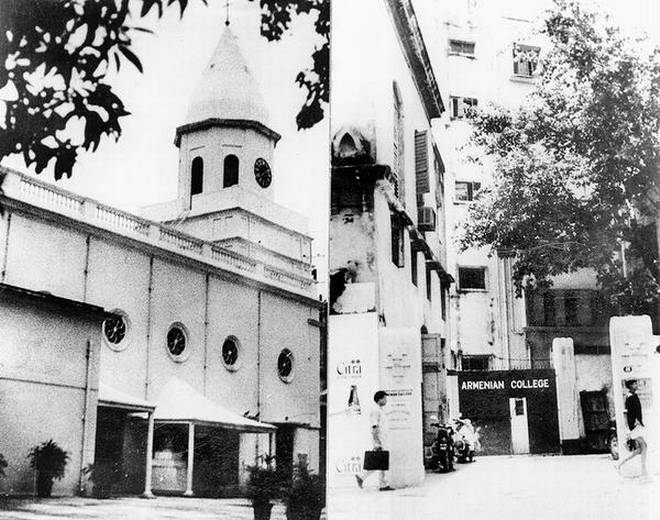
The Armenian Church of Nazareth, the oldest church in Kolkata; and (right) The Armenian College. | Photo Credit: PTI
For 197 years, the Armenian College and Philanthropic Academy has offered not just education but a sanctuary for children torn by conflict.
It was a birthday party of a different kind.
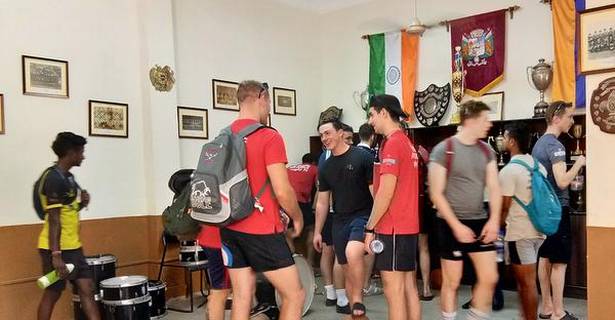
Brought together often by conflict and exile and nurtured in a regime of tough love, the dozen alumni and 70 present students of the Armenian College and Philanthropic Academy (ACPA) of Kolkata were celebrating 197 years of the institution on April 2.
Amid the animated discussions on the crisis in West Asia, Razmik Hakobyan, a 24-year-old Iraqi, an alumnus of the school, said he was dispatched to the ACPA in 2007 for “safety and education,” after a bomb exploded close to his house in Baghdad’s upmarket Kembel Gilani area. Mr. Hakobyan’s father, a retired soldier, decided distant Kolkata was safer.
“A friend who studied in Kolkata told us about the school and my parents got interested,” said Mr. Hakobyan, who left Baghdad when he was just 13. He would like to visit Baghdad, he said, but only on vacations.
“Baghdad is not getting better and nor is its education,” said the young man, whose family has since shifted to Kurdistan. Close to completing his graduation at the city’s St. Xavier’s college, Mr. Hakobyan says he is indebted to the Armenian College and its teachers.
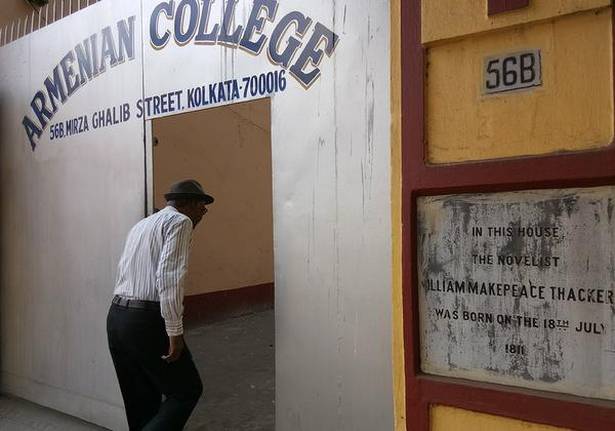
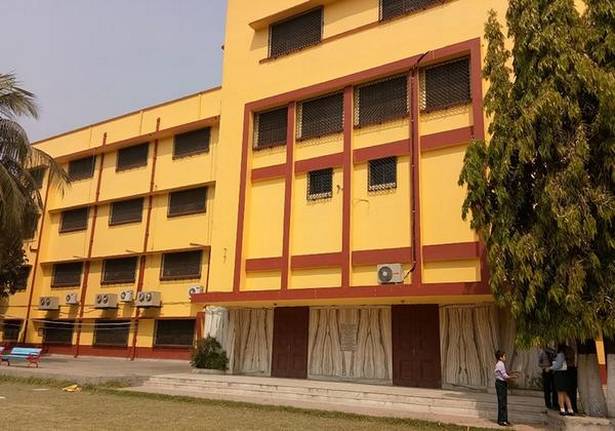
Set about 500 metres north of Park Street in the heart of the city, a plaque at the entrance of the imposing yellow building announces that “the novelist William Makepeace Thackeray was born on the 18th July, 1811” in the premises. Since 1821, it has housed the Armenian College and Philanthropic Academy — a school for Armenian students from all over the world up to Class X.
India as home
The Armenians adopted Christianity in 301 AD and were invited “to come and settle in his dominions” by emperor Akbar in the 17th century.
They arrived in Bengal in 1645 and settled along the Hooghly’s fertile western bank like most traders of the time. Anne Basil in her seminal book Armenian settlements in India writes that the community grew in size and influence and felt the need to have its own school. An informal school was set up in 1798, which was replaced by the present Armenian College and Philanthropic Academy on April 2, 1821, at 358, Old China Bazar Street near the Armenian Holy Church of Nazareth, Calcutta.
Following the genocide of more than a million Armenians in eastern Anatolia by Turkish forces in 1915, “hundreds of children of uprooted families…found shelter and a roof and received sufficient education…” at the Kolkata school, notes Basil.
Open to all Armenians
Armen Makarian, a former student and school’s coordinator, said the institution is the only Armenian school of its kind in the world.
According to Very Reverend Father Movses Sargsyan, head of the Davidian Girls’ School (DGS) — the girls’ wing — and Armenian College, the school is globally known among Armenians. “Internet, website and social pages informed the guardians,” Father Sargsyan said. While a majority of the students are from Armenia, the rest are from the Armenian disapora in Iran, Iraq and Russia and a handful of Indian-Armenians.
“We would like to have Armenian students from across the world — from Germany, Italy or France and even Syria,” Father Sargsyan said.
Like most boarding schools, the Armenian College has an intensely packed, exacting schedule. Mobile phones and laptops are a strict no-no, with the students allowed two hours out of the premises for shopping.
“But we like it,” said Vladimir Grigoryan, a ninth standard student, who was born in Russia but now stays in the Armenian capital, Yerevan.
“My parents were paying $2,500 annually for my education in Armenia. But the teachers never cared if we were learning — unlike here where teachers are constantly demanding,” said Vladimir, whose father runs a chain of hotels in Russia.
For Sevak Azarian Namagardi from Iran, who just appeared for his ICSE examinations, life is a “little boring” at times. Being a trained singer and a regular at choirs, he looks forward to weekly chats with his family over Skype.
“As the summer vacation approaches, I’m making arrangements to leave for Tehran,” he said. He has more reasons to cheer. “This time the family and I will visit Armenia, our motherland,” said Sevak. He, however, is equally keen to get back to friends at the school.
Academic challenge
Imparting education to students from such diverse backgrounds, however, is not easy. Soumitra Mallik, Principal at the Academy said the key problem was to match various levels of education.
“We do not know if the student who has studied up to Class V in her or his country is on par with what is taught here under the ICSE syllabus. So, this content mapping and matching is a problem,” he explained.
The other problem is communication as the students usually come from non-English speaking backgrounds. While Armenian teachers teach Armenian language, history, and culture, most of the around 25 faculty members at the Academy are Indian.
“So, we have six-month preparatory courses where we intensely teach English, some Mathematics and a bit of the Sciences to provide an outline of what the student will study and to hone their English language skills,” Mr. Mallik said. So far, it has worked well as many of the students are quickly able to leapfrog to reading Shakespeare’s Merchant of Venice within a few years!
Arindrajit Saha, the English teacher, said, “Studying Shakespeare within a brief period of time can be considered an important marker.”
Though the students indeed are grateful for the free and quality education they receive, there are regrets of a lost childhood back home.
“Saddam Hussein may have been a dictator but Iraq was not doing too badly and there was peace. With his departure, the country permanently collapsed and I had to leave my incomplete childhood behind,” said Mr. Hakobyan.
The different countries that the students hail from may not share friendly diplomatic ties, but the bond that Mr. Hakobyan or Sevak develop at the Kolkata school go beyond political compulsions or geographical boundaries.
“We are from the same tree, with same roots. The branches move in different directions, but the root remains,” says Arian Makarian of Iran, an alumnus.
source: http://www.thehindu.com / The Hindu / Home> News> Cities> Kolkata / by Suvojit Bagchi / Kolkata – April 14th, 2018
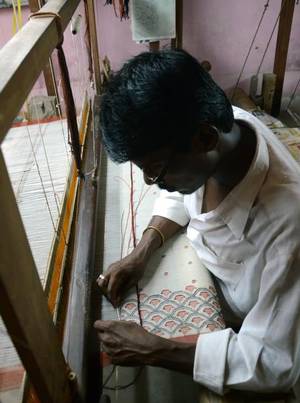
The Bengali Jamdani does not have a GI tag yet. Here, a weaver at the pit loom works on a Jamdani print at a factory in Kana, West Bengal. File photo. | Photo Credit: Sushanta Patronobish
So far, only three types of sarees from West Bengal — Baluchari, Santipur and Dhaniakhali have obtained the GI tags.
The textiles committee of the Union Ministry of Textiles has asked the various weaving communities of West Bengal to apply for the Geographical Indication (GI) tag for Intellectual Property Rights (IPR) protection.
So far, only three types of sarees from West Bengal — Baluchari, Santipur and Dhaniakhali have obtained the GI tags.
“We are asking the different weaving communities of West Bengal to go for GI registration. Some of them are the weavers of Bengali Jamdani, Begumpuri and Bengali Tangail sarees which have huge export markets,” deputy director of the Textiles Committee of the textiles ministry T.K. Rout told PTI.
The weavers of scarves and stoles of Fulia should also apply for GI registration, he said.
Mr. Rout said that once these weaving communities get the GI tag, their IPR would be protected and legal action could be initiated against those who were not bonafide claimaints of these textile products. “Even the export markets of these products would be protected,” he said.
“GI is IPR which provides protection to the products which have origins in a particular geographical location and different from patents and trademarks,” Mr. Rout added
It also gives protection to those weaving communities from counterfeit claims by others, he said adding that the ministry was working to facilitate this process.
As of date, 270 products of the country had been registered under the GI Act, out of which 151 of those belong to the textiles and handicrafts segment.
source: http://www.thehindu.com / The Hindu / Home> News> Cities> Kolkata / by PTI / Kolkata – March 16th, 2018
Forefather’s legacy reinvented with honesty of heritage
Golpark:
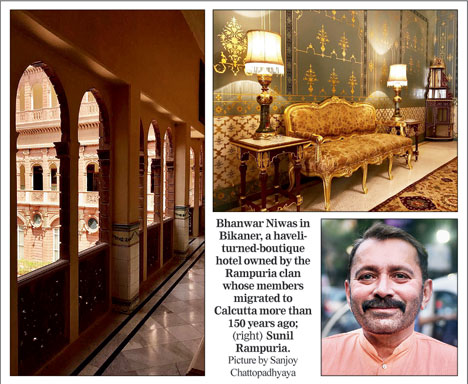
A Calcuttan whose forefathers had migrated to the city from Rajasthan more than 150 years ago has returned to his roots to turn an ancestral haveli into a boutique hotel.
Bhanwar Niwas, one of the famous mansions owned by the Rampuria clan, stands in the old walled city of Bikaner. The haveli had been built in the late 1920s by Seth Bhanwarlal Rampuria, heir to a textile and real estate fortune in Calcutta. It became a boutique hotel in 1993 at the initiative of Bhanwarlal’s grandson, 61-year-old Sunil Rampuria.
Sunil, an alumnus of La Martiniere for Boys and St Xavier’s College, is now based in Bikaner but keeps visiting Calcutta, which he calls “home” and where his parents and in-laws remain.
“The Calcutta I grew up in has made me the person I am. The city is steeped in tradition but that has not stopped it from being liberal. Calcutta moulds you,” Sunil said.
He remembers going to a kindergarten school on Royd Street that used to be run by a Spanish woman and an Iraqi man. “I always wondered why their surnames were different. Back then, living in was not a common thing,” he quipped.
Sunil had sold a house in Vizag, where he had worked in a construction company for several years, to fund the facelift of Bhanwar Niwas.
Although the property is more than 90 years old, it did not need much renovation. The architecture of the three-storey mansion is a mix of Indian and European styles with a majestic facade and a sprawling courtyard in the middle. Multiple staircases and large rooms complete the heritage look.
“People from my native place came to work in Calcutta and eventually settled down. But there were relatives back home. They built large houses because they were a status symbol,” Sunil told Metro before returning to Bikaner last weekend.
Several bhujia makers in the city trace their roots to Bikaner. The Rampurias are one of the oldest among these clans with several havelis spread among Sunil’s distant relatives.
His great grandmother lived there until 1988. Sunil left Calcutta in 1992 when he was 27 and started the project the same year. He was married with three children and his parents were apprehensive about the decision because of the risks.
In Bikaner, people were surprised that Sunil was reversing a trend. While his forefathers had migrated from a provincial town to a booming business centre, he was returning from Calcutta.
Before the hotel opened, Sunil made changes like carving attached bathrooms out of the large rooms. He did the stencil-painted wallpapers himself.
The hotel has done well over the years. “I don’t have go to Delhi to solicit business,” Sunil said.
Bhanwar Niwas offers a wholesome period experience in its own way. It is located in the middle of a locality and guests can see people celebrate local festivals. There are no TVs in the rooms because Sunil wanted to be “faithful to the period when the mansion was built”.
It is hard to miss the connection with the Best Exotic Marigold Hotel, the 2012 film about a young Sonny Kapoor (played by Dev Patel) who wants to realise his father’s dream of restoring a grand hotel in Jaipur.
Sunil downplays the comparison, but is proud that his eldest son Prashant now looks after Bhanwar Niwas.
Calcutta is dotted with centuries-old buildings that are caught in the conservation conundrum.
A little over a month ago, the Calcutta Municipal Corporation allowed the building that housed the old Kenilworth Hotel to be demolished by its present owners after downgrading its heritage status. Heritage conservationists alleged a builder-official nexus.
Metro reported last week that Tripura House, the stately Ballygunge Circular Road mansion, will have a residential highrise share a portion of its 100-cottah compound after the West Bengal Heritage Commission gave its nod to a project rejected by the civic body.
Heritage has to be relevant to make conservation viable, Aishwarya Tipnis, an architect working on French heritage structures in Chandernagore, said in a lecture at the Indian Museum last Wednesday. “Conservation is no rocket science. It is far from a NASA code that can’t be cracked,” she said.
Sunil seems to have cracked the code.
source: http://www.telegraphindia.com / The Telegraph,Calcutta,India / Home> Calcutta / by Debraj Mitra / April 12th, 2018
Santal people performing a traditional dance. | Photo Credit: PTI
While Bengal has more than two million Santali speakers, the number is dwindling
The onset of spring has dressed Jhargram, the district on the western corner of West Bengal, in the flaming colours of the palash flower. The flowers of the mahua tree are also scattered everywhere; women are collecting them in buckets to brew wine as the sun dips into the horizon. The radio is on to keep them company, tuned in to Radio Milan, 90.4 FM where RJ Shikha Mandi is hosting a programme called ‘Johar Jhargram’ (Greetings, Jhargram), which focuses on Santali language and culture.
A man, speaking in Bengali, calls in with a request for a Santali song. The RJ urges him to speak in Santali since, it turns out, the caller is Santali. The man says he understands Santali but can’t speak it properly. Mandi’s enthusiastic voice asserts that it’s better to speak broken Santali than not to speak it at all. It’s their mother tongue after all.
Santals are the largest tribal community in Bengal, which has more than two million Santali speakers. The language was included as an official language in the eighth schedule of the Constitution in 2003, but only a few schools in Bengal use it as the medium of instruction.
Best interests
The Bengali-speaking population of Jhargram also tends to look down upon the language and the community. “We speak Santali among ourselves. The Bengalis here don’t know our language, and it’s in our interest to learn to speak Bengali — most businesses here are owned by Bengalis,” says Shibu Soren of Kalaboni village near Jhargram town, taking a sip of mahua wine.
Given such realities, it is not surprising that the number of Santali speakers is dwindling. Outside Bengal, Santali is spoken in Jharkhand, Bihar, Odisha, and some parts of Tripura.
It’s in this milieu that the twenty-four-year old Mandi of Radio Milan has been trying to make Santali fashionable. From the Santali community herself, Mandi has lived most of her life in Kolkata, but returned to Jhargram after completing her studies to become an RJ. In the few months of its existence, the programme she hosts, ‘Johar Jhargram’, has become hugely popular, crossing the boundaries of Jhargram to reach Kolkata, which may be only five hours away but far removed culturally and linguistically. People also tune in to ‘Johar Jhargram’ from different parts of India, Canada and the U.K. on a mobile app.
Mandi says it’s her bitterness at being seen as ‘inferior’ by her Bengali classmates in her Kolkata school that inspired her to take up the cause of Santali.
“I was often dismissed as a tribal, and for slipping into Santali in school. I made it a rule to never speak Santali outside the four walls of home.”
Shikha Mandi | Photo Credit: Ashok Nath Dey
Mandi was born in Belpahari, 40 km from Jhargram, and sent to Kolkata for schooling when she was four. In Jhargram, regular classes would have been impossible. Part of the Red Corridor, the area has seen a lot of Maoist violence in the last two decades.
Mandi’s two-hour radio pragramme, which airs between 4:00 and 6:00 pm from Monday to Saturday, takes up different issues relevant to the community — from education and child labour to traditional harvest festivals.
Songs are played in between; listeners call in and participate, sometimes in Bengali, but Mandi responds in Santali. Mandi’s accent is itself imbued with traces of Bengali, but she has been reading and writing Santali and talking to native speakers to improve her skills. “But in truth,” she says, “no one now knows the language as well as our grandparents do.”
Most parents, in fact, discourage their children from speaking Santali because only Bengali and English can fetch them jobs.
Quiet optimism
Arun Kumar Ghosh teaches at Burdwan University. He has been working on Santali language for three decades now. “It is one of the world’s oldest languages,” he says, “and, interestingly, it still preserves linguistic features that are as old as 150 years.” There is a growing interest in the world outside the Santali community to study the language and absorb the culture, but the community is hesitant to let this happen. “The low literacy within the community is a major cause behind this unwillingness,” says Ghosh.
But the younger generation is slowly beginning to embrace the mother tongue. Usha Soren from Kalaboni tells me while cleaning her courtyard that she sends her son to a Santali language teacher twice a week so that he learns to write in the Ol Chiki script.
Young people like Mandi want to learn about their history and culture in Santali rather than in Bengali. They want to learn to be a Santal in Santali language. Ghosh is optimistic that programmes like ‘Johar Jhargram’, which bring entertainment and information in Santali, can go a long way towards mainstreaming the language.
A journalist based in Uttarakhand, the writer explores the lives of those who walk mountains.
source: http://www.thehindu.com / The Hindu / Home> Inside India> Society / by Arpita Chakrabarty / April 07th, 2018
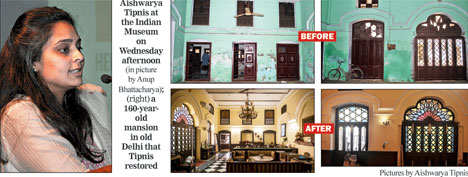
A young architect working on heritage structures in Chandernagore busted several myths about conservation of old buildings at a lecture at the Indian Museum on Wednesday afternoon.
“Conservation is no rocket science. It is far from a Nasa code that can’t be cracked,” said Aishwarya Tipnis.
An alumnus of the School of Planning and Architecture in New Delhi, Tipnis won the Chevalier des Artes et des Lettres, France’s top cultural award, this January for her “outstanding commitment” to the preservation of French heritage in Chandernagore, where she has been working for eight years.
The 37-year-old debunked the common perception that conservation is opposed to development, stressing that it is in fact a part of it.
The lecture, titled Why Does Heritage Conservation Even Matter To Anyone, took the audience through a presentation that told the story of Tipnis’s first big project – the restoration of a 160-year-old mansion in old Delhi, which started in 2010.
The current owner of Seth Ram Lal Khemka Haveli at Kashmere Gate in Shahjahanabad, Deoki Nandan Bagla, wanted to spruce up the house before his sons’ marriage. The three-storeyed house had been home to Bagla’s grandparents since 1920. Lack of renovation had created large cracks on floors and walls and several doors and windows were missing.
It was one of the first private conservation projects in the capital and went on to become a torchbearer for conservation of several old mansions. But the journey wasn’t smooth. The first challenge came from the client himself. Bagla wanted to turn it into a contemporary home. “What is restoration? Make the haveli modern,” he told Tipnis.
But Tipnis managed to convince him that compromising on the house’s principle architectural and aesthetic values was not a smart choice. “I told him everybody had a fancy home. But a palatial mansion was rare. He could show it off as a status symbol to the families of prospective brides.”
The finer details of the conservation were not as important to Bagla as his family’s pride. The point Tipnis drove home was that “architects have to get off their high horses” and connect with people.
One of the key aspects of traditional architecture was lime mortar plastering instead of cement. It led to setting up a lime mortar chukki in the courtyard of the mansion. After several failed experiments – with everything from urad dal and gur to methi seeds – a traditional lime plaster was ready to be caked on the walls.
The project also proved that conservation did not need to be an extremely expensive affair and jugaad could go a long way in bringing down the costs. Instead of using imported beams, Tipnis and her team used stainless steel beams made in Bagla’s factory.
The main lesson of the project was that heritage must continue to be relevant for conservation. “The day it loses relevance, no amount of legislation can preserve it,” said Tipnis.
source: http://www.telegraphindia.com / The Telegraph,Calcutta,India / Home> Calcutta / by Debraj Mitra / April 05th, 2018
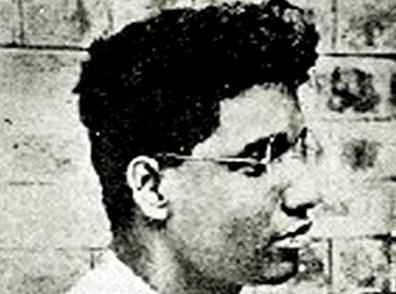
His directorial debut ‘Sahaj Paather Gappo’ has given Manas Mukul Pal the much-needed boost to start his career. His first film became a box office hit last year receiving rave reviews from both the audience and critics.
Now the talented filmmaker is all set for his next venture which is reportedly a biopic on freedom fighter Dinesh Gupta. The film will begin right from his college days and follow his indomitable works and actions as Bengal’s one of the bravest freedom fighters.
Not just Dinesh, the story of Binay and Badal will find their place in the upcoming biopic. The famous Writers Building attack by Binay-Badal-Dinesh will also be covered. It’s certainly great news for Bengali cine lovers. After a long time, we will see a historical biopic. Interestingly, earlier this year rumours suggested Dev will also make a film on Binay-Badal-Dinesh.
Dinesh Gupta was born on December 6, 1911 in Josholong of Munshiganj District, now in Bangladesh. While studying in Dhaka College, he joined Bengal Volunteers, a group founded by Subhas Chandra Bose in 1928. Soon the Bengal Volunteers turned out to be a more active revolutionary association and started liquidating infamous British police officers. Dinesh was only 19 when he was hanged for anti-government activities and murder on 7 July 1931 at Alipore Jail.
As per industry sources, the camera will roll on for this biopic from October. The film will be shot in Kolkata, Midnapore, and Bangladesh.
source: http://www.timesofindia.indiatimes.com / The Times of India / Home> News> Entertainment> Bengali> Movies / News / TNN / April 03rd, 2018
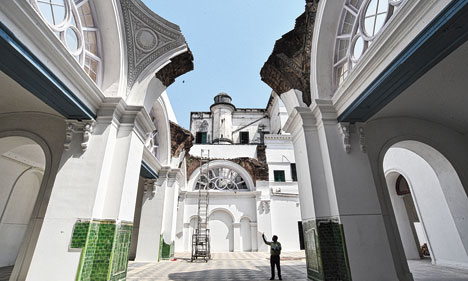
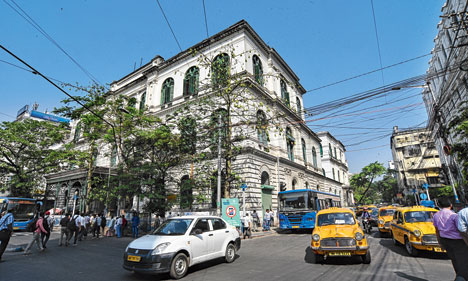
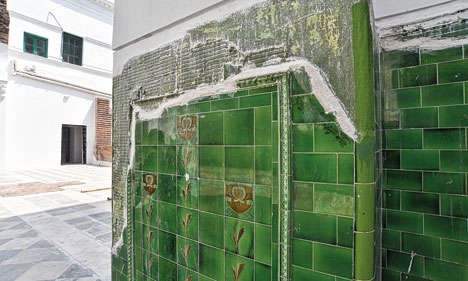
The courtyard of the 185-year-old Currency BuildingDalhousie is being restored by the Archaeological Survey of India. The remnant of the dome to the left was in a state similar to the one on the right and has now been restored.The green tiles (above) with nettle patterns have developed cracks in some places and a few have broken edges. A technique called lime punning, which involves application of a mixture of lime and sand, is being used to prevent water from seeping into the inner side of the tiles and conserve them. / Pictures for all above by Sanjoy Chattopadhyaya
Calcutta:
The large courtyard of the more than 150-year-old Currency Building, designed in Italian style, will soon be turned into an exhibition hall for the National Gallery of Modern Art with a glass roof over the remnants of demolished domes overhead.
The flat toughened glass ceiling will allow sunlight to stream in and keep the view of the domes unhindered.
Conservation and restoration work is underway at the protected monument, which is under the custody of the Archaeological Survey of India (ASI). The first and second floors of the building’s west wing, facing Dalhousie Square, will also be handed over to the National Gallery of Modern Art (NGMA).
The building was “founded” in 1833, according to the ASI website. “It initially housed Agra Bank and was named Currency Building when the government took over a large portion for its currency department,” the website states.
The building had been in use till 1994. The Central Public Works Department (CPWD), which was in charge of the building, started demolishing the structure in 1996.
In the book White and Black, Soumitra Das writes that the destruction was stopped after the Calcutta Municipal Corporation (CMC) and Intach (Indian National Trust for Art and Cultural Heritage) intervened. The ASI was given custody of the building in 2005. But the three massive central domes had been pulled down by then.
Architects and engineers are now conserving the tiles on the walls of the courtyard and restoring the hollow walls on the first and second floors.
Some tiles with nettle designs have developed cracks while a few others are damaged along the edges. Instead of restoring the tiles, which would involve filling the gaps with similar tiles, the ASI has decided to conserve them using a technique called lime punning (see caption).
“Lime punning will prevent water from seeping into the inner side of the tiles and restrict further decay,” said Sudipta Sen, a junior conservation architect in the project.
Post restoration, only the west wing of the building will be handed over to NGMA, which plans to use the space for an exhibition hall and a full branch office.
“An office in Calcutta would help researchers as they would be able to approach the city office for help instead of going to Delhi,” said Adwaita Charan Gadanayak, the director general of NGMA.
“We expect to get the space within three months. The ASI is working very fast. Once we get the space, we will use some of it for permanent display of paintings and artefacts and the rest for exhibitions,” Gadanayak said.
“A memorandum of understanding was signed in 2015 and work was carried out in phases. Recently, we have quickened our pace and hope to hand over the space to NGMA soon,” said G. Maheshwari, the superintending archaeologist of ASI’s Calcutta circle.
The first and second floors of the west wing are also being done up. Each of the floors has three rooms and a 40-metre-long hall. Together, the two floors hold 12,055 sq ft of space.
The east wing has offices of the ASI and National Monuments Authority.
source: http://www.telegraphindia.com / The Telegraph,Calcutta,India / Home> Calcutta / by Subhajoy Roy / April 01st, 2018
A Good Friday tradition among workers from Odisha continues at former colonial firm
This Good Friday, the headquarters of the 154-year old Andrew Yule Company resonated with verses from the Bhagavat Gita along with a puja for Lord Jagannath.
A practice started by the Odisha employees of this erstwhile colonial managing agency, under the patronage of Scotsman David Yule has continued uninterrupted through the ups and downs of the company and marks its 100th year in 2018.
Heritage building
Yule House, the headquarters of AY, which managed cotton and jute mills, tea gardens, coal companies, railways and a printing press, with over 80,000 on its rolls in its heyday, is listed as a heritage building in the heart of Kolkata’s business district.
The company was set up in 1863 when Andrew Yule, a strapping Scottish entrepreneur arrived in Calcutta, the then imperial capital of India. He founded a company as a managing agency at a time when railways, telegraph and postal services were making a beginning in the country.
George Yule, Andrew ‘s elder brother took over the reins in 1875. David Yule assumed AY’s control, after his uncle’s death and by 1902, Andrew Yule managed over 30 businesses including a printing press and even a zamindari in Midnapore district, where it promoted agriculture, forestry , fisheries, roads schools, and healthcare facilities.
Among its many employees were several from Odisha. Says septuagenarian Praful Das from Kendrapara, a special invitee to the centenary celebrations: “ Four generations of our family have been working here and since those days, people of all faith have been participating in this puja…It was a small affair then… it has grown in pomp now.”
Fluctuating fortunes
AY’s fortunes dived with the abolition of the managing agency system in 1969 and nationalisation of the coal and the insurance industry. The process of government acquisition ended with AY becoming a public sector enterprise.
However, the puja tradition goes on. Bijoy Panda a third generation employee, explained that the priest comes from Puri carrying a bit of the flag that flies atop the Puri Jagannath Temple and some special offerings from the Temple. The first invite is sent to the titular King of Puri.
source: http://www.thehindu.com / The Hindu / Home> News> Cities> Kolkata / by Indrani Dutta / Kolkata – March 30th, 2018