Category Archives: Historical Links / Pre-Independence

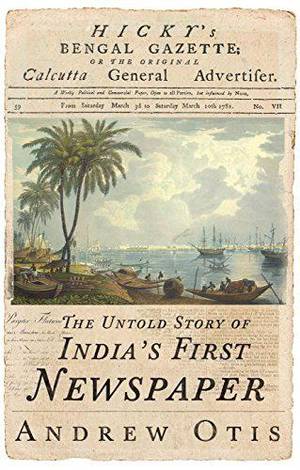
Hicky’s Bengal Gazette: The Untold Story of India’s First Newspaper review: Winds of freedom

In 1780, an Irishman took on the British in Calcutta with a tell-all weekly that covered everything from corruption to politics

It was 1780. Great events were shaping and shaking the world. Four years earlier, in 1776, Britain had lost its first colony; a new nation was born, namely, the United States of America. And nine years, later, in 1789, the French revolution ushered in a new era of freedom and hope in Europe.

At a time when the western world was changing rapidly a new spirit was also taking shape in one of Britain’s eastern colonies. Calcutta, then capital of British India, though the East India Company ruled only a small part of India at that time, was witnessing developments that were new not only in India, but in all of Asia. As free thought and freedom of expression swept across the world, an Irishman called James Augustus Hicky gave Calcutta and India its first printed newspaper in 1780.

Taking on power

Hicky’s Bengal Gazette, according to the young American scholar Andrew Otis, was a four-page weekly newspaper priced at ₹1. And it took on the rich and mighty of British Calcutta. What did Hicky publish in the pages of his newspaper? “He tried to cover everything that might be important to Calcutta, devoting many sections to politics, world news and events in India.” Topics that featured regularly were poor quality of sanitation and lack of road maintenance. Houses of poor Indians had thatched roofs, prone to catching fire. The outbreak of fires was frequently reported in Hicky’s paper. Through the letters he solicited and published, the editor gave voice to Calcutta’s poor.

He attacked corruption in the East India Company and in high echelons of society. The Bengal Gazette reported that the Governor of Madras, Sir Thomas Rumbold, had been recalled to England to answer charges of corruption in front of Parliament. “Hicky sarcastically wrote,” Otis tells us, “Rumbold was a great man for only amassing a fortune of about 600,000 pounds while in India, much of it from bribes and extortion.”

Hicky did not spare any institution. He exposed the problems of low pay for soldiers in the subaltern ranks of the Company’s army. Failed wars of the Company also came under its gaze. The Company’s army suffered a crushing defeat in the Battle of Pollilur at the hands of Hyder Ali, then ruler of Mysore. As the news of the disaster trickled in, Hicky questioned why the British were fighting in India. He accused the Company of squandering the lives of its soldiers. He even praised the noble actions of Hyder Ali in his treatment of the captured soldiers of the Company.

But as Hicky continued his fearless mission against corruption, the powers of the day did not sit idle. A rival newspaper was born in Calcutta. The India Gazette of Messink and Reed differed from Hicky in every possible way. The two papers represented two sides of the political spectrum.

Tough rival

Hicky emphasised independence while the India Gazette made no secret that they had the support of Governor Warren Hastings. So much so that Hastings had given the facility of free postage to India Gazette. There were hardly any opinion columns in it, a clear sign of their obeisance to Hastings’s authority. And they did so for a good cause, that was monetary rewards. India Gazette became the Company’s de facto mouthpiece; the Company’s departments placed advertisements and notices in that paper.

Press freedom

But Hicky took on the might of the establishment. He alleged through his pieces in the paper how one Simeon Droz had sought a bribe from him and wanted to get favours for him from Marian Hastings, wife of Warren Hastings, in lieu of the bribe. Hastings fumed that someone could show such imprudence. He passed an order that the Post Office would no longer extend its facility to the Bengal Gazette.

Hicky fought back. He hired 20 hircirrahs (courier men) to deliver his newspaper, and his newspaper’s popularity soared. He continued his fight against the most powerful man of the day and his entourage.

Hastings hit back and the Chief Justice Elijah Impey decreed that Hicky be imprisoned on charges of libel. A grand jury sat to decide the fate of Hicky.

After a fierce courtroom battle, the jury acquitted him. Hicky won, Hastings lost. As Otis tells us, “He had proven that it was possible to protect the Press against the most powerful people in British India.”

There were still three more trials to come that tried to muffle the voice of Hicky. What happened; did freedom of the press triumph? For that you must turn to Otis’s book, as he sketches a riveting tale of the struggle of India’s first newspaper editor.

Hicky’s Bengal Gazette: The Untold Story of India’s First Newspaper; Andrew Otis, Westland/ Tranquebar, ₹899.

source: http://www.thehindu.com / The Hindu / Home> Books> Reviews / by Sunandan Roy Chowdhury / July 14th, 2018
Gods, demons and myths

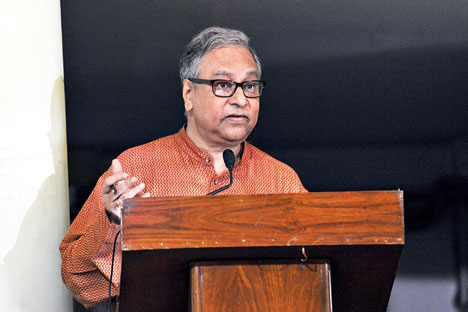
Jawhar Sircar delivers the Dr Biman Behari Memorial Lecture at Asiatic Society.
Picture by Sanat Kumar Sinha

Park Street:

When Jawhar Sircar, the former Prasar Bharati CEO, took the stage at Asiatic Society to deliver the Dr Biman Behari Memorial Lecture on a topic drawn from Indian mythology, it was a deliberate act to lift what he described as the “academic apartheid with gods and demons”.

“The huge area of mythology and folklore is taken as nonsense by academics, thus leaving it to those who are deliberately misusing it to threaten the idea of India,” Sircar said.

Among those who deal in the area, Devdutt Pattanaik, he said, is too text-based in his interpretations. “At times he does refer to context but that pleases rather than disturbs the reader into challenging dangerous fundamentalism.”

Amish Tripathi, he said, builds modern myths on age-old ones that leaves the reader more firmly rooted in the imagined past. “The difference between myth and reality is fast disappearing in India.” Only a few bravehearts like D.D. Kosambi have explained “why colourful tales are needed to sugarcoat religious values”.

Elaborating on his theme ‘ Asuras in Indian tradition’, Sircar said his fascination with asuras was from a desire “to get their side of the story”.

He was using asuras, mentioned in the Mahabharat and the Puranas, as an umbrella under which to put all demonised anti-gods. “They are indigenous forces who stood in opposition to the emerging and dominating Sanskritic narrative.”

“The idea,” he said, “is to try to retrieve bits and pieces of the alternative narrative that was wiped off by priestly officialdom but survived through disjointed tales embedded within the mega narrative.”

Delving into the root of demonology, he pointed out that for ages Man knew certain deities were not benign. “But our binaries do not operate on the same plain (as the God vs Devil construct in the West). We have internalised much of the malevolent pantheon.”

An example of the process, he said, is Shani, who is still treated with suspicion and carries signatures of demonic worship. “You cannot place him indoors. Yet Brahmanism has managed to fit him within the system so that he does not run out of it and become the rallying point of dissonance.”

A difference between gods and demons, he said, is that one has to be worshipped and the other propitiated. Deities were metaphors for ethnic groups. “In pre-legislative times, policy-making depended on whose god one was able to foist upon the others in the pantheon.”

The expulsion or suppression of gods reflects social changes. “Of the ruling three in the Aryan narrative, Brahma was pensioned off to a temple in Pushkar and Indra was banished as a suffix to names. By this time, pastoral economy was on the upswing and Indra was pitted against Krishna.” The Govardhan mountain episode, with Krishna sheltering Vrindavan from the thunder of Indra, is iconic in the Krishna lore.

“Monotheism makes no compromise with the demonic. The devil had to be opposed to God. Christianity and Islam have kept the demon alive on a day-to-day basis as temptation, Sircar said, referring to rituals such as stoning of the devil at Mecca.

But in Hinduism, the asura is already defeated and his memory is celebrated in the burning of Ravan. “Over time, even figures in opposition were deified. Ravan, for example, was shown as a Shiva disciple.

“The story of India lies in this absorption and continuous process of accommodation.”

source: http://www.telegraphindia.com / The Telegraph,Calcutta,India / Home> Calcutta / by Sudeshna Banerjee / July 1oth, 2018

Tour of three hidden gems

Museums that encapsulate magic of Bengal and Calcutta

Michael Feiner, the German consul general, with members of Unique Legacies of Bengal (BAUL) at Gurusaday Museum in Joka on Sunday. Pictures by Gautam Bose

Calcutta:

A museum dedicated to the folk arts and crafts of Bengal, another housing a treasure trove of artefacts excavated till 2005 and a third that narrates the story of the ubiquitous tram. Three of Calcutta’s lesser-known attractions, all of them possible to visit in a day, were on Sunday part of a heritage tour taken by the German consul general Michael Feiner.

Metro tagged along to capture highlights of the visit to the Gurusaday Museum in Joka, the State Archaeological Museum in Behala and the tram museum in Esplanade.

Gurusaday Museum, Joka

This museum located near the Joka crossing on Diamond Harbour Road houses paintings, kantha embroidery and musical instruments, among others.

Colourful scroll paintings ( patachitra) that narrate tales like Gourangalila and Manasamangal adorn the walls . There are also square paintings that depict ordinary people living ordinary lives as well as gods and goddesses. One such painting shows a rural market scene with some people dressed in proper clothes while others are clad only in a dhoti, creating an image of social contrast.

Tribal musical instruments like dhamsa, madal, shinga and damru are also on display in the museum.

The majority of the pieces are from the collection of Gurusaday Dutt, an Indian Civil Service officer who gathered those during his stints as collector in various districts of undivided Bengal. Many others have made donations to the museum.

One of the more striking pieces is the Crowned Buddha. “We are used to seeing figures of a bare-headed Buddha. A figure of Buddha with a crown on his head and jewellery around his neck and arms is rare,” said Dipak Barapanda, the assistant curator of the museum.

Smaranika, the tram museum at the Esplanade tram depot

The stone sculpture dates back to the 10th Century.

The museum has been in the news, albeit for the wrong reason, since the Union ministry of textiles informed the authorities that it could not fund maintenance forever. In a letter last November, the ministry asked the museum to find a sustainable revenue model to keep the show going.

About 800 exhibits are currently on display and another 4000 are languishing in the storeroom for paucity of space.

State Archaeological Museum, Behala

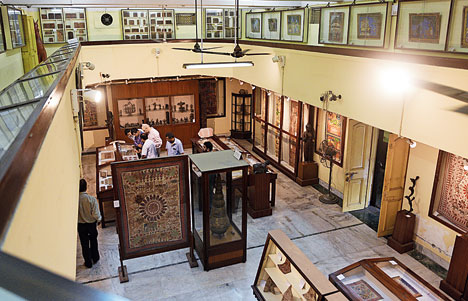
Tucked away behind a pavement full of hawkers in Behala is the richness of a heritage often overlooked. Several galleries in this museum are dedicated to paintings and artefacts found during excavation of historical sites.

Very few seem to know that artefacts excavated in 2005 at Jagjivanpur, a site in Malda, are on display here. “This site was excavated between 1996 and 2005,” said Sumita Guha Roy, the assistant curator and an employee of the museum since 1992.

How Jagjivanpur was discovered is an interesting story in itself. “In 1987, a man digging his field found a bronze plate,” Guha Roy recounted. “Archaeologists later deciphered the text on the plate and found that it was a land grant made by King Mahendrapala to his senapati (commander) to build a Buddhist monastery there.”

This was the first clue to the treasure trove hidden underground. A plaque inside the gallery mentions that excavation began in 1992, but had to be stalled for some years to rehabilitate people living there.

In one gallery, a painting from the late 18th Century shows the intermingling of people from different stratas of society. This one came from Nashipur in Murshidabad.

“The painting shows a medieval king and a Vaishnava saint standing in front of Lord Krishna with folded hands,” said Sayak Ghosh, a member of the Bespoken Architectural and Unique Legacies of Bengal (BAUL), the group that had organised the Sunday tour with the German consul general.

Smaranika, the tram museum in Esplanade

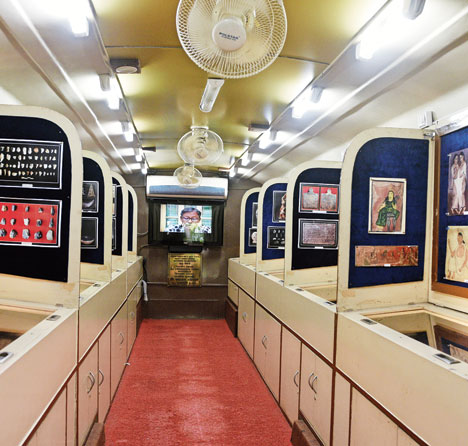
The inside of a van that travels to the districts to make people aware of Bengal’s history, heritage and culture. Schools and individuals can contact that State Archaeological Museum to book a visit to their neighbourhood

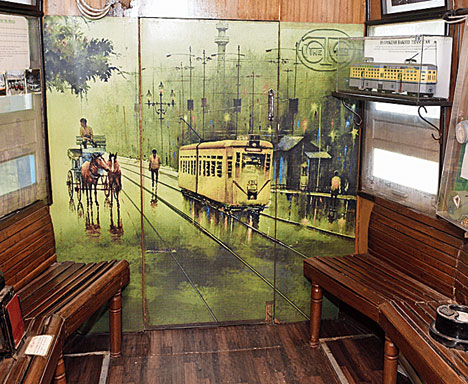
A tram of 1938 vintage at the Esplanade depot has been turned into a museum-cum-cafeteria with 16 seats. The rear bogie of the tram is where the museum is. It contains replicas of a tramcar that was once used to water and clean roads, besides a trolley bus. Tram tickets used during various periods are also on display.

Trolley buses had wheels like buses, but they drew electricity from overhead electric cables meant for trams.

The visit took consul general Feiner back to Germany, where trams still run. “Around 50 cities of Germany like Berlin, Stuttgart and Munich have streetcars. In Germany, streetcars get priority over other traffic,” he said.

At the cafeteria, which is open from 1pm to 8pm, a montage of films shot inside trams between 1931 and 2012 runs on loop on a television screen.

Feiner, who has lived in Calcutta for 10 months, offered a suggestion to promote tourism within Calcutta. “I think there should be a website with comprehensive information on the museums and heritage of Calcutta. There are a lot of ways to promote tourism and this can be a start,” he said.

source: http://www.telegraphindia.com / The Telegraph,Calcutta,India / Home> Calcutta / by Subhajoy Roy / July 09th, 2018

The dead poet’s society

Swachchhasila Basu visits Michael Madhusudan Dutt’s Bengali debut stage on the poet-playwright’s 145th death anniversary

DUTT ADDRESS: Belgachia Rajbari

A two-storey structure off north Calcutta’s Belgachia Road nudges curiosity. The portico cuts though the building like a tunnel. Trees grow on the walls, their aerial roots weaving a veil over it. The pink ground floor walls are peeling like scabs, the upper floor is unpainted. The bricks that seal the arched spaces to the right of the portico talk of secrets buried. The red doors to the left are not welcoming either. And yet, once, the doors of this very house had been thrown open to Bengal’s cultural elite.

The Belgachia Rajbari hosted, among other things, the first performance of Michael Madhusudan Dutt’s Sarmistha, the first original play in Bengali.

According to the Mahabharata, Sarmistha is the second consort of prince Yayati. Says 83-year-old Nityapriya Ghosh, “It was 1859. While translating Ramnarayan Tarakanath’s Sanskrit play Ratnavali into English, Dutt realised there were no original plays in Bengali. Encouraged by friends and patrons, among them the rajas of Paikpara and Jyotindramohan Tagore, he wrote this five-act play.”

This was supposed to be the most productive phase of Dutt’s literary life. In a letter from 1859, written to a friend whom he refers to “as one of the best dogs in creation” he writes, ” Sermista [the English translation by Dutt himself is spelt thus] has turned out to be a most delightful girl… Jyotindra says it is the best drama in the language.”

Ghosh, who used to live in Belgachia Villa – a government housing that came up in a portion of the Rajbari estate – says that around 1836, Prince Dwarkanath, entrepreneur and grandfather of Rabindranath Tagore, bought the estate and a single-storey house and converted it into this palace. In Bonedi Kolkatar Gharbari, Debasish Bandyopadhyay writes that Dwar-kanath had spent over Rs 2 lakh on the estate makeover.

“The who’s who of society would look forward to an invitation to the innumerable parties he threw here,” says 88-year-old Deboprosad Majumdar, who has done much research on the region.

Later, Dwarkanath’s son, Debendranath, auctioned the property. Its new owners, the Singhas of Kandi in Murshidabad, who were the rajas of Paikpara, got it for Rs 54,000.

Paikpara is adjacent to Belgachia.

In Calcutta – The Living City, writer Tapati Guha Thakurta talks about the drawing room of the palace being full of European style furniture, art and sculptures.

Ghosh’s daughter, Sahana, recalls playing with her friends in the palace gardens till the early 1970s, while attending mothers would sit around on marble chairs fixed to the ground, around a marble table, chatting, knitting and soaking up the winter sun.

At that time, the then owners lived in a second house further down, across a large water body known as the Motijheel. Sahana says, “It extended quite a bit across the estate even in the 1970s. An uncle used to take us bird-watching there.” The jheel has vanished in places today and what remains of it are unrelated ponds and garbage dumps.

Theatre artiste Ditipriya Bandopadhyay, who got a chance to enter the palace building recently – she was shooting for a TV serial – says, “I saw some black-and-white photographs. They were captioned but the writing was so blurred that there was no telling what was what.”

Sarmistha opens in the Himalayas. Dutt writes in yet another letter: “Everyone says it is superior to that [Ratnavali] book; as for the Bengali original, the only fault found with it is that the language is a little too high… This I need scarcely tell you, is nothing; for if the book is destined to occupy a permanent place in the literature of the country, it will not be condemned on this head.”

source: http://www.telegraphindia.com / The Telegraph,Calcutta,India / Home> Calcutta / by Swachchhasila Basu / July 01st, 2018

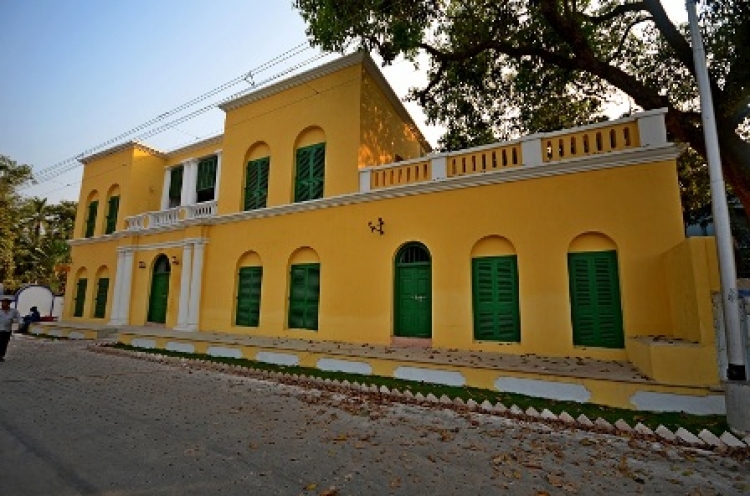
Citizens take inititaive to restore heritage school

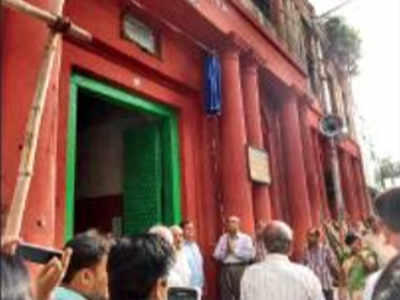
A plaque was unveiled at the school on Saturday

Kolkata :

A dilapidated portion of the Burrabazar branch of Metropolitan Institution, which was pulled down by the KMC on April 7, is getting a new lease of life with a group of residents taking the initiative to restore the heritage structure to its old glory. The initial, rudimentary repairs have been carried out with school funds and the subsequent renovation is likely to depend on government assistance as well as crowdfunding.

Members of ‘Purono Kolkatar Golpo’, a Facebook group that has taken up the project, organized a programme on the premises of the institution on Prasanna Coomar Tagore Street at Pathuriaghata on Saturday, when they unveiled a plaque, with the building’s “heritage status” written on it.

This plaque, they hope, would make Kolkatans and authorities aware of the historical significance of the school, which was founded by Ishwarchandra Vidyasagar.

The unveiling was followed by discussions and a cultural programme, which was attended by current and old students, teachers, neighbours and local councillor, Ellora Saha, who advised to form a development committee that would work towards procuring money from the government. “It is a proud moment that ordinary people have come together to conserve the historical institution. Our aim is to restore the building,” said P N Palit, secretary at Vidyasagar Institute trustee board. He added the initial repair, white-wash and clearing trees and undergrowth from the compound were carried out with school money.

Heritage enthusiast Swarnali Chattopadhyay said, “It’s high time we did something to save such structures of architectural and historical significance. For restoration, we are looking to state help and crowdfunding as and when required.”

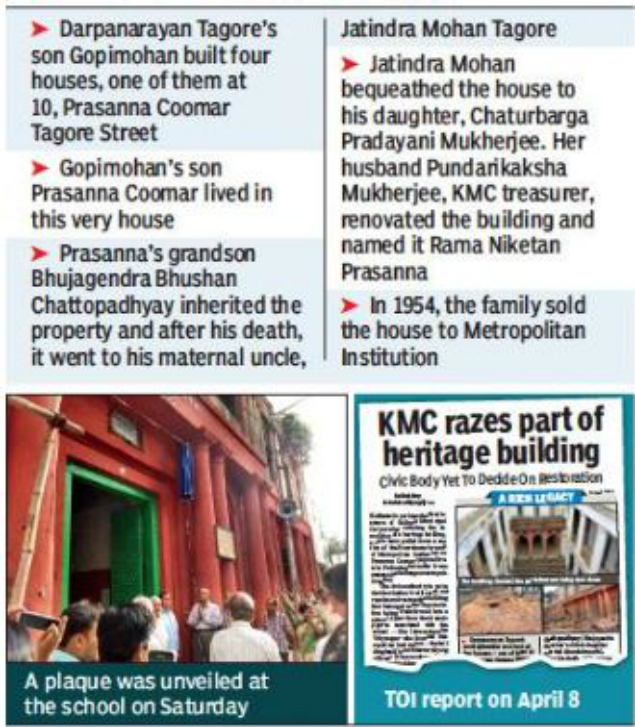
Till 1954, the building belonged to the Tagores and was known as Rama Niketan.

Thereafter, the Burrabazar branch of Metropolitan Institution was set up on the premises, where the school ran out of rooms on the ground and first floors. Now, with only 60 students on the roll, classes are held only on the ground floor. The Pathuriaghata post office shared the same compound. “To save the building, it is important to save the school.

Different activities have to be started there as the institution and the building are interdependent. A proposal has been given that other small schools in the area may use the huge compound, and if need be, they can be merged into one institution,” said Jayanta Sen, heritage activist and another member of Purono Kolkatar Golpo.

Councillor Saha said, “The building still has Vidyasagar’s chair and it is where Madhusudan Dutta composed ‘Sharmistha’. It is my duty to help people conserve the place.”

Conservation architect Kamalika Bose hailed the initiative: “This is a great example of residents doing something at the grassroots level, without expecting the government to take the first step.”

source: http://www.timesofindia.indiatimes.com / The Times of India / Home> City News> Kolkata News> Schools & Colleges / by Dipawali Mitra / TNN / June 17th, 2018

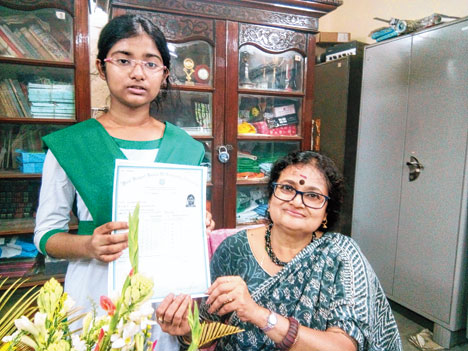
Sunity flaunts 4 toppers

Sanjibani Debnath with headmistress Manideepa Nandi Biswas at Sunity Academy on Wednesday. Picture by Main Uddin Chisti

Cooch Behar:

Had Maharani Sunity Devi lived now, she would have been happy.

Four girls of Sunity Academy, set up by her husband and Cooch Behar king Nripendra Narayan in 1881, have made it to the state-wide list of top 10 Madhyamik examinees this year.

A few among the Indian woman to be awarded a CIE (Companions of the Order of the Indian Empire) by the British, Sunity was the daughter of Brahma Samaj reformist Keshab Chandra Sen.

“Her initiatives to impart education to girls and women are well known in Cooch Behar. Not only that Sunity Academy was set up in her name (it was initially Suniti College), but she was also instrumental in setting up the Maharani Girls’ High School in Delhi. During her days as the queen of Cooch Behar, she had helped girls ensure that they get education. She would have been definitely happy to see girls of her school performing so well,” said Shaukat Ali, a senior academician based in Cooch Behar.

In the Madhyamik this year, Sanjibani Debnath of the school has topped in the state with 689, followed by Mayurakhi Sarkar (687, third in the state), Ankita Das (685, fifth in the state) and Aitihya Saha (681, ninth in the state).

“It is great day for us. Back in 2013, a student from our school had topped in the state in Madhyamik. In our school, there is a close relation among teachers and students. Though many take private tuitions but all the students are always dependant on the school to improve their performances,” said Manideepa Nandi Biswas, the proud headmistress.

Pankaj Kumar Debnath, the father of Sanjibani and a college principal, has appreciated the school.

“My daughter has been studying here since Class III and I have always found that each teacher is caring and giving individual attention to students. They keep on encouraging students and do not relent unless a student understands a subject,” said Debnath.

Along with the performance of the girls of Sunity Academy, Cooch Behar residents have another reason to cheer. In the Madhyamik this year, the district has come up with nine students in total – the highest in any district of Bengal – who have secured positions in the top 10 slot.

They are Sumit Bagchi of Dinhata High School (684, sixth in state), Mahasweta Home Roy of Manindra Nath High School (683, seventh), Debosmith Roy of Rambhola High School (682, eighth), Suman Saha (680, tenth) and Baidurjya Biswas (680, tenth), both of Mathabhanga High School.

“All these students have made our district proud. We will felicitate them for their success,” said NB development minister Rabindranath Ghosh, who also hails from Cooch Behar.

source: http://www.telegraphindia.com / The Telegraph,Calcutta,India / Home> West Bengal / by Main Uddin Chisti / June 07th, 2018

Apeejay Surrendra Park Hotels To Manage Oldest Hotel In India

Apeejay Surrendra Park Hotels has entered into an agreement with the Government of West Bengal to manage the historic The Denmark Tavern, the 232-year-oldest hotel in India, in Serampore, Kolkata.

“We are delighted to manage The Denmark Tavern on behalf of the West Bengal Government. THE Park Hotels will build on the rich legacy of the Tavern and bring it and the area back to life. The hotel will soon be buzzing with guests enjoying a quiet break on the banks of Hooghly and the sights and sounds of old-world Serampore and beyond,” Priya Paul, Chairperson, Apeejay Surrendra Park Hotels.

The Tavern was established in 1786 in what was then Fredricksnagore. The two-storeyed structure by the Hooghly is the place where the Danes had kept their flagstaff and cannons. The Tavern was a place to meet and stay for traders, clergy and travellers exploring Bengal.

In 2010 – 11, more than 200 years after the tavern’s heyday, a group of restoration experts studied the building that stood in complete ruins surrounded by debris. It took around two years to restore the Tavern to its former glory as part of the Serampore Initiative, a restoration programme for several Danish heritage structures led by the National Museum of Denmark and funded by Realdania, a private trust in Denmark, in collaboration with West Bengal State Heritage Commission, and Indian National Trust for Art and Cultural Heritage (INTACH).The refurnished building has a cafe, inspired by the double height central atrium of the Indian Coffee House in Kolkata and six high-ceilinged spacious rooms.

The restored Denmark Tavern will fall under THE Park Collection brand of THE Park Hotels. The Park Collection is intimate, personalized, and tailored to transmit inimitable guest experiences. The Denmark Tavern will have THE Park Hotel’s design aesthetics, its impeccable services and will reverberate with Anything But Ordinary experiences. The hotel will open by September 2018.

source: http://www.traveltrendstoday.in / Travel Trends Today / Home> Hot News / by T3 News Network / May 24th, 2018

Landmark nuggets in 75th year

Desi steel for Howrah Bridge

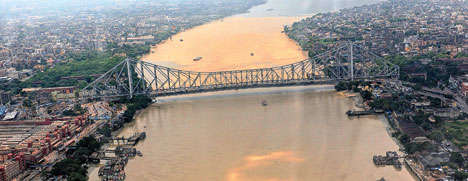
• When Howrah bridge was built in the late 1930s, nearly 90 per cent of its steel was made in India.

• When Vidyasagar Setu was built in the 1980s, all the steel was imported.

• The 705m-long Howrah bridge was built in 41 months. The 823m-long Vidyasagar Setu took 14 years to be built.

Calcutta:

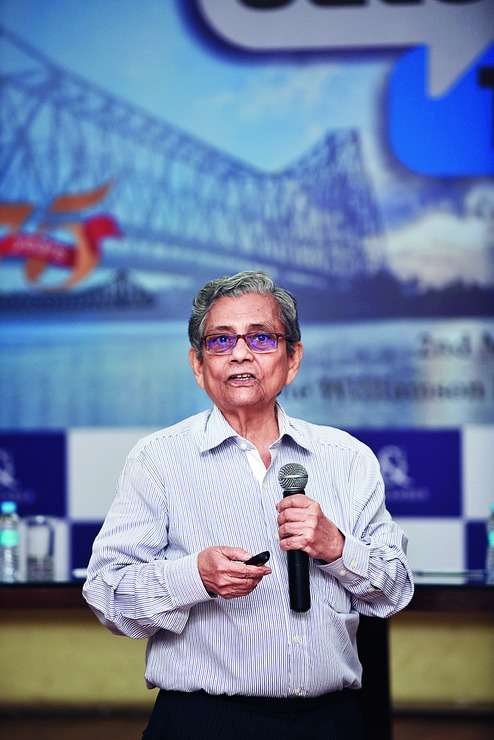
These and more such nuggets of information about the two bridges across the Hooghly were shared at the Bengal Chamber of Commerce and Industry on Wednesday during a lecture on the completion of the Howrah bridge’s 75 years.

Amitabha Ghosal, an engineer who was part of the team that built Vidyasagar Setu, spoke about the history of the Howrah bridge and its engineering.

Ghosal began by saying why the Howrah bridge was built. Traffic to and from Howrah station had been slowly but gradually on the rise. A pontoon bridge that stood over the Hooghly and connected Calcutta and Howrah had to be lifted whenever a large ship came under it.

“River traffic was then more important than road traffic, which was however increasing. So a need was felt to build a bridge,” said Ghosal, who studied the design, construction and tendering of the Howrah bridge while working on Vidyasagar Setu.

There had been talk about building a bridge since 1900 but the actual planning didn’t begin till 1921. World War I was one of the reasons for the delay.

Amitabha Ghosal at the Bengal Chamber of Commerce and Industry.
(Sanjoy Chattopadhyaya)

The pontoon bridge was commissioned in 1874 for 25 years, but remained in use till 1943, when the Howrah bridge was commissioned. Construction began in November 1938 and carried on till March 1942.

Four companies from England, Scotland, Germany and India had placed bids in a global tender floated for the construction of the Howrah bridge. The German company was rejected because World War II was brewing.

Cleveland Bridge of England won the bid but British-owned Indian company opposed it. “It was a tiff between the British in India and the British in England. The British in India managed to convince the authorities that the entire work cannot be given to an England-based company,” said Ghosal.

A compromise was worked out. The Indian company – BBJ Construction Company Limited, a consortium of Braithwaite, Burn and Jessop – was asked to make the steel. Most of the steel – 23,500 tonnes out of 26,500 tonnes – was manufactured and supplied by Tata Iron and Steel Company (Tisco), now Tata Steel.

The foundation of the bridge was built by the Indian-owned Hindustan Construction Company, which is now building the Parama flyover in Calcutta.

source: http://www.telegraphindia.com / The Telegraph,Calcutta,India / Home> Calcutta / by Subhajoy Roy / May 03rd, 2018

1.5-million-year-old tools found in Museum vault

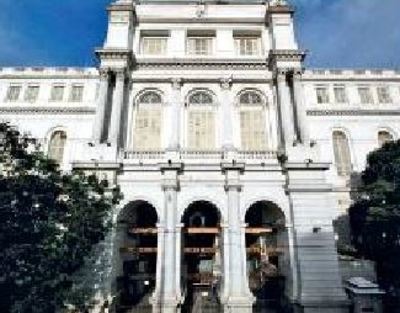
Indian Museum is pushing back the history it has been narrating thus far. It has ‘excavated’ Paleolithic stone age tools, some of which are up to 1.5 million year old, from its own sub-terranian store and will put them on display at a new pre-historic gallery that will open next month

Kolkata :

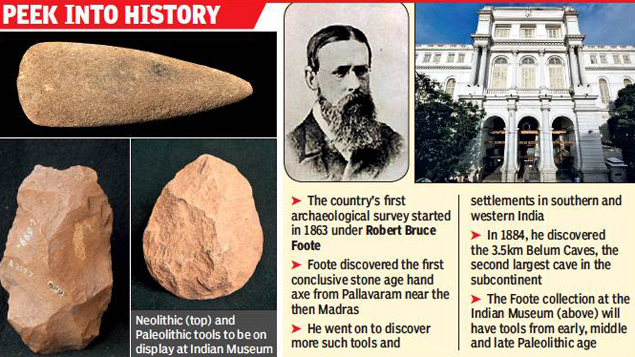
Indian Museum is pushing back the history it has been narrating thus far. It has ‘excavated’ Paleolithic stone age tools, some of which are up to 1.5-million year old, from its own sub-terranian store and will put them on display at a new pre-historic gallery that will open next month.

The collection, handed over to the museum in the 19th century by geologist-cum-archeologist Robert Bruce Foote, had been gathering dust in the underground store till they was re-discovered recently. Foote is considered the father of Indian pre-history and was the director general of Geological Survey of India.

Museum officials stumbled upon the collection of 100-plus tools that were discovered by Foote in south India. The oldest among them were unearthed in Atiram Pakkam, an area in Pallavaram, Chennai. These finds were named Atiram Pakkam tools.

“The Bruce Foote Collection is indeed the oldest collection of human tools anywhere in India. This treasure trove has never been viewed since it was brought to the museum. The inventory has swelled for 200 years without proper cataloguing. We are now sorting and classifying the collections scientifically,” said Indian Museum director Rajesh Purohit.

About 40 stone tools comprising of hand axes, scrappers, cleavers and arrow heads, mostly made of quartzite, will be brought out from that collection and displayed in the new gallery that will replace the Harappa gallery which had been till now the starting point of history at Indian Museum. The Harappa gallery has remained shut to public for nearly 15 years. Handpicked items from the Indus Valley Civilisation will also be exhibited at the new gallery.

The focus though will no longer be on Harappa and Mohenjo Daro, because these are both in Pakistan today and a large number of excavations on the Indian side around a circumference of 1.22 lakh sq km have revealed footprints of contemporary civilisations. “We can build our own history around these sites that have been unearthed in Haryana, Gujarat and Rajasthan. While in the earlier case, the civilisation developed along the Indus, on the Indian side the civilisations sprung up along Ravi, Chenab, Beas, Sutlej, Jhelum, Saraswati, Hakra and Ghaggar,” Purohit explained.

While Lothal (Gujarat) and Kalibangan (Rajasthan) excavations are well-known, other explorations in Rakhigarhi, Krunal, Birhana, Banawali and Firmana that have happened later and have led to discovery of thousands of archaeological remains like pottery, figurines and seals will now be part of the new gallery.

source: http://www.timesofindia.indiatimes.com / The Times of India / Home> News> City News> Kolkata News / by Jhimli Mukherjee Pandey / TNN / April 15th, 2018

Hidden collections

Did you know that the City of Joy is also a city of museums? We’re not talking about the most obvious ones, but several that are tucked in forgotten corners, waiting for the elusive visitor to drop in. In fact, many of these museums provide a wealth of material for those who are interested, but lose out because few people know they exist. Utsav Basu does the rounds of a few of Kolkata’s lesser-known museums

Sabarna Sangrahashala

Located in Barisha, Sabarna Sangrahashala is a museum on the Sabarna Roy Choudhury family and the city of Kolkata. Developed by the Sabarna Roy Choudhury Paribar Parishad in 2005, the museum mainly caters to young students and researchers who wish to learn more about the history of the City of Joy. The museum – or rather a collection by the family trust – possesses rare documents and articles, including ‘kabilatipatras’ dating back to the 18th and 19th centuries. Among them is an important artefact which bears the signature of Kavi Rama Prasad Sen dated 1794. The highlight of the museum is the historic judgment of the Calcutta High Court in the Kolkata birthday case and the expert committee report on the matter, which states that Job Charnock was not the founder of Calcutta (Kolkata), nor is August 24 the city’s birthday.

Other articles include a huge earthen rice pot dating to 1840 with can carry 240kg of grain, a metal hookah from 1878, a metal candelabra from 1795, grinding wheels from 1845 and a wooden table used by Antony Firingee’s grandfather, John Firingee, from 1680.

Timings 10am-12pm and 5pm-7pm every day except Thursday
Entry free

Gurusaday Museum

Tucked away in a corner of Joka, Gurusaday Museum, run by Bengal Bratachari Society, is a house of folk art forms conceptualised by civil servant, folklorist, and writer Gurusaday Dutt. A deep interest in Bengal’s folk art led Dutt to collect around 2,325 specimens of various art forms of Bengal. These artefacts were later housed in a museum, which was thrown open to the public in 1963 by Humayun Kabir, the then Union minister of education. The museum now reels under financial crunch, after the Centre, in a notification, asked it to run on its own. The museum authorities claim this is a breach of agreement between the President of India and the Bengal Bratachari Society of May 23, 1984. Before the recent turn of events, it was funded by the Ministry of Textiles.
From specimens of Bengal’s ‘kanthas’ to ‘patachitras’, the museum is a paradise of eclectic artefacts that range from clay dolls to sandesh chhach (sweet moulds) and Dutt’s personal belongings. A few interesting things include ornaments made of paddy, archaeological specimens from the 1st and 2nd centuries BC, dokra crafts and manuscripts of undivided Bengal.

Timings 11am to 5pm (Tuesday-Sunday) Entry 10; IRs 2 (students); 50 (foreigners)

Raja Rammohun Roy Memorial Museum

Located on Raja Rammohun Roy Sarani near the Amherst Street crossing, the nearly 200-year-old house owned by Raja Rammohun’s family houses a history that talks about his life and work. Through various documentations, the museum talks about his ideological battles with his father, compatriots and with a few British officials.

Though the museum does not have any of the real documents or objects used by Roy, a beautiful recreation of the period talks about his life. There are, however, a few original documents such as the original cover of the ‘Tuhfatu’l-Muwahhidin’ (A Gift to Deists), which was a frontal attack launched by Roy against idolatry and superstition plaguing Hinduism in the 18th and 19th centuries, the cover page of the first sermon of the Brahmo Samaj, and photocopies of a few letters written by Roy to various luminaries of the day.

Started in 2000 as a permanent exhibition, the museum slowly took shape through donations from many quarters and the tireless efforts of teachers and professors of Raja Rammohun Roy College. The museum, like any other lesser-known museums of the city, reels under a financial crunch and is thus not being able to expand and house many other artefacts related to the reformer.

Timings: 11am to 4.30pm, all days except Mondays Entry 10;50 for photography

State Archaeological Museum

Located near the Behala tram depot, the State Archaeological Museum, under the state government, is divided into six departments – Site and Sights, Early Historic Period, Sculptures of Bengal, Paintings of Bengal, Metal Sculptures gallery and the Nandadirghi Vihara: Jagjivanpur.

Inaugurated in 1980 by then chief minister Jyoti Basu, the museum has a collection of rare tools of the Early, Middle and Late Stone Ages from Susunia (Bankura) and other sites, proto-historic antiquities from Pandu Rajar Dhibi (Burdwan), sculptures, stone and stucco from the Gupta, Maurya, Shunga, Kushana, Pala and Medieval times.

The painting section of the museum boasts Mughal miniatures, paintings on wooden planks, Kalighat patachitras and watercolours. Primarily painted by court painters of different rulers, the section also has paintings that tell stories.

The main attraction of the museum, however, is the Nandadirghi Vihara: Jagjivanpur section, which documents the 1992 excavation activities at the site in Malda. The section doesn’t have all the real artefacts found in the excavation, but has flawless replicas, apart from a few real exhibits. It also has a model of the excavation site in Malda.

Timings 11am-4.30pm (Wednesday to Sunday) Entry Rs 5

Cultural Research Institute

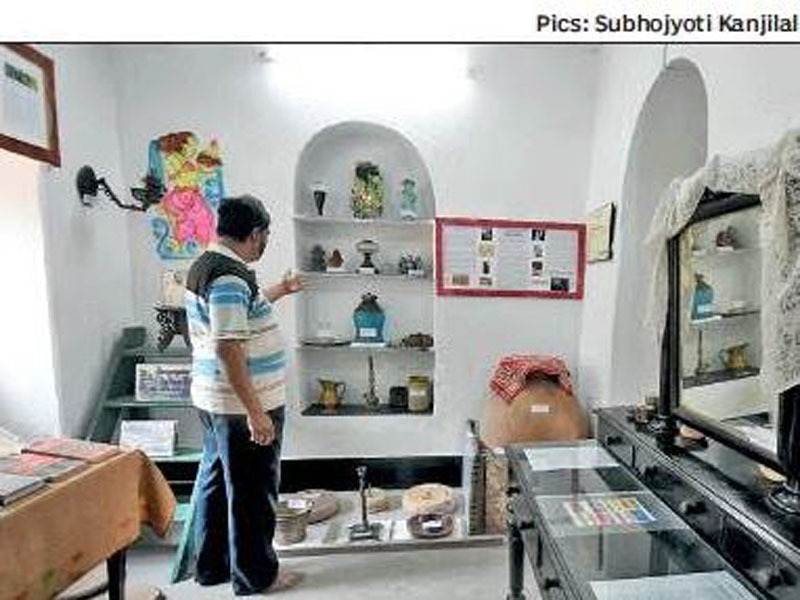
Barely a two-minute walk from the Kankurgachi crossing, beside the Bureau of Indian Standards building is the Ambedkar Bhawan Cultural Research Institute, which houses a museum divided into four sections. Run by the state government, the museum was earlier at the New Secretariat building. In 1980, it was shifted to Ambedkar Bhawan.
The cultural institute, through the four sections – Ethnographic, Puppet, Kantha and Boat – has an interesting collection that talks about Bengal and its varied cultural background.

The ethnographic section displays baskets of several tribes, tribal musical instruments, Birbhum paintings, masks and other artefacts that talk about Bengal’s ethnic milieu at length. The puppet section breaks the popular belief that Rajasthan is the only land from where puppetry originated. This section has a collection of puppets that were used to tell stories of Dakshin Rai and Bon Bibi and that of other kings who ruled Bengal and their valour. The Kantha section is also quite interesting. This section displays some of the finest examples of kantha.

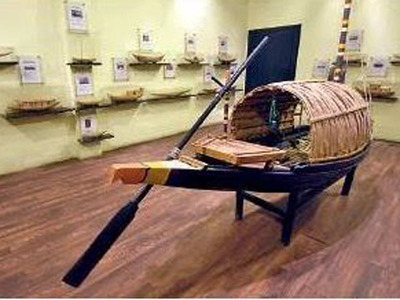
The main attraction is the boat museum, which boasts a collection of around 40 models of several boats of Bengal, used for various purposes. This section is a virtual boat-ride through a wave of stories. Through detailed descriptions about the type of boats used for specific reasons, the narratives also throw light on the areas of Bengal where the boats were used or made.

Timings 10am-5.30pm (Monday to Friday)

Entry Free

Acharya Bhawan

The museum on Acharya Jagadish Chandra Bose at his house built in 1902, beside the Bose Institute on APC Road, houses furniture used by Bose and his wife, the original instruments used by him for his various scientific experiments and his personal belongings. A request to the trustees can also take you to the attic room where Bose used to carry out his experiments.

Restored by INTACH and looked after by the Sir J C Bose Trust, Acharya Bhawan has not been changed a bit from its original glory. The trust has arduously taken the task of keeping intact the feel of the house as it was more than 100 years ago.

A section of the museum has the original chairs and the table which Bose exclusively used while interacting with his friend, Rabindranath Tagore. The museum also has the dark room and the observatory used by Bose for his experiments.

Timings 2pm-4pm (Wednesday and Friday) Entry | Free

source: http://www.timesofindia.indiatimes.com / The Times of India / Home> City News> Kolkata News / Utsav Basu / TNN / April 28th, 2018