Category Archives: Historical Links / Pre-Independence

Begum Rokeya: She gave the call for emancipation of Muslim women

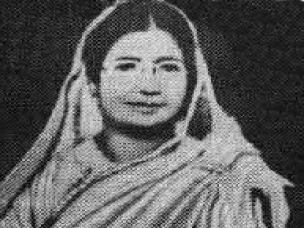
One of the rare rebellions of her time, Roquia Sakhawat Hussain is a name that echoes ceaseless struggle to bring women under the ambit of social respect and admiration. Born in 1880, this gritty and composed lady from a small village of Pairabondh in the then undivided Bengal gave her all towards cementing a respectable position of women during her epoch.

BegumRokeaMPOs29sept2014

A livid exponent of feminist movement in eastern India, Begum Rokeya conceived and implemented the idea of establishing the first school mainly aimed at Muslim girls. Issues like gender equality and women’s emancipation found a new dimension under her prudent leadership. Being the precursor of future feminist movement in India and Bangladesh, Rokeya did her bit to bolster the position of the so called ‘second sex’ in a puritanical society stuffed with orthodox ideologies.

Married off at an early age, hers was in no way a beginning worth remembering. However, the indomitable urge to stand out for a cause and be the guiding star for he contemporaries and the ages to come drove her forward.

Begum Rokeya had the funny bone as well as the tinge of sarcasm that helped her euphemism narrate real-life incidents of injustice forced upon Bengali-speaking Muslim women. She displayed enough valiance to tell it on the face of the oppressors that they are adopting immoral ways distorting version of Islam.

Oborodhbashini (“The woman in captivity”), Paddorag (“Essence of the Lotus”) and Narir Adhikar (“The Rights of Women”) are among her widely read books that openly defied restrictions on women.

source: http://www.headlinesindia.mapsofindia.com / Headlines India / Home> Social Interest News> Women / Friday – March 04th, 2011

When Mahatma saved Netaji’s revolutionaries from gallows

Mahatma Gandhi wrote seven letters to the then Viceroy of India after wife of revolutionary Haridas Mitra approached him. Haridas Mitra is the father of West Bengal Finance Minister Amit Mitra. (archive)

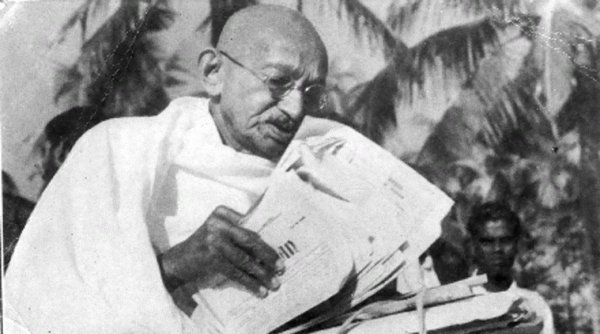
Mahatma Gandhi wrote seven letters to the then Viceroy of India, Lord Wavell, to commute the death sentence, and subsequently get released four young revolutionaries who were held guilty by the British of supplying information to Netaji Subhas Chandra Bose’s Indian National Army (INA).

The startling historical fact is just on of the many mentioned in the jail diary of freedom fighter Jyotish Basu who died in 2000. The diary has been compiled by renowned researcher Pallab Mitra in the form of a book —- ‘Phansi Theke Phire’ (Back from the Gallows) – and details the last few days of Basu at Presidency Jail where he was brought back from the gallows, just a minute before he was to be hanged.

The four revolutionaries for whom Gandhi sought clemency were Jyotish Basu, Amar Singh Gill, Pabitra Roy and Haridas Mitra. Haridas Mitra is the father of West Bengal Finance Minister Amit Mitra, and his wife Bela was the niece of Netaji.

All four were released in July-Agust 1946. While not much is known about the later life of Gill and Roy, Mitra joined Congress and later became the deputy Speaker of West Bengal Assembly. Basu spent his life in various social and cultural activities and died in 2000, at the age of 92.

As per the historians, the only known case when Mahatma Gandhi urged the British to commute the death sentence was for Bhagat Singh. The freedom fighter was ultimately hanged on March 23, 1931. “As far as we know it was in the case of Bhagat Singh that Gandhiji intervened,” says Sabyasachi Bhattacharya, historian and former chairman of Indian Council for Historical Research.

It was Jyotish Basu’s residence at 6A, Bipin Paul Road in Kolkata that the revolutionaries, then part of INA’s Secret Service, set up a communication centre. It was from this house that Basu was arrested on December 31, 1944 while other three were taken into custody some time later.

After a trial that lasted a few months, all four, lodged in Presidency Jail in Kolkata, were sentenced to death.

The book details the fearlessness of the revolutionaries. Asked if they had any last wish before they were hanged, Gill said he wanted to watched a dance recital by Sadhana Bose, while Basu said he wanted to hear Kanan Devi’s songs.

Bela Mitra, then 22, wife of Haridas Mitra, meanwhile, went to Poona and pleaded with Gandhiji to write to the Viceroy requesting for the release, or if that was not possible, commuting of sentence of all the four. A few days later, Basu’s father Ranjan Bilas Bose too met Gandhiji with the same request.

Gandhiji wrote seven letters requesting for release of first Haridas, and then the three others. All these letters have been kept at National Library, Kolkata.

In his first letter, dated September 14, 1945 and sent from Poona, Gandhiji wrote: “Shri Haridas Mitra, an MA of the Calcutta University, and the husband of Shri Subhas Chandra Bose’s young niece, age 22 years, is under sentence of death over what appears to be on untenable ground. I have perused the petition for mercy by the uncle of the condemned as also Advocate Carden Noad. I suggest that they furnish cogent grounds for exercise of mercy. In any event, the case for mercy becomes irresistible in that the war with Japan is over. It will be political error of the first magnitude if this sentence of death is carried into effect”.

“…My attention was drawn to the case by the prisoner’s wife as she has often sung at my prayer meetings when I had the honour of being a guest of advocate Sarat Chandra Bose (elder brother of Subhas Bose) who I am happy to learn from the government of India has ordered to be released”.

It was about five years ago that Jyotish Basu’s daughter told Pallab Mitra about the diary. “I consulted historians Amalendu Dey and Basudeb Chattopadhyay and then I got to know about Gandhiji’s letters. It was a wonderful revelation that because of his intervention four precious lives were saved from the gallows,” says Pallab Mitra.

Repeated calls and text messages to minister Amit Mitra failed to elicit any response.

source: http://www.indianexpress.com / The Indian Express / Home> Cities> Kolkata / by Sabyasachi Bandopadhyay, Kolkata / September 15th, 2014

Kolkata loses its favourite raconteur

Kolkata :

The morning durbars under the portico of the delightfully eccentric Fairlawn Hotel on Sudder Street have just become history. The ‘Duchess of Sudder Street’, as Vi (Violet) Smith was popularly called, will not be holding ‘court’ there anymore. And legions of her fans, as well as the galaxy of loyal customers of her hotel, will no longer be regaled by her stories about the Kolkata of yore. Smith passed away at her first-floor quarters of Fairlawn Hotel on Saturday at an age of 93.

The stories she narrated were as eclectic as her personality, and the hotel itself. One of her favourites was how Shashi Kapoor (“drop-dead gorgeous he was,” recalled Vi) met and fell in love with Jennifer Kendall. In the spring of 1965, the Kendals, who used to own a mobile theatre company called ‘Shakespeareana’, were putting up at Fairlawn and Prithvi Theatre (owned by Shashi’s father Prithviraj Kapoor) also happened to staging shows at New Empire at the same time. Jennifer had gone to watch a show there and it was “love at first sight” for Shashi, who courted Jennifer, joined ‘Shakespeareana’ and eloped with her to Bombay to get married after her father Geoffrey refused permission for marriage. The couple spent their honeymoon in Room No 17 of Fairlawn, and Vi named it ‘The Shashi Kapoor Room’.

Vi was also very fond of telling visitors about Patrick Swayze who stayed at the Fairlawn while shooting for ‘The City Of Joy’ in 1991. “He was very nice and soft-spoken. He had told me about the ranches he owned in California and New Mexico, about his wife Lisa and his childhood,” the coiffed and elaborately made-up Vi told this correspondent a couple of years ago. She was also an encyclopedia on the Calcutta of the glorious past.

Violet Smith was an Armenian whose grandfather escaped the genocide of the Armenians by the Ottomans in Turkey in 1915 and reached India through Iran and Afghanistan. Violet married Edward Frederick Smith, a British army officer, in 1944 and moved to England later, but returned in 1962 to take over the affairs of Fairlawn. Violet’s mother Rosie Sarkies had bought the property from two British ladies in 1936. The sprawling structure that houses the hotel is 231 years old now, having been constructed by one William Ford in 1783.

Vi lent her personality to the hotel she dearly loved. Stepping in through the iron gates of the hotel is like entering a green oasis set amidst the bustle of the city. A profusion of plants, mostly palms, provides an immediate soothing experience and leads to the portico where, every morning, the redoubtable Violet used to hold court. Not just the abundance of potted plants, the colour of the walls, linen, wicker and cane chairs, settees and stools, many of the draperies and even some of the crockery are green or have splashes of it. It’s Violet’s favourite colour. “Green symbolizes freshness, vibrancy and reminds one of nature,” she used to say.

Other regular guests at Fairlawn that Vi would often talk about were filmmakers Ismail Merchant and James Ivory, actors Melvyn Douglas, Penelope Cruz, Julie Christie, Felicity Kendal (Jennifer Kapoor’s sister) and Om Puri, writers Gunter Grass, Eric Newby, Dominique Lapierre, Ian Hislop and Glen Balfour-Paul, British playwright Tom Stoppard, TV presenters Dan Cruikshank and Clive Anderson, and even Gordon Matthew Thomas Sumner (Sting, for the uninformed)!

And all have paid glowing tributes to the hotel and its wonderfully charming owner Violet Smith. Lapierre went to the extent of wishing he loses his passport when he stays at Fairlawn the next time so that he can stay on at the hotel forever. Newby calls Fairlawn his “most favourite hotel”. Vi would often say her motto was to “receive tourists as guests and send them away as friends”. For her innumerable friends all over the world, Fairlawn, and Kolkata, will never be the same without Vi.

source: http://www.timesofindia.indiatimes.com / The Times of India / Home> Cities> Kolkata / by Jaideep Mazumdar, TNN / September 22nd, 2014

Oldest toy train chugs through British garden

London :

The ‘toy train’ chugging up a serpentine track through the Darjeeling hills is almost an image out of a fairy tale. But for Adrian Shooter the first look at the scene triggered a life-long love story that made him buy an entire locomotive to run in his London garden.

The world’s oldest surviving Darjeeling-Himalayan Railway (DHR) locomotive is back on track, thanks to Shooter. Smitten by the magic of a ride on the DHR (now an Unesco world heritage property) a decade and a half ago, Shooter, who retired as chairman of Chiltern Railways, bought the DHR locomotive — model number 778 — built in 1889 by Sharp Stewart and Company, Manchester, to restore it to perfect
condition.

The Indian government had sold the locomotive to Hesston Steam Museum in 1960, not realizing what its worth would be 50 years later when it was declared a world heritage by Unesco.

Shooter has also bought an Ambassador that runs by the train when it chugs through his garden to give it a feel of being in Darjeeling. He shipped the locomotive in a container from US to the steam rail workshop in Tyseley, Birmingham, where he restored it. The tracks laid in his garden over 1.5km is in the form of a loop just like in Darjeeling.

He has also built a station that looks exactly like the original Sukna station, besides laying a pathway that crosses over the tracks, exactly the way it is in Darjeeling.

In an exclusive interview to TOI, Shooter said “I bought the locomotive from the museum in Indiana, US, in 2002. It had been bought by a private individual, Mr Donnelley in 1960. He died in 1975 and it passed on to the museum after that. He was the boss and major shareholder in R R Donnelley Co, which is a very large printer and publisher in Chicago.”

He added, “I have several volunteers who help me operate the loco and we give rides to invited guests. We usually have 100-150 and do this three or four times a year. The loco is fully functional and is in excellent condition. Last winter it had a 10-year overhaul when, by law, the boiler has to be taken off the chassis, carefully examined and repaired as necessary.”

“The loco still has the original 1889 boiler and is, by at least 50 years, the oldest loco boiler in use in the UK. There are a couple of older ones in India. The reason that it has lasted so long is that it is made of wrought iron, which is much more corrosion-resistant than steel. It was obviously very well looked after during its 70-year use in India,” Shooter said.

Shooter will be in Delhi in February at the invitation of Mark Tully to speak at the Indian Steam Conference. He said, “Darjeeling Railway is very special because it climbs so high (over 7000 feet) through fantastic countryside with wonderful people. Many Britons had ancestors who lived, worked or visited Darjeeling. I still regularly come across people who went to school in Kurseong or Darjeeling. The engines themselves are of a sound design that have shown themselves to be more than capable on very steep and curvaceous railway tracks.”

Shooter, however, said he has no plans to return the locomotive to India. Britons will get a chance to ride on the train as it makes a special appearance at the North Pennines on September 26-28.

South Tynedale Railway at Alston is hosting Shooter’s train — Locomotive No. 19 — for an Indian-themed weekend of food, music and films. People will be able to ride on the train, dress like a local from Darjeeling and enjoy eastern Himalayan cuisine.

Locomotive No. 19 was withdrawn from the Darjeeling-Himalayan railway service in 1960 and, privately purchased, made its way to Indiana. In 2003, it was taken across the Atlantic to be restored by Tyseley Locomotive Works, Birmingham, for Shooter. At the same time, two replicas of DHR carriages were constructed at the Boston Lodge Works of the Ffestiniog Railway. These and the locomotive run in Adrian Shooter’s private garden railway.

India at present has 14 original DHR locomotives in working condition and 10 others on display at museums. Shooter’s train is the oldest of all DHR trains. Currently, only five DHR locomotives are privately owned, four of which are in Assam. The 778 is the only model outside India.

Indian railway expert Rajesh Agrawal said, “In the 1960s, India was getting rid of a large number of locomotives as we had more than we required. One such model was the 778. Nobody knew then that the DHR would become such a prized object. People also thought the 778 was not in working condition as it was 71 years old. A locomotive generally retires after 45 years.”

source: http://www.timesofindia.indiatimes.com / The Times of India / Home> City> Kolkata / by Kounteya Sinha, TNN / September 19th, 2014
Lost and found: Seven fascinating stories of Calcutta’s Jewish past

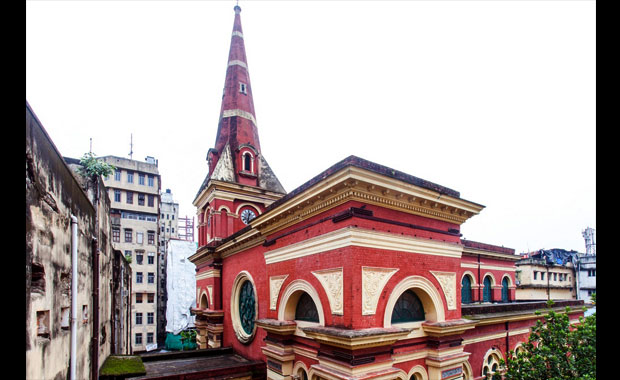
The story of the Jews of Calcutta tends to always be a story about disappearance. There are only about two dozen Jews left in the city where once they were thousands and that makes it a poignant story of loss – of shuttered synagogues without services, a Jewish Girls School without a single Jewish girl, and buildings with names like Ezra Mansion but no Ezras in them. Nahoum’s Bakery and its plum cakes are about the only real memory most Calcuttans have of their city’s Jewish history. It makes for a melancholic nostalgic story both about the vanishing Jews of Calcutta and the city’s fading cosmopolitan charm.

But Jael Silliman says when she started archiving the city’s Jewish history she did not want it to be a lament about how few Jews were left in the city. She wanted to make a different point– “it is that the time we were here was full, was good and both we and the city benefited.”

JewishCalcutta.in is less a stuffy museum of that 230-year old history and more of a digital album that tells the story through snapshots and film clips and even recipes, through marriage contracts found in auction houses and wedding dresses stored away in attics in America. Silliman conceived of the idea, secured a Fulbright-Nehru fellowship and Jadavpur University’s School of Cultural Texts and Records came on board to help create the digital archive.

“My notion of the Jewish community was from my granny and my great-grandma and they were very conservative women, very inward-looking, not politically inclined. Fuddy-duddy kind of people,” she laughs. “I thought their worlds were very limited.”

But she found to her astonishment, her community was anything but limited. She encountered the first person in India to do magic on the radio. Silent movie stars. The first mother and daughter Miss India pair. The first woman to cut a record on disc in India.

Communists and Congressis. A woman asking to be a plaintiff in court long before even Britain had female lawyers. A woman lawyer fighting for the rights of Muslim women in purdah. The “Patton” of the Indian Army. And Jewish patrons of the Bengali Star Theatre in North Kolkata. “They loved what they called ‘gaana bajana’” chuckles Jael.

The Jews of Calcutta were mostly Arab Jews from Iraq, Syria and Yemen who came to India as traders. They prospered under the Raj in that grey area between “whites” and “blacks” and left behind grand edifices recalling that prosperity. But Jael says it’s worth remembering that because so many were new immigrants, over 40 percent of the community was poor and started at the bottom of the ladder.

In a way, she says the story of her community’s success is a story about India as well. “I think only a country like India would enable a community like this, which came for such a short time, to have the kind of impact they did,” she says. And her mother Flower Silliman says even though most of the Jews of Calcutta left in the decades after Independence — unsure of their position in the new country — there’s one thing worth remembering: “At least we didn’t vanish because of anti-Semitism. India can be proud and say that the Jews left because they wanted to leave and no one told them to go.”

The Jews of Calcutta are mostly gone but here are seven of the most intriguing stories they left behind, now saved on JewishCalcutta.in.

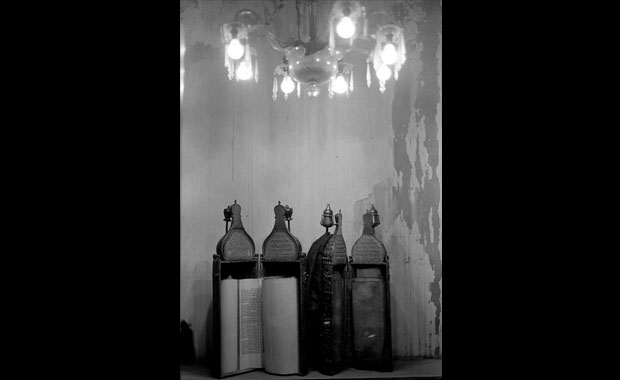
The Sefer Torah. Photo courtesy: www.sanjitchowdhury.com

The Sefer Torah is a handwritten copy of the holiest book of the Jews usually stored in the Holy Ark of a synagogue. “We used to have 80-100 sefer torahs in the synagogue. Now we only have two. At least we have two” says Jael Silliman.

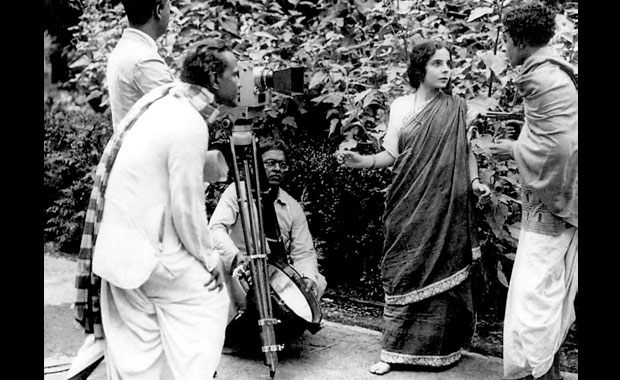
Arati Devi. Photo courtesy: Edmund Jonah

Arati Devi, a star of the silent film era was actually born Rachael Sofaer. She made three films including Punarianma: A Life Divine and A Man Condemned. She died in childbirth at the age of 35. Her cousin Abraham became a Hollywood actor alongside stars like Charlton Heston, Ava Gardner and Elizabeth Taylor.

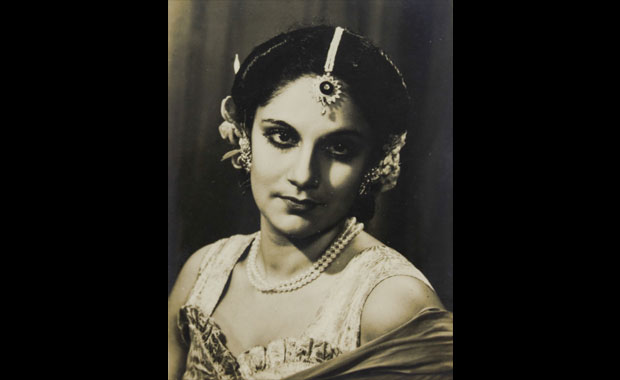
Pramila. Photo courtesy: JewishCalcutta.in

Esther Victoria Abraham was voted as Miss India in 1947. But she became more famous as Pramila, the westernized vamp with Anglicized Hindi in films like Bhikaran, Ulti Ganga and Bijli. She married the film star Syed Hassan Ali Zaidi, a Shia Muslim and converted to Islam, yet remained Jewish to the end and her children observed Passover. Their daughter Naqui became Miss India in 1967, the first mother-and-daughter pair to do so. Naqui became Hindu. One son became Wahabi. Another son Haider remained Muslim but married a Tamilian Brahmin and wrote the screenplay for Jodhaa Akbar. When Esther died at 90, her sons, Jewish and Muslim, carried her to the Jewish cemetery while prayers from both scriptures were recited.

Aloo makallah has no ingredients except potatos and oil and salt but it’s a taste of Jewish Calcutta oldtimers remember nostalgically. Flower Silliman says the keepers of the kosher rules in Jewish kitchens were often Muslim cooks. “My cook would tell me its shabbat today. You have not made such and such dish. I was not at all religious but he was,” says Flower Silliman.

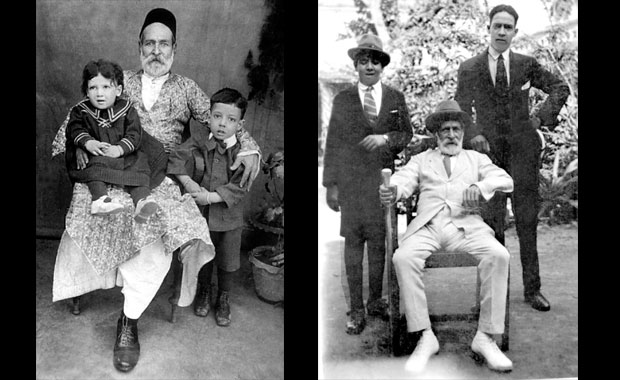
The Jonah family turns sahib. Photo Courtesy: Edmund Jonah

Mr Jonah and his sons show how the Baghdadi Jews quickly picked up British customs as they did business in India. “But he still sits like a Middle Easterner with his legs apart. So I think the transition for some of them was not so smooth,” says Jael Silliman.

Magen David Synagogue. Photo Courtesy: Ashok Sinha

There were three synagogues in Calcutta within walking distance of each other. “We used to roam from one synagogue to another. You told your father I am going to this synagogue this time. Not because you wanted to. But your girlfriend was there. Or you wanted to check out the new girl in town,” says Flower Silliman.

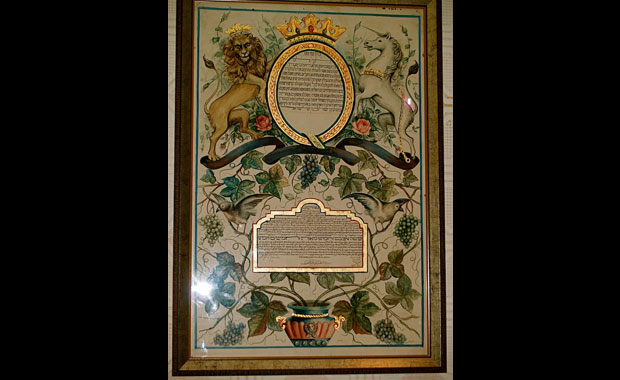
Ketuba or Marriage Contract. Photo Courtesy: JewishCalcutta.in

The elaborate Ketubas are now collector’s items. Jael Silliman was puzzled to be shown a ketuba from Faizabad which was not known to have Jews. But the project put her in touch with the family who owned that ketuba. Their forefather had gone to Faizabad to recruit railway workers for East Africa for the British in 1914. “It was like pieces of a puzzle which came together very neatly,” says Jael Silliman.

source: http://www.firstpost.com / FirstPost.com / Home> F.India> Latest News> India News / by Sandip Roy / September 13th, 2014

Nazrulgeeti legend passes away

Kolkata :

Nazrulgeeti exponent Firoza Begum, who was to be honoured with ‘Banga Bibhushan’ by the state government later this month, passed away in Dhaka on Tuesday evening. The 84-year-old was suffering from heart and kidney disease.

“She breathed her last around 8.15pm,” Bangladeshi media reports said. She had been undergoing treatment at the ICU of a private hospital. She was fitted with a pacemaker on Monday.

Mamata Banerjee grieved on social media as the news reached her on Tuesday night. “I am very sad to learn that the legendary Firoza Begum has just breathed her last. Her passing away will certainly create a huge void in the world of music and culture,” she posted.

The CM said her government had planned to confer the state’s highest civilian honour on her. “We had decided to honour her with ‘Banga Bibhusan’. She had also agreed to come to Kolkata to receive the award. But, now it’s all over,” she mourned.

Mamata recounted her last interaction with the legend by saying: “Hardly 10 days ago, we talked to each other. To me, her passing away is indeed a great personal loss. She used to treat me as a member of her family. On the last occasion of our meeting, she told me: ‘Ar ki dekha hobe? (Will we meet again?)’ Today, these words keep ringing in my ears,” the chief minister said.

source: http://www.timesofindia.indiatimes.com / The Times of India / Home> City> Kolkata / TNN / September 10th, 2014

Jewish past, digital present

A digital museum on the Jews of Calcutta is ready to go online on Monday after two years in the making.

“The archive documents the Jewish community’s contributions to Calcutta and celebrates the city where they thrived. It has taken me more than two years to curate this archive. I’m still fine-tuning it before the launch at Victoria Memorial on September 1 and have got wonderful feedback from community members across the world,” said Jael Silliman, a former women’s studies teacher at the University of Iowa and one of the members of the dwindling community in the city.

The website is a storehouse of information about Jews in Calcutta.

The community has dwindled from 6,000-plus members in its heyday to barely 20 people — mostly elderly — at present.

There hasn’t been a Jewish girl in the Jewish Girls School for about 40 years.

The Telegraph had reported last September how the community needed to include Israeli ambassador to India, Alon Ushpiz, who was visiting the city along with five other Jews, to achieve the “minyan” or quorum of 10 men needed for a formal service to celebrate Simhat Torah at Magen David Synagogue in Calcutta. It could not be held for 25 years because the community was not able to line up 10 men needed for the service.

Jews in India have branched into three main streams after the first batch arrived from West Asia in the late 18th century: the Bene-Israel (meaning Children of Israel), the Cochin Jews who prospered along the Malabar coast and Baghdadi Jews, who settled mostly in Calcutta and Mumbai.

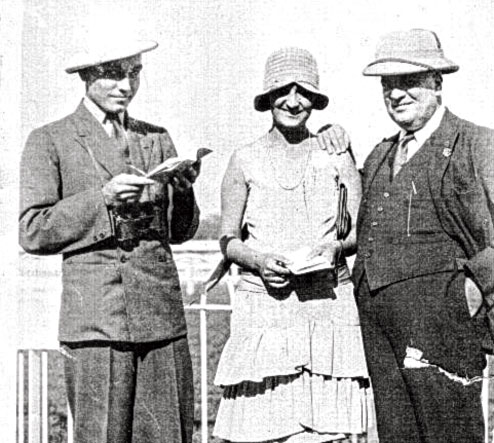
Calcutta’s Jewish community members at the Viceroy’s Cup racing derby in 1937
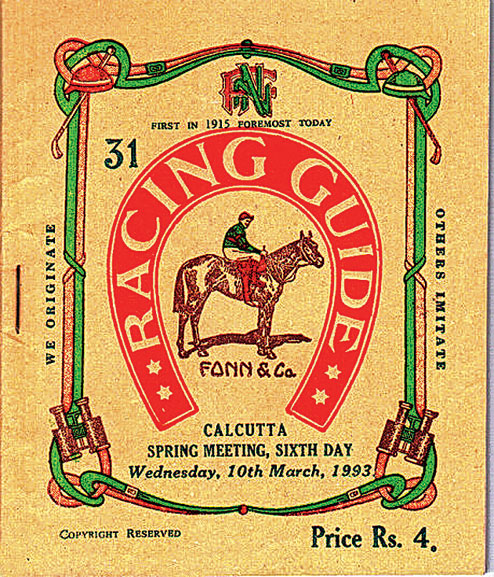
A guide to the races

The archive’s film section includes an audio-visual documentary of Jewish elders Cyril Cohen and Aaron Harazi, who passed away recently, speaking at length about their schooldays and work in Calcutta. The section offers a virtual tour of the Magen David on Canning Street and Beth El on Pollock Street — two synagogues no longer in use.

In a clip from the racecourse, Elijah Twena, an avid racer, gives an insight into the favourite pastime of Calcutta Jews.

A geniza at the Narkeldanga cemetery

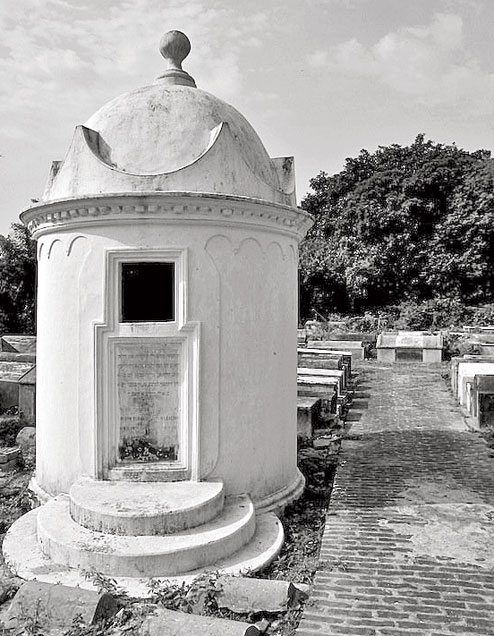
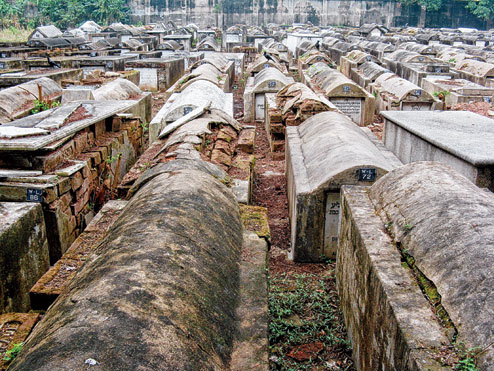
Another section talks about Jewish cemeteries in Calcutta, especially the ones at Narkeldanga.

Legend has it that the first Jewish burial ground — at 45, Narkeldanga Main Road — was “born” when Shalome Cohen, the first settler, decided to buy a plot of land for a cemetery and went about asking his friends and business associates for a suitable place. A Bengali business associate took him to a paddy field on the outskirts of Calcutta and asked if that would do.

Graves of Jewish people at 45, Narkeldanga Main Road

Shalome was delighted and told him to quote a price. The gentleman declined and offered to give the plot for free. But Shalome insisted that he must pay because the site would be used for religious purposes. The gentleman reluctantly agreed to accept “whatever Shalome wishes to give”. The settler pulled a gold ring out of a finger, gave it to the landowner and sealed the transaction.

It is assumed that Moses de Pas, an emissary from Safad, now in Israel, was the first Jew to be buried in Calcutta cemetery for the community in 1812. His grave is no longer traceable. The cemetery has a geniza too for storing worn-out Hebrew-language religious books and papers. A small private cemetery was opened in the 1870s, and closed after 20 years or so, half a mile from the main cemetery.

Other sections include maps of Jewish Calcutta, a film gallery, community portraits, music of the community recorded from Rivers of Babylon, war years and military service and their impact on the community.

The museum project is led by Jael Silliman, a former women’s studies teacher at the University of Iowa, and assisted by Amlan Dasgupta, professor at Jadavpur University. “Some of the speakers at the launch will be Amlan Dasgupta, Adam Grotsky of USIEF and Jo Cohen, who will talk about the life Jews made for themselves in the city,” said Silliman, an author of two books, The Man with Many Hats (2013) and Jewish Portraits, Indian Frames: Women’s Narratives from a Diaspora of Hope (2001).

“We’re happy to be associated with the project. It has been quite a journey and a very fruitful one. Our students have worked untiringly for the project. We’re also considering housing the material at the School of Cultural Texts and Records, Jadavpur University,” said Dasgupta.

source: http://www.telegraphindia.com / The Telegraph, Calcutta / Front Page> Calcutta> Story / by Showli Chakraborty / Monday – September 01sr, 2014

Astor revives its British heritage

Kolkata:

Gallops of horses then, dollops of history now.

Another feather will shortly be added to the city’s heritage hospitality industry as Astor Hotel opens its doors for guests.

Housed in a building that was a British barracks about a century ago, the hotel has retained the rooms of mismatching size and shape, and ironed out the colonial wrinkles with the precision of 21st Century.

“In its 120-odd years of existence, the interiors of the building never complemented its grand facade. Be it the electrical or plumbing system, it was a completely unplanned structure. A thumb-rule in construction is that a poorly-maintained building must be brought down and built over every 70-80 years,” said the hotel’s proprietor Vikram Puri.

“But with the help of the members of the heritage commission and a team from Delhi that specializes in restoring old havelis of Rajasthan, we managed to preserve the heritage elements of the building.”

Puri said the building used to be a British boarding house where soldiers would come riding on their horses and walk up the stairs to take rest in their rooms.

“What used to be the stable is now a lounge bar called Plush. We restored the same teak staircase the armymen walked up, instead of turning it into an elevator shaft. We retained the rooms with their mismatched dimensions, which gave us perfect material for a boutique hotel. A modern hotel resembles a block diagram, but here every room has a different character,” Puri said.

The guests here will use the same rooms that were once occupied by the army personnel of the imperialists, but the rooms have been fitted with modern facilities such as a big-screen television and air-conditioning.

“The main corridor of the hotel has a distinct Victorian look. But, we will adorn the walls with paintings and photographs of a century-old Kolkata,” Puri added.

To bring down carbon footprint, the hotel has done away with split air-conditioners and geysers and installed central systems. The corridor is not chilled but cool.

“This is not air-conditioned but filled with treated fresh air,” said a member of the hotel’s staff.

High ceiling, a four-poster bed and sepia-tainted lights give the suites the ambience of an era gone by. But water sprinklers, smoke detectors and Wi-Fi devices are a constant reminder of 2014.

source: http://www.timesofindia.indiatimes.com / The Times of India / Home> City> Kolkata / by Shounak Ghosal / September 12th, 2014

A lesson in history for teachers

caleidoscope

A place steeped in history recently hosted a spirited discussion on the teaching of history. Teachers, academicians and people of letters gathered to take a fresh look at the teaching of India’s Freedom Movement.

The discussion, titled Teaching the history of the Freedom Movement to young children, was organised at Victoria Memorial on August 19, part of a series of critical conversations to be held at the heritage venue in future.

Moderated by Devi Kar, the director of Modern High School for Girls, the participants included history teachers Anirban Mondal of Netaji Nagar Colony High School, Durgapur, Tina Servaia of Calcutta International School, and Amita Prasad of Modern High School and Megha Malhotra of The Seagull Foundation for the Arts.

“At least somebody is thinking of schoolteachers. The onus of making students understand the essence of history lies on us teachers and textbooks. India’s struggle for freedom is usually an emotionally charged topic. Can it be taught?” wondered Kar as she threw open the discussion.

Mondal felt history as a subject is very abstract and often incorrectly interpreted. “History as a discipline may not match with history of everyday life and what is interpreted on screen. We need to blend the two to teach the subject effectively,” he said.

Prasad stressed on making history lessons more approachable and not reducing it to a litany of dates and places. “Teaching history can be difficult, especially when children have little idea about the events. It is the task of a teacher to concretise the knowledge and make it a real-life experience,” she said.

The only non-teacher in the group, Malhotra, spoke about her foundation’s project on teaching conflict to students and how they have a pool of teachers to work with various schools.

The general consensus at the end of the discussion was that teachers need to excite students and teach them in a language they understand. “I like to mix activities. A Class XII student can be involved in an activity meant for junior classes, if it is meaningful. It all depends on the approach,” said Servaia.

The teachers went on to discuss classroom experiences and the advantages of using visuals and staging plays as teaching aids.

Angels on canvas

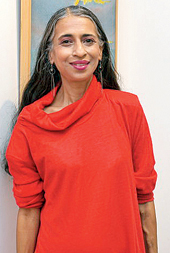
She returned to India from Israel in 2002, terribly disturbed by what she saw there and that is what inspired her to work on Angels, a collection of paintings in oil and water colour.

Rumi at her exhibition. (Rashbehari Das)

The Angels series by Rumi was part of an exhibition of her works at Chitrakoot Art Gallery.

At the opening of the exhibition on August 23, her birthday, the artist recalled how she read the Bible very seriously after she was left shaken by the Israel experience. “I wished for angels to be sent to earth and protect mankind.”

The exhibition was also a fund-raiser event for Rumi’s dialysis and kidney transplant.

“When I met Rumi at a friend’s place I had a feeling that I had come across a natural artist. Being a musician, I know what it is to be natural. The care and love in her paintings is evident. I wish her speedy recovery,” said Monojit Datta, Rumi’s friend and musician.

Ancient art

It was a world of kings, queens and love. Self-taught artist Devirani Dasgupta’s third solo exhibition, held recently at the Academy of Fine Arts, transported one to ancient India. Heavily influenced by Madhubani art and resplendent in earth colours, Dasgupta’s acrylic-on-canvas compositions tell stories of their own. “I am a surrealistic painter trying to connect the known to the unknown through the association of forms,” said Devirani.

Contributed by Chandreyee Ghose & Samabrita Sen

source: http://www.telegraphindia.com / The Telegraph, Calcutta / Front Page> Calcutta> Story / Sunday – September 07th, 2014

INDIA ON WAX – Record discs that helped defeat the British empire: Tagore sings ‘Bande Mataram’

During the freedom struggle, recordings of patriotic speeches and songs helped rally support.
PhonographKOLKATA01sept2014
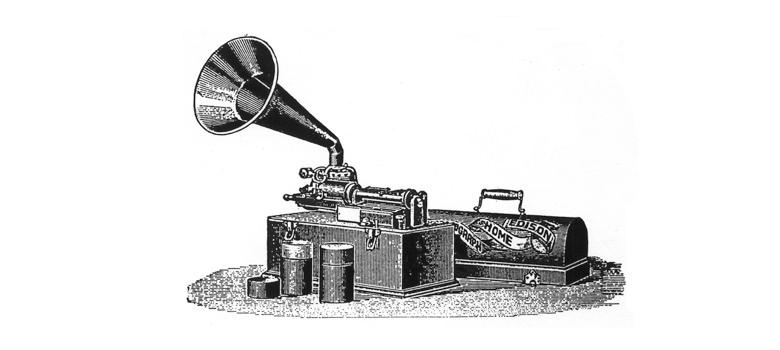
Between 1877 and 1878, Thomas Alva Edison submitted patent applications for the phonograph in many countries, including British India. It is not known when these patents were granted, but it is known that in December 1878, the first phonograph recording was demonstrated in Kolkata.

For the next 30 years, recordings on the phonograph cylinder became quite popular, remaining so even in the early years of disc records.

Many members of royal families and wealthy people bought cylinder phonograph machines and recorded musicians and religious personalities. The Maharajah of Khetri recorded Swami Vivekananad’s speeches and discourses much before he went to America and gave his famous talks on religion. The internet is full of versions of his celebrated speeches.

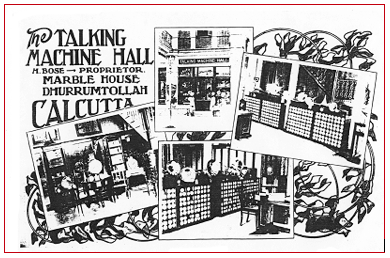
Hemendra Mohan Bose (1864-1916) opened the Talking Machine Hall in Kolkata, a shop where one could get one’s voice recorded. Bose was a sound recording expert and also had an agency to sell Edison and Pathe brand phonograph machines. Many great writers, poets and political leaders would visit him and he would record their recitations and speeches.

A 1906 catalogue lists several cylinder recordings of Rabindranath Tagore. Unlike disc records, cylinders could not be reproduced for sale. Most of these cylinders have been lost. Some museums have broken or damaged copies of cylinders as artefacts but no audible sound can be extracted from them.

TagoreAdsKOLKATA01sept2014
During agitations against the partition of Bengal in 1905, H Bose recorded many political speeches and songs, such as Bande Mataram, both on phonographs and disc records, and they became very popular. But his factory and shops were sealed, machines and discs destroyed ruthlessly by police. As a result, nothing has survived today except a very short piece from Bande Mataram, sung by Tagore.

Recording experts from Beka, a German company, were in Kolkata in November 1907. The British government went about destroying all nationalistic material, whereas the German company was the first to record a political speech right under the nose of the British.

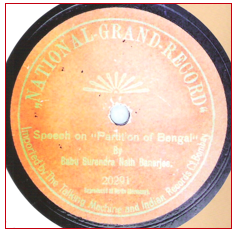
The National Grand Record label had a saffron disc with a rising sun as the logo. On it was recorded a speech by Babu Surendranath Banerjee, on the partition of Bengal. The flipside of this unusual 78-rpm disc has a speech on Bande Mataram.
DiskKOLKATA01sept2014

The man responsible for producing this disc was Sir Abdul Halim Guznavi, a political leader and agent for the Beka record company in Kolkata. Only few copies have survived. We have the image of the label only but no access to the audio file of this historically important recording.

We welcome your comments at letters@scroll.in.

source: http://www.scroll.in / Scroll.in / Home> All News / by Suresh Chandvankar / August 15th, 2014