Category Archives: Historical Links / Pre-Independence

LANDMARK MOMENT – Eden Gardens turns 150

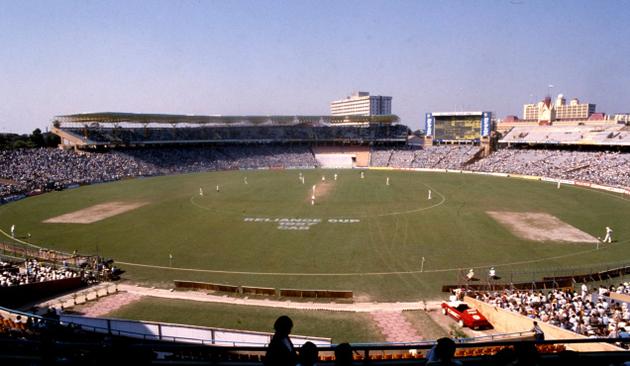
A panoramic view of the Eden Gardens ground during the match between New Zealand and Zimbabwe during the Reliance World Cup 1987. / The Hindu Archives

The heroes of the first test victory at the historic venue came together to mark this milestone

The duo of former cricketers Salim Durani and Chandu Borde — architects of India’s maiden test victory at the Eden Gardens – Thursday came together to launch a book marking the 150 years of the iconic cricket stadium.

The launch of “Eden Gardens, Legend & Romance”, penned by former Bengal cricketer Raju Mukherjee, was part of series of events by the Cricket Association of Bengal (CAB) to mark the occasion.

The book covers the entire journey of the ground, which came into existence as the Auckland Circus Gardens named after the then governor—general to its modern day existence.

The celebrations by the CAB included launch of a special gold coin, felicitating 150 oldest members of the CAB as well as the M.A.K. Pataudi Memorial Lecture by former India great V.V.S. Laxman.

Taking a trip down memory lane, Durani and Borde who scripted India’s memorable 187 victory against England in 1961—62, regaled tales of their association with Eden – which they described as dream ground of every cricketer.

Durani said he become a cricketer only because of the Eden Gardens where he first played as a school cricketer in 1949.

I wouldn’t have been cricketer but for Eden Gardens where my performances help me get into the Ranji team and then in the national team. Playing at Eden along with Lord’s is dream of every cricketer. There remains an emptiness if you haven’t played here,

“I wouldn’t have been cricketer but for Eden Gardens where my performances help me get into the Ranji team and then in the national team. Playing at Eden along with Lord’s is dream of every cricketer. There remains an emptiness if you haven’t played here,” said Durani.

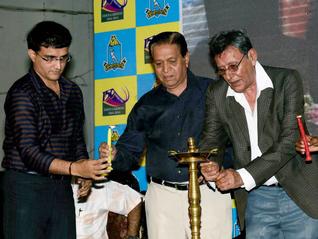
Former Indian Cricket all-rounder Salim Durani and Chandu Borde with Sourav Ganguly, light the lamp, celebrating 150 years of Eden Gardens in Kolkata on Thursday. / PTI

On the occasion, “Eternal Eden” a documentary chronicling the historic journey of the ground which besides cricket greats of several generations, witnessed football legend Pele in action in 1977 playing for the New York Cosmos against Mohun Bagan in exhibition tie.
Talking about his memories of the ground, Borde singled out the appreciative but intimidating Eden crowd.

“Playing against Bengal at the Eden Gardens always used to be challenge besides being a good team they had backing of the crowd which was intimidating for the opponents,” said Borde who said the crowd turning riotous during the 1966–67 West Indies tour has remain etched in his memory.

“The way West Indian players were running back to the team hotel, they must have broken several Olympic records,” said Borde with a chuckle.

Several former cricketers including ex–India captain and CAB joint secretary Sourav Ganguly were also present on the occasion.

source: http://www.thehindu.com / The Hindu / Home> In Schoom> Sports – Landmark Moment / by IANS / October 20th, 2014

Old Paulites rally to hills

Darjeeling :

St Paul’s School will turn 200 in another nine years. But it is time now for the institution to mark another milestone.

The school may have been raised in Calcutta, but most feel it is only when it moved to the mountains, and Jwalapahar on particular, that the school acquired its halo and high ground. Rather literally.

Some 300 Old Paulites have converged at this favourite tourist destination to celebrate 150 years of their school’s coming to the “Burning Mountain”, a name believed to have been acquired from the explosion of flaming rhododendrons that used to bloom there.

Over the next three days, Paulite Forever, as the celebrations have been christened, will see former students from round the world and as far back as the early fifties reliving their school days and sharing space with the current crop and teachers.

“The Quad”, “Dawkins”, “Lower Field”, “Dorms”, “Prep Hall”… Words that meant the many nooks and corners of boarding life in one of the premier institutes of the country will come alive once more for them.

Men who have moved on to their many distinguished paths will shed all that for school blazers, flannels, grey suits and the many little things that made life at what used to be a boarders-only school. “Several Darjeeling schools have this legacy of the British education system. But, St Paul’s was a little more into the British way than the others,” gushed film distributor and entrepreneur Arijit Dutta shortly after checking into a hotel at Darjeeling on Wednesday evening.

“You see, we looked down upon others from our perch high above Darjeeling town,” joked the 1983 pass-out.

As the first whiff of winter grips this hill town and the heavy woolens come out, the month-long cultural festival on the Mall nears its end and the hotels prepare for off-season discount offers, the Paulite party is set to begin. The nippy air is thick with a sense of anticipation.

“It will be a terrific reunion,” added an Old Paulite.

source: http://www.timesofindia.indiatimes.com / The Times of India / Home> City> Kolkata / by Arup Chatterjee, TNN / October 30th, 2014

Bengal just got older by 22000 yrs

AyodhyaKOLKATA22oct2014

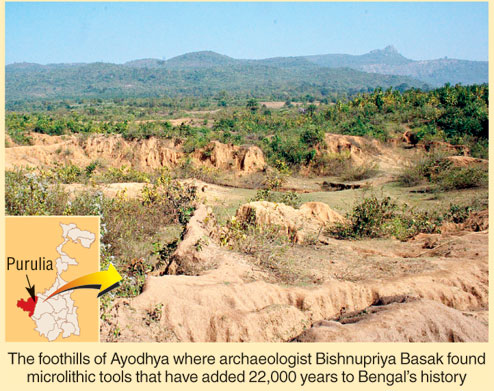
Multi-disciplinary research led by a city-based archaeologist has confirmed the presence of humans in the Ayodhya hills of Purulia about 42,000 years ago, a finding that pushes Bengal’s archaeological calendar 22,000 years back.

Bishnupriya Basak, who teaches archaeology at Calcutta University, sealed the findings after more than 12 years of intensive exploration and excavation of 25 stone-age sites she had discovered between 1998 and 2000 while working with the Centre for Archaeological Studies & Training, Eastern India.

The breakthrough came when Basak, 47, returned to the forests of the Ayodhya hills in 2011 to build on her findings using a technique called Optically Stimulated Luminescence (OSL) that establishes the antiquity of tools of a particular age.

Before Basak’s discovery, the earliest evidence of human presence in Bengal was at Sagardighi, in Murshidabad. The tools found there were dated to approximately 20,000 years ago.

“This is an extraordinary development and a breakthrough in the otherwise hazy chronology of eastern India. It marks a welcome trend in research. In this day and age, multi-disciplinary initiatives are indispensable,” said Gautam Sengupta, former director-general of the Archaeological Survey of India.

In the subcontinent, the earliest evidence of microlith-using cultures — hunter-gatherer populations that made and used the types of light stone implements found in the Ayodhya hills — is in Metakheri, Madhya Pradesh. They date back to 48,000 years ago.
BishnupriyaKOLKATA22oct2014

Microlithic tools found at Jwalapuram, in Andhra Pradesh, are from 35,000 years ago and those discovered in Sri Lanka are from 25,000 years ago.

Basak’s discovery was reported recently in the fortnightly research journal Current Science (Vol. 107, No. 11687).

The 47-year-old had conducted part of her research under police protection in the midst of Maoist insurgency in the region, her bold quest yielding 4,000-odd microlithic tools from excavation sites at Mahadebbera and Kana alone. Mahadebbera is located 500 metres northwest of Ghatbera village, in the catchment area of the Kumari river. Kana is around the same distance northwest of Ghatbera.

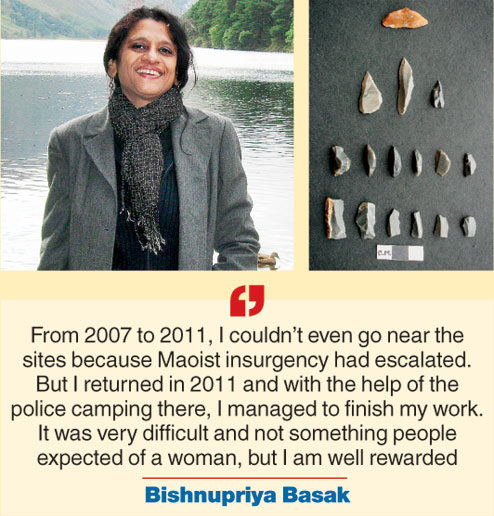
“From 2007 to 2011, I couldn’t even go near the sites because Maoist insurgency had escalated. But I returned in 2011 and with the help of the police camping there, I managed to finish my work. It was very difficult and not something people expected of a woman, but I am well rewarded,” Basak told Metro.

The experts who collaborated with Basak include S.N. Rajguru, a veteran geo-archaeologist who formerly taught at Pune’s Deccan College, Pradeep Srivastava and Anil Kumar from the Wadia Institute of Himalayan Geology, Dehradun, and Sujit Dasgupta, formerly of the Geological Survey of India.

Current Science states that the microlithic tools excavated from the colluvium-covered pediment surface in Kana are from “42,000 (plus or minus 4,000) years before the present” and “between 34,000 (plus or minus 3,000) and 25,000 years before the present in Mahadebbera”.

In the subcontinent, most microlithic sites are reported from alluvial context, sand dunes or rock shelters. There are very few late Pleistocene colluvial sites. Colluvium is the material that accumulates at the foot of the hill ranges — a mix of sediment, gravel and pebbles, all brought down the hill slope through natural gravitational flow. When they form a stable surface, as in the Ayodhya hills, they are a good location for prehistoric populations to settle.

According to geoarchaeologists, the Ayodhya discoveries hold the key to research in several fields, from environmental studies to palaeontology.

“The OSL technique we used helps date sediment samples in which the tools occur to a time they were last exposed to the sun before burial or sealed by later deposits. Our samples were collected from 0.50-1.85 metres below the surface in specially-made steel/iron cylindrical tubes, making sure no light entered the trench during the process. In most cases, we had a plastic black sheet covering the top of the trench and the samples were usually collected early morning or around dusk,” Basak said.

Metakheri had been dated using the OSL method while the tools found in Jwalapuram required dating through a technique called AMS radiocarbon dating. Since there was no presence of carbon in the Ayodhya samples, the OSL method was the only reliable option, Basak said.

The samples had been first sent for pre-treatment and chemical analysis to the Wadia Institute of Himalayan Geology, where senior scientist Pradeep Srivastava dated them as belonging to the Late Pleistocene period, roughly in the bracket of “42,000-25,000 years before the present”. The rocks from which these tools had been made were identified by the Geological Survey of India as “chert and felsic tuff”.

At Sagardighi, a team led by the late Amal Roy had found microliths made of agate, chert, chalcedony and quartz. They were not scientifically dated, though. The antiquity of the tools was assumed to be 20,000 years ago on the basis of geological factors.

Subrata Chakraborty, professor of prehistory at Visva-Bharati, said accurate dating had long been a problem in Bengal because of inadequate infrastructure.

“There is no institutional set-up for accurate scientific dating in Bengal.”

The 4,000-odd Ayodhya microliths include blades and backed tools. Micro blades are small — maximum length up to 4cm — parallel-sided tools that are very sharp and suitable for cutting. Backed microliths are those that are further retouched and attached to bows, arrows and spears to hunt small animals and birds.

An intriguing facet of the discovery is that no trace of the raw material used in these tools was found in the near vicinity, suggesting that the early hunter-gatherers had travelled quite a distance to get their stones. Such instances are, of course, not uncommon even among living hunter-gatherers.

Geo-archaeologist Rajguru said the Ayodhya discoveries had opened a whole new chapter in Bengal’s history.

“We can, for instance, assert that Bengal was very much a part of the climatic changes during the last glacial period. So far it had been assumed that Bengal was always humid with plenty of rainfall. Now we have evidence that the whole of the Rahr region also experienced the dry climate that was caused by the period’s peak in glaciation. We also know that the sea level must have been lower by about 100 metres.”

Rajguru, who has been a mentor to Basak, added: “Let this instance of sustained perseverance in the face of all odds and collaboration of skills and expertise across boundaries be an example and encourage many others to follow suit.”

What message do you have for Bishnupriya Basak? Tell ttmetro@abpmail.com

source: http://www.telegraphindia.com / The Telegraph, Calcutta / Front Page> Calcutta> Story / by Sebanti Sarkar / Tuesday – October 21st, 2014
Curry King brings 14 new marinations

Kolkata :

Marination, that familiar method of flavouring and tenderizing food by coating them in a seasoned, and often acidic, liquid prior to cooking, lies at the core of a cuisine, lending character to the dish even as it provides a signature of the region. When Barbeque Nation, the casual dining chain which has an outlet at Sector V, decided to broaden the menu on their live on-the-table grill, not many could have fitted the bill better than Pat Chapman.

The Englishman, a chef, food writer, broadcaster and author, has a strong Indian connection and, perhaps more importantly, a passion for her cuisines. The Curry Club, which the London-born chef founded back home, has not just helped many a Brit take that bold leap from the bland to the spicy but has had them delve deeper into Indian cuisines.

“I’m not here to teach Indian marination to the chefs here; they know that better than me. But I do know the Indian palate,” said Chapman, who has brought 14 different marinations from round the world to add to what was being put on the table in the DIY (do-it-yourself) menu before the main buffet. “Putting the grill on the table is a fantastic concept and we don’t have it as yet in Britain,” added the 73-year-old, who had seven generations of his family living in India since 1715.

“My mother was born in Mhow and she was a terrific cook. She taught me and I have been cooking Indian food since I was eight,” said Chapman, who has earned sobriquets like ‘Ambassador of Indian food’ and ‘Curry King’ from British food reviewers. The man who has authored 36 recipe books with cumulative sales of over 1.5 million copies reminded that he has had no formal training as a chef. “But I’ve worked hard and learnt from so many of them. These chefs are my gurus,”
he added.

Giving a ‘demo’ of three of the marinations he has brought here — a Lebanese-Arabian coating of broccoli, a Thai preparation of Basa fish and Jamaican Jerk chicken — Chapman pointed out that the essence of marination is tenderizing for penetration of the flavours and that acid helps do that.

“Marination works particularly well for starters. Indian and Middle-East starters use it very cleverly,” he said. “In my view, Indian is the best food in the world. The curry is a wonderful thing, the food of a nation,” he added, and pointed to the phenomenal spread of Indian cuisine in the UK.

“I came to India for the first time in 1965 and have been here some 43-44 times since then; my wife Dominique has been here about 20 times. The visits have been more frequent since the 1980s, when I started The Curry Club. I bring groups and have them meet chefs here. Most members are British but we have Americans and people from other regions on board too,” he said. “Indian food is addictive. When I was a kid, garlic had to be bought from the chemist in the UK. Now you get it everywhere. Every region of India is represented in London through its restaurant and they are all doing well.”

Yorkshire Lamb, Spanish Valencia Prawns, English Mushrooms, Persian Veg Patties, New Orleans Corn, Mexican Veg Shashlik… As the skewers were laid on the table grills for the gastronomes to baste them in Vinegar Chili, Lemon Butter or Oriental Garlic to add that sheen of personal preferences, Chapman went around for the interactions. As the items disappeared quickly from the plates in the company of barbeque, tartar and mild mustard sauces, the beaming Englishman would have known he had connected well with the Indian palate.

source: http://www.timesofindia.indiatimes.com / The Times of India / Home> City> Kolkata / by Arup Chatterjee, TNN / October 18th, 2014

Book to renew Kolkata’s tie with Wajid Ali Shah

Kolkata :

“It’s the only book I’ve read twice. And my favourite line is ‘life can’t be divided into chapters’,” mused Shahanshah Mirza, great-great-grandson of Wajid Ali Shah, referring to ‘The Last King in India’ by Rosie Llewellyn-Jones. The British historian has made waves by compiling facts about the legendary nawab whose memory still divides opinion.

Rosie smiled: “Thanks for helping me investigate the mind of the last king. The British opposed him because they wanted to take his kingdom. Mirza nodded: “You’ve dealt with his seclusion rather well.” He thought the agony associated with the annexation of Awadh is well portrayed in the book.

Rosie begins with a chapter following this act, when the nawab’s mother travels to petition Queen Victoria for justice. Unknown to her, the Queen had no power to return Awadh. The bleak start sets the tone for the book — the British duplicity, with the king caught between forces over which he had no control.

For inputs, Rosie has watched ‘Shatranj Ke Khilari’ “several times”. “Ray did a lot of research,” said Rosie. “When Ray met my father in 1978, he was asked if it was easy getting Amjad Khan into Wajid’s skin. He had said ‘Amjad was blinking a lot. When a ruler is angry, he doesn’t blink. His eyes are wide open’,”
said Mirza.

Rosie’s Kolkata connect goes a long way — since she found Mirza on the royal family website in 2004. “I came here and we did a lot of research together,” she said. The cover is a painting of the nawab which belongs to Mirza’s relative Sultan Ali Sadiq.

Rosie pointed out: “In nearly all his pictures, the king has his left breast exposed.” Mirza explained: “I guess the poet in the nawab wanted to show that his heart was always open.”

The book will be unveiled for the third time on Sunday after a London launch in June followed by another such ceremony in the nawab’s very own Lucknow last month. “Now it is Kolkata’s turn and we had to have Shahanshah,” said Rosie. Mirza has given Rosie inputs on the king settling down in Metiabruz (or Metiaburj, which literally means a clay tower). An old watchtower had once stood there, guarding the Hooghly river bend, giving the place its name.

“The book shows that even 127 years after his death,
Wajid Ali Shah, who himself authored 117 books (Rosie found some of them at the London Library), is still a subject of interest.”

The king contributed greatly to Kolkata’s culture. Kathak and kite-flying were introduced by him. He opened a menagerie which attracted a lot of visitors. According to Rosie, the king tried, within his limited resources (he had to live off a pension given to him by the British), to recreate a miniature Lucknow in Garden Reach-Metiabruz where he lived his last 31 years. He brought with him the music, the poetry, the cuisine, the adab that had made Lucknow under him the byword of culture and etiquette.

“His Calcutta stay changed many aspects of its social life. The British failed to fathom (deliberately) the love that he enjoyed from his subjects,” said his great-great-grandson.

The British, who deposed him to Calcutta in 1856, could hardly accept a ruler who believed that his subjects singing his songs was enough guarantee that he was seen as a good ruler. “Do Queen Victoria’s subjects sing her songs?” Satyajit Ray makes Wajid ask his chief minister in ‘Shatranj Ke Khilari’, thus capturing the differing notions of kingship.

source: http://www.timesofindia.indiatimes.com / The Times of India / Home> City> Kolkata / by Ajanta Chakraborty, TNN / October 12th, 2014

City organization wins US ambassador grant to document folk music

Kolkata :

After seven years, a Kolkata-based organization—Banglanatak.com—has won a prestigious grant from the Ambassador’s Fund for Cultural Preservation (AFCP) 2014 for their project “Documentation of Bengal folk music genres Bhawaiya, Bhatiali, and Bangla Qawwali”. The city chapter of Indian National Trust for Art and Cultural Heritage (Intach) was the last to win the grant in 2007 for restoration of the Lalgola project in Murshidabad.

Announcing the grant award to Banglanatak.com at the American Centre on Friday, director Joanne Joria expressed hope that the documentation of three music genres would help preserve and popularise them again. Musicians of all three genres performed on the occasion.

According to Banglanatak.com founder director Amitabh Bhattacharya, the project will document and preserve folk music traditions—Bhawaiya songs of North Bengal, Bhatiali songs of Sunderbans in South Bengal and Bangla Qawwali of Kolkata, Nadia, and Murshidabad that are fast losing ground to other modern forms of entertainment and being pushed to the point of near extinction.

An initiative by the Bureau of Educational and Cultural Affairs of the US State Department, AFCP supports preservation of cultural sites, cultural objects, and forms of traditional cultural expression in more than 100 countries around the world. AFCP-supported projects include the restoration of ancient and historic buildings, assessment and conservation of rare manuscripts and museum collections, preservation and protection of important archaeological sites, and the documentation of vanishing traditional craft techniques and indigenous languages.

“By taking a leading role in efforts to preserve cultural heritage, the US shows its respect for other cultures,” Joria explained.

The last time a Kolkata organization won this grant was in 2007 when the Indian National Trust for Art and Cultural Heritage (INTACH) won the grant for restoration of the Lalgola project in Murshidabad.

source: http://www.timesofindia.indiatimes.com / The Times of India / Home> City> Kolkata / TNN / October 17th, 2014

UK minister’s city date with WW I, football & museum

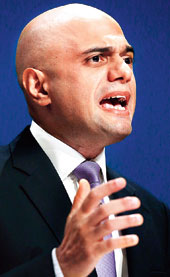
Sajid Javid, Britain’s culture minister and one of the rising stars of British politics, is to set foot in Calcutta on Monday.

Javid, 44, whose formal title is Secretary of State for Culture, Media and Sport and who is a full member of David Cameron’s cabinet, was the subject of a very positive profile last month in the Daily Mail.

The paper’s right-wing columnists normally make a living by putting the boot into immigrants but for Javid, the long headline read: “Could Sajid Javid be Britain’s first Asian Prime Minister? His parents arrived here with just £1, yet he’s now a minister. That’s why this man believes immigrants are natural Tories?”

JavidKOLKATA13oct2014

So who is Sajid Javid and what’s he doing in Calcutta?

Javid will have a busy day in Calcutta where he will host a reception. The day will begin early with a First World War Centenary Commemoration at the Commonwealth War Graves Cemetery. More than a million Indian soldiers fought for Britain in the First World War.

This will be followed with the launch of the community football development programme for girls under the Premier Skills Kolkata Goalz Project at Alipore Bodyguard Lines on Diamond Harbour Road.

He will then introduce the UK-India joint report at the Museums Round Table at the National Library.

For many years now, the British have been training staff in Indian museums. Privately, they say that Indian Museum is a wonderful place but it badly needs sorting out.

For the second part of his visit, Javid will go to Delhi where he will deliver a keynote speech at a UK-funded Cyber Governance Security conference; meet a number of ministers; and also attend a session at the British Council with young Indian creative entrepreneurs and Indians who have studied in the UK.

As culture secretary, he is chairman of the special advisory group supervising the erection of a statue of Mahatma Gandhi in Parliament Square, ready for unveiling on January 30, 2015.

A first-time member of parliament, elected in May 2010, Javid’s political rise has been swift.

After stints in the treasury as economic secretary and financial secretary, David Cameron brought him into the cabinet in April 2014.

He had previously been a banker for 18 years, working in senior positions in New York for Chase Manhattan, and later in Singapore for Deutsche Bank.

Javid’s father, Abdul-Ghani Javid, and mother, Zubaida, came to Rochdale in the north of England in the early 1960s from a village background in Punjab in Pakistan. The couple had five sons — Sajid is the third.

Abdul-Ghani initially worked in a cotton mill, then moved to the buses, first as a conductor and then a driver. By the time the family moved to Bristol, he had started a business in women’s clothes, with Zubaida doing the cutting and stitching at home.

Unlike P.G. Wodehouse’s creation, the bully Roderick Spode, 7th Earl of Sidcup, whose guilty secret (rumbled by Jeeves) was his ownership of a firm dealing in ladies’ lingerie, the culture secretary is quite happy to poke fun at himself: “I think it’s fair to say that I know more about ladies’ clothing than any other male MP!”

Abdul-Ghani, who died of cancer two years ago, planted the seeds of his son’s political thinking.

In the “winter of discontent” in 1978, when rubbish was not being cleared and even bodies were piling up in mortuaries because of trade union unrest, his father saw hope in Margaret Thatcher.

“She will be good for the country,” Abdul-Ghani told his son, then nine. “She’s got steel. She’s the one who is going to sort out the country.”

“And, of course, she did,” asserted Javid, who keeps a portrait of the late Lady Thatcher behind his office desk.

As culture secretary, his mission is to make enjoyment of cultural activities accessible to everyone in society — “I believe that culture is for everyone.”

Not just the ethnic minorities but the poorer sections of society, too, may feel they have now got a champion in Javid who added with quiet determination: “And when I say everyone – I really do mean everyone.”

Javid himself has a quality not always obvious among folk from the Indian sub-continent — he does self-deprecation.

“Self-deprecation is a good thing,” he grinned, looking completely relaxed in his 6th floor office on Parliament Street. “Don’t take yourself too seriously.”

When he addressed the most powerful and somewhat precious men and women in television at the Royal Television Society in September, he disarmed everyone by recalling his school days: “If life had taken a different turn I could have been part of the TV industry myself. My careers adviser at school told me I had a bright future working in television.”

He got the timing right with a little pause.

Then came the punch line: “Delivering them at Radio Rentals for repair.”

source: http://www.telegraphindia.com / The Telegraph, Calcutta / Front Page> Calcutta> Story / by Amit Roy in London / Monday – October 13th, 2014

Victoria Memorial Hall collections to find place in Google’s digital storehouse of art

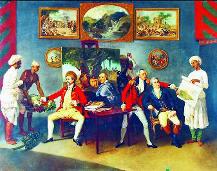
The painting titled 'General Claude Martin and his Friends' or 'Colonel Polier with his Friends' depicts Colonel Antoine Polier, Claude Martin, and John Wombwell with the painter himself, Johann Zoffany (1733-1810), in the background, being waited on by Indian servants, probably in Lucknow around 1786-87.
The painting titled ‘General Claude Martin and his Friends’ or ‘Colonel Polier with his Friends’ depicts Colonel Antoine Polier, Claude Martin, and John Wombwell with the painter himself, Johann Zoffany (1733-1810), in the background, being waited on by Indian servants, probably in Lucknow around 1786-87.

Kolkata :

The Victoria Memorial Hall’s collections will find a place in the largest-ever digital repository of exhibits and collections on a global platform created by Google. Apart from Victoria, some others on the list are Metropolitan Museum of Art and Museum of Modern Art in New York, British Museum, National Gallery and Tate Gallery in London, Musee d’Orsay in Paris, Acropolis Museum in Athens and Hiroshima Peace Memorial Museum.

Victoria Memorial curator Jayanta Sengupta told TOI that the museum and its finest collection of art and artifacts are expected to join the Google Cultural Institute, a cyber platform created by Google Art that enables users to view high resolution images from various museums and even compile their own digital collection. It is fast emerging as an invaluable resource for researchers as they can have access to objects from museums across the world and learn about art objects, their history and artists at the click of a mouse.

“A team from Google will reach Kolkata with sophisticated video and still cameras to film the museum and photograph the 120-odd highlights. Of these, they will select one item and photograph it with high-definition gigapixel camera so that it can be magnified online without distortion. Once the exercise is over in a couple of months, a virtual tour of the galleries at Victoria Memorial will be created and the images uploaded on Google Cultural Institute,” said Sengupta.

Victoria Memorial signed a memorandum of understanding with Google Art in February 2013 and has been communicating with the team since. The museum has sent the list of 120 items it considers the best among its collection of 33,000+ objects of art apart from the 10,000+ small objects like stamps.

Though the Google team is at liberty to select any one of the 120 objects listed by Sengupta’s team as the museum’s highlight for the gigapixel photography, the curator has suggested a painting titled ‘General Claude Martin & his Friends’. The painting that has an alternative title ‘Colonel Polier with his Friends’ depicts Colonel Antoine Polier, Claude Martin, and John Wombwell with the painter himself, Johann Zoffany (1733-1810), in the background, being waited on by Indian servants, probably in Lucknow around 1786-87.

“We have suggested the painting by 18th century German neoclassical painter because it is intricate. There are six paintings within the painting that can be enlarged and viewed in detail when photographed in a gigapixel image,” explained Sengupta. Other paintings that make the cut are ‘Bharat Mata’ and ‘Passing of Shah Jahan’.

Among the other objects in the highlights shortlist are oil paintings by Thomas and William Daniel, Abanindranath Tagore and Gaganendranath Tagore, a 1964 copy of the Ain-e-Akbari manuscript, Persian translation of Aristotle’s treatise Six Principles of Ethical Life and commentary by Dara Shukoh as well as his Persian translations of Gita and Upanishad, Aurungzeb’s personal Quran, Tipu Sultan’s dagger, Maharaja Ranjit Singh’s sword and Queen Victoria’s piano.

“Once Victoria Memorial Hall joins the others on the Google Cultural Institute website, all objects that comprise the museum highlights will be there for the world to see and experience online. We have been working on documenting each object, detailing the history, the artist and its relevance. We are currently in the final lap of that exercise and expect to be on the website by this yearend or early next year,” said Sengupta.

source: http://www.timesofindia.indiatimes.com / The Times of India / Home> City> Kolkata / by Subhro Niyogi, TNN / September 07th, 2014

Film history to come alive near Tolly studio para

Kolkata :

The Mamata Banerjee government will set up an eight-storey film centenary museum in Kolkata where film artefacts and memorabilia have mostly been at the disposal of private hands.

The archive, which will be a treat for both film lovers and researchers, will come up at Tollygunge, not too far away from the studio-para and its associated industry, Tollywood.

The museum project, meant to mark 100 years of Indian cinema and the “golden age” of Bengali cinema, will maintain a record of films released down the ages. The proposed ‘Cinema Centenary Campus’, as it has been christened, will have a built-up space of 60,000 square feet. It will be equipped with state-of-the-art galleries and lighting systems. “We shall try to complete the project at the earliest,” said PWD minister Sankar Chakraborty.

The state information and culture department is preparing a list of films to be acquired for the project. Another list of restored films, which will be transferred into negatives, is also being chalked out.

Starting off as a ready reckoner of the history of cinema, especially Bengali cinema, the museum will trace the evolution of celluloid from the Lumiere brothers to Raja Harishchandra and beyond, and showcase Indian and Bengali cinema through three principal eras — silent, golden and modern.

The multi-storey structure, which will come up at the erstwhile Radha Studio complex beside M R Bangur Hospital, will have a basement for parking. The PWD has taken up the construction. The fire services department has also been roped in for a thorough fire prevention network.

A senior PWD official said: “We are doing the project for the information and culture department. Films have been a powerful tool for communication and filmmaking has emerged as the strongest creative force.”

The biggest attraction of the project will be a library that will document film history right from the era of silent movies to those of the digital age. Space has been reserved to construct guest rooms for visiting film artists, directors and technicians, a cafeteria, a curio shop and an auditorium. While inaugurating the renovated century-old Technicians’ Studio in February this year, the chief minister had expressed her intention to create an exhaustive film museum. She apparently got the idea from the 6,000-square foot National Museum of Indian Cinema set up by the Union ministry of information and broadcasting in Mumbai. However, Banerjee’s plans are on a much bigger scale. The centenary campus will hold film-related seminars and workshops, apart from regular film shows.

Vaults will be installed in the proposed museum with state-of-the-art temperature and humidity control systems for preserving colour and black and white films. Visitors will also be able to watch old classics on a number of monitors or listen to rare film music from the past — a sort of free jukebox.

A two-storey building for film studies that existed on the Radha Studio campus on Deshpran Sashmal Road at Tollygunge is now being dismantled for the construction of the film centenary museum.

The erstwhile Left Front government first conceived the idea of a cinema centenary building in 1995. A two-storey building on the premises of the historic Radha Films Studio was constructed to implement this idea in 1998. But the project ran into administrative snarl-ups and financial crunch and has remained a non-starter.

source: http://www.timesofindia.indiatimes.com / The Times of India / Home> City> Kolkata / by Ajanta Chakraborty, TNN / October 07th, 2014

Heroic turban to be on display at Victoria

Maharaja Nandakumar was hanged by the British 240 years ago

: With his head held high, he faced the wrath of the mighty British Raj when he raised allegations of corruption against India’s first Governor General Warren Hastings. Now, more than 240 years after Maharaja Nandakumar was hanged in 1775, the turban that adorned his head will be put on display at the Victoria Memorial Hall in Kolkata.

Some historians have described the hanging of Maharaja Nandakumar, primarily a revenue officer under the Nawab of Bengal, as one of the first ‘judicial murders’ in the country.

“Decorated with a straight zari ribbon, light brown and cream in colour, the turban was purchased by the Art Purchase Committee of the Victoria Memorial Hall in 1984 from Gauri Shankar Roy of Murshidabad,” Jayanta Sengupta, Secretary and Curator of Victoria Memorial Hall told The Hindu.

This rare textile artefact will be put up on display in October, VMH authorities said.

With an aim to preserve the turban and other textile artefacts, in December 2013, the VMH had organised an in-house workshop in which international textile conservation expert Jamie Lightfoot had participated.

Although, Nandakumar had assisted the British during the Battle of Plassey (1757), he generally was hostile to the British, historians have said.

It was in 1775, a year after Warren Hastings became Governor General of India that Nandakumar accused him of having accepted bribes from the nawab and others. However, Nandakumar himself was in turn accused by Hastings of conspiring to coerce a third party to make the bribery accusation against him.

This charge against the revenue collector was soon dismissed, but in an unrelated case an accusation of forgery was brought against him. Despite the fact that the person who had levelled the charges against him was an Indian, Nandakumar’s case was judged under British laws where forgery was a capital punishment. A newly established British court at Kolkata sentenced him to death.

“Maharaja Nandakumar was publicly hanged on the banks of the Hooghly at Kidderpur at a place known as Collie Bajar,” Sankar Kumar Nath, who has worked extensively on the history of Calcutta told the Hindu.

Pointing out that Sir Elijah Impey, the presiding judge who imposed the death sentence on Nandakumar, was a close friend of Warren Hastings, Dr Nath, an oncologist by training, said that eminent statesmen like Edmund Burke and Lord Thomas Babington Macaulay had described Nandakumar’s hanging as a ‘judicial murder’. Dr Nath also pointed out that the turban is an artefact of great significance as Nandakumar’s story can actually be called one of the early acts of rebellion against the British rule, and heralded one of the most important periods of British history in India.

source: http://www.thehindu.com / The Hindu / Home> News> Cities> Kolkata / by Shiv Sahay Singh / Kolkata – September 29th, 2014