Category Archives: Historical Links / Pre-Independence

Eyewitness accounts

BoseBrothersKOLKATA30apr2016

A journey through the Indian independence movement of the 1920s through an illuminating collection of notes, letters and personal correspondence

Author Madhuri Bose, granddaughter of Sarat Chandra Bose (elder brother of Subhas Chandra Bose) and daughter of Amiya Nath Bose, takes the reader through the most important period of the Indian Independence Movement of the 1920s by reproducing the personal correspondence between the Bose brothers — notes and information collected mostly from her father who was an eyewitness to happenings during the crucial years of freedom struggle. She declares in her introduction, “this is not a biography of the Bose Brothers but based on family perceptions, insights and analyses of the roles of the key personalities, with a focus on Sarat and Subhas over the three decades from the early 1920s”.

The story is told mostly from the view of her father and his notes. Chapter 1 describes Amiya’s close connection with the Bose brothers, though they are physically separated. The narration is both informative and highly touching. She talks of the time Subhas was detained on January 2, 1932.

For a few months, he was allowed to stay with his brother Sarat in prison, but was shifted to Madras penitentiary where he became ill. He was then transferred to Bhowali in Northern India when the seriousness of illness was recognised. Subhas was then sent to Europe — by train to Bombay and then aboard a ship to Vienna on February 22, 1933. The authorities allowed young Amiya to accompany Subhas from Calcutta to Bombay. It was then that Subhas showed Amiya the copy of his hand written thesis on Hindustani Samyavadi Sangha that he had written during his Madras detention. Incidentally the contents were discussed with three members of Comintern (Communist International) later by Subhas in Vienna.

Chapter 2 deals with the difficult time faced by the family when the brothers were under detention by the British. In 1921, 24-year-old Subhas had returned from London after declining to join the Indian Civil Service and joined the movement for freedom.

While interned in Mandalay jail, Subhas wrote Pebbles on the Seashore, a collection of stray thoughts.

The third chapter deals with his reaction to Gandhiji’s suspension of the Non-Cooperation movement and the starting of a new daily with C.R. Das as editor and Sarat as Managing Director.

Chapter 4, the most important chapter of the book, deals with parting of the ways between Gandhiji and the Bose brothers. Copies of telegrams are reproduced here, indicating the beginning of the divide. On January 31, 1939, Gandhiji wrote of the defeat of his candidate Pattabhi Sitaramaiyya and concluded that he rejoiced at the victory of Subhas “. . . after all, Subhas Babu is not an enemy of his country.” In a lengthy letter, Sarat addressed Gandhiji on the prevailing condition in the Congress and how unhappy he was by the turn of the events.

However, at a later date, Gandhiji asked Amiya to convince Sarat to join the Congress again, and Amiya, in hindsight, felt that Sarat could have played an important role had he re-joined the Congress then.

More recent past is explained in the chapter ‘Partition — a Bitter Pill’. Sarat was to write later, “Gandhiji’s acceptance of Rajaji’s formula is nothing short of a tragedy in India’s political life.”

The epilogue deals with all principal characters of the book and it is heart-rending to read some of the letters. The book closes with a touch of disappointment in Amiya’s feeling of not being able to realise his father’s dream.

K.R.A. Narasiah is a writer and historian.

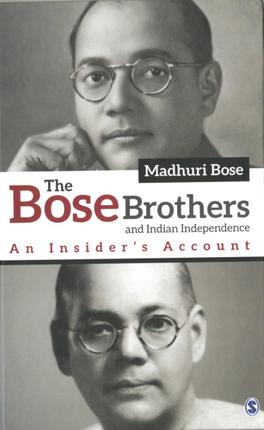
The Bose Brothers and Indian Independence: An Insider’s Account; Madhuri Bose, Sage Publications, Rs. 750.

source: http://www.thehindu.com / The Hindu / Home> Books> Literary Review / by K.R.A. Narasiah / April 30th, 2016
Flower power pushes Kolkata Jewish population up by 1

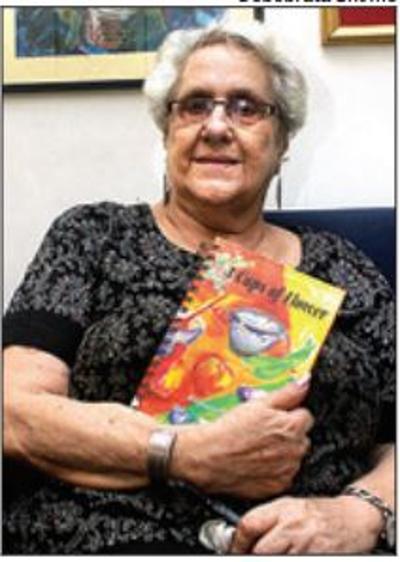
CHRONICLER OF TASTE : Flower Silliman

Kolkata :

For 30 years, Flower Silliman lived abroad, keenly observing and recording Jewish life in the Middle East, Europe and the US.

Now, the 86-year-old is back in the city she was born taking the community count up by one. And, she has taken upon herself the onerous task of keeping the authentic Jewish flavours alive for her nine-member strong community. Yes, you read it right: nine.

Demographers put the strength of the Jewish community in the city at less than 20, but the members are rather strict about who they call “pure”. Those that have married “outside” the community are strictly not “pure” Jews.

“I have come back to the city because this is where the Jews have lived most safe and free, but unfortunately , this is where our numbers have dwindled the most…but I am keeping the flame alive,” she says.

Silliman also happens to be among the last keepers of the community’s ancient recipes and has decided to chronicle the unique tastes for posterity.

“Even the food that Jews here have today is not what we are permitted by our religion. There’s so much of mix and match that most of the authentic cuisine that is over 5,000 years old and has its roots in the Middle East, is lost. I am trying to keep the tradition alive by documenting the recipes and rustling up dishes for feasts,” says Silliman.

Jewish food is special because Jews just can’t eat cause Jews just can’t eat anything and everything, Silliman says.

Their food -kosher -has to abide by strict dietary laws which not only lay down what is forbidden but also the process of cooking, the ingredients and the kitchen specifications. Kosher, for example, does not permit meat to be mixed with milk or milk products.So, neither can you mix the two while cooking, nor can you consume milk or milk products after having meat.

Flower Silliman says: “Judaism has a great similarity with Hinduism so far as its antiquity and dietary specifications go.

It’s another matter that most followers of both religions have drifted away from these guidelines… perhaps because they have often found it difficult to cope with such restrictions. I am not saying this by way of criticism, but the fact is that cuisines, and even cultures, become extinct because of such interpolation.”

A traditional sit-down Jewish feast on Friday night can ideally start with beet khatta with koobah (beet soup with chicken or vegetable balls), followed by Jewish roast chicken, which is different from the European roast in the kind of marinades and spices used. “The authentic Jewish roast will be far milder, both in flavour and sharpness, compared to the European roast,” Silliman says.

Kosher allows Jews to only have fish that have scales, and not those with shells (prawns, crabs or lobsters). “So you have items like fish shoofta, which is minced fish skewers. Vegetable lovers have choices like vegetable mahashas, which is stuffed tomatoes and capsicum.But the magic is in the recipe for the stuffing. The authenticity of the dish is heightened when served with aloo makalla (a special potato fry), hulba (a sort of fenugreek, mint and coriander chutney) and cucum ber zalata. Another speciality is mutton or vegetable ingree -a layered meat dish baked with brinjals, tomatoes and potatoes -not unlike the Greek moussaka, but without dairy to keep within kosher limits,” Silliman explains with the lucidity of an expert.

And why not? While abroad, Silliman served as a souschef at the Plaza in Jerusalem and launched the world’s only kosher Jewish restaurant, Maharaja.

She taught cooking and ran masterchef shows in US and London and authored two books. “I have come back to Kolkata because this is where the Jews have lived most safe and free, but unfortunately , this is where our numbers have dwindled the most… but I am keeping the flame alive.”

source: http://www.timesofindia.indiatimes.com / The Times of India / News Home> City> Kolkata / by Jhimli Mukherjee Pandey / TNN / April 29th, 2016

Armenia still lives in the heart of Kolkata

City’s 195-year-old Armenian school had a near-death experience when its student body shrank to one. But it has now returned to life, thanks to immigrant students.

What Parsis were to Mumbai, Armenians were to Kolkata -a refugee race that washed up on Indian shores before the British, and proceeded to establish iconic businesses and institutions that live to this day.One such in Kolkata is the Armenian College and Philanthropic Academy (ACPA), nearly two centuries old.

Built in 1821 as a residential school for children of Armenian descent, ACPA was founded by two Armenian merchants, Astvatsatur Muradkhanian and Manatsakan Vardanian who hailed from Julfa (now in Iran). The school was founded to impart an `Armenian’ education to its students, in their language, and about their culture.

In the early 19th century, the Armenians were a prominent business community in Kolkata that ran coal mines, indigo and shellac businesses, and built some of the city’s famous landmarks, including Stephen Court on Park Street and Grand Hotel (today Oberoi Grand).

But after the British quit India, so did most of the Armenians, who migrated abroad. Half a century ago, Kolkata’s Armenian population dwindled to just 2,000, vanishing still further to leave behind only around 150. Two of these Indo-Armenians are counted among the 68 students currently studying at the school; the rest are immigrant Armenians from Iraq, Iran, Russia and Armenia.

The school -in whose original building novelist William Makepeace Thackeray was born -has had its ups and downs. Its student body shrank and expanded -going from 138 in 1932, to 149 in 2003, and even plummeting to a solitary student in 1990, perhaps marking the most trying year in the school’s long history.

In February 1999, a Calcutta high court ruling transferred the school’s administration to Armenia’s Mother See of Holy Etch miadzin, the administrative headquarters of the Armenian Apostolic Church. It is now the Pope of Armenia who appoints the school manager.

“Since the institution’s guardianship was vested with the church, the school has maintained its standards and a minimum number of students,” said Rev. Zaven Ya zichyan, manager of Armenian College and pastor of the Indian-Armenian Spiritual Pastorate.

Following the transfer of power, the first batch of 34 immigrant students reached Kolkata from Iraq, Iran, Russia and Armenia -sent here for the free education and boarding provided by the school. Often, Armenian families in places like Iraq and Iran send their children here even as they plan to migrate to the West, the school be coming an interim harbour for their children. ACPA now routinely invites the diaspora abroad to enroll their children here.

In the run-up to their 200th year celebrations in 2021, Rev. Yazichyan has been at tempting to revive the institution. Among the ambitious projects is the preservation and digitization of the Araratian library, set up in 1828 and named after Mount Ara rat, the place where Noah’s Ark landed after the Flood. Other efforts include the creation of a databank of all Armenians from Kolkata (the last was created in 1956) and for malassociations with other international educational organizations.

To retain a cultural identity , ACPA teaches Armenian history , language and religion.

On visiting the campus on Free School Street (some say it got its name from the free Armenian school), the students seem content. Hovhannes Saringulyar, who teach es Armenian history, says, “If they miss their parents, they talk to them on Skype.”

Incidentally , the school also provides boarders with a free passage back home once every three years.

source: http://www.timesofindia.indiatimes.com / The Times of India / News Home> City> Kolkata / Ajanta Chakraborty / TNN / April 24th, 2016

Sparks fly over museum ashes

Kolkata:

More than 25 days have passed since the Centenary Heritage Zoological Museum was gutted and now there seems to be a series of allegations and counter-allegations being thrown about within the zoology department.

On Monday, Ena Ray Banerjee, who heads the Immuno Biology and Regenerative Medicine Research Unit of the zoology department in Calcutta University and was in charge of the museum since 2012, alleged that not only were some of the partially charred specimens lying under lock and key under high temperature and humidity, but even those exhibits which could have been recovered may now be lost

She further pointed out that the fact that skulls and skeletons have just been kept in a room by the department shows a degree of apathy towards a world-class heritage museum. “It’s an irony that on the World Heritage Day, instead of celebrating the natural history heritage we have inherited, the department chose to keep the partially damaged, rescue-worthy, ancient, rare and even extinct animal specimens in a room at a temperature which was over 40 degrees last week. The high humidity is also detrimental for the specimens because fungal contamination can set in very quickly,” Ray Banerjee said.

The former museum head also said that the collections are now exposed to vehicular pollution from the Ballygunge Circular Road towards which the rooms’ windows are open.

“It does not have air-conditioning. It is a practical laboratory table on which the specimens are strewn indiscriminately and they are also handled by bare hands. The fungal bacteria will decay the flesh, denature the protein, preempting any proteomic studies. The nucleases present on human hands will destroy the nucleic acid, forbidding DNA bar coding of the specimens,” she alleged.

Citing a letter from senior scientist Alan Warren of the Natural History Museum in London, Ray Banerjee said, “In his letter, Warren has categorically mentioned that there is an optimum condition in which such archival specimens must be stored. But over the past 25 days there is no such attempt.”

“While the decay progresses in a linear manner in the first few days, once it sets in, the growth is exponential and the flesh is irreversibly lost taking with it valuable information of a time gone by. Science and technology would have been able to decode the information, but in the absence of proper preservation this will be impossible.”
“The specimens which were over 90% burnt and yet DNA barcoded for the database are capuchin monkeys, Hhwler monkeys, spider monkeys, three-toed sloth, marmoset and a giant squirrel. The south Asian river porpoise, whose skull with skin had remained, is out of bounds for anyone. It may also have been lost,” she said.

Some of the other exhibits which are reportedly threatened with destruction due to being locked under inappropriate conditions are the skulls of royal Bengal tigers. These were partially burnt. “But the bone has been damaged by the huge temperature fluctuation which took place after the fire broke out. Hundreds of old, ancient bones from several animals were stacked together in a shelf, which were being restored and sorted. Sadly, these now lie covered with cement and plaster dust, which is corrosive,” the museum head said.

“The ZSI has done a preliminary survey and has given a list of around 10 specimens which can be recovered. Those exhibits have been kept separately. On Tuesday, a team will again visit us at the Ballygunge Science College campus. A process to rebuild the museum is on. Where will we keep the exhibits? We have asked for a larger space at a suitable location from the university authorities. The museum was not for public display and was only dedicated to academic teaching and learning. She has made a number of claims, which do not have much foundation. She is no longer the head of the museum, which has now been placed under the HOD’s custody,” said Parthib Basu, HOD of the Zoology department of CU.

source: http://www.timesofindia.indiatimes.com / The Times of India / News Home>City> Kolkata / April 19th, 2016

Oldest NGO finds a new home after a century

Kolkata:

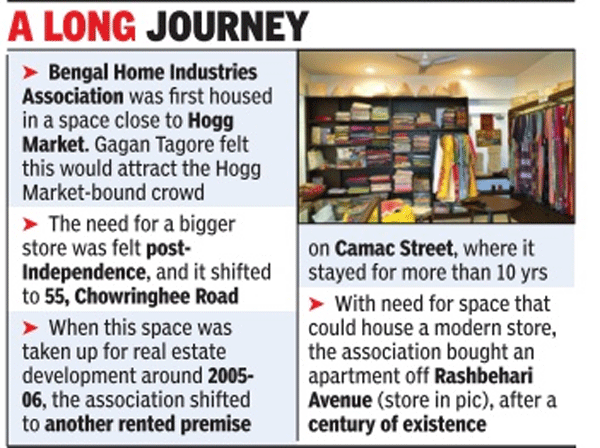
After 100 years, the Bengal Home Industries Association has finally moved into its own home.

Founded in 1916 by a group of intellectuals to give a boost to the swadeshi movement, the association had to run around from one rented place to another all these years. Touted as the country’s first NGO to promote Bengal’s handloom and handicraft, the association has bought its own outlet and reinvented itself to be in tune with the changing times.

The swanky outlet off Rashbehari Avenue is now ready to compete with other pan-India brands that promote handloom and handicraft. The focus has changed too: items for sale have been designed as lifestyle products to attract the urban cli entele. There is no shift from the basic theme of promoting village products, only that they are more stylish now.

In 1914, Rabindranath Tagore’s nephew, a prominent master of the Bengal school himself, Gaganendranath Tagore and his brother, Aba nindranath Tagore, along with some friends like Burdwan Maharaja Bijoy Chandra Mahtab and the royal family of Coochbehar, formed the association as a symbol of swadeshi. The idea behind forming the Bengal Home Industries Association was that it was not enough to just reject foreign goods but to also encourage our own weavers and craftsmen to make indigenous products. The association’s job was two-pronged: to network among village craftsmen and collect and sell their products.

The artist duo of Gaganendranath Tagore and Abanindranath Tagore added value and novelty to the products, making them a hit even with the elite clientele.

One such patron was Carmichael Duck. The story goes that Lady Carmichael -wife of the then Bengal Governor -who was close to members of the association, asked Gaganendranath to create some interesting designs that could be used on blocks. “Gagan Tagore created a motif of a duck created out of a simple geometric pattern.The design became popular overnight and was used widely for block printing on scarves, stoles and sarees,” said Nandini Mahtab, the “queen” of the Burdwan royal family and a member of the association.

OldestNGOkolkata13apr2016

The Bengal Home Industries Association has tied up with Banglanatak.com, a revivalist organization that is working on indigenous tangible and intangible art forms in Bengal. It is helping the association to use art forms, such as `patachitra’, on textiles to make lifestyle products like cushion covers, throws, runners and even tshirts and trousers.

The association was famous for items like its Portuguese cutwork and shadow work and a unique weave called Roshanara, which is created by mixing rayon and cotton yarn. “We have once again trained our artisans in these arts. While the Portuguese cutwork in home linen is available in our new store, Roshanara will make its entry any day now,” Mahtab added.

source: http://www.timesofindia.indiatimes.com / The Times of India / News Home> City> Kolkata / by Jhimli Mukherjee / April 11th, 2016

Indo-Danish collaboration revives St Olav’s from ruins

Serampore:

The bells will again chime, the ancient clock tick and hymns resonate through the air as the 210-year-old St Olav’s Church is Serampore rises like a phoenix from the ruins.

St Olav’s Church of Fredricksnagore, as the Danes called Serampore, is being restored back to its former glory, with the first service being slated for April 16.

After decades, people will pray inside the 210-year-old church that has risen like phyoenix, not from ashes, but from ruins. St Olav’s of Fredricksnagore (as the Danes called Serampore) has been restored back to its former glory.

If the former Danish colony, which administered Serampore from 1755 to 1845, boasted of a landmark, it was St Olav’s, which was built from 1800 and opened to the public in 1806. Now, it is an example of one of the most successful conservation projects in the country.

A part of the “Serampore Initiative”-launched by the National Museum of Denmark (NMD) in 2008 with the revival plans for the former Danish colony monuments-the restoration of the church began in January 2015.

The Danes started building the church in 1800 and finally opened it in 1806., as a relic of the time when the Danish ruled Serampore.

From a distance, the church’s magnificence is not quite visible. But as one walks into the narrow alley, the majestic steeple of St Olav’s church which would be the identity of the Danish settlement on the banks of the Hooghly centuries ago-towers over. The clock in the tower is getting the finishing touches, symbolic of the eras gone by, and the ones to come.

But the grandeur of the project-now touted as a major collaboration India-Denmark collaboration-can be truly perceived only after entering the compound.

Bente Wolff, curator of NMD, to attend the historic moment of reviving the church, sounded excited: “The church looks new, not in the flashy sense, but in its authenticity. Very high standards of international restoration protocol are maintained. We are proud of the fruits of our hard labour.”

She recalled how Danish historian Simon Rasting and architect Flemming Aalund had meticulously conducted the pre-project social survey, hunting through archives in India and Denmark for original designs and photographs as part of the scientific analysis.

“Doing this in our own country would have been easier, but we loved the challenge and how all the stakeholders, especially the locals, helped us achieve this,” said Rastin, adding the project would not have been possible without the craftsmanship of Aalund and conservation architect Manish Chakraborti, chief conservation architect for the project and director of historic buildings conservation firm Continuity.

“St Olav’s can serve as a model for conservation projects,” said Chakraborti. “The restoration was carried out after thorough research.” for adopting an appropriate strategy executed with utmost care.”

Ashis Mukherjee, proprietor of Mascon, who is executing the project, said, “The greatness of the project lay in the filigree work, strictly carried out with lime and mortar.” Everything, from piecing together the almost-shattered marble tablet of J S Hohlenberg to recreating the timber of the roof-it collapsed in 2003 -that has been replaced with steel beams, polishing the church bells with ‘Frederiksvaerk 1802’ inscribed on them to restoring the original Burma teak furniture, is noteworthy.

History of St.Olav’s Church

‘Governor’ Ole Bie – born in Norway, buried in Serampore , Between 1755 and 1845 Serampore was administered by Denmark under the name Frederiksnagore. Until 1814 Denmark and Norway formed one kingdom

The longest sitting head of Serampore’s Danish government was the Norwegian Ole (Olav) Bie. During his service from 1776 to 1805 Serampore grew nto a prosperous town. In 1800 Ole Bie began the construction of a Lutheran church for Serampore’s Protestant citizens.

Originally planned as a simple three-aisle building with a flat roof, the church was later enlarged with an open portico in front, and a vestry and a spiral staircase behind the altar.

The church was completed in 1806, but Bie died in 1805 and never saw the final result.

An epitaph honouring his achievements can be seen in the Church together with five other commemorative tablets. Olav was a Norwegian saint, but it is not known when the name St. Olav’s Church came into use.

source: http://www.timesofindia.indiatimes.com / The Times of India / News Home> City> Kolkata / by Ajanta Chakraborty / TNN / April 07th, 2016

Lessons of life on 22 yards – The bat stands for intellect and the ball weaknesses of the mind. Brinda Sarkar tunes in

If cricket is a religion, Sachin Tendulkar is God

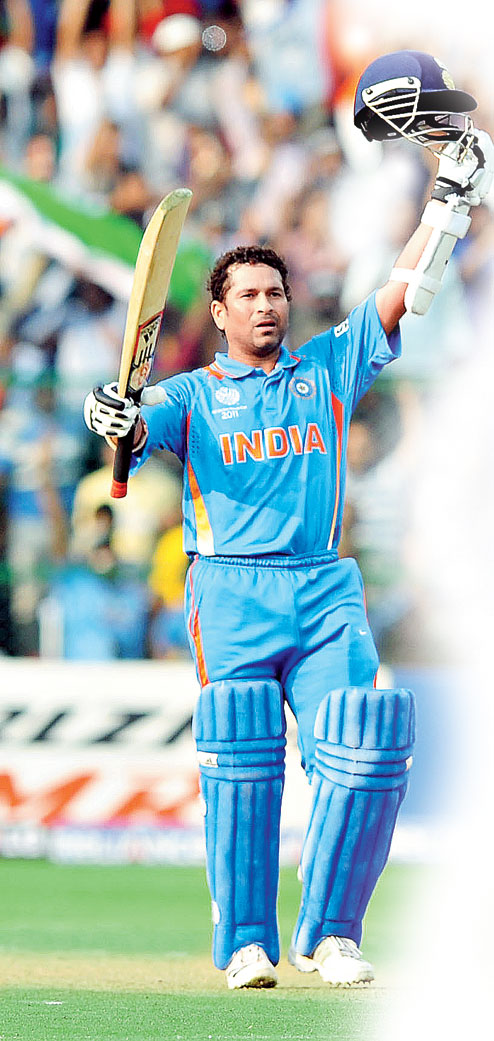
More than Vedanta, cricket is a religion in India. It unites the country and Sachin Tendulkar is god,” began L. Ramaswamy, of the Vedanta Academy, as the audience broke into titters.

Ramaswamy was addressing a gathering at Bharatiya Vidya Bhavan and the audience comprised members of IIT Kharagpur Alumni Association, Salt Lake Chapter. The association was hosting the meet in collaboration with Bharatiya Vidya Bhavan and the topic for discussion was “Vedanta and cricket”.

Life, he said, is a lot like a game of cricket. “Cricket is a batsman-centric game. The batsman wants to score but every ball coming at him tries to get him out. The ball symbolises the weaknesses of the mind. The way the ball can be slow, fast, spin or swing the mind can be overcome by emotions like lust, anger, greed, jealousy etc and they can get us ‘out’,” Ramaswamy explained.

The batsman only has one weapon — the bat — which symbolises a person’s intellect. “The mind is like a river trying to overflow with emotions but if the banks (intellect) are strong the river will reach its destination as well as nourish the land it passes. But if the banks are weak the river will flow off course, flood and destroy wherever it flows.”

The cricket ground is like our life, he explained. For instance, the crease is our spiritual discipline and the fielders are the sense objects trying to get us “out”. This happens if we fall prey to the temptations of our sight, taste, touch etc. The runner is our only friend and this symbolises “satsang” or getting together for spiritual development. It is with the help of the runner that the batsman at first starts scoring singles. It is later, after he is set that he aims for fours and sixes to increase his run rate.

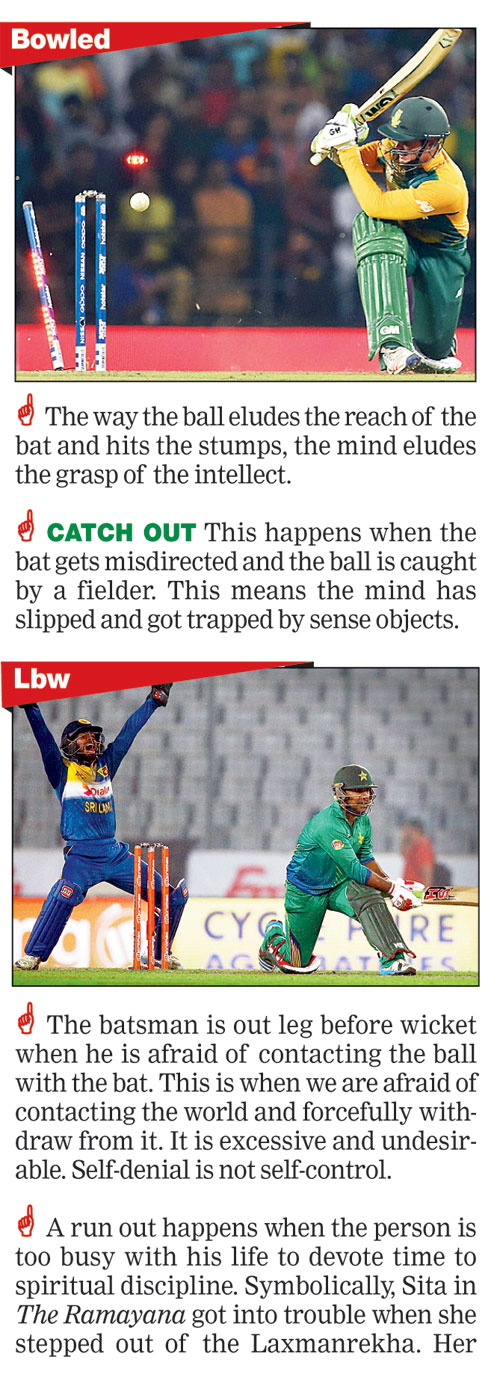
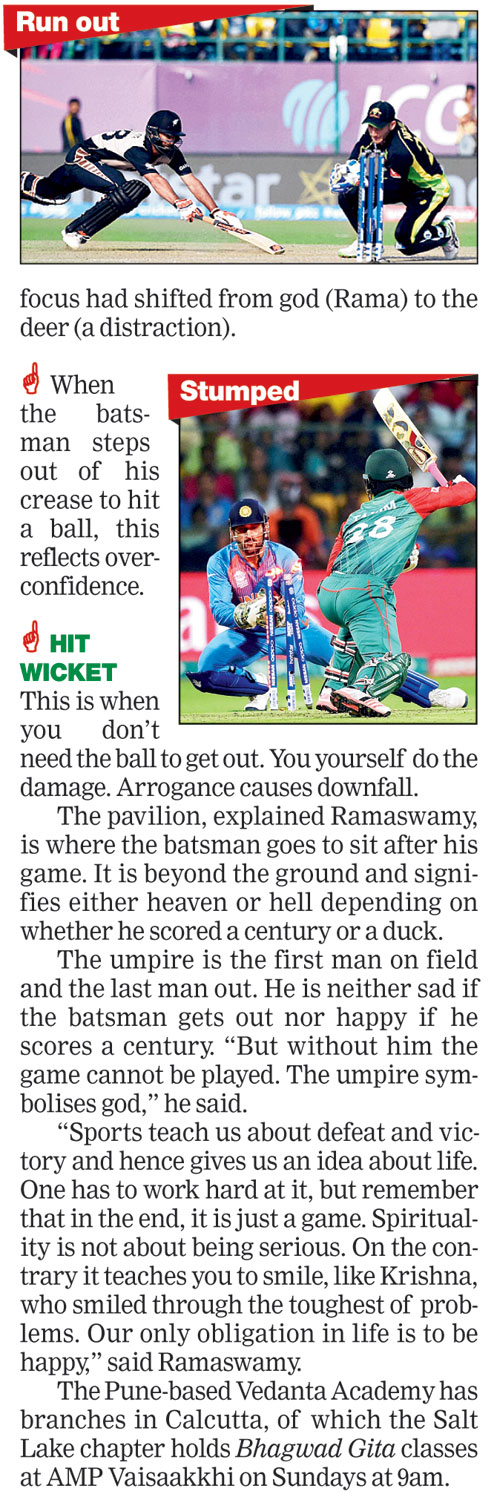
Ramaswamy then picked up every form of dismissal in cricket and found parallels with life —

Cricket01KOLKATA02apr2016

Cricket02KOLKATA02apr2016

source: http://www.telegraphindia.com / The Telegraph,Calcutta,India / Front Page> Salt Lake> Story / by Brinda Sarkar / Friday – April 01st, 2016

Baroness bats for Bengali books – Life peer on digitisation drive

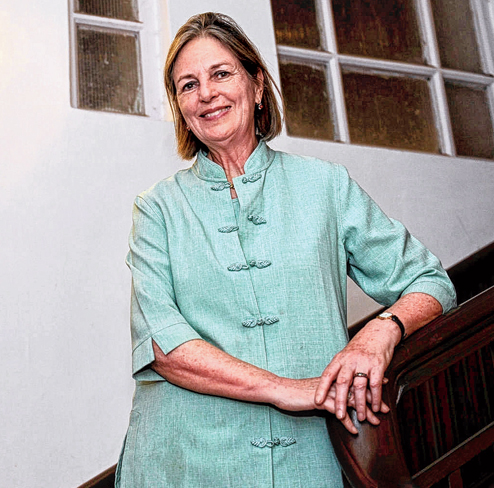
Baroness Tessa Blackstone at Bengal Club on Thursday evening. (Sanjoy Chattopadhyaya)

Baroness Tessa Blackstone, the chairman of the British Library, is in Calcutta to speak with various stakeholders in a massive British Library project to digitise its collections of South-Asian language printed books dating from 1714 to 1914.

Digitisation will not only preserve the rare and priceless — and often brittle — books for posterity but also make them available to people across the world, transforming the scope of research in these languages.
Titled Two Centuries of Indian Print, the project is expected to encompass 22 South Asian languages and some 11 million pages.

The first phase involves the British Library’s collection of early printed Bengali books as well as the cataloguing of these resources, for which the library is collaborating with the School of Cultural Texts and Records at Jadavpur University, Srishti Institute of Art, Design and Technology, Bangalore, National Library of India, the National Mission on Libraries and other institutions in India as well as the library of SOAS, University of London.

On Thursday, the 73-year-old Baroness visited Jadavpur University and met with the university registrar and some senior professors to discuss how this project would take shape and move forward.

“This was an official meeting regarding the pilot project for Two Centuries of Indian Print that we have been talking to the British Library about. Among other things the baroness spoke about the importance of digitisation as well as funding avenues in future,” said Abhijit Gupta, an associate professor at Jadavpur University, who is one of the co-investigators in the project.

On Friday, Baroness Blackwell will meet with Arun Kumar Chakraborty, the director-general of the National Library to discuss digitisation and collaboration between the national libraries of the UK and India.

Name: Tessa Blackstone
Title : The Rt Hon. the Baroness Blackstone of Stoke Newington
Politics: Labour MP, House of Lords. Former minister for education (1997-2001) and former minister for the arts (2001-2003)
Current posts: Chair, British Library board, and chair, Great Ormond Street Hospital Trust, among others
Former posts: Vice-chancellor of Greenwich University, Master at Birkbeck College and lecturer at London School of Economics, among others
Family: The baroness was born in 1942. According to The Guardian, “her father was the chief fire officer for Hertfordshire, her mother an actress and model for the House of Worth in Paris.” House of Worth is a French house of high fashion that specialised in haute couture and perfumes

source: http://www.telegraphindia.com / The Telegraph,Calcutta,India / Front Page> Calcutta> Story / by Staff Reporter / Friday – March 25th, 2016

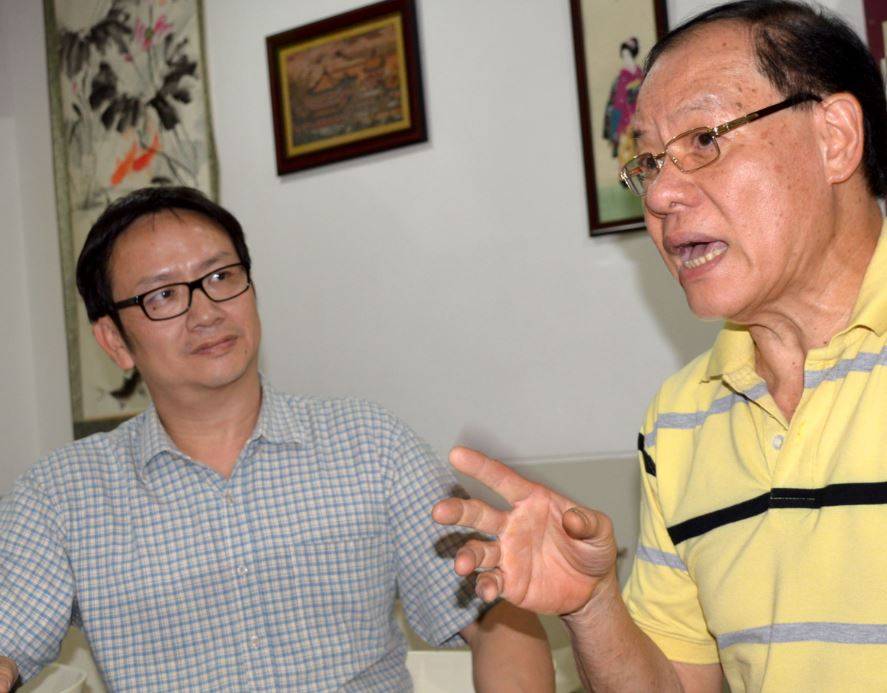
Chinese Indians fight shy of politics, netas

ChineseKOLKATA23mar2016

Kolkata :

The Chinese community is finally emerging from the ghettos at Terreti Bazaar in north Kolkata and Tangra in the east. A realization seems to have dawned on the community that has resided in Kolkata for over two centuries that they need to come out of the cocooned existence and assimilate with rest of Kolkata.

“For generations, Chinese Indians have lived in an insular world. The thinking has been that money will solve all the problem. But it does not. We have to connect to better the condition,” said Bean Ching Law, president of Chinese Indian Association (CIA), who has been persuading senior citizens in the community to get out of their shell.

Tannery owner Chi Chiang Wu, who was born in Kolkata in 1947 but had to struggle for nearly two decades to finally get an Indian passport, said the past continued to haunt the elders. Only Chinese born after 1951 became naturalized citizens.

“The persecution and internment of Chinese at the concentration camp in Deoli, Rajasthan, left a scar that took decades to heal. Hundreds left for foreign shores. When things were just beginning to settle down, the tannery shift happened that devastated many families. Some more Chinese migrated. These twin incidents added to the sense of unease that had prevailed in the community as few could initially converse in a language other than Chinese. The sense of being looked upon as foreigners despite being born here also led to the introvert behaviour,” Wu explained.

Though there were over 20,000 Chinese Indians split between Terreti Bazaar and Tangra till the 1970s before migration began and numbers rapidly dwindled, hardly anyone voted. The language barrier meant that most didn’t understand the nuances of Bengal politics. Also, no political party ever bothered to engage with the community till a decade ago as the 3,000-odd voters in the community split are split between two constituencies and do not make a substantial vote bank. Incidentally, 70% of the eligible Chinese Indians vote now.

Hsieh Ying Hsing, owner of restaurant Big Boss, said though the community was gradually opening up to other communities, they remained wary of politicians. “One reason why even the politically conscious Chinese Indian does not express support to any party in public is the fear of getting identified and persecuted. Since we are Chinese and look different, it is not just the individual but the entire community that could get marked,” he reasoned.

CIA is making a conscious effort to integrate with the mainstream and impress upon community elders the need to involve local politicians and bureaucrats in Chinese festivals and celebrations. Though the proposal met with stiff resistance, Law is hopeful of cutting through the ice.

“Today, we cannot survive without political leaning. The elders and women in the community feel insecure. We have to be practical and discard the baggage of the past,” said Law, an architect by profession.

source: http://www.timesofindia.indiatimes.com / The Times of India / News Home> City> Kolkata / by Subhro Niyogi & Sumati Yengkhom / March 22nd, 2016

Gold crown dug up at Moghalmari in West Bengal

Kolkata:

Excitement and expectation over the Moghalmari excavation site near Dantan in West Midnapore peaked on Monday as the state archeology department, which is digging up the ancient Buddhist vihara ruin, confirmed that it has found a portion of a gold crown over the weekend.

GoldCrownKOLKATA12mar2016

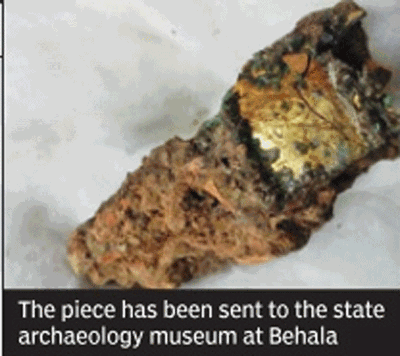
Archaeologists say the find is extremely rare since gold and silver ornaments have almost never been dug up at Buddhist excavation sites. The recovered piece, 7.5x4cm in size, looks like the tip of a crown set in a chunk of terracotta, probably part of a Buddha statue. It has been sent to the state archeology museum at Behala for further examination.

The Moghalmari vihara is gradually emerging as one of the oldest in the country, dating back to at least 6th century if not older. A large number of statuettes, pottery fragments and bronze items have been recovered from the mound since excavation re-started in January. Recently, gold coins bearing the name of Samachar Deva, a king of the pre-Pala dynasty, were dug up.

“We were stunned to find the portion of the gold crown.We feel it was part of the main Buddha statue of the vihara. Gold ornaments were normally not part of Buddha statues. But the Vajrayana sect of Buddhism worshipped what was known as the Crown Buddha. It seems this gold crown was worn by a Crown Buddha,” said Prakash Maity , the chief archaeologist at the site.

“It is possible that the Moghalmari vihara received royal patronage during the pre-Pala times from Samachar Deva, a local satrap who came into prominence in south Bengal after the fall of the Guptas in 550 AD. Notably, king Shashanka had not emerged on the scene yet.Again, while this crown might be indicative of religious harmony , Shashanka was a Shaiva and might not have been too kind towards other religions. Naturally , these matrices have to be studied while establishing the antiquity of the vihara,” Maity said.

He went on to suggest that since Moghalmari was part of an important trade route, the gold ornaments might have been gifted by traders. Two important seals have already been discovered that suggest the name of the vihara was `Sribandaka vihara’.

source: http://www.timesofindia.indiatimes.com / The Times of India / News Home> City> Kolkata / TNN / March 08th, 2016