Category Archives: Arts, Culture & Entertainment

Channel to boost Indo-Bangla ties

In 1971, Swadhin Bangla Betar Kendra was opened on Circus Avenue by freedom fighters from the erstwhile East Pakistan.

The transmissions from the radio station inspired people on both sides of the border to fight the oppressive Pakistani rule. The station folded up on December 16 after the birth of Bangladesh but All India Radio (AIR) continued broadcasting – albeit intermittently – on Special Bangla Service till a transmitter broke down in 2010.

Six years on, Akashvani Maitree is being launched to remind Bangladesh and India of their similarities. The growing presence of Radio China and Radio Iran in Bangladesh might have played a part in prompting the authorities to open the channel.

Akashvani Maitree – which will air at 594 kilohertz – will crackle into life at 11am on August 23. President Pranab Mukherjee is set to inaugurate the channel and its multimedia website from the Yellow Room of Raj Bhavan.

“Maitree was originally planned for a launch with much fanfare in June but the President’s schedule didn’t match. We will have a short programme in the evening at Nazrul Mancha, which will be broadcast live,” an AIR official said.

The programme will include performances by folk troops of Bengal, a reading of Jibanananda Das’s Banglar Mukh and other poems by actor Soumitra Chattopadhyay and recitation by Bratati Bandyopadhyay.

Akashvani Maitree will offer Bangladesh-specific news and entertainment and will also address the student community through programmes highlighting secular, anti-fundamentalist views.

The programmes will be designed in a way that Bangladeshis are encouraged to choose India as a medical destination and opt for Indian universities instead of those in the UK or the US.

Some of the programmes to be aired are Sambad Prabhaha (an exchange of news and views), Campus-ey Adda, Boiparar Khobor (about books and periodicals published in India and Bangladesh), Sholoanna Bangali (about people who have contributed to Bangladesh in some ways) and Ek mati Ek Sur (about similar cultural events like baul melas in Jadavpur and Kushtia).

“This is an outreach program which will bring people closer. There is a desire in people on both sides of the border to know how similar traditions thrive on different soils. Never before have we been able to frame a channel that invites artistes from neighbouring countries to perform in our studios,” said Prasar Bharati CEO Jawhar Sircar.

The popular stage and screen personality of Bangladesh, Mamunur Rashid, hasn’t heard of Maitree yet. “It must be the train you are talking about,” he told Metro over the phone from Dhaka.

On being told about the channel, he recounted the days of the liberation war when he would make radio plays with Mustafa Monwar, Aly Zakher, and others.

“If the radio connection is revived it will be a good thing. To connect more should be our motto. The more we meet the less we hate, the less we will be taken in by blind beliefs and threats by mischief makers,” Monwar said over the phone from Dhaka.

source: http://www.telegraphindia.com / The Telegraph, Calcutta,India / Front Page> Calcutta> Story / by Sebanti Sarkar / Monday – August 22nd, 2016
Century-old silent film boosts NFAI heritage plan

Footage from Bilwamangal, a 1919 film acquired from Cinematheque Francaise

The National Film Archive of India(NFAI) has acquired surviving footage of the Indian silent film Bilwamangal (1919) from the Cinematheque Francaise, France. This acquisition is considered an important for NFAI at a juncture when they are in the process of implementing prestigious National Film Heritage Mission to safeguard Country’s cinematic heritage.

The film produced by the Elphinstone Bioscope in Calcutta later renamed as Madan Theatres Ltd, was directed by Rustomji Dotiwala. NFAI has acquired 594 metres. (28 minutes footage at 18 fps) of this film. The film was originally 12,000 feet long.

NFAI will be returning this gesture by providing a digital copy of Indian silent film Jamai Babu (1931) directed by Kalipada Das from our collection as per mutual exchange policy under FIAF framework”, Press Information Bureau press release here on Friday quoted Mr. Prakash Magdum, Director NFAI as saying.

Bilwamangal is a landmark acquisition for NFAI, as there was no trace of work of studio of JF Madan, available in India till date. With this the NFAI now possesses in its collection films representing three important Indian studios of the silent era – Madan, Kohinoor and Hindustan. Each of these studios had a prolific output making nearly a hundred films each in the silent era.

The last silent films NFAI acquired were from Kolhapur during 1996, titled ‘Murliwala’, ‘Sati Savitri’ and ‘Maya Bazar’ directed by Baburao Painter. India has produced nearly 1300 silent films between 1913 and 1932, most of which were lost due to its Nitrate base.

Nearly 28 silent films though incomplete, have been preserved in NFAI’s storage facilities since then.

source: http://www.thehindu.com / The Hindu / Home> National / Prakash Kamat / Panaji – August 19th, 2016

Kolkata body wants to bring Rammohun Roy’s treasures, manuscripts back home

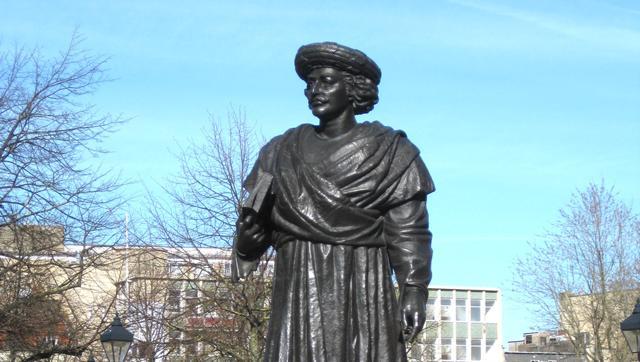
The Raja’s statue in College Green in Bristol, where he died on September 27, 1833. (Photo: Wikipedia)

Tagore called him the man who inaugurated the modern age in India. Of all the personalities who ushered in Bengal renaissance, Rammohun Roy (1772-1833) was one of the tallest. A hunt is about to begin for bringing back the priceless historical documents related to the father of Bengal renaissance Raja Rammohun Roy including manuscripts and personal belongings much of which are lost, fell into the hands of treasure looters while a few remain scattered in various parts of the country and abroad.

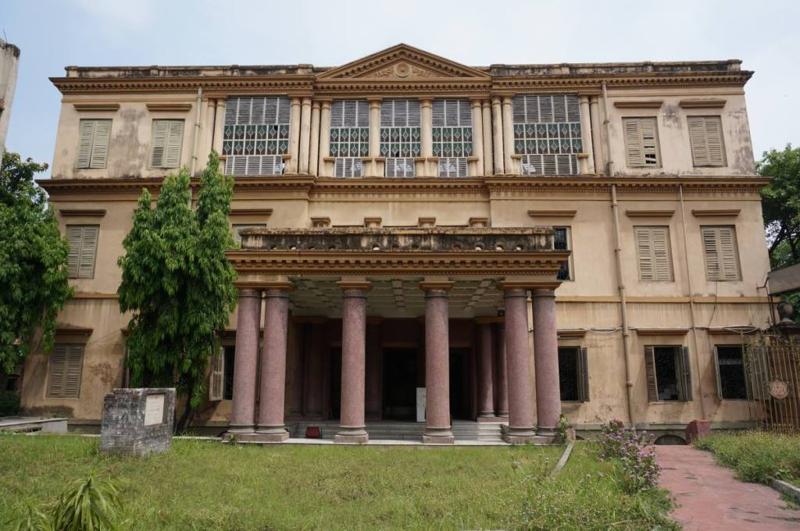
Sachindra Nath Bhattacharya, the director of Raja Rammohun Roy Memorial Museum set up in 2000 to conserve his works told HT, the move to recover original documents was triggered by the discovery that many fake documents are stored in some archives in the country.

The museum is run by a trust.

“There is an urgent need to preserve the documents and rare manuscripts of Rammohun Roy that are lying in various universities and archives across Benares, Patna, New Delhi and the UK. We want to bring back all his original documents, including complete written works, documents related to the Sati movement, his dress, head gear and store in our museum for posterity,” Bhattacharya told HT.

“We’re in a hurry as many documents are already missing. We want to recover the remaining ones before they fall into the hands of treasure thieves. We’ll also approach the British Library which stores many documents of Rammohun Roy,” He added.

Bhattacharya has approached the union culture ministry for the project.

A research team would scout through schools registries in Patna, Sanskrit University in Benares and President’s House in New Delhi once the process gets a green signal from the government.

The Treasure Trove Act, 1878 and Antiquity Registration Act, 1972 empower the Centre to initiate legal processes to collect these documents from anywhere.

The Raja Rammohun Roy Memorial Museum in Kolkata. (HT Photo)

The museum authorities have sought President Pranab Mukherjee and chief minister Mamata Banerjee’s help so that a ‘territorial policy’ is framed under which documents related to a particular museum must be kept in its custody.

The authorities will attempt to unravel many unknown facts regarding his sudden voyage from Midnapore’s Khejuri port in a Albanian ship to Britain, his vital interactions with Dwarakanath Thakur (1794-1846) and other Atmiya Sabha and Brahmo Samaj members, close door discussion with Lord William Bentinck, David Hare and debate with William Carey through the collection of original documents spread across several places.

“We’ll visit all the places across the country where Sati was prevalent in Punjab, Rajasthan to West Bengal. We have already gathered vital information regarding exact numbers of women, including Muslim women, who became sati.

Soon, a drive will begin to collect all legal documents related to the Sati custom and its abolition.

We’ll also try to scout for details of his correspondence regarding introduction of allopathic medicine to the country,” said Bhattacharya.

An attempt will be made to collect documents regarding his pioneering works of Indian journalism such as publication of Sambad Kaumudi (Bengali weekly newspaper), Mirat-ul-Akbar (Persian journal) and Tuhfat al-Muwahhiddīn (Persian book on monotheism).

In 1828, Roy set up Brahmo Sabha that was the precursor to Brahmo Samaj, one of the most prominent socio-religious reform movements of Bengal.

source: http://www.hindustantimes.com/ Hindustan Times / Home / by Atonyu Choudhurri, Hindustan Times,Kolkata / August 20th, 2016

Alpana decision taken at Kala Bhavan

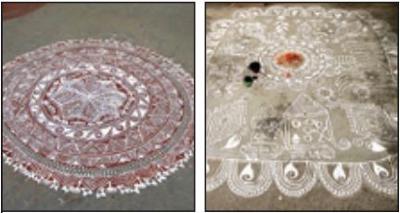
Each district has its own 'brotos' with corresponding  alpanas
Each district has its own ‘brotos’ with corresponding alpanas

Kolkata :

It was at Kala Bhavan that the idea of including alpana as part of the fine arts syllabus germinated, through a series of workshops that Rabi Biswas was called in to conduct. Biswas, in fact, has been crusading to revive folk alpana, with foundations like Daricha and Intach playing a key role.

To most of us, the word alpana means patterns drawn with rice paste on auspicious occasions. In today’s age, when one has very little time to soak and grind rice to make the paste and then take time out to draw the patterns, stickers make for easy use. The result is that one of the most vibrant folk traditions of Bengal is gradually becoming extinct.

However, two of the country’s premier art schools have taken it upon themselves to make alpana a part of their teaching-learning process, to help start a revival of sorts.

The one-year foundation course at Kala Bhavan – compulsory for all students taking up fine arts at the undergraduate level – has been revised to include alpana, both in the Santiniketan gharana that was perfected by Nandalal Bose’s daughters Jamuna Devi and Gauri Bhanja, and also the genre inspired by folk traditions. “All students of painting, sculpture, graphics, design and art history have to first go through the foundation course, get their grades and then be given a chance to choose their specializations,” said principal Dilip Mitra. ” Alpana now features in the foundation course because we want every student to be aware of both the Santiniketan and the folk traditions. This will save it from extinction.”

The most popular among these are the six different kinds of ‘Lakshmi brotos’, coupled with specific corresponding alpanas. There are brotos in the monsoon for sowing paddy seeds popular in Birbhum, Burdwan, Bankura and Purulia, where the paddy sheaf is the central alpana motif, brotos for the Nabanna festival, for a custom called Punyipukur, where the pond and the lotus are the central motifs, for Dasputul, where the alpana is inspired by the ‘Ramayana’, the Senjuti broto that characterizes evenings in the month of Agrahayana, with a 52-motif elaborate alpana, the Jampukur broto where the god of death is appeased through rituals and alpanas, and the Hyachra broto to ward off seasonal diseases like chicken pox.

Though unrelated to the Visva-Bharati initiative, similar alpana workshops by Biswas were a routine affair at Rabindra Bharati University at its state academy of dance, drama, music and visual art. “We are toying with the idea of expanding a portion of the painting syllabus to include folk traditions from Bengal, including alpana of the different districts,” said head of the painting department at RBU, Nikhil Pal.

source: http://www.timesofindia.indiatimes.com / The Times of India / News Home> City> Kolkata / TNN / August 15th, 2016

Where history is set to fade into oblivion

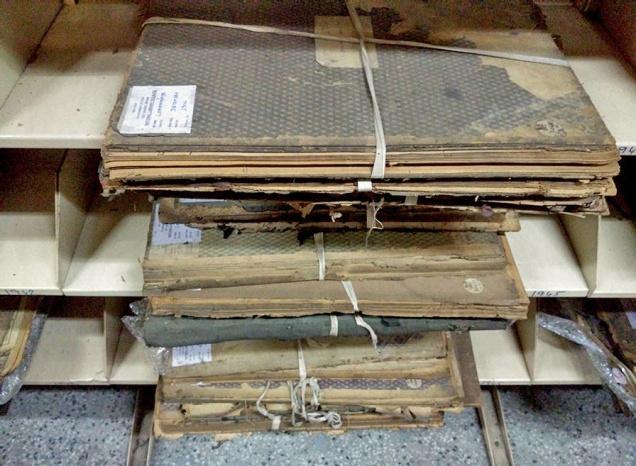
Historic documents lie in neglect in National Library. / Special Arrangement

Newspapers announcing Independence and other events lie in ruins at Kolkata library

“India Independent Today,” announced the August 15, 1947 edition of Amrita Bazar Patrika, one of the highest selling newspapers of India in 1947. The headline is placed above the masthead. But, 69 years later, the August 15 edition is so brittle that it is impossible to open it. It is not only the August 15 edition of Amrita Bazar Patrika that is frangible — 20,000 newspapers stacked up in the reading room are either soiled or so fragile that they will all turn to dust soon.

The rare editions are stored in a dusty and dark section on the second floor of Bhasha Bhavan, located in the western part of the 30-acre campus of the National Library at Alipore. The dark room resembles a mortuary where some of the papers are kept in plastic sheets coated with a thick layer of dust. Water leaks out of the air-condition ducts and during monsoon, buckets are placed to catch the droplets.

“About two weeks ago, the room was filled with ankle-deep water,” an employee of the library said. Some of the volumes were “partially drenched.” “Look at this,” a staff member said, “the August 9, 1942 edition of The Statesman with the news of the All India Congress Committee’s endorsement of Mahatma Gandhi’s call for Quit India Movement… The pages crumble even as you try to remove the dust.” The Statesman’s October 17, 1905 edition with a graphic description of Banga Bhanga, or the first Partition of Bengal, was lying next to The Statesman or Amrita Bazar Patrika. Both announced on Page One that Rabindranath Tagore returned his Knighthood on May 30, 1919, in protest against the Jalianwalla Bagh massacre. Both have nearly disappeared.

The employees said the volumes dating back to 1889 were brought to the Alipore campus in south Kolkata three years ago, for microfilming, from the original building of the Library in central Kolkata. Secretary of the National Library Employee’s Association, Santanu Bhowmick, said there had been “no progress” in the microfilming work.

The Director-General (Additional Charge) of the National Library, Arun Kumar Chakraborty, denied the allegations.

“Perhaps, it [the project] is held up because of the complications in the tendering process,” he said.

source: http://www.thehindu.com / The Hindu / Home> News> Cities> Kolkata / by Soumya Das / Kolkata – August 14th, 2016

Anjan Dutta reinvents Hamlet

Kolkata :

Shakespeare’s Hamlet has inspired award-winning director Anjan Dutta to recreate the intense drama on celluloid, though with a contemporary spin.

Anjan’s ‘Hamlet’, which is the second adaptation of the age-defying drama in recent times after ‘Haider’ by Vishal Bhardwaj, deals with socio-political crisis and violence against humanity.

“Shakespeare’s Hamlet suffered from a basic crisis and I wanted to define and interpret that crisis in my own way,” the director told .

Actor Parambrata Chatterjee will portray Hamlet’s character ‘Hemanta’. Anjan said he himself would play the character if he were a little younger.

“Had I been a little younger, I would have done the role and my wish to portray Hamlet got shape through Param,” he said.

Anjan said that his Hemanta couldn’t care less about the situation around him, unlike his contemporaries who were largely insouciant about violence next door and busy with personal affairs.

“I had long been thinking I should not confine myself to Byomkesh exploits and urban relationship and musicals. I thought there is an imperative need to have a hard look at the present time through my protagonist’s eyes,” he said.

“Hamlet’s character has many layers. Some put his crisis at sexual level, some talk about his anguish and hatred towards the stinking political situation in Denmark about 500 years back. But for me it is more of his angst towards the situation prevailing all over the world,” Anjan said.

Parambrata said he had to cut himself off all other projects for one and a half months to study the character over and over again.

“Though I had read Hamlet during college days as a student of English literature, I needed time to grasp the contemporariness of his character,” the ace actor said adding “it is an actor’s dream to work in projects inspired by Chekov, Tagore and Shakespeare”.

Jisshu Sengupta is playing Horatio’s role while Saswata Chatterjee plays Cladius.

Hemanta after graduating from New York Film School returns to his home in Kolkata and gets the news that his film producer father has commited suicide because his mother Gayatri is set to marry uncle Kalyan (Cladius), which triggers a series of murders and mysterious deaths.
SUS MD MM JCH

source: http://www.timesofindia.indiatimes.com / The Times of India / News Home> City> Kolkata / PTI / August 08th, 2016

Very warm, also blunt – The thing is… that I have to write – Mahaswetadi to Bengali literature, Ma to tribals

Mahaswetadi and I have quite a few things in common. Both our fathers are poets; both of us have four-syllabled names; both our nicknames are Khuku; and both of us were born on Poush Sankranti.

I remember seeing her father Manish Ghatak and her in our house in my childhood. Mahaswetadi was very affectionate towards me and treated me as a sister far younger in years. Possibly because she was the eldest of 10 siblings and had practically raised all of them, there was that maternal air about her.

Her mother Dharitri Devi, who brought out a Little Magazine, was often ill. If Mahaswetadi was maturer than her years I, a single child, was far more naive than my age.

I have seen her remake herself time and again, breaking the barriers of middle-class life and values. She never cared for public opinion. Smoking cigarettes and bidis, marrying twice, roaming villages in keds shoes – she did exactly what she pleased. I admired her hugely.

MahaswetadiKOLKATA29JUL2016

She was writing her newspaper columns -in Jugantar – besides teaching in Vijaygarh College. In her single-room establishment in a mess in Ballygunge Station Road, she did much of her writing besides keeping an open house. It bustled with people – friends, folks from the villages, her pet cat… she would cook for everyone. I would drop by often on my way back from Jadavpur University.

She was tremendously hard-working. While she was very warm, she was also blunt. (This is perhaps the only virtue of hers that I share!) Many who did not know her well feared her. Like most members of her family, Mahaswetadi had a wonderful singing voice. She was Suchitradi (Mitra)’s contemporary in Santiniketan.

The one image of her coming most to my mind today is of the day when my father (Narendra Dev) passed away. She sat on folded knees by his bed, singing one Rabindrasangeet after another. That was all we needed, my mother and I, to deal with that moment.

It was awe-inspiring how, relinquishing her middle-class identity, she chose to embrace the cause of the Shabars, and more importantly got accepted as one of them. What did she not do for them – staying in their huts, sharing their food, opening her home to them, highlighting their problems through her writings, even fighting long-lasting court cases on their behalf spending money from her own pocket…. She tried to understand them by analysing our socio-political history and showed us how they have continued being victims of the feudal system.

She showed how history and society are against those who work – be it tribals, be it women. She rebelled against the feudal system, be it the land system or the social structure. When her name was raised for the Jnanpith Award, some members objected to her nomination saying she was an anthropologist. We had to point out that no, she was a writer.

That award gave her national renown and led to her Hindi translations. Meeting Gayatri (Chakravorty Spivak) was a turning point in her life. She presented her as the voice of the subaltern.

Had Gayatri not translated her work into English, Mahaswetadi would not have become the international figure that she is. She is taught in various universities abroad.

I remember at a meeting on Nandigram how she urged a woman who had been gangraped to speak up.

She never called herself a feminist but in her writings she always sided with oppressed women, who are doubly victimised if they are from “untouchable” communities.

Mahaswetadi has made her place in the history of the Shabar tribe and of Bengali literature.

As told to Sudeshna Banerjee

source: http://www.telegraphindia.com / The Telegraph,Calcutta,India / Front Page> Calcutta> Story / by Nabaneeta Dev Sen / Friday – July 29th, 2016

Our celebs are charging a bomb for Khuti Pujos

CelebsKOLKATA25jul2016

The lucrative business of celebs’ public appearances is known to one and all. In a state where people celebrate baro mashe tero parbon, festivities are aplenty all year round.

From mega stars to fringe celebrities — routine appearances during festivals like Durga Puja are great opportunities to earn those extra bucks, sometimes running into lakhs. But cutting the ceremonial satin ribbon to throw a Puja open is so last century.

With Durga Puja becoming bigger by the day, celebrations now begin from Ratha Yatra — which marks the making of the kathamo or the wooden frame on which the Durga idol is built.

Khuti Pujo, as it’s famously called, is now a rage with Puja committees going all out to make their paras bask in the reflected glory of stardom.

For celebs too, it’s the new Puja inauguration. The remuneration has been worked out, the list of dos and don’ts drawn up and a schedule added to their busy planners.

For some, however, the handsome paycheck is not the key factor — good PR is. Ever since Soham joined the political fray, he has not been charging a penny for showing up at Khuti Pujos. It’s the same with Rituparna Sengupta and Paoli, who attend the ceremony only on request. Rituparna has been to Khuti Pujos organised by ministers and bureaucrats whereas Paoli has done the same for those close to her. The latter charged approximately a lakh last year for attending a Khuti Pujo, but this year things are different. Then, there are those who are squeezing out an extra hour from their choc-a-bloc diaries as the reward is alluring.

Rachna Banerjee, we hear, takes anywhere between Rs 50 – Rs 70K to attend a Khuti Pujo. If she is familiar with the Puja committee, she travels by the car sent to her by the organisers; else, she travels by her own and gets the petrol bill reimbursed. Being choosy, she has turned down several offers to attend such a ceremony. On the other hand, she has attended many for free just for the rapport she shares with the organisers.

Sreelekha Mitra, who has already attended one this year, charged Rs 50K for it. Her remuneration goes up depending on the distance and she takes up an offer only if it is to her liking. Koneenica Banerjee, who attended the Khuti Pujo of Tridhara and Hindustan Park ‘out of love’, has several offers from Hazra, Baranagore, Barrackpore and Dum Dum lined up in the next few days. The actress charges Rs 50 – Rs 60K depending on the place and the time she needs to spend there.

As per Puja committees, it costs a bit more if they wish to get Tonushree Chakraborty or Paayel Sarkar on board, who charge somewhere between Rs 70k – Rs 80k. Tonushree has already attended six such ceremonies this year, while Paayel has been to four. On the other hand, Monami Ghosh has always remained a favourite with many. The actress, who charges `30k, stays for around 30 minutes and travels by the committee’s car. If she is attending one on the outskirts of Kolkata, the remuneration goes up to Rs 35k. Another hot favourite with Puja organisers is Vikram Chatterjee, who shot to fame with a popular megaserial. He charges around Rs 25k – Rs30k per event and stays for around 15 minutes. Last year, he attended three Khuti Pujos and 18 inaugurations and the numbers are set to soar this year. All the payments are made in advance to rule out complications of a starry kind later.

*The figures mentioned in the article are approximate and have been shared by Pujo organisers.

source: http://www.timesofindia.indiatimes.com / The Times of India / News Home> City> Kolkata / Zinia Sen & Ruman Ganguly / July 25th, 2016

Eco-friendly transport in Kolkata’s Fort William

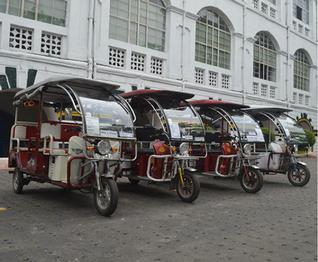
Battery-powered rickshaws wait for passengers in the Fort William campus in Kolkata.— Photo: Special Arrangement

Battery-operated rickshaws, locally called ‘totos,’ are now allowed to ply in Fort William, the headquarters of Eastern Command, for civilians to commute in the 177-acre campus. The initiative has benefited those who work in the Eastern Command — both former and current employees — as they routinely visit Fort William, located on the eastern banks of the river Hooghly.

“Electronic rickshaws are immensely helpful. We had to walk a kilometre or two to reach the canteen from one of the main gates,” said Shibnath Ganguly, a retired Air Force staff and added: “It was an arduous walk, especially in the summer.” The e-rickshaws charge a subsidised rate of two rupees from each passenger for each trip.

235th anniversary

The rickshaws ply from 8 am to 8 pm inside Fort William, which completes its 235th year in 2016.

Opened in 1781, the fort, with a formidable arsenal and personnel presence, was named after William III of England. Many civilians, a few thousands in number, stay inside, while scores of employees daily report to their offices offices.“This is primarily a welfare service, not only for the benefit of the public but also for the boys who operate the rickshaws,” explains Col. Richard Fernandes, the Commanding Officer of 12 Garhwal Rifles, who ensures smooth operation of the rickshaw service. The drivers are civilians, selected by the Army, to run four such rickshaws.

“The Army has provided the e-rickshaws. The drivers are not only paid Rs.3,000 every month [by the Army] but also make additional money by providing the service to people,” said Col. Fernandes. The rickshaws are not allowed to go outside the Fort’s campus. However, that is “not a major concern” for Mritunjay Kumar, one of the drivers who covers 50-60 km every day. “I am earning about Rs. 100-150 per day and making about Rs. 8000 each month,” said 19-year-old Mr. Kumar, whose father is a civilian employee of the Army.

The officials believe that the earning of the drivers from the e-rickshaw project, promoted as “an eco-friendly” venture, will go up from localised tourism, as the Vijay Smarak [War Memorial] at Fort William was recently opened to the public.

The e-rickshaws charge a subsidised rate of two rupees per passenger per trip

source: http://www.thehindu.com / The Hindu / Home> National / by Special Correspondent / Kolkata – July 14th, 2016

The brothers bose

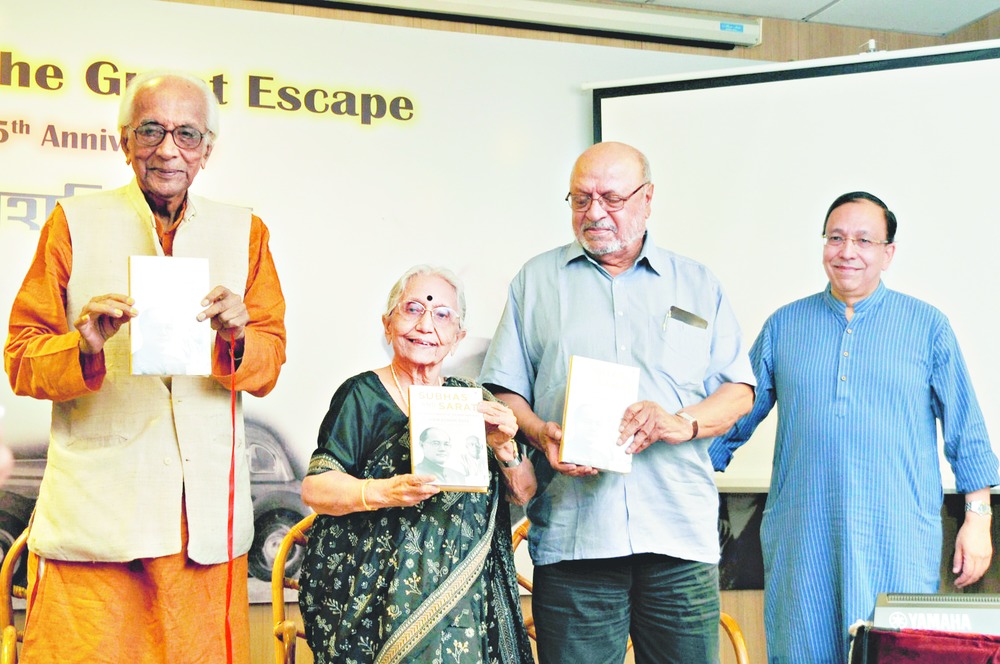
(From left) Poet Nirendranath Chakraborty, former MP Krishna Bose, film-maker Shyam Benegal and historian-MP Sugata Bose at the launch of SUBHAS AND SARAT: An intimate memoir of the Bose Brothers at Netaji Bhavan on Sunday evening. /  Picture by Sanat Kr. Sinha
(From left) Poet Nirendranath Chakraborty, former MP Krishna Bose, film-maker Shyam Benegal and historian-MP Sugata Bose at the launch of SUBHAS AND SARAT: An intimate memoir of the Bose Brothers at Netaji Bhavan on Sunday evening. /
Picture by Sanat Kr. Sinha

The book has been edited by Sumantra Bose, a professor of international and comparative politics at the London School of Economics and son of Sisir Kumar Bose.

Sisir Kumar Bose, Netaji’s nephew and son of Sarat Chandra Bose, had in the 1980s authored the Bengali version of the memoir: Basu Bari.

The book, which used to be serially published in Anandamela, a children’s magazine published by the ABP Group, focuses on the period from the mid-1920s to the 1940s, when the freedom movement was at its peak.

Sisir Kumar Bose, who died in 2000, had written a version of the memoir in English, said Harvard professor Sugata Bose, the elder son of Sisir Kumar Bose.

Chakraborty recounted how as editor of Anandamela he had convinced Sisir Kumar Bose to pen Basu Bari.

source: http://www.telegraphindia.com / The Telegraph,Calcutta,India / Front Page> Calcutta> Story / Monday- July 11th, 2016