Category Archives: Arts, Culture & Entertainment

Chinese New Year celebrated in the oldest China Town in Kolkata

The first sounds you hear as you head towards Bentinck Street in Central Kolkata are those of measured thumping and co-ordinated beats of the drums. As the clamour reaches its crescendo, a giant lion mask made of paper mache, red and golden cloth springs to life and starts twisting and turning to the beats.

Welcome to India’s oldest China Town nestled in the chaotic central Kolkata which is decked up in red and golden to celebrate the Chinese New Year. Only, there are not enough members of the community left to conduct the lion dance for the 20 odd clubs that is an integral part of the New Year celebrations. Youths from other communities perform this ritual for several clubs.

“We thrived here,” said Jen Lee, 72, sitting in a tea shop near Kunga Hotel, close to Tiretti Market. “Our children played in these lanes and attended local schools. We had Chinese schools and our own newspapers. But now it’s mostly memories. In a few years we’ll all be gone or dead.”

But the dwindling number of the community did not hamper the spirit of the festivities on Saturday. The congested and dilapidated neighbourhood of Chatawala Gali, Lu Hsien Sarani and Tiretti Market where residences, small Chinese eateries and small manufacturing units hang cheek by jowl metamorphosised into an island of revelry. The entire neighbourhood is decorated in red and gold.

Members of the community dressed in their gladrags and festive fineries strutted to their local churches early in the morning. They light incense sticks and pray at temples to wish for an auspicious start to the New Year.

“The day starts with offering prayers after which friends and family visit each other. The lion dance where groups of youngsters visit households to offer their wishes and collect gits is the highlight of the day,” said Dominic Lee, a businessman and community veteran in Central Kolkata.

Other New Year’s traditions include the eating of dumplings and the lighting of fireworks on the eve of the New Year. “Lion dancing is our way of not only paying tribute to our ancient culture,” Tseng said. “It is also our chance to hold on to the past while living in the present. Since there are such few Chinese youths are left in the city, youngsters from other communities are keeping this tradition alive. This tradition will stay even if the city is left with no Chinese.”

Mohammed Imran, who was born and brought up in China Town learnt the lion dance from one of his Chinese frinds who has not migrated to Canada. “Uncles and aunties tell request me to perform the lion dance for their clubs because there are no Chinese youths in their clubs. They have all migrated,” said Imran.

Each Chinese New Year is characterised by one of 12 animals that appear in the Chinese zodiac. This is the year of the rooster and people born in the Year of the Monkey are believed to be hardworking, courageous, resourceful and talented.

Calcutta, which was home to 30,000 ethnic Chinese in 1962, has just about 3,000 today. Although Chinese food keeps soaring in popularity the affable Chinese dry-cleaners, the shoe-makers, the dentists and the tanners have all but gone.

Kolkata has the oldest China Towns in the country that exist in two clusters. The one in central Kolkata nestled between New CIT Road and BB Ganguly Street is the older of the two. The other one is in Tangra.

A revival plan that has hit a road block due to a dispute over a garbage dump on New CIT Road reflects that hardly anybody is bothered about restoring the dwindling Chinese population in Kolkata. This is the year of rooster which denotes courage, talent and hard work. In a few years to come, the slice of city will be no more.

Though the numbers of the community has been dwindling fast, Chinese New Year is an occasion when members of the community get together and greet each other.

Kung Hei Fat Choi (wishing you happiness and prosperity in the New Year)

source: http://www.timesofindia.indiatimes.com / The Times of India / News> City News> Kolkata News / by Zeeshan Javed / TNN / January 28th, 2017
Date set for Dover Lane

The Dover Lane Music Conference is reviving a tradition discontinued 15 years ago by scheduling the inauguration of the annual festival for the morning instead of evening.

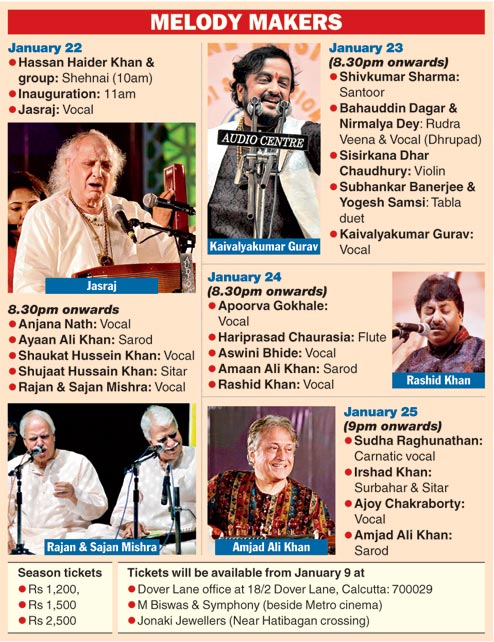
The 65th edition of the music conference, to be held at Nazrul Mancha, will be inaugurated by Jasraj at 11am on January 22. The festival will end on the Republic Day morning with a performance by Amjad Ali Khan.

The Sangeet Samman Award 2017 will go to Sisirkana Dhar Chaudhury.

Apart from Jasraj and Khan, the performers will include Ajoy Chakraborty, Hari Prasad Chaurasia, Shivkumar Sharma, and Rajan and Sajan Mishra.

Jasraj will perform after the inauguration, following which there will be a break. The session will resume at 8pm. The sessions on the next three days will start in the evening.

“We have received numerous requests from the audience over the years to revive the morning inauguration. So we have decided to revive it. The practice (of inaugurating the festival in the morning) was discontinued in 2001,” said Bappa Sen, general secretary, The Dover Lane Music Conference.

Over the past few years, the festival ended with the performance of Jasraj or Amjad Ali Khan. “It would be dawn by the time either would go up on stage and many in the audience would be too tired to listen to their renditions. That’s why we will have Pandit Jasraj perform at 11am,” Sen said.

Like on previous occasions, the list of artistes in this year’s festival is a mix of fresh and famous faces.

Among the five musicians making their debut at the conference is Hassan Haider Khan on the shehnai, whose performance will precede the inauguration.

“I am excited to have got the opportunity to play at such a prestigious conference. I have assisted my father (Ali Ahmed Khan) during his performance here when I was just nine years old. To play solo at the same place is humbling. I will try to do justice to the tradition of great names like my father’s and that of Ustad Bismillah Khan, Ustad Vilayat Khan and my guru, sitarist Arvind Parikh,” said Hasan Haider, 30.

Among the other “debutants” this year will be vocalists Apoorva Amit Gokhale, Nirmalya Dey (as part of a duet), Sudha Raghunathan and Anjana Nath, who had won a talent search contest conducted by The Dover Lane Music Conference in 1989.

“We are privileged to be associated with this conference, which is the most revered, awaited and sought after music festivals in Calcutta,” said Sanjay Budhia of Patton, one of the patrons of the conference.

source: http://www.telegraphindia.com / The Telegraph,Calcutta,India / Front Page> Story / by A Staff Reporter / January 03rd, 2017

Queen Victoria’s last letter to India unveiled at Victoria Memorial

The three-page hand written letter, dated December 14, 1900 with a Royal Seal and Windsor Castle being written next it

The letter, written nearly a month before the monarch’s death, was was gifted by Lord Curzon in 1904.

Queen Victoria’s last letter to India, written 116 years ago, is on display for the first time at the Victoria Memorial, one of the finest monuments built in her memory.

The three-page handwritten letter, dated December 14, 1900 and bearing the Royal Seal, was unveiled for the public on December 16 at the Prince Hall of the Victoria Memorial.

“This letter is an important piece of historical correspondence between British India and Britain. The letter was gifted by Lord Curzon in 1904,” Jayanta Sengupta, curator of the Victorial Memorial told The Hindu.

Mr. Sengupta, also a historian, pointed out that the letter by Queen Victoria was written nearly a month before her death. She passed away on January 22, 1901.

The letter is Queen Victoria’s reply to the then Viceroy, Lord Curzon, who in an earlier correspondence to the Queen had expressed his sympathies on the death of one of her “soldier grandsons” “The Queen Empress has to thank the Viceroy for the very kind letter of the 9th November, full of sincerest sympathy of her beloved soldier grandson…,” the letter begins.

The references in the letter are to the death of Prince Christian Victor, the eldest son of the third daughter of Queen Victoria and Prince Albert. Prince Christian died on October 29, 1900 in Pretoria, South Africa during the Second Boer War.

“He was as good as he was brave,” Queen Victoria writes in the letter about her grandson. “All the Viceroy says of her own trials and anxieties the Queen feels very much, and she cannot deny that she feels a good deal shaken by them.”

Along with the handwritten letter, a typed copy of the text has been displayed alongside for the convenience of visitors.

Within few weeks of Queen Victoria’s death in January 1901, a meeting was convened at the Town Hall of Calcutta in February 1901, when a resolution was passed for constituting an all-India fund for building a memorial. King George V, then the Prince of Wales, laid the foundation stone of the Victoria Memorial on January 4, 1906 and it was formally opened to the public in 1921.

source: http://www.thehindu.com / The Hindu / Home> News> States> Other States / by Shiv Sahay Singh / December 21st, 2016

10-day theatre festival kickstarts in Kolkata

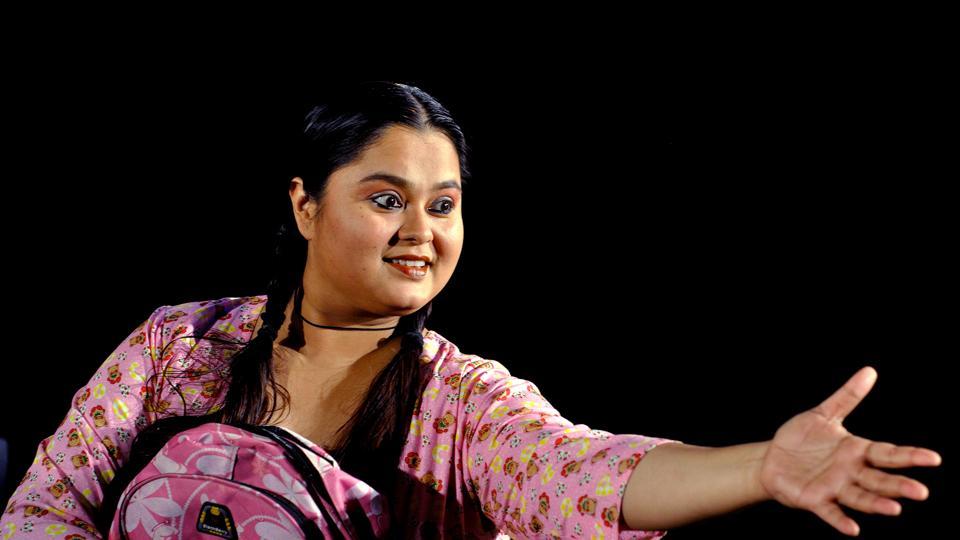
National award winning actor Sohini Sengupta in a still from the play Alipha. (Nandikar)

Nandikar’s 33rd National Theatre Festival, which focuses on youth, is all set to make your theatre experience more special this winter. The 10-day festival, which begins today, will have 23 performances from states like Assam, Bihar, Delhi, Karnataka, Manipur, Odisha and West Bengal. The only international participant this year is from the United States of America. Veteran theatre personality Soumitra Chatterjee will be felicitated with Nandikar Samman.

An exhibition titled, Struggle In Theatre, is another interesting segment of the festival. It highlights the state of theatre all over the world. The exhibition, which is more like a collage of events, write-ups and pictures, has been single-handedly organised and researched by theatre artiste Rudrarup Mukhopadhyay.

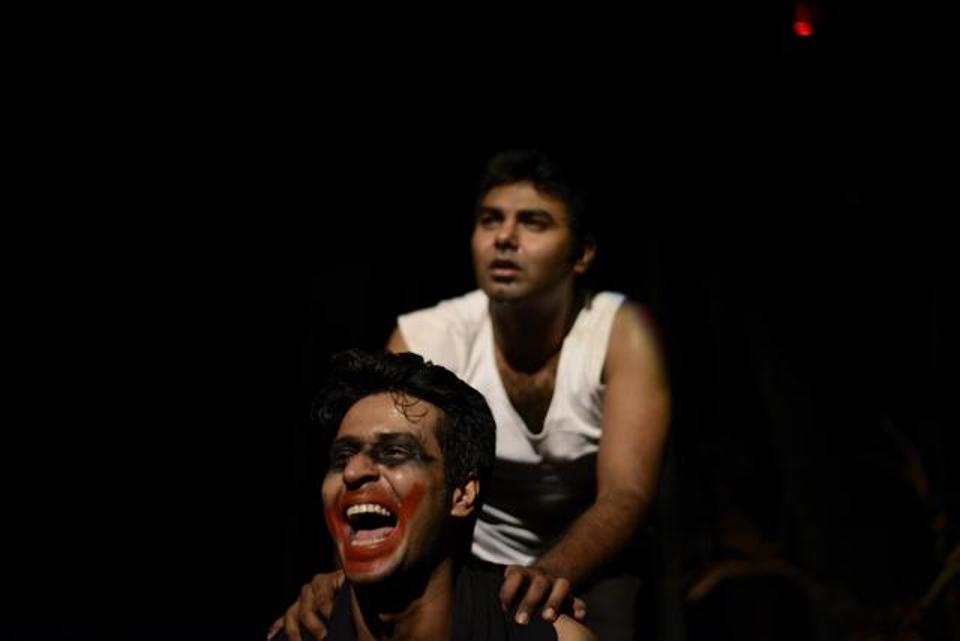
Anirban Bhattacharya plays the pivotal character in Athhoi. The play is based on William Shakespeare’s Othello. (Natadha)

“I feel the current generation has a lot in them that we want to explore. There is so much to learn and share and we feel that they deserve a proper platform for the interaction to take place. Personally, the more I am counting years, the more I feel young from within. It’s like the Yule’s law, heat lost equals heat gained,” smiles Rudraprasad Sengupta, veteran actor, director and president of Nandikar, while taking about youth as their focus.

Sohini Sengupta’s Alipha and Poulami Chattopadhyay’s Phera will inaugurate the festival. Waman Kendre’s Phoolrani (National School of Drama Repertory Company, Delhi), based on George Bernard Shaw’s Pygmalion, will premiere on December 19. Among others, one should not miss plays like Choumatha by Anirban Bhattacharyya (Hatibagan Sangharam), Outcaste by Randhir Kumar (Raaga, Bihar), Athhoi by Arna Mukhopadhyay (Natadha, Howrah) and Hungry Stone by Heisnam Tomba (Kalakshetra, Manipur).

There is an interesting bouquet of short plays for children too. There’s Batasbari by Anindita Chakraborty (Children’s Ensemble, Nandikar) and Ha-Ja-Ba-Ra-La by Anamitra Khan (Beadon Street Subham) on December 24. There are also three short productions by Children’s Ensemble, Nandikar, Lanka Dahan Pala by Debabrata Maity, Bobby by Samrat Basu and Joy Ke Chai by Debabrata Maity.

Two of Nandikar’s popular dramas will end the festival on December 25. Swatilekha Sengupta’s Madhabi and Sohini Sengupta’s Panchajanya will be staged back-to-back on the concluding day.

source: http://www.hindustantimes.com / Hindustan Times / Home> Cities> Kolkata / by Shreya Mukherjee, Hindustan Ti es / December 16th, 2016

Project for novel artistic ideas

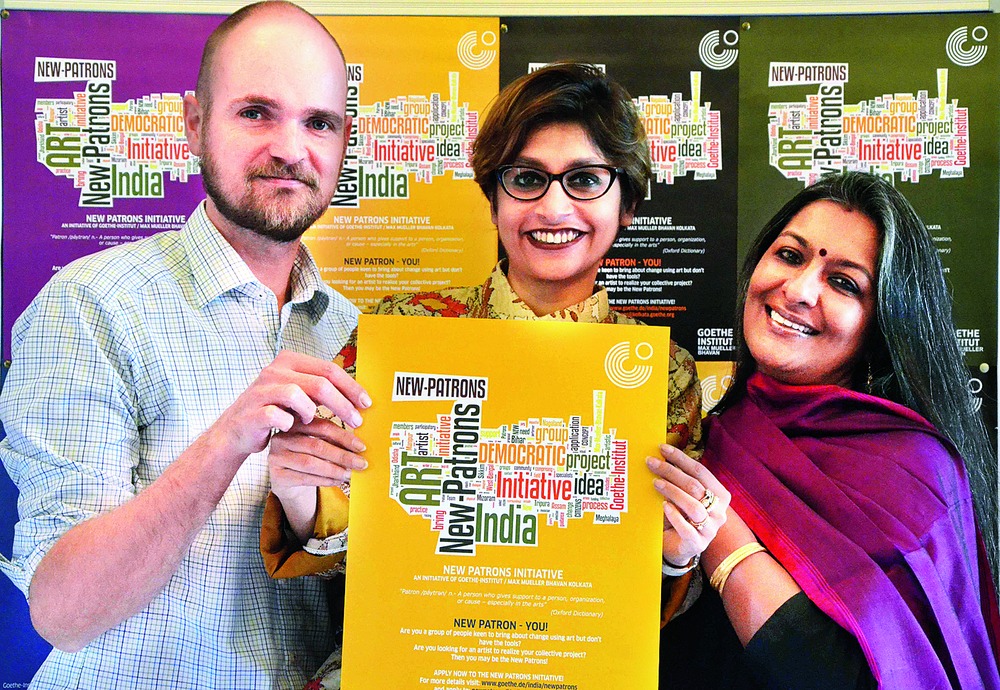
(From left) Max Mueller Bhavan's director Friso Maecker and programme officer Sharmistha Sarkar along with arts curator Nandita Palchoudhuri hold a poster of the New Patrons project
(From left) Max Mueller Bhavan’s director Friso Maecker and programme officer Sharmistha Sarkar along with arts curator Nandita Palchoudhuri hold a poster of the New Patrons project

A system that makes it possible for people to commission public art projects themselves has been introduced. New Patrons, already active in Europe, Africa and the US, has just been launched in India.

Max Mueller Bhavan, Calcutta, is accepting applications for the New Patrons project from across Bengal, Jharkhand, Odisha, Bihar, Sikkim, Tripura, Assam, Meghalaya, Nagaland, Manipur, Mizoram and Arunachal Pradesh.

“They have been planning this for a long time in Mumbai, Delhi and Chennai. But we managed to see it take off here first,” Nandita Palchoudhuri, arts curator and entrepreneur, said.

She has been brainstorming with Max Mueller Bhavan’s director Friso Maecker and programme officer Sharmistha Sarkar over the past few weeks on how best to implement the project.

Any group of individuals over 18 with an original idea that could start an artistic dialogue or participatory process can apply for the New Patrons project.

The idea has to be novel and aesthetic that will bring sustainable change in the local milieu, make life easier, bring people together, restore and beautify architecture or invent new ways to sensitise people about an issue.

A special jury will select an idea and place it before a team of mediators from the New Patrons initiative who will collaborate with the group to identify a suitable artist and a funding plan. The core team of the New Patrons initiative will guide and monitor the progress regularly.

In France, a community got a renowned composer to create a composition for an orchestra of amateur musicians with unconventional instruments.

Another community commissioned an artist to landscape and restore a heritage landmark.

So far, there has been a heartening response from the Northeast and Calcutta, Sarkar said. “There are interesting projects on the city they live in, dying art forms etc. But we are still waiting for Bihar and Odisha to respond.”

People often have ideas but don’t know how to take it forward or who to contact or how to negotiate with various government or private bodies, Palchoudhuri said.

“The New Patrons team takes care of all such issues through discussions with the group. For the artists, too, it is a new experience,” she said.

“The collaboration between citizens, mediators and artists makes for equal involvement and sharing of responsibilities not always seen in cultural productions. It is also possible to rope in foreign sponsors.”

Those wishing to apply can send in their proposals in English or Hindi to newpatrons@kolkata.goethe.org before November 30.

Proposals should include a short description of the project idea that the group collectively seeks to execute, the need for such a project and the impact expected and an introduction of the group and its members.

source: http://www.timesofindia.indiatimes.com / The Times of India / Front Page> Calcutta> Story / by Sebanti Sarkar / Wednesday – November 23rd, 2016

Kolkata: Streets of India festival showcases street food, arts

The rasogollas, a signature sweet of Bengal, is available in tangy pudina and dhaniya avatars, besides paan and yummy mixed fruit and pista crush.

‘Streets of India Festival’, Kolkata. (Source: Facebook/@Streetsof India2016)

The ongoing ‘Streets of India Festival’ in Kolkata showcasing fashion and food festival, is a gastronome’s paradise with mind boggling 170 varieties of rasogolla and 34 flavours of fusion icecream waiting to be savoured. The rasogollas, a signature sweet of Bengal, is available in tangy pudina and dhaniya avatars, besides paan and yummy mixed fruit and pista crush.

“We have used natural colours for 170 varieties of rosogollas with no preservatives. In keeping with the fast food tradition there are varieties like cappuccino, phuchka and green chilli. Also there are fusions like golgappa rasogolla, a fusion inspired by a popular Delhi’s fast food,” its owner Swati Saraf told media.

She said in keeping with the theme of the event the sweets were given a different spin by introducing bitter and chilli tastes which became an instant hit with the visitors.

There was no dip in footfall despite the currency crunch, she claimed. The lip-smacking fusion ice creams included the natural tender coconut flavor, caramel crunch, rose (sugar tree), south Indian coffee and kesaria rabri malai to fit the quick grab concept of street food.

“Anjeer (dry fruit) and seven varieties of paan flavoured icecreams are our signature items this festival. But yes we are a little way behind expected sales apparently due to crunch of big currencies,” a stall spokesman said.

While a lady customer was seen paying through card for her choice of lemon grass icecream, another said she was not familiar with card or electronic wallet use and was finding it difficult to use her now demonetised Rs 1000 currency note.

source: http://www.indianexpress.com / The Indian Express / Home> Lifestyle> Art and Culture / by PTI / Kolkata / November 13th, 2016

Kolkata artist to give shirish tree a makeover at Nandan

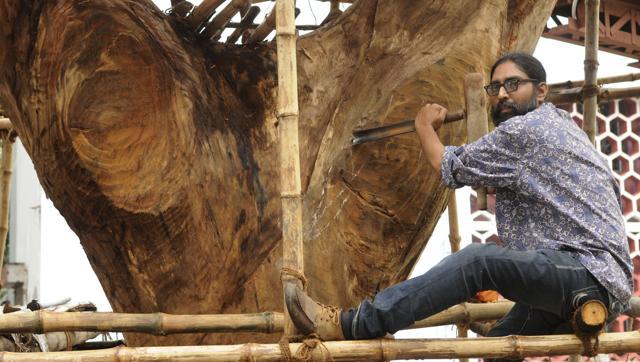
Sculptor Deep Saha’s tree sculpture at Nandan draws inspiration from musical instruments and films. (Samir Jana/HT Photo)

A 30-feet shirish tree that stood tall on the Nandan campus and played host to numerous discussions involving film buffs is set for a makeover. Nandan witnessed many discussions among movie-lovers on Truffaut and Godard over lemon tea sitting under the shirish tree.

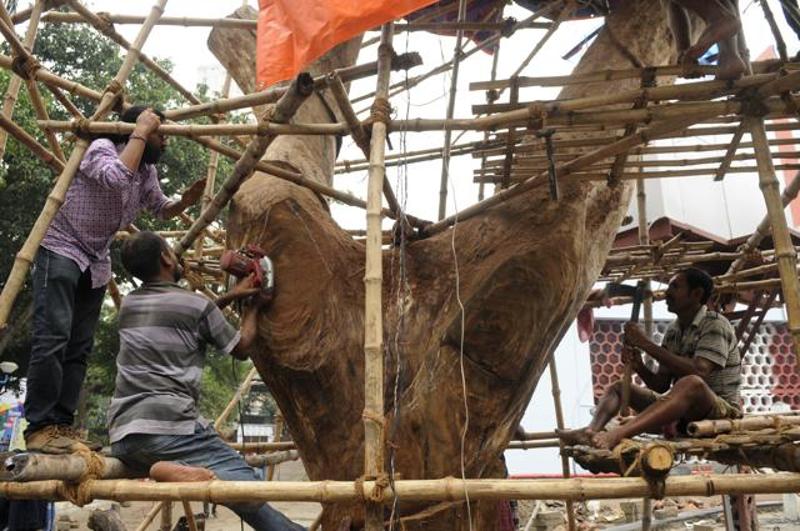
But now, one might find it difficult to locate the same tree. Covered with tarpaulin, men are seen with saw and hammers carving the tree to give it a shape.

Deep Saha, a pass out of Government College of Arts & Craft, Kolkata, in 1998, is working on a tree sculpture at Nandan campus for beautification before the Kolkata International Film Festival (KIFF) that begins on November 11.

“I wanted to do something with the tree and hence asked the KIFF authorities if I could do a sculpture on it. I was given a free hand,” said the 41-year-old sculptor.

Nandan is getting a makeover before the Kolkata International Film Festival (KIFF). (Samir Jana/HT Photo)

Saha’s sculpture draws inspiration from musical instruments and films. “Since it is a figurative sculpture, it will be an amalgamation of human figures and musical instruments. I also plan to experiment with colours,” said Saha, who has also done the hand-shaped fountain near Raj Bhavan, Esplanade. He has also made sculptures to beautify the city at Eco Park, Princep Ghat and Mahajati Sadan.

It’s been just eight days since the Golf Green resident has started working on the sculpture at Nandan campus. He informed that he spends approximately 12 hours every day on the sculpture. “The work won’t be complete within November 11. We will again start working after the KIFF gets over,” said Saha, who has done shows in Mumbai.

In the meantime, Saha is excited to have received an offer from union shipping minister Nitin Gadkari to make sculptures in Delhi. However, he is yet to meet the minister and discuss the offer.

Atri Bhattacharya, information and cultural affairs secretary, said chief minister wanted to start the renovation work at Nandan for a long time. “Before the film festival begins, the film buffs will have a renewed Nandan campus, which will be more environment friendly,” he said.

source: http://www.hindustantimes.com / Hindustan Times / Home / by Anindita Acharya, Hindustan Times, New Delhi / November 09th, 2016

Bob Dylan’s day in Kolkata for a wedding, a Baul for a friend

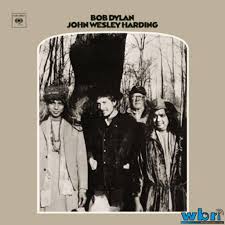
Purna Das Baul (extreme right) and brother Luxman Das Baul with Bob Dylan on the cover of the 1967 album 'John Wesley Harding'
Purna Das Baul (extreme right) and brother Luxman Das Baul with Bob Dylan on the cover of the 1967 album ‘John Wesley Harding’

Think Bob Dylan in a bright red kurta and white pyjamas as a guest at a Bengali wedding. Too far-fetched?

Not quite. While most of Dylan’s life has been an open book, a lesser-known fact is Dylan’s hush-hush visit to Kolkata in the winter of January 1990.

The world’s most legendary song smith flew down to the city to attend a marriage in the family of an old friend and music mate, Purna Das Baul. The baul singer, now 83, had introduced Dylan to the sounds of rural Bengal during his tour of the US in the late 60s. When his son Dibyendu was getting married, Dylan turned up for the event.

“He came to our house in Dhakuria and then travelled with me to the venue in Ballygunge,” recalls Dibyendu. But his visit did not last long. “An hour into the ceremony, people and media got whiff of Dylan being there and as more and more people started inquiring, he rushed out.” Not really in the mood to hand out autographs, “Please, I am here on a private visit… If you don’t mind, I need some rest,” he pleaded before delivering a firm “no” to a starstruck fan.

Purna Das’s association with him began in 1965 when Albert Grossman, Dylan’s manager, invited him to sing at a festival in San Francisco. Das toured and performed at several venues before Grossman took him to Bearsville, Dylan’s hometown.

“That was when our manager brought Dylan to meet us. He said to me that our singing goals were the same since we both sang about people, life and times. Then he gave himself the title `Baul of America’, he showed me his patchwork coat, a lot like guduri, the costume that some bauls wear,” reminisced Purna Das who has been hailed as “India’s Bob Dylan”.

It was the beginning of a long friend ship. “We toured and performed together between 1965 and 1967.”
Baul gaan hit a peak when Dylan rather niftily learnt to pluck the khamak and wield the ektara and jammed with the minstrel from Bengal.

Purna Das and his family were invitees to Dylan’s birthday party in 1978, for which Das compiled a CD of Bengali songs as a gift. “I’m so happy,” Das said about his Nobel. “He has served people with his songs like no other.” It’s difficult, if not impossible, to try and pin Bob Dylan down.

Ever since he burst onto the public consciousness almost six decades ago, he has been many, many people at different times, sometimes all at once, depending on whom you asked: poet, protest singer, reluctant star, desultory prophet, unwilling “voice of a generation”, elder statesman of rock music…. And, now, Nobel laureate.

Kolkata has, for years, loved -and lived -Dylan’s music. Whether it’s the casual listener who only knows the refrain of `Blowin’ in the Wind’ to the serious fan who can sing every verse of ‘Like A Rolling Stone’ without a peek at the lyrics and who can debate, for hours, the snarkiness quotient behind every extended second of “How does it feeeeeeeel”, there’s one of each variety, and possibly every sort in between in the city.

Which is why , perhaps, it is only natural for Dylan to always set off strong emotion and evoke wildly divergent comment. Purna Das Baul, who appears on the cover of Dylan’s 1967 album ‘John Wesley Harding’, is ecstatic with the news. “I am the happiest person in the world now,” says the 83-year-old. But he isn’t surprised. “I’ve seen him up close and personal, having stayed with him in the US back in the Sixties. He invited me and my brother [Luxman Das Baul, who also appears on the cover] when he opened his studio.And he was so fond of us that he put our photo on the album cover. I couldn’t have been happier had I won it myself. But I do feel he deserved it a long, long time ago,” he told TOI, voice quivering with emotion.

It’s exactly because there’ no definitive version of Dylan that he evokes so divergent reactions. To countless critics and fans alike, he has been a genre-changing singer; to others, he’s a brilliant poet who (sometimes) sings and (always) drawls unintelligibly. “I know this is heresy, but I have never been a fan of Bob Dylan’s voice,” says Trinamool MP Derek O’Brien. “His lyrics and poetry are far better than his singing. Getting the Nobel maybe confirms that he is a far better writer than a singer,” he feels. But then, Dylan has never “conformed” to a particular genre, even when he was part of a tradition.Back when he was a folk singer, no one had quite heard anything like him. When he shocked everyone by going electric at the 1965 Newport Folk Festival, Pete Seeger was so outraged that he said he would have cut the cables if he had an axe. Fans booed him. Coming at that time, when rock music was still in its infancy, those reactions were perhaps understandable, especially with the benefit of hindsight. But look closely, and Dylan was undoubtedly scripting the basic framework of modern rock. And this is something that longtime Dyan fan Anjan Dutt also acknowledges. “The moment Dylan entered the rock ‘n’ roll world, he was a protest singer, but he didn’t stop there,” says the singer-songwriter-filmmaker. “He made rock ‘n’ roll more intelligent. Else we wouldn’t have been able to break out of the `I-love-you-you-love-me’ mould.” “Dylan,” Dutt says, “ushered in a new era. His music was not only against war but any sort of inhumanity . The content of `Blowin’ in the Wind’ encompasses climate concerns and worldwide corruption. No band, even The Beatles, would have changed their sound had it not been for the Dylan effect.”

And the Dylan effect is palpable, from The Beatles to Dutt’s own music. “Songs like `Tambourine Man’ and `Like a Rolling Stone’ have had an indirect but distinct impact on my lyrics writing,” confessed Dutt, who believes Dylan’s Nobel was long-awaited, and that he deserves the award for “both peace and literature”.

Dylan belongs to the school of art that’s both “intelligent and sub stantial”, believes musician Amyt Dutta. “He deserves the award. It’s not only his lyrics and thoughts; as a musician, too, he is a legendary , genuine artist,” he feels.

“The award is his due,” believes “India’s Bob Dylan” Lou Majaw, the Shillong-based musician who performs tribute concerts at Shillong and Kolkata on Dylan’s birthday every year. ” Actually, it should have happened 20-30 years back. But better late than never,” he said.

The Dylan effect has been substantial also on those who grew up in the politically turbulent years in Bengal. “I was a student at Presidency between 1969 and 1972, which were tumultuous times,” said Anoop Sinha, a former IIM-Calcutta professor. “Everyone listened to Dylan then, even those who wouldn’t normally listen to English songs,” he recalled. “For us, Seeger’s `We Shall Overcome’ and Dylan’s `Blowin’ in the Wind’ were like anthems.”

Poet Shankha Ghosh would agree. “I was a huge fan of Dylan and liked both his music and lyrics. His winning the Nobel is wonderful news,” he told TOI.

source: http://www.timesofindia.indiatimes.com / The Times of India / News Home> Chennai News> Kolkata / by Mohua Das / TNN / October 14th, 2016

WRITER’S BLOCK – Of love, lust, and death in Calcutta

Every time I visit Calcutta — I prefer to use the old name when I look back fondly at a recent visit — there is something I do without fail. I take a taxi to Kumartuli, where idol-makers are at work round the year, stroll through its lanes before walking along the river up to Baghbazar, where I get into a ferry bound for Howrah station. The boat, carrying anywhere between 100 to 200 passengers at any given time, goes under the iconic bridge to get to the station, where I walk around aimlessly for a while before taking the next boat back.

This is my way of paying tribute to Calcutta, my most favourite city in India, because it owes its existence to the river: it was near Baghbazar that Job Charnock dropped anchor in 1690, and soon Calcutta, the British city, came into being. The best part is it costs next to nothing: one-way fare, until recently, was five rupees, now it is six. The trip invariably takes place at dusk, and most of the time I have company.

So last week, before the roads could get clogged up by Durga Puja festivities, a friend and I arrived at Kumartuli in a yellow taxi to watch the Durga idols being carried away by parties of able-bodied men representing different neighbourhoods of the city. My friend watched the spectacle awestruck: she has lived in Calcutta for 20 years, but this was her first visit to Kumartuli, whereas I started exploring the city as recently as in 2011, and knew much of old Calcutta like the back of my hand.

Before she could take enough pictures her phone died, so I led her through the narrow lanes to the riverbank. We watched the sun — now a gentle orange ball — slowly lower itself behind the buildings on the opposite bank. Once it was no longer a circle but just an orange smudge, we sat on a concrete bench by the river. Conversation is meaningless at such an hour, in such a place — when the day slowly melts into night, and when the river that gave birth to Calcutta changes colours — all you can do is sit in silence and watch the spectacle unfold. But silence was impossible at the moment. We happened to share the long concrete bench with four other people — two men and two women. Since they had identical ID cards hanging from their necks, it was clear that they all worked for the same company. What was equally clear was that they had come on this outing as couples, but it was difficult to decide who was whose girlfriend. One moment it appeared that Ms. C was Mr. A’s partner, but the very next moment it seemed Ms. D was Mr. A’s girlfriend. And then suddenly Mr. B put his arm around Ms. D.

What aggravated my confusion was the conversation (it is so easy to eavesdrop on Bengalis) I could overhear: they were talking about hotels that asked no questions when a man checked in along with a woman — or a woman checked in along with a man.

“Next time you are in Pune, check into such-and-such hotel,” one of the men advised the rest of the gang.

“That hotel?” one of the women retorted, “but they asked me for my entire family history before I could check in.” “How silly of you,” the man rebuked her, “You could have just shown your ID card.”

Precisely at that moment, something came floating down the Hooghly and everybody’s attention turned to it. All along, things had been floating on the river: the ferries, the hyacinths, nobody gave a second glance. But right now, all eyes were fixed on that something — a human body, bloated and skinless — floating down the river.

Crows sat on the body as it glided downstream, pecking on whatever they thought was still edible. Suddenly, I found the silence I was looking for, as the men and women who flirted with lust now contemplated death.

source: http://www.thehindu.com / The Hindu / Home> Features> Metroplus> Society / by Bishwanath Ghosh / Chennai – October 14th, 2016

Mask gallery doors set to open

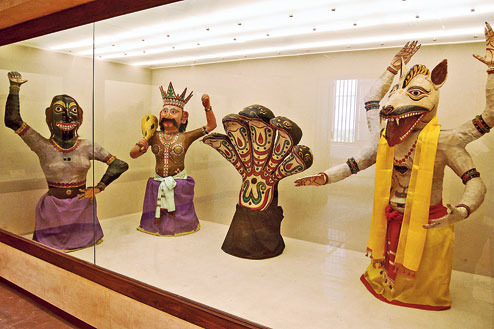
The number of masks in Indian Museum runs into hundreds and acquisitions date from the colonial period to 2000.

The collection has masks from not only India but also Australia, New Zealand, Central America, Africa, Bhutan and Nepal.

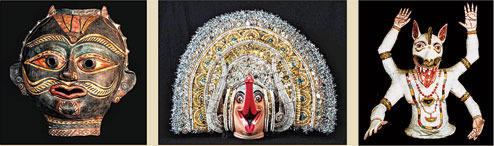
Most are dance masks of ancient folk traditions. Like the torso-covering Satriya mask of Narasimha used in Assam’s indigenous theatre, the Bhaona, or the brass mask of guardian spirit Bhuta of Karnataka or the golden deer from Bengal’s Gamira Dance ‘Ram Banbas Yatra’. There are masks of the Maoris and native Americans as well.

The mask gallery on the museum’s top floor was thrown open to the public in 2010. But it had to be shut in 2014 when some masks got drenched in rainwater because of a leaking roof.

MUSEUM TREASURE TROVE

The revamped mask gallery at Indian Museum will reopen on Tuesday
(From left) terracotta mask of Bakasura from Bihar; chhau mask of Lord Ganesha; Narasimha Satriya mask of Assam. Pictures by Bibhash Lodh

The gallery, revamped and redesigned by curator Mita Chakraborty, will reopen on Tuesday. Eight-five items will be on display.

“Many major museums have masks but few museums have a gallery dedicated solely to masks,” director Jayanta Sengupta said. “We have a significant collection. The Indian Council for Cultural Relations has decided to make Indian Museum the nodal agency for a large comprehensive exposition on Masks of India, which will be showcased in the next edition of The Festival of India. We will select items from museums across the country.”

The museum has arranged for a school workshop on Chhou and Gamira mask-making to mark the reopening.

Birinchi Medhi, professor of Gauhati University’s anthropology department, will give a special lecture on ‘Satriya Mask’ from 2pm. Sarit K. Chaudhuri, director, Indira Gandhi Rashtriya Manav Sangrahalaya, will inaugurate the gallery at 3pm. A mask dance is on the cards.

source: http://www.telegraphindia.com / The Telegraph,Calcutta,India / Front Page> Calcutta> Story / by Sebanti Sarkar / September 27th, 2016