Over a hundred exhibits on display capture the legendary film-maker’s multifaceted personality, as a writer, as an illustrator and as a composer.
The exhibition showcases everything related to Ray’s much-feted oeuvre, including photos from his famed Red Books where he jotted down minute details associated with his films.
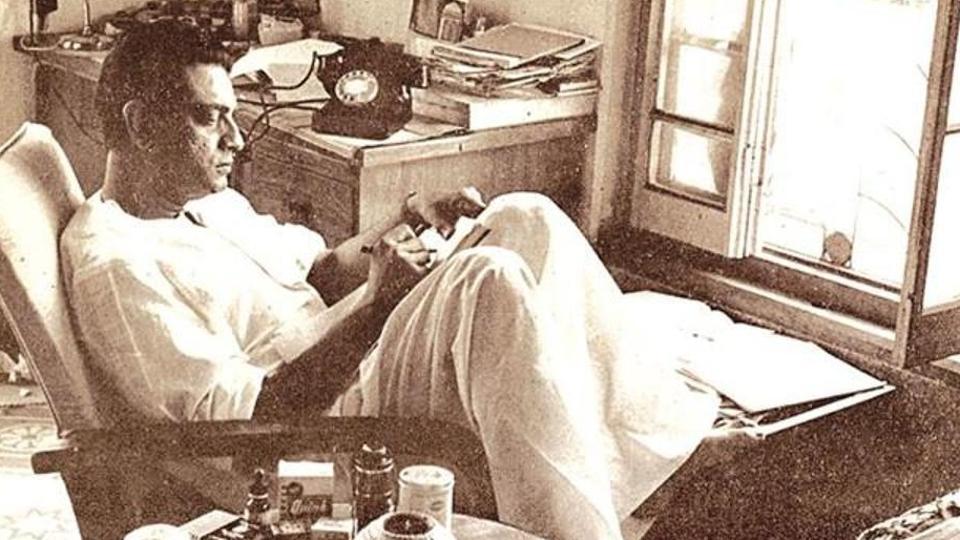
An exhibition of over a hundred exhibits celebrating 50 years of Feluda, the iconic sleuth created by auteur Satyajit Ray, was inaugurated in Kolkata on Sunday evening ahead of the legend’s 96th birth anniversary on May 2.
The Oscar-winning film director’s 25th death anniversary was observed on April 23.
The assemblage essentially captures everything related to Ray’s much-feted oeuvre, including photos from his famed “Kheror Khata” (red books or manuscripts) where he jotted down minute details associated with his films.
“Though the theme is Feluda, there is much more to be seen in the exhibition, such as his doodles. Initially we were restricting the exhibits to 90 but it has crossed 100. The items exhibited capture his multifaceted personality, as a writer, as an illustrator and as a composer.
“For Feluda afficionados, there are shooting schedule of films like Sonar Kella, sketches and illustrations of Feluda,” a representative of The Society for the Preservation of Satyajit Ray Archives, said. The show will run till May 4 at ICCR and then move to the Calcutta Club.
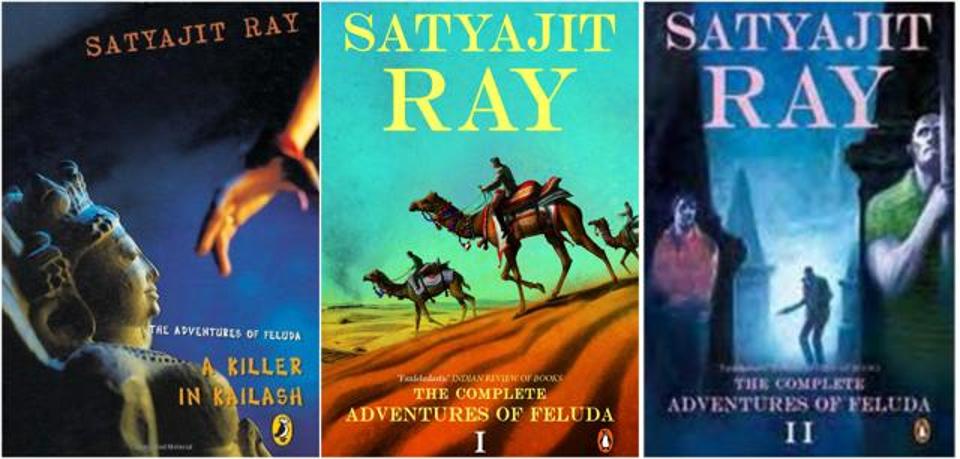
Revolving around the 27-year-old athletic Pradosh Chandra Mitter, nicknamed Feluda, the novellas showcase the private eye’s superb analytical and observational skills that ultimately solve the mysteries – be it murders, theft or kidnapping.
Said to have been modelled on Sherlock Holmes, the cigarette-smoking and martial art-trained Feluda is accompanied in his sleuthing pursuits by cousin, Tapesh Ranjan Mitra or Topshe who is the narrator of the stories and may have been loosely based on character of Dr John Watson.
Ray also brings in a character called Jatayu (Lal Mohon Ganguly), a writer of thriller novels who provides a much-loved comic relief, from his sixth novella onward.
Feluda possesses a .32 Colt revolver but rarely uses it. In story after story, his major weapon is “magajastra” (the brain). Since the first Feluda whodunit Feludar Goyendagiri (Feluda’s investigation) debuted in December 1965 in the Sandesh magazine, the series has been translated in four Indian languages besides English, French, Italian, Swedish, German and Japanese. The first Feluda book came out in 1967.
The books have spawned hit films, animations and comics and the character has attained cult status among the old and the young alike.
Follow @htlifeandstyle for more.
source: http://www.hindustantimes.com / Hindustan Times / Home> Lifestyle> Art & Culture / by Indo Asian News Service / Kolkata – May 01st, 2017
The journey that started in 1948 after Shambhu Mitra and Bijon Bhattacharya left the Indian People’s Theatre Association (IPTA) to embark on a new venture, continues unabated as Bohurupee turns 70 on May 1, making it the oldest surviving theatre group in the country.
The group that has left its imprint on the history of the nation’s theatre movement — first under Shambhu Mitra himself and then under Kumar Roy — is readying itself to present a theatre festival to celebrate the landmark.
The festival is scheduled between April 29 and May 1 and will not only see new productions and re-staging of popular plays, but will also have in attendance theatre directors Tanvir Akhtar from Bihar and Subodh Pattanaik from Odisha.
Shambhu Mitra (along with wife Tripti), stunned the theatre world with his ‘Raktakarabi’, ‘Char Adhyay’, ‘Visharjan’, ‘Raja’, ‘Malini’ and ‘Muktadhara’. Some of the other better known plays of Mitra were adaptations from Sophocles, Ibsen, Chekov, O’neil, Brecht, Anouilh, Sartre and Sanskrit classics like Sudrak’s ‘Mirchchakatika’ along with works of contemporary playwrights. The plays were noticed by leading theatre personalities in Mumbai and Delhi as well, so much so that Marathi legends Satyadev Dubey and Mohan Rakesh sent their student Amol Palekar to watch Bohurupee plays.
“Shambhu Mitra and and Kumar Roy shaped my sensibilities ever since I came into theatre in 1967. Those were different times when the Kolkata group theatre scene lit up theatre movements in Pune, Mumbai, Delhi and Bangalore,” said Amol Palekar, who is still associated with Bohurupee. “Night after night, I witnessed Mitra’s Ibsenian realism shake viewers out of their stupor. There was no Bohurupee production that I missed in the city,” he recounted. He has even written for the group’s special number that is scheduled to be released on the occasion.
The piece is at the same time a remembrance of Om Puri, whom he met at a theatre lovers’ gathering in Kolkata.
A new play, ‘Medal’, written by Alok Mukhopadhyay and directed by Debesh Roy Chowdhury, will be staged at the event.
Bohurupee spokesperson Susanta Das said, “We’ll honour the state’s biggest theatre directors. Of them, Rudraprasad Sengupta worked with Mitra and Bibhas Chakraborty started out as a Bohurupee student.”
source: http://www.timesofindia.indiatimes.com / The Times of India / Home> News> City News> Kolkata News / by Jhimli Mukherjee Pandey / TNN / April 24th, 2017
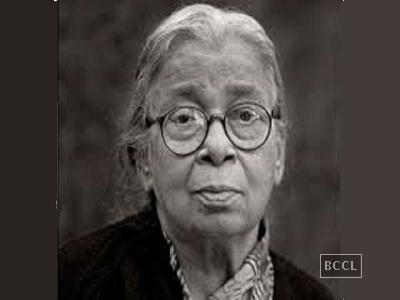
A memorial to Magsaysay award winning late author and social activist Mahasweta Devi will be set up at her residence in Rajdanga in Kolkata, Chief Minister Mamata Banerjee said on February 27.
“The memorial is ready. The memorial will house her belongings, books, and other materials used by her,” Banerjee said during an informal interaction with mediapersons at Eco Park.
Jnanpith awardee Mahasweta Devi, who crusaded for the rights of tribals and the marginalised throughout her life, died on July 28, 2016.
Banerjee also said the state government would establish memorials for famed journalists Barun Sengupta, Gour Kishore Ghosh and Amitabha Chowdhury. The government also had plans to rename roads after the three journalists. A road close to the office of the Bartaman newspaper on the Eastern Metropolitan Bypass founded by Sengupta would be rechristened after him.
The government was on the lookout for sites to set up the memorials on June 19.
source: http://www.timesofindia.indiatimes.com / The Times of India / News> Lifestyle> Books / IANS / February 28th, 2017
Last time sculptor Niranjan Pradhan worked with a model offering live sitting was 50 years ago in 1966-67, when he was a student at art college and professional models posed for students to sketch and sculpt human figures.
The sessions helped the artist create some of his best bronze figures, including that of Raja Rammohan Roy in Bristol, Vivekananda, Tagore and Jagadish Chandra Bose at Burdwan University , Satyajit Ray at Roop Kala Kendra and Uttam Kumar at Tollygunge. “One gets to sculpt only famous personalities or gods and goddesses. Artists usually don’t get to sculpt a live person,” said Pradhan. Little did he know he would get the rare opportunity , and the model would be none other than President Pranab Mukherjee.
Over five sessions last year, Mukherjee sat without as much as twitching a facial muscle as Pradhan gave the finishing touches to his statue, now at Rashtrapati Bhavan. “Rashtrapati Bhavan wanted to commission a work for the collection of President’s busts. I readily agreed,” Pradhan said.
Mukherjee had to first go in for a shoot, in which he was photographed from various angles.Based on the photos, Pradhan did the initial clay modelling and then a fibre glass mould, which he carried to Delhi for a live session with Mukherjee for finishing touches. “I was excited about checking out how my sculpture had fared compared to the person,” the artist said.But Pradhan was in for disappointment as Mukherjee got busy with meetings and then left for China.
The next time Pradhan visited Rasthrapati Bhavan was a couple of months later.But this time, he was pleasantly surprise. Not only did Mukherjee give him a day’s sitting, he also sat through for an hour, daily for five days in a row. “He was the perfect model.He was very cooperative and even spent time after the sitting to see how the work progressed,” Pradhan said.
The artist created a plaster cast of the final sculpture and returned to his Salt Lake studio for a bronze casting.
The bust was delivered to Rashtrapati Bhavan in time to be installed next to APJ Abdul Kalam’s bust on December 11, Mukherjee’s birthday .
source: http://www.timesofindia.indiatimes.com / The Times of India / Home> News> City News> Kolkata News / by Subhro Niyogi / TNN / February 27th, 2017
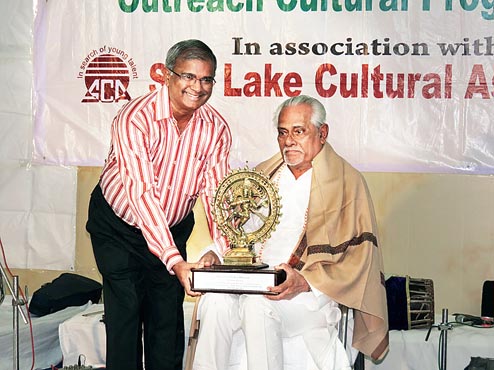
G.V. Subramanian, secretary and joint director of Bharatiya Vidya Bhavan, felicitates Sujit Bhattacharyya at the school auditorium on Saturday. Picture by Sudeshna Banerjee
The man who gave classical music a regular stage in Salt Lake was felicitated last Saturday by Bharatiya Vidya Bhavan. Sujit Bhattacharyya was handed the Parvathi and K.V. Gopalakrishnan endowment at a programme held at the school auditorium for giving young talent a platform over three decades through his organisation Salt Lake Cultural Association.
“Proficiency in classical music is tough to acquire but I would give more credit to the organisers of classical music programmes, especially if young talent is showcased. It is not easy to judge what a musician would be like in 10 years. It is even tougher to carry on doing this for so long. I hope the younger generation takes up the baton from him and carries on under his mentorship,” said Bikram Sarkar, retired IAS and a two-time MLA who stays in AD Block.
The president of the association Asit Kumar Chatterjee recalled the first annual concert 30 years back. “Now we have some resources. Then he was alone. But he was fired by this passion to make this happen. People are ready to loosen their purse strings for Durga puja or Kali puja but tell them you want to organise a classical music concert and you will get neither help nor audience.”
Acclaimed tabla player Suven Chatterjee recalled being scolded on multiple occasions by “Sujitda”. “I called him Sujitda instead of kaku since he was so handsome and I was worried that he might scold me if I called him uncle,” he smiled, adding how he got a chance to play with doyens like Girija Devi and Vishwa Mohan Bhatt at the conference’s programmes down the years.
Sitarist Mita Nag, daughter of Pandit Manilal Nag, recalled how Bhattacharyya had offered her the foyer of Gyan Manch where the annual concert was being held to put up her exhibition on Bishnupur gharana when she met him seeking space.
source: http://www.telegraphindia.com / The Telegraph,Calcutta,India / Front Page> Salt Lake> Story / by A Staff Reporter / Friday – February 24th, 2017
Historians have often linked the archaeological site at Chandraketugarh with Alexandar and the Greco-Roman maritime trade. But on ground zero, nothing much has been done till date to preserve the site with a 250-year-old history. Prodded by Barasat’s Trinamool MP Kakoli Ghosh Dastidar, things have finally started moving in the right direction. Fianlly, Chandraketugarh has started getting its due.
A museum has been readied to preserve artefacts that have found at Chandraketugarh. Though the Archaeological Survey of India (ASI) protects the site officially, there is no sign of “protection” anywhere apart from two signboards that stand at two ends of the mound. The half-excavated matrix lies exposed to daily loot and other ravages.
In 2009, after she became an MP, Dastidar was approached by local school and college teachers who had been trying to raise awareness over the site on their own. “They requested me to visit the site and see how soon everything will get lost. I was aghast at what I saw. ASI had done some piecemeal job and had left the site open and unattended. Since then, I have raised the issue in Parliament and approached the culture ministry to which the ASI reports. When nothing happened, I approached the West Bengal Heritage Commission, but unfortunately I was unable to stir up the imagination of the chairperson,” Dastidar said.
Finally, in August 2016, Dastidar wrote to chief minister Mamata Banerjee, seeking her intervention. “I told her clearly that unless we are able to set up a site office and a museum, the state will lose its most ancient archaeological site,” Dastidar added. Within days, the CM sent an investigation team — comprising the DM, bureaucrats and historians — that assessed the site, interacted with local activist groups and submitted a report that confirmed its antiquity.
Two TOI reports, one dealing with the deplorable state of things and another of a new research by IIT-Kharagpur experts trying to establish the antiquity of Chandraketugarh to Sandrocottus mentioned by Megasthenes, were also cited.
“Finally, at the CM’s insistence, we have been able to set up the museum and the site office, which will start functioning within a month. Local people who have been zealously guarding the excavated artefacts have agreed to donate them to the museum,” Dastidar said, adding that she has been able to recover artefacts worth a few hundred crores.
source: http://www.timesofindia.indiatimes.com / The Times of India / News> City News> Kolkata News / TNN / February 21st, 2017
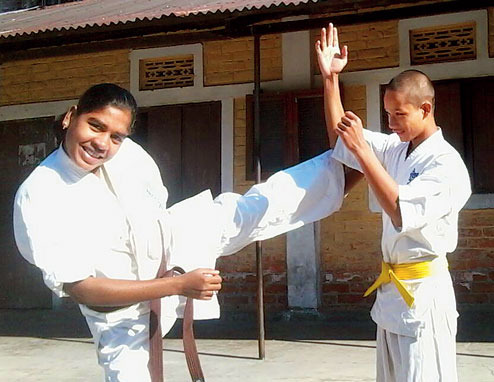
Subrati Baraik performs karate with a student in Jaigaon. (Anirban Choudhury)
Alipurduar :
A 23-year-old woman is providing training in karate to youths, particularly females so that they could protect themselves from teasing and stalkers.
Subrati Baraik, a resident of Madhu Tea Estate, is running a karate camp in Jaigaon and training youths for their own safety.
Baraik told Metro that she had decided to learn karate after being repeatedly teased by youths at different places.
“Eight years ago, I was teased by some youths while travelling on a train. I was returning home from Siliguri. When I tried to resist them, they passed lewd comments. After few months, a similar incident occurred again at a fair. I felt insulted after both these incidents and decided to learn karate for my safety,” she said.
In 2010, Baraik came to Alipurduar town and met Apra Bora, a karate coach.
“I requested him to teach karate and he started training me. In December 2015, I participated in a National Karate Championship in Hoogly and came first in ‘Kiyukishan Full Body Contact’ category,” she added.
In Jaigaon, located on India-Bhutan boarder and 15km from here, Baraik teaches karate to 20 students, of whom 15 are females.
“I started a camp around three years ago in Jaigaon. I came here with my coach and the urge to learn karate among students made me start the camp. I charge Rs 200 per month for a student,”she said.
Classes are conducted from 8am to 9.30am on Sundays.
Baraik said after learning karate, she had once beaten up a group of youths who were teasing her and also wanted her friends residing in the estate to learn the same.
“I could study till Class X because of financial crisis in the family. I have decided to teach karate to the youth in the garden but it will take time to convince them as they are very shy,” she said.
Baraik holds brown belt in karate.
Apra Bora, Baraik’s coach, said: “She is really talented. If she does training with a lot of sincerity, she will be able to win more championships.”
The garden is 36km from Alipurduar town.
source: http://www.telegraphindia.com / The Telegraph,Calcutta,India / Front Page> North Bengal> Story / by Our Correspondent / Friday – February 17th, 2017
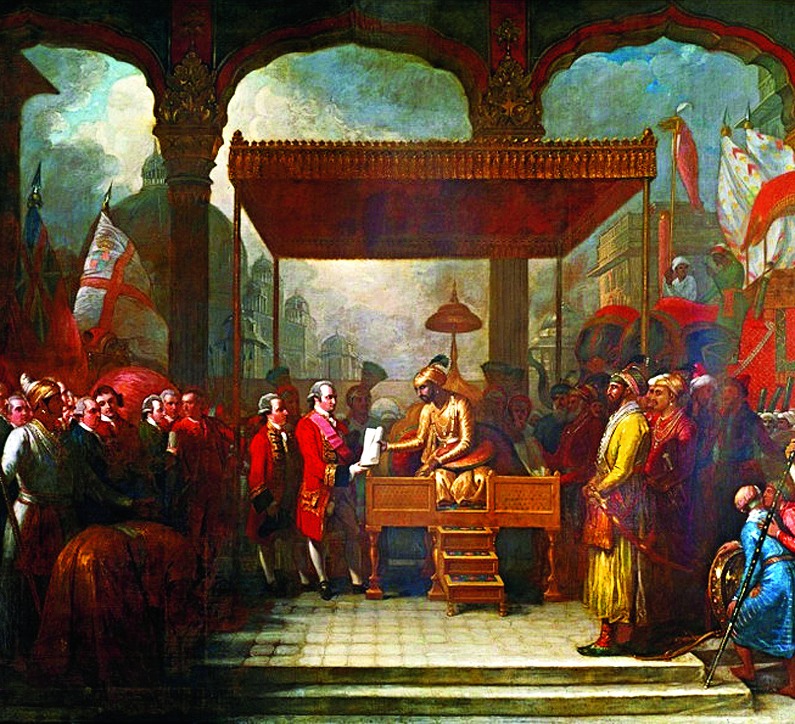
A painting by Benjamin West, 1765, of the Mughal emperor, Shah Alam, transferring the right of tax collection to Lord Clive
East India Company was basically a commercial enterprise; till the end it continued to make good money by exporting Indian goods. In the 19th century, its monopoly was corroded by the entry of other British traders; but trade continued to be a major activity till its demise in 1858.
But it was an odd bird from its birth. The Spanish and Portuguese adventurers who preceded it were an explicit extension of their home governments; the British crown, on the contrary, kept out of the Company’s affairs abroad. Charles II gave the Company power to judge and punish people in its territory abroad according to the laws of his kingdom in 1661; the power to make locally applicable laws followed.
The injunction assumed that the Company would occupy and own territory. But its territory in India was not virgin territory; it had its own administrative structure, of which the Company became one pillar. So it had two masters; and in so far as the two never talked to each other, it had considerable freedom of manoeuvre. But legislation and administration were not its main business; it tried to minimize the effort it put into them. One way it did so was to use local law where it existed, and import British law where there was no local law.
The two differed greatly in respect of landed property. In 1660, King Charles II abolished personal service due from noblemen and converted it into a monetary obligation; that is how land revenue became the dominant tax in Britain. In India, too, land revenue was the major tax; it was reckoned as a third of agricultural produce under Akbar. But it was not always in cash. And it did not necessarily go to the king; the nobleman delivered his dues in cash or in military service. The feudal structure applied to the Mogul empire, but not necessarily to other, smaller kingdoms. So when Lord Clive defeated the Mogul army in 1765 and took the Diwani of Bengal, the Company had to learn the ins and outs of zamindari.
The lessons it learnt are the main part of Law and the Economy in Colonial India, a new book by Tirthankar Roy and Anand V. Swamy. They are an odd pair. Tirthankar is a first-class economic historian. But he is not a leftist; so he faced discrimination from the academic powers-that-be in India. Finally he got fed up and left India; now he teaches in the London School of Economics. Anand Swamy teaches economics in Williams College. They have been running into each other in conferences, and working together on books once in a while.
Their conclusion is that the Company did not learn the lessons well. Its laws led to thousands of cases in Bengal relating to property, tenancy and rent; the system remained overloaded throughout British rule, and cases took decades. As if property law was not obscure enough, legal proceedings were complicated by succession law, which differed according to religion. They do not say so, but the mess was sorted out after Independence, first by legislation abolishing zamindari, and more slowly by population growth, which reduced the size of holdings.
It is difficult to imagine today that Indians could own slaves till 1843; and once slavery was abolished by law, all they had to do was to give a loan to the slave and turn him into a bonded labourer. That is not surprising, since Britain itself outlawed slavery only in 1811. But slavery served a purpose under conditions of labour shortage, which was commonly faced by plantations in the north-east. There were not enough workers in the area; they had to be brought from far away, most often tribals from Chhota Nagpur, which is now Jharkhand. Loading them into bullock carts and transporting them hundreds of miles cost money; a planter could not afford to bring them and then let them walk over to a neighbouring planter for a higher wage. So planters asked for and got laws which empowered them to jail their workers for not repaying a loan. But maltreating workers also earned a planter a bad reputation that he would rather avoid; so planters who could get and retain workers more easily avoided using penalties. Roy and Swamy deal with these labour market adjustments in some detail.
I found their discussion of contract law fascinating. Before the statification of the Company, Indian governments did not legislate or enforce laws. But commerce had existed for millennia; and where there was trade, there was always scope for cheating and breach of promise. Traders used social networks to deal with these risks; loss of reputation and standing was the punishment for breach of contract. But this could work only with those who had reputation to lose; it could not work with Santhal labourers or indigo farmers. When it came to workers, the Company gave penal powers to their employers. That could not be done with indigo farmers; they were not housed by indigo buyers, and could not be jailed or beaten up. So indigo buyers collected chits documenting debt against various farmers, and when an opportunity arose, sold them off to someone who had greater influence on the debtors. Partly under their influence, a contract act was passed in the 1860s; but few cases were filed under it.
Such are the narratives collected by Roy and Swamy. Their book is neither a treatise on law nor a history book: it does not systematically align legislation and case law, and it does not tell a story. The topics it has chosen are broad; a systematic treatment would take more space. Making a history out of it would require a larger role for the personalities involved; a legal treatise would require links with both legislative and case law. So there is a case for expanding the book.
Roy and Swamy should also try their hand at pathology of Indian law. The Indian judicial system is hugely overloaded, and extremely slow; the two aspects are connected, but slowness is not just due to overload. It is a good deal due to antiquated procedure; for instance, judges let lawyers drone on and on, briefs cite piles of cases unnecessary to make the point, and courts give postponements and adjournments for the asking. There are too many briefless lawyers, and too few judges. High courts reverse a high proportion of lower court judgments, generally on the ground of poor police investigation. Other systems have faced these problems and overcome them.
No one in India has looked critically at the judicial system except Arun Shourie; anyone who thinks of doing so is bound to consider the possibility that he may face judicial bias if he is hauled to court. Roy and Swamy do not have to worry about that. At worst, a book of theirs would be banned in India. But that would not be much of a loss; hardly any book sells more than a thousand or two copies in India, and the publicity would increase the book’s sales outside. If the judicial system is to be repaired, someone has to start somewhere, and no one is better placed to do so than Roy and Swamy.
source: http://www.telegraphindia.com / The Telegraph,Calcutta,India / Front Page> Opinion> Story / Writing On The Wall: Ashok V. Desai / Tuesday – February 14th, 2017
This saree-clad, Spanish-speaking woman had stood out in the Costa Rica pavilion of the Kolkata Book Fair. Nothing about her looks and demeanour was Central American and yet she seemed so much at home, spreading native Costa Rican cheer. But speaking to a visitor at the pavilion, her Spanish changed into pure Bengali within seconds. Kolkata girl Baishakhi Saha has made it big in Costa Rica to gain permanent residency from the government there.
Saha used to live in Salt Lake and studied at Bharatiya Vidya Bhavan before settling down with her parents in Chennai. Her ties to the city, however, remained strong as the family often returned to visit relatives. Always a brilliant student, Saha bagged a scholarship from the Singapore department of education to major in computer science and minor in German from University of Singapore. It was during her stay there that she realised being part of university exchange programmes would help her see the world.
However, she soon realised that with a partial scholarship, it was quite an expensive proposition for an Indian girl with a middle-class background. Around this time, she participated in a global essay-writing competition hosted by the government of Switzerland, on how Europe still inspires imaginations. This won her a limited period stay in Switzerland, which was a turning point in her life. “I yearned see the whole of Europe.
There were many like me and I soon found that by becoming a member of Aiesec, a global students’ body, I could get placed in jobs and get internships that could help me with that. Luckily, I managed to clear the necessary tests and was called for an interview to Malayasia, after which I was awarded a management internship with Model United Nations in Nigeria. It was a two-month job and I made $200 a month — quite a hand-to-mouth situation, but I enjoyed every moment of it,” Baisakhi recalls.
For the next one-and-a-half years she travelled the length and breadth of the west coast of Africa for the TV show Goge Africa. Aiesec acknowledged her work and her next assignment was that of an English teacher in Venezuela, after which she got a similar assignment in Costa Rica. By then, she had started writing her book, ‘magicNine’. The book was a success and Baisakhi was soon giving inspirational talks and teaching business communications at institutes. Her popularity made the Costa Rican government acknowledge her contribution and offer her permanent residency.
“Life has been a dream since then. Costa Rica is more or less like Kerala or Goa if you want to compare Indian situations. I come to Kolkata once in a while, but I have plans to take slices of Bengali culture there now,” Baisakhi said. She is a dancer too and has performed Indian dances in Costa Rica, which have been instant hits. As one of the few Bengalis in a distant land, she has much to do to bridge the two cultures, she explained.
source: http://www.timesofindia.indiatimes.com / The Times of India / News> City News> Kolkata News / by Jhimli Mukherjee Pandey / TNN / February 13th, 2017
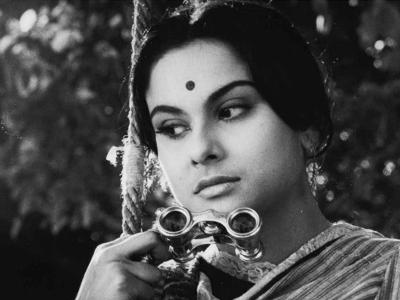
To mark the 75th birthday of veteran actress Madhabi Mukherjee, a special programme will be held on Saturday at Nandan. The Federation of Film Societies of India (FFSI) is hosting this programme along with Shilpi Sangsad and Nandan that will see a host of dignitaries speaking about the actress followed by a screening of “Baishey Srabon”.
While her remarkable prowess in acting has often been spoken about, what has hardly been highlighted is Mukherjee’s philanthropic nature.
Said her daughter Mimi Bhattacharya, “Maa would buy umpteen bottles of pickles sold by an ageing actress only to help her tide through crisis. There were times when we wouldn’t even need that much. Yet, she bought them because that was her way of helping the veteran actress.”
She was among the few who had extended financial help to Ray actor lying on his deathbed in a government hospital. During that time, she was invited to Sonagachhi to attend a programme organised to launch the Babu Samity.
Premendra Mazumdar, who is the former general secretary of the Federation of Film Societies of India, was also one of the speakers. Addressing the sex-workers, Mukherjee had given a fiery speech that day. “‘Both you and I work with our bodies. We use our bodies in a certain way when we perform as actors. You use your bodies differently in your profession. But never be ashamed of what you are doing,’ she had said,” recalled Mazumder.
During her speech, she had referred to how this actor was once in relationship with a lady from that area. “Suddenly, we saw a lady in the crowd weeping profusely. She was the one with whom he had had this relationship. Spontaneously, the girls collected money for his treatment. This lady then accompanied Madhabi-di back to the hospital and stayed there till he died,” recounted Mazumder.
Even her decision to join politics was driven by her urge to help the workers who had lost their job when the Star Theatre was gutted down by a fire. “Maa was crest-fallen. Along with Soumitra kaku (Soumitra Chatterjee), Maa had approached Buddhadeb Bhattacharya to see if something could be done. There were some litigation issues. But Buddhababu never informed her that he wouldn’t be able to do much. That hurt Maa a lot. Later on, when Subrata Mukherjee and Mamata Banerjee had approached maa to join politics, she had first asked if they would do anything for Star theatre. When they had said yes, she had counted 1,2,3 under her breath and said yes,” Mimi said. Losing the polls wasn’t an issue for her. “Maa had to contest against him and was ready to face the consequences,” Mimi said.
However, Mukherjee herself has never liked to highlight the way she has helped others. “It is not about only reaching out to people from the industry. I connect with human beings and try to do my bit to help them,” she said, happy that she has been able to make a difference in people’s lives.
source: http://www.timesofindia.indiatimes.com / The Times of India / News> City News> Kolkata News / TNN / February 10th, 2017