Category Archives: Arts, Culture & Entertainment

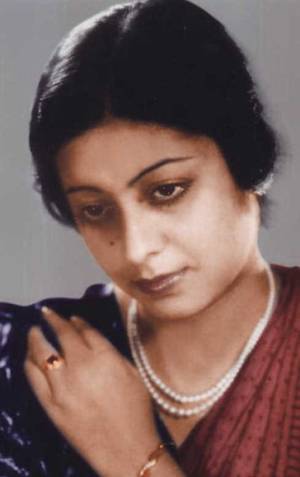
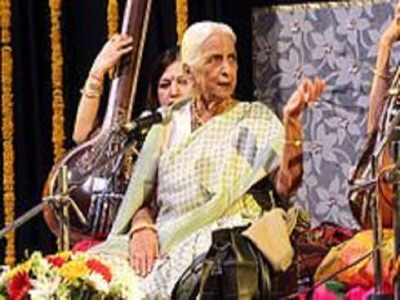
‘Girija Devi’s demise an irreparable loss to Banaras Gharana’

Even at 88 her scintillating voice could leave the audience spell bound

_______________________________________________________________

Highlights

Girija Devi, fondly known as Appa ji, passed away in a hospital in Kolkata on Tuesday evening. She was 88.

She worked as a faculty member of the ITC Sangeet Research Academy, Kolkata in the 1980s and of the Banaras Hindu University during the early 1990s

She was awarded Padma Vibhushan in 2016
_________________________________________________________________

Varanasi :

Demise of great vocalist and Thumri queen Girija Devi came as a big shocker to the music lovers of Varanasi, the birth place of the eminent singer. Girija Devi, fondly known as Appa ji, passed away in a hospital in Kolkata on Tuesday evening. She was 88.

“It is an irreparable loss to Indian music and Banaras Gharana of music. She was a guiding figure for us,” said noted Sarod player and Yash Bharati recipient Pt. Vikash Maharaj. “She was ailing for some time, and admitted to BM Birla Hospital in Kolkata in the morning. She left for the heavenly abode in the evening,” he said adding that she had been living in Kolkata with her daughter.

“No one can fill the gap. Even at 88 her scintillating voice could leave the audience spell bound. She was perhaps the last exponent of thumri, tappa, chaiti and khayal. I heard her singing in an award ceremony in New Delhi on August 27,” said Ashok Kapoor, founder of a cultural organization Kala Prakash working for the cause of Indian music.

Though settled in Kolkata, she regularly visited Varanasi. She was born in Varanasi in 1929. She took lessons in singing khayal and tappa from vocalist Sarju Prasad Misra in early childhood. She worked as a faculty member of the ITC Sangeet Research Academy, Kolkata in the 1980s and of the Banaras Hindu University during the early 1990s. She was a prominent performer of purabi ang thumri style of Banaras gharana. She was awarded Padma Vibhushan in 2016.

source: http://www.timesofindia.indiatimes.com / The Times of India / News> India News / by Binay Singh / TNN / October 25th, 2017

Kolkata: A peek into Parsi tradition and culture at 4-day expo

Kolkata :

If you’ve always wondered what lies beyond the closely guarded boundary walls of a Parsi fire temple, especially because tradition has it that a non-Parsi is not allowed inside, your curiosity is going to be satisfied. A Parsi agyari (fire temple), as it is called by the community, will be re-created as part of a special four-day exhibition that the community in the city is organising to explain its history, traditions, lore and culture.

The exhibition, Threads of Continuity, is being organized between October 26 and 29 by The Calcutta Zoroastrian Community’s Religious and Charity Fund (a trust) – as part of its 150 years celebrations – in association with Parzor, a Delhi-based foundation that has been working with the support of the Unesco for the revival of Parsi culture and heritage. It’s being held at Olpadvala Memorial Hall.

There are about 650 Parsis in the city, a number that has dwindled from 2500 three decades ago. While on one hand the community rues that there has been a steady brain drain of Parsis from the city – thanks to the lack of business and career opportunities here – on the other, both the Parsi Club and the trust have tried to keep the community bonding strong by organizing cultural activities throughout the year. “But, we need to know more about our history that goes back to ancient Persia and the time when we as Zorastrians came under attack from the Muslim invaders/rulers of Persia. Facing persecution, we fled and reached the shores of Diu from where we entered Gujarat and chose to settle there after we were given shelter by the king…” said Cyrus Madan, a trustee.

“Most people do not know why non-Parsis are not allowed inside the fire temple, for that matter, many don’t know that we are not worshippers of fire. It’s just a medium through which we reach the God. We just want to de-mystify everything,” said Trista Madan, who is co-ordinating with Parzor.

source: http://www.timesofindia.indiatimes.com / The Times of India / News> City News> Kolkata News / by Jhimli Mukherjee Pandey / TNN / October 23rd, 2017

Two girls who’ve brought cosplay to Kolkata

We all have our hidden heroes somewhere inside. It may be someone with superpowers — like Superman or Batman — or someone from the dark side — like Loki or Harley Quinn. While most of us go through life with these fantasies locked up, there are some lucky ones who get to express their innermost desires, dressing up as characters of their choice. These are the cosplayers — people who role-play as fictional characters for an audience — and Kolkata finally has a couple of them to boast of.

What is Cosplay?

Cosplay or Costume Play is a hobby where the participants bring a fictional character to life with the right makeup and costumes. The idea behind cosplaying is to bring two dimensional art forms into 3D space. The characters mostly revolve around anime, video games, manga comics and are sometimes taken from storybooks and TV/web series.

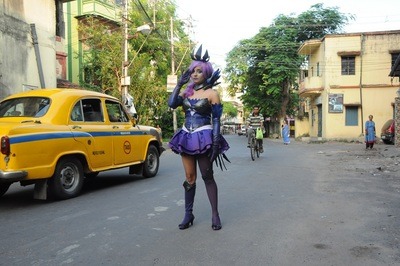
Meet Rhea Chowdhury and Romi Mondol, two girls who’ve taken up this exciting, adventurous hobby in a city that’s a cosplaying backwater in every sense of the term. Cosplaying is an accepted sub-culture abroad, especially in countries with a huge fan following for comic books, like the US and Japan. In India, it’s become popular in cities that have regular Comic Cons, like Bangalore and Mumbai. But that’s not a hindrance for our two city girls. Rhea, aka Rheality Lapse, is a social media executive who’s been cosplaying since 2015, while Romi Mondol, an MBBS interning at SSKM hospital, just started a year back. Their stories will tell you more about them, us and the world of cosplaying.

Early days of Cosplaying

Romi, for instance, faced some resistance at home when she started dressing up as fictional characters. Her parents found her behaviour eccentric and couldn’t understand what the budding doctor was up to. “My dad is still dead against cosplaying as he thinks doctors are not supposed to do such things. My mom was also against it, but since she loves tailoring, she has started sewing my cosplay clothes,” says Romi. Cosplaying also allowed her to cross-dress. “From childhood, I liked to dress up as a boy. I was often taunted for this, but cosplaying helped me get rid of the inhibitions,” Romi adds.

Romi Mondol
Cosplay name: Romtz Wonder World
Profession: Doctor
Cosplaying since: 2016
Major characters covered: Usui Takumi, Misty (Pokemon), Erza Scarlet, Rei Ayanami, Harley Quinn, Lucy Heartfilia
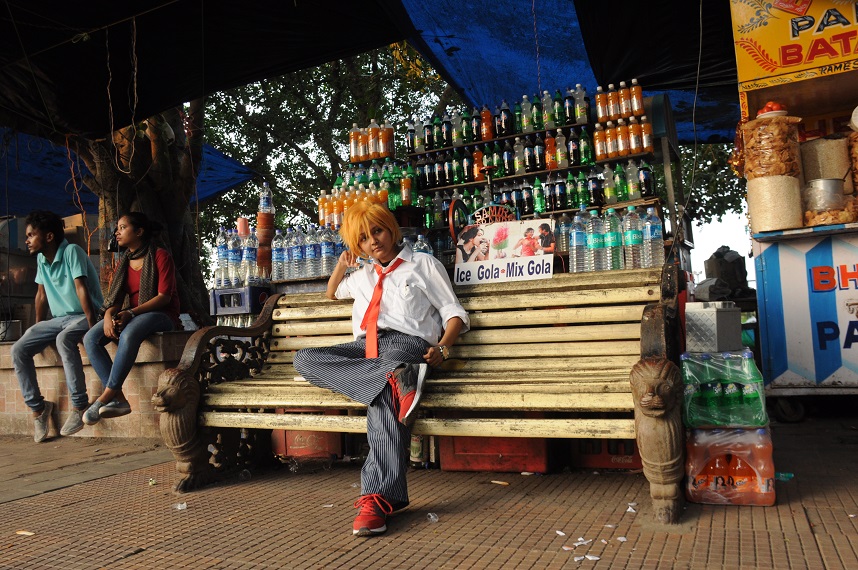
Romi also thinks gender consciousness is dependent on how people address the issue. “I am a cross-cosplayer. I like to dress up as both male and female characters, though I prefer men. Cosplay allows me that, which is one of the major reasons why I fell in love with this activity.”

Rhea on the other hand has a supportive family. “I was always into Japanese anime and gaming. My parents knew that my hobbies and likings were offbeat. They have accepted me the way I am, but they get worried when I wear skimpy clothes. That’s mostly because of the horrifying news we see and read every day,” she says. Rhea started following cosplay in 2010 and before she knew it, she was regarded as a cosplayer. “I’ve been following the scene since 2010. But I started dressing up much later. I used to do that for fun. But when people started calling me a cosplayer, I thought, why not?”

The Kolkata scene

Rhea feels Kolkata can become one of the leading Indian cities for cosplaying, but can’t understand the reasons behind the ignorance. “Kolkata has a niche audience for gaming and cosplaying. But somehow big events like Comic Con India don’t come to our city,” she adds. She also points to the availability of cheap dress material, which is crucial to cosplaying. “The city offers you the best quality dress material at a much cheaper price compared to other Indian cities. This should interest cosplayers but I don’t know why people don’t participate.”

Rhea Chowdhury
Cosplay name: Rheality Lapse
Profession: Social Media Manager
Cosplaying since: 2015
Major characters covered: Lara Croft, Weiss Schnee, Harley Quinn, Juuzou Suzuya (Crossplay), Dark Lux, Diva (blood+)
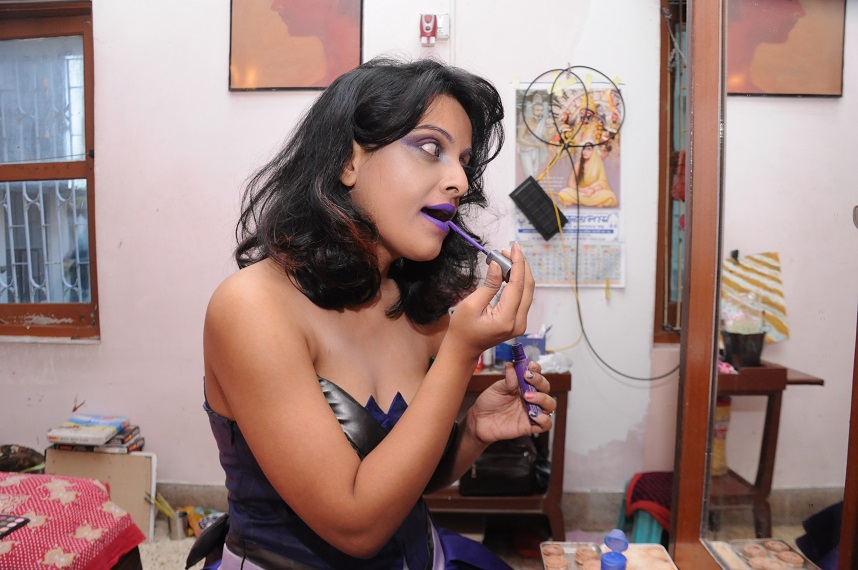
Romi echoes Rhea in that the major cosplay events ignore Kolkata, which is why cosplaying is not growing here. “If events like Comic Con had come to our city, people would have got the opportunity to think about it. Now, most people don’t know what cosplay is. Many people I know have cosplayed once or twice but they didn’t continue because of the lack of events.”

Rhea has won many competitions held elsewhere in India. “I didn’t go for winning; I just went for cosplaying. The opportunities here are so few that participating itself is great fun for me. However, I won quite a few times and it’s always nice.” Romi is visiting Mumbai for a cosplay event later this year. “My profession doesn’t allow me enough time for cosplaying and since Kolkata doesn’t have much events, travelling to another city takes a lot of time. So I miss out on many big opportunities,” she adds.

Both agreed that since Kolkata is not exposed to the idea of public role-playing, people often behave in objectionable ways when they’re out in their costumes. Rhea speaks about a harrowing experience on Park Street, which is seen as the city’s party street. “I did a cosplay walk dressed as Harley Quinn (Suicide Squad) along with my friend who was dressed as the Joker. Stares are common and we cosplayers are prepared for that. But we had to stop the shoot as people crossed the line of decency and came too close. This is not the first time though; such behaviour is common in Kolkata,” she remembers.

Even Romi has faced similar problems. “Even if I ignore the innumerable stares and comments, sometimes people cross the limit. I have faced situations like that but I got out of them very confidently,” she says with a smile.

source: http://www.timesofindia.indiatimes.com / The Times of India / News> City News> Kolkata News / by Shrutanwita Chakraborty / TNN / October 22nd, 2017
This video by a Cuban filmmaker turns Kolkata into a dizzying roller coaster ride

‘During my trip to Kolkata, I could only think of one word.’

https://www.youtube.com/watch?v=hYg2dmJO4Lg

Ever since City of Joy, Kolkata has been a foreign filmmaker’s joy, its dizzying roll of sights, faces, sounds, and activities offering exciting possibilities to documentary-makers in particular.

Cuban-born, Netherlands-based filmmaker Yuribert Capetillo Hardy aptly summed up the feel of Kolkata in the title of his short film – Roller Coaster. “During my trip to Kolkata, India, I could only think of one word: rollercoaster,” he wrote in the film description. “This film rollercoaster is the visualisation of my feelings, fears and emotions.”

Hardy’s film moves just like a rollercoaster, swooping low and soaring high to create an exhilarating collage of scenes from the city. He shot his film in just one week, while on assignment for a Dutch non-profit organisation, 1000Children. “The one thing that stays on my mind was a little baby sleeping alone in the streets, which made me think of my own daughter who grows up protected and loved,” Hardy noted.

We welcome your comments at letters@scroll.in.

source: http://www.video.scroll.in / Scroll.in / Home> Around The Web / by Scroll Staff / October 14th, 2017

Project to revive lost glory of Kolkata-Puri pilgrim route

Kolkata :

A team of researchers has taken up a project to revive the lost glory of Jagannath Sadak — the ancient trail from Kolkata to Puri used by travellers and pilgrims before the railways came. The project was launched by the Indian National Trust for Art and Cultural Heritage (Intach), Bengal chapter on November 19, 2015.

Titled, “Listing and Documenting the Monuments of the Jagannath Sadak in West Bengal”, the compiling of heritage sites dotting this coastal route between Odisha and Bengal is now an elaborate three-volume document that informs about the precious structures lost in oblivion and also those which can still be protected. It will be released at the Indian Museum on Sunday. Anil Dhir, chief coordinator of the project, told TOI, “We have traced 200 remnants in Odisha, but only 100 in Bengal.

Many of the monuments don’t exist any more, but some structures, such as a Gurudwara at Chandrakona, a Jagannath temple at Dantan, a Kali temple at Bagnan and the Nandagopal temple at Mellock near Panskura, are still there.”

Travellers would cover the 516 km stretch in bullock carts, palanquins, horses, camels and elephants. Many walked.

Three years ago, Dhir took a bullock cart to traverse the entire stretch. “For the documentation, three different routes were taken in Bengal. They culminated at Dantan on the Odisha border,” explained Dhir. The route taken by Chaitanya Mahaprabhu was through Tamluk, Mahisadal, Kanthi and Mohanpur while Guru Nanak took the route through Chandrakona, Midnapur and Narayangarh.

The popular and shorter route through Uluberia, Panskura, Debra and Belda. G M Kapur, convener, Intach’s Bengal chapter, said, “We will approach the Bengal and Odisha governments and the ASI to notify these 315 structures as protected monuments and help in their conservation.” With the advent of the railways, Jagannath Sadak was abandoned.

source: http://www.timesofindia.indiatimes.com / The Times of India / News> City News> Kolkata News / by Ajanta Chakraborty / TNN / October 21st, 2017

Blind boys in melody mission – MUSIC RESTORES WHAT LOSS OF SIGHT SNATCHED

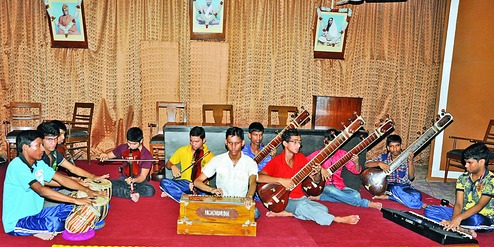
The band rehearses on September 22, a day before going to Delhi to play at a puja concert. Picture by Anup Bhattacharya

Narendrapur:

Asit Sil can feel the calluses on his fingers from hours of playing the sitar but still won’t use a plectrum.

Touch and feel are integral to the music created by this 16-year-old and his friends, part of a band of talented teens from the Ramakrishna Mission Blind Boys’ Academy in Narendrapur.

The band comprises more than 10 members, all of them students with varying degrees of visual impairment. Asit has 90 per cent blindness. Vocalist Dipu Roy, 19, was diagnosed with Nystagmus disease as an infant and lost his eyesight by the time he turned 2.

“Sight is not a must-have for musicians. But it is a different ballgame when you are playing in a group. In a concert, one wrong note can disrupt the entire performance. It takes hours of practice to get the coordination right,” said Bishnu Deb Chakraborty, one of the music teachers at the academy.

The band performs at concerts in the city round the year. From Tagore to SD Burman, instrumental compositions based on ragas to bhajans and folk, the band’s bouquet of music spells variety.

The boys have been invited to perform at pujas in different parts of the country in the past couple of years. Last year, it was Mumbai. This festive season, they performed at a celebration in Delhi.

“They had been invited by a puja near Dwarka. Most of them went to the capital for the first time,” said Biswajit Ghosh, the principal of the academy.

Indranil Kesh, who plays the violin, is from Bardhaman. He had joined the academy in 2011 and has been playing for close to four years. The VG Jog admirer remembers “sweating in panic” the first day he took the stage for a concert at the Rahara Ramakrishna Mission.

“Now I don’t get nervous unless the event is really big,” smiled Indranil, who loves listening to Arijit Singh’s melodies.

If Indranil’s favourite raga is Shivranjani, its Yaman for Asit, who is from a family of farmers in South Dinajpur.

Asit had started taking singing lessons at a very young age. Joining the academy seven years ago changed his passion. “I fell in love with the sitar,” recounted the teenager, who loves listening to Vilayat Khan and Ravi Shankar on YouTube.

On normal days, the boys practise in an auditorium at the academy for an hour after their regular classes. “They put in more hours before an event,” said principal Ghosh.

Sandip Sen, 18, plays the tabla. The Asansol boy’s only memory of music before joining the academy in 2012 is of his mother singing him to sleep. “I had kept my formal initiation into music a secret. When they first heard me in a programme in Calcutta, they could not believe it,” Sandip recalled.

source: http://www.telegraphindia.com / The Telegraph,Calcutta,India / Home> Calcutta / by Debraj Mitra / Tuesday – October 17th, 2017

Our fair lady

As the entertainment industry celebrates the birth centenary of Kanan Devi, let’s rewind to the life and times of the first melody queen of Indian cinema.

Kanan Devi, the melody queen and superstar of 1930s and 40s, was a remarkable personality. An epitome of beauty, glamour and grace and the recipient of the prestigious Dadasaheb Phalke Award (1976), Kanan’s life story (1916-1992) transcends that of Eliza Doolittle in “Pygmalion” and “My Fair Lady”. Her memoirs “Sabare Ami Nami” (I pay my respect to everyone) provides a fascinating account of her transformation from an unlettered slum girl into a much sought after social celebrity. The most astounding aspect of her persona was her grit, determination and courage which led her to attain the pinnacle of fame and glory and thus become a legend and an institution in her lifetime.

Kanan began her career as a child artiste Bala in Madan Theatres of Calcutta during the silent era. Her name may not mean anything to the present generation but in her times she was not only a melody queen but also a glamorous superstar of Indian cinema. She was the only artiste of the silent era to make a smooth transition to the talkies.

It was her superb performance in Radha Film Company’s Bengali production “Manmayee Girls School” that made Kanan famous. She was acclaimed by the media as the prettiest and most attractive singing star of the day. So much so, that even the renowned P.C. Barua offered her the role of Paro in his all time classic “Devdas”. Kanan could not accept the offer owing to her contractual obligations with Radha Films but she harboured the regret at not being a part of the film throughout her professional career.

An amateur singer when she joined cinema, Kanan received training in classical music from Allah Rakha, an eminent ustad from Lucknow. This qualified her to master light classical or semi-classical, including the ghazal form of singing. She learnt Rabindra Sangeet from Anadi Dastidar, kirtan from Dhirendra Mitra and Nazrul Geeti from Kazi Nazrul Islam himself. But above all, her real teacher was New Theatres’ R.C. Boral, the father of Indian film music.

Kanan Bala joined the elite New Theatres, Calcutta, in 1936 during its golden era. Debaki Bose gave her a prominent role in his masterpiece “Vidyapati” (1937). She dominated the film with her superb performance as Anuradha, a character created by Nazrul Islam. Her enchanting songs like “More angna mein aaye aali” along with lovely duets with K.C. Dey made her the leading singer-star of New Theatres. She followed up the astounding success of “Vidyapati” as a heroine opposite Barua in his hit “Mukti”. Kanan stunned the viewers with her charming performance as a sophisticated high society emancipated woman. Once again the music scored by Boral and the hit songs by Kanan added to her fame and popularity.

The culmination of Kanan’s career, however, was her appearance as K.L. Saigal’s heroine in the New Theatres’ greatest musical hit “Street Singer” (1938). Directed by Phani Majumdar with music again by Boral, the film was a runaway success all over India. It created a sensation in the film industry. Kanan Bala emerged as the melody queen and reached the zenith of her fame and glory. Kanan was now a celebrity and it was said that she carried honey in her throat. Saigal and Kanan had deep and genuine admiration for each other’s talents. Their enchanting duets, “Lachhmi Moorat daras dikha”, “Sanwariya Prem ki bansi bajaye” and “Sukoon dil ko mayssar gul-o-samar mein nahi”, still continue to haunt music lovers.

Kanan appeared in three other films “Sapera” and “Jawani Ki Reet” in 1939 and “Haar Jeet” in 1940 with stars like Pahadi Sanyal, Prithviraj Kapoor, Nawab and Najmul Hussain. All of them were moderately successful and none was a box-office hit. This temporary set-back in Kanan’s career was more than made up by the great success of “Lagan” where she again teamed up with Saigal and their melodious songs – four by Kanan and five by Saigal – proved to be popular hits.

Soon after this, Saigal left for Bombay and Kanan also left New Theatres. Later, she joined Barua’s M.P. Productions and appeared with him in the famous hit “Jawab” (1942). This film is remembered even today for its captivating numbers “Ae chand chhup na jana” and “Ye dunia toofan mail”. Its music was scored by Kamal Das Gupta, himself a reputed singer. Kanan Bala’s Hindi film career virtually ended with “Jawab” since her subsequent films like “Hospital” (1943), “Chander Shekhar” (1947) and “Faisla” (1947) did not attract audience.

Kanan Bala’s personal life was also quite eventful. She mentions in her memoirs how her first marriage with Ashok Maitra, the son of one of the most eminent educationists of Bengal, broke down due to the society’s reluctance to accept and recognise her as its dignified member. In 1947, she went abroad to educate herself with the goings on in the western world of cinema. She was glad to visit Hollywood and meet legends like Clark Gable, Spencer Tracy, Robert Taylor and others. On her return she resumed her professional career and worked in some films before setting up her own Shrimati Productions. In the meantime she married Haridas Bhattacharya, ADC to the then Bengal Governor in 1949, who also joined films as a director. Together, they produced many Bangali films till she retired from the industry in 1966.

It was quite an uphill task for Kanan Bala to transform herself into Kanan Devi in those days when women liberation was unheard of. She had to struggle and with her strong determination and independent personality, she virtually forced the society to shower their respect and esteem on her when she became a celebrity in her own right. In her old age, she fondly remembered her days at New Theatres, full of joy and laughter. She was deeply impressed with K.L. Saigal and had the greatest regard for him.

Kanan Devi virtually stopped singing after 1947. Her last concert was at the India House in London when she was invited by Shri Krishna Menon, the High Commissioner, to perform on 15th August 1947. She mentioned about it as the greatest moment in her life as a singer. Kanan inspired a whole generation of later day singers, the foremost being Lata Mangeshkar. She lived a full life both as an artiste as well as a woman. A great devotee of Lord Krishna, during her last years she spent most of her time in worshipping her lord and reading Geeta for her self-realisation and inner peace.

source: http://www.thehindu.com / The Hindu / Home> Friday Review / July 01st, 2016

Percussion virtuoso passes away

Kolkata :

A pioneer of Latin music in India and a multi-faceted percussionist, Monojit Datta, passed away in New Delhi on Friday afternoon, a few hours before taking the stage. He was 54.

Also a composer and a lyricist, Datta -popularly known as ‘Kochuda’ -had nurtured the dream of playing Latin music even while performing with rock band Shiva and D For Brother, a band that had experimented with complex harmony and jazz.

“The dream came true in 1996 when he formed The Orient Express, the first Latin band in India. Not only Latin music, he had vast knowledge on Latin culture and politics too. It’s a great loss for the entire music fraternity in the country,” said Chandradip Goswami, the drummer of The Orient Express.

Arkapravo Ghosh, the band’s guitarist, remembered him as a teacher par excellence. “It’s a sad day in the music world,” Ghosh said. lier interview to TOI recalled how `Kochu’ used to pair up with him during practice sessions in the late 60s with `bongos’ made of oil cans. “I was eight years old when I got hold of an old Hawaiian guitar lying in a corner of my house. I turned an empty medicine bottle into a bar that’s needed to play the guitar, and my cousin, Monojit Datta, paired up with me on `bongos’ made of coconut oil tins and butter cans,” Amyt had reminisced.

Musician Neil Mukherjee, According to Ghosh, shortly before leaving for the sound check at the Piano Man Jazz Club, where the band was supposed to perform on Friday evening, Datta went to the washroom at an acquain tance’s place where he was staying. “He fell inside the washroom around 4.30pm and passed away a little while later,” said Ghosh.
Datta’s cousin and guitarist Amyt Datta had in an ear too, remembered Datta as a mentor. “I had collaborated with him for several shows and recordings. But the best part of my association with him is the way he guided me and showed me how to play quality stuff,” he said. Guitarist Bodhisattwa Ghosh recalled performing with Datta at the `Raga with Latin Beats’. “Japanese sitarist Tadao Ishihama had also performed with us. It’s a sad day for us,” he said.

Datta had played with contemporary Indian music stalwarts like Ranjit Barrot, Louis Banks and Karl Peters.

source: http://www.timesofindia.indiatimes.com / The Times of India / News> City News> Kolkata News / TNN / October 08th, 2017

Monali Thakur realised ‘actual gravity’ of National award through others’ reaction

Singer Monali Thakur was named as the Best Female Playback Singer at the National Film Awards 2016.

Monali Thakur shared that she feels amazing and overwhelmed at bagging the award.

Singer Monali Thakur, who has been named as the Best Female Playback Singer for the song “Moh moh ke dhaage” from “Dum Laga Ke Haisha” at 63rd National Film Awards, says it was through other people’s reaction that she understood the “actual gravity” of the award.

The singer also shared that she feels amazing and overwhelmed at bagging the award.

“It feels amazing at first, overwhelming actually and feels really great,” Thakur told IANS.

Asked how important the honour was as compared to other awards, Thakur said: “Of course, this gives a lot of happiness when you know that you have won an award or for that matter that you have been nominated for your work. I realised the actual gravity of this award (63rd National Award) when I saw the reactions….”

The “Sawaar loon” crooner said that the award became more important to her after she saw the “reaction and excitement” of her family and friends.

The 30-year-old singer says that the composition of the song makes it special for her.

“This song is extremely special for me because you hardly get any more compositions like this in our industry. In the era of EDM, I am really happy and feel lucky that I got a chance to sing such a song.” she said.

Directed by Sharat Katariya “Dum Laga Ke Haisha”, a romantic comedy film, stars Ayushmann Khurana and Bhumi Pednekar.

source: http://www.indianexpress.com / The Indian Express / Home> Entertainment / Pop-Bollywood Music / by IANS, New Delhi / May 02nd, 2016

Sculpture garden inaugurated in Kolkata on Wednesday

Kolkata :

A sculpture garden on the history of Bengal will be inaugurated by minister Firhad Hakim at New Town’s Eco Park on Wednesday.

The garden will have 12 murals that will focus on important individuals and their contributions to the country and society, as well as on different phases of the history like Shri Chaitanya, Battle of Plassey, Raja Ramohan Roy, renaissance in Bengal, Bankimchandra, the awakening of Bengal in India, Swami Vivekananada and his activities, Santhal rebellion, Indigo Movement, Subhash Chandra Bose and the Azad Hind Fauz, Shri Arobindo, Lalan Fakir, Kazi Nazrul Islam, Rabindranath Tagore and the Visva Bharati movement, Satyajit Ray and his world of films

The garden will also have 52 portraits, including Shri Chaitanya Mahapravu and Begum Rokeya and will have a light and sound show explaining the story in each of the relief panels.

The show will keep the audience moving from one panel to another in groups. There will also be benches for the elderly and children.

source: http://www.timesofindia.indiatimes.com / The Times of India / News / by Suman Chakraborti / TNN / September 21st, 2017