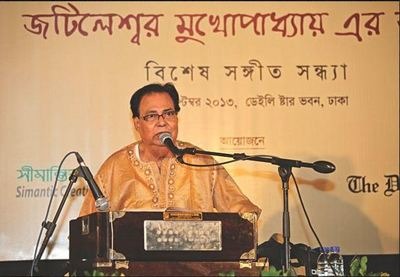
With the demise of Jatileshwar Mukhopadhyay, Bengal lost one of the most eminent personalities from the golden era of music who had the rare distinction of being a singer-composer-songwriter. Eighty three-year-old Mukhopadhyay succumbed to multi-organ dysfunction at a city nursing home on Thursday. He is survived by wife Sabita, daughter Subha and son Raja.
Born on December 13, 1934, at Chandernagore, Mukhopadhyay received his training under Satinath Mukhopadhay and Chinmoy Lahiri. Once he started working from the 60s, he created a niche for himself by writing the lyrics of 2000 songs and setting 1500 of them to music. Few know that he found inspiration in Mehndi Hassan’s ghazals.
While his own songs became popular, he churned out a number of hits when composing songs for Sandhya Mukherjee, Arati Mukhopadhyay, Haimanti Shukla, Banasree Sengupta, Pintu Bhattacharya, Sreeradha Bandopadhay and Pt Ajoy Chakraborty. Connoisseurs of modern Bengali songs remember his compositions like ‘E kon sokal rater cheyeo ondhokar’, ‘Keu bole falgun, keu bole polasher’, ‘Aamar swapan kinte pare’, ‘Aaami phoolke jedin dhore’, ‘Tomar songe dekha na hole’, ‘O sojon haay’ and ‘Amar onge jole’. His ‘Bodhua amar chokhe jol enechhe hai bina karone’ was a cult song and years later when Srikanto Acharya recorded it again, it generated equal interest among a new generation of listeners. Mukherjee had scored the music for Raja Sen’s ‘Damu’.
Tapan Basu, his disciple for over two decades, also highlighted his contribution as an author. “He has written Bengali essays and plays. ‘Krishnakumari Katha’ was a popular musical written by him. A lot of his research-based articles have been published as books. He also wrote in-depth articles on Begum Akhtar, Pankaj Mullick, Sudhin Dasgupta, Nachiketa Ghosh, among others,” Basu said.
Mukhopadhyay’s demise was deeply mourned by his music lovers. Composer Joy Sarkar described him as a most “underrated” talent who never got his due during his lifetime. Poet-and lyricist Srijato described Mukhopadhyay as a “smart” composer. “His compositions were smart, his lyrics had depth. He knew the art of expressing a lot while using few words. He is a perfect example of how to use knowledge with restraint,” Srijato said. Borrowing his own lyrics, noted elocutionist Urmimala Bose said: “Tomar songe dyakha na hole, bhalobashar deshta amar dyakha hoto na”.
His mortal remains will be kept at Rabindra Sadan on Friday to allow the people to pay their last respects before his final journey.
source: http://www.timesofindia.indiatimes.com / The Times of India / News> City News> Kolkata News / by Priyanka Dasgupta / TNN / December 22nd, 2017
In order to draw the attention of a young crowd not initiated to Indian classical music, tabla player Anubrata Chatterjee has come up with a unique concept. In an innovative fashion, Chatterjee has conceived a new show that will cater to the tastes of those who have a short-attention span.
On January 11, Chatterjee is bringing a unique concert to the city called Beats & Pieces. Chatterjee describes this as “T20 of classical music” and is being presented by Pt Anindo Chatterjee’s Music Academy for Tabla Research (MATRA). This concert will feature 20-minute individual solo acts of Mayookh Bhowmik on percussions, Pratik Shrivastav on sarod, Rageshri Das on thumri, Allarakha Kalavant on sarengi and Chatterjee on tabla. All the artistes will finally jam at the end for a 20-minute session.
“The usual audience for classical concerts is fast ageing. If classical artists can’t connect to the youngsters, we shall find the numbers of art connoisseurs fast declining. That’s how Beats & Pieces came to my mind. It has a young vibe with its roots in tradition.
I hope, a packed performance, full of fireworks of Indian music, shall catch the attention of youth just like T20 cricket did,” said Chatterjee, who is also looking forward to the Sur Festival on February 4 where he will be playing a duet with Pt Kishan Maharaj’s grandson Shub Maharaj.
source: http://www.timesofindia.indiatimes.com / The Times of India / News> City News> Kolkata News / by Priyanka Dasgupta / TNN / December 18th, 2017
Kolkata driver wins award for shunning horn for 18 years | Kolkata News – Times of India
Kolkata :
It will be tough to find people who can resist honking on the roads for 18 minutes. But this man from Kolkata has done wonders.
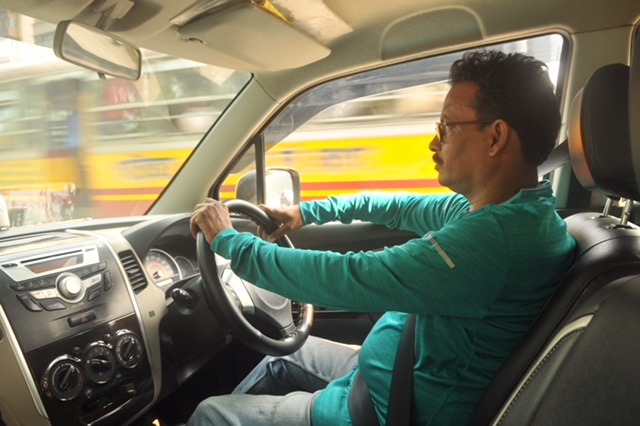
Meet Dipak Das, a city-based driver, who has not honked for 18 years. Seems incredible? His car even has this placard, ‘Horn is a Concept. I care for your heart.’ Das has won awards for this unique and rare habit.
With this no-horn policy, Das wants to inspire others to follow the practice. Thus noise pollution can be reduced, he believes, saying if a driver follows this no-horn policy, she/he will become more alert while driving.
He dreams of making Kolkata a “no-honking city” someday.
The 52-year-old, who lives with his wife and daughter, has worked as a Metro Rail helper. Dipak got his driving licence in 1991.
He says, “One day, I dropped a passenger in Golf Green area. I was taking rest in front of a school, but was woken up rudely because of senseless honking of cars.” On that day, he decided not to honk while driving. Das said, he was influenced by a poem of famous Bengali poet Jibanananda Das. Das’s daughter rides bycycle, but like her father she also does not honk.
Earlier, people used to call him ‘disturbed’. But today they respect Das’s ideology. He was awarded in this year’s Manush Mela. Eminent personalities who have travelled in Das’s car also appreciate this.
“I went to various places with him. He is special. His patience, sensibility has amazed me” says famous percussionist and tabla player Tanmoy Bose.
Singer Sidhu of the famous Cactus band also said, “I went to Mukutmanipur with Dipak. The guy has not honked for once. He is a rare talent.” Seriously!
source: http://www.timesofindia.indiatimes.com / The Times of India / News> City News> Kolkata News> Civic Issues / by Sumit Dey El Samay / December 13th, 2017
Serampore, near Kolkata, was an important 18th century Danish colony. A grand heritage restoration programme is underway in the town to restore its major landmarks to their former glory. Serampore, near Kolkata, was a Danish outpost for 90 years (1755-1845). The 210-year-old Lutheran St Olav Church’s restoration was completed in 2015. The project won the Unesco Heritage Award of Distinction in 2016. (Burhaan Kinu / HT Photo)
From the white colonnaded verandah of the Denmark Tavern in Serampore, a sub-divisional town 35 km from Kolkata, the panorama is serene: a placid river Hooghly flows next to the late 18th century building, towards its final resting place, the Bay of Bengal. Even on a busy suburban weekday, the waterfront is usually quiet. These days, however, the peaceful atmosphere is often punctured by sounds of hammers, saws and drills, thanks to the restoration work going on in the building. The tavern’s renovation is not a stand-alone project; it is a part of a heritage restoration programme underway in the town, which was a Danish outpost for 90 years (1755-1845). The Danes had two other colonies in India: Tranquebar (now Tharangambadi in Tamil Nadu) and the Nicobar Islands.
Other than the tavern, several other Danish-era structures are being restored: The 12,000-square feet Danish Government House (DGH) and its two gates; Red Building (a British-era structure located inside the DGH campus), and the cast iron gate, fence and staircase of the Serampore College, which completes 200 years in 2018. The 210-year-old Lutheran St Olav’s Church’s restoration was completed in 2015.
“Tranquebar and Serampore were different kinds of outposts. The former was a port town; the sea gave it a carefree atmosphere. Serampore was a commercial and educational-missionary hub, and more urban. So its heritage has had to grapple with the challenges of an expanding town and burgeoning population,” says conservation architect Manish Chakraborti.
The DGH is located at one end of its 6.7-acre compound. The former residence of the Danish governors is an imposing colonial-style building, but not ornate. The middle part of the yellow and white house, which has an extended porch and six Iconic columns, juts out. A flight of steps will take you into the rooms. Under the Danes, DGH was the administrative headquarters. It continued to be so under the British and till 1990, the Bengal government too had its offices in the building. It was abandoned in 1990 after a fire. Today, the DGH campus, which houses the sub-divisional magistrate’s office, looks rundown. The compound is more or less barren, and doubles up as a parking lot. The town outside is dense, heavily built up, teeming with people and small businesses.
However, even today, the structure and pattern of the main street of the town centre remains as it was constructed by the Danes. The St Olav’s Church is just a few steps away from DGH. It has a portico of twin columns and has the royal monogram of Christian VII, who was the King of Denmark when the church was consecrated. It is flat roofed and reflects the designs of contemporary churches in British India.
Heritage town
“The church is special not just to Christians but all communities… It is a critical component of the town’s life,” says Mohit Ranadip of the Shrirampur Heritage Restoration Initiative, a local citizen-led body. “The town’s heritage, however, is not just about the Danish heritage …. one must not miss the elegant houses of the rich Indian trading class of the 18th century and the ghats they built on the river…we must restore them too.” Some residents, however, allege that the local municipality is not doing enough to save the town’s heritage. “For example, they shouldn’t allow high-rises around the historic centre and concretise roads,” says a resident, who did not wish to named.
While the Church was restored with funds from Denmark’s ministry of culture, DGH’s restoration is being funded by the Centre, the West Bengal Heritage Commission (WBHC), and the Serampore Municipality is in charge. The renovation of DGH will be completed early next year. The National Museum of Denmark (NMD) is overseeing the restoration of the tavern, the Serampore College, and the Red Building. Realdania, a philanthropic organisation, has provided Rs 10 crore (2012-18) funding for the project, which is called the Serampore Initiative.
“Initially, I was sceptical about restoring heritage buildings outside Denmark, but after we began researching for the project, we realised that locals also have a great appreciation for these old buildings and want them to be restored,” says Dr Bente Wolff, project leader, Serampore Initiative, NMD. “Our historian, Simon Rasten, accessed 20,000 pages of Danish documents from the West Bengal State Archives and found information about the town and the architectural plans of the building.” Rasten also traced the only existing map of the Danish areas and the buildings in The Queens Reference Library, Copenhagen.
Bengal’s Little Europe
The Europeans began trading with this region from the 16th century, an era that coincided with the birth of the large trading companies in the continent. But it was only in the last decades of the 17th century that Europe-Bengal trade in textiles, raw cotton, silk, sugar, saltpeter and opium flourished and their outposts came up along the river. Starting with the British in Calcutta, there were the Danes in Serampore, the French in Chandernagore, the Portuguese in Bandel and the Dutch in Chinsurah.
The Danish history in Bengal, however, was not one of smooth progress: In 1698, they acquired a trading settlement called Dannemarksnagore. But it was closed down in 1714. In 1755, the Nawab of Bengal, Ali Vardi Khan, granted the Danes the right to settle down in Bengal as well as free trading rights. Along with the parwana, the Danes bought land and established Fredricksnagore, in the honour of King Fredrick V. In the next few years, three more villages were added to Fredricksnagore: Serampore, Ackna and Pereapore. Since then the Danish territory has been colloquially called Serampore, only officially it was Fredricksnagore.
It was under the administration of Governor Colonel Ole Bie (1776-1805), that Serampore flourished. His abilities and cunning entrepreneurship brought prosperity to the town and the present historical town centre, which is being restored, is his legacy. Contemporary travellers also wrote eloquently about Serampore’s glory days. In 1803, George Annesley wrote that the buildings of Serampore were “picturesque being white, with expensive porticoes to the south and the windows closed by Venetian blinds painted green.”
Though Serampore was managed by the Danes, it also attracted other Europeans and Indians. “The manufacturing of cotton and silk textiles as well as salt petre and sugar led to the rise of a local class of Indian traders, middlemen and agents, and the gradual urbanisation of the settlement… Some Indians eventually became powerful, economically and politically,” Rasten told HT. The turning point in the history of Serampore was the British occupation of Denmark (1807 to 1814). The British monopolised trade in India, and in 1845 Denmark sold Serampore and Tranquebar to the British East India Company.
The challenges of heritage restoration
“When the West Bengal Heritage Commission handed over DGH in 2008 to me, it was in ruins: The floor was broken, the roof had collapsed and tree roots were coming out of the walls,” says conservation architect Gopa Sen. “There were false partitions, destroying the internal plan of the house…. It was a terrible and heartbreaking sight. And a challenge for us.”
The same was the case for the Denmark Tavern, whose front verandah, which overlooks the river, had collapsed. “The campus had been converted into quarters for policemen and additional structures had come up in its precincts. The police line is now being shifted,” says Manish Chakraborti, who is restoring the tavern and parts of the Serampore College. He is also the man behind the restoration of the church, which won the Unesco Heritage Award of Distinction in 2016. “We started with the St Olav’s Church because it had a defined boundary and a single ownership. It is also has immense historical importance because missionary, educationist and botanist William Carey was the first preacher here,” explains Chakraborti. “These buildings could have been saved much earlier but there was not much political support, nor funds. Restoration was seen as a bourgeoisie exercise. The state never looked at public spaces as vibrant community spaces.”
The architects and historians involved in the projects accessed old paintings, maps and documents to get a flavour of the core heritage zone of the town and the how the buildings looked during the Danish period to help them draw up a restoration plan. “The challenges in projects such as these are always unknown. Despite hours of planning, there can be surprises when you start work in an old building, which means reworking the original plan… while keeping to the strict norms,” says Sen.
Both Sen and Chakraborti are ensuring that all the work that is being done follows the heritage norms. This means that the building materials have to be same as those the Danes used: Lime, surki, molasses and khayer. Masons from Murshidabad, who know this old construction technique, have been employed for the project. The architects are also reusing old materials, especially the Burma-teak doors and windows.
For a restoration project to be successful and sustainable, it is important that people have a stake in the project. On that score, Serampore has not done badly: Citizens participated wholeheartedly in a competition to design a new bus stand, which will be shifted from the historic core area. Ranadip’s organisation is also pushing schools to teach their students the town’s Danish lineage.
Future plans
For heritage buildings to survive and ensure their long-term maintenance, which can be expensive, it is important to have an “adaptable re-use plan”. By early 2018, the 200-year-old Danish Tavern will be back in business: It will have a coffee shop, a Danish bakery and six well-appointed rooms for guest accommodation.
“The DGH will have a museum of the town’s Danish past and an exhibition hall,” says Dr Basudeb Malik, officer on special duty, WBHC. “Once the restoration is over, we are expecting tourists interested in Bengal’s colonial-trade history to come not just to Serampore but other outposts in Bengal as well. The government is working on a project to ensure this”.
“I see the restoration work in Serampore as a triggering process; It will hopefully lead to greater investments in urban restoration and push for developing safe, clean and secure community spaces, which Bengal –– for that matter, India –– is woefully short of,” says Chakraborti. “There are no green spaces here…the quality of open environment will improve for the people,” says Flemming Auland, architect, NMD.
The tourism sector is also upbeat about the opportunities such restoration programmes could bring. “Our Little Europe Tour will take tourists to the colonial settlements along the river,” says Navpreet Arora of FunOnStreets, a Kolkata-based tourism company.
Serampore, more than just commerce
The 18th century ushered in an era of Lutheran missionary activities in Serampore, thanks to the patronage of Danish rulers. Though they came to preach Christianity, they also dedicated themselves to education and social reforms. The protagonists were William Carey, Joshua Marshman and William Ward. They established the Serampore Mission, the Serampore Mission Press and the Serampore College. The press printed the Bible in 45 languages including Assamese, Awadhi, Telegu, Bengali, Mooltani, Persian and Pushtu. Journalism in Bengal can be said to have begun with the Serampore missionaries who were the first to expose the lapses of the British government. The Serampore College was designed by a Danish architect and the front gate and two beautiful staircases were gifts from the king of Denmark.
For Denmark, it is a restoration of a link that was lost in time. “But this is just not Danish heritage… this is a part of the world’s shared heritage, which had never been studied. It deserves to be showcased,” says Dr Wolff.
“When [foreign] governments undertake these kind of projects, there is, of course always an objective of image building and visibility,” says Gulshan Sachdeva, director, Europe Area Studies Programme, School of International Studies, Jawaharlal Nehru University. This, however, Dr Sachdeva adds, is not necessarily a negative assessment. Some of these projects genuinely improve awareness and contribute to the local economy through increase in tourism etc. “Ultimately, it is a win-win for both the partners,” he adds.
The rise of the Indian trading class
Approximately at the same time as the Danes came to Serampore, the founder of the Goswami family, Ramgovinda, settled in the western part of the town. His two sons – Harinarayan and Ramnarayan – built a large fortune thanks to their positions as middlemen and their good relations with the Danes. Harinarayan functioned as the diwan of customs (collector) under the Danish East India Company, while his brother Ramnarayan became the official moneylender to the factory. They established an aristocratic colony on the western side of town and became influential people in Serampore. “Unlike other colonial rulers, the power equation between the Danes and Indians were different… locals such as the Goswami family called the shots because they were very rich,” says Simon Rasten, historian, National Museum of Denmark.
@kumkumdasgupta
source: http://www.hindustantimes.com / Hindustan Times / Home> India / by KumKum Dasgupta, Hindustan Times / December 10th, 2017
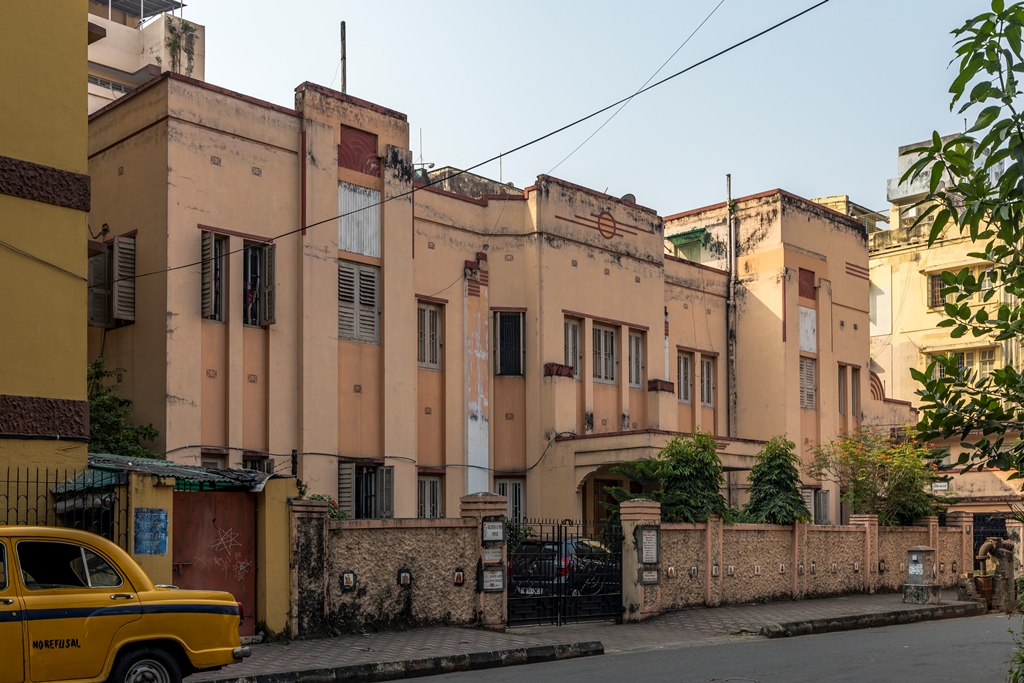
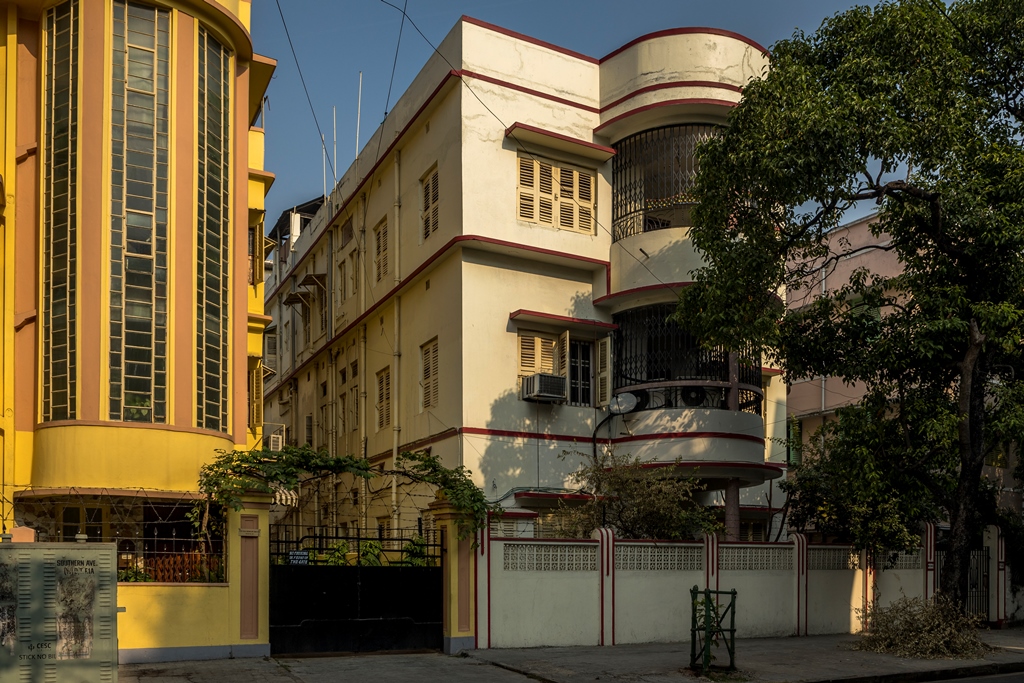
Preserving Art Deco architecture in the city is uniquely challenging because it is so commonplace, residents take it for granted.
Photo : Deepanjan Ghosh
In 2015, author Amit Chaudhuri started a movement to preserve ordinary Bengali homes in South Kolkata. The architecture of these homes, Chaudhuri said, was unique and its destruction would be a disaster. His movement and the pressure group that he created, Calcutta Architectural Legacies, has helped to shine a light on the kind of buildings that ordinary Kolkatans do not think of as constituting heritage.
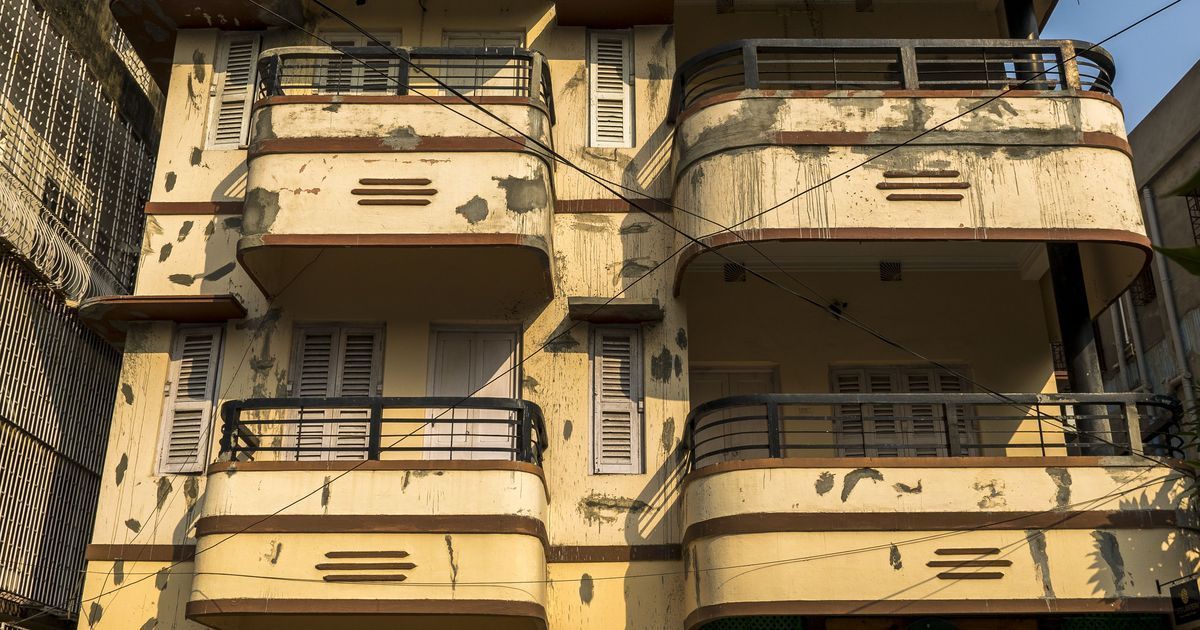
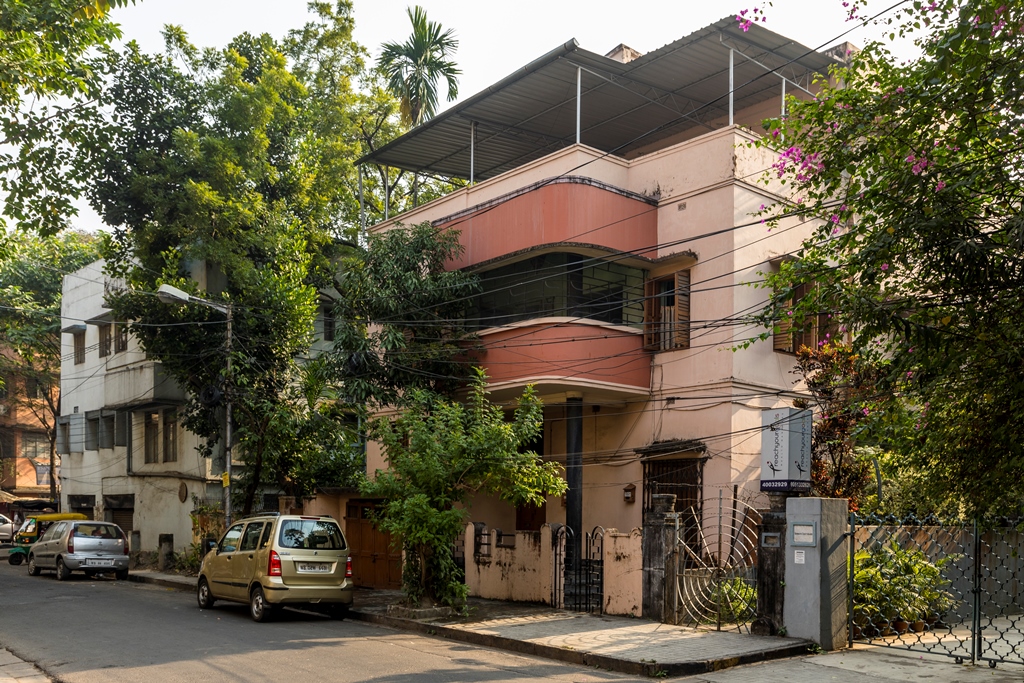
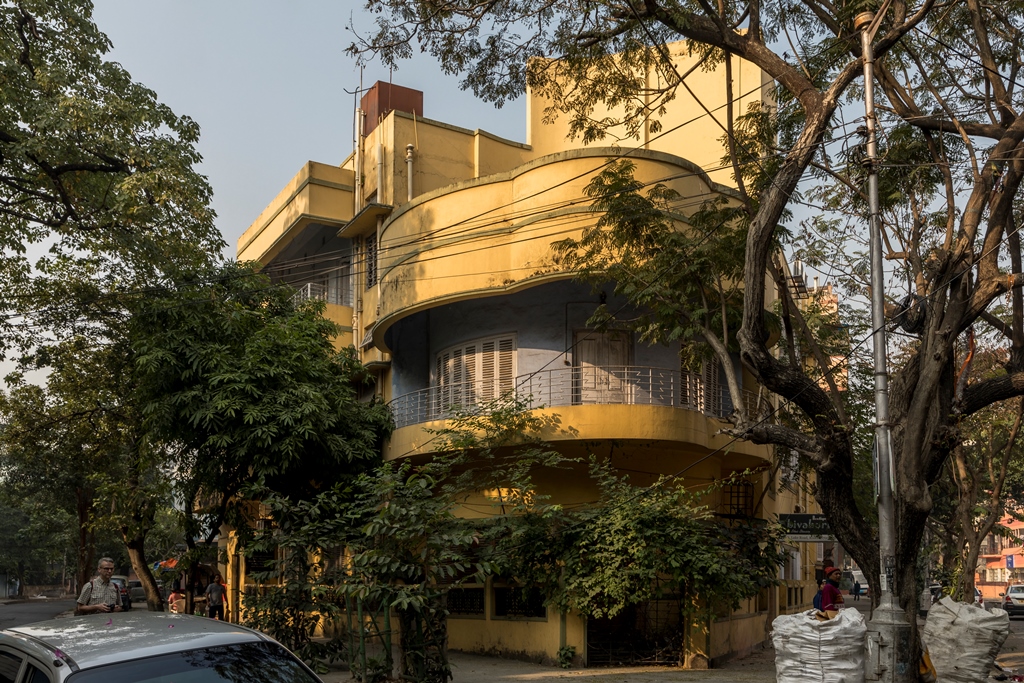
“When we speak of Calcutta’s architecture, we usually mean the colonial institutions that the British erected,” wrote Chaudhuri. “Or the aristocratic mansions of North Calcutta built by Bengali landowners. But the houses I’m speaking of were built by anonymous builders for middle-class Bengali professionals: lawyers, doctors, civil servants and professors.” Chaudhuri also notes that a lot of these houses have in common, the presence of Art Deco elements such as “semi-circular balconies; a long, vertical strip comprising glass panes for the stairwell; porthole-shaped windows; and the famous sunrise motif on grilles and gates”.
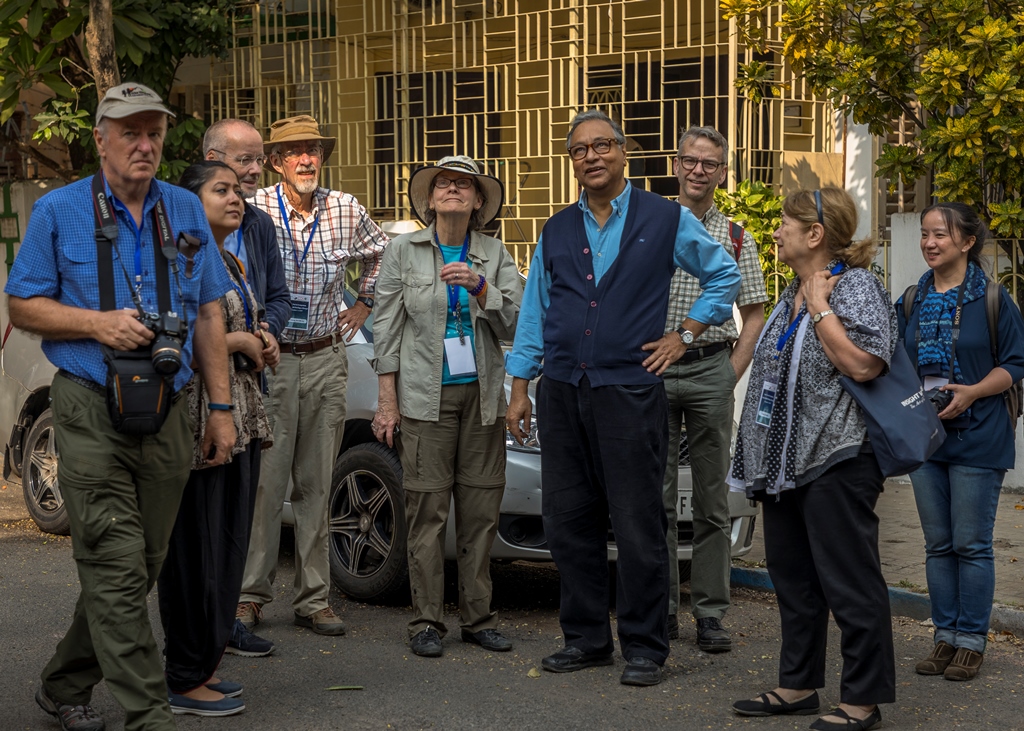
Art Deco is so common in South Kolkata that most people are intimately familiar with it without even realising it. These neighbourhoods were the focus of a walk on December 5, led by Jawhar Sircar, the former CEO of Prasar Bharati. The walk was organised by the International Council on Monuments and Sites, an interdisciplinary, global network of architectural and archaeological heritage experts. “Jawhar Sircar has had a deep engagement with South Kolkata’s Art Deco style and advocated for it on various public forums,” said Kamalika Bose, urban conservationist and co-ordinator of the ICOMOS programme. But the focus on these architectural curiosities also raises a question – why did a 1920s European architectural style find so many takers in 1950s and 1960s Kolkata?
Photo credit : Deepanjan Ghosh
A modern style
Styles rarely evolve in a day, but the definitive moment for Art Deco that experts point to is the International Exhibition of Modern Decorative and Industrial Arts, held in Paris in 1925. Fifteen thousand exhibitors from 20 countries presented to 16 million people a highly decorative “style modern”, using fine craftsmanship and expensive materials. Even the name “Art Deco” is an abbreviation of the title of the exposition. This style would spread rapidly around the world, from skyscrapers in New York to ocean liners that crossed the Atlantic. It can still be seen today, in structures such as the Chrysler Building, the General Electric Building and the American Radiator Building of New York. But while American skyscrapers were the largest and most visible examples of the style, Art Deco encompassed almost all forms of the visual arts, architecture and design, including painting, sculpture and even typography.
In Kolkata, the sole example of the Art Nouveau style, which preceded Art Deco, is the Esplanade Mansions opposite the Raj Bhavan, built in 1910. But there is little evidence to suggest that the Art Deco buildings seen in the city today evolved from here. In an age without internet, trends caught on through magazines, which meant that Asia lagged a decade behind Europe. Art Deco’s dominance in the West ended with the beginning of World War II, but here in India, the earliest Art Deco structures were built in the 1930s and the style would continue well into the 1960s in Kolkata. Mumbai is known to have the world’s second-largest collection of Art Deco buildings but what makes South Kolkata’s Art Deco homes unique is the fact that they are more a result of jugaad than formal architectural decisions.
Photo credit : Deepanjan Ghosh
Metro-style ‘baadi’
Among the earliest examples of Art Deco in Kolkata are Victoria House, now the headquarters of the Calcutta Electric Supply Corporation, built in the 1930s and Reid House on Red Cross Place, built in 1941. But the icon of the city was the Metro Cinema Hall. Designed by Thomas White Lamb and built by Metro Goldwyn Mayer, Metro Cinema stood on Dharmatalla crossing, one of the city’s nodal points. With its waterfall-style columns and grand staircase, Metro became the building that a new class of up-and-coming Bengalis wanted to ape.
The building boom in South Kolkata began around the same time with large numbers of people moving out of the North, or later moving to West Bengal post-Partition. While these people were affluent, they had nowhere near the astronomical sums of money needed to construct the lavish mansions of North Kolkata. Buildings in the north followed the pattern of rooms arranged around a central courtyard. This placed an emphasis on communal space. But with changing sensibilities putting a greater stress on personal space, this style was thought of as both wasteful and outdated.
Photo credit : Deepanjan Ghosh
Scenographer and artist Swarup Dutta has taught design for a decade and closely studied the evolution of Kolkata’s architecture. He points to a peculiarity in the law in Bengal, which allows civil engineers and draftsmen to file the plans for a building, as opposed to architects, who would be required in other states. This was good news for homeowners, since architects would charge between 2% and 5% of construction cost, says former civil servant Jawhar Sircar. The demand that Bengalis made from their civil engineers, aka “contractors”, Sircar says, was, “amake Metro style baadi baniye dao” – build me a house in the Metro style. Because civil engineers were concerned with the technical side of construction, instead of the aesthetic, their response was to present their clients with a collection of templates. These would then be tweaked according to each client’s needs. Since the buildings in areas like Hindustan Park and Lake Temple Road all came up around the same time, and used the same technique, entire neighbourhoods ended up looking like variations on a theme.
Why is it important to save these buildings? Chaudhuri says in an interview, “In a city like Kolkata, what we embrace, what we celebrate it for, is its modernity. It’s a form of existence that teaches us to look and experience life in a certain way…as exemplified by these non-heritage residential buildings which form these astonishing residential neighbourhoods that have art deco features as well as traditional features and European provenances.”
But saving them is proving to be a challenge for a number of reasons. With economic stagnation in the east, the younger generation have had to move out in search of work and many homeowners now no longer have the means to maintain the houses they are living in. With the buildings being worth much less than the land they stand on, a developer’s offer is difficult to refuse.
Photo credit : Deepanjan Ghosh
But the greatest challenge is to get ordinary Kolkatans to think of these buildings as special. “You don’t notice them,” said restoration architect James Simpson who was also a part of the ICOMOS walk, “because for you, they are commonplace. But once you know what to look for, these buildings keep popping out at you.” If anything, Chaudhuri’s initiative has at least managed to put these buildings in the spotlight. Three friends, Manish Golder, Sidhartha Hajra and Sayan Dutta have begun a project to document these buildings on Instagram. Their handle, @calcuttahouses, now has more than 2,000 followers. Chaudhuri hopes his campaign will make people “look at these buildings again – something we’ve stopped doing for a number of reasons”. Whether that will be enough, remains to be seen.
Jawhar Sircar. Photo credit: Deepanjan Ghosh.
source: http://www.scroll.in / Scroll.in / Home> Magazine> Archtecture/ by Deepanjan Ghosh / December 12th, 2017
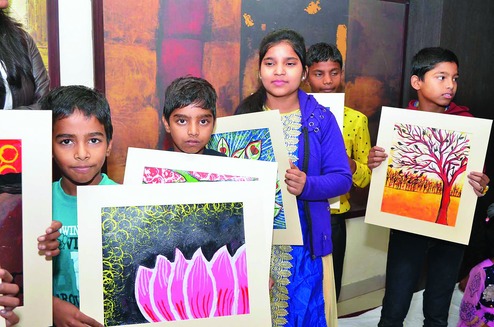
Young artists with their works at the second edition of Colours of Innocence, in association with TTIS, at Mukti World Banquet on Sunday.
Curated by Vayjayanti Pugalia, founder of Sonali’s Cubo, the auction was a blast of colours and imagination.
Students from NGOs and city schools poured their hearts out on canvas, under the guidance of artist Gunjan Daga, to raise funds for charity.
Present at the auction were singer Usha Uthup, PR veteran Rita Bhimani, fashion designer Sharbari Datta, theatre actor-director Ramanjit Kaur and others. “It is a wonderful and inspiring experience. The paintings are beautiful and I am glad to be a part of this event,” said Usha Uthup who rang in the festive cheer with Jingle Bells along with the kids.
“COI is my vision come true. This is my way of giving back to the society,” said Pugalia.
source: http://www.telegraphindia.com / The Telegraph, Calcutta,India / Home> Calcutta / by Samabrita Sen / December 1th, 2017
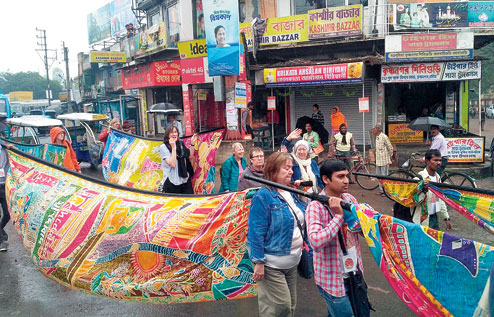
In a bid to rediscover and rebuild the cultural relationship between Bengal and the UK that developed over centuries along the banks of the Hooghly and the Thames, a group of contemporary artistes, authors and historians from Calcutta and London on Saturday participated in a walk in Nadia’s Krishnagar.
The walk, a part of the 10-day initiative titled “Silver River India Walk”, began from Azimganj in Murshidabad on Thursday. It will conclude at Calcutta’s Victoria Memorial Hall on December 16, with stops at 10 important heritage sites like Barrackpore, Chandernagore and Batanagar – all located along the banks of the Hooghly.
The walk has been organised by the British Council in India in association with UK-based art organisation Kinetika and India-based Think Arts, with the support of the Union ministry of culture, the state tourism department and several other organisations to mark the 70th year of India’s Independence.
On Saturday, around 40 artistes from Bengal and the UK paid a visit to the clay model hub in Krishnagar’s Ghurni and learnt about the craftsmanship of the artisans.
“It is a great experience to see the artisans working with delicate artefacts with such fineness. Stories of these artisans need to be known by people that live on the banks of the Thames too,” said Kevin Rushby, a travel journalist with The Guardian.
source: http://www.telegraphindia.com / The Telegraph, Calcutta,India / Home> West Bengal / by Subhasish Chaudhuri / December 10th, 2017
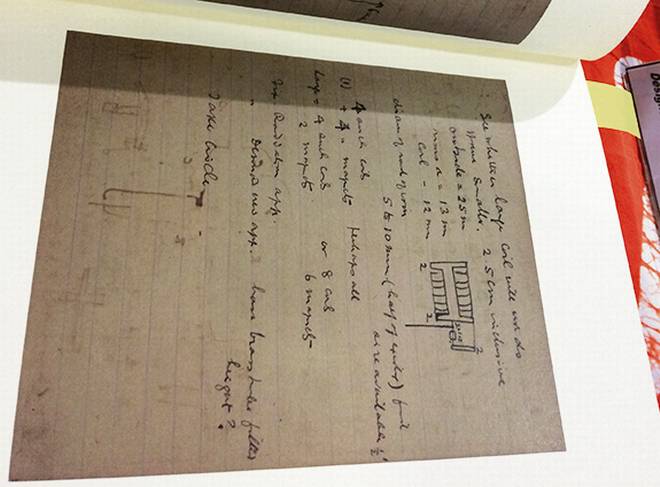
One of the pages of J.C. Bose’s notes. Photo: Special Arrangement
Bose Institute, one of India’s oldest research institutes, will house a museum highlighting the history of Indian science. The decision was taken during the recently-concluded centenary celebrations of the institution, set up by Jagadish Chandra Bose in 1917.
“The History of Science Museum will be located in the campus of Bose Institute on Acharya Prafulla Chandra Road in Kolkata. We are in touch with the National Council of Science Museums for its construction. There will be 50- 60 panels in the first phase which will be completed by 2019,” Siddhartha Roy, director of Bose Institute, told The Hindu.
According to Prof. Roy, the museum will cover four disciplines — physics, astronomy, mathematics and medical sciences — and trace the journey of Indian science from the ancient times.
“Depending on the themes we can have the gallery tracing the development from the Harappan times,” he said.
Professor P.P. Divakaran, who was present at the centenary celebrations of Bose Institute last month and gave a lecture on The Mathematics of India : From Counting to Calculus, welcomed the idea of the museum and said he was “pleasantly surprised “to find a section dedicated to mathematics.
“For most of the time till 1600 AD, India had one of the most advanced mathematical cultures among the world,” Prof. Divakaran said.
Prof. Roy pointed out that modern Indian science may have started with J.C. Bose but there were many who did pioneering work but people were not aware of their contribution.
“In terms of advancements in medical science, the museum will highlight the likes of U.N. Brahmachari, who discovered the treatment for kala azar, and Sambhu Nath De, who discovered the cholera toxin,” Prof. Roy said.
Renovated museum at Bose Institute
Interestingly, as part of its centenary celebrations, the Bose Institute recently upgraded the existing museum on J.C. Bose by displaying 12 digitised volumes of the scientist’s handwritten notes and dairies.
These diaries include the notes he took while attending classes by Francis Darwin (son of Charles Darwin) at Christ’s College in Cambridge. The museum, which also has on display the microwave apparatus developed by J.C. Bose in 1894, has also brought to light the scientist’s communications with personalities such as Mahatma Gandhi and Sister Nivedita.
source: http://www.thehindu.com / The Hindu / Home> News> Cities> Kolkata / by Shiv Sahay Singh / Kolkata – December 02nd, 2017
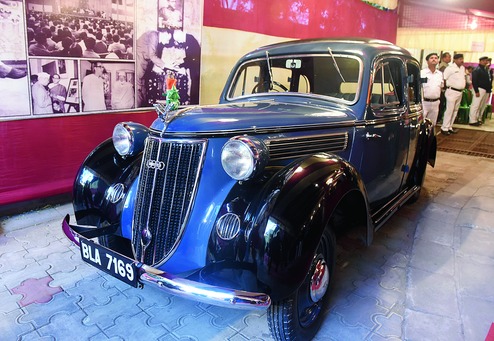
Netaji Subhas Chandra Bose’s Great Escape car, the 1937 Wanderer, was taken apart – on slides – and its restoration story told at the Calcutta Club on Saturday.
Restorer Pallab Ray (right in picture by Sanat Kr Sinha) gave an audiovisual presentation on how he was picked to restore the vintage car that was part of “such a thrilling history”.
In fact, the Bose family had two cars – a Studebaker President and the Wanderer. Apparently, Netaji wanted to escape in the Studebaker. But the Wanderer was chosen as everyone thought people would easily recognise the Studebaker.
Netaji’s nephew Sisir Bose ran an endurance test with the Wanderer till Burdwan.
On the night of the Escape, the Wanderer made a noisy start as it moved out of the Elgin Road house, turned right and then again right to get on to Allenby Road. Netaji held on to his door tightly without closing it so that anyone who was awake would hear only one door being shut. He shut the door after the car had crossed Allenby Road.
On the 75th anniversary of the Great Escape, the restored Wanderer (top in picture by Pradip Sanyal) was unveiled by then President Pranab Mukherjee.
The car had been on display at the Netaji Research Bureau (NRB) since 1970.
The NRB director appointed Audi Calcutta for its restoration. As Wanderer was built by Auto Union, which Audi bought later, they had been contracted to do the job. The Audi Calcutta CEO zeroed in on Ray who had restored his family’s Studebaker President.
Ray said he found the car in a shambles. He was asked to do just a visual restoration, but he decided to make it run again. And he did that with the help of his team. From overhauling the engine to working on the transmission and unique Wanderer suspensions, rebuilding the dashboard and stitching the upholstery, Ray restored the vehicle completely.
Reporting by Anasuya Basu
source: http://www.telegraphindia.com / The Telegraph, Calcutta,India / Home> Calcutta / by Anasuya Basu / December 06th, 2017