Category Archives: Arts, Culture & Entertainment

Fairlawn Hotel gave off the scent of antiquity — a bit damp, and wholly old Calcutta

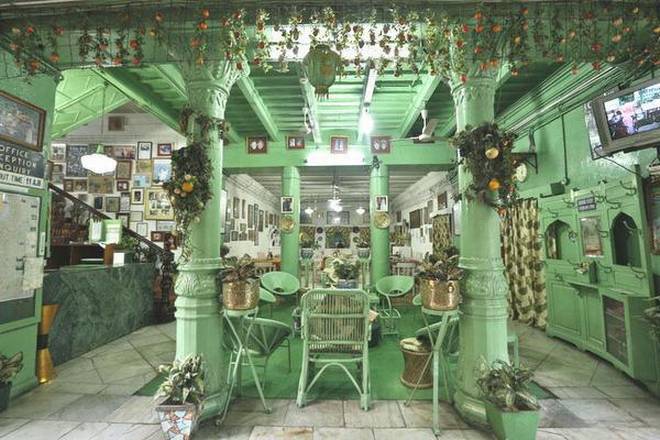
‘For quite some time, only beer was available and that too in the front garden, which became rather raucous as the night drew on’ | Photo Credit: fairlawnhotel.com

A tribute to Calcutta’s Fairlawn Hotel

When the British left India they forgot to take Fairlawn Hotel with them. So for 70 years, this ‘corner of a foreign field’ has sat happily in Sudder Street, being British. Or rather, reminding us Britons of what we used to be like.

Not exactly frozen in time, because improvements were made over the years, Fairlawn nevertheless had an ambience firmly rooted in 1930s British India. There was a comforting atmosphere of chintz furnishings, proper dressing-tables, spacious almirahs, and a reliable dhobi service. When you dialled ‘Reception’ a room bearer came immediately to assist you. Fluffy white dogs belonging to the owners, Violet and Ted Smith, occupied chairs on the landing at the top of the handsome staircase. They (the dogs, not the owners) growled gently if you tried to move them, but any right-minded Briton would rather suffer hours of discomfort than move a sleeping dog or cat from its chair.

Jolly evenings

On the first floor of Fairlawn is the grandest room where parties and receptions were held in the 18th century. It had taken the British some time to figure out that rooms above street level could be cooler than those on the ground floor, particularly if there were open arches through which the fugitive breezes could enter.

The colonial bungalow at the core of Fairlawn was built in 1783 by the Englishman William Ford who had bought a plot of land here two years earlier. The original bungalow was a simple rectangular structure of two floors, each with a large central hall and with covered verandas running around the exterior walls. Access to the first floor would have been via an exterior staircase, but at some point during the 19th century, an interior staircase was constructed, which allowed extra rooms to be added.

A number of other alterations took place too, which the practised eye can see. The front verandah was extended outwards towards Sudder Street, and iron columns were inserted to support the new garden room above. It was from here that diners below could hear shrieks of laughter on jolly evenings when Violet entertained the British Deputy High Commissioner and other friends to drinks.
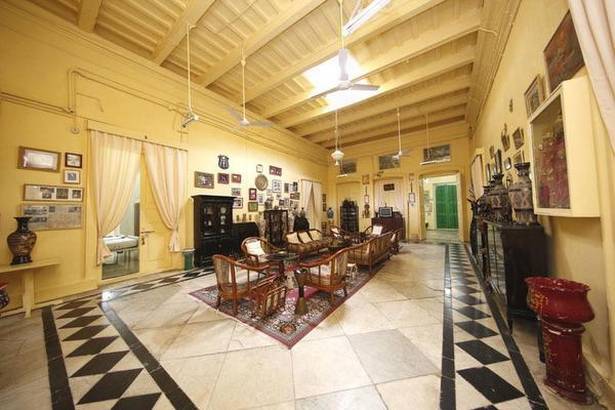
Those of us supping in the ground floor dining room were a little envious, because we couldn’t get the traditional gin and tonics with our evening meal. For quite some time, only beer was available and that too in the front garden, which became rather raucous as the night drew on.

I want to pay tribute to Fairlawn, where many happy days (and nights with a much-loved Indian friend) were spent from 1988 onwards. The first thing I looked for, whenever lucky enough to get the farthest ground floor room, was something that cannot be visualised — it was the smell, the heady perfume of antiquity, a bit naphthalene, a bit damp, and wholly old Calcutta.

My favourite room was part of the inner veranda, which had been compartmentalised at some point with panelled doors. The doors had been firmly painted over and couldn’t be opened, although the marks of the bolts and locks were visible through the thick cream paint.

At night I would imagine a procession of friendly phantoms from old Calcutta passing through these doors and into my room, dressed in their empire-line muslin costumes and stiff red broadcloth uniforms. These were British ghosts but there were also a number of faithful Indian spirits who spent quiet evenings in the corner of my room dozing on charpoys while they waited for the sahibs and memsahibs to retire for the night.

Guests and quirks

As a historian I am perhaps over-sensitive to the past — old buildings and old rooms attract and often haunt me. In an idle moment, when I happened to have a tape-measure with me, I measured the width of the outer wall in my room that led onto the veranda — it was 26 inches wide, over two feet of solid brick to keep out the heat. My ceiling was made of teak beams brought from Burma. When I sat at breakfast in the ground floor hall I could trace the outline on the far wall of earlier doors which had been bricked up when alterations were made.

Of course, not everything at Fairlawn was perfect. Indian staff were made to wear white gloves when serving food to Europeans until well into the 1990s. This peculiar custom arose because white people were said not to like the sight of brown hands serving their food. And there is no doubt that would-be Indian guests were discouraged from checking in at the hotel.

But I won’t let Fairlawn go lightly. It was special and it attracted special guests, whose names will be more familiar to Britons than to Indians — Dan Cruickshank, the architectural historian, Ian Hislop, the editor of the satirical magazine Private Eye, and many other quirky foreigners. All of us have sat in the uncomfortable basket chairs in the front veranda, reading the newspapers and waiting for our friends.

Fairlawn was one of the last places to positively encourage smoking — there were proper ashtrays on the occasional bamboo tables and even after I gave up smoking, the odd cigarette, bought from the corner store opposite, would entice me back to bad habits. Everything was painted apple green — the basket chairs, the iron pillars, and the reception area where Sam greeted guests and patiently answered their silly questions with unfailing courtesy.

It had a special place in old Calcutta for those who either couldn’t afford the Grand Hotel or the Great Eastern Hotel, or who preferred something more intimate.

Everyone who has stayed here will have their own memories — my friends who didn’t realise there was hot water until their third day there because no one had shown them how to turn on the hot-water heater; the British aid-worker back from a gruelling year in Odisha who needed to relax; the retired Calcutta policeman who sought me out last year and my numerous friends who knew where to find me whenever I stayed in the city.

Dr. Llewellyn-Jones is an independent scholar and historian, and lives in London with two cats called Havelock and Lawrence.

source: http://www.thehindu.com / The Hindu / Home> Society / by Rosie Llewellyn-Jones / March 03rd, 2018

CM to give awards to nine at fest

Siliguri:

The chief minister will present Banga Ratna to nine persons from north Bengal for their contribution in different fields at the inauguration of the Uttar Banga Utsav here on Monday.

Mamata Banerjee is scheduled to launch the eight-day cultural fest at Kanchenjungha Stadium here.

Official sources have said among the recipients of the Banga Ratna are Manas Dasgupta (economist from Darjeeling), Dinesh Chandra Roy (researcher on folk culture of the region from Jalpaiguri), Prem Kumar Bhutia (social worker of Kalimpong) and Debkumar Mukherjee (educationist from Cooch Behar).

The others are Malin Das (folk music instrumentalist of Cooch Behar), Dilip Kumar Roy (writer from Alipurduar), Prem Bihari Thakur (retired teacher from North Dinajpur), Tapas Kundu (researcher on Molecular Biology from South Dinajpur) and Radhagobinda Roy (social worker of Malda).

“Each award will carry a prize of Rs 1 lakh, a shawl and a certificate.

Apart from the awards, a total of 54 meritorious students from eight districts of north Bengal will get Rs 10,000 each from the chief minister.

Thirteen of them will get the assistance at the inaugural and the rest will be provided with the amounts by the administrations of their respective districts,” an official of the organising committee of the festival said.

source: http://www.telegraphindia.com / The Telegraph, Calcutta,India / Home> West Bengal / by Bireswar Banerjee / January 08th, 2018

Bird fest takes wing

Ravikant Sinha inaugurates the bird festival by lighting a lamp on Saturday. (Anirban Choudhury)

Alipurduar:

The second edition of the annual bird festival was inaugurated at the Buxa Tiger Reserve on Saturday.

The state forest department and Siliguri-based Himalayan Nature & Adventure Foundation (HNAF) are jointly organising the event.

Forty bird lovers and experts from different parts of Bengal and even from Delhi are participating at the four-day fest.

The Buxa Tiger Reserve is rich in avifauna and the fest is unique as it aims to bring together eminent ornithologists, researchers and bird enthusiasts from the region. “It (the fest) offers an opportunity to explore nature’s avifauna in this region alongside the rich biodiversity and wilderness of BTR,” Ravikant Sinha, the principal chief conservator of forests (wildlife) of the state, said after inaugurating the fest.

The fest will also help foresters to make a checklist of the birds available in the reserve, generate awareness among people about conservation of birds and study their habitat, said foresters.

Last year, 127 species of birds were sighted during the fest. They included rare birds like the mountain imperial pigeon, Rufous-bellied hawk eagle, Silver-eared mesia, Jerdon’s baza, Sultan tit, Brown dipper and wreathed hornbill.

“We want to highlight the avian population in Buxa, which is no less attractive (than the animals) . We have plans to make it a state-level festival in the coming years. The Buxa Hills are comparatively undisturbed and we hope more species will be sighted this year,” said Sinha.

source: http://www.telegraphindia.com / The Telegraph, Calcutta,India / Home> West Bengal / by Anirban Choudhury / January 07th, 2018

Focus French connection

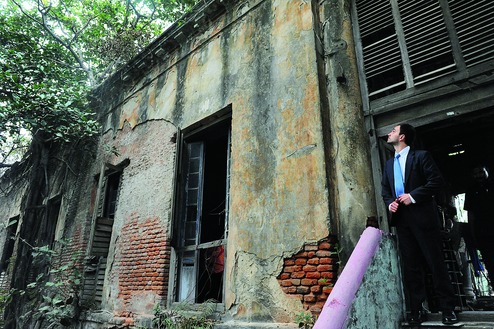
French consul general Damien Syed during an earlier visit to the Registry Building in Chandernagore, accompanied by Metro

Calcutta:

Registry Building, a derelict colonnaded structure with louvered screens, caught in the clasp of myriad tree roots at the corner of the Strand, declared as condemned by the civic body, is the focal point of an initiative in Chandernagore for the former French colony to reconnect with its built architectural heritage.

Friday will see the launch of Know Your Indo-French Heritage, a week-long multidisciplinary workshop that is taking place within the ambit of Bonjour India, a celebration of Indo-French partnership in innovation and creativity across the country, organised by the French Embassy and Institut Francais.

“It is a collaborative workshop designed for the restoration of French-built heritage which will not survive unless people are proud of the town’s assets and realise that this can be a source of economic growth,” said French consul general Damien Syed, who reiterated his distress at the state of dereliction of the French heritage structures.

Students from Jadavpur University, Chandernagore College and The Confluence Institute for Innovation and Creative Strategies in Architecture, Lyon, will meet at Chandernagore College on Friday. “They are expected to come up with innovative design solutions as to how public spaces in the town can be better utilised. One of the outcomes of the workshop would be a sustainable business model for the reuse of the Registry Building. IIM Nagpur will collaborate on that,” said Aishwariya Tipnis, a conservation architect who has worked to identify the heritage buildings in Chandernagore. Seven buildings from her list, including the Registry Building, have recently been selected for notification as heritage structures by the state heritage commission.

All ideas from the workshop will be exhibited on the Strand as part of the closing ceremony on January 12 for the public as well as French ambassador Alexandre Ziegler to see. “We will also launch a crowd-funding initiative which will possibly be a first in India for restoration of a building,” she said.

Four heritage adda sessions will take place involving eminent residents like lighting wizard Sridhar Das and representatives of heritage businesses like confectioner Surya Kumar Modak.

Beyond Chandernagore

France will be the partner country this year at the state government’s Bengal Global Business Summit. “For the first time, we will have a delegation of nine or 10 companies,” said Syed. This is a significant development after the pullout of a French joint venture from the Haldia port which was blamed on strong-arm tactics by an entrenched lobby close to the ruling establishment. The then ambassador Francois Richier had raised the matter with the state government during his city visit in 2014.

source: http://www.telegraphindia.com / The Telegraph, Calcutta,India / Home> Calcutta / by Special Correspondent / January 05th, 2018

It’s Bach to the cemetery for a musical feast in Kolkata

One of the city’s oldest Christian cemeteries will host an evening of Baroque music to celebrate its 250th birth anniversary
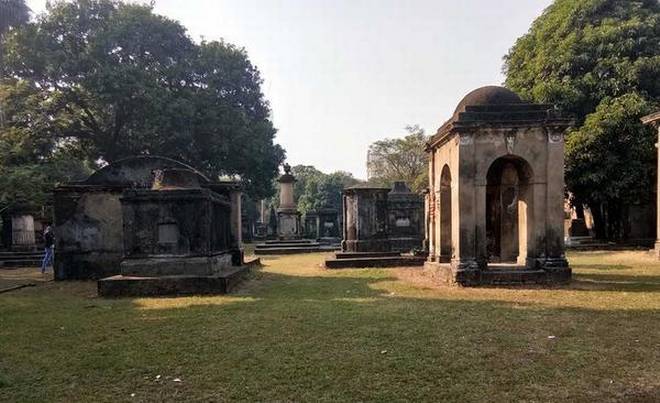
Come Saturday, Kolkatans, both the living and the dead, can look forward to a grand musical feast as the South Park Street Cemetery, one of the city’s oldest cemeteries, will celebrate its 250th birthday by holding a concert on its premises.

In a clearing amid small and giant sepulchres, ageing plaques, and 300 varieties of trees, its sprawling, leafy compound will host a performance by a string quartet and a pianist on January 6.

The performances, according to the programme booklet, will mainly be of “17th and early 18th century Baroque composers” such as Antonio Lucio Vivaldi, Johann Sebastian Bach and George Frederick Handel. Some of the finest musicians of the city, including some who are based abroad, such as the violinist Prosanto Dutt, will perform. “He will also talk about the music,” said Ranajoy Bose, the architect of the two-hour show and a managing member of the Christian Burial Board, which manages the cemetery. The tickets are priced at a modest ₹20.

On being asked about the low price of the tickets, Mr. Bose said, “This is a strange cemetery. For instance, there are no crosses here. Instead, the tomb designs carry the architectural imprint of many civilisations, including Greek, Roman, Turkish and Mughal influences, and some are even shaped liked Hindu temples. We would like school children to know something about these eclectic designs created by Indian masons, besides some Western classical music.”

source: http://www.thehindu.com / The Hindu / Home> News> States> Other States / by Suvojit Bagchi / Kolkata – January 03rd, 2017

Doc with city roots a star author in Britain

London:

Who is Rangan Chaterjee and why has he suddenly become just about the most famous doctor in Britain – a bit of a heart throb, actually?

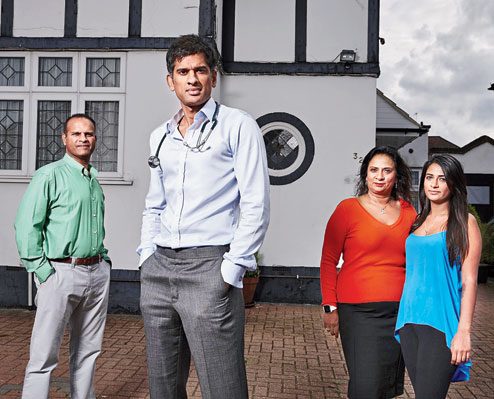
For starters, Chatterjee, son of a doctor, Tarun Chatterjee, who came to England from Calcutta in the 1960s, has written a book, The 4 Pillar Plan: How to Relax, Eat, Move and Sleep Your Way to a Longer, Healthier Life, which is now No. 1 on Amazon UK.

“I am a Bengali boy and this book will have special appeal for Bengalis who tend to eat late at night,” Chatterjee told The Telegraph, as he remembered frequent Calcutta holidays at his father’s home in Shyambazar and his mother Bandana’s in Chetla.

Chatterjee, who has been interviewed by BBC News, The Daily Telegraph, the Daily Mail, the Daily Express and elsewhere, appears to have struck a chord by focusing “on finding the root cause of diseases and helping my patients make their illnesses disappear”.

“The handsome 40-year-old father-of-two, star of BBC One’s Doctor in the House, is at the forefront of a new generation of social-media-savvy medics,” wrote one interviewer about the 6ft 6in tall doctor who lives in Wilmslow, Cheshire, with his Gujarati wife, Vidhaata, a criminal barrister, and their children, aged seven and five.

Based on his “experiences serving as a doctor for nearly 20 years”, Chatterjee, MBChB, BSc (Hons), MRCP, MRCGP, says that his “book goes beyond the sort of health advice we’ve all been reading about for so long – beyond the fad diets and the quick fix exercise programmes”.

His plan has been endorsed by, among others. Celebrity chef Jamie Oliver, who believes “Rangan’s easy, common-sense plan can help everyone live a happier, healthier life”.

Two events have shaped Chatterjee’s life – one was caring for his father who died five years ago. He was a consultant at Manchester Royal Infirmary, “a first-generation immigrant, who worked and worked and worked”.

Even more traumatic was the near death of his infant son who was diagnosed with “an easily rectified calcium deficiency”.

With a sensible diet, exercise and meditation, Chatterjee says: “I have routinely helped my patients reverse type 2 diabetes; eliminate irritable bowel syndrome; lower blood pressure without drugs; reduce menopausal symptoms naturally; sleep better and regain their energy; regain control of their autoimmune conditions; restore harmony to their circadian rhythms; add life to their years, as well as years to their life.”

source: http://www.telegraphindia.com / The Telegraph, Calcutta,India / Home> Calcutta / by Amit Roy / January 03rd, 2018

City girl on a roll in New York

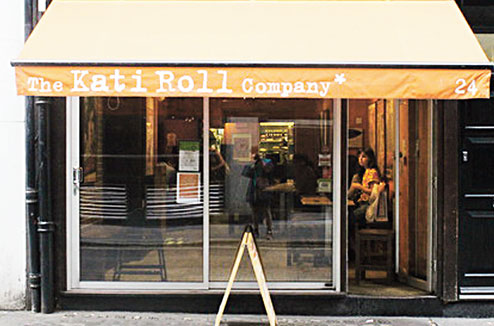
An outlet of The Kati Roll Company, which has branches in New York and London

Calcutta:

The Calcutta girl who makes “the next best wrap after Pashmina” rolled out her sixth kati roll shop in New York in November and has another one lined up in March.

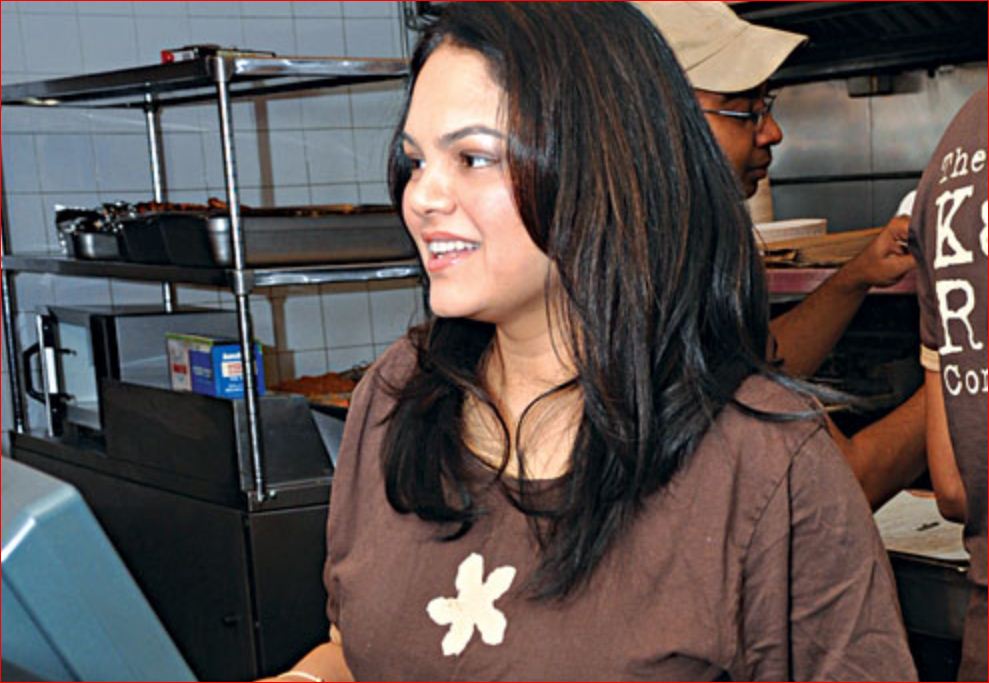
Payal Saha, who comes from a music family that runs Hindusthan Records of 1932 vintage, has five stores serving up kati rolls in Manhattan New York , where she is based, and a solo near Oxford Street in London.

The newest store of The Kati Roll Company opened at Grand Central in New York and the earlier ones are at Greenwich Village, East Village, Midtown West and Midtown East.

Daughter of a college professor and an entrepreneur, Payal perhaps had it in her blood to excel in business. Both her grandfathers were entrepreneurs, she said over an email chat from New York.

Payal’s paternal grandfather founded Hindusthan Records after training in Germany. “He travelled through India looking for regional content from the brothels of Varanasi, recording recitals by baijis to Bade Ghulam Ali and Debabrata Biswas,” she said. The Akrur Dutta Lane studio of Hindusthan Records was inaugurated by Tagore where he also recorded his songs.

Payal Saha

Her maternal grandfather jumped ship on Staten Island as an illegal immigrant in NYC and went on to become a chemical engineer from New York University before returning to Calcutta to open a paint factory.

The first store of Kati Roll Company opened in 2002 and soon became a raging trend for “fast casual dining” in New York. It has been widely covered in the American and London press, including The New York Times and BBC America. “After 15 years we still have snaking queues and on weekend nights we need bouncers to manage the rush. Last year, we sold over a million rolls,” Payal said. The bestseller: Chicken Tikka Roll with Achari Paneer a close second.

The decor at her stores is very street and Bollywood with film posters and a rugged charm.

Payal studied at Loreto House before moving to Lawrence School in Ooty for her PLus II and Jesus and Mary College in New Delhi for her graduation. She left for New York in 2000. “My husband (Anil Bathwal) was working in advertising and found a job in New York,” she said.

While Payal missed her Calcutta food, it was the kati roll that she most yearned for. Her personal favourite: Golden Spoon on Middleton Row near her school. “I also like the rolls at Stop and Go near Ballygunge Phanri,” she added.

Soon, Payal started experimenting with recipes and came up with The Kati Roll Company. On her next visit to Calcutta, she visited as many roll shops as she could – from Anamika in New Alipore to Badshah in New Market. She also gained some hands-on experience at a kati roll shop run by a Bengali in Mumbai. “I was determined to make it taste like the best of Calcutta rolls, if not better,” she said.

In the early days, Payal made everything on her own, with just one helper. “We would grind the spices, make the parathas and marinate the fillings. It was a lot of work.”

With several shops under her wings, operations stabilised and a baby to take care of, she now depends more on her “capable managers”.

The core menu is authentic kati roll but for healthy eating, she offers chapatti instead of paratha. Recently, Payal started a line of flavoured lassi with organic yogurt. Mango Lassi and Mishti Doi Lassi made with patali gur are among the top picks.

Her one earnest wish: Bengal should apply for a GI tag for the kati roll.

source: http://www.telegraphindia.com / The Telegraph, Calcutta,India / Home> Calcutta / by Anusuya Basu / January 02nd, 2018

Dooars fest set to roll today

Alipurduar:

The Biswa Dooars Utsav will commence from Friday at Alipurduar Parade Ground and singers from neighbouring countries will perform at the event.

Singers from Bangladesh, Nepal, Bhutan will perform at the 14th Dooars Utsav, sources said.

Sourav Chakraborty, MLA Alipurduar, as well as General Secretary of Dooars Utsav Committee, said: ” This is the first time singers from Bangladesh, Bhutan, Nepal are coming this year to attend Dooars Utsav. Almost 6,000 artistes across the state will participate in different cultural activities.”

“The Utsav will start tomorrow and end on 7th January. The Utsav is organised to promote Dooars among the people of the country. Every evening eminent singer from Calcutta and Mumbai will perform on the main stage of the Utsav. On the last day, Kumar Sanu will perform,” Chakraborty added.

There are three stages in the Utsav Ground which is known as Parade Ground in the town. One is main stage where the main programmes will be held. Another stage is set for the children’s performance while the third stage is made where the folk artists will perform. This is the first time several troops from different communities will perform during 10 days of the Utsav. There are people belong to Limbu, Rava, Mech, Garo, Asur, Santal, Adibashi communities. Troops of Dukpa community in Buxa hill will also perform. Different troops from Forest Villages and tea gardens will participate actively in the Utsav.

Chakroborty added that almost 200 stalls will be there in the Utsav. Arrangements for children amusement will be there. Stalls are also coming from Bangladesh, Bhutan and Nepal.

This is the first time sports has been added in the Utsav. Badminton, Cricket, Marathon are added. Games will be held on 30th and 31st December in the parade ground. Senior renowned artists across the North Bengal will also be felicitated during Utsav. Tourists coming to Alipurduar town will be taken to forest and Phuentsholling by the Utsav Committee free of cost.

source: http://www.telegraphindia.com / The Telegraph, Calcutta,India / Home> West Bengal / by Anirban Chaudhury / December 29th, 2017

Kolkata artist’s paintings stamp their authority in Germany

Kolkata :

German postal service Deutsche Post AG has issued two postage stamps featuring paintings by an artist from Kolkata.

Sudip Chatterjee, who passed out of the Indian College of Art & Draftsmanship in 1986 after graduating in science from University of Calcutta, was pleasantly surprised when he received a mail from the Deutsche Post headquarters in Bonn, seeking his approval to use two of his paintings in postal stamps. Each stamp is priced 1.45 euro.

Awarded senior fellowship by HRD ministry for 2016-18, Chatterjee was in Germany for an exhibition at Galerie Sabine Neubuhr from May 30 to June 19. He is again due to visit Germany next year for an exhibition at Gallerie Stauferland at Goppingen near Stuttgart from May 31 to June 17.

Chatterjee association with Germany goes back two decades. In 1998-99, he was an artist in residence at the Kuntseminar Freie Hochschule in Metzingen, Germany, and has done several shows in Stuttgart and Berlin, apart from Paris, Mumbai, Delhi and Kolkata.

His Paintings are part of the collection at the National Gallery of Modern Art, Roopankar Museum, Bharat Bhawan and other private and public collections in India, Germany, France, UK, Finland, Austria, Canada and the US.

source: http://www.timesofindia.indiatimes.com / The Times of India / News> City News> Kolkata News / TNN / December 28th, 2017

IIM reunion kicks off

Joka:

The IIM Calcutta’s 1992 alumni returned to the campus on Saturday to relive their student days with batchmates Sonya Dutta Chowdhury and Swati Kaushal who chucked corporate careers to turn authors.

Each year, winter marks the homecoming of the batch that graduated from Joka 25 years ago. And the occasion is called “Reminiscence”.

The reunion started with a two-day carnival that would include a guided tour of the campus, a discussion with the director and dean, interaction with former professors and current students among others.

“I cannot imagine being a writer without my stint in the management school,” Kaushal told her batchmates. “Because I went to management school, worked with Nestle, interacted with advertising agencies, I was subjected to a lot of communication… that’s what brand management is about.”

Dutta Chowdhury said: “MBA teaches you a lot of communication, writing, analysis and storytelling.”

Instances of IIM graduates shunning corporate careers to turn authors is not new, though. Amish Tripathi, who was at IIM Calcutta to collect the distinguished alumnus award on November 14, is perhaps the most successful example with his Shiva trilogy.

source: http://www.telegraphindia.com / The Telegraph, Calcutta,India / Home> Calcutta / by Special Correspondent / December 24th, 2017