Category Archives: Arts, Culture & Entertainment

Here lived Dr Rajendra Prasad

At a time when Calcutta’s Hindu Hostel is the subject of controversy, Moumita Chaudhuri chronicles the good ol’ days
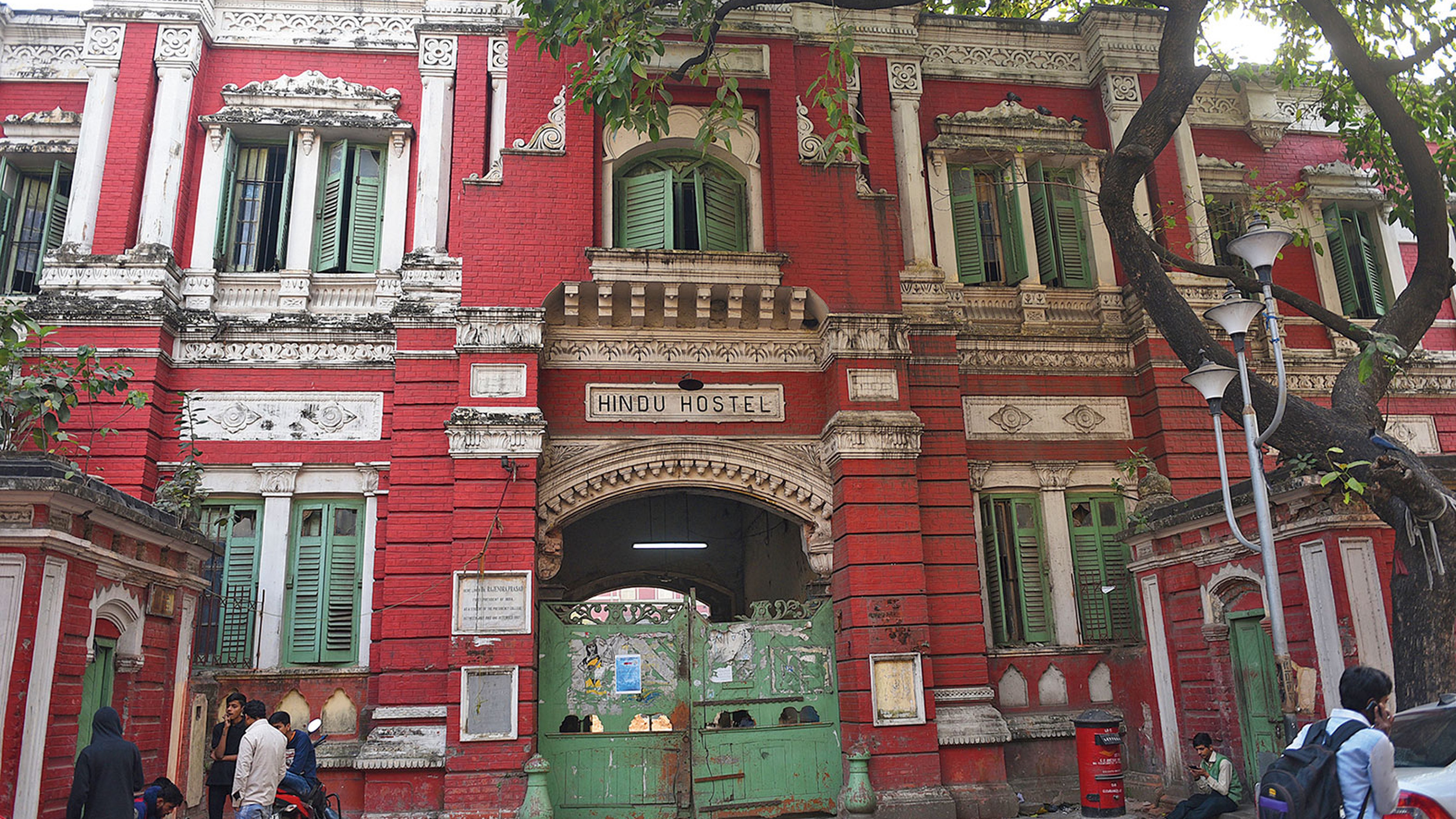
Hindu Hostel /
Telegraph file picture

In July 2015, Eden Hindu Hostel for male students of Calcutta’s Presidency University, Maulana Azad College, Sanskrit College and Goenka College of Commerce and Business was vacated for repair work. Three years on, it is yet to be reopened. On August 4, students launched a protracted protest. On September 11, the annual convocation had to be shifted after angry students locked the university premises. And Governor Keshari Nath Tripathi chose not to attend the off-campus abridged event.

In the heart of north Calcutta’s College Street area stands the red building with green fenestrations. A plaque outside it reads: Here lived Dr Rajendra Prasad first President of India as a student of the Presidency College between July 1902 and December 1907. Once you enter the premises, you realise Eden Hindu Hostel is not just one building. There is the main building that houses wards 1 and 2. Another to its east houses three more wards. Construction of a hostel for postgraduates began in 1988 and took seven years to complete. Many old boarders were shifted to this one.

Heritage conservationist and architect Partha Ranjan Das’s firm is overseeing the repair and restoration of a part of the hostel. Das says, “The older buildings take after early 19th century British colonial architecture. They display the soft style of the late Baroque era.” According to Das, when his firm assumed charge in 2015, it came to light that a lot of additions and alterations had been made. “Such interventions are not allowed while restoring a heritage building,” he says. “Additions were made to the original structure, which we have removed. The buildings cannot withstand extensions like these,” he adds.

The hostel was more than a boarding and lodging space for students. It was a place of bonhomie, politics and spirited debate. It was also a creative space. From the centenary publication of Presidency College, we learn that the hostel ran a bilingual magazine called Suhrid in 1894. There are references to an assembly of poets till the late 19th century. There was a keen rivalry between the wards, each of which ran its own manuscript magazine with names such as Sense and Nonsense and Highland Review. All the wards would come together for Saraswati Puja.

This is the space where friendships were struck and history was made. Scientist Meghnad Saha met freedom fighter Jatindranath Mukherjee aka Bagha Jatin here. Says Swapan Chakravorty, distinguished professor of Presidency University and former director-general of National Library, “Those days, caste seating was followed in the dining hall. Saha felt discriminated against and left the hostel in protest.” More stories. Nationalist and founder of the Congress, Surendranath Banerjee, was a student of Doveton College but would frequent the place. When deputy superintendent of police Basanta Kumar Chatterjee was murdered in 1916, the hostel was raided. No one could be nailed though. Much later, during the Naxalite movement, eight boarders were expelled. “A movement coagulated around this expulsion,” says Chakravorty.

Jyotirmoy Pal Chowdhury, director and chairman of the Institute for Civil Service Aspirants, stayed here in the 1950s. Those days, the boarding charge for a ground floor room was Rs 5, first floor and second floor room charges were Rs 7 and Rs 8, respectively. The monthly charge for food was Rs 32. (In 2015, the monthly charge including lunch and dinner was Rs 1,500.)

Pal Chowdhury talks about student politics and how any boarder contesting elections was sure to win. He recalls the time when college senior Amartya Sen asked him to contest elections. He talks about the canteen. How each of the five wards had a kitchen representative who would go grocery shopping, decide on the menu and arrange for a monthly feast. With relish he recalls the menu, obviously hungry for a taste of those times — “Pulao, luchi, two kinds of fish, mutton, doi-mishti and dilkhusha paan that was sold at the college gate.” He has his own hand-me-down hostel tales — “Scientist Satyen Bose would play football in the adjoining field. He used to be the goalkeeper.”

The condition of the hostel deteriorated in the 1990s. Debarshi Das, a professor of Economics at IIT Guwahati, was a boarder during those years. He recalls the thick walls, high ceilings, “big rooms” sans fans. He says, “We used to rent DC fans (AC fans were not easily available on rent). You had to stick carbon sticks that would not last long.”

Chakravorty says that by 2000 most government grants dried up. The here and now we piece together from students. Sayan Chakraborty, a final-year PG student, says, “The hostel was in very bad state when we vacated the rooms in 2015. There were 250 boarders staying in all 123 rooms. Each room was heavily partitioned with possibly Burma teak wooden panels.”

Das has not seen any Burma teak partition, only “low quality wooden panels”. He says, “Each room is as big as a big classroom with 15-foot high ceilings, and teak doors and windows. The staircase is all mahogany. We have tried to put back the heritage building with minimum intervention to its original structure. But we did not get the original plan of the heritage structure and so we had to use our judgment in some of the cases.”

Currently, the Eden Hindu Hostel stands heavily guarded. Students are continuing with their fast. Vice-chancellor Anuradha Lohia said earlier this month that it would take another 4-5 months to do what was not achieved in the last three years — make the place “habitable and safe”. Last week, however, after one of the fasting students had to be hospitalised, the state government ordered that Building 1 be readied by November 15 and the university comply with the set deadline.

Pal Chowdhury had told us of the climate and culture of Hindu Hostel from his times, “We did not believe in fighting. We believed in debate. We were the Argumentative Indians.”

Hindu History

A hostel for students coming to Calcutta was the brainchild of college teacher Pearycharan Sarkar

He set up a boarding house on Bowbazar Street in north Calcutta, followed by the first students’ hostel on the same street in 1861

It was for male Hindu students. The Baker Hostel which came up in the early 20th century took in Muslim students from Maulana Azad (then Islamia College)

In Calcutta in the Nineteenth Century: An Archival Exploration, Bidisha Chakraborty writes that more than a decade later, a piece of land was earmarked for the Eden Hindu Hostel

It was named after Lt General of Calcutta Ashley Eden, who led the campaign to raise funds

The ground floor came up in 1886. In 1898, the British Government took it over

In 1947-48, it was thrown open to students of other colleges too.

source: http://www.telegraphindia.com / The Telegraph,Calcutta,India /’ Home> Heritage / by Moumita Chaudhuri / October 07th, 2018
A Long Shot: Veteran cameraman who worked with Ritwik Ghatak, Satyajit Ray

When it comes to the film industry, some people routinely remain out of focus

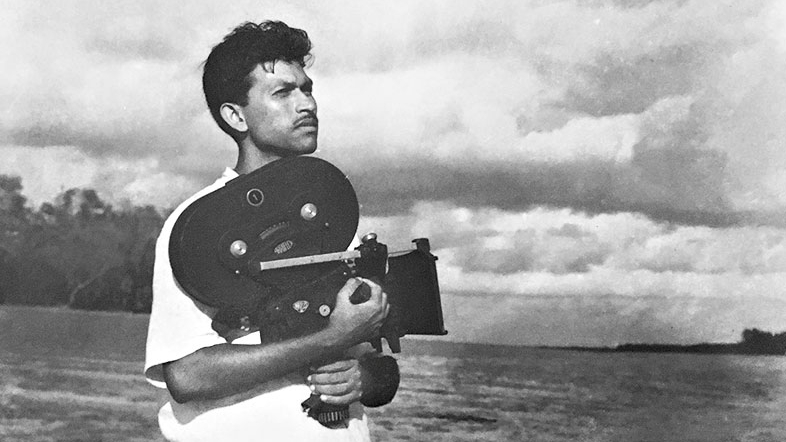
Lens craft: Gour Karmakar

The difference between good and genius often lies in the breach of sanity. Gour Karmakar comes across as an incredibly sane and rooted individual. The veteran cameraman, who has worked in the Bengali film industry and for a bit in Hindi films too — since the late 1950s — sits down to tell his story.

We are all agog with excitement. After all, here is a man who started out as a third assistant and worked his way right up. The 84-year-old has been part of the units of some great directors: Ritwik Ghatak, Tapan Sinha, Mrinal Sen, Satyajit Ray — “Only Samapti,” he clarifies. He has seen Uttam Kumar in action, Suchitra Sen too in Debi Choudhurani, Fariyad, Chhabi Biswas, Pahari Sanyal. His “boss” was the renowned cinematographer Dilip Ranjan Mukhopadhyay, whose works include Ghatak’s Komal Gandhar, Subarnarekha, Sinha’s Atithi, Sudhendu Roy’s Saudagar — “When Bachchan was not yet Bachchan,” Karmakar says. He assisted K.K. Mahajan in Basu Chatterjee’s Rajnigandha. These days, however, Karmakar attends memorial meets, pays visits to bedridden colleagues, attends felicitation ceremonies.

Somewhere near the beginning of our conversation, it becomes evident that our man has planned out his entire narration. At point X, a tea and samosa break. At point Y, he will bring out the cameraman’s logsheet. At point Z, the spools of film, the cinema booklets with the complete credit line. These props, if you will, have been chosen and carefully spaced out to keep his story in sharp focus.

He shows us a notebook with page upon page of numbers written out in a neat hand and an all-cap header that reads “Depth of Focus”. He worked meticulously on his camera skill to get it right — worked, took notes, observed, took more notes, compared results. “A roll of film was expensive then. One didn’t want to take lame shots and waste film. There was also the fear that the bossman would tick you off,” he says earnestly.

We try to pry Karmakar away from the focal length of it all, try to get him to tell us some of the stories. How he ditched the job at the Port Commission and started work as a third assistant — pushing the Vinten trolley and others, marking the spot where an actor or actress must stand in accordance with the way the lighting had been imagined, observing the camera caretakers, the focus poolers.

He sees our expression and throws in an explainer — “Those days, unlike these digital times, you couldn’t see the image on the monitor, which is why it was imperative that one developed a sense of measure and accuracy.”

Now he is in the throes of nostalgia and as it happens with every telling, more and more details come into the line of sight. Karmakar cannot pick and choose, that is not his craft, he is master of focus alone.

One moment he is in the present — “You would have read about Kalpana Lajmi’s death. The newspapers have not written about her first film, a documentary on director Dhiren Ganguly titled, DG. I was the cameraman.” The next minute he is back in the past, talking about how in all his time in the industry he has never seen another director like Ghatak. “He did his own framing,” he says. He is looking at us, talking to us, but it is evident he is back in that time. “Ritwikda called me Goura. He smoked a lot.” Jerky, disconnected frames. A lot of senior directors from that time eventually started to operate the camera themselves. Karmakar says with only as little disdain as his gentle persona will permit, “But I am sure they would have never been able to operate a Mitchell camera. We have worked with Mitchell, Arriflex, Beaulieu cameras.”

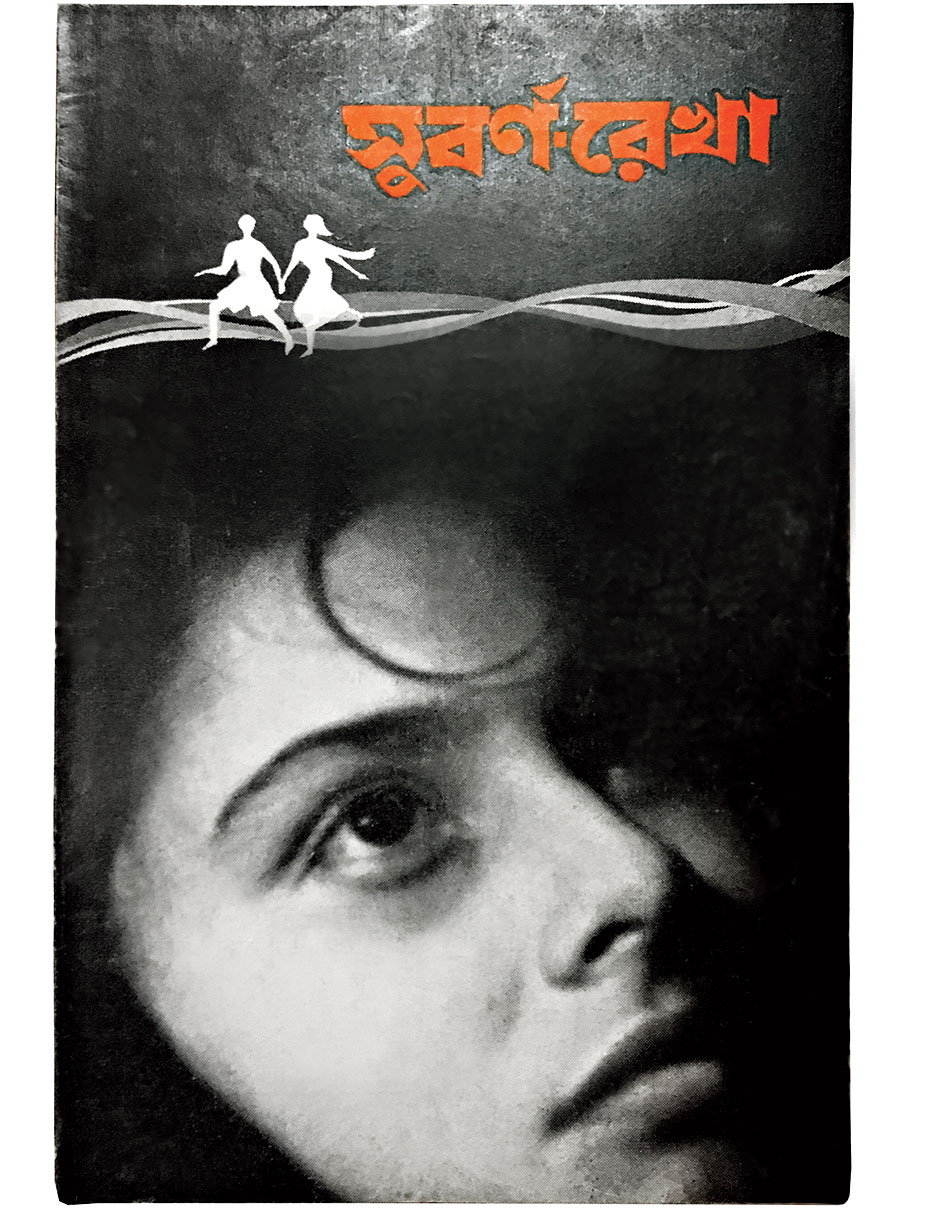
Booklet of Ritwik Ghatak’s Subarnarekha with Madhabi Mukherjee on the cover
Gour Karmakar

He talks about the weight of those cameras, stand et al. “Easily 60 kilos.” And the “association”, a reference to the Eastern India Cinematographers’ Association set up for technicians to share knowhow. He says how “senior artistes” co-operated without a murmur and make-up men had knowledge of lighting. He is crafting a portrait of an industry as a family.

Next, he brings out letters of appreciation from Ray, Sen, Sinha. Not to boast, for there is nothing of the show-off about him. He barely talks about the films wherein he was the cameraman — Saheb, Atmaja, Debi Garjan, etc. He has worked on documentaries — on Uday Shankar, Benaras, the Sundarbans, coal.

Among the letters is a long typed note from British photographer Denny Densham, who has worked with Karmakar in some documentaries. Karmakar caresses the paper, wipes a spontaneous tear and hands it to us. It reads, “It was a pleasure to view your rushes which contained nicely balanced compositions, and some first class close-ups. There was not a soft focus shot anywhere, the pans were smooth, and everything looked good, so pat yourself on the back for me.” It is dated 1981.

Karmakar murmurs, “The problem is no one now has an idea what our work then entailed. How invested we were in it all.” He adds, “I tell my daughter to look after all of this when I am gone. And then again I think, when I am gone, I will not care about all this anymore.”

source:http://www.telegraphindia.com / The Telegraph,Calcutta,India / Home> Culture / by Upala Sen / September 30th, 2018

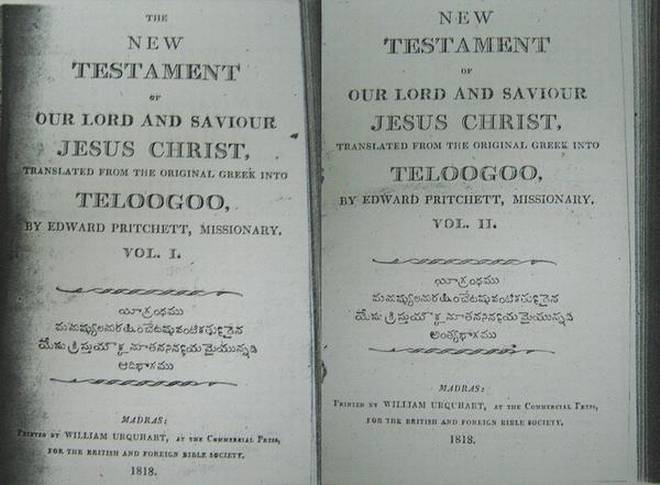
Telugu Bible turns 200

The cover page of the New Testament that was first translated and printed in Telugu in 1818. | Photo Credit: Special Arangment

It was translated in Vizag and West Bengal

On September 30, based on a resolution adopted by the United Nations, the world celebrates the International Translation Day (ITD). It is observed in honour of fifth century St. Jerome, a priest from northeastern Italy, who was the first to translate the Bible (New Testament) into Latin from Greek manuscripts. He also translated parts of the Hebrew Gospel into Greek.

The ITD has a unique connection with Visakhapatnam. The churches in the city will be celebrating this year the 200th year of the translation of Bible from original Greek to Telugu.

First attempt
The first attempt to translate the Bible (New Testament) was made by one Rev. Benjamin Schulz (1689-1760) some time in the mid-1760s, and the manuscripts were sent to Germany for printing, but it was not printed and the manuscripts were lost.

The second serious attempt was made simultaneously at Vizagapatam (as Visakhapatnam was then called) and Serampore, then unified Bengal, some time around 1805-1806.

Telugu Pandit’s role
In Serampore, the project of translation was led by Rev. William Carey of the Baptist Missionary Society. In Visakhapatnam, young Christian missionaries of London Missionary Society Rev. Augustus De Granges and Rev. George Cran took up the work of translating the Bible from original Greek to Telugu. The missionaries in Vizagapatnam were assisted by a local Telugu Pandit Anandarayar.

The untimely death of both Granges (1809) and Cran (1810), however, did not deter Anandarayar from pursuing the work of translation under the guidance of Rev. John Gordon and Rev. Edward Pritchett, said V. Edward Paul of INTACH.

“The first three gospels out of four translated in Vizagapatam were sent to Rev. Carey in Serampore and the translation work continued simultaneously at Serampore and Visakhapatnam. The full extent of translation was completed with the fourth gospel, letter and acts and sent to then Madras Presidency for expert opinion of Rev. Thompson and Mr. Campbell, a reputed Telugu scholar in the Presidency. It was certified and then printed in 1818, and that makes the translation 200 years old, as of today,” said Mr. Edward Paul. The Bible that was printed in 1818 in Madras Presidency is today considered the authentic Bible and has undergone several revisions.

source: http://www.thehindu.com / The Hindu / Home> News> States> Andhra Pradesh / by Sumit Bhattacharjee / Visakhapatnam – September 28th, 2018

Edit

Paintings that pioneered modern art in India to get a permanent gallery in Kolkata

Victoria Memorial Hall is all set to unlock a set of 5,000 paintings from the Bengal School that paved the path of modernism in Indian art.

Victoria Memorial Hall (VMH), one of the museums with the highest footfalls in the country, is all set to unlock a a set of 5,000 paintings from the Bengal School that paved the path of modernism in Indian art.

“This winter we will open a permanent gallery dedicated to this collection. It includes the largest and most important collections of the works of Abanindranath Tagore and Gaganendranath Tagore, two of the pioneering figures of modern Indian art,” said Jayanta Sengupta, curator and secretary of VMH.

Notable among this collection are the works by cousins Abanindranath and Gaganendranath, as well as Nandalal Bose. The three are among India’s nine artists of national importance whose works cannot be taken outside the country.

“This collection is one of the most important in the context of Indian modern art because modern art movement in India centred on Kolkata, and this collection comprises works of the formative days,” said Sushobhan Adhikary, art critique and former curator of the museum at Kala Bhavana of Visva Bharati.

The Bengal School art movement that started in the late 19th century led to the development of modern Indian art during the early 20th century.

The 300-odd works of Abanindranath is the most exhaustive collection of his works and include the iconic series on Arabian Nights, Mughal Empire, Mangalkabya and the mask series. Among most famous paintings are ‘Bharat Mata’ (1905) and ‘Passing of Shah Jahan’ (1902), Krishna Lila series and the 12 original illustrations for Omar Khayyam’s Rubaiyat (1909-1911).

Gaganendranath’s 200-odd works include those of cubist style and his signature-style of satiric works and caricature.

Besides, there are pencil sketches of Jyotirindranath Tagore, Rabindranath’s elder brother whose art influenced the poet’s drawings in his early days.

“The permanent gallery will be a treat for art lovers,” Adhikary added.

“Jyotirindranath had the unique habit of sketching people sitting in front of him and then to get the sketch signed by the person. The collection comprises several dozen of such signed portraits,” said Subhashis Mukherjee, treasurer, Rabindra Bharati Society (RBS).

The collection of about 5,100 paintings, sketches and doodles was in the strong-room of RBS from 1945 to 2011, when it was handed over to VMH on enduring loan.

The authentication and cataloguing was going on over the past six years and is now complete. The framing and mounting has been done afresh in most cases.

The gallery, which is almost ready, will be able to display about 250-300 paintings. The works from the collection will be put on display in turns.

“We already had an exhaustive collection of the Company school of art. Now, we have a great collection of modern Indian art. At present we are equipped to provide one of the best visual documentations in India of late-medieval and modern South Asian history from the late 17th century to the middle of the 20th century,” Sengupta said.

Among other important artists in this treasure trove are Mukul Dey, Radha Charan Bagchi and Sunayani Devi, Asit Haldar, Sudhir Khastagir and Sarada Ukil – all important personalities of Bengal art.

There is also a set of about 100 paintings of ‘unknown artists’, belonging to the Bengal school and the Rajput school.

source: http://www.hindustantimes.com / Hindustan Times / Home> Kolkata / by Snigdhendu Bhattacharya, Hindustan Times / September 19th, 2018

Jamdani that is out of the box

The Textile Show by CCI presents contemporary versions of traditional craft

“Our craft has to grow and adapt. It has to be a living tradition and not just be preserved as our heritage. Which is why innovation and thinking out of the box help,” says Sarita Ganeriwala, founder of Karomi, an organisation that works with the women weavers of West Bengal, focussing on the myriad possibilities of Jamdani technique.

“Karomi works with urban and rural artisans and ours is weaver-centric organisation. The focus is keeping the craft alive. For me, the product comes ahead of the story of the weaver. We develop high quality products with high functionality,” she says.

Karomi products are not just ethnic, but have a contemporary feel,” Sarita points out, adding that her art background has enhanced her design interpretations. A textile design graduate from NIFT Delhi, Sarita was joined by Sarika Ginodia, a chartered accountant, to provide a sustainable business leadership to the firm.

Disha, founded by Amrita Chaudhary, works with 400 women artisans of the Shekhawati region in Rajasthan and engages them in tie-and-dye. It has made the women self-reliant by forming a self-help group. The stories of Karomi and Disha are woven by the skilled weavers from economically marginalised regions of Shekhawat and West Bengal. All the three women who have spearheaded this revolution will participate with their creations at the Textile Show organised by Crafts Council of India (CCI), in the city.

Disha provides a dignified livelihood for vulnerable women. Its activities include assistance in creating SHGs, skills training, promoting children’s education and very importantly, conducting awareness workshops on women’s social and legal rights. The 400-member SHG founded by Disha is trained in tie-and-dye and the Japanese craft of shibori to create saris, dupattas, stoles and running fabric in chanderi, tussar, and mulberry silk.

“Our design mission is to bring together the classic and the contemporary. We handover out complete designs to our weavers and they are also involved in the design development process from the beginning. At times, design intervention takes place at the loom level,” says Sarita.

Karomi has developed a special range of khadi and khadi blends for the Chennai exhibition. “We have brought products in plain khadi, khadi-linen, among others, all with the jamdani style of weaving. This collection is most suitable for Chennai’s weather,” says Sarita. Karomi received the UNESCO Award of Excellence for Handicrafts — Jamdani stoles in 2012 and again in 2014.

At the exhibition, Disha will showcase shibori saris, stoles, and dupattas. These artisans also use fine bandhini work on chanderi and silk saris. The Karomi design story is all about natural fabrics and linen woven in the jamdani style, inspired by colour blocking and geometrics, all woven by women weavers in remote villages of West Bengal.

The Crafts Council of India (CCI) is a volunteer-run, not-for-profit NGO working for the sustainable growth and development of India’s crafts and it’s craft artisans.

The Textile Show is at CCI’s Kamala Crafts Shop, Egmore, September 6 to 8, 10.30 am to 7 pm. For details, call 28191457.

source: http://www.thehindu.com / The Hindu / Home> News> Cities> Chennai / by Chitra Deepa Anantharam / September 05, 2018

Kolkata revives the romance of the Raj

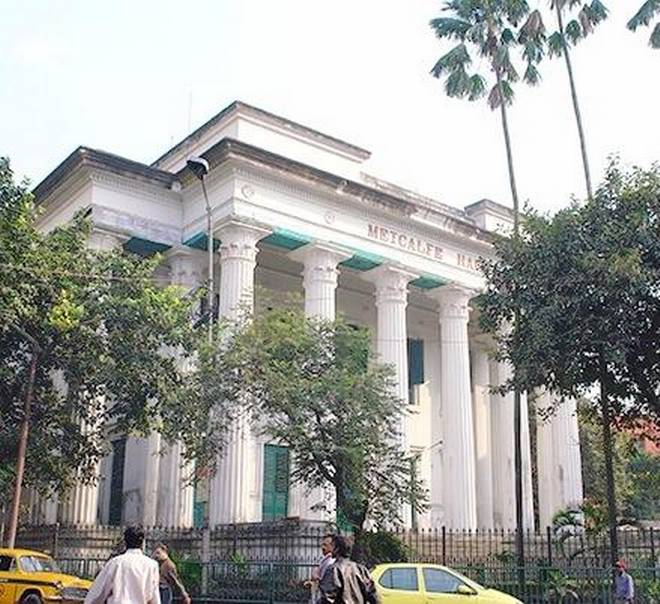
From another time: Metcalfe Hall, at left, and Currency Building are set to host exhibitions. | Photo Credit: The Hindu

Two colonial-era buildings to get a new lease of life as hubs of art and culture

Two of Kolkata’s oldest colonial buildings, Currency Building and Metcalfe Hall, both built in the 19th century, will soon become museums and galleries showcasing art and urban history.

The three-storied Currency Building in Dalhousie Square was built in 1833. Designed in the Italian style with Venetian windows and cast iron gates, its vaults and strong room once housed some of India’s oldest banks, including Agra Bank and the Reserve Bank of India.

But now the western wing is all set to become the office of the National Gallery of Modern Art (NGMA). Once the NGMA moves in, the Currency Building will host an exhibition of sketches and sculptures by Ramkinkar Baij, a pioneer of modern Indian sculpture.

“We are expecting that a portion of the Currency Building will be handed over to us by September. There are plans to have a large exhibition on Ramkinkar Baij,” said Adwaita Gadanayak, director general of NGMA.

Archaeologists say the Currency Building was not a mint but a place where currency was kept. Till 1937, it was occupied by the RBI, after which it fell into neglect. Its central dome collapsed later. The Archaeological Survey of India (ASI) took over its upkeep in 2005.

Barely 200 m away is Metcalfe Hall, with 30 Corinthian pillars built between 1840-1844. Located at the junction of Strand Road and Hare Street, it draws its name from Lord Metcalfe, the Governor General of India in 1835-36. It is in this structure that the city’s history will come alive as the ‘Calcutta to Kolkata’ exhibition.

Renovation dilemma

The ASI grappled with the question whether to rebuild the Currency Building’s dome, but decided to keep the existing structure.

In Metcalfe Hall, it shifted one lakh books for repair work. “The exhibitions will bring them back to life,” said G. Maheswari, Superintend- ing Archaeologist, ASI, Kolkata circle.

source: http://www.thehindu.com / The Hindu / Home> News> States> Other States / by Shiv Sahay Singh / Kolkata – September 02nd, 2018

Telugus rejoice 1000 full moons in city

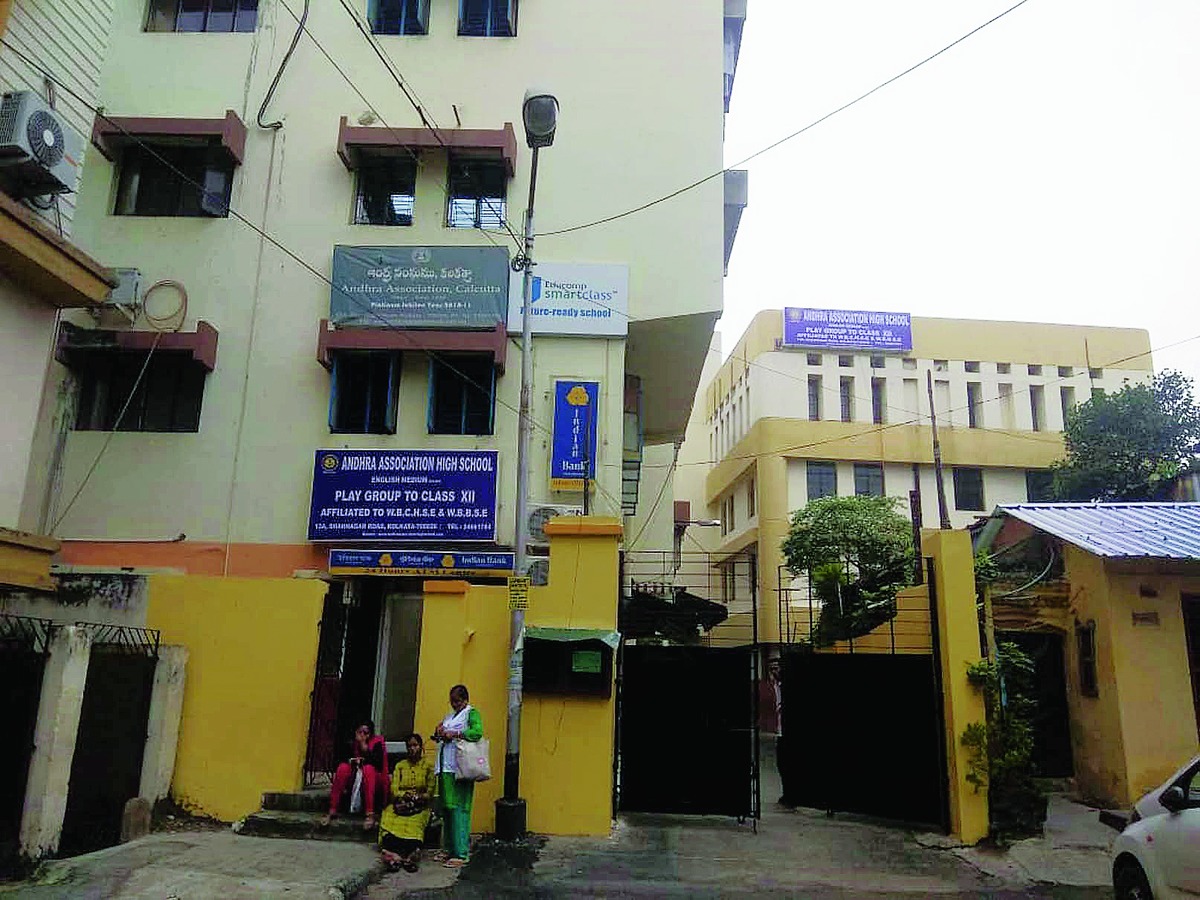
The Andhra Association Calcutta, which houses the Andhra Association High School

Calcutta:

An association for Telugus in Calcutta, formed in 1936, is celebrating its existence for 1,000 full moons according to the Telugu calendar, an occasion known as Sahasra Purna Chandrodaya.

The Andhra Association Calcutta was set up to give Telugus a feeling of home away from home.

Sahasra Purna Chandrodaya is an occasion Telugus celebrate if they see 1,000 moons in a lifetime, an association official said.

“Our association has completed 1,000 full moons and we will celebrate the occasion. For us Telugus, seeing 1,000 full moons is an auspicious occasion,” Srinivas Vedula, president of the association, said.

“In Telugu families anyone living for 1,000 full moons thinks it to be a new life. If one’s spouse is alive, partners exchange garlands like a second wedding.”

Established in September 1936, the Andhra Association Calcutta is now 81 years old. The difference in food, culture and language prompted Telugus in the city to form the association.

Vadlamani Venkatesham Pantulu, an engineer working in Port Trust, had set up the association.

President Vedula said several Telugus approached Pantulu after which the engineer took a place on rent in Bhowanipore and turned it into a hostel for Telugus. “Here, people used to get food cooked the way they would get at home. Besides, interacting with fellow Telugus gave them a feeling of home.”

Even now the association directs people who approach them to places where they can get Telugu food or people. Yet at the same time, members mingle with people from other states so that they don’t remain exclusive without any contact with people from other cultures, Vedula said.

“During cultural programmes, we have Rabindrasangeet as well,” an association member said.

There are about 100,000 Telugus in Calcutta and a large number of them working in the IT sector in Salt Lake and New Town.

Andhra Pradesh has been split into two states but people from both Telangana and Andhra Pradesh are members of the association. “It’s an association of Telugu people and not of people from a state,” Vedula said.

The current building that houses the association’s office on Pratapaditya Road has the Andhra Association High School, where Telugus are a minority. “We have about 1,000 students and about a dozen of them are Telugus,” a member said.

source: http://www.telegraphindia.com / The Telegraph,Calcutta,India / Home> Calcutta / by Subhajoy Roy / September 03rd, 2018

Taste a cuppa of tea tales

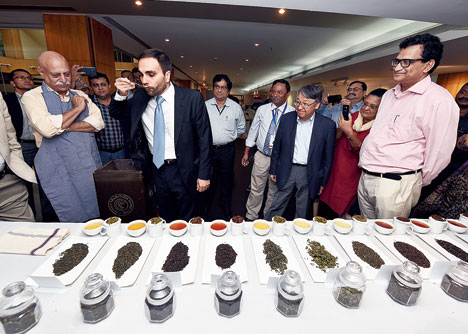
French consul general Damien Syed has a go at the tea tasting session. Pictures by Sanjoy Chattopadhyaya

A beverage made from the first harvest of a garden is light and delicate. A few months later, the second harvest from the same garden lends a rich musky character to the drink. The two are like youth and wisdom.

Calcutta:

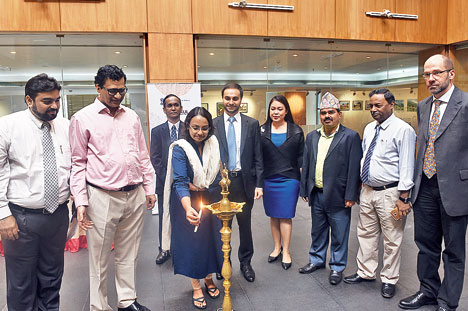
Tea tales brewed at a tasting session for the champagne of Darjeeling on Friday.

Kajari Biswas, director of the Indian external affairs ministry’s branch secretariat in the city, lights the inaugural lamp at ICCR on Friday

Foreign envoys were shown how to make the “right slurp” – and forget manners for a moment – to realise all the flavours, each independent of the other, at the same time.

India’s favourite drink has a centuries-old heritage. The tea industry creates maximum sustainable livelihood in Darjeeling and is steeped in the local history of the hills.

“Since the time the British first planted tea saplings in the Darjeeling area way back in the early 1800s, tea has become synonymous with the art, culture, lifestyle and economic ecosystem of the people around the tea gardens,” said Samrat Chowdhury, the chief mentor of BAUL (Bespoken Architectural and Unique Legacies of Bengal), which hosted the Chiabari Festival at ICCR, with the external affairs ministry and Chamong Chiabari Tea Resorts.

There are more than 80 tea gardens in the hills of north Bengal. The Darjeeling tea industry employs 55,000-odd workers and some five lakh people are dependent on the industry.

Arijit Raha, the secretary general of the Indian Tea Association, gave an overview of the Indian tea industry. The stagnation in auction price over the past few years and climate change were some of the challenges before the industry, he said. “There is an urgent need to check unfettered expansion as well.”

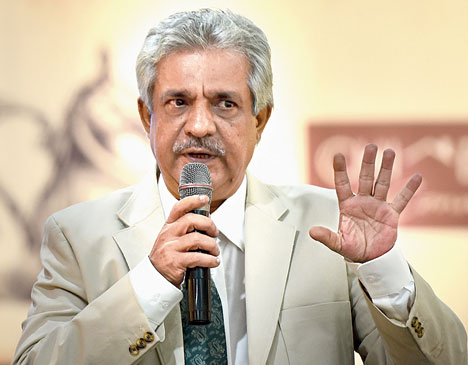
Krishan Katyal, chairman and MD of auctioneer J Thomas, at the event

Krishan Katyal, the chairman and managing director of auctioneer J Thomas, said the beauty of Darjeeling tea was in the distinct difference in flavours of the drink made from the leaves of the same garden in two different seasons.

“During the first flush in spring, the leaves are fresh and green like new shoots. The liquor is a beautiful, clear, light and delicate. The leaves of the same garden during the second flush in summer are of a completely different texture – thicker, heavier and more succulent. The tea is richer, with a ruby red colour and a depth and mellowness,” said Katyal. “It is hard to choose one. The two flavours are like youth and wisdom.”

The consuls general of France and Japan were among those at the event along with Kajari Biswas, the head of the Indian external affairs ministry’s branch secretariat in the city.

During a tea tasting session, Ajay Kichlu, the director of the Chamong Group, invited Damien Syed, the French consul general, to the table.

When Syed kept sipping the tea, Kichlu and Katyal asked him to slurp in a spoonful and let it roll in his tongue. The reason – a sip allows just one composite taste, while a slurp allows a jet of the liquor to enter the mouth, activating all the taste buds simultaneously. “The composite taste is dissected into specific compartments and each one of them is felt independently,” Kichlu said. Syed got it right the next time.

The programme included discussions on the prospect of tea tourism and the way forward for attracting foreign visitors. “We are trying to make India a 365-days-a-year destination. Niche offerings like tea tourism would play a key role in that,” said J.P. Shaw, the regional director of India Tourism in Calcutta.

P.K. Bhattacharya, the secretary general of the Tea Association of India, said 11 new tea estate proposals are pending with the government. “A couple would be approved soon.”

source: http://www.telegraphindia.com / The Telegraph,Calcutta,India / Home> Calcutta / by Debraj Mitra / August 04th, 2018

Trophy for hill Cup colours

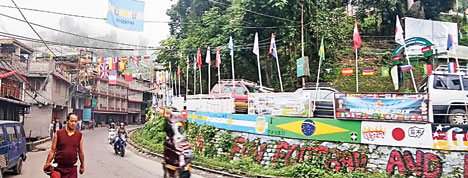
A decorated street at Bara Kak Jhora in the Darjeeling hills that bagged the award

Darjeeling:

In the “World Cup Town” of Darjeeling, BKJ (Bara Kak Jhora) United Club on Sunday lifted the “trophy” hours before the biggest football tournament’s grand finale kicked off.

BKJ United Club bagged the prize for the most beautifully decorated Darjeeling area during the month-long Fifa carnival.

The Darjeeling North Point School Alumni Association (DNPSAA) handed over a replica of the Fifa World Cup to BKJ United Club.

“On June 2, we had organised an outreach programme to raise funds for a Father Van Memorial Clinic on Wheels. Thousands participated in the football parade where we had christened our hometown.

‘The World Cup Town’. BKJ United Club has bagged the award,” association chief Deven Gurung said. Father Van was a former rector of North Point.

During the event, which featured various entertainment shows, it had also been decided that the best decorated area with the World Cup theme in Darjeeling town would be awarded hours before the final begins in Moscow.

The team inspected several places like Aloobari, J.P. Sharma Path, Employment Exchange area, Nimki Dara, but found Bara Kak Jhora different.

“The place (Bara Kak Jhora) was not only beautifully decorated but was also unique in the sense that it was informative,” Gurung said.

Apart from detailing the history of the World Cup and putting up theme works on “Pele to Platini, Zico to Ruud Gullit”, the club had made a special display of Sunil Chhetri for being among the highest scores of international goals.

“We appreciate the fact that they had a corner for the ’60’s legendary players of Darjeeling’ and put up photographs of famous footballers from the region like Chandan Singh Raut, who was part of the India’s football team, Benu Subba, Avay Gurung, KrishDewan, Raju Rai, Kapil Thapa and Shyam Thapa. All of them have made us proud,” said Gurung.

The St. Joseph’s School alumni association announced that the ambulance, for the clinic on wheels, has been booked and will arrive soon. The vehicle, fitted with a slew of equipment, will be sent to remote areas for free medical check-ups.

source: http://www.telegraphindia.com / The Telegraph,Calcutta,India / Home> West Bengal / by Vivek Chhetri / July 16th, 2018

Sushila Goenka dead

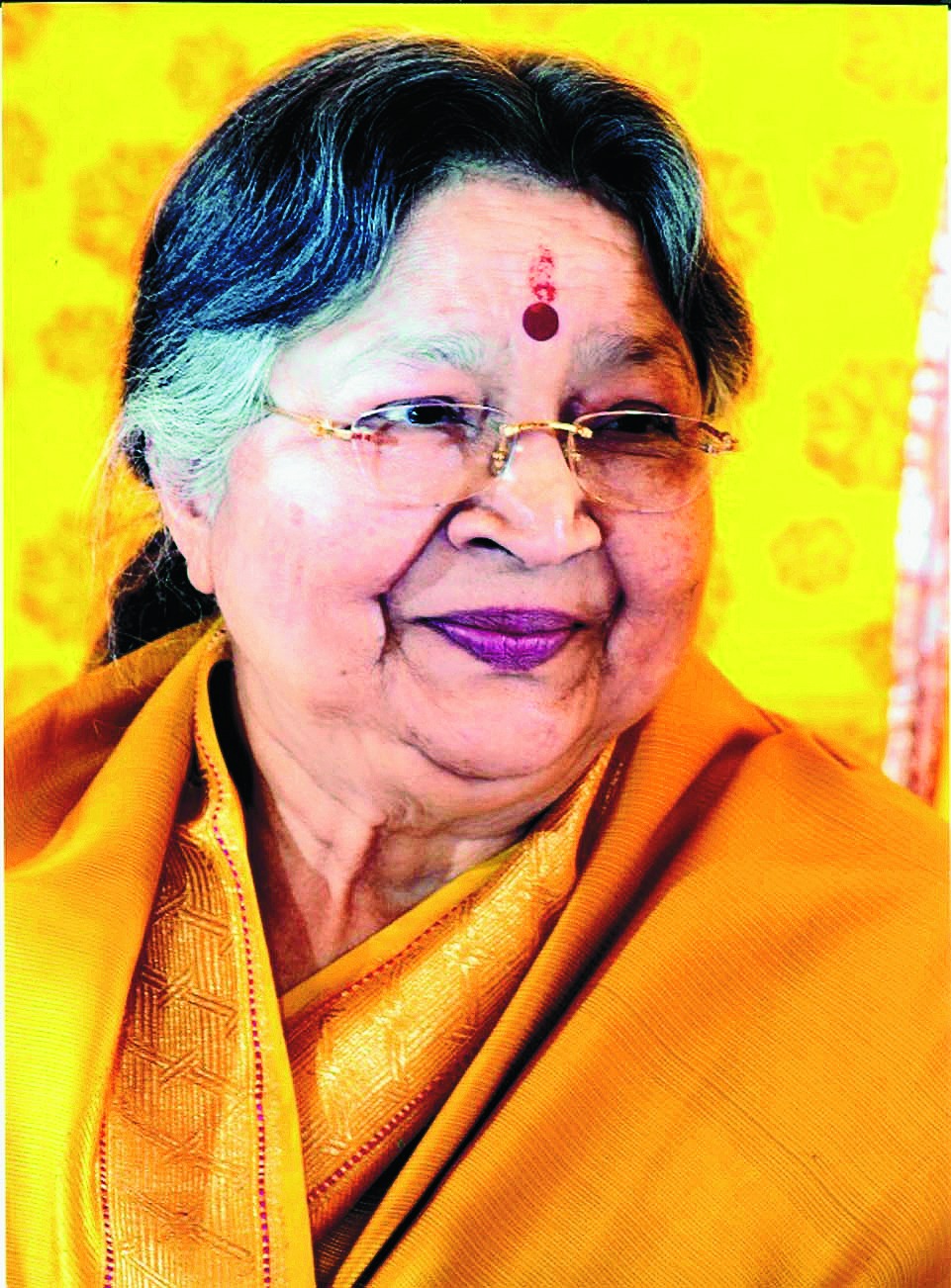
Sushila Goenka

Calcutta:

Sushila Goenka, the wife of industrialist Rama Prasad Goenka, passed away on Sunday evening. She was 82.

Her eldest son Harsh Vardhan Goenka, who is the chairman of the RPG Group, and younger son Sanjiv Goenka, the chairman of the RP-Sanjiv Goenka Group, were present along with their children and other family members during Sushila’s final moments.

R.P. Goenka’s brothers, Jagdish Prasad and Gouri Prasad, were also present.

Born in Calcutta on August 15, 1936, Sushila, a daughter of Ram Sundar Kanoria, got married in 1948. A devotee of Indian tradition and culture, she was known for her interest in Indian music and her intimate connection with musical legends like Lata Mangeshkar.

Sushila was a director of Saregama India Ltd. Along with her husband, she was instrumental in setting up the Mahalaxmi Temple on Diamond Harbour Road.

She was cremated at Keoratala on Monday morning in the presence of friends, family members, ministers, senior government officials and city-based industrialists.

source: http://www.telegraphindia.com / Telegraph,Calcutta,India / Home> Calcutta / by Special Correspondent / July 17th, 2018