Category Archives: Records, All

IIT-Kgp bags top award for patents

Kolkata:

The IIT-Kharagpur has won an award from the Indian government for being the top academic institute for patents in 2016.

IIT-Kharagpur director Partha Pratim Chakraborty said they have received a letter from the Union Ministry of Commerce and Industry, which said that the institute has been awarded the prize for ‘Top Academic Institute for Patents 2016’. PTI

The award will be given on April 26 in Delhi by Union minister Nirmala Sitharaman at a function jointly organised for the celebration of World IP Day by the Indian Intellectual Property office.

The Indian Intellectual property office confers national intellectual property awards on outstanding innovators, organisations and companies in the fields of patents, designs, trademarks, and geographical indications on the occasion of World IP Day every year.

The National IP Award carries an amount of Rs 1,00,000, a citation and a memento.

To simplify the process of patent filing by students as well as professors who have done some substantial research within the institute, the IIT has been running an IP Portal.

Prof Goutam Saha of the institute said patents help them in getting consultancy work and other projects / PTI

source: http://www.timesofindia.indiatimes.com / The Times of India / News Home> City> Kolkata / TNN / April 10th, 2016

Rare oil art by Tagore, other masters restored

Kolkata:

Seventy-two rare oil paintings by Rabindranath Tagore and other masters of the Bengal School that were lying in the strongroom of Rabindra Bharati University have been restored. The university authorities are also planning a public display of these paintings.

Most of these paintings by Tagore, his relatives, students and other legendary painters of the Santiniketan Kala Bhavan were in possession of the Jorasanko Thakurbari and were handed over to RBU when the house was converted into a state university in 1956. Some of these belonged to the Tagore family at Pathuriaghata.

After the Rabindra Bharati Museum was set up on the Jorasanko campus of RBU, several paintings by Tagore and his nephews, Abanindranath and Gaganendranath, and other family members were put up for display. But most of these were pencil sketches, water colour, crayons and pastels.

The Tagores were not known to have a great penchant for oil paintings, except when they were painting portraits or self portraits, feel scholars.

This makes ‘The Three Witches’ particularly so important. This is one of those rarest Tagore oil paintings, which has always generated a lot of interest among the scholars. However, it was never made available for public viewing. This, scholars say, is the most valuable painting in the collection, not only because it is a Tagore original but also because it was influenced by Shakespeare’s Macbeth. It is a dark painting showing three hooded women stirring the potion inside the cauldron. The three women are seen in moonlight and the suggestion of magic comes from a spark near the cauldron, deftly created by the light and shade used by the artist.

A portrait of Tagore by his grandnephew Subhogendranath Tagore was also restored. It’s a mammoth oil on canvas, that has been done by putting together geometric shapes. You have to move away from the painting to understand the pattern. “Today you have the concept of pixels in your camera. This painting, made more than 100 years ago, gives a perfect idea of pixel,” explained Indrani Ghosh, curator of the museum.

There are also some rare oil paintings by JP Ganguly, who also belonged to the Tagore family (he was Tagore’s elder brother’s daughter’s son) and Ramendranath Chakraborty, one of the most accomplished students of Kala Bhavan, Santiniketan.

It took two years for painting conservationists at the National Research Laboratory for Conservation of Cultural Properties (Lucknow) under the ministry of Culture to complete the job.

There were layers of dust all over the paintings, which were also torn in many places; in some the canvases had come out of the frames.

RBU is planning to hold a public viewing of all the 72 paintings at the ICCR.

source: http://www.timesofindia.indiatimes.com / The Times of India / News Home> City> Kolkata / by Jhimli Mukherjee Pandey, TNN / April 08th, 2016

Indo-Danish collaboration revives St Olav’s from ruins

Serampore:

The bells will again chime, the ancient clock tick and hymns resonate through the air as the 210-year-old St Olav’s Church is Serampore rises like a phoenix from the ruins.

St Olav’s Church of Fredricksnagore, as the Danes called Serampore, is being restored back to its former glory, with the first service being slated for April 16.

After decades, people will pray inside the 210-year-old church that has risen like phyoenix, not from ashes, but from ruins. St Olav’s of Fredricksnagore (as the Danes called Serampore) has been restored back to its former glory.

If the former Danish colony, which administered Serampore from 1755 to 1845, boasted of a landmark, it was St Olav’s, which was built from 1800 and opened to the public in 1806. Now, it is an example of one of the most successful conservation projects in the country.

A part of the “Serampore Initiative”-launched by the National Museum of Denmark (NMD) in 2008 with the revival plans for the former Danish colony monuments-the restoration of the church began in January 2015.

The Danes started building the church in 1800 and finally opened it in 1806., as a relic of the time when the Danish ruled Serampore.

From a distance, the church’s magnificence is not quite visible. But as one walks into the narrow alley, the majestic steeple of St Olav’s church which would be the identity of the Danish settlement on the banks of the Hooghly centuries ago-towers over. The clock in the tower is getting the finishing touches, symbolic of the eras gone by, and the ones to come.

But the grandeur of the project-now touted as a major collaboration India-Denmark collaboration-can be truly perceived only after entering the compound.

Bente Wolff, curator of NMD, to attend the historic moment of reviving the church, sounded excited: “The church looks new, not in the flashy sense, but in its authenticity. Very high standards of international restoration protocol are maintained. We are proud of the fruits of our hard labour.”

She recalled how Danish historian Simon Rasting and architect Flemming Aalund had meticulously conducted the pre-project social survey, hunting through archives in India and Denmark for original designs and photographs as part of the scientific analysis.

“Doing this in our own country would have been easier, but we loved the challenge and how all the stakeholders, especially the locals, helped us achieve this,” said Rastin, adding the project would not have been possible without the craftsmanship of Aalund and conservation architect Manish Chakraborti, chief conservation architect for the project and director of historic buildings conservation firm Continuity.

“St Olav’s can serve as a model for conservation projects,” said Chakraborti. “The restoration was carried out after thorough research.” for adopting an appropriate strategy executed with utmost care.”

Ashis Mukherjee, proprietor of Mascon, who is executing the project, said, “The greatness of the project lay in the filigree work, strictly carried out with lime and mortar.” Everything, from piecing together the almost-shattered marble tablet of J S Hohlenberg to recreating the timber of the roof-it collapsed in 2003 -that has been replaced with steel beams, polishing the church bells with ‘Frederiksvaerk 1802’ inscribed on them to restoring the original Burma teak furniture, is noteworthy.

History of St.Olav’s Church

‘Governor’ Ole Bie – born in Norway, buried in Serampore , Between 1755 and 1845 Serampore was administered by Denmark under the name Frederiksnagore. Until 1814 Denmark and Norway formed one kingdom

The longest sitting head of Serampore’s Danish government was the Norwegian Ole (Olav) Bie. During his service from 1776 to 1805 Serampore grew nto a prosperous town. In 1800 Ole Bie began the construction of a Lutheran church for Serampore’s Protestant citizens.

Originally planned as a simple three-aisle building with a flat roof, the church was later enlarged with an open portico in front, and a vestry and a spiral staircase behind the altar.

The church was completed in 1806, but Bie died in 1805 and never saw the final result.

An epitaph honouring his achievements can be seen in the Church together with five other commemorative tablets. Olav was a Norwegian saint, but it is not known when the name St. Olav’s Church came into use.

source: http://www.timesofindia.indiatimes.com / The Times of India / News Home> City> Kolkata / by Ajanta Chakraborty / TNN / April 07th, 2016
Pages from city’s past – Young Metro

The 88-page book with a black-and-white cover may not grab eyeballs, but flipping through it will make one realise what a treasure trove it is.

The first edition of Uttaradhikar, brought out by the Oriental Seminary archive, is not a mere school journal but a compilation of memoirs and tales about the city from a host of writers.

The bilingual publication edited by C.P. Ghoshal, a teacher at the school and in-charge of the archive, took around eight months to put together. “I wanted the contributors to write about Chitpore or their school memories or about the history of Calcutta in the 18th and 19th centuries. A publication by a school that goes back to 1829, should bring out the flavour of the various periods that it has been part of,” he said.

The book, being sold for Rs 50, has write-ups from current and ex-students as well as from historians and researchers. The English essays are by Subha Das Mollick, the founder-member of Bichitra Pathshala, and Mary Ann Dasgupta, an educationist.

Mollick writes about the Our Living Memory project that involved several schools in the city. The project attempted to link family history and collectibles to history textbooks and underline the latter’s relevance in today’s world. Dasgupta takes readers on a tour of St. Paul’s Cathedral and its relics.

Other contributors include historian Soumitra Srimani, researchers Simanti Sen and Rajat Kanti Sur and current student Ayan Ghosh.

There are six write-ups in Bengali – a heady mix of Calcutta in the 19th century, Chitpore’s culture, old boys’ memories and a current student’s journey. The book cover, designed by a former student, is a throwback to Chitpore’s popular woodcut printing.

The book was launched by former student and academician, Ashok Chowdhury, the current principal of the school, Diptiman Kundu, and Srimani at a cultural programme on the school premises.

source: http://www.telegraphindia.com / The Telegraph,Calcutta,India / Front Page> Calcutta> Story / by Chandreyee Ghose / Friday – April 01st, 2016

Baroness bats for Bengali books – Life peer on digitisation drive

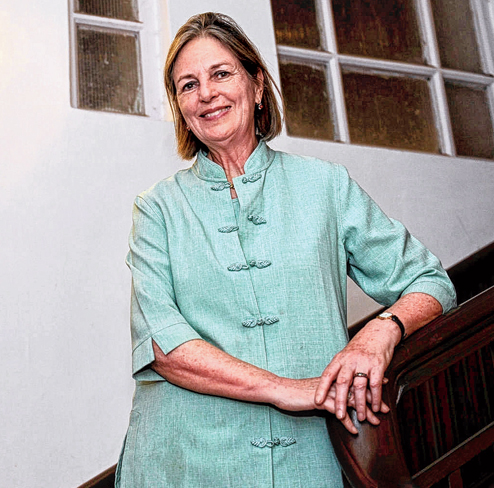
Baroness Tessa Blackstone at Bengal Club on Thursday evening. (Sanjoy Chattopadhyaya)

Baroness Tessa Blackstone, the chairman of the British Library, is in Calcutta to speak with various stakeholders in a massive British Library project to digitise its collections of South-Asian language printed books dating from 1714 to 1914.

Digitisation will not only preserve the rare and priceless — and often brittle — books for posterity but also make them available to people across the world, transforming the scope of research in these languages.
Titled Two Centuries of Indian Print, the project is expected to encompass 22 South Asian languages and some 11 million pages.

The first phase involves the British Library’s collection of early printed Bengali books as well as the cataloguing of these resources, for which the library is collaborating with the School of Cultural Texts and Records at Jadavpur University, Srishti Institute of Art, Design and Technology, Bangalore, National Library of India, the National Mission on Libraries and other institutions in India as well as the library of SOAS, University of London.

On Thursday, the 73-year-old Baroness visited Jadavpur University and met with the university registrar and some senior professors to discuss how this project would take shape and move forward.

“This was an official meeting regarding the pilot project for Two Centuries of Indian Print that we have been talking to the British Library about. Among other things the baroness spoke about the importance of digitisation as well as funding avenues in future,” said Abhijit Gupta, an associate professor at Jadavpur University, who is one of the co-investigators in the project.

On Friday, Baroness Blackwell will meet with Arun Kumar Chakraborty, the director-general of the National Library to discuss digitisation and collaboration between the national libraries of the UK and India.

Name: Tessa Blackstone
Title : The Rt Hon. the Baroness Blackstone of Stoke Newington
Politics: Labour MP, House of Lords. Former minister for education (1997-2001) and former minister for the arts (2001-2003)
Current posts: Chair, British Library board, and chair, Great Ormond Street Hospital Trust, among others
Former posts: Vice-chancellor of Greenwich University, Master at Birkbeck College and lecturer at London School of Economics, among others
Family: The baroness was born in 1942. According to The Guardian, “her father was the chief fire officer for Hertfordshire, her mother an actress and model for the House of Worth in Paris.” House of Worth is a French house of high fashion that specialised in haute couture and perfumes

source: http://www.telegraphindia.com / The Telegraph,Calcutta,India / Front Page> Calcutta> Story / by Staff Reporter / Friday – March 25th, 2016

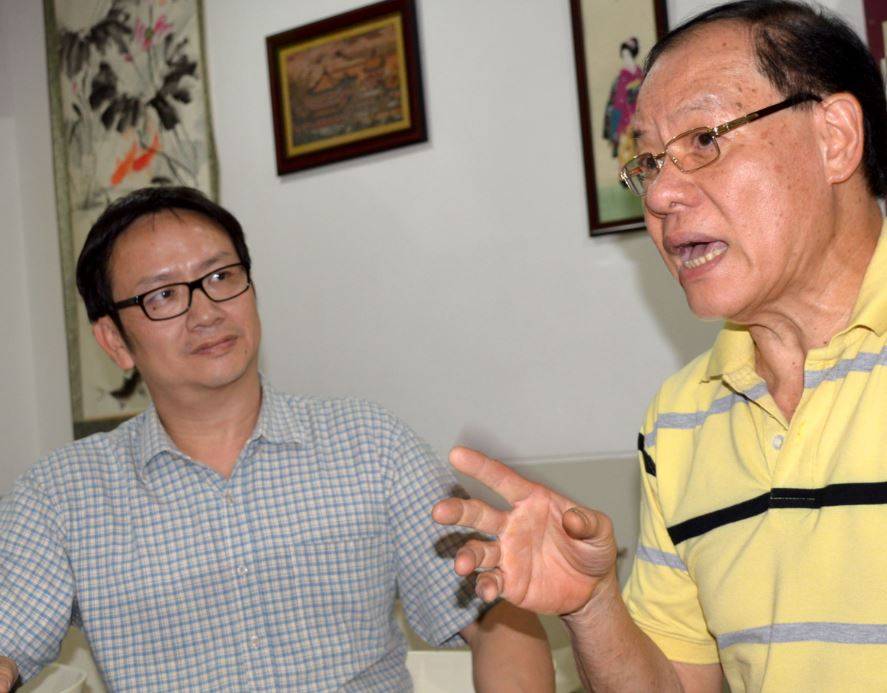
Chinese Indians fight shy of politics, netas

ChineseKOLKATA23mar2016

Kolkata :

The Chinese community is finally emerging from the ghettos at Terreti Bazaar in north Kolkata and Tangra in the east. A realization seems to have dawned on the community that has resided in Kolkata for over two centuries that they need to come out of the cocooned existence and assimilate with rest of Kolkata.

“For generations, Chinese Indians have lived in an insular world. The thinking has been that money will solve all the problem. But it does not. We have to connect to better the condition,” said Bean Ching Law, president of Chinese Indian Association (CIA), who has been persuading senior citizens in the community to get out of their shell.

Tannery owner Chi Chiang Wu, who was born in Kolkata in 1947 but had to struggle for nearly two decades to finally get an Indian passport, said the past continued to haunt the elders. Only Chinese born after 1951 became naturalized citizens.

“The persecution and internment of Chinese at the concentration camp in Deoli, Rajasthan, left a scar that took decades to heal. Hundreds left for foreign shores. When things were just beginning to settle down, the tannery shift happened that devastated many families. Some more Chinese migrated. These twin incidents added to the sense of unease that had prevailed in the community as few could initially converse in a language other than Chinese. The sense of being looked upon as foreigners despite being born here also led to the introvert behaviour,” Wu explained.

Though there were over 20,000 Chinese Indians split between Terreti Bazaar and Tangra till the 1970s before migration began and numbers rapidly dwindled, hardly anyone voted. The language barrier meant that most didn’t understand the nuances of Bengal politics. Also, no political party ever bothered to engage with the community till a decade ago as the 3,000-odd voters in the community split are split between two constituencies and do not make a substantial vote bank. Incidentally, 70% of the eligible Chinese Indians vote now.

Hsieh Ying Hsing, owner of restaurant Big Boss, said though the community was gradually opening up to other communities, they remained wary of politicians. “One reason why even the politically conscious Chinese Indian does not express support to any party in public is the fear of getting identified and persecuted. Since we are Chinese and look different, it is not just the individual but the entire community that could get marked,” he reasoned.

CIA is making a conscious effort to integrate with the mainstream and impress upon community elders the need to involve local politicians and bureaucrats in Chinese festivals and celebrations. Though the proposal met with stiff resistance, Law is hopeful of cutting through the ice.

“Today, we cannot survive without political leaning. The elders and women in the community feel insecure. We have to be practical and discard the baggage of the past,” said Law, an architect by profession.

source: http://www.timesofindia.indiatimes.com / The Times of India / News Home> City> Kolkata / by Subhro Niyogi & Sumati Yengkhom / March 22nd, 2016

Gold crown dug up at Moghalmari in West Bengal

Kolkata:

Excitement and expectation over the Moghalmari excavation site near Dantan in West Midnapore peaked on Monday as the state archeology department, which is digging up the ancient Buddhist vihara ruin, confirmed that it has found a portion of a gold crown over the weekend.

GoldCrownKOLKATA12mar2016

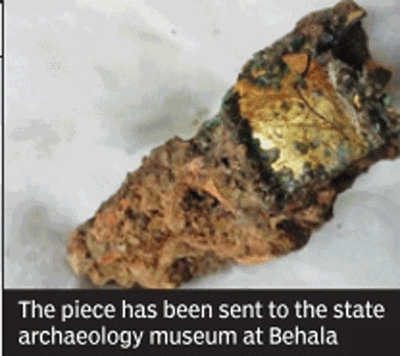
Archaeologists say the find is extremely rare since gold and silver ornaments have almost never been dug up at Buddhist excavation sites. The recovered piece, 7.5x4cm in size, looks like the tip of a crown set in a chunk of terracotta, probably part of a Buddha statue. It has been sent to the state archeology museum at Behala for further examination.

The Moghalmari vihara is gradually emerging as one of the oldest in the country, dating back to at least 6th century if not older. A large number of statuettes, pottery fragments and bronze items have been recovered from the mound since excavation re-started in January. Recently, gold coins bearing the name of Samachar Deva, a king of the pre-Pala dynasty, were dug up.

“We were stunned to find the portion of the gold crown.We feel it was part of the main Buddha statue of the vihara. Gold ornaments were normally not part of Buddha statues. But the Vajrayana sect of Buddhism worshipped what was known as the Crown Buddha. It seems this gold crown was worn by a Crown Buddha,” said Prakash Maity , the chief archaeologist at the site.

“It is possible that the Moghalmari vihara received royal patronage during the pre-Pala times from Samachar Deva, a local satrap who came into prominence in south Bengal after the fall of the Guptas in 550 AD. Notably, king Shashanka had not emerged on the scene yet.Again, while this crown might be indicative of religious harmony , Shashanka was a Shaiva and might not have been too kind towards other religions. Naturally , these matrices have to be studied while establishing the antiquity of the vihara,” Maity said.

He went on to suggest that since Moghalmari was part of an important trade route, the gold ornaments might have been gifted by traders. Two important seals have already been discovered that suggest the name of the vihara was `Sribandaka vihara’.

source: http://www.timesofindia.indiatimes.com / The Times of India / News Home> City> Kolkata / TNN / March 08th, 2016

An indigo planters’ journals

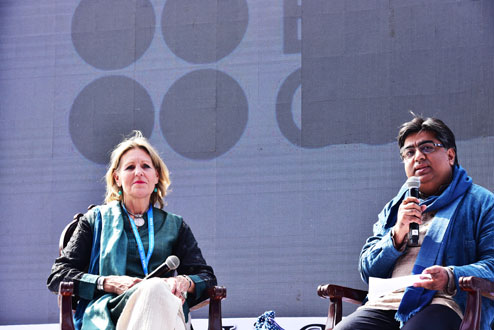
Jenny Balfour-Paul with Bappaditya Biswas at Kolkata Literary Meet on January 24. Picture by Anindya Shankar Ray

“It was serendipity,” said Jenny Balfour-Paul about how he chanced upon Thomas Machell’s journals in the British Library. She was speaking at the Tata Steel Kolkata Literary Meet, in association with the Victoria Memorial and The Telegraph on January 24.

Balfour-Paul’s book, Deeper than Indigo, based on these journals, seemed to her like a natural progression from her earlier works. For, it was indigo that lured her to Machell and shaped the 15 years of her life that she spent pursuing his trail.

Machell was a midshipman in the merchant navy and an indigo planter. He had travelled on an Arab ship dressed as an Arab and read the Bible to strict Muslims. He was taken aback at how much they had in common. Machell’s plea for religious tolerance is much more relevant now than it was in his times, said Balfour-Paul.

Balfour-Paul objects to her obsession with Machell being called a love affair across time. Yet, she seemed quite taken when it was pointed out that the Bengali translation of her book’s title, Ghana Shyam, not only means the darkest blue but is also another name for Krishna, bringing to mind an image of Radha and the themes of separation and union.

“It was a compulsion to know more about Machell and his spiritual search” that led Balfour-Paul to follow his path. Machell would love the way the world is connected at present, said Balfour-Paul, adding that had he been around he would probably have been quite active on Twitter.

Machell was ahead of his time in his empathy for the “natives” and his “criticism of colonialism”. His journals bear witness to him repeatedly “grappling with his conscience”. Machell, when he wrote the journals, only wanted to be heard. Balfour-Paul recalled how when she came across the first draft of the book, she shouted to the sea: “I’ve got you out there now.”

source: http://www.telegraphindia.com / The Telegraph,Calcutta,India / Front Page> Calcutta> Story / by Srimoyee Bogchi / Tuesday – March 08th, 2016

Bengal Area completes 121 years

Kolkata :

One of the oldest static formations of the Indian Army in the eastern region, Headquarter Bengal Area, celebrated its 122nd Raising Day in Kolkata on Tuesday. What makes this formation extremely crucial for civilians is that it liaisons with the West Bengal and Bihar governments for activities such as disaster relief, rescue efforts during natural calamities and deployment of troops to curb violence.

Lt Gen Rajeev Tewari, general officer commanding, Bengal Area, addressed all ranks of the formation at a special sainik sammelan and conveyed his greetings.

Bengal Area Headquarter was raised as Bengal Command at Fort William on March 1, 1895, by Lt Gen Sir WK Ells. It moved to its present location at 246, AJC Bose Road from Bengdubi in north Bengal in September 1995. Bengal Area participated with distinction during World War-II, the Sino-Indian conflict of 1962 and Indo-Pak War of 1971. Besides operational war time task, the formation also supports the logistics requirements of fighting formations and units of the Eastern Command in war and peace.

It is also the ‘local military authority’ acting as a link between the state government and the Army besides being the custodian of the ‘Maidan’ area and all Army land around Kolkata.

“With growing need of the military in combating natural disasters as well as man-made calamities, the importance of the formation has gone up by leaps and bounds. It also provides necessary assistance to the Eastern Command in maintaining bases in parts of south Bengal and bordering areas of Bihar,” an officer said.

source: http://www.timesofindia.indiatimes.com / The Times of India / News Home> City> Kolkata / by Jayanth Gupta / March 01st, 2016

Experts to Document Ashoka Circuit in State

Kalaburagi :

A joint initiative of HKRDB and Calcutta University to document an Ashoka Circuit for Karnataka from Sannati to Siddhapura has been launched.

Head of Ancient History Department of Calcutta University Prof Susmita Basu Majumdar is the Principal Investigator. As part of this expedition, a documentary will be filmed and a pictorial Pali-English-Kannada dictionary will be compiled.

Karnataka has perhaps the largest number of Ashoka sites and those dating back to the 3rd century BC are the earliest legible records found from Afghanistan in the northwest, Andhra Pradesh in the south, Odisha in the east to Girnar in the west. The project will first document all the Ashokan sites in Karnataka and then establish the full circuit from Afghanistan.

AshokaBF02mar2016

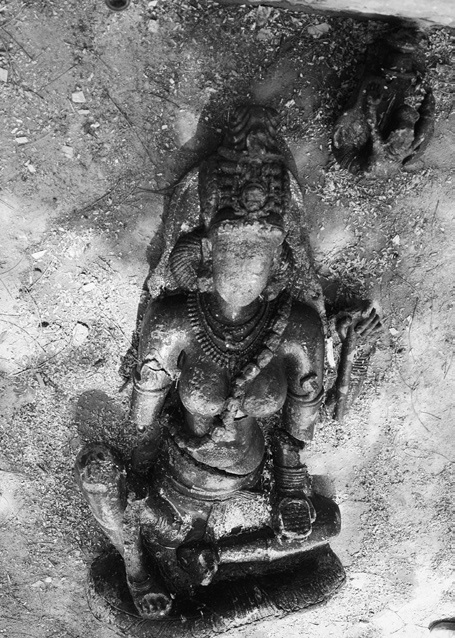
A team of three, Prof Susmita Basu Majumdar, artist Rajib Chakraborty and film maker Ranjay Ray Choudhury visited the Chandralaparameshvari temple at Sannati on Sunday, to document the spot where the Ashoka edict was found. They found the original idol of deity Mahakali broken into four pieces lying on the western side of the temple on the banks of river Bhima.

Prof Basu Majundar took the initiative to re-join the idol and narrated the interesting story behind the discovery of the Ashoka inscriptions. In 1986, a portion of the roof of the temple collapsed and caused damage to the 12th century seated four handed figure of goddess Mahakali wearing mundamala and holding damaru, trishula, kapala and sword.

Presently, this beautiful piece of sculpture only shows the trishula and kapala and the other two hands are broken but the temple authorities informed that the present image of Chandraparameshwari which is worshiped in the temple is a replica of the previous Goddess.

The khandita pratima of the deity lying on the banks of Bhima was almost awaiting the visit of this team and when the sculpture was joined it looked as if the beautiful Goddess had reappeared.

The idol base had a protruding pillar like hinge which was fitted into a stone socket. The stone on which the Ashoka inscription was engraved was used to form the base of this deity. When the idol was damaged, the inscription was discovered.

This inscription carried the separate edicts one and two and rock edits 12 and 14 of Ashoka (274-232 BC). Karnakata was the southernmost boundary of the Ashoka’s Mauryan Empire.

This inscription was discovered in 1989. Now the original idol which is about 600 years old is also restored to the temple. The matter is being reported to the ASI for further action.

source: http://www.newindianexpress.com / The New Indian Express / Home> States> Karnataka / by Express News Service / March 02nd, 2016