The three-page hand written letter, dated December 14, 1900 with a Royal Seal and Windsor Castle being written next it
The letter, written nearly a month before the monarch’s death, was was gifted by Lord Curzon in 1904.
Queen Victoria’s last letter to India, written 116 years ago, is on display for the first time at the Victoria Memorial, one of the finest monuments built in her memory.
The three-page handwritten letter, dated December 14, 1900 and bearing the Royal Seal, was unveiled for the public on December 16 at the Prince Hall of the Victoria Memorial.
“This letter is an important piece of historical correspondence between British India and Britain. The letter was gifted by Lord Curzon in 1904,” Jayanta Sengupta, curator of the Victorial Memorial told The Hindu.
Mr. Sengupta, also a historian, pointed out that the letter by Queen Victoria was written nearly a month before her death. She passed away on January 22, 1901.
The letter is Queen Victoria’s reply to the then Viceroy, Lord Curzon, who in an earlier correspondence to the Queen had expressed his sympathies on the death of one of her “soldier grandsons” “The Queen Empress has to thank the Viceroy for the very kind letter of the 9th November, full of sincerest sympathy of her beloved soldier grandson…,” the letter begins.
The references in the letter are to the death of Prince Christian Victor, the eldest son of the third daughter of Queen Victoria and Prince Albert. Prince Christian died on October 29, 1900 in Pretoria, South Africa during the Second Boer War.
“He was as good as he was brave,” Queen Victoria writes in the letter about her grandson. “All the Viceroy says of her own trials and anxieties the Queen feels very much, and she cannot deny that she feels a good deal shaken by them.”
Along with the handwritten letter, a typed copy of the text has been displayed alongside for the convenience of visitors.
Within few weeks of Queen Victoria’s death in January 1901, a meeting was convened at the Town Hall of Calcutta in February 1901, when a resolution was passed for constituting an all-India fund for building a memorial. King George V, then the Prince of Wales, laid the foundation stone of the Victoria Memorial on January 4, 1906 and it was formally opened to the public in 1921.
source: http://www.thehindu.com / The Hindu / Home> News> States> Other States / by Shiv Sahay Singh / December 21st, 2016
. Scientists have developed an inexpensive kit to test the fluorosis level in the body
. The fluoride level detection kit that will soon be available in shampoo-like sachet
—————————————————————————————
Kolkata :
Scientists at a top-notch research institute in Durgapur have developed an easy-to-use, inexpensive kit to test the fluorosis level in the body so that one can take corrective measures before it causes teeth and bone deformity.
A team led by CSIR-CMERI scientist (surface engineering and tribology division) Dr Priyabrata Banerjee has developed the fluoride level detection kit that will soon be available in shampoo-like sachet. The sachets, to be priced around Rs 5 each, will contain two kits comprising two vials and a strip of colour-coded paper. While one vial will be empty, the other will contain a chemo-sensor liquid.
“All that a person has to do is spit into the empty vial, then pour the chemo sensor into it, close the vial and shake it vigorously. There will be an instant colour change, indicating the level of fluorosis in the body. If it is orange, it will indicate unsafe level of more than 1.5 ppm. Yellow indicates safe level of less than 1.5 ppm. The vial can be placed against the colour coded strip to match the colour and the fluorosis level it indicates,” Banerjee pointed out.
The Central Mechanical Engineering Research Institute (CMERI) is a leading mechanical engineering R&D institute under the aegis of Council of Scientific & Industrial Research (CSIR) that has developed technologies to provide societal solutions.The folurosis level detection kit is one such that has already been provisionally patented and technology tranferred to small scale industry for commercial production. The institute showcased this and other technologies at the 31st Indian Engineering Congress organised by the Institute of Engineers (India) in Kolkata recently.
“We expect the kits to be available in health stores in rural Bengal, particularly villages in Purulia, Bankura and Birbhum where fluorosis is a problem,” said Banerjee, who is the key inventor. Fluorosis can be dental, skele tal or non-skeletal and cause motteled teeth or deformity of limbs.
Banerjee’s team has also developed a chemo sensor station costing around Rs 2,000 each that will be placed at the primary health centres in fluorosis-affected districts where people can get the samples electronically verified.
“The salivary fluoride level detection kit is the latest technology that our scientists have come up with. The patent for this product was filed on November18,” said CSIR-CMERI director Harish Hirani.
Another technology that the R&D institute demonstrated was a smart card operated and pluggable energy meter through which one can instantly measure the energy level of an electrical installation using a smart phone. “One only needs to have internet connectivity or bluetooth to link a smart energy meter with a smartphone,” said a scientist.
source: http://www.timesofindia.indiatimes.com / The Times of India / News> City News> Kolkata News / by Suman Chakraborti / TNN / December 20th, 2016
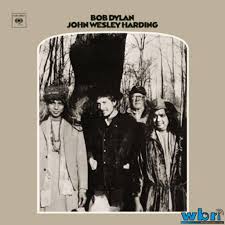
Purna Das Baul (extreme right) and brother Luxman Das Baul with Bob Dylan on the cover of the 1967 album ‘John Wesley Harding’
Think Bob Dylan in a bright red kurta and white pyjamas as a guest at a Bengali wedding. Too far-fetched?
Not quite. While most of Dylan’s life has been an open book, a lesser-known fact is Dylan’s hush-hush visit to Kolkata in the winter of January 1990.
The world’s most legendary song smith flew down to the city to attend a marriage in the family of an old friend and music mate, Purna Das Baul. The baul singer, now 83, had introduced Dylan to the sounds of rural Bengal during his tour of the US in the late 60s. When his son Dibyendu was getting married, Dylan turned up for the event.
“He came to our house in Dhakuria and then travelled with me to the venue in Ballygunge,” recalls Dibyendu. But his visit did not last long. “An hour into the ceremony, people and media got whiff of Dylan being there and as more and more people started inquiring, he rushed out.” Not really in the mood to hand out autographs, “Please, I am here on a private visit… If you don’t mind, I need some rest,” he pleaded before delivering a firm “no” to a starstruck fan.
Purna Das’s association with him began in 1965 when Albert Grossman, Dylan’s manager, invited him to sing at a festival in San Francisco. Das toured and performed at several venues before Grossman took him to Bearsville, Dylan’s hometown.
“That was when our manager brought Dylan to meet us. He said to me that our singing goals were the same since we both sang about people, life and times. Then he gave himself the title `Baul of America’, he showed me his patchwork coat, a lot like guduri, the costume that some bauls wear,” reminisced Purna Das who has been hailed as “India’s Bob Dylan”.
It was the beginning of a long friend ship. “We toured and performed together between 1965 and 1967.”
Baul gaan hit a peak when Dylan rather niftily learnt to pluck the khamak and wield the ektara and jammed with the minstrel from Bengal.
Purna Das and his family were invitees to Dylan’s birthday party in 1978, for which Das compiled a CD of Bengali songs as a gift. “I’m so happy,” Das said about his Nobel. “He has served people with his songs like no other.” It’s difficult, if not impossible, to try and pin Bob Dylan down.
Ever since he burst onto the public consciousness almost six decades ago, he has been many, many people at different times, sometimes all at once, depending on whom you asked: poet, protest singer, reluctant star, desultory prophet, unwilling “voice of a generation”, elder statesman of rock music…. And, now, Nobel laureate.
Kolkata has, for years, loved -and lived -Dylan’s music. Whether it’s the casual listener who only knows the refrain of `Blowin’ in the Wind’ to the serious fan who can sing every verse of ‘Like A Rolling Stone’ without a peek at the lyrics and who can debate, for hours, the snarkiness quotient behind every extended second of “How does it feeeeeeeel”, there’s one of each variety, and possibly every sort in between in the city.
Which is why , perhaps, it is only natural for Dylan to always set off strong emotion and evoke wildly divergent comment. Purna Das Baul, who appears on the cover of Dylan’s 1967 album ‘John Wesley Harding’, is ecstatic with the news. “I am the happiest person in the world now,” says the 83-year-old. But he isn’t surprised. “I’ve seen him up close and personal, having stayed with him in the US back in the Sixties. He invited me and my brother [Luxman Das Baul, who also appears on the cover] when he opened his studio.And he was so fond of us that he put our photo on the album cover. I couldn’t have been happier had I won it myself. But I do feel he deserved it a long, long time ago,” he told TOI, voice quivering with emotion.
It’s exactly because there’ no definitive version of Dylan that he evokes so divergent reactions. To countless critics and fans alike, he has been a genre-changing singer; to others, he’s a brilliant poet who (sometimes) sings and (always) drawls unintelligibly. “I know this is heresy, but I have never been a fan of Bob Dylan’s voice,” says Trinamool MP Derek O’Brien. “His lyrics and poetry are far better than his singing. Getting the Nobel maybe confirms that he is a far better writer than a singer,” he feels. But then, Dylan has never “conformed” to a particular genre, even when he was part of a tradition.Back when he was a folk singer, no one had quite heard anything like him. When he shocked everyone by going electric at the 1965 Newport Folk Festival, Pete Seeger was so outraged that he said he would have cut the cables if he had an axe. Fans booed him. Coming at that time, when rock music was still in its infancy, those reactions were perhaps understandable, especially with the benefit of hindsight. But look closely, and Dylan was undoubtedly scripting the basic framework of modern rock. And this is something that longtime Dyan fan Anjan Dutt also acknowledges. “The moment Dylan entered the rock ‘n’ roll world, he was a protest singer, but he didn’t stop there,” says the singer-songwriter-filmmaker. “He made rock ‘n’ roll more intelligent. Else we wouldn’t have been able to break out of the `I-love-you-you-love-me’ mould.” “Dylan,” Dutt says, “ushered in a new era. His music was not only against war but any sort of inhumanity . The content of `Blowin’ in the Wind’ encompasses climate concerns and worldwide corruption. No band, even The Beatles, would have changed their sound had it not been for the Dylan effect.”
And the Dylan effect is palpable, from The Beatles to Dutt’s own music. “Songs like `Tambourine Man’ and `Like a Rolling Stone’ have had an indirect but distinct impact on my lyrics writing,” confessed Dutt, who believes Dylan’s Nobel was long-awaited, and that he deserves the award for “both peace and literature”.
Dylan belongs to the school of art that’s both “intelligent and sub stantial”, believes musician Amyt Dutta. “He deserves the award. It’s not only his lyrics and thoughts; as a musician, too, he is a legendary , genuine artist,” he feels.
“The award is his due,” believes “India’s Bob Dylan” Lou Majaw, the Shillong-based musician who performs tribute concerts at Shillong and Kolkata on Dylan’s birthday every year. ” Actually, it should have happened 20-30 years back. But better late than never,” he said.
The Dylan effect has been substantial also on those who grew up in the politically turbulent years in Bengal. “I was a student at Presidency between 1969 and 1972, which were tumultuous times,” said Anoop Sinha, a former IIM-Calcutta professor. “Everyone listened to Dylan then, even those who wouldn’t normally listen to English songs,” he recalled. “For us, Seeger’s `We Shall Overcome’ and Dylan’s `Blowin’ in the Wind’ were like anthems.”
Poet Shankha Ghosh would agree. “I was a huge fan of Dylan and liked both his music and lyrics. His winning the Nobel is wonderful news,” he told TOI.
source: http://www.timesofindia.indiatimes.com / The Times of India / News Home> Chennai News> Kolkata / by Mohua Das / TNN / October 14th, 2016
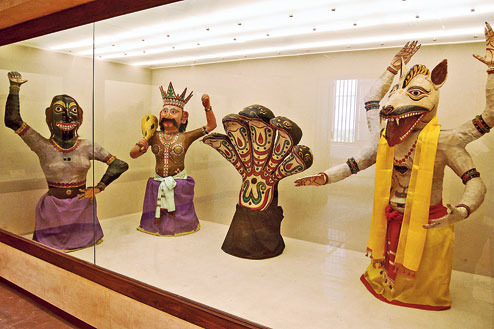
The number of masks in Indian Museum runs into hundreds and acquisitions date from the colonial period to 2000.
The collection has masks from not only India but also Australia, New Zealand, Central America, Africa, Bhutan and Nepal.
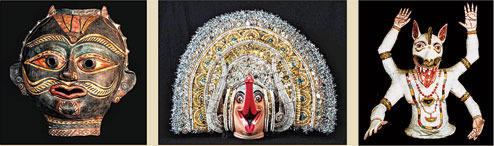
Most are dance masks of ancient folk traditions. Like the torso-covering Satriya mask of Narasimha used in Assam’s indigenous theatre, the Bhaona, or the brass mask of guardian spirit Bhuta of Karnataka or the golden deer from Bengal’s Gamira Dance ‘Ram Banbas Yatra’. There are masks of the Maoris and native Americans as well.
The mask gallery on the museum’s top floor was thrown open to the public in 2010. But it had to be shut in 2014 when some masks got drenched in rainwater because of a leaking roof.
MUSEUM TREASURE TROVE
The revamped mask gallery at Indian Museum will reopen on Tuesday (From left) terracotta mask of Bakasura from Bihar; chhau mask of Lord Ganesha; Narasimha Satriya mask of Assam. Pictures by Bibhash Lodh
The gallery, revamped and redesigned by curator Mita Chakraborty, will reopen on Tuesday. Eight-five items will be on display.
“Many major museums have masks but few museums have a gallery dedicated solely to masks,” director Jayanta Sengupta said. “We have a significant collection. The Indian Council for Cultural Relations has decided to make Indian Museum the nodal agency for a large comprehensive exposition on Masks of India, which will be showcased in the next edition of The Festival of India. We will select items from museums across the country.”
The museum has arranged for a school workshop on Chhou and Gamira mask-making to mark the reopening.
Birinchi Medhi, professor of Gauhati University’s anthropology department, will give a special lecture on ‘Satriya Mask’ from 2pm. Sarit K. Chaudhuri, director, Indira Gandhi Rashtriya Manav Sangrahalaya, will inaugurate the gallery at 3pm. A mask dance is on the cards.
source: http://www.telegraphindia.com / The Telegraph,Calcutta,India / Front Page> Calcutta> Story / by Sebanti Sarkar / September 27th, 2016
After pushing through the name-change resolution in the assembly by a brute 189-31 majority, the Mamata Banerjee government on Monday lobbed the ball in the Centre’s court, asking it to fast-track the proposal to rechristen the state as Bengal (in English) and Bangla (in Bengali and Hindi).
Minutes after the passage of the government-sponsored resolution, the chief minister spoke to Union home minister Rajnath Singh and urged him to introduce a constitutional amendment at the earliest.
The road ahead could be treacherous as BJP and Left voted against the resolution on Monday and Congress remained ambivalent -it staged a walkout. I will request the Centre to pursue the matter so that it can be placed in Parliament.We want it to be done as early as possible,” Mamata said. She also criticised state BJP chief Dilip Ghosh for saying he would not allow the bill to be passed. “I will see how he (Ghosh) can stop it. I will speak to the Union home minister. Who is he to stop it?” Mamata thundered.
“Those who are opposing the name change just for the sake of politics should be ashamed. It is a historic blunder and history will not forgive them. It doesn’t matter who opposed it.The West Bengal assembly passed it,” the CM said.
While the debate in the assembly on Monday started on predictable lines, Trinamool Congress almost outwitted the opposition by keeping only `Bangla’ in the resolution. This was the name that had been adopted by the Left Front government and supported by the Congress in 1999. The split in the Opposition was immediate, with Congress harping on a referendum on the issue and staging a walkout.
“I have no problem with the name. It can be `Banga’, `Bangla’, `Paschim Banga’, anything.But how can a state have two names, one in Bengali and another in English. I am Sujan Chakraborty . So will I be called `Goodman Chakraborty’ or Sovondeb Chatterjee be called `Goodlooking God Chatterjee’.This is ridiculous. There should be only one name. Bengal or Bangla – whatever it might be,” said CPM’s Sujan Chakraborty .
Mamata replied, “We are in favour of Bangla as it goes with the culture, language and tradition of the state, but there is only one problem. ‘Bangla’ resonates with ‘Bangladesh’ and it will create a problem in the international arena and so we have decided to write ‘Bangla’ putting ‘Bengal’ in bracket. Buddhadeb Bhattacharjee had said `Bangla’ is better than ‘Banga’, we endorsed your proposal.What is the problem then? Outside India, we are known as people from Bengal.”
source: http://www.timesofindia.indiatimes.com / The Times of India / News Home> City> Kolkata / TNN / August 30th, 2016
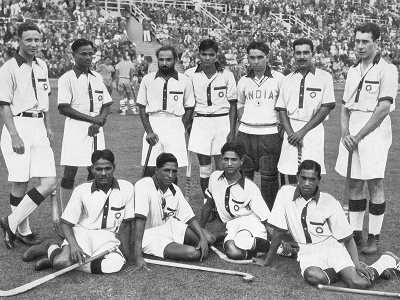
Stick figures: It was World War II that interrupted the winning streak of the Indian hockey team, seen triumphant here in 1936
Community set the foundations for the game here. And it was their post-Independence exodus to Australia that built up the sport in that ex-colony.
Every four years, a billion-plus Indians pray that our hockey team should win a medal at the Olympics, as it has done eleven times before. This year the Indian team does, indeed, stand a chance. But, let’s face it, India’s ‘Golden Age’ of hockey is long gone.
That Golden Age was between 1928 and 1956. Some pundits, however, would narrow it down to the period 1928-1936, when India, in its first three Olympics, annihilated all opposition, with the incredible goal ratio of 97:3, thus acquiring the reputation of being “magicians with hockey sticks”. It’s an era we automatically associate with the legendary Dhyan Chand. But it’s strange that many of us know nothing about the large number of Anglo-Indian hockey stars without whom it wouldn’t have happened.
A quick glance at the numbers says it all: At the 1928 Olympics, eight of the Indian XI were Anglo-Indians; at the 1932 Olympics seven of the Indian XI were Anglo-Indians; at the 1936 Olympics six of the Indian XI were Anglo-Indians. But, as Frank Anthony, an Anglo-Indian leader of the time remarked, the hockey talent of this little community ran so deep that it could have perhaps produced six times those numbers of world-class players.
Hockey maestros like Carlyle Tapsell, Broome Penniger, Richard Allen, Dickie Carr, Leslie Hammond, the Goodsir-Cullen brothers and Joe Galibardy — now long-forgotten — all played a key role in India’s dominance of the game. If Dhyan Chand was “the world’s greatest centre forward”, Broome Penniger was the world’s greatest centre-half and Richard Allen was the world’s greatest goal-keeper (allowing only two goals through all the Olympic games of 1928, 1932 and 1936, an amazing record). The other Anglo-Indian stars were not far behind in their prowess, combining a high degree of artistry with a robust aggressiveness.
So what was the reason for this domination of hockey by the Anglo-Indians — who, after all, accounted for only about 0.1% of India’s population at the time?
The answer lies in the fact that the game came to India with the British army in the 1880s. While the officers played cricket and polo, the ordinary British soldier preferred the rugged game of hockey. The soldiers first played between themselves, and then they began to play with teams raised from local organisations, like the railways, police and port authorities — all of which employed significant numbers of Anglo-Indians. Soon, hockey was embraced by the Anglo-Indian community as an embodiment of masculine virtue, and it became an integral part of the Anglo-Indian culture: every family pushed their sons to excel at the game.
It started in Bengal and by 1895 Kolkata had a number of great Anglo-Indian hockey teams, who battled each other in the newly instituted Beighton Cup Tournament: legendary teams like Calcutta Naval Reserve, Calcutta Rangers, Bengal-Nagpur Railways and Calcutta Customs. In time, leading teams from Mumbai, Lahore, Jhansi and other parts of India joined the fray. Thus, by the time India was officially admitted to the Olympic Games in 1928, there was such an abundance of hockey-playing talent in the country that choosing only 15 players for the contingent posed a problem. Interestingly, Britain, who’d been the hockey champions in the two previous Olympics, quietly withdrew their team at that point — presumably to avoid humiliation from their colonial subjects. They would stay away from Olympic hockey until the end of the Raj.
Meanwhile, Anglo-Indian players played a decisive role in India’s Olympic hockey triumphs in 1928, 1932 and 1936. And if World War II hadn’t intervened, they would have, doubtless, continued to do so in 1940 and 1944, as well. But after 1947 there was an exodus of Anglo-Indians, and this, obviously, affected Indian hockey significantly. The Indian contingent for the 1948 Olympics in London still included seven Anglo-Indians (it would have been eight, but Joe Galibardy, that brilliant left-half, had to drop out for personal reasons). But by 1952, there were only two Anglo-Indians left in the Indian contingent.
India’s loss proved, however, to be Australia’s gain. The Anglo-Indian diaspora settled mainly in Western Australia, and created a powerful hockey culture in the state. Soon the Western Australia team began to dominate Australian hockey. And that was the beginning of Australia’s emergence as a world hockey power — driven by Anglo-Indian coaches and players, like Trevor Vanderputt, Fred Browne, Merv Adams, Dickie Carr, the five remarkable Pearce brothers, Kevin Carton and Paul Gaudoin. In the 1956 Melbourne Olympics, when India played against Australia, there were five Anglo-Indians on the field — four of them on the Australian side, and only one on the Indian side. And in the 1960 Rome Olympics when India played against Australia, the rival captains in that closely-fought match, Leslie Claudius and Kevin Carton, were both, ironically, Anglo-Indians. Meanwhile, another great Anglo-Indian player, Rex Norris, was masterminding the emergence of the Netherlands as another major world hockey power.
Leslie Claudius, arguably the greatest of the Anglo-Indian players, saw India through to the end of its Golden Age, which culminated in its defeat to Pakistan in the 1960 Olympics. When he died in Kolkata in 2012, largely forgotten, it was the end of an era. In the Rio Olympics, the top-ranked teams are (in ascending order) India, Britain, Germany and the Netherlands. The No 1 ranked team, however, is Australia. There’s probably a moral in this story, somewhere.
The writer is an advertising professional and hockey buff.
source: http://www.timesofindia.indiatimes.com / The Times of India / News Home / by Anvar Alikhan / TNN / August 14th, 2016
In 1971, Swadhin Bangla Betar Kendra was opened on Circus Avenue by freedom fighters from the erstwhile East Pakistan.
The transmissions from the radio station inspired people on both sides of the border to fight the oppressive Pakistani rule. The station folded up on December 16 after the birth of Bangladesh but All India Radio (AIR) continued broadcasting – albeit intermittently – on Special Bangla Service till a transmitter broke down in 2010.
Six years on, Akashvani Maitree is being launched to remind Bangladesh and India of their similarities. The growing presence of Radio China and Radio Iran in Bangladesh might have played a part in prompting the authorities to open the channel.
Akashvani Maitree – which will air at 594 kilohertz – will crackle into life at 11am on August 23. President Pranab Mukherjee is set to inaugurate the channel and its multimedia website from the Yellow Room of Raj Bhavan.
“Maitree was originally planned for a launch with much fanfare in June but the President’s schedule didn’t match. We will have a short programme in the evening at Nazrul Mancha, which will be broadcast live,” an AIR official said.
The programme will include performances by folk troops of Bengal, a reading of Jibanananda Das’s Banglar Mukh and other poems by actor Soumitra Chattopadhyay and recitation by Bratati Bandyopadhyay.
Akashvani Maitree will offer Bangladesh-specific news and entertainment and will also address the student community through programmes highlighting secular, anti-fundamentalist views.
The programmes will be designed in a way that Bangladeshis are encouraged to choose India as a medical destination and opt for Indian universities instead of those in the UK or the US.
Some of the programmes to be aired are Sambad Prabhaha (an exchange of news and views), Campus-ey Adda, Boiparar Khobor (about books and periodicals published in India and Bangladesh), Sholoanna Bangali (about people who have contributed to Bangladesh in some ways) and Ek mati Ek Sur (about similar cultural events like baul melas in Jadavpur and Kushtia).
“This is an outreach program which will bring people closer. There is a desire in people on both sides of the border to know how similar traditions thrive on different soils. Never before have we been able to frame a channel that invites artistes from neighbouring countries to perform in our studios,” said Prasar Bharati CEO Jawhar Sircar.
The popular stage and screen personality of Bangladesh, Mamunur Rashid, hasn’t heard of Maitree yet. “It must be the train you are talking about,” he told Metro over the phone from Dhaka.
On being told about the channel, he recounted the days of the liberation war when he would make radio plays with Mustafa Monwar, Aly Zakher, and others.
“If the radio connection is revived it will be a good thing. To connect more should be our motto. The more we meet the less we hate, the less we will be taken in by blind beliefs and threats by mischief makers,” Monwar said over the phone from Dhaka.
source: http://www.telegraphindia.com / The Telegraph, Calcutta,India / Front Page> Calcutta> Story / by Sebanti Sarkar / Monday – August 22nd, 2016
Footage from Bilwamangal, a 1919 film acquired from Cinematheque Francaise
The National Film Archive of India(NFAI) has acquired surviving footage of the Indian silent film Bilwamangal (1919) from the Cinematheque Francaise, France. This acquisition is considered an important for NFAI at a juncture when they are in the process of implementing prestigious National Film Heritage Mission to safeguard Country’s cinematic heritage.
The film produced by the Elphinstone Bioscope in Calcutta later renamed as Madan Theatres Ltd, was directed by Rustomji Dotiwala. NFAI has acquired 594 metres. (28 minutes footage at 18 fps) of this film. The film was originally 12,000 feet long.
NFAI will be returning this gesture by providing a digital copy of Indian silent film Jamai Babu (1931) directed by Kalipada Das from our collection as per mutual exchange policy under FIAF framework”, Press Information Bureau press release here on Friday quoted Mr. Prakash Magdum, Director NFAI as saying.
Bilwamangal is a landmark acquisition for NFAI, as there was no trace of work of studio of JF Madan, available in India till date. With this the NFAI now possesses in its collection films representing three important Indian studios of the silent era – Madan, Kohinoor and Hindustan. Each of these studios had a prolific output making nearly a hundred films each in the silent era.
The last silent films NFAI acquired were from Kolhapur during 1996, titled ‘Murliwala’, ‘Sati Savitri’ and ‘Maya Bazar’ directed by Baburao Painter. India has produced nearly 1300 silent films between 1913 and 1932, most of which were lost due to its Nitrate base.
Nearly 28 silent films though incomplete, have been preserved in NFAI’s storage facilities since then.
source: http://www.thehindu.com / The Hindu / Home> National / Prakash Kamat / Panaji – August 19th, 2016
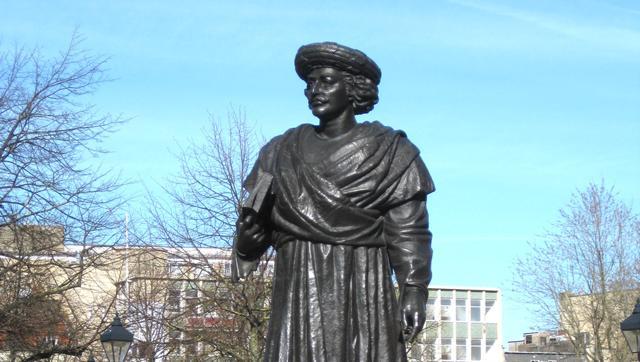
The Raja’s statue in College Green in Bristol, where he died on September 27, 1833. (Photo: Wikipedia)
Tagore called him the man who inaugurated the modern age in India. Of all the personalities who ushered in Bengal renaissance, Rammohun Roy (1772-1833) was one of the tallest. A hunt is about to begin for bringing back the priceless historical documents related to the father of Bengal renaissance Raja Rammohun Roy including manuscripts and personal belongings much of which are lost, fell into the hands of treasure looters while a few remain scattered in various parts of the country and abroad.
Sachindra Nath Bhattacharya, the director of Raja Rammohun Roy Memorial Museum set up in 2000 to conserve his works told HT, the move to recover original documents was triggered by the discovery that many fake documents are stored in some archives in the country.
The museum is run by a trust.
“There is an urgent need to preserve the documents and rare manuscripts of Rammohun Roy that are lying in various universities and archives across Benares, Patna, New Delhi and the UK. We want to bring back all his original documents, including complete written works, documents related to the Sati movement, his dress, head gear and store in our museum for posterity,” Bhattacharya told HT.
“We’re in a hurry as many documents are already missing. We want to recover the remaining ones before they fall into the hands of treasure thieves. We’ll also approach the British Library which stores many documents of Rammohun Roy,” He added.
Bhattacharya has approached the union culture ministry for the project.
A research team would scout through schools registries in Patna, Sanskrit University in Benares and President’s House in New Delhi once the process gets a green signal from the government.
The Treasure Trove Act, 1878 and Antiquity Registration Act, 1972 empower the Centre to initiate legal processes to collect these documents from anywhere.
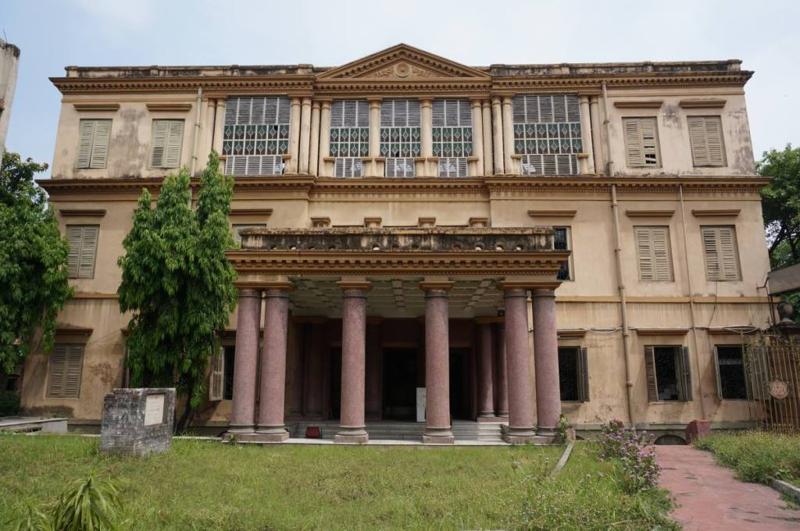
The Raja Rammohun Roy Memorial Museum in Kolkata. (HT Photo)
The museum authorities have sought President Pranab Mukherjee and chief minister Mamata Banerjee’s help so that a ‘territorial policy’ is framed under which documents related to a particular museum must be kept in its custody.
The authorities will attempt to unravel many unknown facts regarding his sudden voyage from Midnapore’s Khejuri port in a Albanian ship to Britain, his vital interactions with Dwarakanath Thakur (1794-1846) and other Atmiya Sabha and Brahmo Samaj members, close door discussion with Lord William Bentinck, David Hare and debate with William Carey through the collection of original documents spread across several places.
“We’ll visit all the places across the country where Sati was prevalent in Punjab, Rajasthan to West Bengal. We have already gathered vital information regarding exact numbers of women, including Muslim women, who became sati.
Soon, a drive will begin to collect all legal documents related to the Sati custom and its abolition.
We’ll also try to scout for details of his correspondence regarding introduction of allopathic medicine to the country,” said Bhattacharya.
An attempt will be made to collect documents regarding his pioneering works of Indian journalism such as publication of Sambad Kaumudi (Bengali weekly newspaper), Mirat-ul-Akbar (Persian journal) and Tuhfat al-Muwahhiddīn (Persian book on monotheism).
In 1828, Roy set up Brahmo Sabha that was the precursor to Brahmo Samaj, one of the most prominent socio-religious reform movements of Bengal.
source: http://www.hindustantimes.com/ Hindustan Times / Home / by Atonyu Choudhurri, Hindustan Times,Kolkata / August 20th, 2016
Garden Reach Shipbuilders and Engineers (GRSE), on Saturday, commenced work on the first in a series of Fast Patrol Vessels (FPVs) it has developed and will be building for the Coast Guard. Among those present during the ‘Plate Cutting Ceremony,’ the first step towards construction of a ship, were Rear Admiral (retd) AK Verma, chairman-cum-managing director, GRSE and other senior officials.
The order for the FBVs was placed in March, 2016 and the first ship will be delivered in February, 2018, Verma said. “The design of these ships is unique. They are cost-effective, fuel-efficient and ideally suited for patrolling, anti-smuggling, anti-poaching and rescue operations. They are an improved version of Inshore Patrol Vessel (IPVs) built earlier by GRSE for the Coast Guard. The FPVs are designed and developed by the in-house design centre of GRSE. Thanks to active support and participation of internal workforce and business partners in various shipbuilding activities, GRSE’s capabilities are constantly increasing. These ships will add punch to the Coast Guard’s capabilities in maintaining maritime security,” the CMD added.
The FPV is 48.9 metres long, 7.5 metres wide and has a displacement of nearly 300 tonnes. It is capable of attaining a maximum speed of 34 knots. At 12-16 knots, these ships have endurance of 1,500 nautical miles. They are fitted with three water jet propulsion systems powered by marine diesel engines, each developing 2720 KW of power and will be fitted with CRN-91 indigenous 30 mm gun. The ship has modern habitability conditions with accommodation for 35 personnel.
source: http://www.timesofindia.indiatimes.com / The Times of India / News Home> India / by Jayanta Gupta / TNN / August 14th, 2016