Category Archives: Records, All

From Canton to Kolkata

From ship builders, dentists, shoe-makers — to chefs. How did the Chinese in India get stuck with the identity of the Chinese chef? A report from Kolkata, the only Indian city with two Chinatowns where the Chinese came 220 years ago
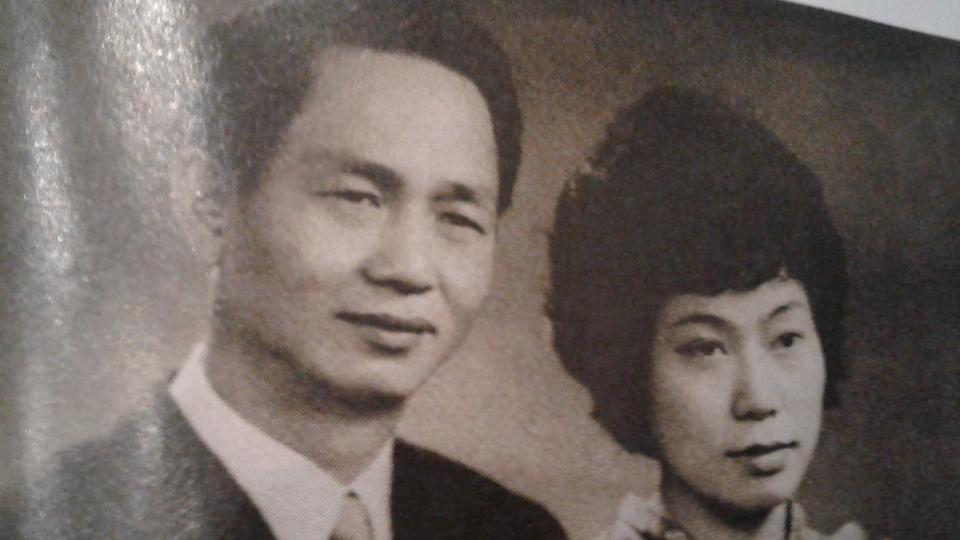
(R) Monica Liu with her husband. Liu, an Indian Chinese, is one of the most successful restauranteurs of Kolkata. (Photo courtesy: Monica Liu)

You could almost say Tong Atchew was a good mushroom growing on foreign soil. A mushroom does wonders for the soup, the stir fry and as stuffing. No flash, no permanent dash, but it still stands on its own even as it adds to the flavours of the mix into which it is thrown.

Atchew, a middleman, believed to be the first Chinese immigrant in India, arrived in 1798. He managed to strike a deal with Warren Hastings, the governor-general of British India, and became the owner of a sugar mill near Kolkata.

In the late 18th century, Kolkata was the terminus, the port and the transit point to pretty much everywhere else. The Chinese in India, especially the Chinese of Kolkata, the only Indian city with two Chinatowns –– the first in Tiretta Bazaar has existed since the 1800s, the second, in Tangra since 1910 –– consider Atchew The Ancestor. Here was someone who made ‘leaving home’ a success story, in contrast to staying put, the established wisdom for that age. He consolidated the image of the Chinese as a hardy migrant who slogs for his success, is a credit to his community, and keeps his own counsel.
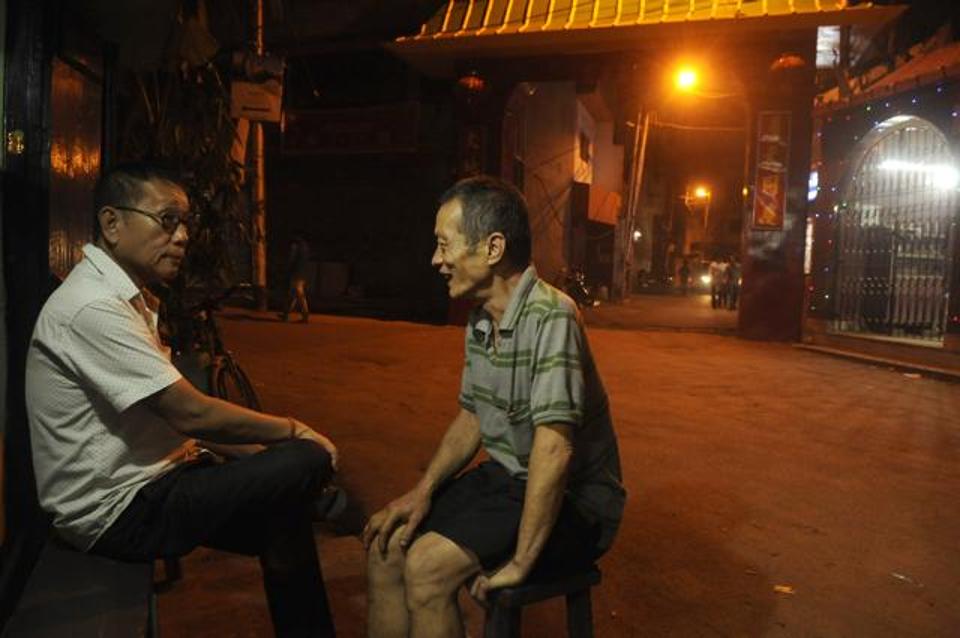
At Tangra, the second Chinatown, of Kolkata. (Samir Jana/HT PHOTO)

The Chinese who came to Kolkata were mainly from coastal China, then ravaged by civil wars; many landed in between the two world wars too. All had different skills and traditions, which they innovated, in order to survive. The Hubeis, who were “teeth-setters”, became dentists. The Cantonese were ship-fitters; by the ’50s they had moved into carpentry. The Hakkas were talented shoe-smiths and leather manufacturers. All of them came to India to work. None of them came here to cook.

But as the example of Monica Liu, a Hakka housewife who has become Chinatown’s most well-known businesswoman over the past 10 years, shows, the restaurant business can become an area where race or ethnicity may find accommodation, and success –– if it does not challenge established tastes too much.

In the ’90s, Liu cooked for the late chief minister Jyoti Basu at his home after his return from China. In 2012, writer Amitav Ghosh did a lunch with the Financial Times at Liu’s flagship restaurant, Beijing. Here, he discussed the opium trade, linguistic adjustments made by men who met at sea featured in his Ibis trilogy over beer and steamed bhetki. In 2018, Liu is preparing to face cricketing legend Sourav Ganguly in the popular Bengali television game-show, Dadagiri.

Two Bengali boys watching Liu, as she does the rounds of the tables at the Beijing restaurant, delay stuffing the last tiger prawns into their mouths and greet her saying they have seen her appear in some TV programme. In block heels, cropped hair and thinly pencilled eyebrows, Liu’s is as public a public face as is possible in a community that shuns the media.
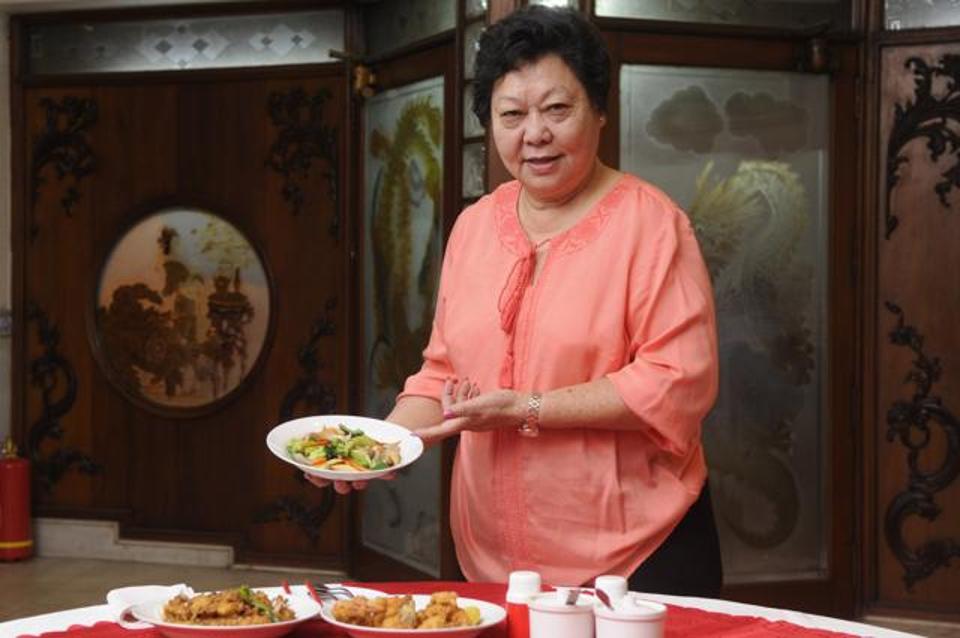
Proprietor and head chef Monica Liu at her Beijing restaurant in Tangra, Kolkata. (Samir Jana/HT PHOTO)

Image issues

“Our food is suited to Indian tastes,” says the owner of five restaurants in and outside Chinatown, returning to our table. Liu opened Kimling, her first, in 1991. “In my restaurants, I always keep a chilli-garlic gravy, popular with customers, ready. Sometimes they want their chicken dry or with gravy. But this is not to say my food is Indian-Chinese. It is Chinese,” says Liu playing the elder stateswoman of Chinese cuisine to the hilt.

Restauranteurs in Tangra, riding the restaurant boom in the ’90s, had no problem saying they sell Indian-Chinese to create a space, as it were, for selling their food. “It was part of their entrepreneurial logic to boost saleability,” says anthropology researcher Piya Chakraborty. But the renown of many Chinese restaurants now owned by non-Chinese (such as hotelier Anjan Chatterjee’s Mainland China, which he started in Mumbai in 1994 and which he brought to Kolkata, and musician Debaditya Chaudhury’s Chowman chain in 2010) has produced a new kind of anxiety. So the assertion of ‘authentic Chinese’ to be got at Tangra, and not just at central Kolkata, the original Chinatown, is important now.

Food networks

The small eating houses in Tiretta Bazaar, central Kolkata, was originally meant to feed the local Chinese working men, numbering around 25,000 till the early ’60s, before the outbreak of the Indo-China war of ’62. Central Kolkata was a Cantonese stronghold. When a new throughfare split the area, the Hakkas, the other sizeable Chinese immigrant group, re-located to Tangra. The collective sense of security in mixed neighbourhoods, where each minority recognises the other as such (central Kolkata had substantial Anglo Indian, Jewish, Sindhi, Bihari populations), however, stopped many Hakkas from moving out.

Dominic Lee, a Hakka, who owns Pou Chong, one of the most well-known brands of sauce and noodles made by the community near Tiretta Bazaar, is perceived as Mr Lee, the sauce-maker, not the Indian-Chinese sauce-maker by the neighbourhood. His professional identity, he says, has never felt eclipsed by his racial identity. (That is why he is able to field questions of “authenticity” without feeling defensive about it.)

This is not to say that the Chinese do not maintain strong community networks. Lee’s products are used by Tangra outlets like Liu’s Beijing, as much as all over central Kolkata eateries. When casting directors of the Salman Khan-starrer Tubelight were scouting for a youth to portray “a Chinese”, Lee recommended Thomas Chen, a Cantonese mechanical engineer and singer in Kolkata, for the cameo.

David Rocco, the popular Canadian-Italian TV host, has interviewed Lee for his programme Dolce India. When quizzed about the ‘authenticity’ of his sauces, Lee’s answer is pat: “It’s authentic for this area. The Hakkas are gypsies. Each group of Hakkas has its own Hakka cuisine.” No two Bengalis, he says to further explain his point, make pulao or paturi the same way.

Owner of the Pou Chong brand, Dominic Lee at his shop at Tiretta Bazaar, the first Chinatown. The combination of the Pou Chong tomato and Pou Chong green chilli sauce is usually used with the Kolkata kathi roll. (Samir Jana/HT PHOTO)

The Pou Chong brand, started by Lee’s father to cater to the large Chinese population, was badly hit, a second time, when families were uprooted at the outbreak of the Indo-China war in 1962. “It was a collective trauma for the community, which may explain the wall of silence it maintains now,” says Chakraborty.

The war with China nearly emptied central Kolkata; hundreds of Chinese were deported to and jailed in camps in Rajasthan on mere suspicion of being ‘Chinese agents’. Monica Liu and her family were picked up and sent to a prison camp as was Thomas Chen’s mother in her teens; they were released without compensation or apology after several years. In a cruel twist of fate, the role he had to enact to crack the Tubelight audition was to play a Chinese soldier interrogating an Indian spy.

“I can never touch a potato or a gourd since then. Even the smell of their cooking scares me,” says Liu. They were a staple in her prison camp. For many Indian Chinese with similar experiences, family traditions around food have just not come together because of interrupted family life. Chen says he learnt to make a Chinese-style whole steamed fish, but not from his mother. The lack of schooling, because of formative years in jail, may also have pushed many of those from the earlier generation towards informal sectors like food, other than ‘office jobs.’

By the ’70s, the situation stabilised. Local Chinese boys entered the city’s five-star kitchens as hotels opened their first Chinese restaurants. “They popularised our products. Chinese, by then, had become part of the city’s street food. Every street corner had someone selling chow on carts. The combination of the Pou Chong tomato and Pou Chong green chilli became the Kolkata kathi roll sauce,” says Lee.

The eating culture of the central Kolkata Chinese developed in close contact with other migrant communities at the margins of Bengali society. Their restaurant clientele – fellow Chinese – was assured due to their still sizeable population in this area so they were under no pressure to suit their food to a ‘Bengali’ palate. Jayani Bonnerjee of OP Jindal Global University, a specialist on the Indian-Chinese community, talks of a dish called ngapi, a shrimp paste of Burmese origin, that was eaten at both Chinese and Anglo-Indian homes on Bentinck Street, though it’s not clear who influenced whom.

“The Chinese and Anglo-Indians had an affinity for one another; for ease of schooling and professional networks, many Chinese had become Christians. They shared schools, met each other in church, visited each other’s homes,” says Bonnerjee. When Waldorf, the famous Kolkata Chinese restaurant on Park Street, changed hands, the ownership went to an Anglo-Indian family, the Mantoshes, most probably in the ’90s, she points out.
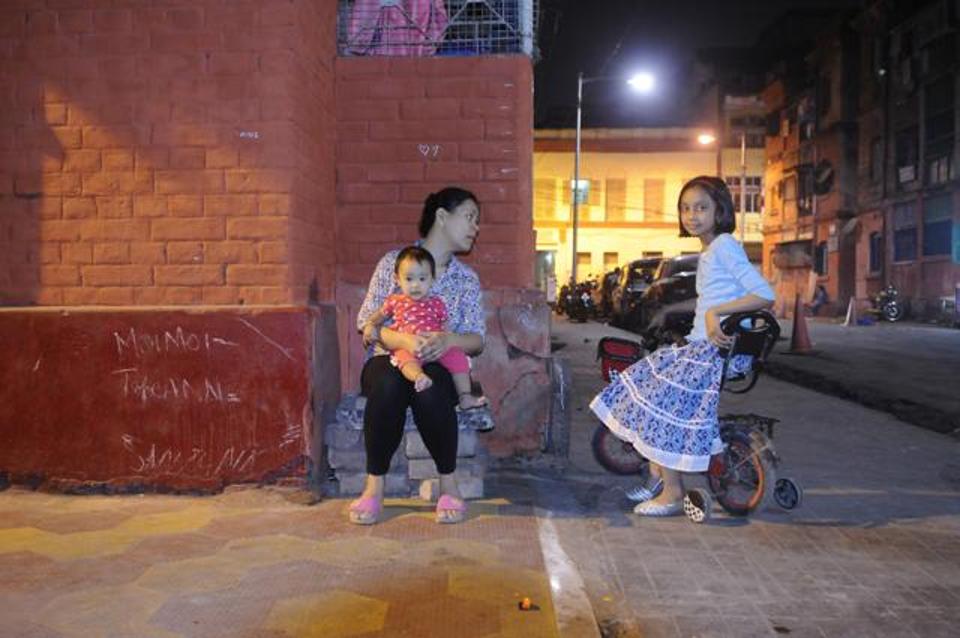
At Bow Barracks, central Kolkata. The Central Kolkata Chinese stay in mixed neighbourhoods. (Samir Jana/HT PHOTO)

Indianisation

The Supreme Court ultimatum in 2002 to shift out 592 tanneries in Tangra, where the Hakkas on leaving central Kolkata went, was another big jolt for the community. It nearly emptied out Tangra. Most left for Canada. Those who could not; converted the godowns into restaurants. This is where the Indianisation of Chinese restaurants began.

The story of Tangra’s Indianisation is classic migrant-nama: left with lemons, they made lemonade. But when they did, that was inadvertently the first step taken by the community to build, with the Bengalis, a shared culinary mythology.

Chinese eating houses probably took their initial reluctant steps towards serving ‘Indian Chinese’ when Kolkata’s office-goers passed through the tannery areas in Tangra on their way home and showed up at the factory-cum-kitchens of the Chinese to request for fried chicken to go with booze.

Bengalis who frequented these Chinese joints wanted Chinese food, but on their own terms — fried, spicy and saucy. Enter the Chilli Chicken (chicken nuggets dipped in corn slurry, deep fried and finished up with soya sauce) and Schezwan Chicken (made by tossing deep fried chicken with a reddish sauce out of a bottle and Sichuan pepper, a key ingredient). Sichuan pepper, when it met Bengalis inside Chinese restaurants, began to be called ‘Schezwan’, so goes the joke.

Authenticity-seekers eat in Central Kolkata places like Eau Chew and Tung Nam now; Tangra is the spice-lovers’ haunt. Such customers might, says Monica Liu, on the rare occasion, ask her the passive-aggressive question, “what is your cooking medium?”, which she knows how to answer. “We use the same oil, or as much oil – the way you like your biryani,” she says fixing the customer with gimlet eyes.

The last Chinese waiter to take orders at the tables of Chinese restaurants like Liu’s Beijing, is not known. Till the ’70s, the Chinese restaurant was not the first place where Bengali boys looked for jobs. Now they do. This is now Beliaghata boy Babu’s stage. In Liu’s kitchen, Biharis are firing up the woks, and two Hakkas are chopping the vegetables and supervising them. The word is in many ‘Chinese restaurants’ Nepalis and south Indians are doing the cooking. Peter Chen, who runs the famous carpentry firm in Poddar Court, central Kolkata, says as much but won’t identify the restaurants. “They are doing a fine job, let them be,” he says.
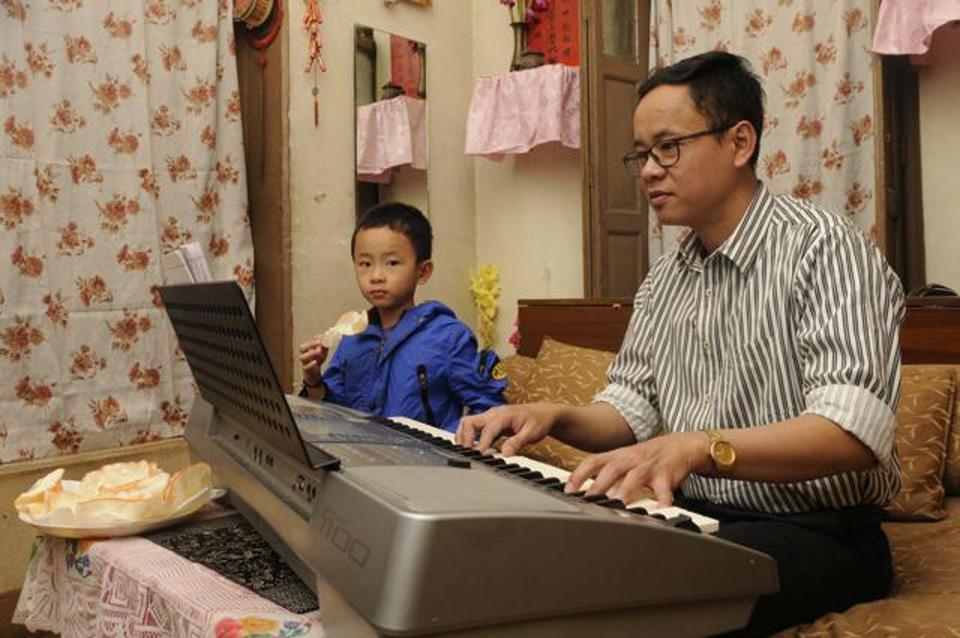
Mechanical engineer Thomas Chen with his son, Travis, at his home in Bow Bazaar, central Kolkata. ‘I am almost Bangali,’ he says. Chen has done a cameo in a Salman Khan film and also sings in Bengali, Hindi and Mandarin. (Samir Jana/HT PHOTO)

The Chinese have taken up Indian food as well. When dal poori entered Chinese homes has not yet been documented, but Peter Chen, the businessman likes it. Chang Chen Fa, a Hubei chef loves it. Thomas Chen, the singer, eats it. Chen, who welcomes us into his home with tea and Chinese prawn wafers, says his pork is spiced with Everest turmeric masala. “I am almost Bangali,” says Thomas Chen, who speaks the flat, unaccented Bengali spoken in urban Kolkata.

Many young Indian-Chinese like Chen, especially those who were born in India, say experts, are increasingly trying to define their Chinese-ness in the context of their immediate surroundings. Chen and his family participate in community art projects around Tiretta Bazaar, the area he grew up in. He is not looking to be Chinese in China.

As we leave Kolkata, two images remain with me. Monica Liu barking at her employees to slice the carrots well, which pretty much sounds the same in every language. And Chen singing khayal at his home, which he says, helps him hit the high notes when singing in Mandarin.

People often say the Chinatowns of Kolkata are going or gone. Both, I think, daily renew themselves.

source: http://www.hindustantimes.com / Hindustan Times / Home> Lifestyle> Art & Culture / by Paramita Ghosh, Hindustan Times / March 10th, 2018
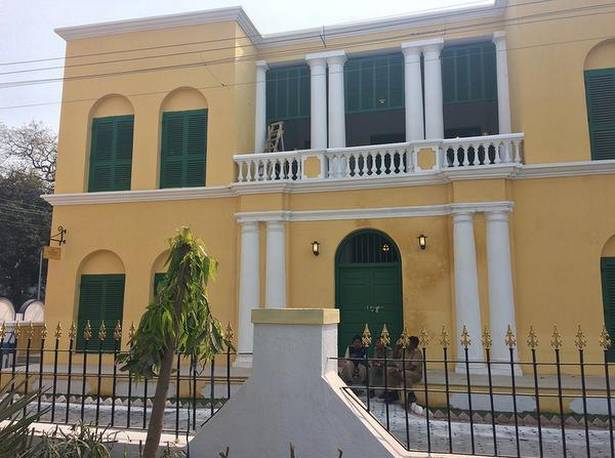
232-year-old Denmark Tavern opens doors again in Serampore

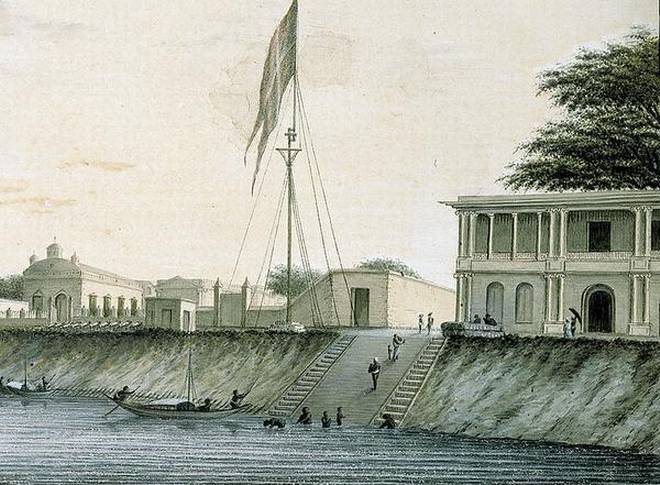
Across the ages: The Denmark Tavern in a painting by Peter Anker, dated 1790 | Photo Credit: Historical Museum of Oslo/Special Arrangement

After two years of renovation that cost ₹5 crore, the building is ready to host visitors to the historical town of Serampore in West Bengal

Mr Parr, who formerly kept the London Tavern, has taken the new upper-roomed house near the flag-staff in Serampore, directly facing the Barrackpore Cantonments and fitted up the same in an elegant and convenient manner, both as a Hotel and Tavern.

This was one of the advertisements published in the Calcutta Gazette on March 16, 1786, announcing the opening of a tavern by James Parr on the banks of river Hooghly.

Another advertisement, two years later on April 3, 1788, makes a mention of the establishment.

Noting a change of hands from James Parr to John Nichols, who formerly kept the Harmonick Tavern in Calcutta, the advertisement goes on to say: The gentlemen of cantonments, or parties going up and down the river, and all others who may honour Mr. Nichols with their countenance, may depend on the utmost civility and every endeavour to give satisfaction and very moderate charges. Bed, Lodging, and Board, by the week or month.

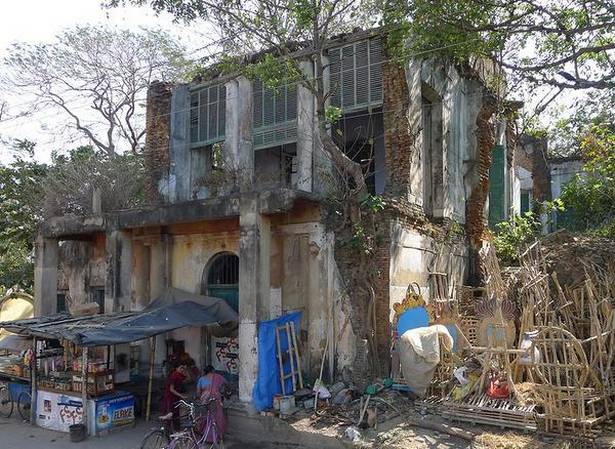
In 2010 – 11, more than 200 years after the tavern’s heyday, a group of restoration experts studied a building that stood in complete ruins, surrounded by debris.

“Nobody remembered the original name and function of the ruined building. It was like detective work to search the archives for information, and it felt great when I realised that it must be the well-known Denmark Tavern and Hotel, which was located at the Nishan Ghat where the Danes kept their flagstaff and salutation cannons,” said Simon Rastén, historian, National Museum of Denmark. It was decided that the building would be restored and reused.

Grand unveiling

Across the ages: The Denmark Tavern in ruins in 2009.

After two years of painstaking restoration work, the Denmark Tavern was reopened on Wednesday. Ambassadors of a number of Scandinavian countries, including Denmark, were present on the occasion.

The renovation cost of ₹5 crore has been borne by Realdania, a private association in Denmark which supports philanthropic projects in the realms of architecture and planning, and the Department of Tourism, Government of West Bengal.

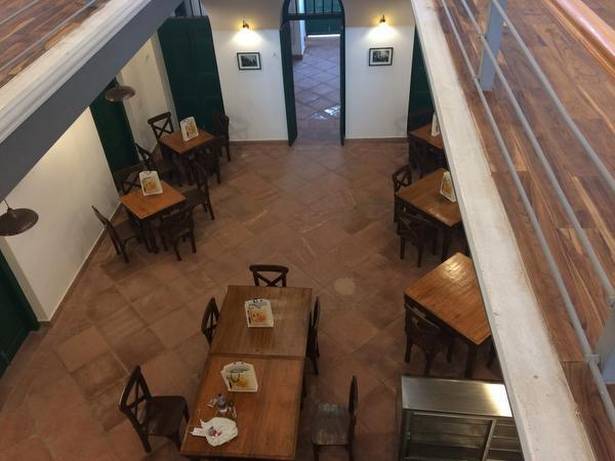
The State Tourism Department is in talks with an agency that will maintain the restored building, which will serve both as a café and a lodge.

The coffee house is inspired by the double height central atrium of the Indian Coffee House in Kolkata and five rooms have been opened for boarders. Officials are hopeful that within a few weeks the tavern would be buzzing with visitors as it was in the late 18th century.

Experts from the National Museum of Denmark, officials from the West Bengal government and conservation architect Manish Chakraborti have tirelessly worked on the restoration of the building since October 2015.

Bente Wolff, project head of the Serampore Initiative, National Museum of Denmark, said that Serampore was administered by Denmark under the name of Frederiksnagore till 1845, when Denmark sold its Indian possessions to Britain.

Stressing on the importance of maintaining the identity of old trading towns like Serampore, Ms. Wolff said that The Denmark Tavern was located on a peaceful stretch of the river, only a two-minute walk from Serampore’s main street. “This would be an be an attractive space for citizens and tourists where you go for shopping, restaurants and cafés, and a morning or evening stroll along the river front.”

Meticulous work

Mr. Chakraborti, whose work on the St. Ola Church in Serampore won the UNESCO Asia Pacific Heritage Award in 2016, said the conservation of the tavern was a more difficult job.

He said that archival research in terms of topographical maps, paintings and photographs were supplemented by building archaeology and sample excavations of foundations and plinth by clearing all the debris.

Along with the tavern, the experts have also restored an old registration building built by the British that will serve as a heritage canteen on the Court complex of Serampore.

Ms. Wolff said that the former Danish Government House built in 1776 and predating the tavern was being restored. “By the end of this year, we hope to put together an exhibition on Serampore’s history at the former Danish Government House,” she said.

source: http://www.thehindu.com / The Hindu / Home> News> Cities> Kolkata / by Shiv Sahay Singh / Serampore – March 01st, 2018

Church organ falls silent

Man who made music at St John’s during Sunday prayers passes away

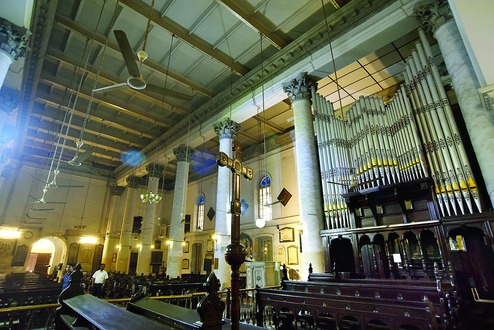
UNFINISHED NOTES: The pipe organ at St John’s Church that Johnny Purty used to play. (Sanjoy Chattopadhyaya)

Calcutta:

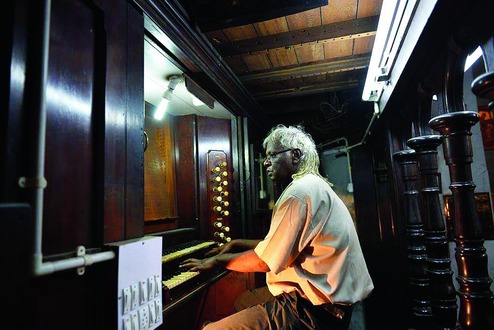
The sonorous ebb and flow of pipe organ notes won’t fill St John’s Church this Friday. Johnny Purty, the dreadlocked wizard of the keys whose music churchgoers say elevated the soul, died on Tuesday aged 57.

Johnny had been an unmissable presence during Sunday prayers at the church for years, his back to the congregation but his music always upfront in its purpose. On Fridays and Saturdays, he would play almost all day. Over the years, he became as famous as the grand instrument he played.

Noel Ronnie Purty, Johnny’s brother, told Metro on Thursday that his sibling inherited his love of the organ from their father, who had also played the instrument in a church. An alumnus of Assembly of God Church School and St Xavier’s College, Johnny was wedded to music and so remained a bachelor in life.

“He had a cardiac arrest around 3.45pm. A doctor was called and he pronounced Johnny dead,” Noel said.

A memorial service for Johnny was held at Wesleyan Church on Thursday, from where his family and friends proceeded to the Bhowanipore cemetery for the funeral.

“The hall was packed today. He was a master at playing the organ,” said Peter Hyrapiet, a close friend of Johnny.

Johnny Purty on the pipe organ at St John’s Church Picture courtesy: Subhadip Mukherjee

The pipe organ at St John’s Church on Council House Street was installed in the early nineteenth century and remains the grandest in Calcutta. “I have seen Johnny play even when there was none in the church. He used to play the whole day because he loved doing so,” said Subhadip Mukherjee, a friend and member of the Church of North India (CNI) that runs St John’s.

A college teacher who had visited St John’s last winter with her colleagues remembers the warmth with which Johnny greeted them. “He escorted us in. As we went around the church, Johnny started to play the organ. He seemed so happy just playing for us. It’s shocking to hear that he is no more,” she said.

At least five churches in Calcutta have pipe organs but regulars say that the one at St John’s is the grandest in terms of the quality of sound. Johnny’s finesse had as much to do with it as the maintenance that is put in to keep the instrument in shape.

Johnny also played the pipe organ at Wesleyan Church on Sudder Street for two decades. He had been playing there before he first touched the instrument at St John’s.

Unlike a piano, playing the pipe organ requires the use of both hands and feet. “The chords are played using the feet while the lead is played using the hands,” said a church member.

Mukherjee, whose blog Indian Vagabond has a detailed guide to St John’s Church, explained that the instrument has “stops” on either side of the seat that are adjusted to produce the sound the musician desires.

Johnny knew how to adjust these to produce the right music at the right moment, he said.

While a pipe organ player sits with his back to the audience, there is usually a mirror in front that enables the person to see the congregation and play to it.

Johnny’s death means St John’s Church will have to look for a musician to take his seat. “We are looking for a new player as quickly as possible,” said Pradeep Kumar Nanda, the vicar at St John’s.

The church, whose construction started in the late eighteenth century, stands on land gifted by Maharaja Nabo Kishen Bahadur of Sovabazar.

source: http://www.telegraphindia.com / The Telegraph,Calcutta,India / Home> Calcutta / by Subhajoy Roy / March 16th, 2018

Homegrown math scores in tiki-taka tracking

ISI team develops algorithms that promise higher accuracy than the competition

The automated system developed at ISI looks to be as accurate as Lionel Messi’s left foot when it comes to ball tracking. (AP)

Dunlop:

Advanced algorithms developed by a team of scientists at the Indian Statistical Institute (ISI), Calcutta, promise to do for ball tracking in football what tiki-taka has done for FC Barcelona.

Dipti Prasad Mukherjee of the institute’s electronics and communication sciences unit and PhD candidates Saikat Sarkar and Samriddha Sanyal have come out with a high-precision automated system using algorithms that “balance prior constraints continuously against the evidence garnered from sequences of images”.

The system, based on computer vision, aims to track and accurately calculate ball possession by a team during a game. According to Samriddha, it is at least 7.2 per cent better compared to competing approaches to ball tracking.

Samriddha had published a paper titled “On the (soccer) ball” with Mukherjee and Arnab Kundu in 2016.

“The problem of tracking the ball is when there is a sudden change in speed and orientation of the ball,” he said.

In a given video, the prior constraints would be the ball positions in previous frames. The paper proposes a particle filter-based algorithm that tracks the ball when it changes direction suddenly or travels at high speed.

“Our tracking algorithm has shown excellent results even for partial occlusion (blockage), which is a major concern in soccer videos,” Samriddha said.

Tracking a ball when it is being kicked or passed quickly from player to player like in tiki-taka remains a challenge for broadcasters.

Saikat, who is working on calculating ball possession, said: “Till now, the chess-clock method is used to measure ball possession. The other measure for ball possession is to count the number of passes. The ratio of the number of passes by a team divided by the total number of passes in a match closely correlates with ball possession stats.”

FIFA uses data from Deltatre, a sports media company that uses the chess clock method. In the Premier League, ball possession is measured on the basis of data from Opta Sports.

Deltatre has individuals using the three buttons of a chess clock to measure when the ball is with Team A, Team B or not in play. Opta uses a software overlaid on live feeds to track the number of passes.

The team at ISI uses raw broadcast video, measuring ball possession with close to 80 per cent accuracy.

source: http://www.telegraphindia.com / The Telegraph,Calcutta,India / Home> Calcutta / by Anasuya Basu / March 14th, 2018

Park Mansions: The house with the slatted windows

‘My grandparents, refugees from Bangladesh, have kept their house exactly the way they received it.’ | Photo Credit: Chirodeep Chaudhuri

Like many things in Calcutta at the turn of the 20th century, Park Mansions was built by Armenian merchant Thaddeus Mesrope Thaddeus

Can you love a beautiful thing without understanding what beauty is? I was eight years and something when I first saw Charulata, considered to be Satyajit Ray’s finest film and sometimes listed among the greatest films ever made. Ray had died that Calcutta summer, and Doordarshan was showing a retrospective of his films late at night, in remembrance. Those were the pre-DVD days, and even in VHS, Ray’s films were hard to come by. My parents would wake me late at night so I could watch with them, the only late-night activity I was allowed to participate in.

“Just watch a bit,” my mother would say, “it doesn’t matter if you don’t understand it.” At eight, even for the precocious, full-of-themselves Bengalis, I was a bit young for Tagore’s story of a young bored housewife falling for her brother-in-law, and recognising the loneliness of her marriage to an older, professorial man. (It was the typically uneven marriage of high-caste Hindus of the day — a young woman, a man at least a decade-and-a-half older.)

But I liked the film. I liked it from the start, because I liked Charu’s windows — the slatted windows through which she watched a man with a black umbrella on a Calcutta street, one of Bengali cinema’s most beloved scenes (and one of international cinema’s most recognisable scenes). My grandfather’s house had the same windows; windows operated with a spine to pry them open. The kharkhari, as we call it in Bengali, lets you glimpse the outside without letting the inside out. It is said to be designed specifically for tropical heat, and is typical of old, statuesque Calcutta homes from the turn of the 20th century.

Of stillness

I felt at home in Charulata’s world, though her emotional dilemma was several years of understanding away from me. I felt like I was in my grandfather’s house, 25 Park Mansions, with its books, and long corridors and curvaceous, dark wood furniture. (Today’s furniture is a lot more angular, a lot more straight lines, no?) More than anything else, the house has the same air of stillness and non-fidgetiness that you sense in the film. Despite Charulata’s emotional turmoil, you see her sewing or writing or playing cards, rarely fidgeting.

My grandfather’s house has that same quality — even now, it makes me forget my phone and the notifications on my post. It keeps the outside out, and holds me inside. I had little idea then that the building would one day be classified as “heritage” property, that I had grown up in something that deserves to be preserved for the public and the future. I had loved it without understanding it, much like I did with the film.

The foundation stone of Park Mansions was laid in 1910, one year before the British announced that the imperial capital would be shifted to Delhi. Like many things in Calcutta at the turn of the century, it was built by an Armenian, a merchant and philanthropist called Thaddeus Mesrope Thaddeus. Park Street, Calcutta’s iconic restaurant and bar street, has at least three other buildings credited to Armenians. Stephen Court, which stands diagonally opposite to Park Mansions, was built by Arathoon Stephen, who also built the adjacent complex, Queen’s Mansion. These three majestic mansions were conceived as residential quarters.

A little further down the street, close to the beloved Olympia Pub, is the Masonic (Freemasons’) Lodge and Hall, built by Johannes Carapiet Galstaun. Many of the city’s most loved and recognised hotels have also been built by Armenians — the Grand Hotel, the Kenilworth, the Astoria and the late Shashi Kapoor’s favourite hotel, the Fairlawn.

What is most interesting about this building spree is the timing — the turn of the 20th century was the zenith of the Raj in India. Calcutta is widely considered to be built by the British, and little credit is given to the Armenians. The early 20th century was also the time of the genocide of Armenians by the Turkish state — in her book A Problem from Hell, the American academic Samantha Powers describes this as the first genocide of the modern period.

The Armenian touch

But the presence of Armenians in Calcutta predates the 20th century. The oldest church in Calcutta is the Armenian church on Armenian Street. The earliest grave in the churchyard adjoining it dates to 1630, says Iftekhar Ahsan, who runs one of the most popular walking tour companies in the city. The Armenian college near Park Street still admits and educates children of Armenian origin only. Geographically, Armenia is a land-locked country, and the Armenians have been subject to invasions over the centuries. Waves of Armenians have left and settled across the world. They are among the most resourceful and successful immigrant communities worldwide.

According to the Kolkata Municipal Corporation (KMC), “a heritage building means any building… which requires preservation and conservation for historical, architectural, environmental and ecological purpose…” This definition suggests that a heritage building is a public good meant to be sustained for the city as a whole.

When the heritage status came in for Park Mansions, a plaque was put in in memory of the company managing the estate. In the four years since, nothing has been put up about Thaddeus, about the Armenians of Calcutta, the style of Armenian buildings, or even the distinct architectural features of Park Mansions.

However, a whole lot of signage has come up on the façade of the building itself — advertising for commercial and institutional tenants. The KMC website on heritage specifically mentions that no display of signage or hoardings is allowed on heritage buildings unless it is approved, and in harmony with the building.

Gleaming new commercial tenants have arrived — the country’s largest car company has a showroom in Park Mansions, a store for a global computer giant whose favourite colour is white, the tech gadgets branch of India’s largest industrial conglomerate, a hip global café franchise known for live music performances. There are new institutional tenants too — the cultural wings of two prominent Western governments have set up office. In the course of these arrivals, the interiors of the mansion complex have been almost completely stripped. The hip café is set to its global décor template, and could well have been in a mall for all that it has retained of its 107-year-old setting. One of the cultural institutes has stripped the original floors and replaced them with a polished wood material. The arrangement of rooms and spaces has been wholly reimagined.

Crumbling edifice

My grandparents, refugees from Bangladesh who came to Calcutta with nothing, have kept it exactly the way they received it. Not a thing has been taken out. The laal mejhe (red floor) — red oxide mixed with cement — typical of old Calcutta homes is intact, still deliciously cold and creamy on bare feet. Our ceilings are still ages away, held up by criss-crossing beams and joists. They make the unreasonable Calcutta summers reasonable and the embarrassing winters a bit more draughty and respectable. His house is, perhaps, the only unit to have retained the space as it was originally conceived.

But the innards of the apartment are falling apart. The sewage pipes, after more than a century of use, often spill out waste in the bathrooms. They leak faecal matter into the walls and ceilings. The estate managers, puffed with the heritage tag, swat us residents away.

What is happening to Park Mansions is known as ‘adaptive reuse’ in urban planning language. A building conceived primarily for residential use is being refashioned for commercial and institutional use. In the process, the character of the building is changing. The interiors are being stripped away. The identity of Park Mansions is eroding.

I see this unfolding before me. When I walk down Park Street in the evenings, there is invariably a knot of people in front of the hip new café at Park Mansions. They wait to take selfies below the name of the café. Where they knock their heads close and ready their faces for the camera, they stand in front of the foundation plaque of the complex: “Park Mansions: The foundation stone of this building was laid by Lizzie, wife of T.M. Thaddeus, on the 1st May 1910.” Their photographs have no space for Thaddeus’ Park Mansions. It’s only the building housing the global café chain.

Park Mansions Adda: On a semi-regular basis on Sundays, my family welcomes people via a public post on Facebook to walk through our apartment, feel the red oxide floor, look out of our slatted windows, run hands along the spines of my grandfather’s library. And then we sit in the living room and talk, just like people still do in any apartment in the world.

The Kolkata-based writer and independent journalist writes on public health, politics and film. Her hobby is writing about herself in the third person.

source: http://www.thehindu.com / The Hindu / Home> Rubric> Society / by Sohini Chattopadhyay / March 03rd, 2018

Fairlawn Hotel gave off the scent of antiquity — a bit damp, and wholly old Calcutta

‘For quite some time, only beer was available and that too in the front garden, which became rather raucous as the night drew on’ | Photo Credit: fairlawnhotel.com

A tribute to Calcutta’s Fairlawn Hotel

When the British left India they forgot to take Fairlawn Hotel with them. So for 70 years, this ‘corner of a foreign field’ has sat happily in Sudder Street, being British. Or rather, reminding us Britons of what we used to be like.

Not exactly frozen in time, because improvements were made over the years, Fairlawn nevertheless had an ambience firmly rooted in 1930s British India. There was a comforting atmosphere of chintz furnishings, proper dressing-tables, spacious almirahs, and a reliable dhobi service. When you dialled ‘Reception’ a room bearer came immediately to assist you. Fluffy white dogs belonging to the owners, Violet and Ted Smith, occupied chairs on the landing at the top of the handsome staircase. They (the dogs, not the owners) growled gently if you tried to move them, but any right-minded Briton would rather suffer hours of discomfort than move a sleeping dog or cat from its chair.

Jolly evenings

On the first floor of Fairlawn is the grandest room where parties and receptions were held in the 18th century. It had taken the British some time to figure out that rooms above street level could be cooler than those on the ground floor, particularly if there were open arches through which the fugitive breezes could enter.

The colonial bungalow at the core of Fairlawn was built in 1783 by the Englishman William Ford who had bought a plot of land here two years earlier. The original bungalow was a simple rectangular structure of two floors, each with a large central hall and with covered verandas running around the exterior walls. Access to the first floor would have been via an exterior staircase, but at some point during the 19th century, an interior staircase was constructed, which allowed extra rooms to be added.

A number of other alterations took place too, which the practised eye can see. The front verandah was extended outwards towards Sudder Street, and iron columns were inserted to support the new garden room above. It was from here that diners below could hear shrieks of laughter on jolly evenings when Violet entertained the British Deputy High Commissioner and other friends to drinks.

Those of us supping in the ground floor dining room were a little envious, because we couldn’t get the traditional gin and tonics with our evening meal. For quite some time, only beer was available and that too in the front garden, which became rather raucous as the night drew on.

I want to pay tribute to Fairlawn, where many happy days (and nights with a much-loved Indian friend) were spent from 1988 onwards. The first thing I looked for, whenever lucky enough to get the farthest ground floor room, was something that cannot be visualised — it was the smell, the heady perfume of antiquity, a bit naphthalene, a bit damp, and wholly old Calcutta.

My favourite room was part of the inner veranda, which had been compartmentalised at some point with panelled doors. The doors had been firmly painted over and couldn’t be opened, although the marks of the bolts and locks were visible through the thick cream paint.

At night I would imagine a procession of friendly phantoms from old Calcutta passing through these doors and into my room, dressed in their empire-line muslin costumes and stiff red broadcloth uniforms. These were British ghosts but there were also a number of faithful Indian spirits who spent quiet evenings in the corner of my room dozing on charpoys while they waited for the sahibs and memsahibs to retire for the night.

Guests and quirks

As a historian I am perhaps over-sensitive to the past — old buildings and old rooms attract and often haunt me. In an idle moment, when I happened to have a tape-measure with me, I measured the width of the outer wall in my room that led onto the veranda — it was 26 inches wide, over two feet of solid brick to keep out the heat. My ceiling was made of teak beams brought from Burma. When I sat at breakfast in the ground floor hall I could trace the outline on the far wall of earlier doors which had been bricked up when alterations were made.

Of course, not everything at Fairlawn was perfect. Indian staff were made to wear white gloves when serving food to Europeans until well into the 1990s. This peculiar custom arose because white people were said not to like the sight of brown hands serving their food. And there is no doubt that would-be Indian guests were discouraged from checking in at the hotel.

But I won’t let Fairlawn go lightly. It was special and it attracted special guests, whose names will be more familiar to Britons than to Indians — Dan Cruickshank, the architectural historian, Ian Hislop, the editor of the satirical magazine Private Eye, and many other quirky foreigners. All of us have sat in the uncomfortable basket chairs in the front veranda, reading the newspapers and waiting for our friends.

Fairlawn was one of the last places to positively encourage smoking — there were proper ashtrays on the occasional bamboo tables and even after I gave up smoking, the odd cigarette, bought from the corner store opposite, would entice me back to bad habits. Everything was painted apple green — the basket chairs, the iron pillars, and the reception area where Sam greeted guests and patiently answered their silly questions with unfailing courtesy.

It had a special place in old Calcutta for those who either couldn’t afford the Grand Hotel or the Great Eastern Hotel, or who preferred something more intimate.

Everyone who has stayed here will have their own memories — my friends who didn’t realise there was hot water until their third day there because no one had shown them how to turn on the hot-water heater; the British aid-worker back from a gruelling year in Odisha who needed to relax; the retired Calcutta policeman who sought me out last year and my numerous friends who knew where to find me whenever I stayed in the city.

Dr. Llewellyn-Jones is an independent scholar and historian, and lives in London with two cats called Havelock and Lawrence.

source: http://www.thehindu.com / The Hindu / Home> Society / by Rosie Llewellyn-Jones / March 03rd, 2018

IICB uncovers molecular mechanism of stress-induced gastric ulcer

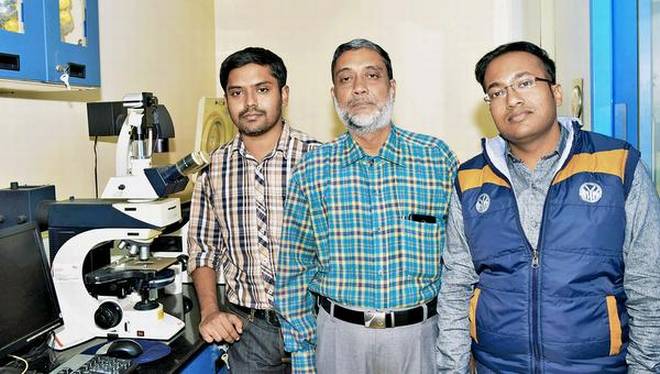
Damage caused to the stomach by mental stress can be reduced by targeting the mitochondria present in the stomach, says Uday Bandyopadhyay (centre).

The link between mitochondria in the stomach and the brain was found using rats

Researchers at Kolkata’s CSIR-Indian Institute of Chemical Biology (CSIR-IICB) have for the first time identified the molecular mechanism by which acute mental stress affects the stomach causing gastric ulcer or stress-related mucosal disease. Using a rat model subjected to cold-restrained stress, the research team led by Uday Bandyopadhyay from the Division of Infectious Diseases and Immunology at IICB has used drugs that can act specifically on mitochondria present in the stomach to prevent gastric ulcer caused by stress.

When subjected to stress, the mitochondrial respiratory capacity was disrupted, ATP production was reduced and oxidative stress increased. Stress also causes morphological changes to the mitochondria such as increased fragmentation. The results of the study were published in the journal Free Radical Biology and Medicine.

“Due to oxidative stress and fragmentation, the mitochondria in the gastric mucosal lining cannot behave in a normal fashion and ATP production gets further compromised. In the absence of ATP production, cells cannot proliferate and the gastric lining gets thinner due to mucosal cell death. All these cause stress-induced gastric ulcer,” explains Dr. Bandyopadhyay. “This is the first time we could find a link between the mind and mitochondria in the stomach. It is very exciting and fascinating.”

Second brain

The stomach is one of the organs most severely affected by stress and this is due to the link between the stomach and the brain. Moreover, the stomach is also known as the body’s second brain with a specialised neural network, repository of neurotransmitters and different kinds of nerve cells innervating the organ, though fewer in number.

Plenty of corticosterone was released into the blood when the animals were subjected to stress. Once corticosterone gets inside mitochondria it reduces ATP production and respiration capacity. By using a drug that prevents corticosterone from binding to the receptor found inside the cell, the researchers were able to significantly prevent stomach injury in the animals.

Interestingly, some common psychoactive drugs used in the study helped in preventing the pathological manifestations — gastric ulcer. “So we can say that it is indeed the acute mental stress which is causing gastric complications,” says Rudranil De from IICB and first author of the paper.

Role of mitochondria

“We delved deeper to find out the involvement of mitochondria in stress-induced gastric damage,” says De. A compound that scavenges harmful free radicals released from the malfunctioning mitochondria and another compound that inhibits mitochondrial fragmentation significantly prevented the injury and intra-gastric bleeding; although the drugs don’t reportedly act on the brain.

“Although stress is present, we could still prevent the damage caused to the stomach by targeting the mitochondria,” says De. “The use of these two compounds acting directly on the mitochondria confirmed that acute mental stress damages the mitochondria of the stomach ultimately leading to tissue injury and haemorrhage.”

The use of tranquilisers and barbiturates, often prescribed to patients suffering from mental stress and disorders, are associated with inherent problems including withdrawal effects and long-term side effects. “Our study proposes an alternative line of therapeutic strategy which relies on salvaging mitochondrial damage, thereby providing significant protection from stress. This will help avoid the use of existing psychoactive drugs while keeping the subjects alert,” says Somnath Mazumder from IICB, one of the authors.

If further research and human trials confirm the results seen in animal studies, it would lead to a new generation of anti-stress medications with minimal side effects which would aim at targeting the mitochondrial pathology to take care of a bigger psychosomatic health complication.

source: http://www.thehindu.com / The Hindu / Home> Sci-Tech / by R. Prasad / January 06th, 2018

Jhargram-born scientist discovers low cost material to build anti-landmine vehicle

Kolkata :

Aerospace Engineering researcher Professor Santanu Bhowmick, who hails from Jhargram district of West Bengal, has discovered a unique raw material to manufacture light weight anti landmine-vehicles.

The anti-landmine vehicles used by the defence organisations in India usually weigh 10-15 tonnes. Whereas vehicles manufactured using raw material discovered by Profesor Bhowmick will weigh only 5 tonnes, resulting in faster spped and greater mobility, especially in hilly terrains. The new material is also capable of withstanding heat upto 2400 degrees celcius. Usually, heat generated during a landmine blast measures upto 2000 degrees celcius.

Professor Bhowmick has already discovered a light weight bulletproof jacket which has been approved by the empowered committee of the Ministry of Defence. The jacket is made from indigenous ultra modern lightweight thermoplastic technology. It has been included in the Prime Minister’s ‘Make in India’ project.

Anti-landmine vehicles used in India are made of steel which tends to melt by the heat generated by landmine blasts, resulting in the death of its occupants -namely security personnel and jawans.

According to Professor Bhowmick, “Primarily the new vehicle will be provided with a heat withstanding ceramic and steel plate fitted to its base. The other portions of the vehicle will be made of steel. Later the entire vehicle can be made entirely of this material which will make it lighter. The material remains unchnged even at the highest temperature limit of 2400 degrees celcius.”

The vehicle base will be made of three layers of heat resistant ceramic plates of 60mm thickness.

Professor Bhowmick claims that the new anti-landmine vehicle will be made by the Tata group at their Jamshedpur workshop. On January 4, a meeting was held between him and the representatives of Tata group. According to Bhowmick, “Tata will supply high quality steel. The vehicle will be entirely made by Indian technology.”

The newly discovered material’s patent has been secured by Bhowmick. The new series of vehicles will be ready by 2020, confirms the scientist.

On Monday, the professor delivered a presentation about the newly discovered technology at the Army Technology Seminar 2018 using slide shows to illustrate his findings. According to him, “In the future this raw material may be used in building army bunkers, tanks, missiles and space research centres too.”

Bhowmick has been assisted in the research by three other scientists – Govindraju M, G Ajesh and V Shivakumar.

Monday’s presentation was attended by the Indian Army chief Gen. Bipin Rawat and many top ranking Army officers. DRDO director S Christopher was also present at the show together with scientists from the Chennai and Gandhinagar IITs.

Professor Bhowmick’s discovery is considered an important progress towards Prime Minister Narendra Modi’s Make In India project especially in the Defence sector.

source: http://www.telegraphindia.com / The Telegraph, Calcutta,India / Home> News> City News> Kolkata News / by El Samay / January 09th, 2018

CM to give awards to nine at fest

Siliguri:

The chief minister will present Banga Ratna to nine persons from north Bengal for their contribution in different fields at the inauguration of the Uttar Banga Utsav here on Monday.

Mamata Banerjee is scheduled to launch the eight-day cultural fest at Kanchenjungha Stadium here.

Official sources have said among the recipients of the Banga Ratna are Manas Dasgupta (economist from Darjeeling), Dinesh Chandra Roy (researcher on folk culture of the region from Jalpaiguri), Prem Kumar Bhutia (social worker of Kalimpong) and Debkumar Mukherjee (educationist from Cooch Behar).

The others are Malin Das (folk music instrumentalist of Cooch Behar), Dilip Kumar Roy (writer from Alipurduar), Prem Bihari Thakur (retired teacher from North Dinajpur), Tapas Kundu (researcher on Molecular Biology from South Dinajpur) and Radhagobinda Roy (social worker of Malda).

“Each award will carry a prize of Rs 1 lakh, a shawl and a certificate.

Apart from the awards, a total of 54 meritorious students from eight districts of north Bengal will get Rs 10,000 each from the chief minister.

Thirteen of them will get the assistance at the inaugural and the rest will be provided with the amounts by the administrations of their respective districts,” an official of the organising committee of the festival said.

source: http://www.telegraphindia.com / The Telegraph, Calcutta,India / Home> West Bengal / by Bireswar Banerjee / January 08th, 2018

Bird fest takes wing

Ravikant Sinha inaugurates the bird festival by lighting a lamp on Saturday. (Anirban Choudhury)

Alipurduar:

The second edition of the annual bird festival was inaugurated at the Buxa Tiger Reserve on Saturday.

The state forest department and Siliguri-based Himalayan Nature & Adventure Foundation (HNAF) are jointly organising the event.

Forty bird lovers and experts from different parts of Bengal and even from Delhi are participating at the four-day fest.

The Buxa Tiger Reserve is rich in avifauna and the fest is unique as it aims to bring together eminent ornithologists, researchers and bird enthusiasts from the region. “It (the fest) offers an opportunity to explore nature’s avifauna in this region alongside the rich biodiversity and wilderness of BTR,” Ravikant Sinha, the principal chief conservator of forests (wildlife) of the state, said after inaugurating the fest.

The fest will also help foresters to make a checklist of the birds available in the reserve, generate awareness among people about conservation of birds and study their habitat, said foresters.

Last year, 127 species of birds were sighted during the fest. They included rare birds like the mountain imperial pigeon, Rufous-bellied hawk eagle, Silver-eared mesia, Jerdon’s baza, Sultan tit, Brown dipper and wreathed hornbill.

“We want to highlight the avian population in Buxa, which is no less attractive (than the animals) . We have plans to make it a state-level festival in the coming years. The Buxa Hills are comparatively undisturbed and we hope more species will be sighted this year,” said Sinha.

source: http://www.telegraphindia.com / The Telegraph, Calcutta,India / Home> West Bengal / by Anirban Choudhury / January 07th, 2018