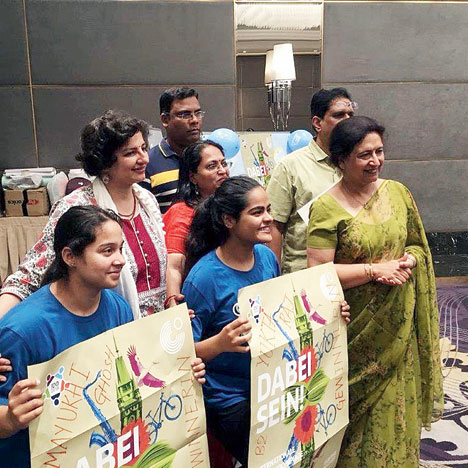
Modern High girls to represent India in contest with learners from 72 countries Mayukhi Ghosh and (right) Yukta Raj, who will represent India at the International German Olympiad this July
Ballygunge:
Two students from Modern High School for Girls have German television soaps and pop music to thank for topping a national-level language competition and earning the opportunity to represent India at the International German Olympiad in Freiburg this July.
Yukta Raj, a student of Class XII, and Mayukhi Ghosh, who is in Class X, have been learning German for many years. But the fluency they needed to compete with other learners in a language Olympiad came as much from following popular culture as from classroom lessons.
“I started watching German TV shows like Jojo sucht das Gluck and Tyrkisch fur Anfanger to prepare for the competition. It was basically learning while enjoying oneself,” said Yukta, who is the president of her school’s Deutschind club.
For Mayukhi, who inherited her love of German from her mother, pop music has been an unlikely learning tool. Her favourites include the rapper Cro and fellow artiste Namika.
Mayukhi was in Class I when she heard her mother speak a smattering of German and tried to emulate her. A decade later, it is the teenager who insists that her mother converse with her in the language and “keeps correcting her”.
“My mother is not fluent now for lack of practice. I ask her to randomly have a conversation with me in German,” Mayukhi said.
She and Yukta see the chance to compete with learners from 72 countries in the IDO – Internationale Deutscholympiade as an extension of their future plans. Both girls are looking at Germany as an option for their undergraduate studies. Yukta is fascinated by German “discipline” while Mayukhi loves the concept of artists’ colonies, of which that country has several.
For now, Yukta and her junior teammate are focused on enhancing their ability to not just speak and write German but also think in that language. “It’s started happening a lot. Since I started practising for the Olympiad, thinking in German has become a habit,” said Yukta.
Bina Ghosh, who teaches German at Modern High, said inter-school events and an exchange programme with a school in Germany had helped increase her students’ proficiency. “Even communicating over WhatsApp and Skype helps,” she said.
source: http://www.telegraphindia.com / The Telegraph,Calcutta,India / Home> Calcutta / by Jhinak Mazumdar / April 25th, 2018
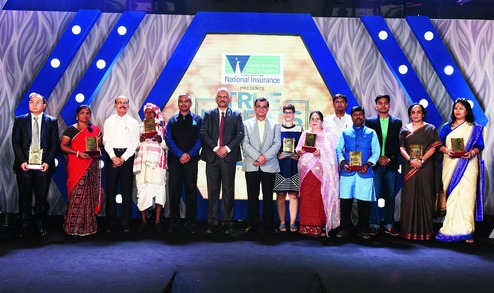
(From left) Thyelnai Dawn Khaling, Jamuna Tuddu, Subhas Datta, Simon Oraon, Major General A.K. Sanyal, GOC, Bengal Sub Area, Vijay Srinivas of National Insurance, D.D. Purkayastha, MD and CEO, ABP Group, Eva Katherina Kleekamm, Moirangthem Muktamani Devi, Surya Prakash Rai, Sankar Halder, Vikash Das, Sharda Radhakrishnan and Rosalin Patasani Mishra at the National Insurance presents True Legends Awards 2018 in association with The Telegraph, at Taj Bengal on Monday. Maj. Gen. Sanyal, Purkayastha and Srinivas were among those who gave away the awards. Pictures by Pradip Sanyal and Bishwarup Dutta
Alipore: Eleven heroes. Eleven battles. One award.
National Insurance presents True Legends Awards 2018, in association with The Telegraph, honoured men and women for changing lives in their own unique ways at the Crystal Hall of Taj Bengal on Monday.
The award recognised their outstanding perseverance, contribution and dedication to go beyond their calling, overcome obstacles to make this world a better place for many.
From health care to animal welfare and education to environment, this year’s legends contributed in varied ways in Bengal, Jharkhand, Bihar, Odisha and the North-east.
An audience comprising diplomats, doctors, educationists and more listened with rapt attention and broke into applause every time a story unfolded.
K.B. Vijay Srinivas, general manager, National Insurance Company, saluted the legends. “In our society there are people who do big things, who do great things, they are marked, they are revered, they are talked about. Yet, society carries on through the works of innumerable men and women who take small steps to answer unfulfilled needs. These are people who care, who have a passion for taking it upon themselves to do something meaningful.”
Metro salutes the True Legends
Bengal
SUBHAS DATTA, 70
A chartered accountant by training, a crusader by choice. Subhas Datta fought for issues that most people didn’t recognise as significant.
Datta proved in Calcutta High Court, citing the state pollution control board’s data, that the fair Calcutta so loved could actually kill its people. The air pollution level in the Maidan area took a leap during the Book Fair. “A Telegraph journalist helped me find the pollution control board report,” he says. The court ordered the Book Fair to be shifted away from the Maidan. Even the then chief minister Buddhadeb Bhattacharjee’s complaints didn’t make Datta relent.
He is also the man behind the phasing out of two-stroke autorickshaws from the city roads, to be replaced by four-stroke ones with better emission standards.
Datta is now fighting the state government for a switch to CNG vehicles.
Spotlight speak: I consider myself to be the scavenger of this city. I was once featured in a book with a broom in my hands. It is really nice that the Unputdownable is recognising the down-to-earth activist.
SANKAR HALDER, 43
The IT professional founded a non-profit organisation in 2003 to “repay” his neighbour who had sponsored his education. Fifteen years later. NGO MUKTI is synonymous with a better life in the Sunderbans.
In 2017-18, the NGO arranged sponsorship for 129 students from poor families, including 28 who are studying to be doctors and 33 who have enrolled for engineering.
MUKTI has also built more than 20,000 toilets in villages, set up a book bank and created women’s self-help groups. One of its newer projects focuses on educating farmers to switch to organic agriculture and marketing their produce.
Spotlight speak: It is not an individual’s recognition. This is a recognition of the people I want to help and the people who help me do this.
EVA KATHERINA KLEEKAMM, 47
The former banker from Munich is godmother to about 25 children in the city. She admitted them to school and pays for their education from her own savings and with some help from friends in Germany.
It all started in 2004, when a seven-year-old girl’s face peeped out from behind her mother and said she wanted to go to school. The little girl is now a student at a hotel management institute in the city.
Eva has settled down in the city and goes to Germany only on vacation. Even when she was diagnosed with breast cancer in 2016, she decided to stay back in Calcutta to be with “her children”.
Spotlight speak: When I first heard (about the award) I was speechless because I thought very important people get such awards. I do not give too much importance to myself. But this award will be a big support for my children and when I show it to my friends in Germany they will be proud too.
SHARDA RADHAKRISHNAN, 59
A hospital for animals in Sonarpur that is home to 500 dogs, seven horses, several cows and even injured kites has been this animal lover’s life and passion for the past 10 years.
The dogs at Chhaya include strays injured in accidents as well as pets of various breeds – Rottweiler, German shepherd, Great Dane, bull mastiff, spitz, golden retriever and Labrador – abandoned because of old age or sickness.
When a horse named Moti was found lying on the Maidan last month, Chhaya took it in and nursed it back to health.
Radhakrishnan has trained youths of the neighbourhood around Chhaya as para vets, who manage the hospital and take the ambulance to north and south Calcutta on alternate days to pick up stray dogs that need treatment. When Radhakrishnan started the hospital, she would ferry ailing and injured dogs in her own car.
Spotlight speak: I never thought the kind of work I do is worthy of such recognition and I thank The Telegraph for it. But, on second thoughts, this award is important for people to realise there are animals who need to be cared for and that it is our responsibility to help them.
BIHAR
SURYA PRAKASH RAI, 36
A community library in a small village in Bihar’s Gopalganj district, some 200km from Patna, has changed the way 400-odd students and their parents think about education.
Rai wants to help eliminate the caste system and encourage students of different backgrounds to come together in the same room to read, study, and interact with each other.
Spotlight speak: This is a huge recognition. Our efforts are bearing fruit and this will give us a lot of impetus going forward.
Jharkhand
SIMON ORAON, 84
Born into a family of farmers who relied heavily on rainwater for agriculture, this Class I dropout went on to build five irrigation reservoirs.
He is the man behind mass tree plantation, digging of wells and ponds in the Bero block near Ranchi that covers 51 villages.
Back in 1961, Oraon tried building a reservoir at the foot of a hill. He succeeded after two failed attempts. The waterman, as he is popularly known, received the Padma Shri in 2016.
Spotlight speak: I am happy to receive the award but I would be happier if the farmers back home got enough water to farm and drink. Only when that happens would I be truly happy.
JAMUNA TUDDU, 38
The resident of Muturkham village in Chakulia, Jharkhand, has been protecting forests in the area since she was 18.
She began her crusade against the timber mafia with just five women by her side. Together, they would visit the forests thrice a day and fight those who tried to cut trees. Tuddu’s arms include bows and arrows.
Twenty years on, Tuddu has 200 Van Suraksha Samitis in East Singhbhum district to patrol and protect the forests. Each committee has 15 women and 10 men.
“I have been pelted with stones, my home has been robbed but I have not given up,” said Tuddu.
Spotlight speak: It makes me proud that The Telegraph is acknowledging the efforts of women working in remote villages and honouring them in the city. We never thought when we started that so many people outside our district would know about us.
Odisha
VIKASH DAS, 29
A social enterprise set up in 2014 has built a network of nearly 2,300 women across four states and changed their lives.
The organisation has developed a sustainable business model to ensure financial independence for women in Odisha, Jharkhand, Chhattisgarh and Bengal.
Das’s life changed when he saw a tribal woman being dragged out of a festival for being a “lowborn”. He left his cushy IT job and set up Vat Vrikshya.
Spotlight speak: We don’t work for awards. But this incredible recognition puts a lot of responsibility on my shoulders. I hope I can live up to that.
ROSALIN PATASANI MISHRA, 36
The founder of Parichay Foundation, that works for empowerment of women, education for underprivileged children and promotion of Odiya art and culture, has taken up a new project in Salia Sahi Slum, the largest slum in Bhubaneswar.
Spotlight speak: We go through a lot of stress and pain. It is good to get such recognition at times. This will motivate me to keep going.
Manipur
THYELNAI DAWN KHALING, 42
A doctor and an Indian Air Force wing commander, he set up a classroom in his house for children whose parents could not afford to send them to school,
Khaling, who hails from a village in Khangshim, Manipur, stressed the need for education. The school he started was an attempt to educate the children of a domestic help working at his home.
“People should not miss out on education because they can’t afford it. Education empowers children to face the challenges of the future with dignity,” Khaling said.
His father was the first person from the Uipo Naga community to pass the matric examination.
Khaling’s classroom has grown over the years and today it has more than 30 children. He takes classes after his shift ends at 5pm.
Khaling’s Ascension Educational Trust (AET) also provides free coaching for MBBS entrance test besides CPR and first-aid training.
His colleagues from the air force also contribute to the project as volunteers whenever possible.
Spotlight speak: It is a recognition of what we have been doing though we never sought any recognition. So it came as a surprise.
MOIRANGTHEM MUKTAMANI DEVI, 59
In 1989, Muktamani Devi couldn’t afford a pair of shoes for her daughter. She knitted a pair on the sole of a torn shoe with woollen threads for her second daughter. At school, her daughter was scared when her teacher approached her during assembly. The girl knew the shoe she was wearing didn’t conform to the school uniform. But the teacher smiled and asked, “Who made these?”. The teacher wanted the same shoes for his daughter.
This was how Muktamani Devi’s journey in shoe-making began. Today, she exports shoes to Australia, the UK, France, Mexico and some African countries. She set up Mukta Shoes Industry in 1990-91.
Over the years she has helped train many unemployed women in Manipur so that they could earn a living making shoes.
Spotlight speak: I would dedicate this award to women back home who have been working relentlessly along with me. In the beginning, I only knew how to make ends meet in my family but today I am proud to bring in so many women like me to follow their dreams. My story of adversity gave birth to Mukta Shoes Industry.
source: http://www.telegraphindia.com / The Telegraph,Calcutta,India / Home> Calcutta / The Telegraph Bureau / April 24th, 2018
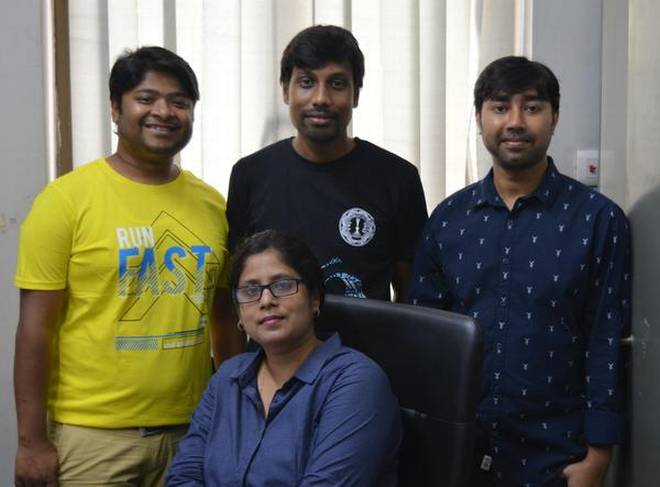
“The logic system can be recycled for three cycles by adding a heat deactivation step,” says Jyotirmayee Dash (sitting).
Sixteen combinations of different enzymes were used to make up the desired outputs
Scientists at the Indian Association for the Cultivation of Science (IACS), Kolkata, have been successful in designing DNA-based logic devices that would find application in DNA-based computation. They have designed reusable YES and INHIBIT logic systems by using a small molecule that serves as a fluorescent probe and binds to both a four-stranded DNA structure (G-quadruplex) present in human telomeres and nucleic acid cleaving enzymes (nucleases).
Fluorescence
The fluorescent probe — carbazole ligand — selectively binds to the G-quadruplex over other DNA structures present in the human genome. Once it binds to the DNA (G-quadruplex), the small molecule inhibits certain enzymes (nuclease S1 and exonucleases) from degrading the DNA. However, certain other enzymes (DNase I and T7 endonuclease I) can degrade the DNA even when bound by the small molecule.
While the small molecule by itself shows weak emission at 373 nm and 530 nm, the fluorescence intensity gets enhanced 14-fold at 530 nm once it binds to the DNA. Similarly, the small molecule bound to the DNA exhibits different fluorescence behaviour in the presence of different enzymes and this has been taken advantage of by the team led by Prof. Jyotirmayee Dash from the Department of Organic Chemistry to design conceptually novel logic devices. The results were published in the journal ACS Synthetic Biology.
Computation
For instance, DNase I enzyme degrades the DNA-bound small molecule and so when both the DNA the DNase I enzyme are used as inputs the fluorescence at 530 nm weakens. The output is therefore taken as zero. On the other hand, nuclease S1 enzyme does not degrade the DNA bound by the small molecule and so when both DNA and nuclease S1 enzyme are used as inputs the fluorescence at 530 nm does not get affected. The output is taken as one.
“So the INHIBIT logic gate is constructed using DNA and DNase I as inputs while the inputs of DNA and nuclease S1 form a YES logic gate,” says Prof. Dash.
Once the DNA is degraded by the DNase I enzyme, the logic system can be reused by supplying heat to deactivate the enzyme. “The logic system can be recycled for three cycles by adding a heat deactivation step. After three consecutive cycles, the efficiency of the system decreases by only 33%,” says Prof. Dash.
The team went a step further to design combinatorial logic systems (individual logic gates integrated into one another such as INHIBIT−INHIBIT and NOR−OR) by using different combinations of four nucleases (enzymes) as inputs.
16 combinations
The researchers were able to get 16 different combinations by adding one, two, three or four enzymes (nuclease S1, Exo I, T7 Endo I and DNase I) to the DNA-bound small molecule. The different combinations of the four enzymes are taken as inputs and the fluorescence response at 530 nm is taken as the output.
Of the 16 combinations, only four combinations are fluorescent (output taken as 1) and 12 are non-fluorescent (output taken as zero). The square numbers (1, 4, 9, 16) are assigned as fluorescent combinations, whereas the rest are assigned as non-fluorescent combinations. “So by suitable programming we can modulate the system to carry out complex calculations (for example, identification of square numbers up to 16) by varying the inputs,” she says.
“We hope that these DNA logic gates will provide the ability to not only create more complicated, sequential DNA computations but also create interfaces between silicon and DNA-based computers. The DNA-based nanodevice could be useful for diagnostic sensors and other biomolecular machines,” Prof. Dash says.
source: http://www.thehindu.com / The Hindu / Home> Science / by R. Prasad / April 21st, 2018
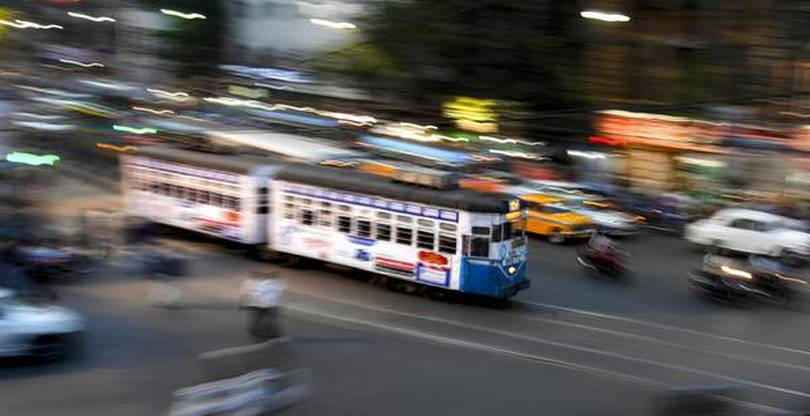
The city’s trams may have been sidetracked by taxis and buses, but they soldier on carrying passengers and a proud legacy
As he drives a tram through the busy streets of Kolkata, Dinesh Singh keeps a watchful eye for yellow taxis. When he started work 35 years ago, Mr. Singh, who is from Uttar Pradesh, did not have to worry so much. The electric cars ran smoothly on dedicated lines with nothing coming in their way. But now, vehicles running on fossil fuels have gained the upper hand.
The trams may not have kept pace with the city’s fast life, but they refuse to roll down into the sunset. Making slow progress through busy streets without leaving a smoky trail, the trams offer a ride down history. Running continuously since March 27, 1902, the Kolkata trams make up one of the oldest transport systems in Asia. “Earlier, tram lines used to be separate from the regular traffic. But as the city grew, those lines were merged with the main traffic routes. Hence, tram services run even more slowly now. Youngsters no longer prefer it, and it is only the elderly passengers and women who still use it,” says Uma Shankar Sharma, who has a history with trams. The 59-year-old took up driving trams after his father completed 40 years of service piloting them through the city’s streets.
Bombay, Madras, Delhi and Karachi have no trams now, though the British introduced them in these cities also. Exuding an old-world charm and nostalgia, the slow-moving, eco-friendly transport system is part of Kolkata’s charm. The Calcutta Tramways Company was registered in London in 1880. The British managed it even after Independence. In 1967, the West Bengal government took over the operations. But as time passed, taxis, private buses and India’s first metro simply outpaced the trams. The tram tracks became a casualty of rapid urbanisation. Many tracks were removed. The slow speed, infrequent timings and failure to change network patterns worked against trams. The tramway corporation even introduced bus services to increase its revenues.
Indrajit Singh, a timekeeper at the Esplanade tram depot, says only 10% of the tram lines in existence in 1995, when he joined service, are functioning now. He cites the expansion of the metro and other means of transport as the reason for the decline. The depot, from where the first electric tram car in Asia was run, today houses a tram museum and a cafe, serving history buffs and tourists. A 2011 study by the University of Calcutta said improving Kolkata’s tramways would have greater economic and environmental benefits than replacing it with other means of transport such as buses.
source: http://www.thehindu.com / The Hindu / Home> News> Cities> Kolkata / by K.R. Deepak / April 21st, 2018
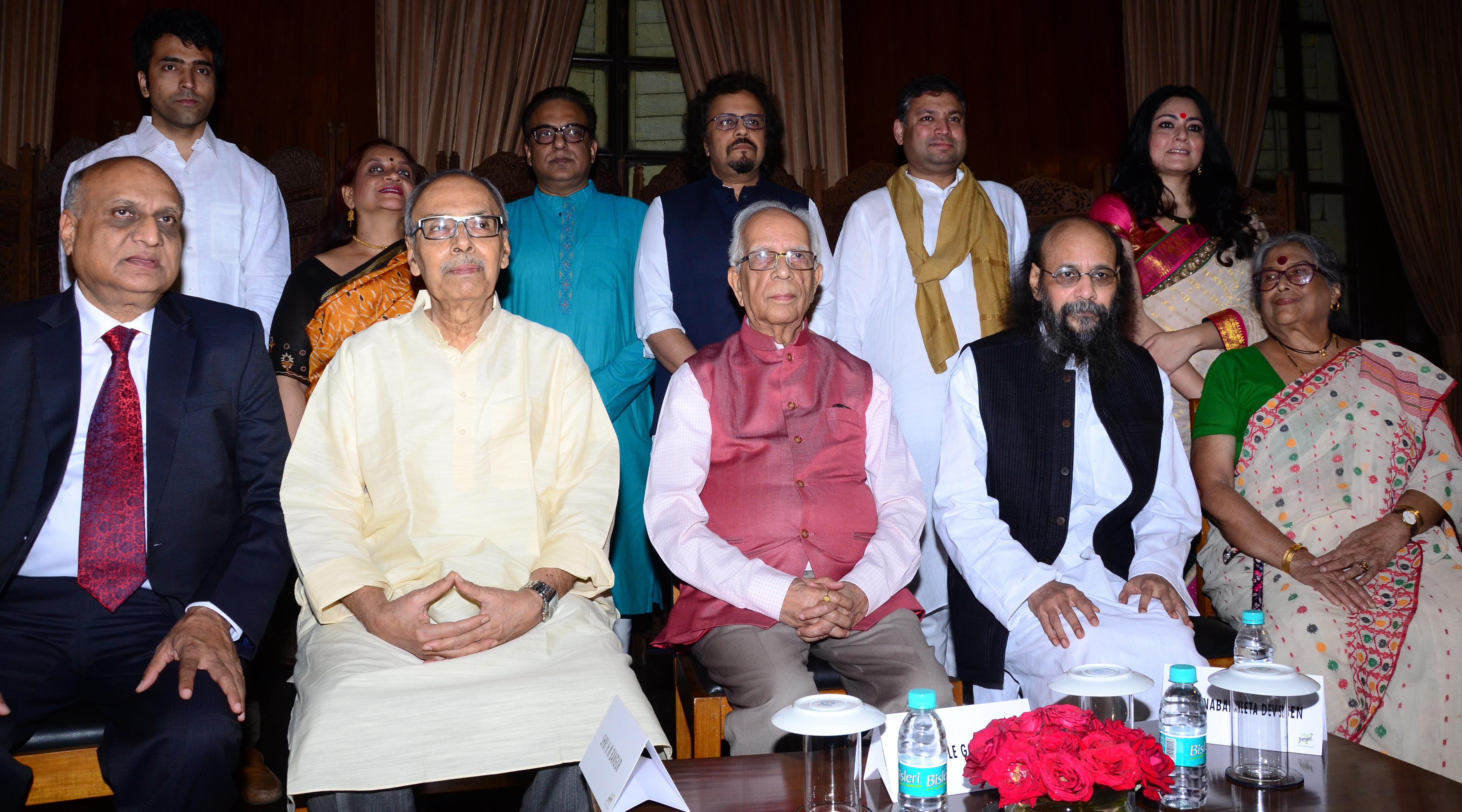
The Governor of West Bengal, Keshari Nath Tripathi, will honour litterateur Prafulla Roy with the Sunil Gangopadhyay Memorial Award for the year 2017 at a function in Raj Bhavan today.
The award ceremony is organised by The Bengal, an NGO represented by prominent individuals of the state from different walks of life.
The Governor, along with author Nabaneeta Dev Sen, president of The Bengal, and HM Bangur, chairman of the NGO, will confer the award on Prafulla Roy.
Agnimitra Paul will host the event, and members of the NGO like Goutam Ghose, Arindam Sil, Jogen Choudhury, Dona Ganguly, June, Bickram Ghosh, Aniruddha Roy Chowdhary and Usha Uthup, among others are expected to attend the event. A few celebs will also perform at the do.
“The Sunil Gangopadhyay Memorial Award was instituted in 2012 by The Bengal, a city-based NGO, following the demise of its immediate past president late Sunil Gangopadhyay. The award, which includes a citation and a cash amount of `2 lakh, is for outstanding work and contribution to Bengali literature,” said culturist Sundeep Bhutoria, honorary general secretary of the NGO.
The award for the years 2012-13 and 2013-14 were conferred on eminent poets Nirendranath Chakraborty and Sankha Ghosh respectively by the then President of India, Pranab Mukherjee. Other recipients of the award were Sirshendu Mukhopadhyay (2014-15) and Joy Goswami (2015-16).
source: http://www.timesofindia.indiatimes.com / The Times of India / News> City News> Kolkata News / by Srishti Dasgupta / TNN / April 19th, 2018
Conservation experts from the United Kingdom are voicing concern over the loss of Calcutta’s architectural heritage.
Conservation architect Philip Davies, who campaigns for the “shared heritage of Calcutta and Britain” and James Simpson, OBE, architect and vice-president of ICOMOS, UK, a heritage and cultural organisation, have lent their support to the protest march that Calcutta Architectural Legacies (CAL) is organising on April 18, the World Conservation Day.
Simpson believes Calcutta is facing a situation that Edinburgh faced 50 years ago. when development had threatened to rob the Scottish capital of its architectural heritage.
“Calcutta is… eminently worthy of recognition by Unesco as a World Heritage City. When chief minister Mamata Banerjee came to the Scottish capital last November, she saw in Edinburgh a beautiful city, whose heritage has made it one of the best places in the world in which to live and to do business, and to whose economy tourism makes a significant contribution,” Simpson wrote in an email sent to Metro on Sunday.
The Calcutta Municipal Corporation had last year downgraded the heritage status of the building that housed the old Kenilworth Hotel near the Middleton Street-Little Russel Street crossing, enabling its demolition by the present owners. Conservation activists have alleged that a builder-authorities nexus was behind the downgrading and the subsequent demolition.
The civic body had said the heritage downgrade of the building happened in accordance with law.
Amar Nath Shroff, the chairman of Alcove Realty, has said his company has not done anything outside the law. Alcove Realty is part of the consortium that owns the plot where the hotel stood and is promoting The 42, Calcutta’s tallest building.
Simpson said Calcutta’s heritage is its greatest asset, on which its future should be built. “Amit Chaudhuri and his supporters in CAL and PUBLIC are fighting for the very survival of the city. Without the architecture and the culture which makes it uniquely special, Calcutta will, in global terms, sink into mediocrity,” said Simpson.
London-based architect Philip Davies, who believes citizen’s movement is important to force governments into action, said: “Amit Chaudhuri, CAL and PUBLIC are to be applauded for taking to the streets to protest against the de-listing of buildings and the refusal of repeated administrations to designate conservation areas to protect its historic centres. Kolkata is one of the world’s great historic cities. Its remarkable heritage is enshrined in the very fabric of its buildings, neighbourhoods and public places. They desperately need strong statutory protection.”
Lamenting the loss of many such buildings, like the Strand Road warehouses, Davies said: “What is happening is a scandal. The Strand Road warehouses have stood vacant and decaying on a prime central riverside site for over 50 years losing crores and crores of potential revenue. The Botanic Gardens are of world significance and the oldest in Asia, but they are appallingly neglected with no coherent strategy for their future.”
He also lists the Silver Mint and Mint Master’s House, among the finest neoclassical buildings in India, that have been lying dilapidated for decades. The buildings that made Calcutta “a city of palaces” are threatened with development, he said.
Historic buildings and neighbourhoods are a huge economic and cultural asset, feels Davies. “A successful city can, and must, have both. Conservation is not an optional extra luxury, but crucial for sustainable urban regeneration and change. Heritage-led regeneration works,” he said.
Experience across the world – from London to Cape Town – demonstrates that waterfront cities can, and do, reinvent themselves. Calcutta can do the same and reap huge economic benefits for all, but it needs vision and leadership, felt the architects.
Grateful for the support from the UK, Chaudhuri said: “They have long been interested and invested in conservation in Calcutta.”
Talking of the UK experience in conservation, he said: “We can learn from Edinburgh, which never lost any of its architectural heritage, unlike Glasgow. We can learn from Scotland and London. But we can also learn from our own Mumbai, which has its own heritage precincts like the Churchgate and Oval Maidan, and the art deco of Marine Drive.
All these places are not museum-like but lived spaces shared by the affluent and the ordinary people. Calcutta too has the same mix of livelihoods and buildings that would form an attractive part of the city.”
source: http://www.telegraphindia.com / The Telegraph,Calcutta,India / Home> Calcutta / by Anasuya Basu / April 16th, 2018
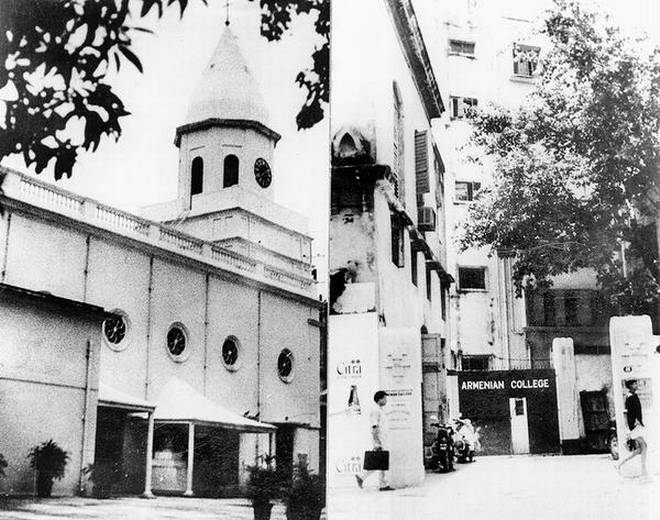
The Armenian Church of Nazareth, the oldest church in Kolkata; and (right) The Armenian College. | Photo Credit: PTI
For 197 years, the Armenian College and Philanthropic Academy has offered not just education but a sanctuary for children torn by conflict.
It was a birthday party of a different kind.
Brought together often by conflict and exile and nurtured in a regime of tough love, the dozen alumni and 70 present students of the Armenian College and Philanthropic Academy (ACPA) of Kolkata were celebrating 197 years of the institution on April 2.
Amid the animated discussions on the crisis in West Asia, Razmik Hakobyan, a 24-year-old Iraqi, an alumnus of the school, said he was dispatched to the ACPA in 2007 for “safety and education,” after a bomb exploded close to his house in Baghdad’s upmarket Kembel Gilani area. Mr. Hakobyan’s father, a retired soldier, decided distant Kolkata was safer.
“A friend who studied in Kolkata told us about the school and my parents got interested,” said Mr. Hakobyan, who left Baghdad when he was just 13. He would like to visit Baghdad, he said, but only on vacations.
“Baghdad is not getting better and nor is its education,” said the young man, whose family has since shifted to Kurdistan. Close to completing his graduation at the city’s St. Xavier’s college, Mr. Hakobyan says he is indebted to the Armenian College and its teachers.
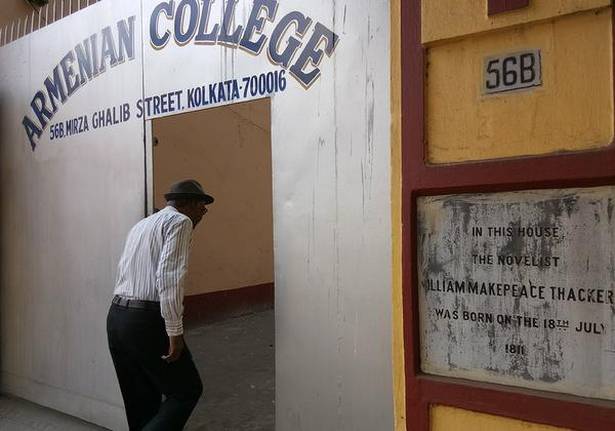
Set about 500 metres north of Park Street in the heart of the city, a plaque at the entrance of the imposing yellow building announces that “the novelist William Makepeace Thackeray was born on the 18th July, 1811” in the premises. Since 1821, it has housed the Armenian College and Philanthropic Academy — a school for Armenian students from all over the world up to Class X.
India as home
The Armenians adopted Christianity in 301 AD and were invited “to come and settle in his dominions” by emperor Akbar in the 17th century.
They arrived in Bengal in 1645 and settled along the Hooghly’s fertile western bank like most traders of the time. Anne Basil in her seminal book Armenian settlements in India writes that the community grew in size and influence and felt the need to have its own school. An informal school was set up in 1798, which was replaced by the present Armenian College and Philanthropic Academy on April 2, 1821, at 358, Old China Bazar Street near the Armenian Holy Church of Nazareth, Calcutta.
Following the genocide of more than a million Armenians in eastern Anatolia by Turkish forces in 1915, “hundreds of children of uprooted families…found shelter and a roof and received sufficient education…” at the Kolkata school, notes Basil.
Open to all Armenians
Armen Makarian, a former student and school’s coordinator, said the institution is the only Armenian school of its kind in the world.
According to Very Reverend Father Movses Sargsyan, head of the Davidian Girls’ School (DGS) — the girls’ wing — and Armenian College, the school is globally known among Armenians. “Internet, website and social pages informed the guardians,” Father Sargsyan said. While a majority of the students are from Armenia, the rest are from the Armenian disapora in Iran, Iraq and Russia and a handful of Indian-Armenians.
“We would like to have Armenian students from across the world — from Germany, Italy or France and even Syria,” Father Sargsyan said.
Like most boarding schools, the Armenian College has an intensely packed, exacting schedule. Mobile phones and laptops are a strict no-no, with the students allowed two hours out of the premises for shopping.
“But we like it,” said Vladimir Grigoryan, a ninth standard student, who was born in Russia but now stays in the Armenian capital, Yerevan.
“My parents were paying $2,500 annually for my education in Armenia. But the teachers never cared if we were learning — unlike here where teachers are constantly demanding,” said Vladimir, whose father runs a chain of hotels in Russia.
For Sevak Azarian Namagardi from Iran, who just appeared for his ICSE examinations, life is a “little boring” at times. Being a trained singer and a regular at choirs, he looks forward to weekly chats with his family over Skype.
“As the summer vacation approaches, I’m making arrangements to leave for Tehran,” he said. He has more reasons to cheer. “This time the family and I will visit Armenia, our motherland,” said Sevak. He, however, is equally keen to get back to friends at the school.
Academic challenge
Imparting education to students from such diverse backgrounds, however, is not easy. Soumitra Mallik, Principal at the Academy said the key problem was to match various levels of education.
“We do not know if the student who has studied up to Class V in her or his country is on par with what is taught here under the ICSE syllabus. So, this content mapping and matching is a problem,” he explained.
The other problem is communication as the students usually come from non-English speaking backgrounds. While Armenian teachers teach Armenian language, history, and culture, most of the around 25 faculty members at the Academy are Indian.
“So, we have six-month preparatory courses where we intensely teach English, some Mathematics and a bit of the Sciences to provide an outline of what the student will study and to hone their English language skills,” Mr. Mallik said. So far, it has worked well as many of the students are quickly able to leapfrog to reading Shakespeare’s Merchant of Venice within a few years!
Arindrajit Saha, the English teacher, said, “Studying Shakespeare within a brief period of time can be considered an important marker.”
Though the students indeed are grateful for the free and quality education they receive, there are regrets of a lost childhood back home.
“Saddam Hussein may have been a dictator but Iraq was not doing too badly and there was peace. With his departure, the country permanently collapsed and I had to leave my incomplete childhood behind,” said Mr. Hakobyan.
The different countries that the students hail from may not share friendly diplomatic ties, but the bond that Mr. Hakobyan or Sevak develop at the Kolkata school go beyond political compulsions or geographical boundaries.
“We are from the same tree, with same roots. The branches move in different directions, but the root remains,” says Arian Makarian of Iran, an alumnus.
source: http://www.thehindu.com / The Hindu / Home> News> Cities> Kolkata / by Suvojit Bagchi / Kolkata – April 14th, 2018
Residents of Raiganj have pinned hopes on Sonia Baishya, a local girl, to achieve medals at the Commonwealth Games on Saturday.
On Saturday, Sonia will participate at the finals of the 4 X 400 relay race at the international sports event. She is the sole member in the Indian squad from north Bengal.
“I have spoken with her over phone and have mentioned about the high hopes of Raiganj residents. We will organise a puja at home ahead of her event. But I will not join others to watch the live telecast. All of us are eagerly waiting for her success,” Baren, her father, a resident of Netajipally in the town, said.
In 2017, Sonia had bagged gold at the same event in the Open National Athletics Championship that was held in Chennai. Then she participated at 18th Asian Games Invitation Tournament held on February this year at Jakarta in Indonesia. There, she had also won the gold medal.
“Sonia’s consistent performance has helped her to secure a berth in the Indian squad that was sent for Commonwealth Games. India has already won a number of gold medals in the event but Saturday’s event is most important to us. We want to see her succeed,” said a sports enthusiast of the town.
Ahead of the event, residents, social organisations and even the North Dinajpur district administration have drawn up plans to pray for us as well as put giant screens to show the live telecast of Sonia’s event.
“A giant screen would be put at the stadium here where people can watch the event. Sonia Baishya has made North Dinajpur district proud and to encourage more children and youths to join the sports arena, we have made the arrangement,” said Ayesha Rani A, DM, North Dinajpur.
Sonia’s friends have planned a prayer meeting for her success. Also, organisers of Quiz Premiere League, a which will be held in the town from Saturday, have said that they would pray for her ahead of their programme.
“All eyes would be on Sonia on Saturday. People are planning celebrations if she succeeds,” said a representative of the District Sports Association.
source: http://www.telegraphindia.com / The Telegraph,Calcutta,India / Home> West Bengal / by Kousik Sen / April 14th, 2018
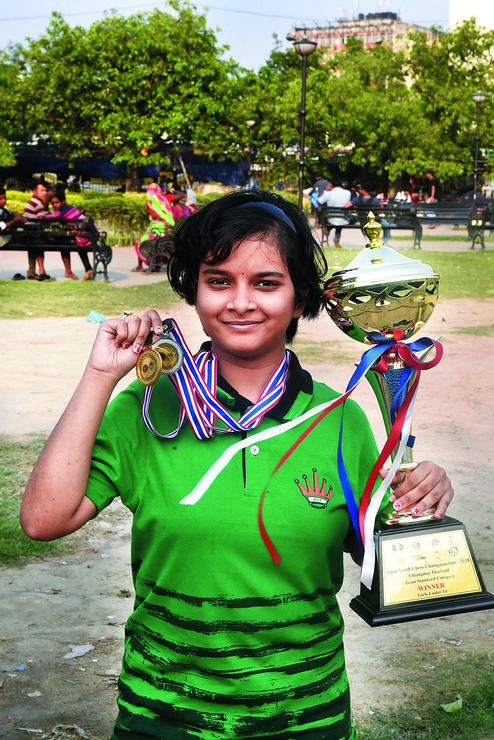
Thailand silver teaches chess teen how to finish first
Bristy Mukherjee outside the Maidan club. Picture by Sanjoy Chattopadhyaya
Calcutta:
If Bristy Mukherjee misses her 8.45pm train from Howrah after training at a Minto Park academy, she has to wait another 90 minutes to catch the next one and reach home past midnight.
The 14-year-old from Memari in East Burdwan has become used to the consequence of missing trains, but is having a hard time consoling herself about the gold medal she narrowly missed in Thailand this month.
Half a point was all that forced Bristy to settle for silver in the under-14 girls’ category of the Asian Youth Chess Championship at Chiang Mai between April 1 and 10.
Bristy had outplayed higher-ranked players in four consecutive rounds, but drew her last match against China’s Wan Quian to score 6.5 points in nine rounds. This was just half a point less than what Kazakhstan’s Kamalidenova Meruert had totalled to win the gold.
The visit to Thailand was the first time Bristy had travelled abroad. She has had to skip a couple of other international tournaments because her parents could not afford the expenditure.
Bristy’s mother had mortgaged her jewellery to arrange just over Rs 70,000 so that she could compete in the Asian Youth Chess Championship. Her father used to run a grocery shop that shut down two years ago because accompanying his daughter to tournaments left him with little time for business.
“I have to travel with Bristy within and outside the state. There is nobody else to sit at the shop,” Debasish Mukherjee told Metro at a Maidan club where Bristy and other players from Bengal were felicitated by the state chess association.
Mukherjee rents out a portion of his ancestral two-storey house for private ceremonies. The prize money that Bristy wins is kept aside to cover travel costs, although that is hardly enough.
Bristy trains at the Alekhine Chess Club at Gorky Sadan, near Minto Park, and spends six hours a day travelling. “The journey is especially taxing during the summer months,” she said.
Chess became Bristy’s life in 2010 when she was visiting a nursing home near Minto Park with her parents. “I noticed an advertisement for admission to Alekhine Chess Club. Nobody in our family was associated with chess but I liked the game,” she recalled.
That was July. In October the same year, Bristy won the first tournament she participated in – at the Khudiram Anushilan Kendra in the under-6 category. At the Asian School Championship in 2011, she won a bronze medal in the under-7 event.
Bristy, who studies at Memari Rasiklal Smriti Balika Vidyalaya, idolises Grandmaster Koneru Humpy and aspires to win laurels for the country. “She is from a place where there is hardly any chess infrastructure. She is promising but the pressure to perform sometimes hampers her game. Her performance in Thailand is encouraging. This is the break she needed,” said Atanu Lahiri, the general secretary of the Bengal Chess Association.
source: http://www.telegraphindia.com / The Telegraph,Calcutta,India / Home> Calcutta / by Debraj Mitra / April 15th, 2018
Satyen Das was busy picking up passengers on his rickshaw at Geetanjali Metro station in Naktala when he got to know a documentary film—‘Ladakh Chale Rickshawala’ — on his rickshaw journey from Kolkata to Ladakh had won the Best Exploration/Adventure Film at the 65th National Film Awards announced in New Delhi on Friday.
By afternoon, when he got the news, the 44-year-old had already earned Rs 150, but he was more excited about the award. It’s his love for adventure that gave him the courage to fight all odds to complete the treacherous journey, says Das.
It turned out to be a life-changing moment for Das, when Indrani Chakraborty, a television producer from Naktala, hailed his rickshaw in 2014. During the short journey, she learnt that Das was planning to leave for Ladakh soon. He fished out old pictures of him visiting Puri and some places in north India on his rickshaw and showed it to her. At that moment, Indrani decided to shoot his journey to Ladakh and turn it into a film.
“I didn’t have the money to follow Satyen Das on his entire journey to Ladakh, so taught him to shoot on a handycam. It was tough when the handycam stopped working after he crossed Benaras and someone from my team had to rush to where he was and get it repaired. Two of my associates and I met him on the final leg of his trip in Ladakh,” says Indrani.
Das credits Indrani for helping him in completing the journey and doesn’t forget to thank some of his regular passengers and members of Naktala Agrani Sangha, a club in his neighbourhood.
“I drove my wife and daughter to Puri and north India and was inspired to take my rickshaw to Khardung La mountain pass, the world’s highest motorable road, 39 km Leh. I got help from Indranidi, a few of my passengers and members of Naktala Agrani Sangha. There were many challenges; every day, someone or the other would ask me to return to Kolkata. ‘You can go till Srinagar, not beyond,’ they told me. But I didn’t budge,” recalls Das.
For Das, food was as big an issue as the lack of oxygen and the inclement weather. “I carried basic ingredients like rice and potatoes. I would either have aloo chokha-bhaat or instant noodles; it was more of a fight for survival,” he says.
But the toughest part of his journey came when he reached Zoji La pass. “The roads were rough and there was no way that I could carry my belongings on the rickshaw and cover the 8-km stretch. I would offload everything on the road drive the rickshaw for a few metres and return to carry the things on my shoulder. It took an entire day to cross that stretch, but I didn’t stop. I wanted to create a record of sorts by reaching Khardung La.”
Das, who shot his journey on a handycam, was joined by a three-member camera team in Ladakh. “From thereon, there was no looking back. I returned to Ladakh again in 2017, this time with the message of fighting global warming. I sprinkled 5,000 date seeds along the way.”
His rickshaw has been put on display at the university campus set up by Sonam Wangchuk in Ladakh. Indrani, who helmed the documentary film, said even though the journey took two-and-a-half years to complete, it took her three years to finish this 64-minute film. She approached Films Division, which has taken the project under its wing.
source: http://www.timesofindia.indiatimes.com / The Times of India / Home> News> City News> Kolkata News / by Zinia Sen / April 04th, 2018