Category Archives: Records, All

Jamsetjee Framjee Madon — a pioneer of Indian cinema and champion of Calcutta’s poor Parsis

In Pioneering Parsis of Calcutta, Prochy N. Mehta chronicles the little-known lives of the first Parsis who came to the city during British rule.
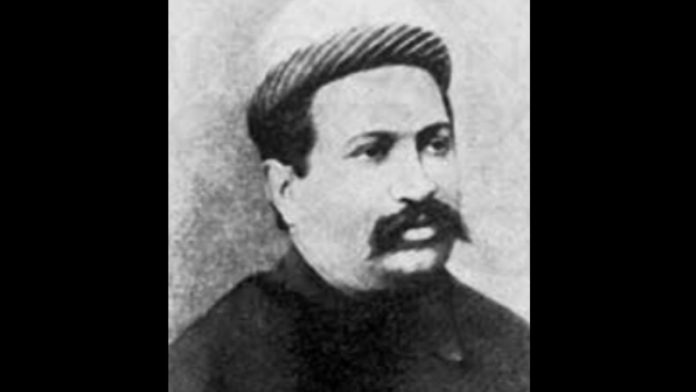
Jamsetjee Framjee Madon | Niyogi Books | Prochy N. Mehta


Jamsetjee Framjee Madon was one of the pioneers of Indian cinema. He owned over 120 cinema halls at one time. Jamsetjee was very modern in his outlook and a reformist in his religious views. He was one of the first trustees of the Late Ervad D.B. Mehta’s Zoroastrian Anjuman Atash Adaran and was a supporter of the young Bella, to whom he left Rs 5,000 in his will to help her in her legal case. 

Jamsetjee Framjee Madon was born on 27 April 1856 in a very poor family in Bombay. The family being truly indigent, he had to seek employment at the tender age of twelve as a scene-shifter in the dramatic company of Cooverji Ratanji Nazir, at a salary of Rs 4 per month. The young lad got enamoured of the stage, copying the roles of the heroes and heroines of the plays and later playing small roles on stage. Since he had a good voice, he could act the part of a courtesan and became quite popular. 

He then joined Elphinstone Natak Company which toured the country and in 1875, on an auspicious day, he came to Calcutta with this touring company. Some time later he took over this company in partnership with a few others. This company prospered, thanks to his experience, far-sightedness and hard work, and made Calcutta its permanent home. Simultaneously he started dealing in auctioned goods and in 1885 started another business as wines and provision merchant at 5, Dharamtalla Street. His honesty, perseverance and gentle nature soon attracted important Indian customers and the shop became extremely popular among government officers and Englishmen. There were seven branches of this store including those at Calcutta, Darjeeling, Lucknow and Delhi. 

In 1903, at the time of the British invasion of Tibet, Jamsetjee opened food and provision stores all the way from Siliguri to Chumbi and assisted the armed forces in supplying food and provision to soldiers even at great personal risk. The British officers greatly appreciated Madon’s fortitude and bravery as a result of which Jamsetjee was given a large contract of supplying the army during the wars in Kabul. He carried out his work at great risk and in significantly difficult circumstances, to the utmost satisfaction of the military officers. In appreciation of these services, the British Government awarded him the Order of the British Empire in 1918.

On 30 March 1919, the Calcutta Parsis felicitated Jamsetjee at a function under the chairmanship of the trustee of the Anjuman, Seth Edulji Pestonji Guzdar. Madon Seth was congratulated on obtaining the Order of the British Empire and praised for his simple life, gentle nature, honesty and kindness and for his munificence towards the poor. 

Seth Jamsetjee, like the other Parsi elders of the community, had a generous nature and was always anxious to assist the needy. Having grown up in poverty he felt for the poor and gave employment to many poor Parsi youngsters in his cinemas and shops. He was thus responsible for the livelihood of a large number of Parsi families. Many of his charities were done secretly and it can be truly said of him that his left hand was not aware of what his right hand gave away. It was estimated that such secret handouts averaged Rs 5,000 every month. This help was not restricted to Parsis exclusively; all the needy benefitted from his charity, irrespective of caste or creed. Many institutions of public welfare owed their existence and prosperity to him. 

In 1907 Seth Jamsetjee took up the mission of building a second Tower of Silence in Calcutta. Starting a subscription list with his personal donation of Rs 5,000, he went from house to house and managed to collect a lakh of rupees from the Calcutta Parsis. It was due to his influence that the municipality gave a grant of Rs 27,000 towards the purchase of land for this second Tower of Silence, and he personally bore the expenses of Rs 20,000 towards building it. Seth Madon’s efforts and far-sightedness resulted in bringing together the priests of the Kadimi and Shahanshai sections for the first time in Calcutta. The Kadimi priests performed the religious rites at the time of the foundation and the Shahanshai priests performed the consecration rites. 


In 1912, at the time of the building of the Mehta fire temple, Seth Jamsetjee provided his devoted services. The building attached to the fire temple used as a residence for the priests was built and donated by him and his family to the Atash Adaran. He presented several chandeliers, lamps and carpets for the main prayer hall and also many tables, chairs, large cooking utensils for general use. This generous-hearted Parsi also had the foresight to start funds with initial personal donations to take care of the future maintenance of the Atash Adaran.

Seth Jamsetjee was deeply sympathetic towards the poor Parsi families in Calcutta. In Dharamtalla Street he built Khorshed Madan Mansion at an expense of Rs 1,10,176 in memory of his beloved daughter, Mrs Khorshed Rustomji Maneckji Mehta, who had died on 14 January 1920 during the lifetime of her parents. Seth Jamsetjee donated this house to the Anjuman on the understanding that the flats be rented out to the poor and middle-class Parsi families of Calcutta at a low rent. Further he set aside a sizeable fund for the maintenance of this building. 

He also secured the land for the ‘aramgah’ for the Parsis in Darjeeling and donated funds towards its maintenance. On several occasions he gave donations to the Anjuman on behalf of his friends and relations. Seth Jamsetjee organised several ‘benefit nights’ in many of his cinema houses to collect funds for charities for Parsis as well as other communities. 

In 1923, the British Government honoured him with the award of Commander of the Order of the British Empire in recognition of his many cosmopolitan charities. 

About twenty years prior to the advent of cinema on a commercial basis in India, Seth Jamsetjee experimented with this new media and perfected it for public viewing. He was truly a pioneer of the cinema industry in India. 

The young lad of twelve, who started his career as a scene-shifter at a salary of Rs 4 per month, aided by some lucky turn of events and greatly due to his own inherent ability, perseverance and hard labour, became, in the evening of his life, the owner of a hundred cinema houses in India. Seth Jamsetjee’s life is a shining example of Parsi adventure and philanthropy. Upon his death which took place in Calcutta on roz 22 Govad, Mah 10 Dae, Year 1292 y.z., corresponding to 28 June 1923, Calcutta lost a true benefactor of the poor. 
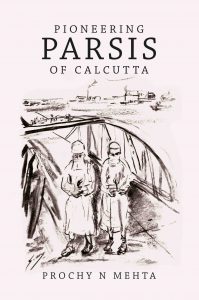
This excerpt from Pioneering Parsis of Calcutta by Prochy N. Mehta has been published with permission from Niyogi Books.

source: http://www.theprint.in / The Print / Home> Page Turner> Book Excerpts / by Prochy N. Mehta / April 04th, 2020

Nabaneeta Dev Sen passes away

Dev Sen had announced she was suffering from cancer

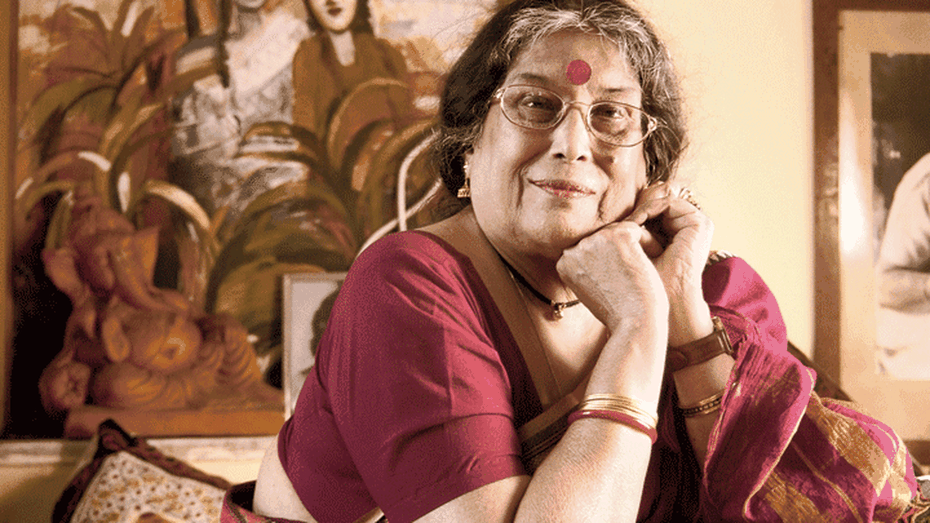
Nabaneeta Dev Sen / Telegraph picture

Nabaneeta Dev Sen, poet, novelist and academic, breathed her last at her south Calcutta home on Thursday evening. She was 81.

Dev Sen had announced she was suffering from cancer.

Her spontaneity, unique style of expression, vast and varied experience of life are evident in her poems, short stories, novels, plays, travelogues, literary criticism, essays and works of children’s literature. Some of her well-known works are Bama-bodhini, Nati Nabanita, Srestha Kabita and Sita Theke Suru.

Her Radhakrishnan Memorial Lecture series at Oxford University, a pioneering work on The Ramayana seen from women’s viewpoint, in 1997 started a new school of studies on Sita across the world.

Dev Sen is survived by her daughters Antara and Nandana, from her marriage of 17 years to economist Amartya Sen. Her last rites would be performed on Friday, before which she would be taken to Jadavpur University, a family friend said.

The daughter of the poet-couple Narendra Dev and Radharani Devi, Dev Sen grew up in a literary milieu and graduated from Presidency College. She received her masters degree from JU in 1958, where she later taught in the comparative literature department till her retirement in 2002.

She was also an alumna of Harvard University, from where she took a masters with distinction, and of Indiana University, where she did her PhD. She then completed her post-doctoral research at the University of California in Berkeley and Newnham College, Cambridge University.

The recipient of the Padma Shri and the Sahitya Akademi award was a polyglot, reading Hindi, French, German and Sanskrit among other languages.

A friend of over 50 years, author Sirshendu Mukherjee reminisced: “She had an unbelievable sense of humour and spontaneity. So infinite was her vitality that sitting next to her was like sitting by a dynamo. She had a lot of health issues, always going around with an inhaler. Yet nothing seemed to touch her. She was without fear and beyond prejudices.”

Lauding both her poetry and prose, Mukherjee said he had lost “a favourite author”. “She may not have written for children as much but what she has written is amazing. She also spoke up for a definite place for women in society through her work.”

Chief minister Mamata Banerjee expressed grief over Dev Sen’s death. “Saddened at the passing away of noted litterateur and academic Nabaneeta Dev Sen. A recipient of several awards, her absence will be felt by her myriad students and well-wishers. My condolences to her family and admirers,” Mamata tweeted.

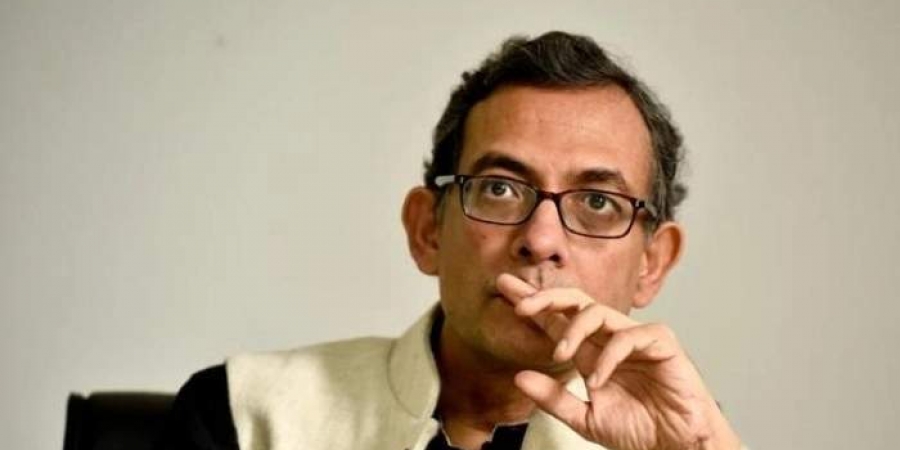
Her last photographs made public were with Abhijit Vinayak Banerjee, when the economist came to meet her at her home Bhalo-Basha on October 23 during his brief sojourn to Calcutta after winning the Nobel Prize.

That photograph of her smiling radiantly through an oxygen tube attached to her nostrils will endure.

source: http://www.telegraphindia.com / The Telegraph, Online edition / by Special Correspondent in Calcutta / November 08th, 2019

Tributes paid to ‘bhadralok’ soldiers of WW I

Kolkata :

A forgotten chapter of the Indian military history was retrieved from the oblivion and feted at a brief function organised as part of various events held in the city on Remembrance Day today.

The memorial erected by the British at College Square in Kolkata to honour members of the Bengali Regiment who died in the First World War is hard to locate on an ordinary day. Today, however, it saw visit by WB Minister Sadhan Pandey, who paid floral tributes to the soldiers, most of whom fell not by bullets but due to various diseases.“The 49th Bengali Regiment would go on to have a rather inglorious record. It reached Mesopotamia in September 1917, but never saw combat and struggled with the desert conditions and diseases. A commanding officer divided the regiment into ‘Measles Squad’, ‘The Whooping Cough Squad’ and ‘Scarlet Fever Squad’.

More seriously, there was infighting and a junior member opened fire on three senior colleagues while they were asleep. The regiment was demobilised soon after the war,” said Santanu Das, professor at London’s King’s College, who is known for his work on the first great war.

Ashok Nath, military historian, who is on the faculty of Stockholm University, however, said except for the Kumaon Rifles, all other army regiments raised by the British in India in view of the First World War were disbanded after the war.

Muhammad Lutfur Haq, retired Bangladesh Army officer, said 10 per cent of the members of Bengali Regiment were Muslims. The rest were all Hindus. “Bengalis were never put to the frontline. They were given static and security duty at rear,” Dhaka-based Haq, an expert in military matters, told this reporter.

It is likely that because of the poor show by the regiment (known as Bangali Paltan) in the war, the memorial at College Square does not arouse excitement among the city residents.


In honour of Bengali Regiment  

  • A memorial was erected by the British at College Square in Kolkata to honour members of the Bengali Regiment who died in the First World War
  • The 49th Bengali Regiment reached Mesopotamia in September 1917, but never saw combat and struggled with the desert conditions and diseases
  • The regiment was divided into ‘Measles Squad’, ‘The Whooping Cough Squad’ and ‘Scarlet Fever Squad’

source: http://www.tribuneindia.com / The Tribune / Home> Nation / by Tribune News Service / by Shubhadeep Choudhury / November 11th, 2019

Kolkata-born Miss England helps raise funds for city’s children in UK

The Hope Foundation was founded in 1999 by Irish humanitarian Maureen Forrest to provide protection and safety to 14 young girls in Kolkata who were forced to survive on the streets.

Miss England 2019 Bhasha Mukherjee (Photo | Instagram)

World :

Indian-origin Miss England 2019 Bhasha Mukherjee helped raise funds for a UK charity working with street-connected and slum children in Kolkata as part of her beauty with a purpose mission.

Mukherjee, a doctor by profession who spent her childhood in Kolkata, took time out from preparations for the Miss World contest next month to join the Hope Foundation’s annual fundraiser in London on Friday night.

The evening raised over 20,000 pounds for the charity through ticket and auction sales and also received several pledges to sponsor children in India.

“I think it’s destiny that brings people together. I am from Kolkata, so Hope Foundation is very special to me,” said the 23-year-old, who moved to UK as a nine-year-old and is currently employed as a junior doctor in Lincolnshire, eastern England.

“Hope isn’t just about the children of Kolkata, it’s about children all over the world as well. And, my beauty with a purpose project is health education, which I am very passionate about as a doctor.

“I want to take this platform of Miss England and empower people to take control of their own health and stay well in the community,” she said.

The Hope Foundation was founded in 1999 by Irish humanitarian Maureen Forrest to provide protection and safety to 14 young girls in Kolkata who were forced to survive on the streets.

It has since grown from just one protection home to 12 homes and also operates a range of other outreach work, which has impacted the lives of millions who reside in Kolkata’s slums and on the city’s streets.

“I suppose it was my dream, and is my dream, to live in a world where it would never hurt to be a child.

“Our legacy will not be the buildings we have left there (Kolkata), but the thousands of children that we have introduced to education, these children are in turn breaking the cycle of poverty,” said Forrest, honorary director of the foundation.

The fundraiser, which was backed by historic India-connected tea brand Britannia and UK fitness retailer DW Sports, raised nearly 9,000 pounds through an auction of lots including a holiday to India and signed sports memorabilia.

The rest of the profits raised are also intended to go towards implementing the work of the foundation, which has offices in the UK, Ireland, US as well as India.

“This evening is not just about celebrating the great part that Hope (Foundation) plays in the lives of these street-connected children.

“It’s also about the inspiration that these children provide us so that we can endeavour to make changes to their lives, said Reza Beyad, London-based entrepreneur and the foundation’s UK ambassador.

“Hope offers, through its various programmes, opportunities for these kids to step out of the social bubble created for them by injustices in society,” he said.

source : http://www.newindianexpress.com / The New Indian Express / Home> World / by Press Trust of India / October 06th, 2019

Nobel winner Abhijit Banerjee to come home to Kolkata on October 22

Abhijit Banerjee’s mother Nirmala said that she is personally preparing the room where her elder son will stay at their home in an apartment.

Indian-American Abhijit Banerjee won the 2019 Nobel for Economics. (Photo | Twitter)

Kolkata :

Nobel laureate Abhijit Banerjee will come to his paternal home in the city on Tuesday to visit his 83-year-old mother after winning the global award.

Banerjee will be in the city for two days and his mother Nirmala Banerjee, an economist in her own right, is busy overseeing the last minute preparations to welcome him.

She said she is personally preparing the room where her elder son will stay at their home in an apartment.

Banerjee, who was declared to be winner of the Nobel Prize on October 14, is now in New Delhi.

He will be at his home on October 23 and leave for the US early next morning, a family member said.

Nirmala Banerjee told reporters that she would be preparing fish items for food to welcome her Nobel laureate son.

“He loves fish and eats fish items whenever he is in Kolkata. I will prepare Katla fish curry and other fish items and some sweet dish,” she said.

The family and his friends have decided not to make it a gala affair this time as he will be on a tight schedule.

“He will be in the city in December-January and we are planning some big celebrations then,” Banerjee’s childhood friend Bappa Sen said.

“For now some of us who are his friends have decided to meet him and congratulate him in person,” he said.

Banerjee, an Indian-born American professor at Massachusetts Institute of Technology, has won the Nobel in economics for 2019, jointly with French-American Esther Duflo, his wife and Michael Kremer of Harvard University for “experimental approach to alleviating global poverty”.

Banerjee did his schooling at South Point School and had graduated in economics from the famed Presidency College (now University) in the city.

On Saturday he had visited his alma mater Jawaharlal Nehru University in New Delhi, where he completed had completed his Masters.

source: http://www.newindianexpress.com / The New Indian Express / Home> Nation / by Press Trust of India / October 22nd, 2019

50 years of NSS at Xavier’s

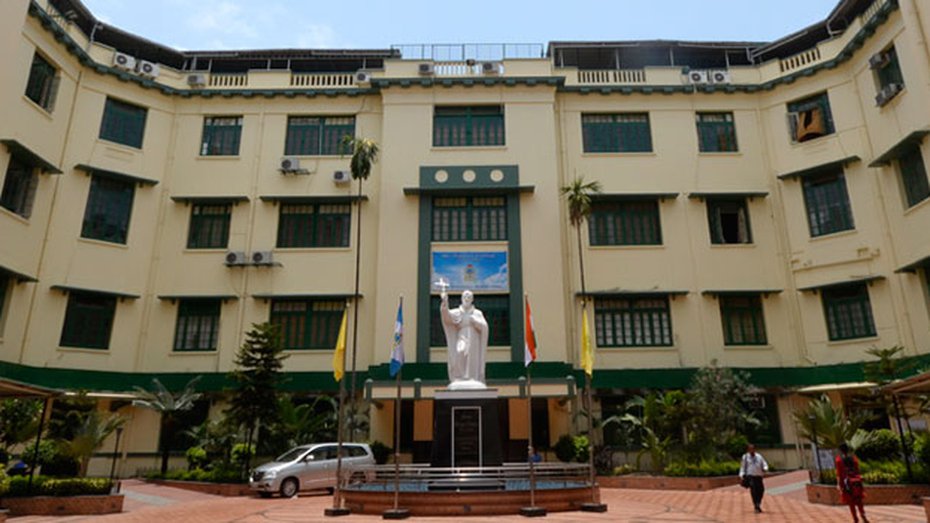
At St Xavier’s College, every student is a NSS volunteer and the social outreach activity is mandatory for all students

“At least six of the 23 teams spoke on the need for mental wellness and the role students of St Xavier’s could play in helping those suffering from low mental well-being,” Sheryl Francis, the director of NSS and the college’s social work department.https://www.sxccal.edu

St Xavier’s College students on Tuesday marked 50 years of the institute’s National Service Scheme (NSS) by pledging to reach out to poor students and ensure their mental wellness and fight plastic pollution.

At least 230 students, divided into 23 teams, discussed education, health, environment and the need for mental wellness of young students.

At the end of the sessions, the teams concluded mental wellness and plastic pollution were two major problems and their “active participation” was needed to resolve them.

The NSS — sponsored by the youth affairs and sports ministry — was started at St Xavier’s on September 24, 1969, the day it was launched in the country for college and university students.

At St Xavier’s College, every student is a NSS volunteer and the social outreach activity is mandatory for all students. “The primary objective of the event was to encourage students to work together for social causes,” Father Dominic Savio, principal, said.

A seminar on “Social Responsibility of College Students — Its Need and Relevance Today” was held on the campus to mark the occasion. NSS volunteers of the college regularly visit 12 villages of South 24-Parganas where they are involved in welfare activities for poor students.

“At least six of the 23 teams spoke on the need for mental wellness and the role students of St Xavier’s could play in helping those suffering from low mental well-being,” Sheryl Francis, the director of NSS and the college’s social work department, said.

The teams had been asked to come up with suggestions on how the problems could be resolved. A team suggested that the process start on the campus. The experience could be used to help poor students.

For example, someone in a class may be going through a crisis at home. “There could be someone showing signs of low mental well-being. He/she may be silent…. We can start an exercise to identify our friends who show such signs. We can provide them with a platform to address their problems,” according to a suggestion from one of the teams.

Arranging regular adda where students get to share their day’s happy and sad moments was another suggestion. The same process could be followed to help poor students outside the campus.

Almost all the students said they were “concerned” about plastic pollution. The students decided to ban the use of plastic on the campus.

source: http://www.telegraphindia.com / The Telegraph, online edition / Home> West Bengal / by Mita Mukherjee in Calcutta / September 27th, 2019

Time stops at Trincas, as it celebrates its 60th birthday this weekend

“It was a magical time: gentlemen in suits and ties and ladies in evening gowns, all decked up to eat, drink, dance and sing-along. In the 1970s and ‘80s, Trincas was dominated by the Anglo-Indians. It definitely is Calcutta’s most nostalgic location.”

Usha Uthup has more reason than most to be nostalgic about the iconic restaurant and performance venue — her maiden performance at Trincas was what made her the darling of the city, and eventually the country.

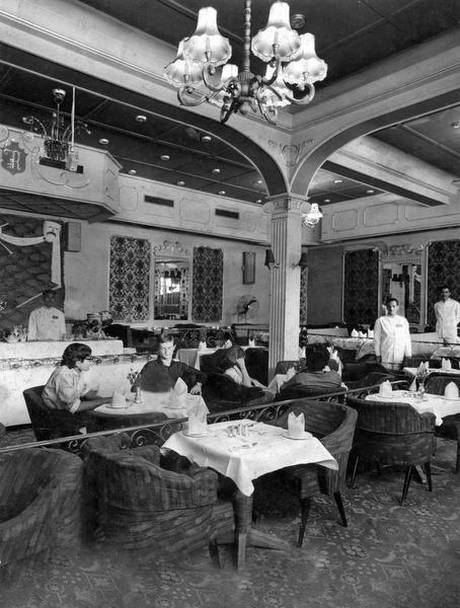
Trincas, one of Kolkata’s most iconic venues for a family evening out, is celebrating its 60th birthday this weekend. It was established by a Swiss man, remembered today only as Mr. Trinca, back in the 1930s as a bakery and tea house, but was taken over by Ellias Joshua and Om Prakash Puri in 1959, then shutdown for extensive renovations before reopening in 1961. Famous for live music performances, fresh food and a wide range of drinks at the bar, it became Park Street’s main attraction.

Celebrating music

The Puris eventually innovated again, sectioning off a third of the floorspace to make a quiet area and pioneering Szechuan cuisine in the city in the newly christened ‘Ming Room’. But what Trincas has been known for most, are its legendary live music performances. Carlton Kitto, an Anglo-Indian jazz guitarist, was followed quickly by Usha Uthup, whose maiden performance at Trincas was in 1969. Returning to headline the Diamond Jubilee celebrations over three days, October 27, 28 and 29, Uthup recalls her four decades at Trincas — “The people and their dress have changed, Trincas has not. It’s the same great music, good food and drinks and people enjoying themselves”.

Uthup found her way to Trincas after she began her career in the erstwhile Bombay at the Talk of the Town bar, now known as Not Just Jazz By The Bay. Her father was Vaidyanath Someshwar Sami Iyer, so returning to Madras’ Mount Road to perform in the basement of what used to be the Safire theatre complex in a club called Nine Gems, was homecoming for her.

Cornel Bloud, the lead guitarist and occasional singer who has been gracing Trincas’ stage just about every night for the last 25 years, also has fond memories. “The crowd has changed a lot, we don’t see many older people like we used to, now it’s mainly younger people coming to relax with their friends, but they all come to enjoy themselves. Trincas is a brand: time will pass but people know to come here for a good evening out with their families.”

Today’s customers are far more relaxed, jeans and T-shirts have replaced suits and dresses, save for the handful who have been stalwarts for decades. Office goers throng the restaurant on weekdays, while those seeking an alternative to the thumping bars and nightclubs of the city come to Trincas to listen to the Eagles and other classics that walk them through the 1960s, ’70s and ’80s. Weekends see the wooden dance floor in front of the stage cleared for those who can jive, twist and waltz — often gracefully, sometimes not so. Sing-alongs are also popular, with the band and lead singers frequently taking song requests scribbled on napkins.

Om Prakash Puri’s grandson Anand, having spent decades running similar establishments in Mumbai and Delhi, has now returned to the family business with a keen eye on keeping pace with changing customers. Tall with a managerial presence, Anand sits across the table from me narrating his plans for the coming decades. He coordinates the waiters with an easy flick of the wrist or tap of a finger. “I’ve seen Cal change. It’s not the sleepy town it used to be, so many venues for live music, ranging from rock to indie, have popped up everywhere. I see writers, poets, musicians all over the city. I need to let them know Trincas is for them too, while not altering where Trincas has come from.”

Anand’s calm exterior hides myriad plans milling about on a war footing below the surface. He is setting about replacing the flowery curtains with the old, blood-red velvet drapes, tied back with old-fashioned thick ropes. Old pictures telling the story of the restaurant are going up, as are small red table lamps. His eyes dart around his family’s pride — “See the wall here?” — he points at a creamy space between speakers behind him.

“I’ve dug up some old photos for it. And there used to be a mirror here, I am going to get that back up, too.” The back of the stage has also gone back in time. “Do you remember the mirrors?” he asks me, and I nod. “Well, they too have gone. The old photos showed a red velvet sofa-backing type of backdrop, so I copied that and this is what we now have.”

While other live music bars and restaurants try their level best to keep up with rapidly changing times, Anand strikes a fine balance between taking Trincas even further back in time, and looking forward. As Trincas celebrates 60, a new generation of Puris are looking at 100.

source: http://www.thehindu.com / The Hindu / Home> Life & Style / by Anthony Khatchaturian / September 25th, 2019

Mini Europe by the Hooghly

Kolkata’s splendid history holds impressions of waves of European cultures

Kolkata :

Across the River Hooghly – a tributary of the River Ganges – one can still see signs of various European countries that had created their own unique areas, to facilitate trade through Calcutta’s Port. For those not too familiar with Bengal’s early history, a visit to the area is a real treat as one can see signs of the settlements of various European countries, along the banks of the Hooghly River.

The countries that settled here, creating their own spaces were Denmark, France, Holland and Portugal. As one drives along the riverside road, it is fascinating to see the structures that have survived over the years. The area occupied by the European settlement is the present Hooghly District. Fortunately, these countries have begun to appreciate the historical value of these old ruins. Denmark has recently restored a Tavern at Serampore and tourists now have a splendid place for a meal.

It was almost a century after the Portuguese adventurer Vasco da Gama landed on the western coast of India in 1498, that other European countries realised that they were losing out on trade with India. Soon the European settlements began inroads into Bengal, with the Hooghly being their main source of navigation. The first to create a settlement were the Portuguese who settled down at Bandel, long before the British made Calcutta their stronghold. They were soon followed by the Dutch in Chinsurah, the Danish in Serampore and the French in Chandannagar.

Across the River Hooghly – a tributary of the River Ganges (Photo: By Shona Adhikari) Image Credit: IANS

The Portuguese also built the first Christian church in Bengal in 1599.

In 1632, Mughal Emperor Shah Jahan attacked the Portuguese settlement and demolished their small fort and their church. The head of the Church, Father Joan De Cruz, was taken prisoner to Agra, where he was thrown in front of a ferocious elephant, who instead of trampling the priest, lifted him up and seated him on his back. Shah Jahan was so impressed that he freed the priest and provided free land for a new church.

Interestingly, such miraculous episodes continued. During another siege, Taigo, a local Christian, in a desperate bid to save the statue of Mary, dived into the Hooghly with it and was never seen again. However, on the day of the inauguration of the church, it was found on the river bank. Re-established, the statue came to be known as “Our Lady of the Happy Voyage”.

There is also a splendid Imambara worth seeing in Bandel. Designed by architect Keramtulla Khan, the two-storied building is centred round a rectangular courtyard, decorated with fountains and pools and has a sundial that is a great attraction. The structure has two 85-feet high towers with 152 stairs in each – one for men and the other for women. Built in the memory of the philanthropist Hazi Muhammad Mohsin, the structure took 20 years to build. The three-storied structure connecting the towers contains a clock at the top story. The lower rooms are said to contain splendid chandeliers, but are unfortunately out of bounds to the public.

The Dutch settlement ended in 1825, the Dutch fort of Gustava was demolished by the British and very little remains of the Dutch rule in Chinsura. The Dutch church was demolished in the 1980s, but the Dutch cemetery still stands containing an assortment of graves under the shade of ancient trees, with the oldest dating back to 1743.

It was after receiving Mughal Subedar Ibrahim Khan’s permission in 1673, that the French colony Chandannagar was established as a trading post on the right bank of the Hooghly River. Bengal was then a province of the Mughal Empire. The colony became a permanent French settlement in 1688 and in 1730, when Joseph Francis Dupleix was appointed governor of the city, its development included 2,000 new houses and a considerable amount of trade and commerce. For a short while, Chandannagar also became the main centre for European trade in Bengal.

Today, Chandannagar still boasts considerable French heritage.

The Strand is considered the most beautiful stretch of the Hooghly River. The tree-shaded promenade along the river is about 1km in length and 7 meters in width, and the area houses a number of French mansions. The Durgacharan Rakshit Ghat on the Strand is also an interesting mix of Indo- French architecture.

Also on the Strand is the Dupleix Palace Museum – one of the oldest museums of the region housing French antiques and period furniture. Just off the Strand is the Sacred Heart Church, dating back to 1884. It was designed by French architect Jacques Duchatz and has beautiful stained glass windows. A French colony till 1950, French is still taught as a third language in many of Chandannagore’s schools.

To make you aware that you are in French surroundings, there is the Chandannagar Gate constructed in 1937 to mark the Fall of the Bastille. Etched on stone is the slogan ‘Liberte, egalite, fraternite’ (Liberty Equality and Fraternity).

Serampore , the Danish Settlement, remained under Danish rule till 1845, after which the Danish Governor decided to sell it to the British East India Company. The Serampore college, remains well maintained with its grand facade. Danish missionary Carey along with Ward and Marshman, began the Serampore Mission Press and published the first Bengali translation of the Bible. They also launched the “Friends of India” newspaper. Another outstanding contribution was the installation of India’s first paper mill at Battala, set up by Marshman, which was powered by a steam engine.

The Baptist Mission Cemetery in Serampore contains the family graves of Carey, Ward and Marshman – three personalities whose immense contribution to literacy, cannot be disregarded. Between 1801 and 1832, the Serampore Mission Press printed 212,000 copies of books in 40 different languages.

IANS

source: http://www.gulfnews.com / Gulf News / Home> Asia> India / by Shona Adhikari / September 13th, 2019

Kolkata to get world’s first museum on Chaitanya Mahaprabhu

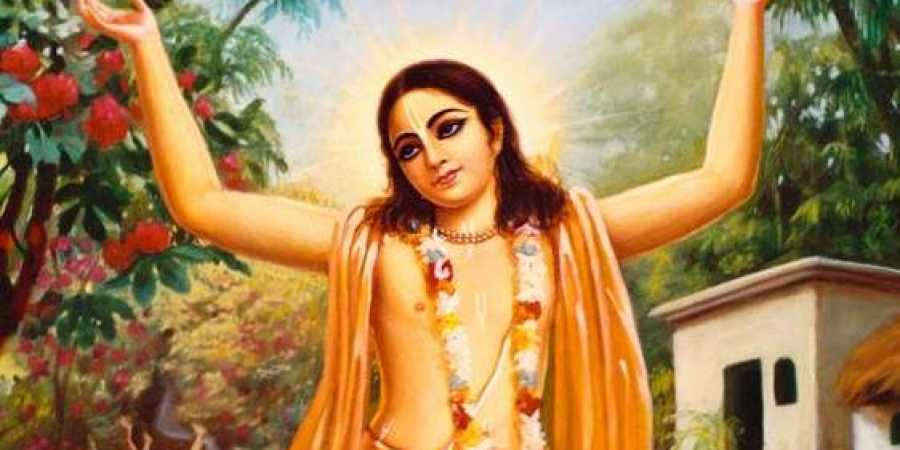
The Gaudiya Mission, a spiritual and philanthropic organisation established in 1935, propagates the teachings of Sri Chaitanya and the Vaishnava faith.

Sri Chaitanya Mahaprabhu

Kolkata :

The world’s first museum dedicated to the life and teachings of 16th-century saint and social reformer, Chaitanya Mahaprabhu is ready to be inaugurated at the city’s Baghbazar Gaudiya Math on August 13, an official said.

Chief Minister Mamata Banerjee will inaugurate the technically-enabled ‘Sri Chaitanya Mahaprabhu Museum’ built to preserve information related to the great saint. “The museum is the dream project of Gaudiya Mission which will be a reality after it’s inauguration on August 13. Amidst the prevalent cruelty, clashes or say intolerant situations in our society, we wish to showcase Mahaprabhu’s teachings and vision and serve the society,” Bhakti Nishtha Madhusudan Maharaj, the mission’s assistant secretary and museum in-charge told IANS.

The Gaudiya Mission, a spiritual and philanthropic organisation established in 1935, propagates the teachings of Sri Chaitanya and the Vaishnava faith. It has many centres in India and temples in London and New York.

He said that they aimed at spreading the message across society and not just keep it restricted to the devotees. They want researchers, intellectual and scholars to avail of the library facilities and experience a detailed life of Mahaprabhu by visiting the museum.

The museum is a three-storey structure built on an area of approximately 1,350 square metres and includes galleries, public utility areas and a library. Each floor is dedicated to different phases of the saint’s life starting from his birth, his marriage with Vishupria, journey throughout the country up to the period after he attained ‘Sanyasa’ (sainthood).

Life-size models, 3D films, audio tracks and animatronics will ensure maximum engagement of the visitors. The museum has been designed by the National Council of Science Museums (NCSM). “While the museum seeks to play a key role in creating awareness among the present generations, its primary objective is to preserve all the evidence of Vaishnava heritage, living traditions as well as the intangible heritage which are disappearing very fast,” the official page of the museum said.

A rich collection of resources such as the saint’s memorabilia, artefacts, manuscripts, rare books, pictures and other valuable exhibits are on display. People can even get a glimpse of hsi original hand-writing. Also, there is an auditorium, archive, meditation room, Library, space theatre and a canteen.

Multimedia display, light and sound illustrations have been used for an immersive experience. There is Virtual Reality to depict the ‘Nagar Samkirtan’ (religious chant) where visitors will feel that they are participating in ‘Kirtan’ along with Mahaprabhu. The budget of the state-of-the-art museum is somewhere around Rs 12-14 crore, a mission official said.

While laying the foundation stone in 2013, the then president of the Mission Bhakti Surhid Prabrajika Goswami Maharaj had said that it was the world’s first museum on the saint with modern communication methods which will collect, preserve and disseminate archival literature of the Sri Chaitanya cult.

source: http://www.newindianexpress.com / The New Indian Express / Home> Cities> Kolkata / by IANS / August 08th, 2019

Chandrima Shaha, first woman set to head science academy, was also a cricketer, commentator

Chandrima Shaha, the president-elect of the Indian National Science Academy, says she will take initiatives to combat pseudoscience.

Chandrima Shaha | @PrinSciAdvGoI | Twitter

New Delhi: 

As a young scientist, Chandrima Shaha often “felt invisible” when she sat among her male colleagues. Only a few acknowledged her presence. But little did it deter this feisty woman from fighting her way through gender biases and achieve heights that only some dare to reach.

From being a vice-captain of West Bengal’s first women’s cricket team to becoming the first woman cricket commentator for All India Radio, Shaha has added another first to her illustrious career. The president-elect of the Indian National Science Academy (INSA) will be the first woman to hold the post. Her appointment was announced last week.

“Women have to first believe in themselves in order to take over leadership positions. I have been elected by a council consisting of mostly male members,” Shaha tells ThePrint.

With a scientific career spanning more than three decades, Shaha, 66, now looks forward to becoming the face of Indian science.

Along with the newly-elected council of 30 other members, Shaha will assume her new office from 1 January, 2020. During her stint at the INSA, she wants to encourage collaborations between scientists of different fields so that problems can be solved using a multi-disciplinary approach.

To get people more interested in science, Shaha wants to increase the outreach of scientific communities. She pointed out how various government initiatives have given a push towards innovations but the learning system is not designed to encourage research.

Also on her agenda is a push to combating pseudoscience.

Love for adventure

Born on 14 October, 1952 to a photographer father and an artist mother, Shaha credits her parents for inculcating in her a scientific temperament and “streak for adventure” from a very young age.

Her father, Shambhu Shaha, was especially known for the photographs he took of Rabindranath Tagore in the last years of the Nobel laureate’s life.

“My father could not pursue a career in science but he always wanted me to do it. He would bring books from the British Council office and also talk to me about the universe,” Shaha recalls.

She fondly remembers her father gifting her a simple telescope one day. “I kept looking at the stars. At times, I felt very strange thinking how vast the universe was. I thought I was going to be an astronomer,” says Shaha.

But it was an antique microscope that eventually helped Shaha find her calling. She used to collect water from different sources near her house and observed these samples under the microscope. “That really made me transform into a biologist,” she says.

“My mother, Karuna Shaha, was a painter and probably a feminist even before the concept was even born,” Shaha adds.

Karuna was one of the first women students at the Government College of Art and Crafts in Calcutta and also among the first women artists who insisted on claiming professional space in their own right.

Karuna’s biography In Her Own Right: Remembering the Artist Karuna Shaha, written by Tapati Guha-Thakurta, says the artist is best known for her studies of the female nude. For Karuna, it became the prime symbol of artistic freedom and a shedding of inhibitions.

“My mother went to jail during for pulling down the British flag. She was very adventurous. I probably got this zeal for adventure from her,” said Shaha.

To understand cells

Shaha graduated with a Master’s degree from the University of Calcutta and completed her doctoral research in 1980 from the Indian Institute of Chemical Biology.

For her post doctoral work, she went to the University of Kansas Medical Centre (1980-1982). From 1983-1984, she was at the Population Council, New York City. Shaha joined the National Institute of Immunology in New Delhi in 1984 as a scientist.

The main focus of Shaha’s research is understanding the mechanisms that cause cell death. “Cell death is something very fundamental to our bodies. If you can identify the mechanism behind cell death you can also develop drugs to counter various diseases. Cell death pathways have been used very successfully to make cancer drugs,” she explains.

Shaha has extensively worked with ‘Leishmania’ parasite — which causes Kala Azar — and has authored over 80 research papers.

“The excitement of looking at the core of your life — cell — was clearly something that inspired me. I used to sit with the microscope for hours, staring at cells. It was that sheer excitement of looking at life that inspired me,” she says.

Passion for photography

Growing up, Shaha did not let any stereotypical expectations stop her from reaching places she always wanted to go. During her time at the Calcutta University, Bengal was in the middle of the historic Naxal movement. The unrest in the early 1970s meant colleges were frequently closed. It took two extra years for her to complete her under-graduation.

“I got interested in photography because of my father. I took the camera and went to different kinds of places where women wouldn’t usually go. I just hopped on to buses and went to different villages to photograph,” she said.

Shaha had also been the vice-captain of West Bengal’s first women’s cricket team for three years.

Fight against gender bias

“Initially, when we started our careers, nobody would shake hands with women scientists,” Shaha recalls, adding they would be completely “ignored” by her male colleagues.

Even scientists married to career women would greet everyone else but not their female colleagues, she says.

Shaha, however, never thought of giving up her career. “I was internally driven. I knew this (gender bias) wouldn’t stop anywhere. I always thought that I have to keep going forward. I am doing that even now.”

She, however, thinks “attitudes” are changing and the society is on a “self correcting mode”. “I think diversity in science is very important — both men and women need to participate in research. Women, by nature, are more sincere and particular about things. They must participate in a larger way towards the country’s scientific endeavour.”

Plans for INSA

Shaha believes the country’s scientific community is extremely talented. Given the limited amount of funding that is available, Indian researchers have made remarkable achievements, she says.

She also thinks scientists need to reach out to the people in local languages for better understanding of issues.

When Shaha became the director of the National Institute of Immunology (NII) in 2012, she initiated a programme called ‘Science Setu’, as part of which scientists would go and teach undergraduates. The students were also invited to visit the NII laboratories.

As the president-elect of INSA, Shaha now hopes to take similar initiatives at a much larger scale to effectively combat pseudoscience.

“What needs to be inculcated in schools and among public too is the fact that while ancient texts can tell us about cures to various things, in science — where things have to be proven via experiments — we have to provide evidence,” she says.

source: http://www.theprint.in / The Print / Home> Science / by Mohana Basu / August 10th, 2019