Vibrant Rock offers a rare peek into stone sculptures in Bengal

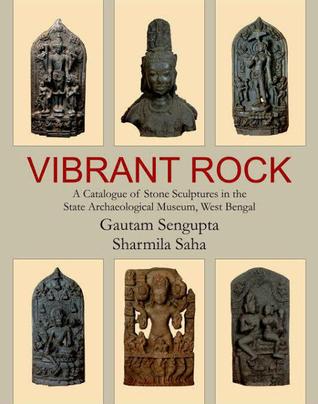
The first-ever catalogue of stone sculptures collected from different parts of West Bengal, Bihar, and parts of Bangladesh belonging to Brahmanical, Buddhist, and Jain pantheon has been published by Directorate of Archaeology and Museum, Department of Information and Cultural Affairs, Government of West Bengal.

VibrantRockBENGAL20jul2014

Archaeologists say the first-ever catalogue of historical stone sculptures in the region titled Vibrant Rock contains a comprehensive details of 444 stone sculptures housed in the State Archaeological Museum at Behala in the southern parts of the city, dated between the sixth and 19th century AD.

Most of the stone sculptures belong to Pala-Sena period. However, the unique piece highlighted in this catalogue is a sculpture dating to the 19th century: the specimen is a stone plaque depicting in six different panels the story of birth of Lord Krishna. In each of the panels, there are depictions of the parturition rooms (labour room) in the palaces of Kansa and Nanda. The plaque is accompanied with an inscription in Sanskrit.

Another talked about is the image of Surya, discovered from Mahisantosh in Naogaon district of Bangladesh. The exquisitely sculpted piece of the ninth century is from the time of Pala King Mahendrapala.

“Through Vibrant Rock we have tried to introduce a major collection of sculptures of the region in form of a catalogue. The book offers not only iconography and stylistic affiliation of the sculptures but also an array of information about find spots, modes of acquisition, rock type, and inscriptional detail,” Guatam Sengupta, former director general of Archaeological Survey of India (ASI) and author of the book, said.

The book also deals with a wide range of rocks used in making these historical sculptures such as coarse-grained granite gneiss, ultramafic rock, ballast, chlorite schist, mica, and sandstone.

Sharmila Saha, the co-author of the book, said that an analysis of the sculptures provided in the book will prove useful to identify the influence of regional schools of aesthetics on the broad South Asian Art.

“Not only academicians like archaeologists and historians but laymen interested in ancient Indian heritage are laying their hands on the books,” Rajat Sanyal, an archaeologist of University of Calcutta, said.

source: http://www.thehindu.com / The Hindu / Home> News> Cities> Kolkata / by Shiv Sahay Singh / Kolkata – July 20th, 2014

Jadavpur University ties up with Intach over Writers’ restoration

Kolkata :

Jadavpur University has approached the Indian National Trust for Art and Cultural Heritage for expert guidance in the mammoth restoration project that it has undertaken over Writers’ Buildings – the 236 year old seat of the state secretariat. At the moment JU architects are conducting a detailed survey on the condition of the building, preparing a layout of how the restoration process would progress and interiors would be re-organized once the work is over.

Objections were reportedly raised by the West Bengal Heritage Commission over the state PWD department’s decision to hand over the responsibility of restoration to JU and IIEST (formerly Besu) jointly. The Commission felt that a building of the rare stature of Writers’ Buildings should be handled by an agency whose expertise lies in restoring heritage institutions. The Commission felt that the architecture departments of neither JU nor IIEST had the required experience. However, belying such doubts the state PWD has gone ahead with its decision and has not interrupted the ongoing survey work that is being conducted by JU at the premises.

Intach has not only been formally invited by JU, talks have also happened between the national level heritage conservation agency and the PWD authorities over ways in which Intach would bring in its expertise in overseeing the project right from the drawing and testing stage now and also later during the execution. Most departments of the state government shifted out of Writers’ Buildings last October with the state secretariat shifted to Nabanna, so that the heritage building at Dalhousie can be restored. However, execution is yet to happen and the delay has raised several eyebrows.

“We must remember that Writer’s is no ordinary building and execution of the plan cannot happen immediately. We are conducting a series of tests on the structural status of the different portions of the building and the strength of its foundation. Once execution starts cracks should not develop in the portions that are relatively weak. Again, the building as we see it today, was not built all together; portions were added with time. Naturally the health of the building will also be somewhat heterogeneous,” said Madhumita Roy, head of JU’s architecture department, who is leading the project. She feels that the project report on how execution should be ready for submission to the state government by November. Once the state government approves it, execution should start immediately.

Confirming that she has tagged Intach in the project, Roy said, “I have closely followed the work that Intach has done in restoring institutional heritage e.g. Gwalior Monument, Princep Ghat, St John’s Church and Lalgola correctional home. I think it will be able to guide us well both on the methodology and progress.”

Intach state convenor, GM Kapur said that the main problem with Writers’ restoration is lack of original drawings which could guide the restoration team. “I am sure that the original drawings would exist in what was then known as the India Office library, a part of the British Library. We will write to them to see if they exist and then organize for copies so that they can be consulted.”

PWD officials said that JU experts are conducting the survey and the condition of the building. “Suggestions are invited from any consultancy or architectural firms as to how the restoration work could take place. All the suggestions will be discussed with the heritage commission following which work order of the actual work will be issued,” said a PWD official. Earlier, the demolition work of the extended portions was supposed top start off from this month.

source: http://www.timesofindia.indiatimes.com / The Times of India / Home> City> Kolkata / by Jhimli Mukherjee Pandey, TNN / July 10th, 2014

Bengal to house hub for start-ups

StarupsKOLKATA19jul2014

Calcutta :

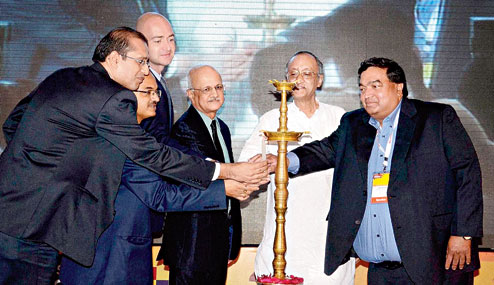
The Bengal government will allot 10,000 square feet of built-up space in Salt Lake’s Sector V to Nasscom for setting up its first incubation centre in the eastern region.

The announcement was made by state information technology minister Amit Mitra at the eastern edition of the Nasscom Product Conclave here today.

The prospective hub, which will be aimed at mentoring start-up companies and fuelling entrepreneurship for product development, is expected to take shape within 3-6 months. It will require a strong infrastructure back-up and is likely to draw venture capital funds, seed funds and top names of the industry as mentors into the state.

The development comes at a time Bengal is battling the scathing aftermath of Infosys’s decision to put their maiden campus project on hold here. Incidentally, software behemoth Microsoft India is in the final stages of setting up a research and innovation centre in Sector V to impart its expertise in IT skill training.

Nasscom already has such as facility in Karnataka, which is supported by the state government. It houses around 15 start-up companies. The proposed facility in Calcutta will have the requisite plug-and-play facilities. A board comprising Nasscom members and government representatives will initiate a selection process based on merit.

“As we move towards an era where the dividing line between products and services gets blurred, this is a particularly important area. This is a very different ecosystem from the traditional industry and need a different kind of support. At the heart lies the entrepreneur who is young, capable and talented but do not necessarily have deep pockets or experience of what is required to run a business,” Nasscom president R. Chandrashekhar said.

The turnover of the Indian IT industry is slated to grow to $300 billion by 2020 from about $118 billion now. Of this, as much as $100 billion is likely to come from the product start-up ecosystem. At present, the product sector is estimated at $2.2 billion.

“We are looking at entrepreneurial development. We accept the offer. We will give 10,000 square feet ready to start with. We are also building 13 IT parks. We would like to request Nasscom to help us bring IT companies into these IT parks. We want you to promote it for us,” Mitra said at the conclave.

source: http://www.telegraphindia.com / The Telegraph, Calcutta / Home> Front Page> Business> Story / by Staff Reporter / Calcutta, Saturday – July 19th, 2014

Case Diaries – The mysterious case of the three iron chests

SUDHITI NASKAR / AGENCY GENESIS

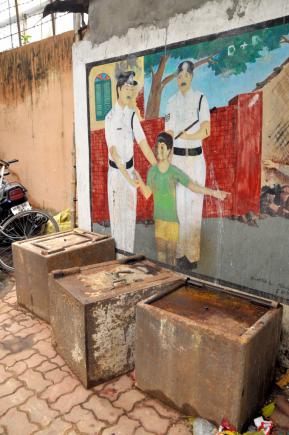
In 2007, three iron chests were dug up from 178 Rashbehari Avenue in Kolkata. They were kept at the Gariahat police station while their ownership was disputed.

On a sultry Monday afternoon in mid June this year, a group of about three hundred people—journalists, photographers and locals—crowded around the police station in Gariahat, in south Kolkata.

When Umesh, the istriwala, who presses police uniforms in his small shanty adjacent to the thana, stepped out to get a better look at the scene, he saw that the top of the thana’s high boundary wall had been fitted with bamboo poles, between which was strung a cloth screen. He told me that a few intrepid journalists and locals had climbed up on nearby trees to see what was going on inside, while others peeked through a side gate.

The focus of everyone’s interest was three iron chests that were inside the compound. The chests had been unearthed a few years earlier from a plot on Rashbehari Avenue that was being excavated for construction. Since then, speculation had grown about their contents, whetted, perhaps, by recent treasure hunts—both successful, such as at the Sree Padmanabhaswamy temple in Kerala in 2011, and comically unsuccessful, such as at Unnao, Uttar Pradesh, last year, launched on the promise of a godman’s dream. True, the Rashbehari chests were old and rusty, but who could say what they might contain? Murmurs of gold and hidden treasure filled the air, drawing more people to the scene. Officers from the Archeological Survey of India and Geological Survey of India supervised the opening of the chests, along with about fifty policemen.

The scene had been equally chaotic on 24 June 2007, the day the three chests were found. Constable Sudip Nayek recounted to me that he had been on patrol that morning, when he came upon construction workers unearthing a chest from plot 178 on Rashbehari Avenue. Nayek promptly informed his superiors at the station, and the police came out to the site. As a crowd gathered, police cordoned off the area. Over the course of the day, two more chests—each chest weighed around 100 kilograms—were dug up and lifted out with a crane.

The Indian Treasure Trove Act, 1878 defines treasure as “anything of any value hidden in the soil, or in anything affixed thereto,” and directs any such treasure worth more than Rs 10 to be handed over to the government. Thus, the chests became government property. Nevertheless, there were claimants to the chests, though their contents were unknown. Mahamaya Pal, a homemaker in her sixties, had recently sold the Rashbehari plot to a Kolkata-based shoe company called Sreeleathers, which had been excavating it. Both Sreeleathers and Mahamaya Pal staked their claim on the chests and were soon embroiled in a legal battle at the Alipore Civil Court.

After a long but inconclusive case that lasted for seven years, in December 2013, the court ordered that the chests be cut open. There was speculation that there would be riches hidden within them, and even archaeologists were hopeful. “I am excited,” said Ashok Patel, superintending archaeologist, ASI, to the Indian Express. “The chests may have anything. I am sending some experts there.”

I met Mahamaya Pal at the Kalighat temple—a place she called her “own”—on a rain-soaked afternoon in late June. The chests had been opened earlier that month, but Pal still spoke of feeling a spiritual connection to them.

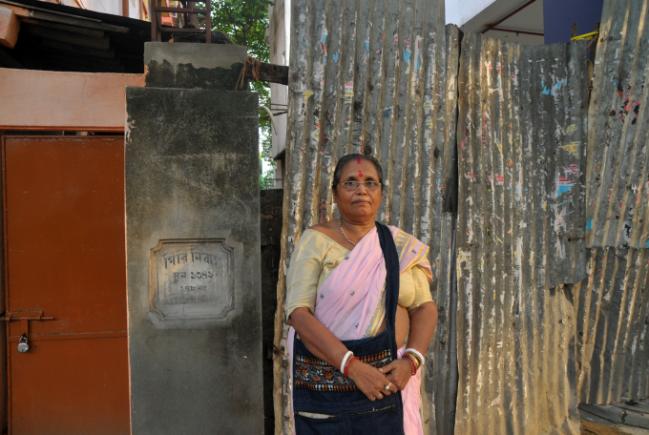
Mahamaya Pal, the former owner of 178 Rashbehari Avenue, who sold the plot to Sreeleathers, the company that discovered the chests.  / Sudhiti Naskar / Agency Genesis
Mahamaya Pal, the former owner of 178 Rashbehari Avenue, who sold the plot to Sreeleathers, the company that discovered the chests. / Sudhiti Naskar / Agency Genesis

“Nothing but the truth can be spoken in the temple,” she insisted. Her eyes glazed over as she described how, as a child, she had been told stories about Kali and other Hindu deities by her grandmother. Now she believed that the chests had been kept for her by the dark goddess herself. She said that after they were discovered, she had started getting “messages” from “another world” telling her that the treasure belonged to her. “This is all secret knowledge,” she whispered, her face twitching. “This is a mystery of the secret chests that belong to Ma Kali.” Her faith in this belief had been fanned by the astrologers and tantriks she has been frequenting for a few years. She told me that she had spent over one lakh rupees on the ownership case with Sreeleathers, a sixteenth of the sum she got from selling her plot.

Pal’s long wait had come to an end on 16 June, about seven years since the chests were found. That morning, she said a prayer at home, applied a tilak of sandalwood paste on her forehead for luck and went to the police station with her family and lawyer. She waited expectantly, watching the shower of sparks fly from the cutters as the fire brigade personnel laboured at the chests.

Both Pal and Sub-inspector Bireswar Roy, the officer in charge of the case, gave me a recap of the events of that morning. It took two hours for the first chest to be cut open. A diamond cutter was used instead of a gas cutter to protect the “precious” content from damage. But the eager crowd were in for a sore disappointment. Roy told me that the chests only contained a few handfuls of latch needles (used in knitting machines) in polythene bags; a letterhead, dated 1975, of a local business, the Sri Ramkrishna Hosiery Factory; a desktop calendar; four Rs 5 notes with Hindi writing on them; and a lone one paisa coin dated to 1953. One chest was completely empty. “What a waste of time!” a photographer said as he walked away from the scene.

Some bravely maintained that the exercise hadn’t been a waste of time—The Hindu quoted an unnamed ASI official saying, “These needles were made in the 1970s. From them we will come to know how the textile industry functioned during that time. They may have some historic value.”

Roy believes that the location of the chests justified the excitement surrounding them. The plot was close to a Kali temple said to have belonged to “Roghu Dakat”—a famous dacoit—and around which there were rumours of human sacrifice and buried treasure. “There was a possibility that these chests contained jewellery or gold hoarded by the dacoit,” said Roy.

Though the contents of the chest were of little value, Roy still believes something about the situation doesn’t add up. After the outer iron casing of the chests was cut open, he said, the firemen found a layer of fire resistant clay. Within this was another iron casing that had to be cut through before the contents could be reached. “Why would someone put nothing of value inside those chests but take such great care to seal them impeccably?” Roy said.

Pal is equally mystified. “We never had any connection with a clothes business,” she said. “And none of my family members ever dealt with Ramakrishna Hosiery.” She was born in that same house on 178 Rashbehari Avenue to a family of traders and grocers, she said, and has been living there all her life. “The house is eighty years old,” she said. “It was built in 1935. How is a bill from 1975 buried in a chest underneath it without any of us knowing about it?”

source: http://www.caravanmagazine.com / The Caravan Magazine / Vantage> Web exclusives for the Caravan / Home> Case Diaries / by Sudhiti Naskar / July 17th, 2014
______________________________________________________________________
Sudhiti Naskar is a freelance journalist based in Kolkata. She likes to document people’s lives in moments of flux. She is regularly published in international magazines. She is currently represented by Agency Genesis.

University of Calcutta to confer a posthumous doctorate on Lithuanian traveller anthropologist Antanas Poska

Vilnius (Lithuania):

In a rare honour, the University of Calcutta has decided to confer a posthumous doctorate on one of the world’s greatest explorers – Lithuanian traveller anthropologist AntanasPoska.

In an exclusive interview to TOI, Lithuanian foreign minister Linas Linkevicius said that Poska – the man who undertook an incredible journey to India on a motor bike all the way from Vilnius in 1929 will be conferred the doctorate during the University’s next convocation ceremony around September.

Confirming this to TOI from Kolkata, the University vice chancellor Suranjan Das said Poska “symbolised an eastern European’s inquisitiveness about India” and was being conferred the doctorate “for his contribution in making India known to the outside world through his extensive writings”.

Das told TOI “Poska’s feat is unparalleled when it comes to popularising India in Europe. Poska also studied in the University of Calcutta. Developing a close relationship with Lithuania is a priority for the new Indian government and conferring the doctorate will help seal the friendship”.

Das said “We have formally confirmed the University’s plans to confer the doctorate on Poska. However, it has to be given by the governor of West Bengal who presides over our convocation. Since the earlier governor resigned recently and we are waiting for the chair to be filled, the date of the convocation is yet to be finalised. It could take place around September-October”.

Lithuania’s ambassador to India Laimonas Talat Kelpsa has plans to bring Poska’s daughter Laimute Kiseliene to Kolkata to receive the doctorate.

It was TOI who had unveiled the extraordinary tale of Poska and a never before known facet of his work – the first ever translations of Rabindranath Tagore’s works into the Lithuanian language.

TOI had dug out Laimute who is now professor of choreography and dance methodology at Lithuanian University of Education. She for the first time ever unveiled to TOI a set of three binded books with “Tagore” written on them and a small palm sized journal made from birch tree barks.

She had received it from a frail old woman who had showed up at her door one day with these manuscripts.

The handwriting on them was familiar – it was that of her father who had written them during his exile.

Post 1929, when Poska returned to Lithuania from an eight year long journey across the world, the Soviet government packed him off on an 18-year-long exile to Siberia “without any formal reason”.

The frail lady then told Laimute that her father had returned from India as one of the biggest admirers of Rabindranath Tagore.

He then translated some of the poet’s works into Lithuanian – the first ever for any Indian literature to be done in that country.

Lack of paper during the exile forced him to use birch tree barks to write on. He also wrote poetry during his exiled years, copying Tagore’s style.

He had then given the documents to the lady in confidence who then worked in a Soviet controlled publishing house.

He wanted them published but the government destroyed most of his works.

Poska also gave her a note that read “These translations are a small bit of light for all those in despair”.

The lady instantly realised that they were “great cultural heritage” and hence hid them from the Soviets.

After knowing Poska is now survived by a daughter, the old lady had landed up at Laimute’s door many years later to hand over the manuscripts.

In an exclusive interview to TOI, Laimute had said “I was amazed when I received these manuscripts. He was a great fan of India and I grew up listening to stories of Tagore and Gandhi. My father never told anyone about these translations. Tagore’s works made a great impact on my father and hence took great pains to translate them thinking it would help those under Soviet oppression to see hope. These are real treasures of cultural heritage”.

“I would gladly give them to any publisher who would publish the translations now. There is nobody in Lithuania to validate the translation,” Laimute who has never shown these manuscripts to anyone before, said.

She added “The dream of his life was to translate the Vedas to Lithuanian”.

One of the translated works “dated 1932 at Shantiniketan” that TOI saw read in the introduction “While being a guest of a great Indian poet. With his personal help, I have prepared a small present for Lithuanians. This is a pearl of Tagore’s work called Fruit Gathering”.

Laimute revealed that Poska and Tagore met twice during his stay in Kolkata.

Laimute said “While in Shantiniketan, he waited for three days to meet Tagore. My father later revealed that the first meeting between him and Tagore wasn’t warm. Only when Tagore learnt of his interest in India, his travels, he became interested in Poska. Poska had expressed interest to Tagore of translating his works – an offer Tagore didn’t like. Tagore supposedly told him he looked down upon foreign translators who he felt ‘made it a business to make money from his works'”.

Poska in his journals also had nice things to say about the people of Bengal.

“During his next visit to Bengal. Poska found the people to be as warm, kind and creative as Tagore’s stories,” Laimute said.

Poska met Laimute’s mother Maria while on exile.

Laimute was born in Petro Pavlovsk in Kazakystan in 1950. She was nine years old when the family finally returned to Lithuania from their exile.

“Poska was never told why he was being exiled by the Soviets. So when he was ever asked the question, he would jokingly say it is because he stole Stalin’s pipe. One of Poska’s close friends and linguists from Bengal professor Suniti Kumar Chatterji gifted him a photo of Tagore which he always carried with him,” Laimute who took to being a professor of dance after hearing her father’s stories on Indian dances, said.

Poska and his co-traveller Matas Šalcius set out for an incredible journey to India on a motorbike in 1929. Their ways parted in Iran and each of them reached India separately in

1930. While Šalcius traversed India and continued his journey east up to the Philippines, Poska stayed on in India for five years, studying at Bombay University, later at Calcutta University and working at the Anthropology Laboratory of the Indian Museum in Kolkata.

He devoted these years to the study of commonalities between Lithuanian language and Sanskrit, Indian Vedas and Lithuanian folklore, making friends among Indian intelligentsia and expressing his passionate support for Indian independence.

He was a passionate advocate of the Esperanto language – international language of peace that was created by Ludwik Zamenhoff of Lithuanian Jewish origin in the end of the 19th Colonial India.

During the Soviet occupation, Poska was arrested for being well travelled and knowledgeable about the world beyond the Iron Wall.

He was first sentenced to hard labour in Siberian gulags, later transferred to Central Asia.

In Osh (Kyrgyzstan), he discovered and described an unknown Palaeolithic settlement and rare fossils.

Laimute finally revealed “Matas Salcius didn’t know how to ride a book. So it was father who drove all the way through so many years of travel”.

source: http://www.timesofindia.indiatimes.com / The Times of India / Home> City> Kolkata / by Kounteya Sinha, TNN / July 18th, 2014
Sunny days ahead for local shoe units

Kolkata :

Eid celebrations arrived early this year in the lanes and bylanes of Topsia, Talbagan, Rippon Street, Tantibagan and Batanagar with Arun Jaitley’s Budget raising hopes of more orders from local footwear firms, and hence, the prospect of more jobs.

In the Budget, excise duty on leather footwear priced between Rs 500 and Rs 1,000 has been slashed to 6% from 12%. This will essentially mean a Rs 30-60 reduction in price of a pair of shoes. While the price cut may appear meager, industry sources said it is crucial for survival as the local small-scale footwear industry had to compete with cheap imports from China.

“The Budget brought good news for small units that supply to individual stores like ours or bigger regional brands like Khadims or Sreeleathers. As sales increase, it will mean more orders for local makers and that in turn will generate more employment in a job-starved city,” said Park Cobbler proprietor Zafar Ahmed.

While stores have already stocked up for Eid-ul-Fitr shopping to be celebrated at the end of Roza, the concession extended by Jaitley will come in handy for the next season, particularly stocks that are placed before Durga Puja and Diwali.

Sreeleathers chairman SB Dey is certain the footwear market will expand following the duty cut. “We will now be able to do business on a level-playing field,” he said. Around 80% of footwear sold by Sreeleathers has a price tag of Rs 500-1,000.

According to CLC Tanners’ Association president Ramesh Juneja, the state will also benefit as footwear manufacturers increase production capacity to meet the demand. “The added incentive to manufacturing units with investment in excess of Rs 25 crore will spur the regional brands to expand capacity,” he remarked.

SS Kumar of College of Leather Technology said the incentive will particularly benefit the labour-intensive leather goods industry. “PVC goods are manufactured by machines but leather shoes have to be hand-made. So any incentive to the leather industry will mean more employment,” he said.

source: http://www.timesofindia.indiatimes.com / The Times of India / Home> City> Kolkata / TNN / July 11th, 2014

Turnaround in Jangalmahal region sets a unique example

Lauding the turnaround in Maoist-affected Jangalmahal region, Chief Minister Mamata Banerjee said on Monday that the region has turned out to be a ‘unique example before the world’. “In this Jangalmahal region, people were scared to come. They were scared of Maoists,” Ms. Banerjee said, addressing a public meeting at Salboni in Paschim Medinipur district.

Claiming that her government has taken up a lot of developmental activities in the region, she said that the work done here since independence is not ‘even part of what’ has been done by her government over the last three years. “I urge you to maintain peace. I will take care of everything else,” the Chief Minister assured the gathering.

Three districts of Paschim Medinipur, Bankura, and Purulia located in the south-west part of the State were the hotbed of Maoist activities between 2009 and 2011.

The Chief Minister said that the State government had plans to set up eight colleges in the region of which four were inaugurated during the day. She referred to the State government scheme of providing subsidised food grains to all the tribals in Jangalmahal.

“The State government has been ignored in the Railway Budget and the General Budget. We do not want anything from the Centre if they waive our loans,” the Chief Minister said, adding that if the Centre did not do so, the State government would organise a protest against the Centre. She, however, expressed hope that the new government would accept the State’s demands.

source: http://www.thehindu.com / The Hindu / Home> News> Cities> Kolkata / by Special Correspondent / Kolkata – July 15th, 2014

Clinic for arthritis patients

Kolkata :

Arthritis, traditionally believed to be the disease of the old, is striking the young at an alarming rate. Over 180 million patients in India are suffering from this disease that causes severe painful and restricts movement, severely affecting normal life.

According to recent trends, doctors have seen that with changing lifestyle, the severity of arthritis at young age, especially in women, is on the rise. Any patient showing the signs of varied levels of pain, swelling, joint stiffness, and a constant ache around the joint(s) or other symptoms like inability to use the hand or walk, weight loss, poor sleep and muscle aches and pains is recommended to visit an orthopaedic consultant.

With a large number of patients reporting symptoms of arthritis, the department of orthopaedics at Rabindranath Tagore International Institute of Cardiac Sciences has decided to conduct arthritis clinics periodically for people residing in and around Kolkata. The inaugural clinic will be held on Saturday, July 19, from 1pm onwards.

The clinic will offer free Bone Mineral Density (BMD) test screening along with consultation with a seasoned specialist Abhirup Maulik, consultant, rheumatologist, Rabindranath Tagore International Institute of Cardiac Sciences. The clinic will be functional on every second week of every month.

Commenting on the clinic, Maulik said, “Awareness about Arthritis is important as it can help one to act on time since early detection results in better treatment.” He further added,” Treatment options vary depending on the type of arthritis and include physical therapy, lifestyle changes (including exercise and weight control), orthopaedic bracing, and medications. Joint replacement surgery may be required in eroding forms of arthritis.”

source: http://www.timesofindia.indiatimes.com / The Times of India / Home> City> Kolkata / by Subhro Niyogi, TNN / July 16th, 2014

Times NIE awards for real achievers

Kolkata :

Children achieve more when they race, not with their peers but with themselves and stay ahead of their aspirations. Keeping this in mind, Times NIE has always opened a whole new world of knowledge for students, where learning is fun and education redefined. And the Time NIE Student of the Year Award 2014 will be held on Saturday to take this philosophy to the next level.

As many as 111 students from schools in and across the city will be felicitated with the Times NIE Student of the Year Award. This includes schools from Durgapur and Siliguri as well.

The awards are being presented jointly by The Times of India and JIS Group Educational Initiatives. It recognizes students whose achievements span academics, sports, conduct, leadership and service to their school and community.

Schools had been requested to nominate one student from Class XII based on criteria that included ‘Academic’ (achieved scholastically across a range of subjects), ‘Attitude’ (willing to help others; makes selfless contributions), ‘Personal Conduct’ (exemplary at all times), ‘Leadership’ (a role model for other students), ‘Service’ (participates fully in school and community activities) and ‘Sports’ (represents the school without necessarily being a champion).

The awards will be presented at a ceremony to be held at Town Hall on Saturday, 12 noon onwards.

A galaxy of personalities will be present to hand over the awards to the winners. Writer Nabaneeta Dev Sen, British Council director (east) Sujata Sen, actor Rituparna Sengupta, fashion designer Agnimitra Paul, painter Wasim Kapoor, percussionist Pandit Tanmoy Bose, cardiologist Kunal Sarkar and lawyer Tamal Mukherjee will hand over the awards.

source: http://www.timesofindia.indiatimes.com / The Times of India / Home> City> Kolkata / TNN / July 16th, 2014

Kolkata NCC gets 2000 people to pledge their eyes by November

Kolkata :

National Cadet Corps (NCC) volunteers of the West Bengal and Sikkim Directorate have succeeded in getting 2,127 people to pledge their eyes over the last ten days. It is now their aim to motivate 100,000 people to pledge their eyes by NCC Day in November. This will be a record of sorts.

This plan was revealed by Major General Shyam Srivastava, additional director general, NCC, West Bengal and Sikkim Directorate, at a ceremony on Friday that was attended by NCC director general Lt Gen Aniruddha Chakravarty. The DG is on a maiden visit to this directorate and also visited IIT, Kharagpur, a couple of days ago where an advanced training course was being organized for cadets who wish to appear for civil services and other competitive examinations.

Lt Gen Chakravarty lauded the efforts of the NCC is the state and said that pledging of eyes is the ultimate donation that a person can make as it helps a visually challenged person see the world. Among those who pledged their eyes were the cadets, their family members and people at large. A cultural programme was organized by visually challenged youth from the Bhartendu Andh Ashram during the day. A presentation was also made to clear the myths associated with eye donation.

source: http://www.timesofindia.indiatimes.com / The Times of India / Home> City> Kolkata / by Jayanta Gupta, TNN / July 11th, 2014