Experts to Document Ashoka Circuit in State

Kalaburagi :

A joint initiative of HKRDB and Calcutta University to document an Ashoka Circuit for Karnataka from Sannati to Siddhapura has been launched.

Head of Ancient History Department of Calcutta University Prof Susmita Basu Majumdar is the Principal Investigator. As part of this expedition, a documentary will be filmed and a pictorial Pali-English-Kannada dictionary will be compiled.

Karnataka has perhaps the largest number of Ashoka sites and those dating back to the 3rd century BC are the earliest legible records found from Afghanistan in the northwest, Andhra Pradesh in the south, Odisha in the east to Girnar in the west. The project will first document all the Ashokan sites in Karnataka and then establish the full circuit from Afghanistan.

AshokaBF02mar2016

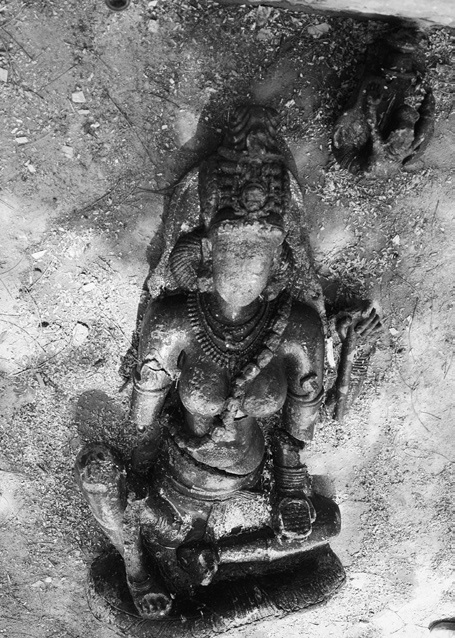
A team of three, Prof Susmita Basu Majumdar, artist Rajib Chakraborty and film maker Ranjay Ray Choudhury visited the Chandralaparameshvari temple at Sannati on Sunday, to document the spot where the Ashoka edict was found. They found the original idol of deity Mahakali broken into four pieces lying on the western side of the temple on the banks of river Bhima.

Prof Basu Majundar took the initiative to re-join the idol and narrated the interesting story behind the discovery of the Ashoka inscriptions. In 1986, a portion of the roof of the temple collapsed and caused damage to the 12th century seated four handed figure of goddess Mahakali wearing mundamala and holding damaru, trishula, kapala and sword.

Presently, this beautiful piece of sculpture only shows the trishula and kapala and the other two hands are broken but the temple authorities informed that the present image of Chandraparameshwari which is worshiped in the temple is a replica of the previous Goddess.

The khandita pratima of the deity lying on the banks of Bhima was almost awaiting the visit of this team and when the sculpture was joined it looked as if the beautiful Goddess had reappeared.

The idol base had a protruding pillar like hinge which was fitted into a stone socket. The stone on which the Ashoka inscription was engraved was used to form the base of this deity. When the idol was damaged, the inscription was discovered.

This inscription carried the separate edicts one and two and rock edits 12 and 14 of Ashoka (274-232 BC). Karnakata was the southernmost boundary of the Ashoka’s Mauryan Empire.

This inscription was discovered in 1989. Now the original idol which is about 600 years old is also restored to the temple. The matter is being reported to the ASI for further action.

source: http://www.newindianexpress.com / The New Indian Express / Home> States> Karnataka / by Express News Service / March 02nd, 2016

Bengal village teen bags top Nasa scholarship

Eighteen-year-old Sataparna is among only five scholars from the world chosen for the programme
Eighteen-year-old Sataparna is among only five scholars from the world chosen for
the programme

Kolkata :

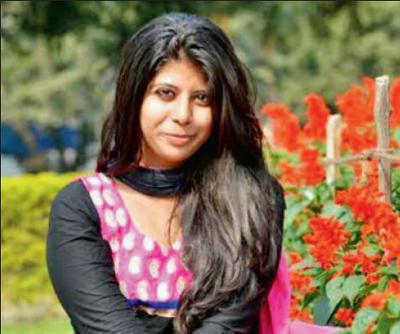
Eighteen-year-old Sataparna Mukherjee, a Class 12 student from a village around 30km from Kolkata, has been selected by the National Aeronautics and Space Administration (Nasa) for its prestigious Goddard Internship Programme under the Goddard Institute for Space Studies (GISS). She is among five scholars chosen from across the world for this programme.

Nasa’s GIP selects five exceptional individuals from across the world every year and funds their entire education after school.

Sataparna, who will appear for her school-leaving exams this year from St Judes School, Madhyamgram, in Kamduni – it gained notoriety for a brutal gangrape in 2013 – will be at Oxford University, where she she will pursue graduation, post-graduation and PhD (as Nasa faculty) in aerospace engineering at its London Astrobiology Centre.

Sataparna told TOI, “It all started in May last year when I was a member of a group on a social networking site where there were many members, including some scientists. One day I shared some of my thoughts on ‘Black Hole Theory’, and one of the members of this group gave me Nasa’s official website and told me to post my findings, which I did.” Sataparna’s paper on Black Hole Theory, and how this could be used to create a ‘Time Machine’, was hugely appreciated. “I am very happy to get this opportunity where I will also work as a researcher at the Nasa centre in London,” she said.

Under the Goddard Internship Programme, Sataparna will work as an “employee and researcher”, where she will be part of its earth science and technology development programme. Nasa is paying her a generous sum as honorarium, apart from bearing all her expenses.

Her father Pradip Mukheree, a headmaster of a primary school who led a people’s movement against goons and political pressure to drop the infamous June 2013 Kamduni gang-rape case, said, “She has made us, and the entire country, proud.”

Pulak Chakraborty, a professor of English at the Nabagram Hiralapal College, who’s acting as Sataparna’s referee at Oxford, said, “She is a very good student and her ability should not be judged through her marks alone. She is original, and that has made her attain so much.”

“She is going on August 17,” said Pradip. “Though every cost is borne by the university and Nasa, we will arrange for the passage money, which is quite high. I am thinking of taking a loan because I don’t want to let this opportunity go,” he said.

source: http://www.timesofindia.indiatimes.com / The Times of India / News Home> City> Kolkata / by Saibal Gupta / TNN / February 29th, 2016

Rebel at seventy-one – Eternal quest of a thinking mind

by Sunanda K. Datta-Ray
SasthibrataKOLKATA28feb2016

Sasthi – I could never bring myself to use the contrived Brata surname – was dead long before he died. If publicity is oxygen for terrorists, Sasthi demanded recognition as a writer. Despite the impressive bravado, it must have killed him telling me on a visit to Calcutta that he sold air-conditioners in London and no longer thought of himself as a writer. Decades later Amitendu Bhattacharya of The Third Realm blog quoted him saying, “‘A Writer’ is one who writes, not someone who has written or is going to write.”

In a forgotten long ago Sasthibrata Chakravarti, to restore his birth name, blazed across Calcutta’s sky like a meteor driven by its own angry passions. What he had to say and the way he said it resonated with his peers. But he was dead in every sense when Pujitha Krishnan of Aleph Book Company approached me because M.J. Akbar wanted to include him in “a collection of India’s greatest journalism”. For a while I assumed whispers of his demise were greatly exaggerated. Sasthi once wrote his doctor had given him only six months. Another column poetically described the sunlight shining through the long golden hair of his (actually his partner’s by another mate) little daughter whose days were cruelly numbered. Sasthi survived those six months to pick fights with many men in many bars. He and his partner had gone their different ways before the little girl’s time was up. If, indeed, it was up and the whole thing wasn’t another self-advertising hoax.

Partha Sen at the Delhi School of Economics first mentioned his death. Bikash Sinha in Calcutta thought it likely. Revealingly, Amit Roy in London knew nothing. Sasthi never had time for London Bengalis. When Roy did confirm the news in this paper three weeks ago, he had it from a British actor. I had already seen – belatedly – The Third Realm’s bleak announcement of September 16, 2011, “I am sorry to tell you that Mr Sasthi Brata has recently been diagnosed with liver cancer. The doctors have given him 2 to 6 months time.” I posted a message and wasn’t surprised when it wasn’t acknowledged.

Sasthi left behind a scattering of meteorites. Some were novels disguised as autobiographies, some autobiographies were fiction. “All my fiction has been supremely autobiographical,” he boasted. Sasthi couldn’t get away from himself. That, as well as a gift for delivering unpleasant home truths in ringing prose, may partly explain why he was more talked about than read. Someone who organized a debate at Calcutta’s Park Hotel with Sasthi and Tilottama Mukherji, who became Shashi Tharoor’s first wife, as speakers, described how “a crude remark by Sasthi aimed at Tilottama caused a massive ruckus resulting in a substantial bill for crockery and furniture damage”. There were similar scenes in Delhi. The frontispiece of his first book, My God Died Young, showed Sasthi with a cigarette striking an Oscar Wilde pose. Confessions of an Indian Woman Eater was dedicated to 50 girls. He must have gloated on the Traitor to India phrase in another book’s title.

He was 21 when we met. I was nearly 23 and felt ancient against his exuberance. The fact that I had worked on newspapers in England for some years before joining The Statesman in London widened the gulf. Deb Kumar Das, busy packing his bags to follow a then unknown Gayatri Chakravorty to the new world, introduced us in the Olympia bar which nursed Left Bank pretensions in the Sixties. They had attended P. Lal’s Writers Workshop which published Sasthi’s Eleven Poems in Lal’s trademark saree binding. Sasthi had also briefly flirted with journalism: Philip Crosland of The Statesman discovered his genius when he was a shoeshine boy in Delhi. He had outgrown Writers Workshop and The Statesman. They languished in the mofussil. He would shine in London.

It was a brave decision. Sasthi had no contacts there but suffered from the Bengali obsession with London that has given Calcutta an imitation Big Ben. Brought up in middle class Entally, he grieved that “south of Park Street” was terra incognita. Like Nirad Chaudhuri, he invested cheese (which both discovered late in life) with cultural symbolism. But he refused to give the deference Chaudhuri expected. Sasthi was entitled to his pride. My God Died Young had just been published in London. He attacked me at the launch for wearing a three -piece suit. His chic friends wouldn’t approve. I explained I had come straight from covering a House of Lords debate. It made no difference. At dinner afterwards at L’Escargot restaurant in Soho he had a flaming row with Brenda (“but for whom the book would not have been possible” gushed the dedication) with whom he lived in Chelsea. “Throw him out,” urged her friends. “Just put his things on the doorstep…” The party threatened to split into camps. Sasthi spared me an uncomfortable choice. A few honeyed words and all acrimony vanished.

Bengali London, licking its wounds, was cock-a-hoop when a smart-alecky critic wrote Sasthi should hitch up his dhoti before attempting his next novel. But any comment by that reviewer, especially a long notice in a highly regarded Sunday paper, confirmed My God Died Young had made a mark. Those were early days for Indians in English fiction. G.V. Desani ( All About H. Hatterr) and Raja Rao (The Serpent and the Rope) had gone. Vikram Seth and Amitav Ghosh had not emerged. It filled Sasthi with frustrated fury that instead of being regarded as a mainstream English writer he floated in “Indo-Anglian” ambiguity. He was mightily offended when Brian Lapping, whom the Wall Street Journal called “the acme, the Rolls-Royce of documentary makers”, said he sounded like me. “He lumped us together as Indians!” Sasthi stormed. “It’s all right for you, you live in India. I am a Londoner. I can’t afford to be typecast.” He rebelled against the categorization as he had rebelled against his upbringing. So much resentment made him increasingly embarrassing company. Perhaps Sasthi himself saw the absurdity. “Well, you can’t be a rebel at seventy or near about seventy, can you?” he asked an interviewer. He was shooting a line even then. He was not “near about seventy”. He was 71.

Sasthi disappeared. His articles no longer appeared in any British newspaper. His column in The Statesman – I often wondered if he regarded it as a triumphant return to the world of letters or consolation prize for not making it in Fleet Street – had ended long ago. People didn’t want to know when I inquired about him on visits to London. He told The Third Realm he had been working for 20-25 years on a novel titled Damned by the Rainbow. I gathered he turned his hand to any job he could get – lavatory attendant, postman, kitchen porter – to supplement Britain’s state pension. Then, seeing his byline in Outlook, I found out his email address – email didn’t exist when we were in touch – and sent a welcome-back message. His instant reply ordered me to use my influence as editor of The Statesman to arrange two weeks’ free stay at the Oberoi Grand. I explained it would have been impossible to do that even if the paper and I hadn’t parted company 14 years before. How do you live then? he demanded. End of correspondence.

I hope he was at peace with himself at the end. “Rimbaud stopped writing poetry at nineteen… Jesus was crucified at thirty-three; Jack Kennedy was shot in Dallas at forty-six. I am twenty-nine years old. What have I done? What am I capable of doing? Who am I?” he asked in My God Died Young. Even if Sasthi had said everything he had to say, those questions reflected the eternal quest of a thinking mind. They deserved answers.

source: http://www.telegraphindia.com / The Telegraph,Calcutta,India / Front Page> Opinion> Story / by Sunanda K. Datta-Ray / Saturday – February 27th, 2016
Back where the music started

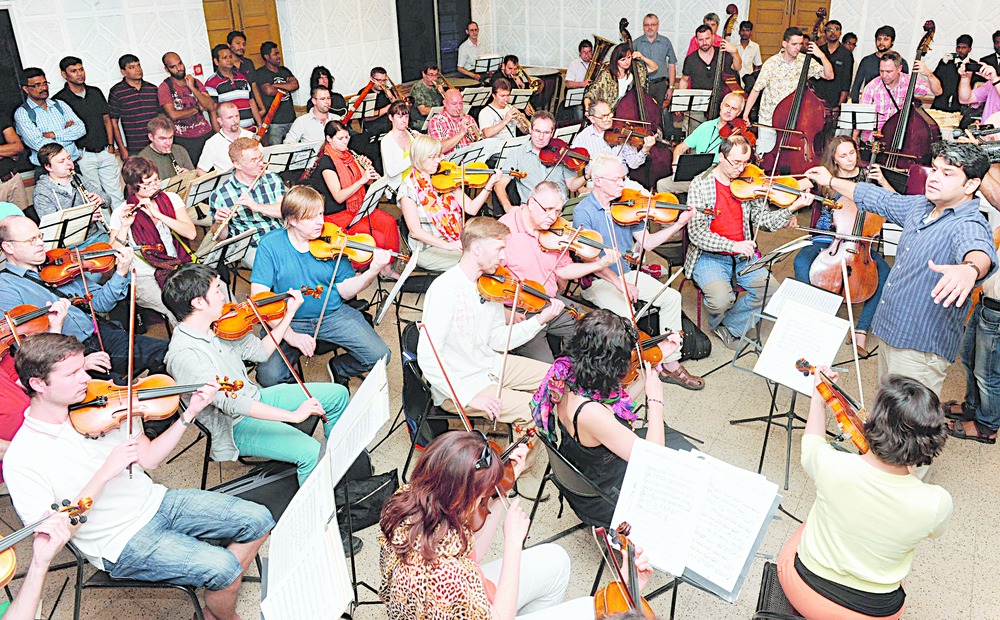
Members of Bohuslav Martinu Philharmonic Orchestra under Debashish Chaudhuri's baton at Calcutta School of Music on Friday. (Sanjoy Chattopadhyaya)
Members of Bohuslav Martinu Philharmonic Orchestra under Debashish Chaudhuri’s baton at Calcutta School of Music on Friday. (Sanjoy Chattopadhyaya)

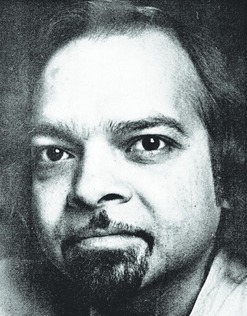
A Ballygunge boy whose first tryst with French horns, bassoons and trumpets was at the Calcutta School of Music is back home as conductor of a premier European orchestra that would perform at his alma mater’s centenary celebrations.

Debashish Chaudhuri, 40, will wield the baton for the Bohuslav Martinu Philharmonic Orchestra from Zlin in the Czech Republic, which will perform along with members of the Calcutta Chamber Orchestra on Sunday evening. The concert at Kala Mandir will mark the end of the centenary celebrations.

Chaudhuri, an alumnus of St. James’ School who has performed at some of the best-known concert venues in the world, is thrilled at the prospect of entertaining his home audience. “My parents still live in Calcutta. It has always been the home I come back to from Prague. I am thrilled to be performing here at the conclusion of the centenary celebrations of the school where my musical journey started,” he said.

Chaudhuri recalled how, as a student in the music school in the 1990s, he had discovered instruments like trumpets and bassoons in packing boxes in a room near the library and taught himself how to play them.

After completing school, Chaudhuri joined a night college to concentrate on music before moving to the Czech Republic to study a conductor’s course. Chaudhuri’s wife Jana, a pianist, is also part of the orchestra and would perform solo on Sunday.

“I don’t remember the last time such a big orchestra played in Calcutta. Generally chamber orchestras, which comprise mostly string sections, perform here. But Sunday’s performance would have an equal spread of strings, woodwinds, brass and percussion,” said Prodipto Banerjea, secretary of the Calcutta School of Music.

source: http://www.telegraphindia.com / The Telegraph,Calcutta,India / Front Page> Calcutta> Story / by Rith Basu / Saturday – February 27th, 2016