Nezone-Ok Play in pact to make indigenous e-rickshaws

Kolkata :

City based Nezone Group and leading moulded plastic maker Ok Play has forged a partnership to manufacture indigenous e-rickshaws.

“We have collaborated with Ok Play to manufacture eastern region’s first ICAT (International Centre for Automotive Technology) and Automotive Research Association of India (ARAI) approved e-rickshaw,” Nezone group managing director M L Beswal told .

As steel pipe producer it is forward integration for us as we will be providing the chasis of the e-vehicle, he added.

Calcutta High Court’s direction to the West Bengal government to form a high-power committee to take steps against unauthorized e-rickshaws comes as a boon for us, he said.

According to estimates, over a lakh e-rickshaws are plying across the state, most of which are either built with Chinese components and are unable to meet regulatory requirements.

PSU banks have also approved this product which will help buyers to get subsidised Mudra scheme loan to purchase the vehicle.

This is a complete green vehicle as even components used for body are all UV stable plastic body which is non-polluting, long lasting and edge free, Nezone officials said.

Feasibility is being carried out to make solar powered e-rickshaw as well, Benswal said.

He said if some direct fiscal benefit scheme is offered by the West Bengal government it would help in quick switchover to authorised e-rickshaw in the state.

The Delhi government has announced a subsidy of Rs 15,000 per e-rickshaw. The Maharashtra government has waived registration charges on such vehicles.

Several state governments have waived VAT on e-rickshaws. The union government has reduced central excise to 6 per cent on these battery operated vehicles.
BSM MD SOM

source: http://www.timesofindia.indiatimes.com / The Times of India / News Home> City> Kolkata / PTI / May 26th, 2016
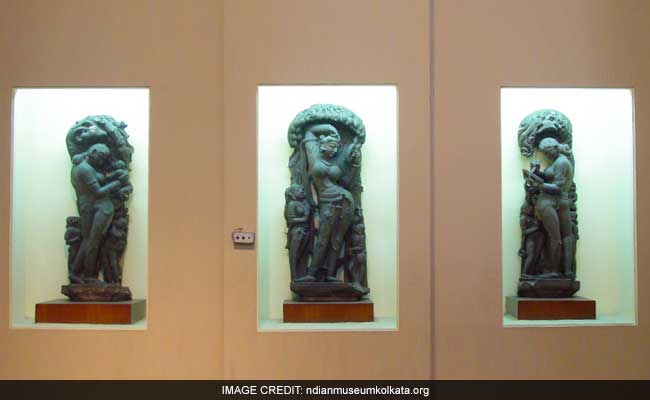
Kolkata’s Indian Museum Collection Going Online With Google

IMAGE CREDIT : indianmuseumkolkata.org

Kolkata :

Beginning with its prized collection of Buddhist art including the famous Gandhara sculptures, the Indian Museum is now putting all of its galleries for 360- degree panoramic viewing for anyone to see online.

As part of a tie-up with the Google Cultural Institute, which allows art lovers to explore artifacts from all over the world on its website, the Indian Museum is launching an e-version of its exquisite exhibition titled Indian Buddhist Art on Wednesday.

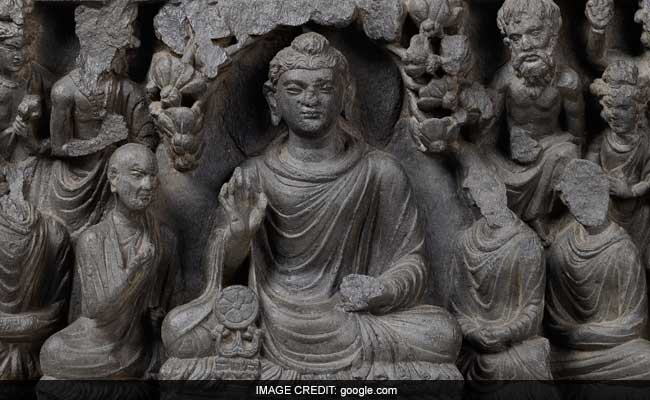
Among the important highlights in the exhibit include a sculpture of the head of Buddha from fifth century in Sarnath which is featured even in school textbooks.

“This is the first virtual exhibition we are organising after which all our galleries will gradually be available on the Google Cultural Institute website,” museum director Jayanta Sengupta told PTI.

IMAGE CREDIT : google.com  /  Buddha' First Sermon (100-200 C.E) by unknown exhibited at Indian Musuem pubilshed on google cultural institute website.
IMAGE CREDIT : google.com / Buddha’ First Sermon (100-200 C.E) by unknown exhibited at Indian Musuem pubilshed on google cultural institute website.

Three galleries, including those on Buddhist sculptures, are ready for 360-degree panoramic viewing on the internet. “This allows anyone to have a walk through the gallery and see it as you do it with your eyes. You can scroll around to see even the ceiling and the floor,” he said.

Since last year a team of Google from the UK and the US have been working hard with their specialised and patented camera technology to click high-resolution photos of the treasures lying in the museum.

The process is taking time because the work can only be done on Mondays when the museum is closed to visitors. It is expected that all galleries will be online within a year’s time.

Over 200 years old, Indian Museum is the oldest and the largest multi-purpose museum in Asia.

The biggest repository of Indian antiquity, some of the museum’s prized possessions include an Egyptian mummy, Buddhist stupa from Bharhut, Buddha’s ashes, Ashoka pillar, fossil skeletons of pre-historic animals and a collection of meteorites.

For some of such cultural and historical treasures, the museum is also planning to have gigapixel images which will allow magnification upto a thousand times.

“If it’s a painting then you can see all intricate details like even the brush strokes. Seeing a gigapixel image is like putting the object under microscope,” Mr Sengupta said.

The musuem director rejects suggestions that once all galleries are online the number of visitors at their campus will decrease.

“Internationally this has been the case. After people see it online they are more motivated to see the real thing and so they walk into the museum,” he said.

Spread over 10,000 square feet area, it boasts of over sixty galleries of art, archeology, anthropology, geology, zoology and botany sections.

It houses rare artifacts of great archival and heritage value numbering more than a lakh.

source: http://www.ndtv.com / NDTV / Home> Sections> All India / Press Trust of India / May 24th, 2016

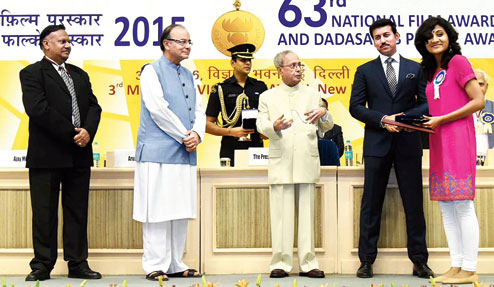
National Award for HA girl

Moumita Roy on stage with President Pranab Mukherjee, Arun Jaitley and Rajyavardhan Rathore

HA Block has produced a National Award winner. Twenty-eight-year-old Moumita Roy earlier this month was awarded the National Film Award for Best Non-Feature Film Audiography for Edpa Kana, a film in the Kurukh language of Jharkhand.

“I wasn’t expecting this award. In fact, I had forgotten that the film had been sent for the National Awards,” laughs the fresh pass-out of Satyajit Ray Film and Television Institute (SRFTI). The winning film was the final year diploma project that she and three of her classmates had to make as part of their course and Moumita was handling the audiography.

“Audiography includes all the dialogues, music and sounds that we hear while watching a film. One has to get the right balance between them,” says Moumita. The director of the film was her classmate Niranjan Kujur who belongs to Jharkhand’s Oraon tribe and speaks Kurukh. The film is about a tribal boy of the Sarna faith who falls in love with a tribal girl who follows Christianity.

“Most of the film was shot in Jharkhand and the actors were Niranjan’s relatives. We were using sync sound (in which dialogues do not get dubbed over in the studio later) so mics had to be hidden in the actors’ clothing. We were shooting in the winter of 2014 and the mics kept picking up rustle of the actors’ winter garments,” recalls the HA 36 resident.

The 26-minute-long Edpa Kana has been making a mark in the festival circuit too but the National Award is the icing on the cake. “The ceremony in New Delhi was very formal. I received the award from the President and was off stage in a few seconds. There was a lot of security protocol too so I didn’t get to speak to other award recipients but I got to meet Sanjay Kurien, who won best audiography (location sound recordist) for the film Talvar.

Her parents watched the ceremony from the audience. “Our daughter. is good at everything she does,” says mother Sikha.

“I have been receiving calls and Facebook messages from relatives, neighbours and even school friends I had lost touch with,” she laughs.

She also won Rs 50,000 with which she plans to buy sound equipment. “As of now I’m working on a freelance basis in Calcutta. Let’s see what happens next,” she smiles.

source: http://www.telegraphindia.com / The Telegraph,Calcutta,India / Front Page> Salt Lake> Story / by Brinda Sarkar / Friday – May 20th, 2016

German ambassador revives Dresden-Kolkata creative tie

Kolkata :

Two years after Germany reunited, four artists from Dresden had come to Calcutta and casually met with painters, sculptures and poets here, not knowing they were sowing seeds for this creative collaboration a quarter century later.

The Dresden-Calcutta initiative was formally launched by German ambassador Martin Ney at ArtsAcre, Museum of Bengal Modern Art, last Tuesday, 24 years after artists Michael Freudenberg, Eberhand Goschel, Max Uhlig and Sonia Zimmermann, facilitated by the Goethe Institut, had the most meaningful interface with members of ArtsAcre in Kolkata. The German artists had been briefed about Pandit Ravi Shankar laying the foundation of ArtsAcre, a nest for budding artists in north Kolkata, and Nobel laureate Gunter Grass inaugurating it in 1986, with an exhibition of his own drawings. Subsequently, Shuvaprasanna, director of ArtsAcre visited Dresden and conceived the idea of “Dresden-Calcutta/Calcutta-Dresden”.

The project promises regular exchange of ideas and workshops between Dresden and Kolkata, with its nucleus at ArtsAcre, the grand 4.5 acre arts hive for artists, enthusiasts and creative communities in Kolkata that chief minister Mamata Banerjee inaugurate two years ago.

The project kicked off with a portfolio of graphics and lyrics, titled “Shuttle”., comprising intaglio, etchings and poetry of seven mainstream artists and seven poets from Dresden and Kolkata, displayed at the permanent Dresden gallery inside ArtsAcre. The participating artists from Desden are Lutz Fleischer, Eberhand Goschel, Peter Herrmann, Reinhard Sandner, Claus Weidensdorfer and Uhig and Zimmermann, who came to Kolkata 24 years ago.

Lothar Barth, Andreas Hegewald, Uwe Hubner, Lothar Koch, Gregor Kunz, Bernhard Theilmann and Michael Wustefeld are the participating poets from the German city.

From Kolkata, Dip Banerjee, Shipra Bhattacharya, Kinkar Ghosh, Shakti Karmakar, Somenath Maity, Munindra Rajbongshi and Shuvaprasanna were those who contributed in the art section. Lending their creative expertise with words were the late Shakti Chattopadhyay, Sunil Gangopadhyay and Mallika Sengupta, Sankha Ghosh, Joy Goswami, Alokeranjan Dasgupta and Dibyendu Palit — Shashi Despande, Subodh Sarkar, Kalyan Ray and Dipak Rudra are the translators.

Shuvaprasanna, executive trustee of ArtsAcre Foundation, said, “The aim of Dresden-Kolkata initiative is providing space for the young and experienced artists, allowing them to express their message and present their creations in all kinds of arts – from painting, to photography and installations.” He said the artists speak of globalization, intolerance and openness through their works.

Grass remains the pivot of the project. Nay watched Gautaim Ghose’s “Shuva & I”, a film on Grass and Shuvaprasanna at Grass’ home in Germany in August 2013.

Pointing at “Shuttle”, the ambassador said, “These works by the poets and artists were created when Germany was passing through the most difficult circumstances – through a totalitarian regime. They will show how important this kind of creative exchange is for countries.”

source: http://www.timesofindia.indiatimes.com / The Times of India / News Home> City> Kolkata / Ajanta Chakraborty / TNN / May 21st, 2016

Homeopath Parimal Banerji explains origin of life in new book

Kolkata :

Paving a new path in the field of the biosciences, eminent homeopath Parimal Banerji shared his discovery on the origin of life at the launch of his book, ‘Discovery Of The Source Of Life Force’ throwing light on the enigma of life called Life-Force. The book was launched on Monday by governor, Keshari Nath Tripathi.

Over the past few decades, Banerji has carried out extensive research on the subject: The Origin of Life or Source of Life – Force which scientists across the globe have been striving to discover since the beginning of civilization. Hypotheses and facts about how the organs and cells work are known but why they function and what the energy is or the force behind them could not be established.

This book will provide a breakthrough in medical world and an exploration in the human quest for the ultimate.

Banerji discovered a new molecular energy, ASA (Anubik Shakti Abarta) Supra molecular energy, which has revolutionized many concepts of physics.

Speaking on the occasion Banerji said, “Anubik Shakti Abarta is a special type of molecular energy which remains in very high dilutions and can exist for an indefinite period even in concentration much beyond 1 in decillion. Molecular composition in each cell in our human body varies widely, which creates the constitution of men so different from each other and are responsible for their individual behaviors, intellect, mental capabilities, memory, manifestation or resistance to diseases, immunity, genetic effects, physical structures, etc. Explanation to all these has taken the life science to a very advanced status with the creation of a new horizon.”

Banerji has been working in search of the source of life-force in the living organisms since the beginning of his medical education. It has remained undiscovered despite extensive researches being carried out by the biosicentists all over the world. He has been successful in discovering the source of life force and presented a paper on it at the Mihijam Institute of Homoeopathy in 1980. Its various aspects were being worked out and were presented at Cultivation of Science at Kolkata. The discovery now explains how consciousness is generated, what makes the cells to work and why a living unicellular animal has the ability to think and react unlike the dead.

Former Prime Minister of India Morarji Desai, Late Prime Minister Narshimaha Rao, Late Air Marshal Subrata Mukherjee were Banerji’s patients, to name a few. Apart from his proficiency in homoeopathy, he has also been working in the domain of physics, relating to life sciences.

source: http://www.timesofindia.indiatimes.com / The Times of India / News Home> City> Kolkata / by Jhilmil Pandey / TNN / May 16th, 2016

Young student from Bengal chosen for Boston Math Workshop

Kolkata :

Soumen Ghosh, a meritorious student from Narendrapur Ramkrishna Mission, has been selected for prestigious Promys, a challenging mathematical summer programme at Boston University. Soumen is one of five students in India selected for Mehta Fellowship that facilitate participation of students in this pogramme.

A resident of Katwa in Burdwan district, Ghosh was also ranked 8th in this year’s Higher Secondary examination. His teachers said that he is a math-champ, who scored 100 out of 100 in every math examination in his career. The Fellowship posed 10 complex mathematical problems. Soumen solved them and mailed. Soumen was one of seven students selected from India. It was followed by online interview in which Soumen was selected.

Approximately 80 mathematically talented pre-university students and 20 undergraduate counselors are carefully selected from around the world. Under graduate students focus primarily on a series of very challenging problem sets, a daily lecture, and exploration labs in Number Theory. There are dozens of additional seminars, mini-courses, and guest lectures on a wide range of mathematical topics, advanced seminars and mentored research are offered.

His father Nani Ghosh is a teacher. He said that his son got excited if he confronted any complex mathematical problems. His schools syllabus hardly appealed him. He looked for mathematics of higher classes. Soumen is also very excited about joining the workshop which will expose him to best of the mathematicians.

Apart from development of mathematical habits of mind that support independence and creativity in facing unfamiliar mathematical challenges, it will also train them in asking good questions, precision of thought and depth of understanding. The workshop is of six-week duration with a collaborative and supportive community. There will be rigorous student discovery of fundamental mathematical truths. Students receive daily feedback from their counselors on their Number Theory problem sets.

source: http://www.timesofindia.indiatimes.com / The Times of India / News Home> City> Kolkata / by Krishnendu Bandyopadhyay / TNN / May 18th, 2016

Barcelos comes to Kolkata

Kolkata :

Costa Mazzis-owned Barcelos has brought Afro-Portugese cuisine to the city. Rohit Malhotra, India Business Head of Barcelos, told Business Line that the franchised 100-seater casual dining restaurant was result of a tie-up with MP Jewellers family outfit Trivia Food & Beverages Pvt Ltd.

Indranil Roychowdhury, Director of Trivia, said that collaboration was likely to be replicated in the near future for a few more in West Bengal.

For Barcelos, it is the fourth outlet after setting up two in New Delhi and one in Gurgaon. “By July we would be present in Jaipur and Mumbai through the franchisee route”, Malhotra said. Apart from one company owned outlet in the Capital, Barcelos is following the franchise model for expansion in the country.

Portuguese restaurateur Mazzis, who first set up his shop in South Africa, linked his brand to a village in Portugal – Barcelos – with legends attached to cockerel or rooster.

Though its low-oil flame grilled chicken along with “peri-peri” or a number of table sauces made of African chili are the menu drivers, for India, Barcelos has created a range of vegetarian dishes.

Barcelos official said that the chain now popularising a typical flavour and taste of the fiery African peri-peri in the country where Portuguese traders centuries ago introduced chili. Variants peri-peri sauce is also used by Barcelos chefs as a secret marinade for meat or seafood before they are roasted or grilled, Malhotra said.

source: http://www.thehindubusinessline.com / Business Line / The Hindu, Bureau / Kolkata – May 16th, 2016