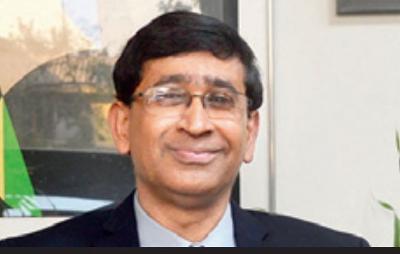
Diversity makes US great, says Nasa scientist from Kolkata

Goutam Chattopadhyay.

Kolkata :

A jet propulsion scientist at Nasa who grew up in the suburbs of Kolkata believes America owes much of its success to immigrants.

“The driving force of America is the assimilation of people from all over the world; people who are talented and have used the opportunities to drive innovation. That is what makes America great,” said Goutam Chattopadhyay, who migrated to the ‘land of opportunities’ in 1992 and lived his dreams.

Growing up in utter poverty in Konnagar, Chattopadhyay was not allowed to sit in a Class III exam as his school fee (Rs 8) hadn’t been paid. Still, he finished second in class that year, the only time he did so as he topped his class right up to his engineering degree in Electronics & Telecommunication from BE College, Shibpur. He had even cracked IIT entrance exam but could not study since his family could not afford it.

From BE College, Chattopadhyay went to TIFR in 1987. That’s when his horizon widened. “Till then, I wasn’t sure what to do other than take up a job to support my family,” the senior scientist recounted. As a design engineer at the premier institute, he was part of the team that designed the Giant Meterwave Radio Telescope (GMRT). Chattopadhyay designed the Local Oscillator System that converts the signal that comes from the sky into lower frequency signal that is easier to process.

In 1992, he went to the US to pursue higher studies, doing his masters at the University of Virginia and then PhD at California Institute of Technology (Caltech). There, he was in the group that developed Terahertz that will come into commercial telephony when 5G is rolled out.

On completion of the PhD in 1999, he got a call from Nasa. “Looking back, it has been an amazing journey and it has been possible because the US has been welcoming. I don’t think Indian students will be affected by what is happening right now. These are short-term bumps. I hope this will not stop the flow of talent to the US,” he said.

Chattopadhyay is currently working on a project that could help President Donald Trump overcome some of the fears on homeland security. His team is using Terahertz to do a remote pat-down of suspects. A project for the department of Homeland security, it is a device that allows law enforcement agencies to remotely scan a person to detect guns or bombs hidden under the jacket. “It can work at a 30-40 metre distance and be of use in airports and stations,” he explained.

Talking of airports, Chattopadhyay missed the crowds waiting at LA airport to welcome immigrants to protest against Trump’s ban on seven Muslim-majority countries as a judge in Seattle had put a stay on the executive order a day before he took his flight to India. Though he wasn’t worried about taking this trip as there are no restrictions on travel from India, fellow colleagues in Nasa who hail from the countries under the scanner won’t risk a visit ‘home’ anytime soon.

source: http://www.timesofindia.indiatimes.com / The Times of India / News> City News> Kolkata News / TNN / February 09th, 2017

IIT-Kharagpur and State Bank of India develop a customised portal for intellectual property

Kolkata :

Indian Institute of Technology, Kharagpur and State Bank of India are collaborating to develop a customized portal for launching ‘Intellectual Property Development as a service’ (IPDaas) for Intellectual Property Rights generation. Mr. Mrutyunjay Mahapatra, Deputy Managing Director and CIO of SBI launched this project today at IIT-Kharagpur.

A symbolic submission of a patentable project was made by him in the preliminary version of IPDaas.
A MoU has already been signed between India’s largest commercial bank and the largest IIT in the country for a larger gamut of collaborations in the FinTech domain. Four departments from the Institute are engaged in this collaboration.

SBI has a history of creating innovative banking and IT solutions in-house. The IPDaas will facilitate streamlining patent applications for solutions developed internally and thereby making them available for external use through licensing. Since solutions created by SBI are based on actual challenges faced by the organization, they would prove to be useful for various bottlenecks experienced by financial institutions that too in the Indian scenario.
It will also tap the huge technical expertise of seasoned banking professionals in the organization. “It is trend-setting for an organization like SBI to move towards holistic IP creation. This would create an ecosystem for organizations in India especially in the financial sector to promote their technical expertise. With the exponentially growing economy of India such solutions will decide the quality and efficiency of financial services which would be provided to customers in India and similar other regions” said Partha Pratim Chakrabarti, Director, IIT Kharagpur.

IIT-Kharagpur will work with SBI Collaborative Innovation Centre (CIC) team. Going forward, this premier technology institute of the country with unique distinction having an IPR law school in the campus will assist in review and associated activities for a full-fledged offer of IP as a service.

Mrutyunjay Mahapatra, Deputy Managing Director and CIO of SBI visited several labs focused on research related to security solutions for mobile banking, hardware such as ATM, POS machine, IoT, intelligent asset tracking etc.

There were further discussions pertaining to commercialization of such products developed by IIT-Kharagpur through SBI.

“This is merely the beginning of what could be termed as a long-term association between SBI and IIT-Kharagpur. IIT has proposed several solutions for real challenges faced by banks in IT, user application, security, management of human resources etc. For e.g. tracking of hypothecated or lien property, prevention of erroneous usage of administrative rights, voice identification of caller, tracking of human resources and office stationary on premise and many more. Some of the solutions are already existing which needs to be customised for SBI’s requirements while some problem situations or feedback SBI will share with IIT based on which they will develop the solutions. We have found several of the solutions intriguing and further discussion would be held to collaborate on those projects,” Mahapatra added.

source: http://www.timesofindia.indiatimes.com / The Times of India / News> City News> Kolkata / by Somdatta Basu, TNN / January 31st, 2017