For the world she is Priyanka Yoshikawa -Miss World Japan 2016.
But those close to her know her as Priyanka Yoshikawa Ghosh.
Born to a Bengali father and Japanese mother, she is the first woman from a multi-racial background to have won the pageant in Japan. But Priyanka’s journey was far from easy .
When she broke the glass ceiling, there were some who questioned why the title was not bestowed upon a `pure’ Japanese, but Priyanka found support in her nation and also in India, where she has her roots.
On a whirlwind tour to Kolkata where she attended a dinner hosted in her honour by Masayuki Taga, Consul General of Japan in Kolkata, Priyanka spoke to us about the backlash and support, tracing back her roots and why her family doesn’t discuss Prafulla Chandra Ghosh, her greatgrandfather and Bengal’s first chief minister, over dinner.
Excerpts:
Is this your first trip to Kolkata since you won Miss World Japan in 2016?
Yes. But I have been to the city quite a few times before that. I lived here when I was nine years old. That was for a year. I also studied in a school here. Even before that, I have been to the city when I was two or three, but I don’t have memories of those visits. Another long visit was five years ago, when I was 18. That time, I stayed here for a month. My father is Bengali and our extended family lives here. My connection with Bengal was established with my birth though I was not born here.During the one year I was here, I explored my father’s country and got to understand my roots.
On this visit for a day, did you get to meet your relatives living in Kolkata?
My father comes from a big family and he has many siblings. My uncle and aunt live in Kolkata.Some of my cousins are still here, but many got married and live abroad. Whenever I am in Kolkata, I visit them. I came on Sunday midnight and on Monday , I visited Mother House and later, went to a doctors’ meet. Though I was not in Kolkata on work, I am the brand ambassador of a charitable foundation, and ended up doing some meaningful work. I wanted to visit Kolkata ever since my win, but it was hard to get a vacation. Then, I got a few days off and came here on my way to Guwahati.
After you became Miss World Japan 2016, the first contestant from a multi-racial background to do so, you spoke about drawing inspiration from Ariana Miyamoto, born to a Japanese mother and African-American father, who won the Miss Universe Japan 2015. She had to endure racial backlash for being a hafu (a person with a non-Japanese parent), but since she set a precedent just the previous year, was it easier for you?
To be honest, Ariana was not exactly my inspiration. We participated in different pageants. I followed my own dreams, but I have tremendous respect for her.I didn’t know her before I won, but we became good friends after winning the title. I didn’t hear stories about her trials and tribulations, but she made it big as the first hafu to win a pageant in Japan. She had to face racial backlash as she was the first and people were not used to it. For me, I was the first for Miss World in the nation. Nothing has been easy even though Ariana won the previous year. I got good media coverage and though some people questioned my win, it never affected me. I was confident and was concen trating on the international pag eant where I made a mark after 60 years. During the pageant, there was no social media back lash, but after the win, some questioned why the title was not awarded to a `pure’ Japanese. I got a lot of support too. Messages came trickling in from hafus living in Japan, and also from Indian citizens. When you get such strong support, it gives you more confidence. I am proud to have an Indian in me, but that doesn’t mean I am not Japanese.
What were the celebrations like in India?
My relatives messaged me. My first cousins are very close to me. I call them didi. One of my didis lives in the US and she was a great support during the inter national pageant. She is eight nine years older than me and she and everyone else was happy about the win.
What was the homecoming like this time around?
I was excited as I was meeting everybody after five years.Visiting home and meeting my aunt, uncle, nephews was quite something. Though they are all in touch with me, talking to them on social media is different from meeting them. I got to eat Bengali food. I was looking forward to tasting some homecooked Indian food. I often crave for white chicken, which is perhaps called doi chicken. And I love phuchkas though I missed it this time. I was in Mumbai and had panipuris there, but it’s different from having phuchkas in Kolkata.
How did you learn to speak so fluently in Bangla?
I studied Bengali in school, but I picked it up naturally as everyone speaks Bengali around me in my family .
Your great-grandfather Prafulla Chandra Ghosh was the first chief minister of Bengal. You must have heard many stories about him from your father?
He was my great-grandfather, but I didn’t meet him. My father did tell me stories about him but only at times. I never really asked questions about him.Everybody in our family knows about him, but we don’t discuss him over dinner.
An elephant trainer, are you visiting Guwahati for a purpose?
My Guwahati trip is all about wild elephant conservation and nature conservation.
You have keen interest in Bengali movies…
I remember having seen The Japanese Wife and some others that I watched on flights. I can’t read or write in Bengali though I can speak the language. It’s sad that not many Bengali films can be found in Japan, though Bollywood movies -sometimes three years old -travel to the country . I love to watch them. I have grown up watching Shah Rukh Khan, Hrithik Roshan and Kajol. Kajol is one of my favourite actresses.
Should you foray into Bengali films if an offer comes your way?
Yes, why not! I would also love to do something with films in India, maybe bring them to Japan… There are many takers for Indian films in Japan and I am sure a lot of people here are waiting to watching Japanese films. If I can bridge the gap, I will be the happiest.
source: http://www.timesofindia.indiatimes.com / The Times of India / Home> News> City News> Kolkata News / by Zinia Sen / TN / November 02nd, 2017
Shruthi started Anthyesti in February 2016 with Rs one lakh that she borrowed from her husband
Death is grim business, but Shruthi Reddy Sethi, a young, enthusiastic software engineer in Kolkata has made it her business to make it easier for those left behind. With her uniquely focused services, in just over a year, her company Anthyesti has notched up a turnover of Rs 16 lakh.
Shruthi’s work begins in the aftermath of a life sadly ending. “Once we get a call,” she explains, “we first arrange for the hearse van and also ask if there is any need for preservation, such as a freezer box.
“After the hearse van moves to the crematorium, we assist the family to procure the KMC (Kolkata Municipal Corporation) death certificate if they seek our help. We then offer them our priest package if they want.”
Her company – Anthyesti – offers well-organized and efficient post-demise packages such as VIP hearse services, mobile freezer or embalming, repatriation of remains, and Shraadhs (a ritual to pay homage to the deceased in the family) for communities such as the Arya Samaj, Gujaratis, Marwaris and Bengalis. These services range from Rs 2,500 to Rs one lakh.
Yes, that’s right, Shruthi Reddy Sethi, 32, is a funeral services planner – officially the first such company in this sector in Kolkata.
“I first shared the idea of setting up a company that provides cremation and funeral services, with my husband,” she says. He promised to support her.
“But my parents,” she adds, “especially my mother, were very upset and said that this kind of ‘ignominious’ work was an insult for an IT engineer. She didn’t talk to me for a month!”
Shruthi had moved to Kolkata in 2015 to be with her husband who had shifted there with his job. Originally from Hyderabad, where she completed all her education, she was the older of the two siblings, with a brother.
Her father worked as an electrical engineer in Electronics Corporation of India Limited (ECIL), while her mother sold saris from the home to supplement the family’s income. Shruthi studied in Sai Public School till Class 10, after which she joined Little Flower Junior College in 2002.
By 2006 she had completed a degree in engineering from Bhoj Reddy Engineering College and she left her home town. “I joined an IT company in Bengaluru as a junior programmer,” she says, “and moved back to Hyderabad with another IT job in 2011.
In 2009, she got married to Gurvinder Singh Sethi who worked in Tata Motors in Hyderabad. “Life was moving smoothly till my husband was transferred to Kolkata in 2011,” says Shruthi. Her employers let her work from home at first, but in 2015 when they asked her to move back to Hyderabad, she resigned.
Shruthi had to plan her next step. “I wanted to do my MBA as I thought it would help me set up my business,” she recounts.
“With a view to joining one of the year-long executive programs in IIM and other reputed B-schools, I took the GMAT exam and cleared it.”
She got admission offers from IIM-Indore and IIM-Lucknow. She was about to get enrolled in one of them, when Siddharth Churiwal, a businessman friend, suggested: ‘Rather than spend that money on a degree, use it for bootstrapping your business. Have faith and you will find everything else on the way up.’
His advice took seed, even though Shruthi had no idea of the nitty-gritty and formalities of entrepreneurship.
“The concept of a funeral service start-up was subconsciously in my mind,” she recalls, “as I saw my husband facing a lot of problems at the death of his maternal grandfather in 2014 – making all the arrangements for cremation and prayers meant that he didn’t have time to grieve with his family.”
So that’s how she started setting up a company geared to efficiently and sensitively taking care of every aspect relating to the processes and ceremonies following a death, starting from embalming human remains to the conclusion of all rituals.
She had the business logic for it. “There is a large population of single old people in Kolkata,” she explains. “There are many people who live all by themselves. They would be more than happy to find someone to help in their last moments.”
In order to gain knowledge of the market and costs, Shruthi began to visit crematoriums, find out about the number of deaths every day, research charges for hearse vans, mortuaries, priests and pujas.
People working in this male-dominated sector were mostly uneducated, and many were drunkards. “My friends and family thought that I had lost my mind as I was busy with the dead throughout the day,” Shruthi says. “It was very tough.”
Finally, Shruthi started Anthyesti Funeral Services Private Limited on 19 February, 2016, with an investment of Rs one lakh, which she borrowed from her husband.
She is the founder-director of the company with 99 percent shares, while her mother, Suhasini Reddy – who came around to support her daughter – is the other director with one percent share. “It took me days before I zeroed in on the name Anthyesti, which means funeral rites in Sanskrit,” Shruti shares.
The company started with two employees in a rented office space of around 1,000 sq. ft. The concept was new to Kolkata and while Shruthi invested in marketing, the gradual increase in her business was mainly due to word-of-mouth publicity. “There were no sudden breakthrough moments,” she says.
“I built contacts with hearse van drivers and priests to be paid on a case-to-case basis,” she explains. “We got enlisted on Justdial in April 2015, from where I started getting calls for funeral services.”
But people normally called for the hearse van and not for cremation or performance of last rites. Shruthi found a solution and purchased two freezer boxes in June 2016 and an air-conditioned hearse van with an investment of around Rs seven lakh.
Now, bookings for Anthyesti’s can be made on the phone or online. The company now has six employees, receives around 35 orders every month, and its turnover has touched Rs 16 lakh in just over a year.
Wait there is more – with an eye on the future.
Anthyesti also offers services for pre-planning funeral service packages – ranging from Rs 6,000 to Rs 20,000 – for those who live alone. “Pre-death packages are an assurance to such clients that, should something happen to them all of a sudden, we are there to carry out the last rites,” says Shruthi. “Our legal agreements for this are prepared and vetted by experienced lawyers.”
Anthyesti is filling a much-felt gap. “Death is a crucial part of life and it needs to be served with professionalism, poise and dignity,” says Shruthi. “Staying calm, sensitive and empathetic is what I and my team focus on.”
Shruthi plans to expand and scale up through the franchising model by 2020. She feels her experience has taught her the value of money and the fact that death is the only truth in life.
“Make your presence on earth worthwhile so that you can benefit mankind,” this mother of a four-year-old son says wisely. She also shares her mantra for women entrepreneurs: “Have belief and never underestimate yourself. Small things will take care of themselves when you aim big.”
This Article is Part of the ‘Super Startups’ Series
source: http://www.weekendleader.com / The Weekend Leader / Home, Vol. 8, Issue 44 / by G. Singh, Kolkata / November 01st, 2017
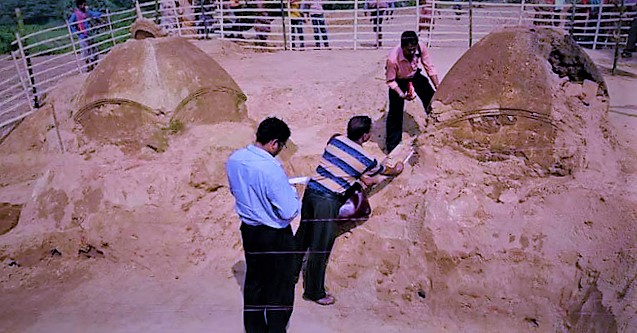
ASI members inspecting the temples in Bhuri, a village near Burdwan
Less than 130 kilometres from Kolkata, in an area at East Burdwan’s Bhuri village, two temples emerged while local workers were digging. The initial inspection and predictions tell that the temples could be centuries old.
Unprecedented and to the dismay of the local workers were digging a section of the land as a part of the Village Panchayat’s cleaning programme aiming to set up a park, two masts of 1.4 metres each came out. The masts resemble the architecture of temples and the primary observation reveals that the temples could be centuries old. Some of the locals also believe that these are Lord Shiva temples that were built during the early British empire.
The land lies beside a canal that connects the River Damodar that was dug years ago to divert water from the village and prevent flood during the monsoons. Whether it was flood or earthquake that led to the demolition and the extinction of these two temples is still a mystery.
Growing anticipation
A team of three from the Archaeological Survey of India (ASI) visited the site where the temples were discovered. According to one of the members of the team who requested a privacy of identity said, “We can’t say anything as of now, it’s very strange that this part of the country had temples like these. We have to dig another 20 odd feet to unearth the reality and the exact identity of these temples. I would my team to prepare the report as soon as possible.”
The ASI team met the local authorities and explained their expectations regarding the security of the place how to neutralise the local excitement. The village head and local police station were instructed to cover the area and stop any kind of further digging. The temples have already got few dents due to the unprofessional digging and the ASI officials stressed on putting a barricade to stop further damage.
While it was just a park that was on the cards, the local authorities are now expecting a tourism spot revolving on the historical aspects of these two temples. For the time being, they are keeping a close watch on the area and have also managed to set up lights during the night to make sure that there is no unnecessary loss of information.
Relic tourism
The eastern region of India especially West Bengal, Bihar, Odisha, and Jharkhand have seen a plethora of religious as well as ethnic diversity since centuries. From the Buddhist settlement in Bodh Gaya and their gradual spread in and around eastern India to the likes of Vaishnavas and various sects of Hinduism practised their culture here. The likes of Moghalmari in West Midnapore district of West Bengal where almost three decades of excavation revealed a Buddhist settlement also adds another hue to this mysterious finding.
History lovers and story seekers have always found their way to dig the reality out of these unique discoveries. While the eastern state is aiming to promote itself as a one-stop destination for all kind of tourists, the unearthing of these two temples near Burdwan definitely has a positive prospect for West Bengal’s tourism industry.
Keep an eye on this space to follow the updates from the unique hamlet nearby the railway station Galsi that recently witnessed the emergence of these two shaman relics.
source: http://www.mediaindia.eu / Media India Group / Home> Tourism / by Sudipto Roy / Kolkata / October 27th, 2017
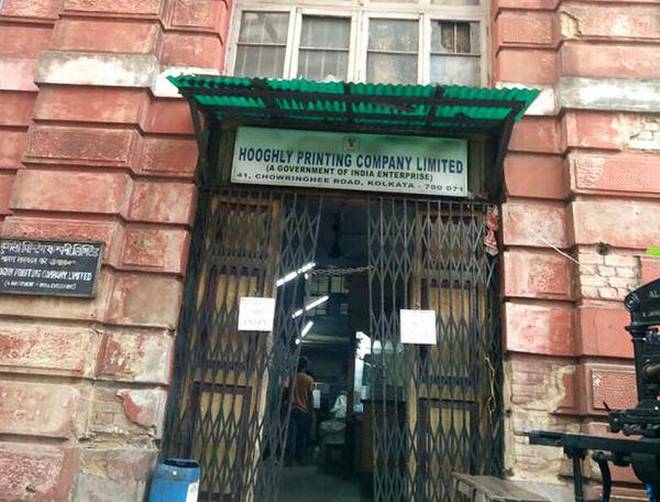
Tucked inside one of the many old red mansions that still dot the city skyline is a 15,000 sq. ft. space, which houses a press that had printed the Indian Constitution. But five years away from its centenary, the iconic printer is gasping for breath.
How old is it?
Hooghly Printing is a subsidiary of Andrew Yule, a Central Public Sector Enterprise. It came into being in 1922. This was at a time when the printing industry was in its infancy in these parts. Once running to full capacity, now it is knocking on the doors of the Central and State governments to get printing orders to survive. Hooghly Printing is part of the Andrew Yule Group of companies, which started operations in 1863 when a young entrepreneur from Scotland arrived in erstwhile Calcutta, then the Imperial capital. By 1875, the company had grown to mark its footprints in jute, tea, coal and insurance. Andrew Yule’s control passed from one sibling to another, and Sir David Yule assumed full control of the company after the death of his brother George, who had run it since 1875.
By 1902, Andrew Yule had expanded its business throughout the country with over 30 businesses which included jute and cotton mills, tea and coal companies, a railway company, a paper-making company and a printing press. It even had under its control a zamindari in Midnapore district of West Bengal, where it virtually ran an administration with agriculture, forestry, fisheries, roads, schools, hospitals and dispensaries, the company’s website says.
What did it print?
Hooghly Printing not only printed the Constitution but was also responsible for supplying the parchment paper on which it was printed. The first few copies were printed at the Dehradun printing facility of the Indian government as these were to be the best copies. The rest were printed at HPC.
Why is it in trouble?
In recent times, however, Hooghly Printing’s journey has been a rough one. As printing facilities have proliferated, Hooghly Printing’s need to play by the rules of a government-owned organisation has shackled its growth, admits Andrew Yule chairman Debashis Jana. It has been printing books, brochures and the like, but it needs bulk orders to survive.
What is the way ahead?
It needs to modernise to put in machinery that will help it get customers. It also needs space. Andrew Yule has put in place a strategy of upgrading the unit while relocating it to an unused space in another of its units on the western precincts of the city. Alongside, it is appealing to the Central and State governments to give it orders for printing textbooks.
The Hooghly Printing’s turnover was ₹17 crore in 2016-17 with a post-tax profit of ₹3 lakh. This thin margin is getting steadily eroded. Its parent, Andrew Yule, which celebrated its centenary year in 1963, too fell into bad days with the nationalisation of the coal and insurance business. In 1969, the government stepped in to acquire a 49% stake, making it a public sector enterprise. Its journey continued to be a rocky one thereafter and it moved to the sick bay. It has since made a remarkable turnaround. Today, it is in profit, and there is no reason that Hooghly Printing should not be a contributor to its parent’s strength. No one knows if a plaque would mark the space in Kanak Building on the arterial Jawaharlal Nehru Road, where the Constitution was printed, but it will be pity if a heritage institution like Hooghly Printing is allowed to fall by the wayside, say historians.
source: http://www.thehindu.com / The Hindu / Home> News> City> Kolkata / by Indrani Dutta / October 14th, 2017
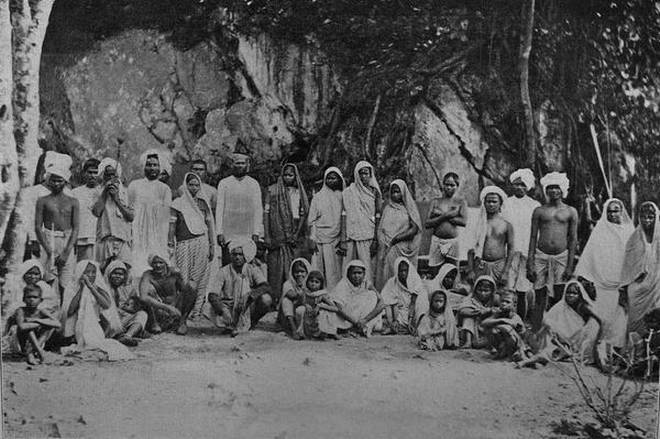
Newly arrived indentured labourers from India in Trinidad. | Photo Credit: Wiki Commons
In 1834, 36 impoverished men from Bihar and Bengal set sail for Mauritius to work as indentured labour. Over the next 80 years, more than two million people would travel to some 20 European colonies, the first of a global Indian diaspora, before indentured labour was abolished 100 years ago
When the British abolished slavery in 1834, they populated their plantations with indentured labour from India, launching the biggest international movement of workers after the notorious ‘middle passage’. In 80 years, more than two million Indian labourers were transported to about 20 British colonies before it was stopped in 1917 under intense pressure from Indian abolitionists. This year marks the centenary of the abolition of indentured labour.
Kalachand was on the verge of collapse when Champa, a fellow tribesman from the hills of Hazaribagh, came looking for him that fateful September evening in 1834. Champa too looked starved, but his eyes held a glint of excitement.
“Where have you been? I’ve been looking for you since noon. Didn’t I tell you god is great? We are going to escape this wretched life,” he said.
Kalachand didn’t say a word in response. All he wanted was to eat something. He hadn’t had a proper meal for three days now.
Champa too, and many others, had not eaten the past few days, but he suddenly seemed to have found some energy. Standing on the slushy banks of the Hooghly, he pointed to the Kidderpore depot and said, “This will save us.”
All Kalachand could see was a long shed and some small sail-ships at a distance. “Are we going somewhere,” he asked. “Tapu,” said Champa.
“Come, let’s eat something, I am starving,” he said. “Money?” Kalachand asked. “Don’t worry, I have some,” he said. He didn’t tell Kalachand it was the same Ghulam Ali, who had promised road work in Calcutta for ₹5 a month, who was now promising a brighter future.
Back in his shanty in Howrah, Kalachand found Bachu, Chuniram, Budhu, Bhola, Chota Bandhu and other friends from Bihar, Burdwan and Bankura, preparing to leave. Champa had sold them the hope of a better life on a faraway island working in British-owned sugarcane plantations. They would have legal contracts, medical help, and plenty of money to save for the future. In five years, they could come back and start a new life.
New lives, new names
The next day, September 10, Kalachand and 35 others put their thumbprints on a paper for a contract with George Charles Arbuthnot of Hunter Arbuthnot & Company. It was read out to them by a magistrate at the Calcutta police headquarters. On the contract, their names were written in English exactly the way the white men pronounced them.
Kalachand became Callachand, Champa became Champah, Bachu became Bachoo, Chuniram became Chooneeram, and Chota Bandhu became Chota Bundhoo. Most of their names had “ee”, “oo” and “ah”. It would be repeated a few million times in the next 100 years, changing Indian names to strange-sounding new variations.
After a medical examination and a five-day wait in a barrack in Bhowanipore, the men were finally herded onto a boat on the Hooghly that took them to a medium-sized sail-ship called Atlas. They were led to the lower deck while the dock workers loaded a big cargo of rice. In a few hours, the ship was heading towards the Indian Ocean. Its destination: Mauritius, the once uninhabited island off the southeast coast of Africa, discovered by the Portuguese in the 14th century and colonised by the Dutch, the French, and finally the British.
The tiny land of forests and hills, originally occupied only by dodos, rats and locusts, now had a flourishing plantocracy that desperately needed cheap labour. The abolition of slavery that year was threatening the survival of the sugarcane plantations. The planters needed workers by the thousands or faced bankruptcy. The only source of cheap labour they could think of was India, poor, overpopulated, and with millions from oppressed castes.
For the 36 men cooped up in the Atlas, it was a desperate, uncertain voyage to escape poverty and oppression. What they didn’t realise was that they were making history by launching the biggest movement of labourers in the world after the ‘middle passage’, laying the foundation for a global Indian diaspora.
50 days later
Over the next eight decades, more than two million Indians would travel to about 20 European colonies. A large number would die in transit, many would return to India, but the majority would remain, building vibrant Indian communities and sometimes even changing forever the demographies and socio-cultural and political histories of the colonies.
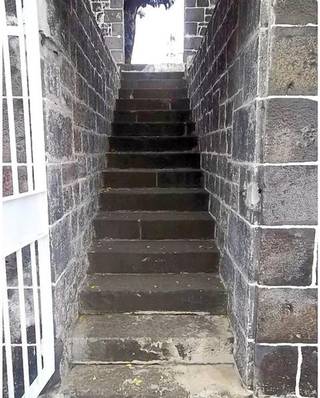
After 48 arduous days at sea and two days aboard the ship just off the shore, Kalachand and the other men set foot in Port Louis and walked up 16 stone steps carved at the harbour before they were processed and sent to the sugarcane estates. In the following years, till the turn of the next century, about half a million more Indians would climb up this flight.
Those steps, like those at Ellis Island near Manhattan that millions of immigrants to America passed through, would go on to become an iconic symbol of the history of Mauritius, and the incredible story of indentured Indian labourers across the world.
Kalachand and the others were the uninformed first participants of a ‘Great Experiment’ that the British had come up with to substitute slave labour and safeguard their commercial interests. If slaves had been hunted down and sold to the British and other Europeans, the new scheme used a method called indenture, which in simple terms meant a written contract signed by a person to work for another person or company for a fixed tenure and sum of money.
Compared to “slave” labour, indenture was projected as “free” labour, even though the workers were bonded by contract for five years under harsh conditions. ‘Double-cut’, for instance, would dock two days’ pay for a day’s absence from work.
The workers could not easily move outside their estates. If caught without their ‘immigration ticket’, they were jailed for ‘vagrancy’. The colonisers wanted to appear morally right without losing profits, but what they had surreptitiously laid out was “a new system of slavery”, as Hugh Tinker would call it in his seminal book in 1974. (A New System of Slavery, Hugh Tinker, Oxford University Press, 1974)
They chose to stay
Although their contracts promised the workers a return passage to India after five years, a majority of them chose to stay back by obtaining a new indenture. Some did return to India, mostly empty-handed, but many went back with wives and children.
Following the Mauritian experiment, which in the next four years saw more than 24,000 Indians arriving in Port Louis (an average 500 people per month), ships carrying Indian ‘coolies’ from the ports of Calcutta, Madras and Bombay became a common maritime activity for the British.
Between 1838 and 1920, another half a million would go to the Caribbean islands and the Dutch-controlled Suriname (based on a convention on emigration signed between the governments of Netherlands and England in 1870.) By the turn of the 20th century, almost all the British colonies, from Sri Lanka to St. Kitts, had tens of thousands of Indian indentured labourers. A few thousand Indian men had been transported as slaves, lascars, artisans and labourers by European colonies during the slave-trade era, even before the ‘Great Experiment’. However, what makes the 1834 Atlas voyage historic and pioneering is that it was the first-ever lawful movement of indentured labourers in the world.
Although Kalachand and his 35 companions survived, many who arrived in subsequent trips, which had more people packed into small ships, didn’t. Infectious diseases, unsuitable food, and the stress of the journey killed them. Mortality often touched double figures.
But in the later years, with the introduction of faster ships, the mortality rates decreased even as the numbers of workers rose rapidly.
The early recruits endured slave-like working and living conditions, and many perished. The Mauritius Truth and Justice Commission in its 2011 report said: “The treatment meted out to the flow of Indian workers who came to Mauritius between 1834 and 1842 was very harsh. Their recruitment, transportation, housing and conditions of work left much to be desired. The condition of work was so appalling that the authorities decided to suspend further recruitment.”
Most of the early ones were tribal people (collectively called Dhangars) and from lower castes — they were the desperate ones who could be easily duped or even kidnapped. The same report shows the attitude of the planters towards the Dhangars: “They have no religion, no education, and, in their present state, no wants, beyond eating, drinking and sleeping; and to procure which, they are willing to labour.”
Tracing their footprints
Did Kalachand or any of the men who came with him die young? Probably yes, but they left no traceable footprints, melting into the sugarcane fields that seemed to have filled the entire island. With no women partners, they probably didn’t even leave any descendants. But some of the early ones did survive and lived long lives. Some, such as Harran, a Bihari from Calcutta, left a record of their life, including photographs, purely by chance. (Angaje, Volume 1, Aapravasi Ghat Trust Fund, 2012.)
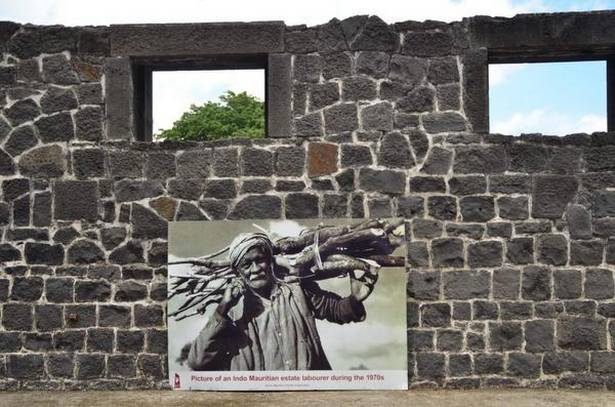
Harran reached Mauritius in December 1836, and did multiple indentures without ever going home. He rose through the ranks, finally becoming an overseer. He was booked for ‘vagrancy’ twice and was photographed by the Immigration Depot for the first time aged 76. His photo, available in the Indian Immigration Archives of Mahatma Gandhi Institute in Mauritius, shows a nattily dressed labour-hardened man with a white beard who looks to have done well for himself.
The stories of Harran and some others, available in the archives, throw light on the early migrants who survived the neo-slavery. The details of the later migrants, particularly those who came in the late 19th century, are well documented.
In the Caribbean islands, migrants fared better because they started travelling late. Munshi Rahman Khan, who became a sort of legend in Indian indenture history for his unique autobiography, was one such. (Autobiography of An Indian Indentured Labourer, Shipra Publications, India, 2005.) Hailing from a village in Hamirpur in the United Provinces, he was a schoolteacher. On a visit to watch the Ramlila in Kanpur, he was lured by the “sugary talk” of two agents into a job in Suriname as a sardar or supervisor at a salary of 12 annas or ₹24 a month, unheard of in India at the time.
He left Calcutta in 1898, finished his five-year indenture, but chose to stay on as an agriculturist while also working as a sardar in railroad construction. He got married and bought a plot near the capital of Paramaribo. By the time he migrated, the reforms in indenture laws and land ownership and the falling sugar prices gave him a different life experience. His memoir is a rich source of history.
Workers to owners
In 1870, the planters were forced by falling prices and labour shortage into land parcelling or grand morcellement — selling small plots on the fringes of their estates to labourers. Many labourers thus became small planters. By the 20th century, there were 40,000 Indian planters who accounted for about 30% of the estates. Their descendants went on to become prime ministers and presidents, ministers, writers, academicians, artists, and businessmen. Nearly 70% of Mauritians are of Indian origin, and they dominate the island’s politics. In Trinidad, Guyana and Suriname, Indians constitute 40%, 51% and 35%, respectively, of the population.
Where are the women?
Indenture history and literature is dominated by the stories of men. But the Mauritius Immigration Office records (1853) [New System of Slavery, Hug Tinker, p-70] show that a handful of women too travelled in the early years like Deeti in Amitav Ghosh’s Sea of Poppies. The very first woman immigrant to Mauritius, and possibly in indenture history, to be issued a number by the Mauritius immigration authorities was Rimoney from North Bihar in 1845. (Satyendra Peerthum, Le Mauricien, 3 November 2016) And what a story it is!
Rimoney, 30, was a widow with a 12-year-old son when she was recruited by an agent in Calcutta where she was struggling to make ends meet. She was literate and so got a job as shopkeeper in an estate while her son was enrolled as labourer. She worked for several years, and with her savings, bought some land to become a vegetable farmer who employed other immigrants and later expanded the business.
There were other women too who migrated under extraordinary situations despite the prevailing patriarchy in India. Gauitra Bahadur, an American journalist of Indian origin, explored the 1903 journey of her great-grandmother Sujaria from Majhi district in Bihar to Guiana, in the book Coolie Woman. Sujaria’s story is fascinating because she was single, pregnant and, above all, a Brahmin for whom crossing the seas was taboo.
By 1910, about 23% of the indentured Indians in Mauritius were women — sifting sugar, stirring the juice, maintaining the mills.
An imagined India
The most remarkable feature of the indenture phenomenon is the creation of a “coolie diaspora” more than a century before the present diaspora India prides itself on. Recruited mostly from the Bengal and Madras presidencies, and to some extent from the Bombay presidency, the labourers and their descendants preserved their culture and heritage in its original form and created an India of their imagination, from handed-down memories and later, from satellite TV and cinema. A poor Tamil woman selling flowers on a Durban street dreams of meeting Rajinikanth in his Chennai home. Women, including young urban girls, who’ve never seen India, wear salwar-kameez and bindis and perform Bharatanatyam.
Temples are prominent in the diaspora’s cultural heritage, whether in Mauritius, South Africa, Fiji or the Caribbean, and Shiva and Kali temples, and Amman, Subramanya and Venkateshwara temples dominate. Shivratri, Diwali, Thaipoosam and Kavadi are gala events, with some rituals likely to surprise even Indians for their adherence to detail.
In Mauritius, for instance, a huge crater-lake atop a secluded mountain has been made into their Ganga Talo, where they celebrate Shivratri with bells and incense and rituals, an astonishing recreation of a heritage that travelled with them when they left their homeland more than 100 years ago.
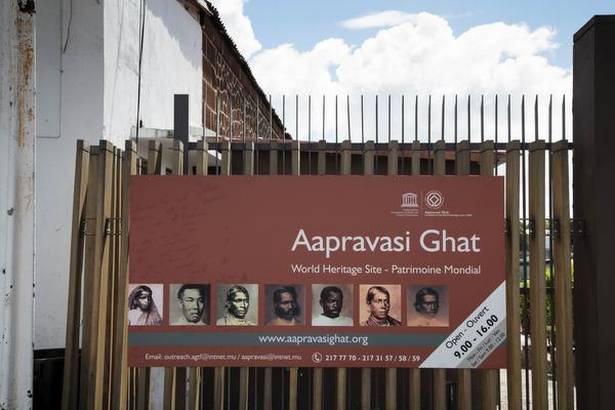
The 16 steps the emigrants climbed are now immortalised as the centrepiece of a Unesco World Heritage site called Aapravasi Ghat. The Ghat, the barracks and the immigration depot have been restored and converted into a living museum. In its cool interiors, exhibits and faces tell the story of the odyssey of generations of bonded labourers from a country more than 3,000 miles away, how they built a nation with their sweat and blood, and finally, how they owned it.
As Kalachand stood at the steps, Champa probably whispered to him that the tapu they had reached was Marich tapu, Mauritius, the centre of a new India they would soon build.
@pramodsarang is a journalist-turned-UN official-turned-online columnist who lives a semi-hermit life in Travancore and adores Sanjay Subrahmanyan.
source: http://www.thehindu.com / The Hindu / Home> Society / by G. Pramod Kumar / October 28th, 2017
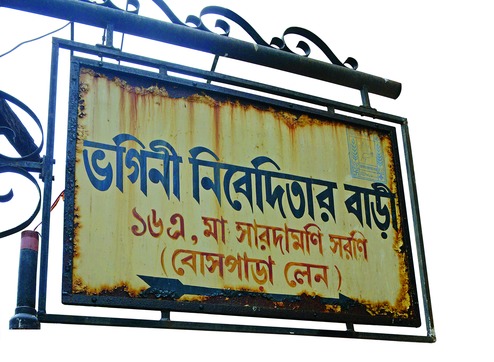
To all outward appearances, it is just another old house in north Calcutta – nondescript, ordinary. The same cannot be said about the address though: 16 A, Bosepara Lane of Bagbazar is the house where Sister Nivedita lived from 1898 to 1911, though few may be aware.
Inspired by her interactions with Swami Vivekananda, when the Irish social activist left her home in England for India, she was still Margaret Elizabeth Noble. It was in Calcutta in 1898, that she slipped into her Indian identity. This two-storey house was the most intimate witness of this spiritual metamorphosis. But all these years no one bothered about it.
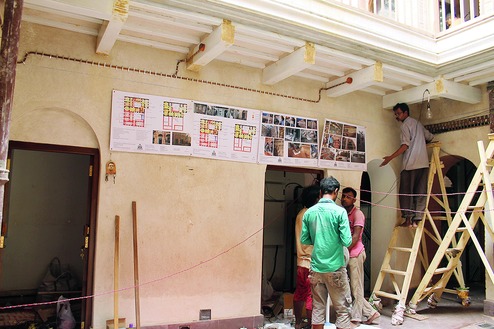
This year being Nivedita’s 150th birth anniversary, the monastic and charitable organisation, Ramakrishna Sarada Mission, along with the Bengal government took on the task of renovating the house. Work is still on, but beginning October 23 – Nivedita’s birthday – the residence has been thrown open to the public for an indefinite but brief while. A full-fledged experiential museum is also in the works. But it will take time to ready it.
“It has taken us almost three years to renovate the house. It was in a precarious state when it was handed over to us – the windowpanes broken, the doors rotting, the rooms in a sorry state, the ceiling about to collapse,” says Pravrajika Aseshprana, the nun supervising the restoration project. She adds, “A lot of the original fittings have had to be thrown away. The wooden handrail of the stairs leading to the first floor, however, remains untouched. It has Sister’s touch on it.”
Upon arriving in Calcutta, Nivedita lived in one of the cottages in Belur in Howrah district, on the banks of the Hooghly. Vivekananda had had these built for some disciples from the West. The shift to Bosepara happened later.
BEYOND BRICK AND MORTAR: (From top) The renovated thakurdalan, the exact spot where the girls’ school was launched in 1898; restoration work underway at 16 A, Bosepara Lane. Photographs by the writer
The physical shift was thought through by Vivekananda. It was in keeping with his larger world view about women’s education and nation-building and the role he thought Nivedita could play in this. In the 1956 book Sister Nivedita, Moni Bagchee writes: “It was to carry out this plan [provide for the nation efficient women in different spheres of life] that Nivedita was sent to Calcutta… Sarada Devi, the divine consort of Sri Ramakrishna, was then residing in Bagbazar with her community of ladies, mostly of devotional bent of mind. Swamiji wanted that Nivedita should live in company of these women…”
Nivedita was given a room in Sarada Devi’s house, but by her own admission, she couldn’t fit in. Bagchee quotes one of Nivedita’s letters from the time. “I imagined caste to be only a foolish prejudice – which must yield to knowledge – against some supposed uncleanliness of foreign habits and thus cheerfully assuming all the ignorance to be on her side, confidently forced myself upon this Indian lady’s hospitality.” Sensitive to the issue at hand, Vivekananda rented out for Nivedita a house in the same neighbourhood – 16 A, Bosepara Lane.
The second shift helped Nivedita bond better with Sarada Devi. It also helped her find her own equilibrium. In Sister Nivedita: The Dedicated by Uzelle Raymond, one comes across a description of the house by Nivedita herself. She writes: “My home is, in my eyes, charming. It is a rambling specimen of the true old Hindu style of building, with its courtyard a great well of coolness and, at night, a playground of merry breezes. Who would not love a house with such a courtyard, with its limited second story, and with its quaintly terraced roof built at five different levels? Here at dawn and sunset, or in the moonlight, one can feel alone with the whole universe .”
As one moves from the hall to the courtyard, and up the flight of stairs to the corner room on the first floor, one cannot help but imagine Nivedita inhabiting this space. Raymond’s book had described a “personal workroom” furnished with two large tables of white wood, a chair, a stool and a bookshelf laden with her Bible studies, Bowden’s The Imitation of Buddha, the Discourses of Epictetus, selections from Renan, biographies, a wide assortment of Emerson, Thoreau, Joan of Arc, Saint Louis, Pericles, Alexander the Great, Saladin. Raymond wrote: “On the wall hung her ivory crucifix and a single picture: the Annunciation, with the Virgin holding the broken lilies in her arms.” One wonders, was it here, or here, or there?
Nobody, of course, can say for sure which space was used for what. “We have had to guess and imagine from the descriptions we find in her books,” says Aseshprana.
The thing that leaps to the eye upon entering the house is the high-ceilinged thakurdalan to the right. Restoration work on this portion is complete. The walls are a lovely burnt orange, the floor gleaming with red tiles, wooden skirting in place with brackets for lights… This is the spot from where Nivedita launched a school for girls one Kali Puja day in 1898. It has now shifted to another address in the neighbourhood. Here she taught them – wives and child widows from orthodox, middle-class Hindu families – lessons in the arts and sciences. Deeply involved with India’s freedom struggle, she had designed a national flag. She taught her students to stitch the design on fine Murshidabad silk.
After the partition of Bengal in 1905, this house became the seat of many political and intellectual meetings. To the left of the entrance is the baithak khana, or parlour equivalent. Debanjan Sengupta, who is a Nivedita expert, tells The Telegraph that this is where the famous chaa paaner aashor or tea party happened. “This is where Rabindranatha Tagore and Vivekananda, Surendranath Banerjee, Sarala Devi, Balaram Bose and others met. This is where Swamiji discussed how to motivate people to embrace Hinduism once again, people who joined the Bramho Samaj.”
Nivedita had an intimate knowledge of armed struggle from her life in Ireland. She was aware of techniques of manufacturing explosives and the power of the Press. Alongside being a centre of women’s education and a den of Bengal’s intelligentsia, 16 A, Bosepara Lane became a repository of all these experiences too, and she drew on these to power the fight for freedom. From this house too was conceived, under her supervision, Jugantar, the first Bengali daily newspaper. This is where she brainstormed with freedom fighters. Writes Bagchee: “…during this time it [the house] was a volcano. It was from this tiny lane that Sister Nivedita planned and conducted the armed struggle like an experienced general…”
The project concerns the house, but the truth is, this entire lane is steeped in history – Nivedita’s and Bengal’s own – though few care to know. History needs makeovers from time to time to re-establish itself. So does, in a manner of speaking, herstory.
source: http://www.telegraphindia.com / The Telegraph,Calcutta,India / Home> Calcutta / by Moumita Chaudhrai / October 30th, 2017
A record crowd at the Salt Lake stadium witnessed a record number of goals on Saturday. India took over as the most attended Fifa Under-17 World Cup venue ever, even as it witnessed 183 goals in the tournament, seven of which came in the final match between England and Spain, the highest ever in the history of a final in the tournament.
The stadium was packed to capacity on Saturday.
The stadium clocked an attendance of 66,684, just three short of the most that could be accommodated by the stadium. The players too acknowledged the support that the crowd showed. The tournament’s highest goal scorer, Rhian Brewster, wrapped the English flag around him and bowed to the spectators with folded hands after the end of the match.
As the final ended, the total number of spectators who turned up at the six host venues across the country stood at 13,47,143, beating the previous best of 12,31,000 recorded in the very first edition of the tournament in China in 1985. With two goals in the Brazil-Mali match and seven goals in the final, the tally of the tournament stood at 183 — 11 more than what was scored in the 2013 edition of the tournament in UAE. The final match tally of seven goals was also the highest, beating the previous record of five goals between Brazil and Ghana in 1997.
“This was like a dream come true. What a match and what an ambiance at the stadium. I am so glad that we could manage to get tickets to the game,” said Priyanka Agarwal, a banker who came for the match with her husband and son.
So enthralled was the crowd that almost none left even after England won the match 5-2. They stayed back for the next 30 minutes for the presentation ceremony where awards of Golden Boot, Golden Ball, Golden Gloves and the all important cup was handed over to the winners in the presence of chief minister Mamata Banerjee and India captain Sunil Chhetri.
While 56,432 spectators had come in for the first match between Brazil and Mali, the count shot up immediately at the start of the second and final match. Among the several noted expats, director of Mali Football Association Cheickna Demba was the toast of the crowd as he ran about along the stands, shouting “Mali! Mali!” to drum up support for the African players. The spectators, though largely Brazil supporters, were soon chanting in tune with Demba. Though the team lost 2-0 to Brazil, the Mali fan club won the hearts of Kolkatans in the stands.
Saturday had a different mix of spectators compared to other days — there were a lot of first-timers. Many were not even football fans, but were at the stadium to enjoy the essence of witnessing a mega sporting event . “We have never been to a stadium before. The atmosphere out here is just crazy. The stadium has made me a fan of the game and I will come back again,” said Army Hospital oncologist Shweta Sharma.
While Brazil garnered more support from the fans in the first match, the crowd support was evenly distributed between England and Spain in the final match. But as England ultimately won the game 5-2, the entire stadium started cheering for the team. “England are the new home team for Kolkata. This was their sixth match in Kolkata and I have seen them win all of them from difficult situations. Today they were at their best,” said Debabrata Mukherjee, a Spain fan who swears by Barcelona, but admitted to have ended up cheering for the English team on Saturday.
source: http://www.timesofindia.indiatimes.com / The Times of India / News> City News> Kolkata News / by Dwaipayan Ghosh and Tamaghna Banerjee / TNN / October 29th, 2017
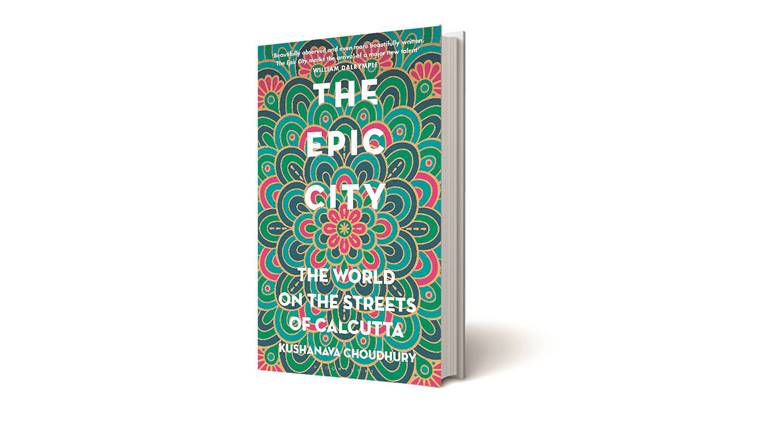
The Epic City: The World on the Streets of Calcutta Kushanava Choudhury (Bloomsbury Circus 241 pages; Rs 499)
Calcutta is personal. And the front flap blurb contains all the trigger words: immigrant, Princeton, British Raj, mosquitoes, hawkers, fish-sellers. Would this be another book balancing nostalgia with wide-eyed wonder? Or would it hit the road running in one more case of parachute authoring? Or, worse, would it be a supercilious outsider’s take on a city that is easy to love, easy to hate, but hard to know?
Calcutta, that most storied of cities, has been subjected to all kinds, right from Geoffrey Moorhouse’s 1971 work to Amit Chaudhuri’s Two Years in the City (2013). In recent years, it has been best served by Strangely Beloved: Writings on Calcutta (2014), a compilation of essays and excerpts that, by virtue of its format, held up special-interest mirrors to facets of the city, from the Eastern Calcutta wetlands to the soundscape that birthed India’s first rock band. The flipside is the academic undertone that robs the city of some of its joy, and the nostalgia shoehorn that depletes some immediacy.
Superficially, The Epic City has none of those problems: Kushanava Choudhury spent some of his childhood years in Calcutta and then comes back to work in the city as a reporter at The Statesman (peeve: the article is part of the masthead, so why lose it?) at the turn of the millennium as a fresh Ivy League graduate. “Like the revolutionaries of my parents’ generation, I wanted to change things…My best hope for making a difference was to work at a newspaper.” To translate those efforts to “make a difference” into a book would be a straight card into disaster zone. Where Choudhury scores emphatically is in twinning his heart, mind and soul — his own story — with the city’s to forge a work that is as gritty as the Beleghata canals, as wondrous as Kumortuli, as determinative as the Partition.
Groomed in the shoe-leather reporting The Statesman was once renowned for (the newspaper’s decline is an obvious parallel for the city), Choudhury lends depth to his observations with lightly worn erudition to produce one of the most readable accounts of a world city. Casual chats with relations, friends, colleagues merge seamlessly with purposeful conversations with trade unionists, little magazine archivists, impoverished scions of Calcutta’s oldest families, descendents of refugees, small publishers, idol sculptors. Underlying it all is an understanding of cultural crosscurrents — Satyajit Ray, of course, but more (and more powerfully) Ritwik Ghatak, Michael Madhusudan Dutt but also Mujtaba Ali — and an instinctive sense of history that burrows into unarticulated spaces, uncomfortable silences.
Cleverly constructed and utterly relevant as each of the 14 chapters of the book is in conveying Choudhury’s clear-eyed vision of the city, two, in my mind stand out. In ‘College Street’, the essay that opens the core section, the author uses a favourite trope for all city chroniclers to eviscerate one of its most fondly held myths: Of Calcutta as a centre of learning. Traipsing through the portals of little magazines and past “rainwater and dog shit” of university avenue, Choudhury trains his guns on the “notes business”, which finesses the education system to ensure intellectual stagnation more effectively than the much-reviled brain drain ever could.
The mood of The Epic City grows darker as it investigates the methodical de-industrialisation of Calcutta — the old factories in the southern reaches memorialised only as bus-stops such as Bengal Lamp and Usha — the rarely acknowledged Hindu-Muslim divide (including at The Statesman, as cosmopolitan as the city likes to think itself to be) and, in ‘Russian Dolls’, it culminates in a familial account of the run-up to Partition and its aftermath.
Weaving together the devastating sequence of the World War II in Europe, the Churchill-directed Bengal famine, the consequences of Direct Action Day with his own grandparents’ displacement from East Pakistan and pitching forward to the rise of the Communists and the Naxal rebellion to his father’s decision to migrate, Choudhury creates a stunning, tight fabric of continuum. Always empathetic, mostly sharp and frequently insightful, this is a heart-full work on a heartbreaking city, notwithstanding the gaping hole of the post-2011 Mamata Banerjee years. While it might even impress the resident Calcuttan, it is definitely recommended for anyone else ever touched by the city.
Sumana Mukherjee is a writer in Bengaluru
source: http://www.indianexpress.com / The Indian Express / Home> Lifestyle> Books / by Sumana Mukherjee / October 07th, 2017
Cancer biologist Aishwarya Kundu has chemically tweaked a natural compound found in broccoli, cabbages and cauliflowers to design a novel molecule that shows promise as a treatment for skin cancer resistant to standard therapy.
The California-based researcher and her colleagues have shown through laboratory studies that their designer compound is about 20 times more potent in killing skin cancer cells than the parent compound extracted from the vegetables: indole-3 carbinol (I3C).
Scientists have known for nearly 30 years that broccoli and the other so-called cruciferous vegetables contain I3C, which has anti-cancer properties. Several research teams working independently have since the late 1980s shown that I3C suppresses breast cancer, prostate cancer, colon cancer and leukaemia cells grown in laboratory petri dishes.
The compound, packaged into tablets, has even been sold as a “health supplement”.
“But the exact way it works in different kinds of cancers is not known. Nor are its direct targets known, without which a compound cannot be given the status of a drug,” said Kundu, who was born in Calcutta and studied at Calcutta Girls’ High School before moving to Manipal and then to the US for higher studies.
Kundu’s research at the University of California, Berkeley, is the first to establish that I3C can block two specific biological pathways -BRAF and PTEN – that drive the growth of skin cancer. While the current drugs against skin cancer target the BRAF pathway, I3C promises a second alternative route of attack.
The researchers have added a chemical structure to the I3C compound to create a novel molecule that shows the same anti-cancer effect at a concentration 20 times lower than the parent compound.
“This is a specially valuable aspect that the drug industry looks for – compounds that are effective at very low concentrations,” Kundu told The Telegraph over the phone. The novel molecule also blocks a third biological pathway: Wnt.
Skin cancer cells use the Wnt pathway as an “escape route” to develop resistance to the standard drugs. Most of these drugs target the BRAF pathway, which is the primary “driver” in 70 per cent of skin cancer patients.
“Since our novel compound blocks the Wnt escape route, we hope it will be more effective than BRAF blockers alone. It can be used in combination with BRAF blockers to curb the risk of resistance,” Kundu said.
“It may also hold out hope for the 30 per cent of patients who don’t carry the BRAF mutation in their tumours and, currently, have limited treatment options. This market alone runs into billions of dollars.”
The California researchers’ studies show that both I3C and the new compound can independently shrink skin tumours in mice. Kundu and her colleagues are now hoping to conduct the required animal studies before the new molecule can be assessed in human clinical trials.
If all goes well, Kundu speculates, human trials could start within two years.
source: http://www.telegraphindia.com / The Telegraph,Calcutta,India / Home> India / by G.S.Mudur / October 27th, 2017
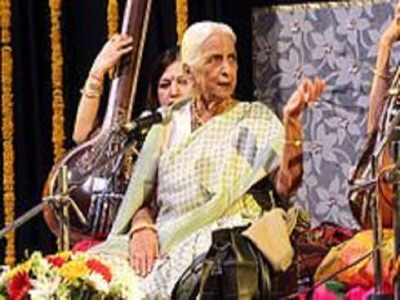
Girija Devi, fondly known as Appa ji, passed away in a hospital in Kolkata on Tuesday evening. She was 88.
She worked as a faculty member of the ITC Sangeet Research Academy, Kolkata in the 1980s and of the Banaras Hindu University during the early 1990s
She was awarded Padma Vibhushan in 2016
_________________________________________________________________
Varanasi :
Demise of great vocalist and Thumri queen Girija Devi came as a big shocker to the music lovers of Varanasi, the birth place of the eminent singer. Girija Devi, fondly known as Appa ji, passed away in a hospital in Kolkata on Tuesday evening. She was 88.
“It is an irreparable loss to Indian music and Banaras Gharana of music. She was a guiding figure for us,” said noted Sarod player and Yash Bharati recipient Pt. Vikash Maharaj. “She was ailing for some time, and admitted to BM Birla Hospital in Kolkata in the morning. She left for the heavenly abode in the evening,” he said adding that she had been living in Kolkata with her daughter.
“No one can fill the gap. Even at 88 her scintillating voice could leave the audience spell bound. She was perhaps the last exponent of thumri, tappa, chaiti and khayal. I heard her singing in an award ceremony in New Delhi on August 27,” said Ashok Kapoor, founder of a cultural organization Kala Prakash working for the cause of Indian music.
Though settled in Kolkata, she regularly visited Varanasi. She was born in Varanasi in 1929. She took lessons in singing khayal and tappa from vocalist Sarju Prasad Misra in early childhood. She worked as a faculty member of the ITC Sangeet Research Academy, Kolkata in the 1980s and of the Banaras Hindu University during the early 1990s. She was a prominent performer of purabi ang thumri style of Banaras gharana. She was awarded Padma Vibhushan in 2016.
source: http://www.timesofindia.indiatimes.com / The Times of India / News> India News / by Binay Singh / TNN / October 25th, 2017