Trophy for hill Cup colours

Darjeeling:
In the “World Cup Town” of Darjeeling, BKJ (Bara Kak Jhora) United Club on Sunday lifted the “trophy” hours before the biggest football tournament’s grand finale kicked off.
BKJ United Club bagged the prize for the most beautifully decorated Darjeeling area during the month-long Fifa carnival.
The Darjeeling North Point School Alumni Association (DNPSAA) handed over a replica of the Fifa World Cup to BKJ United Club.
“On June 2, we had organised an outreach programme to raise funds for a Father Van Memorial Clinic on Wheels. Thousands participated in the football parade where we had christened our hometown.
‘The World Cup Town’. BKJ United Club has bagged the award,” association chief Deven Gurung said. Father Van was a former rector of North Point.
During the event, which featured various entertainment shows, it had also been decided that the best decorated area with the World Cup theme in Darjeeling town would be awarded hours before the final begins in Moscow.
The team inspected several places like Aloobari, J.P. Sharma Path, Employment Exchange area, Nimki Dara, but found Bara Kak Jhora different.
“The place (Bara Kak Jhora) was not only beautifully decorated but was also unique in the sense that it was informative,” Gurung said.
Apart from detailing the history of the World Cup and putting up theme works on “Pele to Platini, Zico to Ruud Gullit”, the club had made a special display of Sunil Chhetri for being among the highest scores of international goals.
“We appreciate the fact that they had a corner for the ’60’s legendary players of Darjeeling’ and put up photographs of famous footballers from the region like Chandan Singh Raut, who was part of the India’s football team, Benu Subba, Avay Gurung, KrishDewan, Raju Rai, Kapil Thapa and Shyam Thapa. All of them have made us proud,” said Gurung.
The St. Joseph’s School alumni association announced that the ambulance, for the clinic on wheels, has been booked and will arrive soon. The vehicle, fitted with a slew of equipment, will be sent to remote areas for free medical check-ups.
source: http://www.telegraphindia.com / The Telegraph,Calcutta,India / Home> West Bengal / by Vivek Chhetri / July 16th, 2018
Sushila Goenka dead
Calcutta:
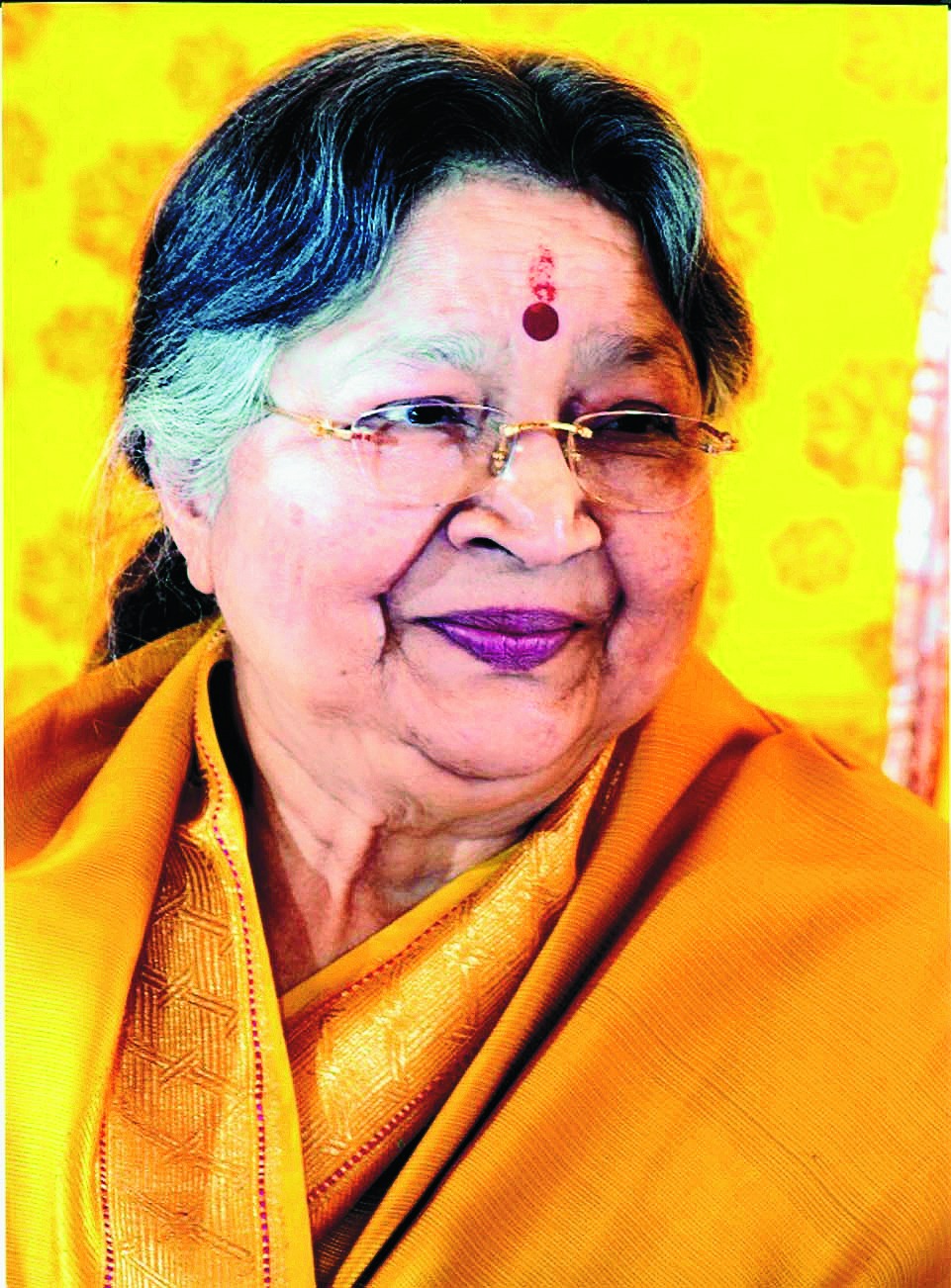
Sushila Goenka, the wife of industrialist Rama Prasad Goenka, passed away on Sunday evening. She was 82.
Her eldest son Harsh Vardhan Goenka, who is the chairman of the RPG Group, and younger son Sanjiv Goenka, the chairman of the RP-Sanjiv Goenka Group, were present along with their children and other family members during Sushila’s final moments.
R.P. Goenka’s brothers, Jagdish Prasad and Gouri Prasad, were also present.
Born in Calcutta on August 15, 1936, Sushila, a daughter of Ram Sundar Kanoria, got married in 1948. A devotee of Indian tradition and culture, she was known for her interest in Indian music and her intimate connection with musical legends like Lata Mangeshkar.
Sushila was a director of Saregama India Ltd. Along with her husband, she was instrumental in setting up the Mahalaxmi Temple on Diamond Harbour Road.
She was cremated at Keoratala on Monday morning in the presence of friends, family members, ministers, senior government officials and city-based industrialists.
source: http://www.telegraphindia.com / Telegraph,Calcutta,India / Home> Calcutta / by Special Correspondent / July 17th, 2018
Practice, chance and peace

Science City:
For 36 years, a Japanese man has been writing and sending a peace proposal to the United Nations. Even at 90, Daisaku Ikeda stays committed to his life-long effort to steer the world away from conflicts and build a humanistic society. He has managed to spread his belief across 192 countries, including India, through the Buddhist society of Soka Gakkai that he leads.
The Soka education system, rooted in the society’s values, encompasses kindergartens in six countries, elementary to graduate level schools in Japan and a liberal arts university in California. Born to a family of seaweed farmers, the Buddhist philosopher and peacemaker has also founded an art museum, a music concert association and institutes for peace and policy research in Japan and the US.
The organisation’s India arm Bharat SokaGakkai held a conference on Ikeda’s 36th peace proposal at Science City on Saturday. “Soka means value creation. There is a lot of synergy between our values and the UN’s agenda,” said Vishesh Gupta, the chairperson of Bharat Soka Gakkai.
The guests were welcomed by volunteers clapping in rhythmic unison.
“Art can’t teach anyone anything. It only makes the human soul receptive to the good. Neither does artistic vision fall from the sky. It is the result of practice,” said filmmaker Suman Mukhopadhyay. He went on to talk of the issues he has addressed through his work on the stage and in films. He is planning a film on Kashmir, titled Paradise in Flames.
Dancer Alokananda Roy shared her experience of working with prisoners. “When I walked into a prison, I did not expect to meet people with heart. But if you treat them as human, they also feel human. I have worked with juvenile offenders, too, who are traumatised by society’s finger-pointing.They made a mistake. It’s fair to give them a second chance,” she argued. Her new students, however, have not made any mistake. They are transgenders. “They do not deserve to be cast aside.”
B.N. Ramesh, additional director general and inspector general of police, West Bengal Human Rights Commission, spoke of his experience of tackling insurgency-hit states across the country and people he met along the way, like an 11-year-old stone pelter in Kashmir.
Former Prasar Bharati CEO Jawhar Sircar shared his experience of attending three Unesco conventions. On the agenda was restitution of cultural property, i.e. the question of returning cultural artefacts plundered from another nation. “Management of peace at the kitchen level calls for patience,” he said.
Using the acronym VUCA coined by the US army, which stands for volatility, uncertainty, complexity and ambiguity, he said: “That’s the world we face. Is peace worth discussing in such a world? But man’s capacity to destroy is equalled only by his capacity to save.”
He cited the genesis of a cross-cultural signal – the salutation. “When strangers met in the medieval times, it was customary to delink the right hand from the body to indicate that no weapon would be used. Warriors would also raise their visors to reveal their identity. The gesture was stylised over time.”
Sircar also mentioned the phenomenon of Mexican wave in sports stadiums. “It proves that there is dormant in man a capacity to act in unison, rising above identity and ideology thrust upon him,” he said.
source: http://www.telegraphindia.com / The Telegraph,Calcutta,India / Home> Calcutta / by Sudeshna Banerjee / July 16th, 2018
Hicky’s Bengal Gazette: The Untold Story of India’s First Newspaper review: Winds of freedom
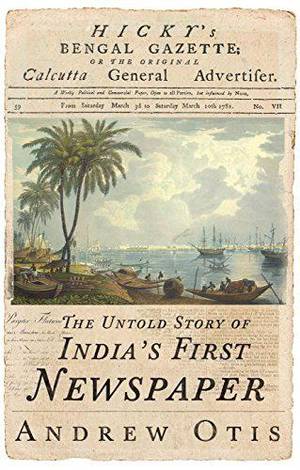
In 1780, an Irishman took on the British in Calcutta with a tell-all weekly that covered everything from corruption to politics
It was 1780. Great events were shaping and shaking the world. Four years earlier, in 1776, Britain had lost its first colony; a new nation was born, namely, the United States of America. And nine years, later, in 1789, the French revolution ushered in a new era of freedom and hope in Europe.
At a time when the western world was changing rapidly a new spirit was also taking shape in one of Britain’s eastern colonies. Calcutta, then capital of British India, though the East India Company ruled only a small part of India at that time, was witnessing developments that were new not only in India, but in all of Asia. As free thought and freedom of expression swept across the world, an Irishman called James Augustus Hicky gave Calcutta and India its first printed newspaper in 1780.
Taking on power
Hicky’s Bengal Gazette, according to the young American scholar Andrew Otis, was a four-page weekly newspaper priced at ₹1. And it took on the rich and mighty of British Calcutta. What did Hicky publish in the pages of his newspaper? “He tried to cover everything that might be important to Calcutta, devoting many sections to politics, world news and events in India.” Topics that featured regularly were poor quality of sanitation and lack of road maintenance. Houses of poor Indians had thatched roofs, prone to catching fire. The outbreak of fires was frequently reported in Hicky’s paper. Through the letters he solicited and published, the editor gave voice to Calcutta’s poor.
He attacked corruption in the East India Company and in high echelons of society. The Bengal Gazette reported that the Governor of Madras, Sir Thomas Rumbold, had been recalled to England to answer charges of corruption in front of Parliament. “Hicky sarcastically wrote,” Otis tells us, “Rumbold was a great man for only amassing a fortune of about 600,000 pounds while in India, much of it from bribes and extortion.”
Hicky did not spare any institution. He exposed the problems of low pay for soldiers in the subaltern ranks of the Company’s army. Failed wars of the Company also came under its gaze. The Company’s army suffered a crushing defeat in the Battle of Pollilur at the hands of Hyder Ali, then ruler of Mysore. As the news of the disaster trickled in, Hicky questioned why the British were fighting in India. He accused the Company of squandering the lives of its soldiers. He even praised the noble actions of Hyder Ali in his treatment of the captured soldiers of the Company.
But as Hicky continued his fearless mission against corruption, the powers of the day did not sit idle. A rival newspaper was born in Calcutta. The India Gazette of Messink and Reed differed from Hicky in every possible way. The two papers represented two sides of the political spectrum.
Tough rival
Hicky emphasised independence while the India Gazette made no secret that they had the support of Governor Warren Hastings. So much so that Hastings had given the facility of free postage to India Gazette. There were hardly any opinion columns in it, a clear sign of their obeisance to Hastings’s authority. And they did so for a good cause, that was monetary rewards. India Gazette became the Company’s de facto mouthpiece; the Company’s departments placed advertisements and notices in that paper.
Press freedom
But Hicky took on the might of the establishment. He alleged through his pieces in the paper how one Simeon Droz had sought a bribe from him and wanted to get favours for him from Marian Hastings, wife of Warren Hastings, in lieu of the bribe. Hastings fumed that someone could show such imprudence. He passed an order that the Post Office would no longer extend its facility to the Bengal Gazette.
Hicky fought back. He hired 20 hircirrahs (courier men) to deliver his newspaper, and his newspaper’s popularity soared. He continued his fight against the most powerful man of the day and his entourage.
Hastings hit back and the Chief Justice Elijah Impey decreed that Hicky be imprisoned on charges of libel. A grand jury sat to decide the fate of Hicky.
After a fierce courtroom battle, the jury acquitted him. Hicky won, Hastings lost. As Otis tells us, “He had proven that it was possible to protect the Press against the most powerful people in British India.”
There were still three more trials to come that tried to muffle the voice of Hicky. What happened; did freedom of the press triumph? For that you must turn to Otis’s book, as he sketches a riveting tale of the struggle of India’s first newspaper editor.
Hicky’s Bengal Gazette: The Untold Story of India’s First Newspaper; Andrew Otis, Westland/ Tranquebar, ₹899.
source: http://www.thehindu.com / The Hindu / Home> Books> Reviews / by Sunandan Roy Chowdhury / July 14th, 2018
Paris pat for Siliguri tea firm
Siliguri:
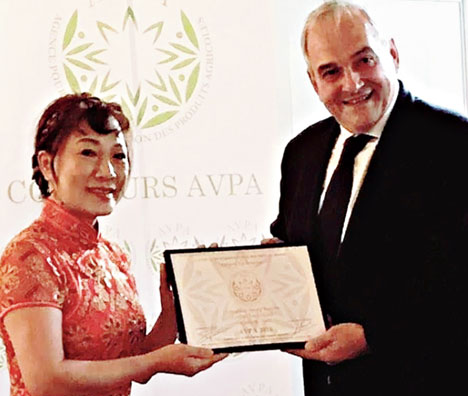
A Siliguri tea firm has bagged an award in a Paris contest with its Darjeeling Tea picked the winner from an assortment of worldwide contenders.
Lochan Tea’s Giddapahar Spring Wonder drew rich pickings at the first edition of the “Teas of the World” International Contest, becoming the only Indian company among winners in various tea categories.
The contest was organised by Agence pour la Valoriasation des Produits Agricoles (Agency for the Valorisation of Agriculural Products orAVPA), and the awards were handed out in Paris on July 10.
“We were the sole Indian company that won an award in the contest. Some other varieties of Darjeeling teas were also put up at the event but those were by foreign importers,” said Rajeev Lochan of Lochan Tea.
Lochan had sent the samples from Giddapahar, a garden near Kurseong.
“It is called the Giddapahar Spring Wonder, one of the finest first flush muscatels. We have informed Sudhangshu Shaw, the garden owner, about the achievement,” Lochan said. The AVPA is a France NGO working in the field of agriculture.
source: http://www.telegraphindia.com / The Telegraph,Calcutta,India / Home> West Bengal / by Avijit Sinha / July 14th, 2018
Machines, made in school
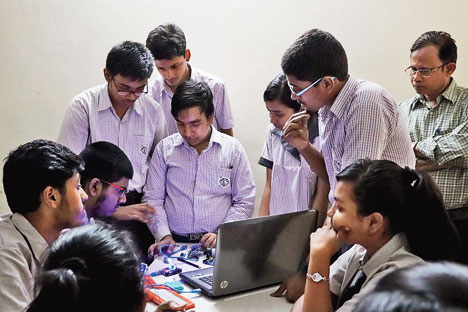
The teenagers from Bijoygarh Higher Secondary School for Girls had never seen a remote-controlled car before. Neither had they heard of artificial intelligence. So they were extremely happy unravelling the wonders of science in the Atal Tinkering Laboratories (ATL) of Salt Lake School.
ATL is an initiative under Atal Innovative Mission, programmed by Niti Aayog, or the National Institution for Transforming India, a policy thinktank of the central government. Under the scheme, the government provides selected schools with grants to set up science laboratories. The idea is to encourage entrepreneurship through self-employment and to develop scientific interest in students. Over 2,000 schools in India have established laboratories under this initiative, including 68 in West Bengal. Salt Lake School is one of them.
The ATL lab in our school was inaugurated in December by the vice chancellor of Jadavpur University, Suranjan Das. Since then, and even before that, 20 students of our school have been working hand-in-hand to create products of scientific importance with utmost precision and dedication.
For many months, ATL had been an intra-school platform, enlightening students on the importance of robotics, cloud computing, programming, coding, artificial intelligence and more.
Finally we opened doors to students of other schools, in observance of ATL Community Day, to commemorate the birth anniversary of B.R. Ambedkar. Our school worked with Maya Foundation, a non-profit NGO that works to create awareness regarding menstrual health of adolescent girls and for the downtrodden sections of rural Bengal. They helped us welcome 12 girls from Bijoygarh. Some students of Salt Lake Point School also attended the exhibition.
As head boy of our school, I watched over my juniors working hard to make the event a success. “Innovation for all” was our motto and we gave it our best shot. My juniors demonstrated remote-controlled cars, which can be used for fire detection, and if fitted with small cameras, can help in investigation purposes. The remote was a mobile phone, and many of the girls from Bijoygarh tried operating it themselves.
The sight of their excited faces at the sight of the moving car was perhaps my moment of the day.
Aditya Mitra, a budding scientist from our school, demonstrated his hand-made laptop. He had built it with spare parts of other electronic gadgets. “Khub bhalo,” was the general reaction from guests, when I asked them to comment on the expo. They interacted with our students and enquired about making the gadgets and the principles working behind them.
The students from Salt Lake Point School were curious and eager too. “There are so many things we didn’t know earlier,” said one of them. “It has been a wonderful experience, getting to see and learn so much.”
Our students, too, were happy to showcase their hard work and explain the intricacies of their machines.
The exhibition was preceded by the inauguration ceremony, attended by scientist Chittaranjan Sinha. Speaking to the students, he emphasised on the importance of scientific innovation and new thinking to sustain our environment and asked us to help society on a wider scale. He encouraged students by telling stories from the lives of Acharya P.C. Roy and Acharya J.C. Bose. “India today is in the grip of grave disarray with superstitious beliefs reigning. Only scientific and rational thinking can save the nation,” he said.
MLA Sujit Bose spent time with us too and congratulated the students and the management for organising the event. Our principal, Sugata D’Souza delivered the vote of thanks and emphasised that this ATL laboratory shall be the nucleus for the development of a scientific temper in students of schools in our region.
source: http://www.telegraphindia.com / The Telegraph,Calcutta,India / Home> Calcutta / by Ananyo Chakraborty, Salt Lake School / July 13th, 2018
Bengal jobs for former KLO rebels
Siliguri:
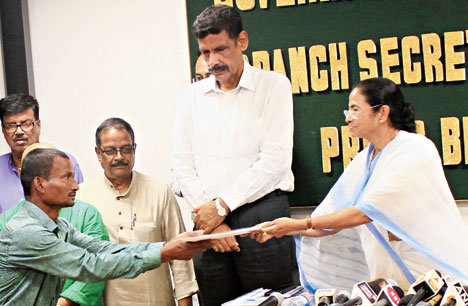
Thirty-six former militants of the Kamtapur Liberation Organisation (KLO) were on Thursday hired as home guard volunteers in the Mamata Banerjee government’s first initiative to rehabilitate the ex-rebels who wanted a separate state.
Mamata handed over job letters to the group, including Mihir Das and Madhusudan Das, once prominent faces of the KLO. The 36 – 21 from Alipurduar and 15 from Jalpaiguri – will be engaged in their districts.
The former rebels – most were arrested during Operation Flushout in 2003-04 by the Royal Bhutan Army – have been disgruntled and long demanded rehabilitation. “They have been provided jobs and will work for the interest of the society. The initiative was taken by the chief minister,” said Amitabha Maiti, the Jalpaiguri police chief.
The decision to address the grievances of those who had resorted to armed struggle demanding a separate Kamtapur state – most were from the Rajbangshi community – follows another important decision the chief minister took during her ongoing trip of north Bengal.
On Tuesday, she had announced the elevation of Bangshibadan Burman as the chairman of the West Bengal Rajbangshi Development and Cultural Board. Burman, board vice-chairman till then, is a top leader of the Greater Cooch Behar Peoples’ Association, also formed to demand a separate state.
A section of the former militants had shunned Trinamul and supported the BJP in the May rural polls in some pockets of Alipurduar. “This had helped the BJP score well in some areas, particularly in the Kumargram block that borders (BJP-ruled) Assam,” an observer said.
The former rebels expressed satisfaction. “We have been raising the demand for 15 years. Some others like us who have been left out should also be provided similar jobs or some other assistance,” said Mihir Das, who hails from Kumargram.
Additional reporting by Anirban Choudhury in Alipurduar
source: http://www.telegraphindia.com / The Telegraph,Calcutta,India / Home> West Bengal / by Avijit Sinha / July 13th, 2018
London Bongs go all out for England
Calcutta:
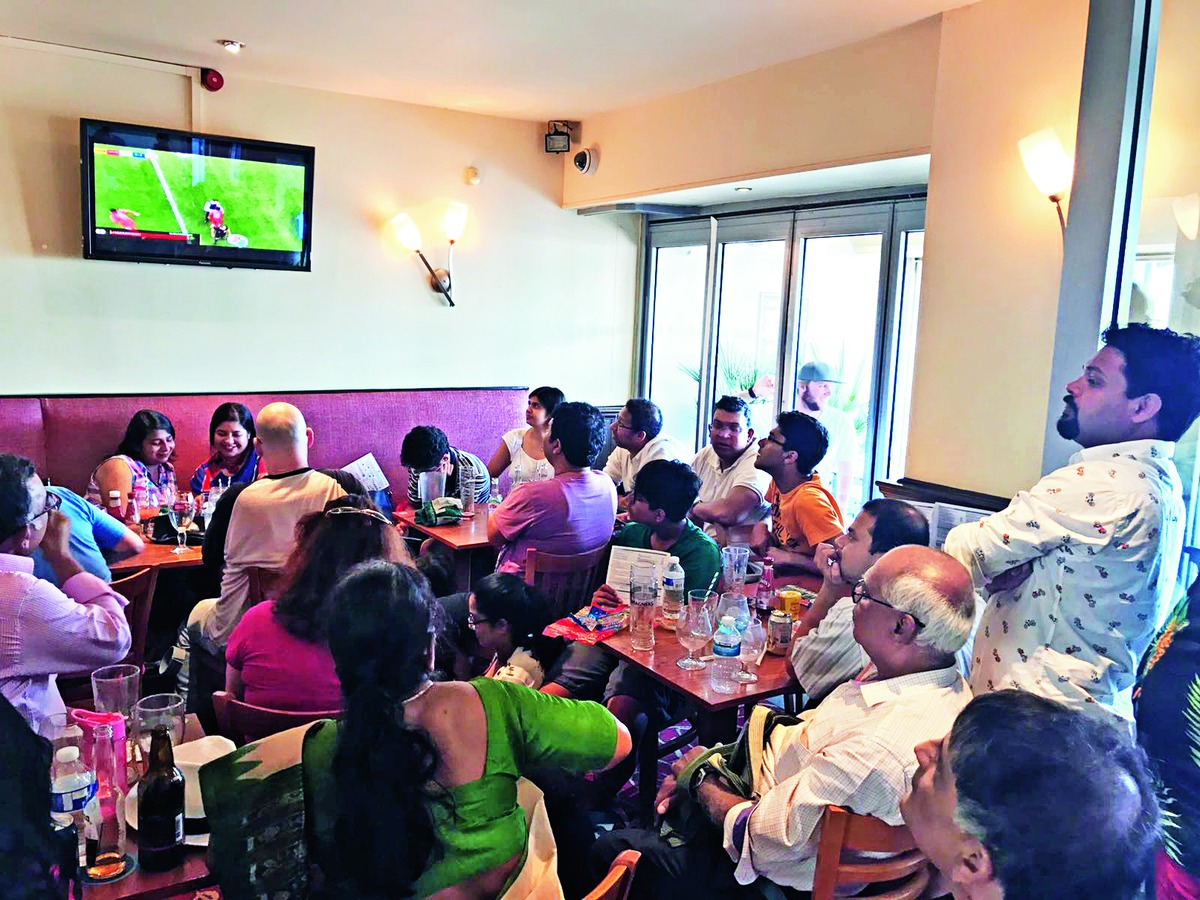
It’s coming home… With old favourites Brazil and Argentina out of the World Cup, Bengalis in England are joining the rest of the country in chanting the choral lyric to the 1996 No. 1 single Three Lions (referring to the English football team’s logo).
“The lyrics are being put up as social media status, memes are getting forwarded on it…” said Sourav Niyogi, a resident of central London.
A video clip he forwarded to Metro had Jaya Bachchan beaming towards the door, silver tray and diya in hand, but instead of the title track of Kabhi Khushi Kabhie Gham there is the Three Lions chorus playing and in place of Shah Rukh Khan, it’s England captain Harry Kane running in with a FIFA World Cup cut-out.
“Streets are getting empty when England is playing. People are hanging flags from houses and cars. Yesterday, I saw a group break into the song at Liverpool Street station,” said Saikat Roy Chowdhury, an IT professional. “Till the other week, our WhatsApp group was divided into supporters of Brazil, Argentina and Germany. Now we are all united under St George’s Cross,” said the 42-year-old.
“Nobody expected England to go this far. This team has no superstar. People have been caught by surprise at how well they have done,” said Tushi Banerjee, a Lionel Messi fan who had “wanted him to go all the way”. Now she buys chart paper for her six-year-old son Ryan to prepare charts with scores of England’s matches.
Saikat and another 60-odd members of the Bengali community group London Sharad Utsav (LSU) had gone for a seaside picnic at Margate on Saturday. “We wrapped up quickly to watch England play at the local Wetherspoons pub.”
Suranjan Som, general secretary of LSU, explains: “Those who come from Calcutta tend to stick to their respective football loyalties – Brazil or Argentina – initially. But as they gradually get sucked into British life and the English Premier League, their loyalty starts shifting towards England. But this time there is no division.”
Prasenjit Bhatacharjee, who has put his sky-blue-and- white jersey away and taken out his England shirt, has started a winner prediction poll on Facebook. “Of course, England has got the most votes,” he laughed. “The average age of this team is only 26. Seventeen members of this squad were not even born when England last reached the semi-final in 1990.”
Indians of other communities are excited about the on-going cricket series. “But for Bengalis, the World Cup is a bigger talking point,” he said.
source: http://www.telegraphindia.com / The Telegraph,Calcutta,India / Home> Calcutta / by Sudeshna Banerjee / July 11th, 2018
Gods, demons and myths
Picture by Sanat Kumar Sinha
Park Street:
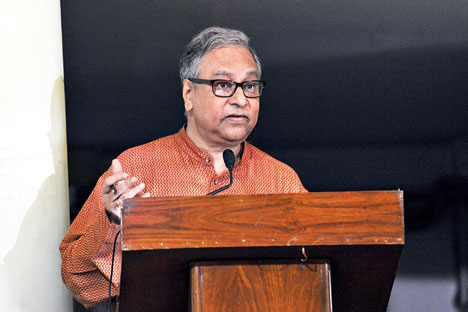
When Jawhar Sircar, the former Prasar Bharati CEO, took the stage at Asiatic Society to deliver the Dr Biman Behari Memorial Lecture on a topic drawn from Indian mythology, it was a deliberate act to lift what he described as the “academic apartheid with gods and demons”.
“The huge area of mythology and folklore is taken as nonsense by academics, thus leaving it to those who are deliberately misusing it to threaten the idea of India,” Sircar said.
Among those who deal in the area, Devdutt Pattanaik, he said, is too text-based in his interpretations. “At times he does refer to context but that pleases rather than disturbs the reader into challenging dangerous fundamentalism.”
Amish Tripathi, he said, builds modern myths on age-old ones that leaves the reader more firmly rooted in the imagined past. “The difference between myth and reality is fast disappearing in India.” Only a few bravehearts like D.D. Kosambi have explained “why colourful tales are needed to sugarcoat religious values”.
Elaborating on his theme ‘ Asuras in Indian tradition’, Sircar said his fascination with asuras was from a desire “to get their side of the story”.
He was using asuras, mentioned in the Mahabharat and the Puranas, as an umbrella under which to put all demonised anti-gods. “They are indigenous forces who stood in opposition to the emerging and dominating Sanskritic narrative.”
“The idea,” he said, “is to try to retrieve bits and pieces of the alternative narrative that was wiped off by priestly officialdom but survived through disjointed tales embedded within the mega narrative.”
Delving into the root of demonology, he pointed out that for ages Man knew certain deities were not benign. “But our binaries do not operate on the same plain (as the God vs Devil construct in the West). We have internalised much of the malevolent pantheon.”
An example of the process, he said, is Shani, who is still treated with suspicion and carries signatures of demonic worship. “You cannot place him indoors. Yet Brahmanism has managed to fit him within the system so that he does not run out of it and become the rallying point of dissonance.”
A difference between gods and demons, he said, is that one has to be worshipped and the other propitiated. Deities were metaphors for ethnic groups. “In pre-legislative times, policy-making depended on whose god one was able to foist upon the others in the pantheon.”
The expulsion or suppression of gods reflects social changes. “Of the ruling three in the Aryan narrative, Brahma was pensioned off to a temple in Pushkar and Indra was banished as a suffix to names. By this time, pastoral economy was on the upswing and Indra was pitted against Krishna.” The Govardhan mountain episode, with Krishna sheltering Vrindavan from the thunder of Indra, is iconic in the Krishna lore.
“Monotheism makes no compromise with the demonic. The devil had to be opposed to God. Christianity and Islam have kept the demon alive on a day-to-day basis as temptation, Sircar said, referring to rituals such as stoning of the devil at Mecca.
But in Hinduism, the asura is already defeated and his memory is celebrated in the burning of Ravan. “Over time, even figures in opposition were deified. Ravan, for example, was shown as a Shiva disciple.
“The story of India lies in this absorption and continuous process of accommodation.”
source: http://www.telegraphindia.com / The Telegraph,Calcutta,India / Home> Calcutta / by Sudeshna Banerjee / July 1oth, 2018