KIFF, marking 100 years of Bengali cinema, to focus on restoration

Kolkata fest to focus on preservation work with a workshop and screening of 13 restored movies

One hundred years after the first Bengali film, Bilwamangal, was screened, the 24th Kolkata International Film Festival (KIFF), to be held from November 10 to 17, will not only celebrate the journey through the past century but also focus on preservation and restoration of Bengali classics.

One of the major draws of this year’s KIFF is a workshop on film preservation organised by the Film Heritage Foundation (FHF). The workshop, which will train 60 resource personnel in the art of preservation and restoration, also aims to create awareness on the urgent need to preserve the moving image heritage of the Bengali film industry.

‘Silent films lost’
Shivendra Singh Dungarpur, founder director of FHF, said that Bengali films were the most affected when it came to preservation. “We have lost all the silent films made here between 1918 and early 1930s, except one film, Jamaibabu, of 1931,” Mr. Dungarpur said.
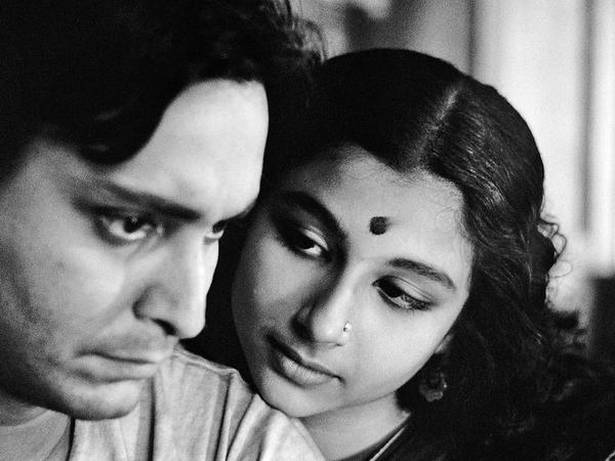
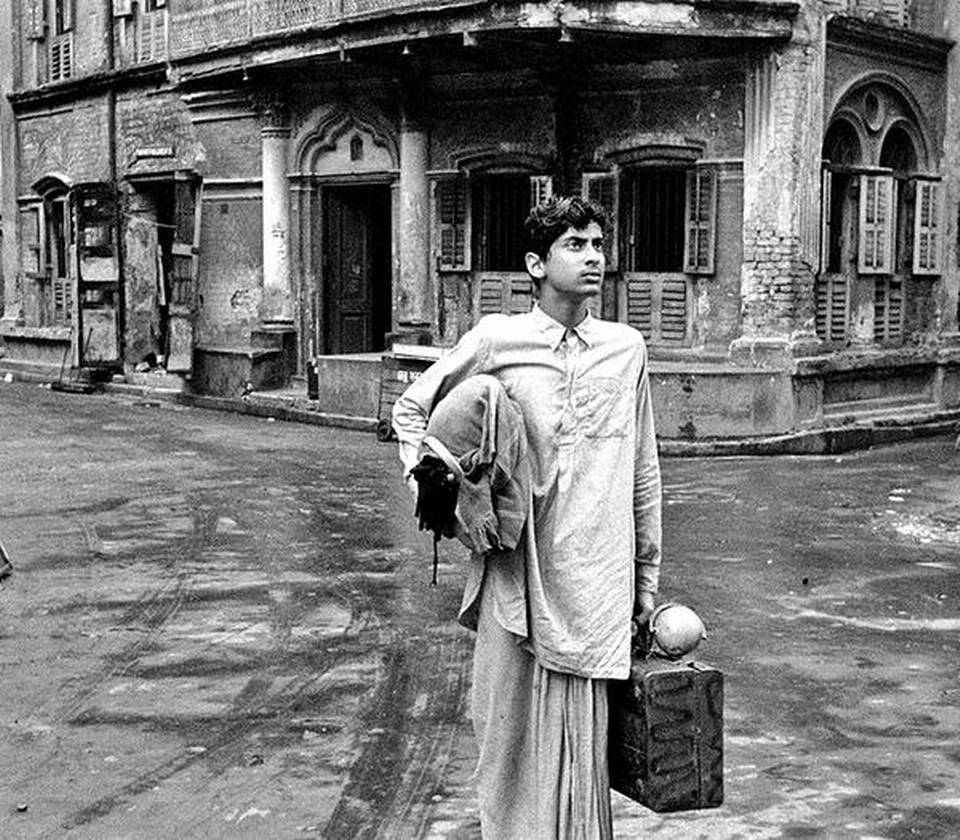
The FHF has compiled a list of 100 Bengali films that are in urgent need of preservation and restoration. They include Bimal Roy’s Udayer Pathe (1944), Suchitra Sen-Uttam Kumar starrer Harano Sur (1957), Tapan Sinha’s Kabuliwala (1957), Satyajit Ray’s Parash Pathar (1958) and Teen Kanya (1961), and Mrinal Sen’s Padatik (1973), among others. Most of these films are lying with individual producers or with the State government.

What makes the workshop and this year’s KIFF more interesting is that 13 classics of world cinema — including The Apu Trilogy (Pather Panchali, Aparajito and Apur Sansar) of Satyajit Ray, Bicycle Thieves of Vittiorio De Sica and Blow Up of Michelangelo Antonioni — will be screened as ‘restored classics’. Before each screening, an expert on film restoration will talk about the restoration process of that particular film.

“Restoration is an art form and we have to train people in this aspect so that our heritage of moving images can be preserved. Moreover, we have to also understand that restoration is more costly that creation,” Mr. Dungarpur said.

Vivek Kumar, director general of KIFF, said the workshop — whose organisers include Viacom18 and International Federation of Film Archives — is a “very important” component of the festival. “Eleven of the most qualified archivist and film restorers of the world will participate in the workshop,”” Mr. Kumar said.
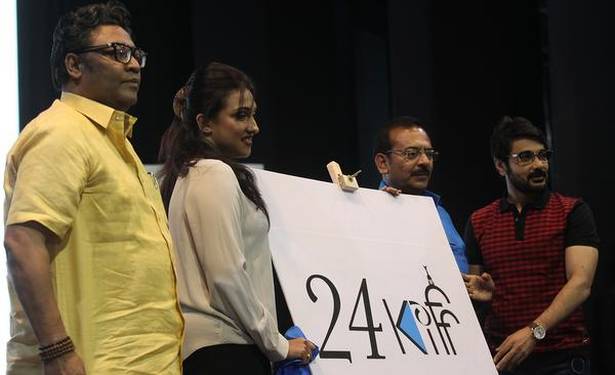
There will be a number of other events to commemorate 100 years of Bengali cinema . This includes an exhibition and also conferring of a special award named after one of the first filmmakers of Bengal, Hiralal Sen. The 24th edition of KIFF will also publish a directory of Bengali films of the past hundred years, a brochure on historical significance of Bengali cinema and a special screening of 14 Bengali films. The inaugural film at the festival will be Uttam Kumar-Tanuja-starrer Bengali film Antony Firingee (1967).

As many as 171 feature films and 150 short films and documentaries from 70 countries will be screened at 16 different venues in the city and suburbs.

“The focus country is Australia, which is also celebrating 100 years of their cinema,” Mr. Kumar said, adding that a delegation of artist and film personalities from that country will be attending the KIFF. The master class, a regular event at the KIFF for film students and cinema enthusiasts, will be conducted by Australian director Philip Noyce.

source: http://www.thehindu.com / The Hindu / Home> Entertainment> Movies / by Shiv Sahay Singh / Kolkata – November 03rd, 2018
Siliguri artist Biplab Sarkar shines in Scotland, recalls struggle

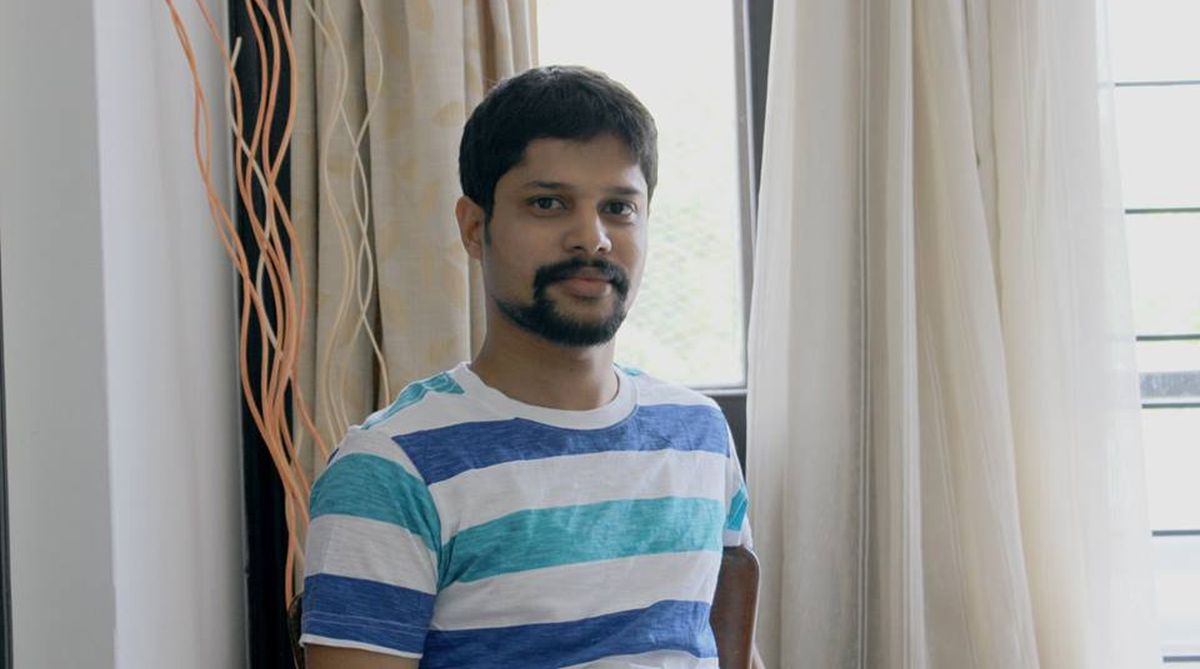
Meet Biplab Sarkar, who was in Scotland for three months for his creative work, and who recently returned to Delhi, where he has established himself as an artist after a long struggle since his school days.

Biplab Sarkar. (Photo: Facebook/@serendipityartsfestival)

True to a proverb that says ‘a wise man does not have proper recognition in his area,’ this Siliguri resident is also a fitting example of a Bengali saying ‘Geyo Yogi Bhik Payna.’

Meet Biplab Sarkar, who was in Scotland for three months for his creative work, and who recently returned to Delhi, where he has established himself as an artist after a long struggle since his school days.

Mr Sarkar, 28, a former student of the Siliguri Baradakanta Vidyapith, says he has not looked backed ever since he has been selected to receive the Glenfiddich International Artists Residency award as an emerging artist of the year 2018.

“Significantly, my artwork was re-coloured in a Kali Puja pandal in Siliguri some time ago, but I did not bother to protest,” says Mr Sarkar, who is in town to celebrate the Pujas. He says he will return to Delhi after Bhai Phonta, which falls on Friday.

Mr Sarkar was chosen as an emerging artist of the year 2018 in March this year after an exhibition of the top five finalists’ works, whose names were shortlisted from nearly 2,500 participants across the country.

He represented India in Scotland as part of the Glenfiddich Artists in Residence programme, where he worked for three months at the Glenfiddich Distillery with a group of eight artists from around the world.

Mr Sarkar, who dreamed to be an artist and wanted to continue his studies in an art college, completed his BA degree in History from the Bagdogra KGTM college. After that, he had to earn his livelihood as an art teacher in private schools in Siliguri and he finally left for Santiniketan on guidance from his art teacher here.

“Only a mad man can make himself an artist after struggling hard and even without food for half a day due to paucity of support. If I can do something, why don’t you take the risk in your life,” his teacher told him once when he was in a dilemma over his future studies, he recalls.

He finally appeared in an examination for admission in Santiniketan and his dream came true after he qualified as a student of Kala Bhawan in Viswa Bharati University.

Later, as he decided to leave Santiniketan to build for himself a “brighter career,” he qualified for admissions in the Delhi University for Masters, where he says he faced acute financial crunch and could not manage admission fees amounting to around Rs 26,000.

“My English teacher, who loved me, helped me a lot by providing part of the admission fees for the Delhi University,” Mr Sarkar recalls.

Mr Sarkar hung around with his old friends in a forest area on the banks of the river Sahu in Siliguri on Diwali.

Mr Sarkar, who works on water colour, got a significant break in his life from India Gate in Delhi where he started working on several hawkers and their struggles and hardworking lifestyle.

“I did not prefer to showcase the misery of the life of hawkers, but tried to portray their joys and sorrows,” Mr Sarkar said. He later worked in Scotland on manufacturing of drums for storing whisky and presented a series of paintings on them with a “natural sound effect,” which was much appreciated there.

source: http://www.thestatesman.com / The Statesman / Home> Cities> Siliguri / by Manas R Banerjee / Siliguri – November 09th, 2018

No priest, women perform Kali Puja in Siliguri

The managing committee of the Ashram’s Siliguri branch has also roped in people from all communities and religions like Hindu, Muslim, Sikh, Buddhism, and Jainism.

(Photo: SNS)

At a time when the Sabarimala Ayyappa Temple has closed its doors for girls and women despite a Supreme Court order, Kali Puja organisers in Siliguri have shunned traditions and allowed a group of women in Siliguri to worship Adya Maa (Kali), while they have organised the puja without a priest.

Significantly, when the puja organised by the Matrisangha Jankalyan Ashram was inaugurated, a group of five women welcomed Goddess Adha Kali by presenting a dance and a song.

Women were directly involved in organising the puja since Tuesday midnight to dawn on Wednesday, while hundreds of Siliguri people witnessed the unique presentation.

The managing committee of the Ashram’s Siliguri branch has also roped in people from all communities and religions like Hindu, Muslim, Sikh, Buddhism, and Jainism.

“Devotees have been offering their prayers and presenting various devotional songs, hymns and even Rabindra Sangeet,” organisers said.

As the Yajna went on, hundreds of people visiting the pandal were greeted by a Rabindra Sangeet ‘Agun’r Parosh Moni Chhoao Prane…’, while the music continues till the oblation of fire.

Notably, the Late Sudin Kumar Mitra, an employee of the Central excise department, established the Matrisangha Jankalyan Ashram, at different locations, including Kolkata and Siliguri.

Mitra organised the first puja in Siliguri in 1978, and termed it the ‘Sarba Bharatiya Adya Kali Puja’ and then set up the Ashram on Balaidas Chatterjee Road at Hakimpara in Siliguri.

Several devotees of Mitra, after his death in 1984, maintain the tradition by showcasing his photograph and his method of worship.

“Our Gurudev Sri Sudin Kumar Mitra has asked us to perform the Kali Puja without a priest, but by involving many people from the society. We maintain the tradition, the method of worship popularized by him and especially his guidance during the puja here. ‘No priest is required for the puja, you do your own puja,’ he used to say,” a member of the managing committee of the Ashram, Bikash Das, said.

“You will not be getting Ma (mother) by ignoring the people (Manush), because the first letter of Manush is Ma,” Sudin Kumar Mitra wrote on 29 July 1969.

Mitra, a resident of Kolkata, started the first puja in Allahabad, as he was posted there and went to many places in India and finally settled in Siliguri.

A poet, Subhan Das, who curiously witnessed that puja throughout the night, said: “Women took part directly to organise the puja when women are being prevented in a temple at Sabarimala in Kerala. Such puja is so significant at the present times we are experiencing.”

“I was delighted as the Rabindra Sangeet ‘Aguner Parosh Moni’ was played during the Yajna,” he added.

source: http://www.thestatesman.com / The Statesman / Home> Cities / by Manas R Banerjee / Siliguri – November 08th, 2018

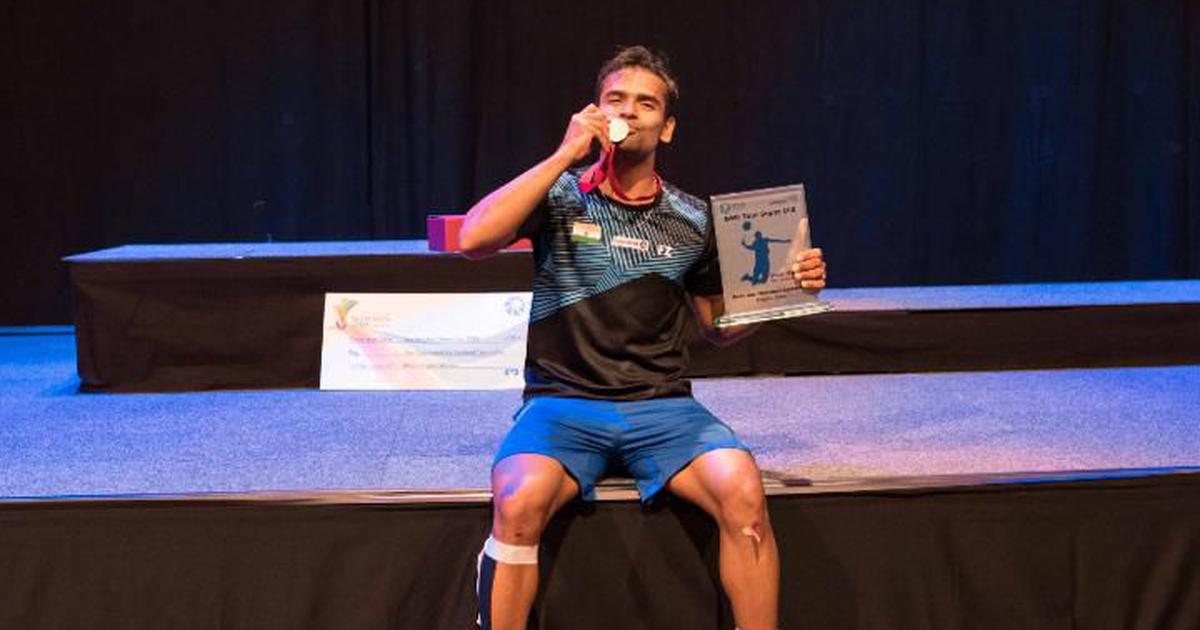
Badminton: How Subhankar Dey overcame India snub and loneliness in Europe to win SaarLorLux Open

Dey, who ran away from home to keep playing badminton and travels without a coach, defeated England’s Rajiv Ouseph in straight games in the final.

Sven Heise/Badminton Photo via Subhankar Dey

On the eve of the biggest final of his career, Subhankar Dey went out with his roommate to walk through a local fair in Saarbrucken, Germany, and kept telling himself that winning the SaarLorLux Open title was the last thing he has to worry about.

After all, the 25-year-old had never imagined playing in a Super 100 final, leave aside winning a title, when he ran away from his home in Kolkata eight years ago because he wanted to pursue the sport while his mother wanted him to take up the Food Corporation of India job offered to him.

But on Sunday, the world number 64 showed the temperament of a champion and the guile of a battle-hardened journeyman to upset fifth seed Rajiv Ouseph 21-11, 21-14 and clinch the biggest title of his career.

It had been a phenomenal week for Dey as he overcame former World and Olympic champion Lin Dan in the second round and saved two match points in the semi-finals against China’s Ren Pengbo before booking his spot in the final.

“My only dream was to become a professional badminton player and I had to struggle even for that,” said Dey, while trying to control his emotions. “But I am thankful to my parents and especially my elder sister who stood by me and this title is dedicated to them.”

He added, “Even after beating Lin Dan, all I told myself was that I am playing well and should make the most of it. So I prepared similarly for the next-round match and thankfully I played very well [against Toby Penty].”

Career struggles
To say that Dey’s journey from the cement courts of Kolkata to the podium in Saarbrucken was difficult would be an understatement.

After leaving home, the youngster trained for couple of years with Shrikant Vad at the Syed Modi Academy in Thane before hopping through various training centres in India, as some coaches had problems with his approach while others couldn’t accommodate him for long.

With his career going nowhere, a break to play in the Danish League for Greve Strands Club provided Dey with an opportunity to hone his skills further and also play more international tournaments thanks to his base in Europe.

“Yes, playing for a club in Europe helped me play more tournaments,” Dey said. “But it was difficult to live all by myself. There used to be no one to talk to and once after winning the Portugal Open title in 2017 I spent two days at the airport because I wanted to see people and interact with them.”

Dey, who lived with a family in Denmark that did not charge him money as their child also played in the same club, would spend all his prize money, his Railways salary and the funds given by his elder sister to play tournaments and record his own matches as he never had anyone to coach him there.

He also began following the European system of studying his opponent’s videos and planning his match strategy in the absence of a coach.

The changes brought the desired results as he won the Iceland International and Portugal International in 2017 and also reached the semi-finals of the Senior Nationals in Nagpur last year after beating 2017 Singapore Superseries champion B Sai Praneeth.

He was, however, still overlooked for the national camp probably because he had left it midway back in 2014 when he was sent to Bengaluru to train with Saina Nehwal, while the rest of the men’s shuttlers were practising at Hyderabad.

Opening an academy
Instead of getting demotivated by the snub, Dey worked towards starting his own academy in Kolkata to provide local players and even those in India who are overlooked by the big centres an opportunity to train with quality coaches.

While he was clear that he had many years of badminton left in him, he hired Indonesian coach Nur Mustaqim Chayo to work with the trainees. Dey himself has been training at the same centre for the past few months.

“I never got an opportunity to train at the national camps or the big centres like Gopichand Academy or Padukone Academy,” said the shuttler, who is supported by the Lakshya NGO. “I was even asked to leave a few academies, while I couldn’t settle in some. So I decided to start an academy of my own and I am happy to finally work with the coach on my game.”

The academy, managed by his elder cousin Somnath Kar, has allowed Dey to focus solely on his training and preparations. In the SaarLorLux Open final, he showcased his ability to read the game and make a solid game plan as he did not allow Ouseph to attack and use his height advantage. “I did a lot of homework and it paid off. I watched his games. I was patient and knew I had nothing to lose,” he said.

The title would have definitely helped him gain confidence that his chosen way of putting in the hard yards do deliver the goods.

source: http://www.scroll.in / Scroll.in / Home> Badminton / by Abhijeet Kulkarni / November 05th, 2018