31 a
30
Kolkata to get world’s first museum on Chaitanya Mahaprabhu
The Gaudiya Mission, a spiritual and philanthropic organisation established in 1935, propagates the teachings of Sri Chaitanya and the Vaishnava faith.
Kolkata :
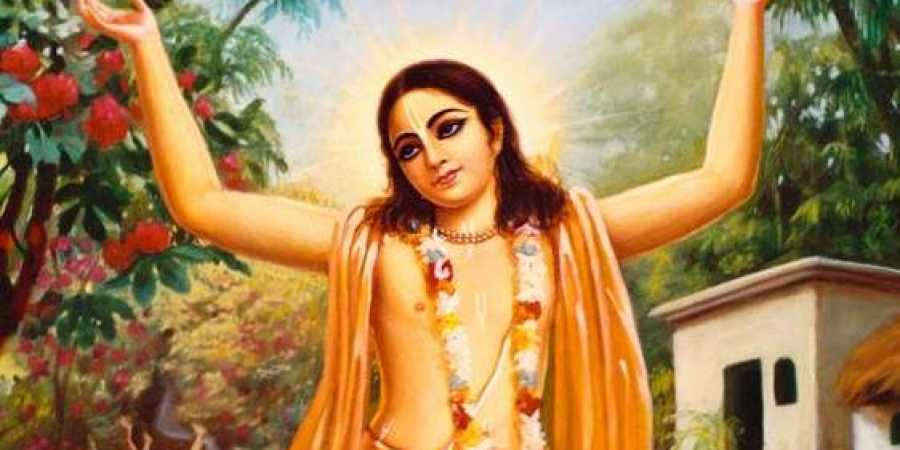
The world’s first museum dedicated to the life and teachings of 16th-century saint and social reformer, Chaitanya Mahaprabhu is ready to be inaugurated at the city’s Baghbazar Gaudiya Math on August 13, an official said.
Chief Minister Mamata Banerjee will inaugurate the technically-enabled ‘Sri Chaitanya Mahaprabhu Museum’ built to preserve information related to the great saint. “The museum is the dream project of Gaudiya Mission which will be a reality after it’s inauguration on August 13. Amidst the prevalent cruelty, clashes or say intolerant situations in our society, we wish to showcase Mahaprabhu’s teachings and vision and serve the society,” Bhakti Nishtha Madhusudan Maharaj, the mission’s assistant secretary and museum in-charge told IANS.
The Gaudiya Mission, a spiritual and philanthropic organisation established in 1935, propagates the teachings of Sri Chaitanya and the Vaishnava faith. It has many centres in India and temples in London and New York.
He said that they aimed at spreading the message across society and not just keep it restricted to the devotees. They want researchers, intellectual and scholars to avail of the library facilities and experience a detailed life of Mahaprabhu by visiting the museum.
The museum is a three-storey structure built on an area of approximately 1,350 square metres and includes galleries, public utility areas and a library. Each floor is dedicated to different phases of the saint’s life starting from his birth, his marriage with Vishupria, journey throughout the country up to the period after he attained ‘Sanyasa’ (sainthood).
Life-size models, 3D films, audio tracks and animatronics will ensure maximum engagement of the visitors. The museum has been designed by the National Council of Science Museums (NCSM). “While the museum seeks to play a key role in creating awareness among the present generations, its primary objective is to preserve all the evidence of Vaishnava heritage, living traditions as well as the intangible heritage which are disappearing very fast,” the official page of the museum said.
A rich collection of resources such as the saint’s memorabilia, artefacts, manuscripts, rare books, pictures and other valuable exhibits are on display. People can even get a glimpse of hsi original hand-writing. Also, there is an auditorium, archive, meditation room, Library, space theatre and a canteen.
Multimedia display, light and sound illustrations have been used for an immersive experience. There is Virtual Reality to depict the ‘Nagar Samkirtan’ (religious chant) where visitors will feel that they are participating in ‘Kirtan’ along with Mahaprabhu. The budget of the state-of-the-art museum is somewhere around Rs 12-14 crore, a mission official said.
While laying the foundation stone in 2013, the then president of the Mission Bhakti Surhid Prabrajika Goswami Maharaj had said that it was the world’s first museum on the saint with modern communication methods which will collect, preserve and disseminate archival literature of the Sri Chaitanya cult.
source: http://www.newindianexpress.com / The New Indian Express / Home> Cities> Kolkata / by IANS / August 08th, 2019
Calcutta teen champions arts in US
17-year-old creates group to give kids choice of education
A teenager with roots in the city is changing mindsets among students in Dallas, Texas, where she lives now.
Kaushiki Roy, 17, believes in giving children a choice in education. A former student of Calcutta International School, she created a group last month to help under-privileged children develop a taste for art, dance, theatre and music and pursue the arts stream in college.
Her goal: To rid students of the pressure created by the school curriculum and parents to opt for STEM (Science, Technology, Engineering and Math) subjects.
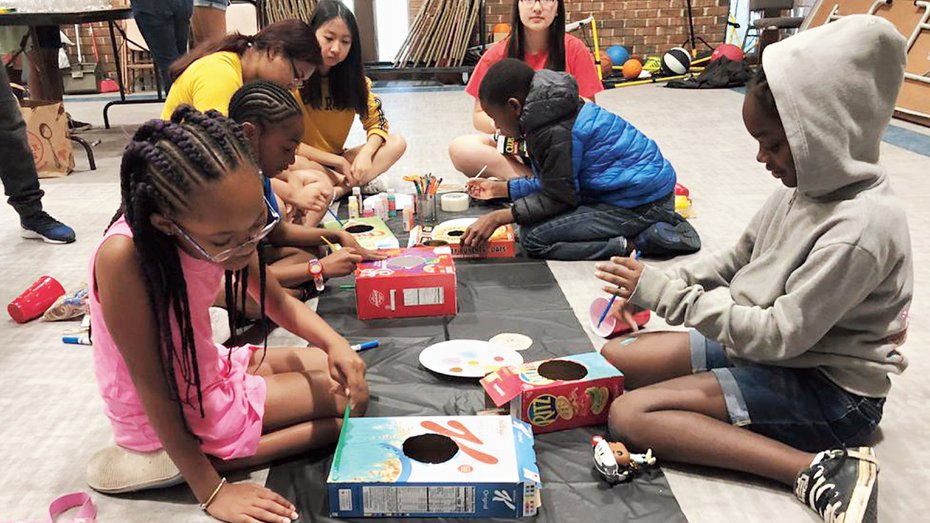
Kaushiki floated Humanities of Tomorrow with the help of some like-minded friends. Together, they involve children in diverse activities from art and craft to music and theatre.
“There are many non-profit organisations that coach underprivileged children in STEM subjects so that they can pursue college education in science and technology. However, none of them creates any interest in the humanities. I decided to do just that,” the Grade 12 student said.
The daughter of an IT professional, Kaushiki had felt the pressure to excel in science and maths during her schooldays in Calcutta.
“I studied there for two years — classes VI and VII. Right from that stage, I could sense this urgency among my classmates and their parents to work harder on science and maths. Most of the parents were doctors and engineers, like mine, and the kids wanted to follow the tried and tested path too,” said the fan of Ariel Lawhon of I was Anastasia fame.
“I remember attending an algebra class on my first day in school and feeling at a loss while my classmates aced the problems,” she said.
Kaushiki, who discovered her love for the languages early, felt kids in the US were also under pressure to excel in STEM subjects.
“The emphasis intensifies from Grade 8. My school caters to a diverse range of students. There are many Asians, too. Most kids are striving hard to excel in physics, chemistry and maths. Humanities subjects are often neglected,” said the girl who enjoys playing the piano.
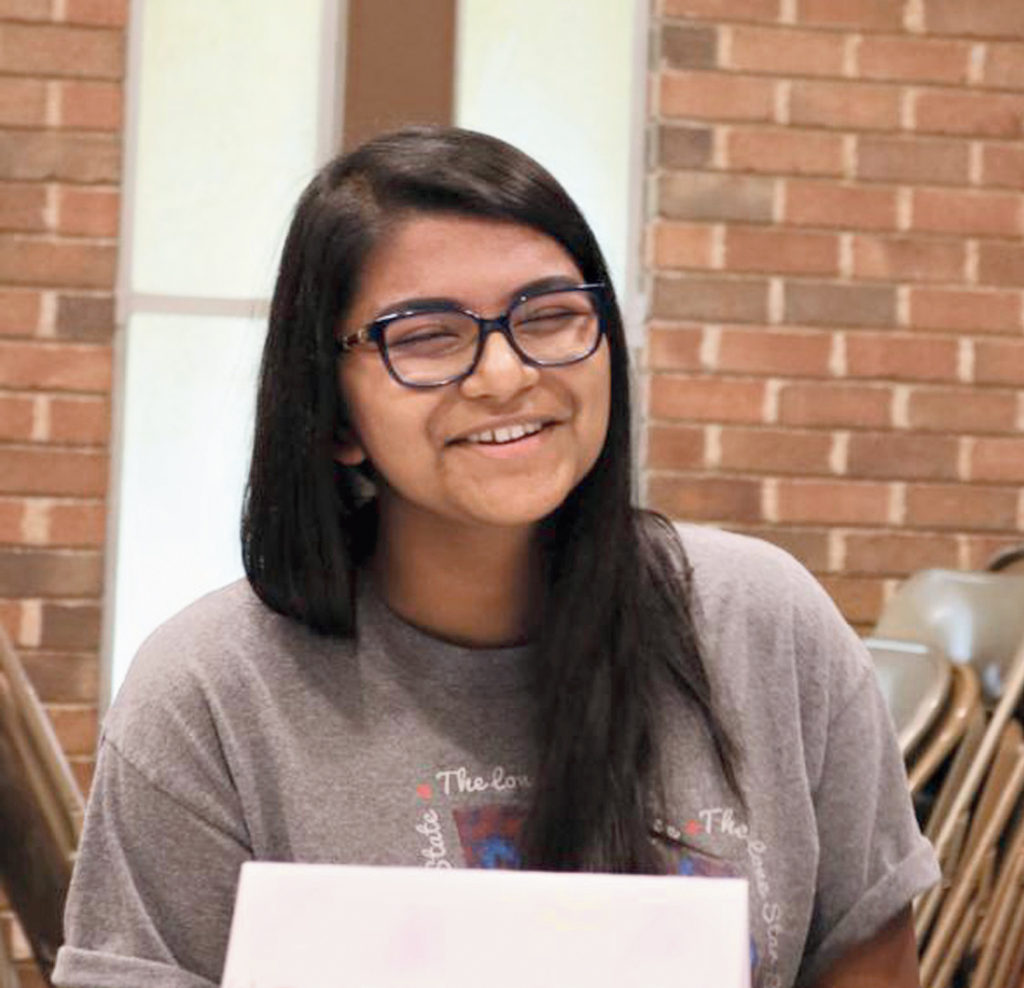
Kaushiki, along with six friends, have designed a two-week arts curriculum for children. Surprise awaited her at home when her father supported her initiative despite his science background.
Workshops conducted by their group engage the children in mandala-making, playing the drums and encourage them to dabble in different theatre genres. Zumba and impromptu acting sessions are also held. The idea is to appreciate the creative qualities of the kids.
“There are different teachers for each subject. The teachers are all students like me. We also have volunteers. Together we try to train the children in forms of dance (contemporary and popular) and music. They learn to express through art. The training is meant to give them a good time and encourage them to speak up,” Kaushiki said.
“They should at least be given a choice. Liking humanities does not make you a loser. The mindset must change. Let them learn everything and then decide what they want to take up in college,” she said.
Kaushiki’s greatest gift — when students express an interest in pursuing humanities in future.
Humanities of Tomorrow has already conducted sessions for two different clubs of underprivileged children. The last day of each session ends with a carnival where the trainers and students have a good time together.
“Till now we have touched the lives of nearly 80 kids (between 9 and 18 years) in our locality. All of them are now looking at humanities from a different perspective. These children don’t get the kind of exposure we enjoy in school. So I am giving it to them in my way. We are thinking of inducting some of these children into our group as volunteers,” Kaushiki said.
She is already planning cultural awareness and environmental awareness weeks in her fall and spring breaks, respectively.
Kaushiki hopes to leave Texas for higher studies next year but wants her organisation to continue working. “My school has been very supportive. We are in the process of training juniors. I will help them when I come home during breaks. I will try to set up a branch of Humanities of Tomorrow in the state where I study,” said the girl, who dreams of being a journalist.
source: http://www.telegraphindia.com / The Telegraph, online edition / Home> West Bengal / by Chandrayee Ghose in Calcutta / August 28th, 2019
27
26
25
24
Being tolerant the Bengali way: Rise and fall of the Brahmo Samaj
The Brahmo Samaj was founded on 20 August, 1828 in Kolkata by Rammohan Roy and Debendranath Tagore
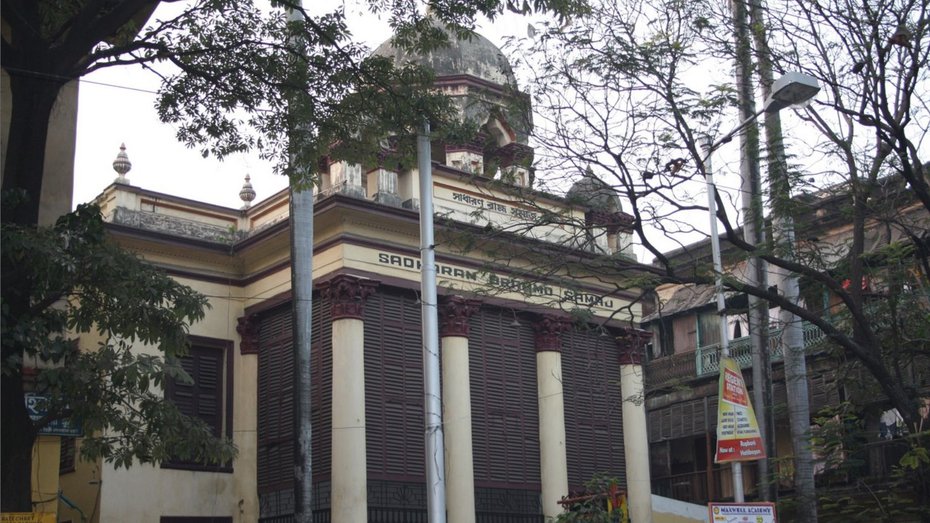
The Sadharan Brahmo Samaj was denied the status of a minority religion in an order issued by the West Bengal Minority Affairs and Madrasah Education Department in September 2017. The context was that of the Samaj constituting the governing bodies of eight prominent colleges in Calcutta. The order proclaimed that as the Samaj was not a “separate minority religion”, the colleges governed by it should be treated as “non-minority Government-aided Colleges.” It further stated that the governing bodies of these institutions, run by the Brahmo Samaj Education society, be dissolved. The Samaj decided to take the West Bengal government to court, stating the government was in an utter state of “confusion”. It is rather ironic that an institution, time and again divided over its vision and constitution, arraign others for getting bewildered by its habitus.
But we will refrain from rallying on those walkways, and instead look back at the checkered yet fascinating history of this once reformist movement, founded on this very day in 1828 by Ram Mohan Roy, Tarachand Chakravarti, and Dwarkanath Tagore among others.
Emerging from the gatherings of educated, upper-caste elite bhadraloks and their newfound belief in religious reform and congregational praying, the Brahmo Samaj in its earliest avatar organised weekly services with marked segregation. The recital of vedas were performed by orthodox priests, only for the Brahmin members of the congregation. It was followed by commentaries on the Upanishads and the singing of songs and hymns which were open to all. This did not fit very well with the greater idea of universal worship that lay at the core of the Samaj. After Ram Mohan’s departure for England in 1830, and his subsequent death in 1833, it was Debendranath, Dwarkanath’s son, who took charge of the Samaj. Debendranath established the Tattwabodhini Sabha, which became the hub of the cultural elite in Kolkata, gathering some 800 members at one point of time.
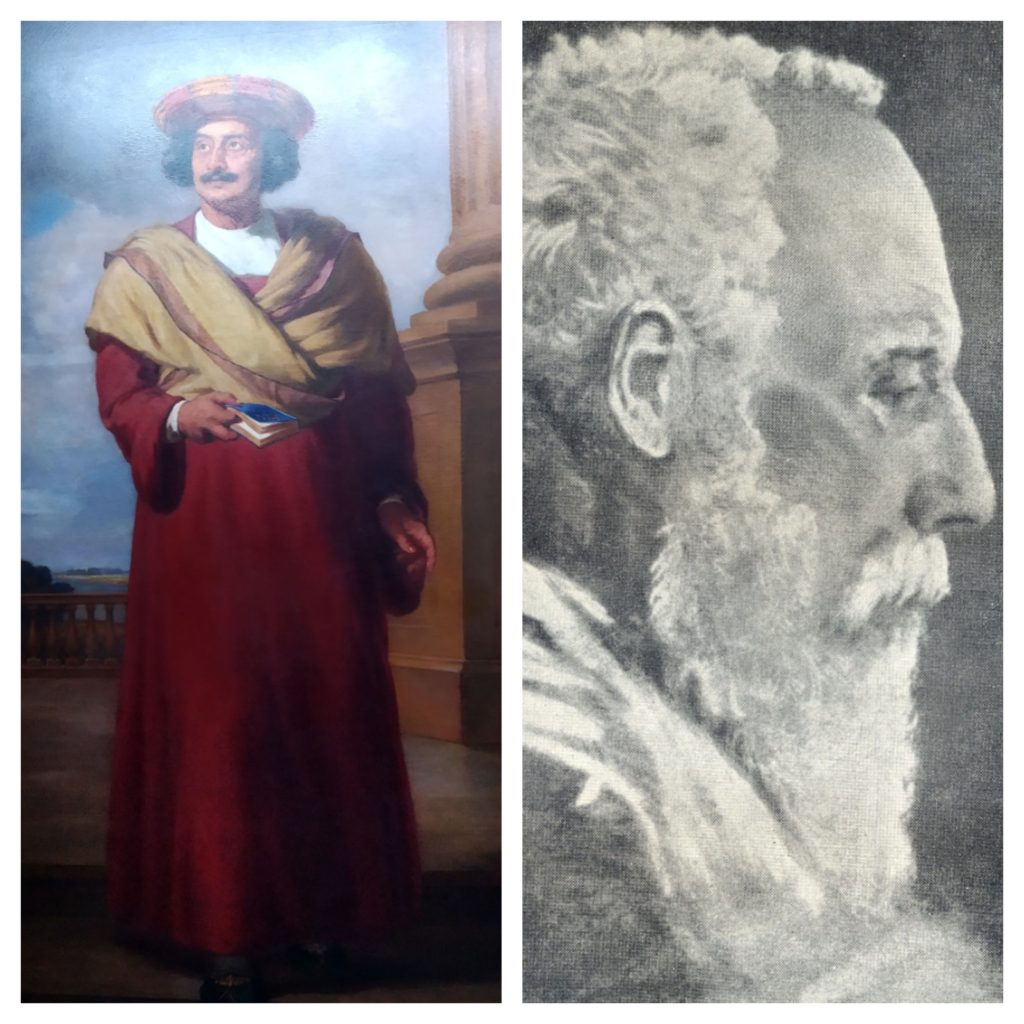
The era of the Tattwabodhini Sabha (1839-1859) thus ushered in a significant and creative epoch in the history of the Brahmo Samaj which had for once come to receive the sincere co-operation of nearly all the progressive sections of the contemporary Hindu society. The unification of these diverse elements of national life on a common platform was certainly an organisational achievement which reflects credit on the tact, foresight and earnestness of the young Debendranath.
Rituals and Adi Brahmo Samaj ceremonials of the new church were formulated, the most prominent among these being the system of initiation. It started with the initiation of Debendranath and his friends in 1843. The initiated Brahmo was a new phenomenon in the history of the faith. Along with initiation came the special status of membership system and compulsory subscription for the initiated was introduced. A notable doctrinal change that took place was the abandonment of the belief in the infallibility of the Vedas. It was decided and formally declared that the basis of Brahmoism would henceforth be no longer any infallible book, but “the human heart illumined by spiritual knowledge born of self-realisation”.
The Brahmo movement spread rapidly in the country and by 1872 the church had succeeded in establishing altogether one hundred and one branches throughout India and Burma. In one respect however a notable change had taken place in the nature of Brahmoism from this epoch. The Samaj had now definitely taken the shape of a religious sect or community with its own creed, rituals and regulations. This began increasingly to mark it out as a separate religious unit, distinct from other existing sects.
The next phase of the Brahmo movement is dominated by the dynamic personality of Keshub Chandra Sen (1838-84) who joined the Samaj in 1857. Debendranath loved the young man and appointed him an acharya of the Samaj. Keshub was the first non-Brahmin to be given that position. In 1864 he undertook an extensive tour of the presidencies of Madras and Bombay and prepared ground for the spread of the Samaj in Southern and Western India. But serious differences regarding creed, rituals and the attitude of the Brahmos to social problems had arisen between Debendranath and Keshub, men of radically different temperaments and the Samaj soon split up into two groups – the old conservatives rallying round the cautious Debendranath and the young reformists led by the dynamic Keshub. The division came to the surface towards the close of 1866 with the emergence of two rival bodies, the Calcutta or Adi Brahmo Samaj, consisting of the old adherents of the faith and the new order (inspired and led by Keshub) known as the Brahmo Samaj of India.
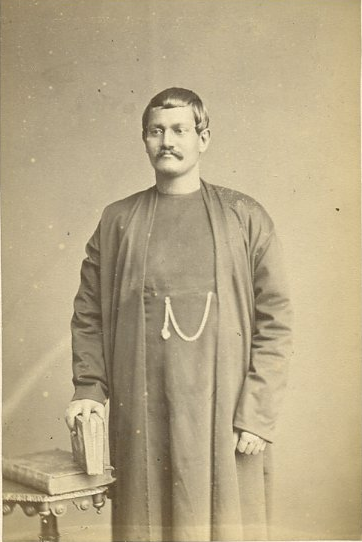
In spite of the dynamic progress of the Brahmo movement under Keshub, the Samaj had to go through a second schism in May, 1878 when a band of Keshub Chandra Sen’s followers left him to start the Sadharan Brahmo Samaj, mainly because their demand for the introduction of a democratic constitution in the church was not conceded. The body led by the veteran Derozian Shib Chandra Dev comprised some of the most brilliant and talented young men of the time including Sivnath Shastri, Ananda Mohan Bose, Dwarkanath Ganguli, Nagendranath Chatterjee, Ram Kumar Vidyaratna, Vijay Krishna Goswami and others. They were all staunch democrats and promptly framed a full-fledged democratic constitution based on universal adult franchise, for the new organisation. It was declared in Bengali mouthpiece of the Samaj Tattwakaumudi that the Brahmo Samaj was about to establish a ‘world wide republic’ by replacing inequality with equality and the power of the king with the ‘power of the people’. The new body displayed, considerable vitality and dynamism in making inroads into fresh fields of philanthropy and politics. Quite a few of its leading figures took part in the activities of the Indian League (1878), the Indian Association (1878) and the nascent Indian National Congress. It has proved up till now, as demonstrated at the outset, a powerful and active branch of the Brahmo Samaj in the country.
source: http://www.telegraphindia.com / The Telegraph, online edition / Home> Culture / by Abhirup Dam / August 21st, 2019