Boston Ice Party

Two hundred years ago, after 20 failed attempts, the first consignment of ice arrived in Calcutta from Massachusetts

Blocks of ice for sale in a market in India. / Shutterstock

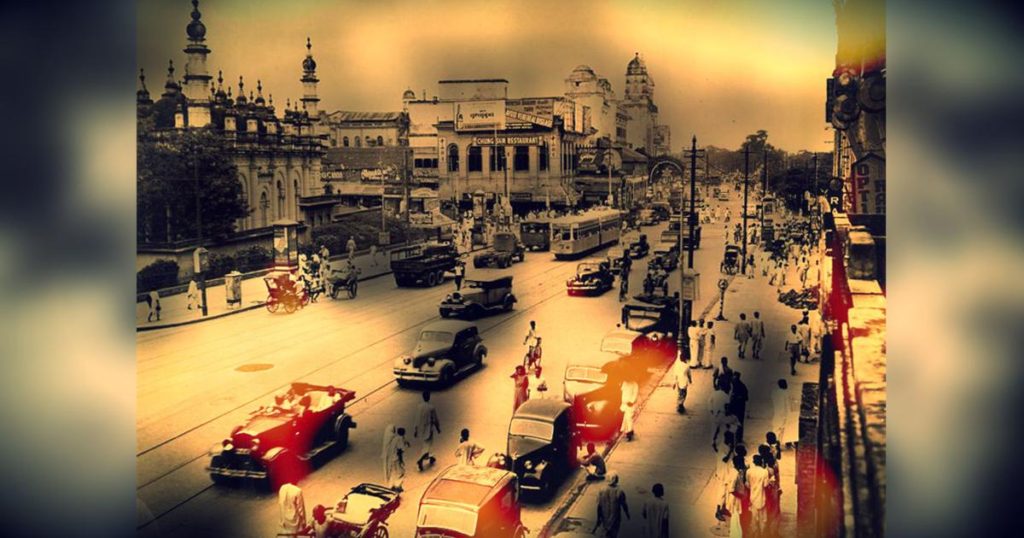
This was not very long ago, but a period that may well now be time stamped as BC or Before Corona. The exhibits at the Jadunath Bhavan Museum and Resource Centre in south Calcutta were arranged in a certain way to present the history of ice in the city — yes, it wasn’t such a taken-for-granted item as it came to be.

The photographs on display were pickings from Fulbright-Nehru Scholar Christine Rogers’s research. Exhibit 1, a black-and-white-photo of a young man driving a rickshaw laden with blocks of ice through the streets of Calcutta. “The boy is carrying the ice to the fish market. It is a photo from present-day Calcutta,” said Rogers. The second exhibit, a photograph of commercial projects of snow parks that are now being created for entertainment. The third, people sitting on the banks of the Hooghly where the ice used to be downloaded after it arrived all the way from the US.

Once upon a time, ice was a rare commodity, procured all the way from America. The exhibition, in consonance with Rogers’ talk, is a detailed history of ice trade in India. The now, followed by the then.

In the 19th century, the British army in India and people in the administration found it difficult to cope with the intense tropical summer. In a letter dated May 1833, Daniel Wilson, the fifth Bishop of Calcutta and the man who built St. Paul’s Church, writes to his family in England: “The weather is perfectly suffocating. None can pity us but those who know our suffering.”

Wilson’s immediate predecessor had not been able to endure the extreme temperatures and had died in office. Thus, to ease things for their own, the East India Company set about arranging for a regular supply of ice for all seasons.

Those days, what was available in the market was “Hooghly ice”. It used to come from Chinsurah in the winter months and was so named because it was made from the river’s waters. Said Rogers, “This ice was filthy and more like slush. It was made by freezing water in shallow pits and was dirty and unfit for drinking. This was not the kind of ice that the British were looking for.”

In 1833, a businessman in Boston, Frederic Tudor, arrived in Calcutta in a large vessel stacked with ice. Bringing ice to India was no easy task, not even for as enterprising a fellow as Tudor. According to Rogers, he failed 20 times before he met with any success. The challenge was to keep the ice from melting the entire length of the two-month journey to Calcutta and thereafter.

Tudor was not in this project alone; he partnered with Nathaniel J. Wyeth, a supplier of ice and a businessman. Together, the two cracked issues such as the technology of cutting ice, thereby making large-scale ice exports from Massachusetts possible. The two evolved the technique of harnessing horses to a two-blade ice cutter to cut more ice in less time.

David G. Dickason writes in his book, The Nineteenth-Century Indo-American Ice Trade, how Tudor took up this project only because he was in dire need of money after failing to dominate the global coffee market. Dickason writes: “He inaugurated his India venture only after experiencing a desperate need for adequate cash flows and profits in order to repay enormous debts incurred through his misadventures in coffee.”

With ice, Tudor got lucky. He was based in Massachusetts that had the requisite climate for producing natural ice in excess. Ice was cut from the Walden Pond, a lake there, where pure ice was easily found. Also, the Boston port was close by.

In 1847, when American essayist, poet and philosopher, Henry David Thoreau, was staying near the Walden Pond, he witnessed the cutting of ice. In one of his essays titled “The Pond In Winter”, he writes: “Thus it appears that the sweltering inhabitants of Charleston and New Orleans, of Madras and Bombay and Calcutta, drink at my well.”

The route was a long one. The ice, according to records, would be covered with fly ash and salt and then packed in jute to keep it from melting. Tudor earned such grand profits from Calcutta the next two decades that he came to be known as the Ice King.

The trade continued for almost 50 years. The price of the ice was only 4 annas per pound (one pound equals half a kilo), much cheaper than Chinsurah ice. It later came down to 2 annas per pound.

Records show that the ice was hugely in demand during that period and it had to be rationed at times as the ships were delayed and there would be a crunch. In fact, people had to produce a doctor’s certificate to get the ice. The British living in Calcutta even raised funds to set up an icehouse to preserve the cargo. Around this time, many Bengali businessman also got involved in the trade.

Rajinder Dutta was one of the pioneers of ice trade in Calcutta. His progeny, living in central Calcutta today, however, has no related documentation. Sanat Kumar Ghosh, who is one of the eighth generation Duttas, rattles off names of some others who eventually joined the trade — the Debs of DarjiPara in north Calcutta, Chhatu Babu and Latu Babu, and the Mitters.

“Rajinder Dutta was more famous as a homeopath. He had treated Ishwarchandra Vidyasagar, the Maharaja of Jaipur and also Raja Naba Krishna Deb of Calcutta,” says Ghosh as he hands over a book titled History of Homeopathy in India in the 19th Century. The book has a few lines on ice trade too. It reads: “In 1836, 12,000 tonnes of ice was shipped to Calcutta and 10 years later, the figure spiralled to 65,000 tonnes.”

That day at the Jadunath Bhavan Museum, Rogers spoke at length about how ice was transported to Madras and Bombay from Calcutta. Dickason also notes how eventually ice came to be used by Indians too. It was used to preserve food, for refrigeration, in drinks. Rounding up he wrote: “Even Hindoos, otherwise so scrupulous, do not hesitate to mix the frozen waters of America with the sacred stream of Gunga, whilst the stricktest Mohummudans use it with unlimited freedom (sic).”

source: http://www.telegraphindia.com / The Telegraph, online edition / Home> Heritage / by Moumita Chaudhari / March 29th, 2020
Microbiologists in Bengal emerge unlikely heroes in COVID-19 time

Welcome to the world of NICED, where samples taken from suspected coronavirus cases are re-examined for confirmation.

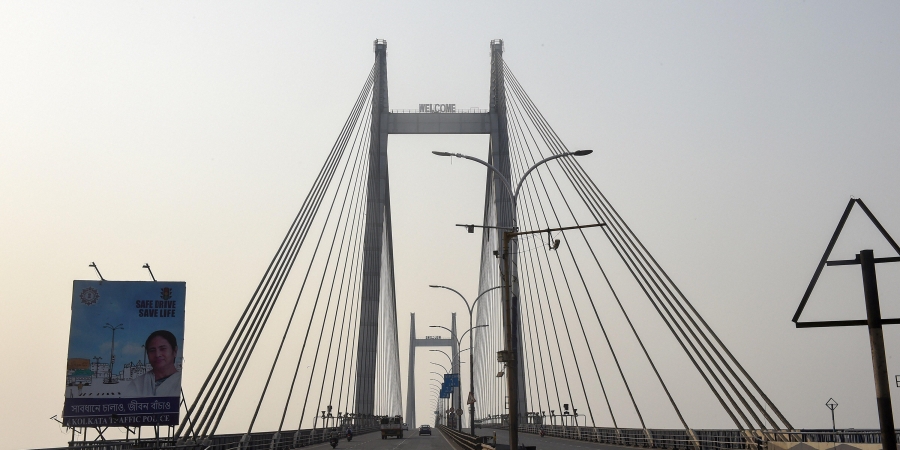
Kolkata Bridge over Hooghly river wears a deserted look during the nationwide lockdown imposed in the wake of coronavirus pandemic in Kolkata Friday April 3 2020. (Photo | PTI)

Kolkata :

They are working for an average of 13 to14 hours a day.

One of them left his newly married wife home, while another faced ostracism from his hostel authorities.

Welcome to the world of NICED, where samples taken from suspected coronavirus cases are re-examined for confirmation.

An 18-member team of virologists, microbiologists and consultants are working 24/7 at the National Institute of Cholera and Enteric Diseases (NICED) in Kolkata — testing samples, filing reports, and attending hundreds of phone calls from hospitals and even from common people.

Samples examined by one hospital are sent for confirmatory test to this institute, which functions under the department of health research, Union ministry of health and family welfare.

“Earlier we used to get one or two samples a day. Now the workload has increased to a large extent in the last four weeks. Now we get more than 70 samples per day,” said Agniva Majumdar, a microbiologist working at NICED.

From receiving a sample to delivering the test report – the entire process takes around 4-5 hours, he said.

“Our team is working round the clock in shifts to ensure that the work is done,” Majumdar told PTI over phone.

Apart from processing data, the team also has to coordinate with the state health officials and various hospitals.

“We are receiving around 500 phone calls every day. Hospitals ring up if they need some clarification on our report. Members of the general public also call us. We are answering their queries too as much as possible. We understand they are in distress,” Majumdar said.

Asis Kumar Jana, another NICED staff, took only two days off for his wedding in Februray and was back to work to handle the samples that had started pouring in.

“I voluntarily tooWelcome to the world of NICED, where samples taken from suspected coronavirus cases are re-examined for confirmation.k just two days off in February for my wedding as the pressure has started to build up,” he said.

Jana said a member of his team recently faced ostracization at a hostel where he stays and was asked by its authorities to go back home.

“Senior scientists of our lab had to get in touch with the hostel authorities and communicated to them that we are not at risk we work in a highly protected atmosphere. Then the matter was resolved,” he said.

“Some of our colleagues are staying at the office guest house and inquire about their family’s well being over the phone,” said Jana.

NICED Director Shanta Dutta was full of praise for her team.

“They are doing a great job and service to mankind,” she said.

The vision of the NICED is to perform research and develop strategies for treatment, prevention and control of enteric infections and HIV/AIDS threatening the nation’s health.

The Indian Council of Medical Research (ICMR) decided to establish a Cholera Research Centre here in 1962 to research on the prevention and control of cholera and other diarrhoeal diseases.

The ICMR renamed it as National Institute of Cholera and Enteric Diseases (NICED) in 1979.

The WHO recognized this Institute as “WHO Collaborative Centre for Research and Training on Diarrhoeal Diseases” in 1980.

source: http://www.newindianexpress.com / The New Indian Express / Home> Cities> Kolkata / by PTI / April 03rd, 2020

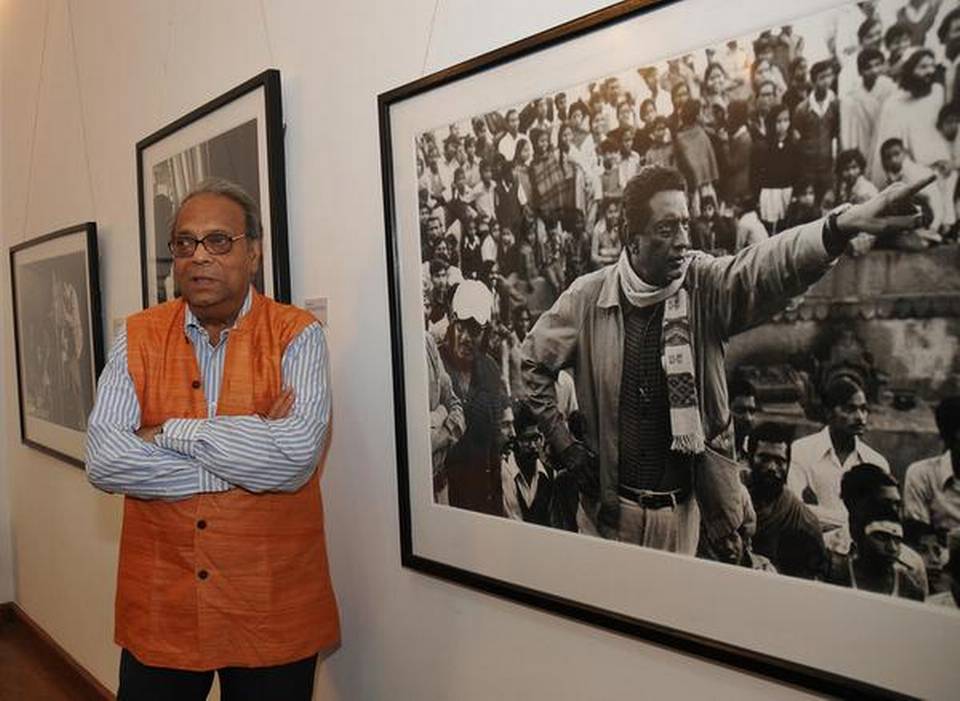
Photographer Nemai Ghosh, the man who never missed a moment

‘Goopi Gyne Bagha Byne’ (1969) onwards, he was the still photographer for all of Satyajit Ray’s works till his last film ‘Agantuk’ (1991)

For someone best remembered as the visual biographer of legendary filmmaker Satyajit Ray and a documentarian of the making of his astounding body of work, an interesting aspect about Nemai Ghosh was that he started off as an actor with actor-director Utpal Dutt’s Little Theatre Group in Kolkata.

Arts critic and publisher-editor Samik Bandopadhyay remembers one such play that he acted in: the landmark Angar (1959) about the exploitation of coal miners. It had music by Ravi Shankar and complex sets (Nirmal Guha Ray) and lighting design (Tapas Sen) with an entire sequence of a mine getting submerged under water. “He was an impressive and formidable figure on stage but was never so interested in photography then,” recalls Mr. Bandopadhyay.

Nemai Ghosh passed away in Kolkata on Wednesday. He was 85.

Ghosh’s interest in photography was kindled entirely by chance in 1966 when he found an abandoned camera and started tinkering and playing around with it. Being a great lover of cinema himself, he wanted to shoot the process of filmmaking which is when his path crossed with that of Ray. Initially just “tolerant” of his presence, as he once recalled, Ray discovered Ghosh’s talent by and by to have him become a part of his unit. Goopi Gyne Bagha Byne (1969) onwards, he was the still photographer for all of Ray’s works till his last film Agantuk (1991). “The only other parallel I can draw is Raghu Rai’s photographs of Indira Gandhi,” says photographer Chirodeep Chaudhuri of an imagemaker’s consistent collaboration and engagement with a personality.

Ray’s son and filmmaker Sandip Ray remembers meeting him on the sets of Goopi… “He was a part of the family. He was always there, not just on the shoot, but our home as well,” he says.

Black and white

The magic of his black and white images lay in the specific fleeting instants that they managed to capture, that too without flash, in natural light. “He never missed a moment, captured the right moment,” says Sandip Ray. “His work in theatre gave him a sense of the moment,” says Mr. Bandopadhyay.

Filmmaker Sujoy Ghosh compares his frames to videography. “Each of his photos tells a story to me. Like Jaya Bachchan in Kalighat, teeka on the forehead, prasad in hand, happy… I see many things in the process. It’s instructive and informative about the process of filmmaking itself,” he says.

Mr. Chaudhuri points out the candidness in his frames unlike the “manufactured PR images and ‘behind the scenes’, ‘making of’ balderdash” where the stars are perennially performing or posing.

“There was an endearing quality about his photos. You could see his love for theatre and cinema [reflected in them],” says Mr. Chaudhuri.

Apart from Ray, Ghosh also chronicled some of Mrinal Sen’s films and he was the still photographer on Mira Nair’s The Namesake. “His portraits of my father were absolutely brilliant,” says Mr. Ray. Sujoy Ghosh remembers him shooting on the sets of his own film Kahaani. “I fell at his feet. It was such an honour that he considered our film,” he says.

On theatre

Beyond Ray and films, a major part of his work was on the theatre in Bengal and about Kolkata itself. His work was a reference point for Sujoy Ghosh when he went shooting in Kolkata for Kahaani. “It was an amazing inspiration. Every photographer and painter has a [unique] way of looking at places, objects, people which is different from ours,” he says.

Mr. Chaudhuri remembers him showing rare colour photos of Ray when he visited Ghosh at his home couple of years back. “He was so excited going through the folders and files of his work on the computer,” he says. One of Ghosh’s disappointments, according to Mr. Chaudhuri, was not being given space by the State government to archive his work. Later, he gave away most of it to the Delhi Art Gallery.

In the latter half, he was passionately documenting painters at work and musicians in performance. According to Mr. Bandopadhyay, Ghosh had clicked some exclusive pictures of the ailing Italian maestro Michelangelo Antonioni, some of them in his hotel room, when the latter had come to Kolkata for the retrospective of his work at the International Film Festival of India in 1994. Impressed with his images, Mr Antonioni, who had taken to painting in his later years, had invited him for his exhibition to Italy. Ghosh took pictures of Antonioni moving around in the exhibition on a wheelchair. Having been witness to and documented the maestro’s painting phase, Ghosh wanted to preserve them in the form of a book. Sadly there were no takers for it in the commercial publishing world.

source: http://www.thehindu.com / The Hindu / Home> Entertainment / by Namrata Joshi / Mumbai – March 26th, 2020

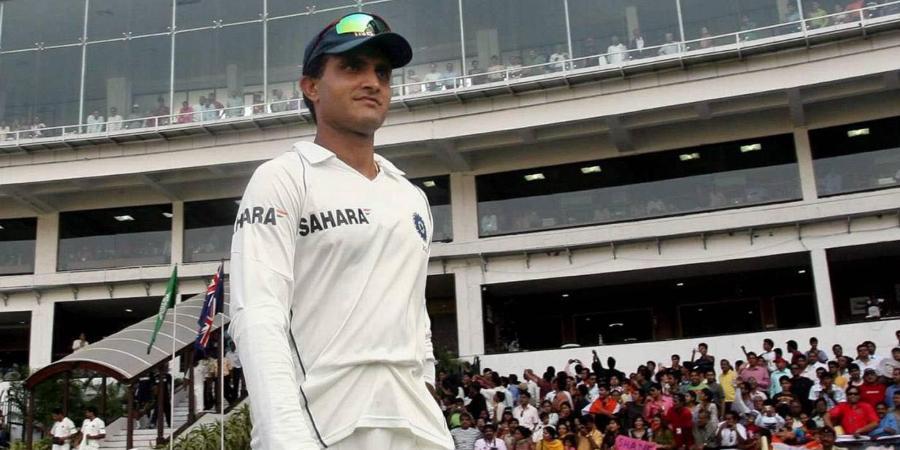
What a win: Sourav Ganguly remembers 2001 Kolkata Test

In 2001, India, under Ganguly’s leadership, became only the third team in the history of Test cricket to win the match after being forced to follow-on.

BCCI President and former India captain Sourav Ganguly (Photo | PTI)

New Delhi :

Board of Control for Cricket in India president and former India captain Sourav Ganguly on Wednesday reminisced the famous win over Australia in the 2001 Kolkata Test. Ganguly retweeted a video of the Indian team at the time celebrating in the dressing room.

“What a win…” Ganguly said in his tweet.

In 2001, India, under Ganguly’s leadership, became only the third team in the history of Test cricket to win the match after being forced to follow-on.

India were all out for 171 in reply to Australia’s first innings score of 445 at the Eden Gardens. Steve Waugh enforced the follow-on and India ended up declaring on 657/7 in their second innings, largely thanks to an extraordinary 372-run stand between Rahul Dravid and VVS Laxman.

Harbhajan Singh, who had become the first Indian to take a hat-trick in Test cricket in the first innings, led the way once again with the ball. He took six wickets as Australia were all out for 212 and India ended up winning the Test by 171 runs.

The match is regarded as one of the greatest Test matches ever and one of the most significant in the recent history of Indian cricket. The Australian team of the time was regarded as one of the greatest teams of all time and Waugh had termed winning a Test series in India as the “final frontier”. While they were unsuccessful in doing it that year, they went on to finally break the 35-year jinx when they came to India in 2004.

source: http://www.newindianexpress.com / The New Indian Express / Home> Sport> Cricket / by IANS / April 15th, 2020

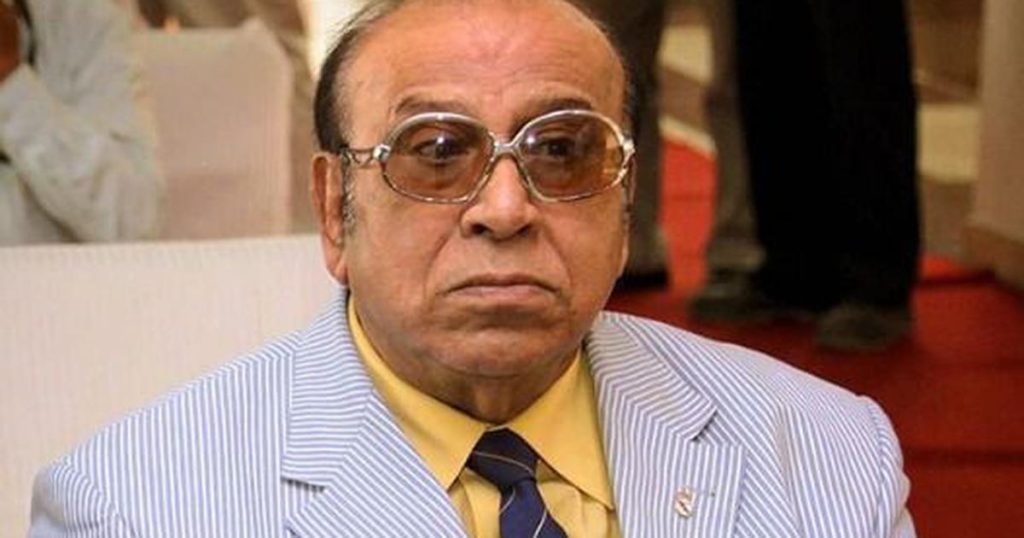
Tactician, motivator, visionary: Indian football legend PK Banerjee’s pupils recall his greatness

Subhash Bhowmick, Gautam Sarkar, Subrata Bhattacharya and Shyam Thapa, some of the best players in the 1970s were coached by the legendary Banerjee.

File image of PK Banerjee | Indian Football/ Twitter

Subhash Bhowmick, a robust and lethal forward in Indian football in the 1970s, was down in the dumps with no visible light at the end of the tunnel until Pradip Kumar Banerjee gave his career a new lease of life, something he is grateful to this date.

Bhowmick, who later became an accomplished coach, owes his stardom to Banerjee’s skills as a coach that brought out the best in him. Similarly, Gautam Sarkar, an absolute feisty character who would send those pin-point passes to Bhowmick playing for Mohun Bagan also benefited from Banerjee’s astute coaching.

Thus, as the 83-year-old veteran lost his battle against prolonged illness, his students, who were stars of Kolkata maidan in the 1970s, an era that was a witness to some of the best matches in Kolkata football, celebrated the accomplished life by narrating several anecdotes from their time with their beloved “Pradip Da”.

“I was kicked out of Mohun Bagan after we lost the Durand Cup final to East Bengal (in 1972),” Bhowmick said, as he went down the memory lane in an interaction with PTI.

“He was the person who picked me up from ‘gutter’ and told me ‘you’re the best player in India, come and play for ‘East Bengal’,” he added.

Bhowmick was one of the key figures in East Bengal’s famous 5-0 demolition of Mohun Bagan on that fateful IFA Shield final on September 29, 1975.

The ‘vocal tonic’

Known for his vocal tonic, Banerjee spurred Bhowmick on by recalling the insults hurled towards him by Mohun Bagan officials. The rest, as they say, is history as Bhowmick played like a tiger on the prowl handing Bagan supporters a day that they have lived on to regret even after 45 years.

Bhowmick did not find his name on the score sheet in that great win but was instrumental in setting up the first two goals scored by Surajit Sengupta and Shyam Thapa.

“Death is always sad. His demise has left all of us sad,” Bhowmick said.

“But the way he was suffering, he did not deserve this pain. For me, Pradip da was dead since the day he left talking about football with me,” he added.

Ahead of his times

Banerjee also fashioned memorable treble for Mohun Bagan two years later in 1977 and this time it was Subrata Bhattacharya, who was the star of the show after three quiet years.

The Mohun Bagan captain was a big let-down in the 1977 Calcutta Football League derby, that the team 0-2 in front of a packed Eden Gardens and was a reason for unhappiness among the fans.

“The fans would not let us enter the field in protest… Such was the atmosphere,” Bhattacharya said.

“The practice would begin at 7.30 am at the Eden Gardens but he (Banerjee) would come one hour before and pay extra attention to me, he made him do some different pieces of training.” he added.

“We went on to defeat East Bengal thrice that season and won the Shield, Rovers and Durand. Nobody dreamt of such a turnaround. Only Pradip Da could do it. He was ahead of his time and crystal clear in his thinking.” Bhattacharya said.

A great motivator

Banerjee’s rivalry with another great coach Amal Datta was well known in Maidan circles but Bhattacharya reckoned that the former knew how to deal with stars and adapt to situations.

“Amal da may have been a great coach and hugely respected for his tactical and aggressive football, But Pradip da had the horses-for-courses policy. He was sharp and was quick to adapt. It showed in his results. I won 37 of my 58 titles under him,” he said.

Former midfielder Sarkar recalled yet another famous win for Mohun Bagan under Banerjee in the 1978 Calcutta Football League.

In his prime, Sarkar was dropped for three-four matches, a decision that caused quite a lot of chatter. He was suffering from giardia, an acute stomach bug that was prevalent in the 70s in Kolkata especially among the lower middle class that didn’t have access to clean drinking water.

“I panicked, everyone was asking why Gautam Sarkar was not playing. I was indispensable then. But he kept quiet,” Sarkar said.

It was just on the eve, Banerjee met Sarkar at the entrance of the club tent.

“He told me that he had kept me for next day’s match as I was a big-match player. He called the kind of the big games,” Sarkar said.

“I again felt that spark, the fire inside me, despite lying low due to my stomach illness. It was as if I was transmitted some supernatural power,” he said recalling how his crucial saves played a huge role in their 1-0 win where Shyam Thapa scored the winner.

Thapa also remembered how Banerjee played a key role in Mohun Bagan’s famous 2-2 draw against Pele’s New York Cosmos team.

“I was given an extra responsibility to stop Pele. The whole team put up a vibrant show. He would sit and plan with us with a board. He was way ahead of his time,” he said.

With Banerjee’s passing, a huge void has been left on the Kolkata maidan, but his legacy in the form of the impact he made on the football there lives on.

source: http://www.scroll.in / Scroll.in / Home> Indian Football / by Press Trust of India / March 20th, 2020

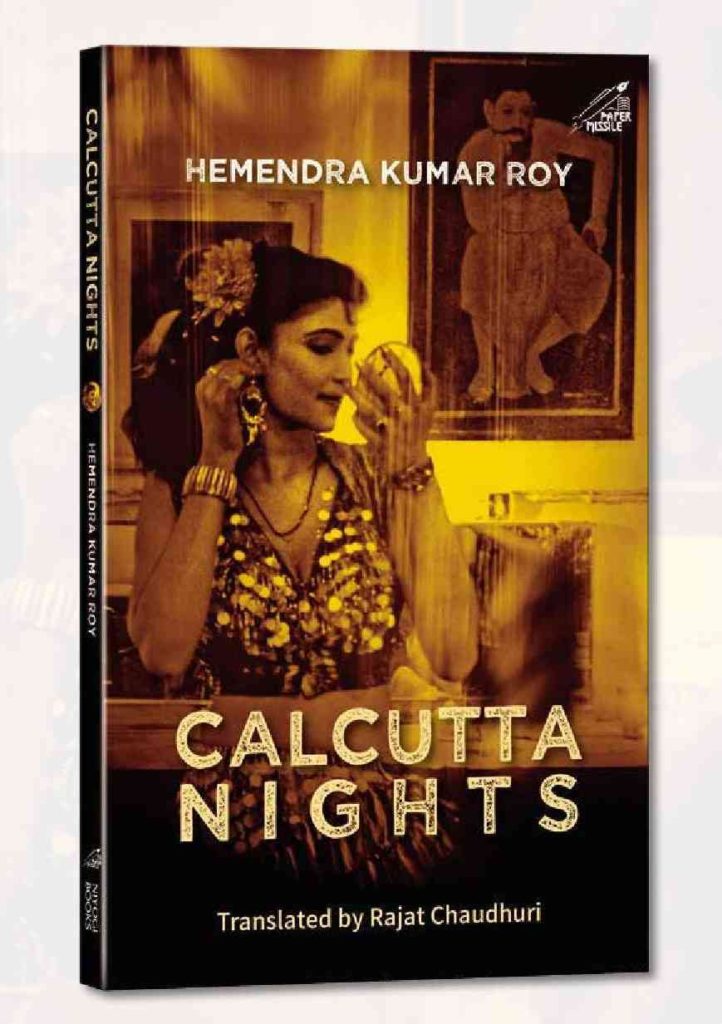
An acclaimed Bengali pulp fiction writer turns a voyeuristic eye on the secrets of Calcutta by night

Epicentre of the renaissance and reform by day, the city was den of shocking behaviour by night, according to Hemendra Kumar Roy’s ‘Calcutta Nights’.

Clyde Waddell / Public Domain

In these times of social distancing, Calcutta Nights , a recently translated crisp vintage work from 1923, beams up from the past the whole human mess of city life as we may fail to experience for a long time now – enticing , contagious with its mirth, sorrow and decadence, yet ultimately safe. Calcutta-ness is both a cult and a code.

That Calcutta, totem pole of cult, is a distilled city, a Xanadu rich with local detail yet universal, contemporary yet not belonging to any particular period, a continuum of experience. No wonder then, that this wondrous city, simultaneous epicentre of renaissance, nationalism, reform movements and debauchery, should inspire city sketches, first made popular in the mid and late 19th century by the inimitable Hutum Pyachar Naksha. Decades later Hemendra Kumar Roy, prolific and popular author of detective fiction, adopted a nom de guerre to have a go at chronicling the scintillating night life of Calcutta in the 1920s.

If books were bordello windows, their sepia light beckoning, Calcutta Nights would be one such, quite literally. A salacious account of what the night unravels, the book takes you behind the scenes, reports on the microcosm of hedonism, the power plays, symbiotic relations, the intimacies of a prostitute with her regular customer, the paanwali bartering and trading with the police, the beggar, the opium-smoker. What sets this book apart is the flawed and reluctant author.

A warning, apparently

A prolific writer of detective fiction, primarily for children and young adults, Roy probably stumbled upon this diverse and rich material probably while researching for his more innocuous detective novels – armed with a stout stick, he says, and at great personal risk. Against his better judgment, he writes about city la nuit, worried and embarrassed about the task at hand, the adirasa or eroticism that he has failed to avoid while raising the curtains of hell.

In his introduction, he rushes to reassure his readers that none of them will find Calcutta Nights obscene. It is, rather, written with the noble intention of sounding a warning to “fathers of young girls and boys”. Our Meghnad Gupta, author in hiding, is no Samuel Pepys, the veritable diarist of 17th century London who wrote himself into his salacious scenes, boasting about his own ardour and peccadilloes.

The city Roy writes about is a city of men, consumed by men. In the author’s own words this book is “ written for an adult male audience,” a sweeping exclusion that predictably rankles this reviewer’s entitled, liberal, feminist bourgeoise self. Said outrage is difficult to cull at first. Then, as the book shines with its vivid portrayals, the puritan author becomes part of the setting and it is possible to turn the judging “gaze” right back at him, to see him in all his troubled light.

Here was an author writing about hedonism at a time when the wave of nationalism was peaking, his puritan acuity often criss-crossing with an awakening of socialism. His feelings about the women he writes about swing from condescension and humble misogyny (empathetic and damning at the same time – a tone often taken when writing about giants by the best of Bengali literary stars, Sarat Chandra Chatterjee included) to genuine insight.

Atmospheric ride

A pacy read, the depiction is vivid and colourful. Despite his protestations the author is clearly an insider – therein lies the strength and authenticity of this sketch. The description is atmospheric. Roy bring alive, with cinematic realism, the night in which “owls flutter away…and gradually the swarthy ugly faces begin to peep and snoop.”

And slowly Chitpur Road transforms itself – weary clerks disappear, the streets are filled with the scented babus, their faces aglow with Hazeline snow seeking verandthe a belles. Kapure babus, hothat-babus, ingo- bingos, the rich, the white, the Marwari, Chinese, European women of loose morals, courtesans of Chitpur, lustful ladies of Kalighat, the poor prostitute, the wanton widow – each scene, as the chapters are aptly called, presents to us a glossary of social categories.

One of the most striking sketches is that of the Bhikiripara or beggar’s quarters. There are fabulously sensational bits, revealing the author’s – Roy had translated Bam Stoker’s Dracula – penchant for the supernatural and the fantastic. Particularly recommended are scenes from the Nimtala Crematorium and the one featuring a prostitute who beckons men into her room where a dead man lies, his throat slit open.

Translator Rajat Chaudhuri craftily balances archaic words with new ones, never upsetting the tonal authenticity of a period piece. Ultimately he strikes the right cadence – the voice often changing as it travels from Chitpur bordellos to the jazzy evenings in the Anglo quarters or the dim Chinese taverns.

For its depiction of the crowded and dense interplay of lives in the Calcutta of those days, this book is a perfect curl-up for these epic-dammed solitary afternoons. A treasure trove for every city addict has been discovered.

Calcutta Nights, Hemendra Kumar Roy, translated from the Bengali by Rajat Chaudhuri, Niyogi Books

source: http://www.scroll.in / Scroll.in / Home> Book Review / by Lopa Ghosh / March 29th, 2020

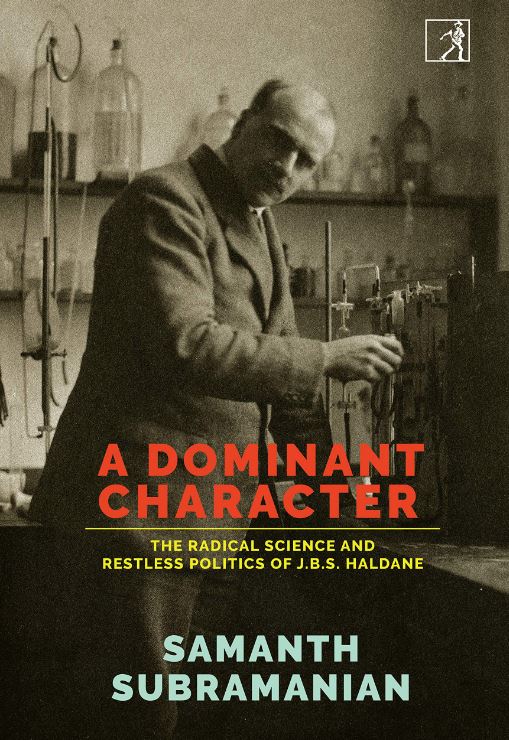
J.B.S. Haldane: Iconoclast, adventurer and a man of science

The book aptly presents the socio-economic background of Haldane, particularly his father role in shaping his young, curious and socially sensitive mind

J.B.S. Haldane / [Wikimedia Commons]

Samanth Subramanian’s book reveals a lot about the man who is its subject. It succeeds in conveying the multifaceted character of the protagonist, his dislike for conventional wisdom, his participation in World War I and the Spanish Civil War as well as his involvement in the British war effort during World War II and, of course, his pioneering contributions to the formative works of evolutionary genetics. Subramanian correctly points out that J.B.S. Haldane was a creative man full of new ideas who wrote many papers in reputed scientific journals. When he was not doing active science, he was busy writing about science for common people. The author also gives a lot of emphasis on the political work of Haldane which makes the book fascinating to read. It is rare to find such a vocal and politically active communist scientist in the history of science.

The book aptly presents the socio-economic background of Haldane, particularly the role played by his father in shaping the mind of the young, curious and socially sensitive Haldane.

Subramanian also succeeds in conveying the scientific nature of Haldane’s work which makes this book not only relevant to the general reader but also valuable for those interested in understanding the history of evolutionary genetics and biological sciences. This book is a good example of popular science writing and can be appreciated truly if the reader has an interest in the biological sciences.

To convey Haldane’s iconoclastic disposition, the author, at times, becomes a bit too harsh in his portrayal of the scientist’s idiosyncrasies and apparent lack of diplomatic skills. Creative minds often have their own set of idiosyncrasies and find social interactions difficult which reflects their complex thought processes.

A Dominant Character: The Radical Science and Restless Politics of J.B.S. Haldane by Samanth Subramanian, Simon & Schuster, Rs 799Amazon

Haldane had a special relationship with India. At sixty-four, he preferred to leave England and settle down in India, a fact that is difficult to believe as sixty-four years is rarely perceived to be an age when someone chooses to start afresh in a different country with a completely different set of languages. He spent the last part of his life (1956-1964) with his wife in India. He became an Indian citizen and worked in the Indian Statistical Institute in Calcutta and later settled in Bhubaneswar. He left England at the height of the Suez crisis in 1956 because he thought his country was on the wrong side of history. For Haldane, India was a new dream, a dream of Nehruvian socialist nation-building, where he could chip in with his scientific knowledge to help the country produce good biologists. This part of Haldane’s life is well-documented in the book.

Subramanian has tried his best to convey the main scientific beliefs of Haldane by pointing out that he was one of the pioneers who tried to implement the ideas of heredity as propounded by Gregor Mendel in the study of natural evolution. The relationship between genetics and evolution became clearer in the works of Haldane and his contemporaries.

In describing the character of Haldane, Subramanian also conveys his feelings about the Soviet Union. The Soviet Union is a recurring theme in this book as the protagonist was associated with the Communist Party of Great Britain for a long time and had played a role in the Lysenko affair. Subramanian describes the communist Haldane elegantly but fails to find anything positive in the Soviet Union. This is a bit strange. In this otherwise splendid book, Subramanian perhaps missed out the fact that if revolutionary Soviet Union, with all its faults, had not existed, then iconoclastic and adventurous scientists of the nature of Haldane, who fought for science and the liberation of the proletariat, may not even have existed on earth.

source: http://www.telegraphindia.com / The Telegraph, online edition / by Kaushik Bhattacharya / April 10th, 2020