Meet Sunira Chamaria, the new FICCI FLO chairperson of the city chapter

‘This year we want to motivate our members to find that spark, and nurture and strengthen it so that we can light up the world’
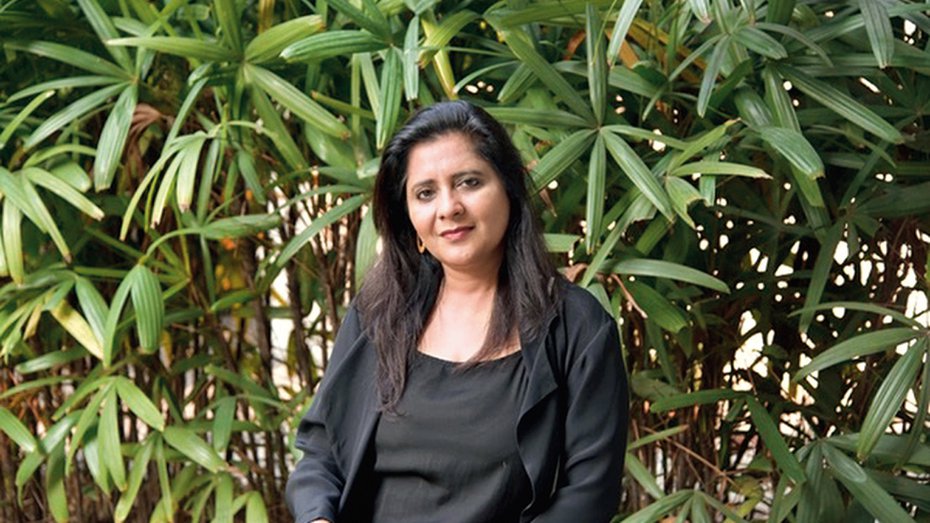
Sunira Chamaria, executive director, DRIL, is taking over as the new chairperson of the Calcutta chapter of FICCI FLO / Sourced by the Telegraph

As the new FICCI FLO chairperson, what is your theme this year?

I have actively been with FLO for many years now and have served in the committee for more than five years. Our theme for this year is ‘Nurture your spark and light up the world’. I believe our unique spark glows within us. This year we want to motivate our members to find that spark, and nurture and strengthen it so that we can light up the world — all of this through a journey of learning and discovering.

What are some of your plans for this year?

The novel coronavirus continues to force people to stay indoors in an unprecedented manner and the subsequent disruption of lives across the world. However, this allows us an opportunity to go inwards and discover our roots. As a tree’s true strength is in the strength of its roots and the deeper the roots, the higher it can reach — with this aim we are planning various talks, focussing on our arts, history, heritage and culture with eminent personalities who are experts in their fields. A series of webinars called ‘Respond, Recover Revive’ has been specially curated to understand the impact of Covid-19 on various sectors such as cinema, fashion, aviation, finance and many others. Various industry stalwarts have been enlisted to make us understand their perspectives on the roadmap ahead. I would like to introduce ‘Fit@Flo’ and ‘love yourself’ series to discover wellness as a lifestyle as it has never been such a need of the hour like now. Also imperative during these times are community building and fellowship. As we are already fortunate enough to have a community such as ours, we will delve deep and forge a sense of togetherness and fortitude. This can be enhanced by shared experiences like cooking together, gaming together and indulging in art experiences with experts from the respective fields.

What are some of your objectives this year?

I would want to promote women entrepreneurship and a series of workshops are being planned to work on specific skills like ideation, operationalisation, marketing, finance and executive development. Apart from the promotion of fitness and wellness through the Fit@Flo and ‘love yourself’ series, I would also like to provide detailed understanding of current affairs among women through a series of webinars. Providing in-depth knowledge of Indian arts, heritage and culture and the creation of skilling opportunities for women of various strata and sectors of society are also on my list of objectives.

Tell us a little about yourself…

I completed my schooling in Delhi and have studied business at the undergraduate level, followed by an advanced course in systems analysis and design from NIIT. I have had varied industry experience, reflecting a number of fields that I am passionate about. My career began at Rajasthan Petro Synthetics, a pioneer in polypropylene yarn, where I spearheaded the digitalisation of the organisation as well as the planning and implementation of market strategy. Thereafter, I have founded a start-up in fashion, followed by one in the area of specialty foods. Presently, I am working with DRIL, the largest ropeway company in India, as an executive director. I am a mother of two lovely children and have a special interest in art and travel. An equitable society with equal opportunities is a dream I work towards.

What are some of the challenges that you’re anticipating this year?

We had planned a lot of events and workshops with the aim of empowerment of women. However, we have now restructured our planning and we are having most of our events in the form of webinars. This pandemic has forced us to think outside the box. We are connecting with our members in new ways to continue in our quest to create meaningful experiences. This also offers an opportunity to access eminent speakers across the globe who might not have been otherwise available to come to the city.

source: http://www.telegraphindia.com / The Telegraph, online edition / Home> People / by Annanya Sarkar / May 20th, 2020
Watchman on the waterfront

Lives of Others: Story of an activist from a storm-ravaged place

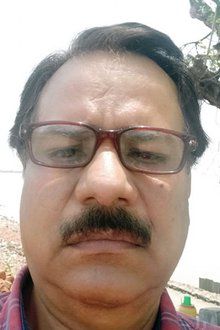
Debashis Chaudhury / Sourced by the correspondent

As a young boy growing up in his uncle’s house in Behrampore in Murshidabad district in the sixties and seventies, Debashis Chaudhury could not help getting caught in a cross-current of ideas. His uncle Soumendra Kumar Gupta, known for his radical views, taught political science at Behrampore Krishnanath College. Naxalbari, which was not far away, had just happened. All around Chaudhury were scholars, writers and activists, dreaming of a new world. Chaudhury would never engage directly with a political movement, but he was baptised by fire.

Today, at 62, he still tries to give shape to those ideas, far from Behrampore and his childhood, in Diamond Harbour. After earning his masters degree in botany from Ballygunge science college, Chaudhury landed up at Diamond Harbour as a teacher of biology and life science at Sarisha High School. Diamond Harbour in South 24-Parganas, once an important harbour town for the Potuguese and the British, now serves as a gateway to the Sunderbans and is a local tourist destination. Here, the Rupnarayan joins the Hooghly to be met by Haldi further down and the three join to run into the sea in the Sunderbans further south.

“I came here and stayed on,” says Chaudhury, a modest man with a smiling face. The town became his mission. He is a Diamond Harbour activist. Just before the lockdown, he was working hard to build a campaign against the CAA and NRC.

Chaudhury points at the river. Cyclone Amphan has breached the embankment on the Hooghly at Matsabandar near Diamond Harbour for about 200 metres. Last year, the main tourist attraction of the town, the promenade on the riverfront that is also part of the main road, had been threatened with collapse by a state government project to build a hanging bridge there.

The project was shelved after protests from Janakalyan Samiti, Diamond Harbour, a civic, social and human rights group that was formed by Chaudhury and others in 2002, which were reported by The Telegraph. Previously Chaudhury was a member and secretary of APDR, a Calcutta-based civil and human rights group.

“But hardly any repair has been done. A disaster may still be waiting,” says Chaudhury about the battered stretch. “Though what the eye can see is very little.”

Diamond Harbour town lies ravaged with its houses roofless and without walls. In the villages the destruction is unbelievable. And Covid is raging. “For so long governments in Bengal had been told to decentralise power more effectively. A strong local government would have helped in people’s participation in health infrastructure. Who even knows about the Gram Samsad now?” asks Chaudhury.

But Diamond Harbour was never really pretty. “I came here in 1981. The town was always in a state of collapse, irrespective of who was in power,” says Chaudhury, who retired from his job in 2018.

One of the first things that he saw was the large spurt of ‘video-halls’ in the early 80s showing blue films. “There were about 20/22 such halls in the town itself and schoolboys were making a beeline for these.” These were closed down, as were some hotels that were being used for prostitution, after intervention from Chaudhury and other activists.

“I was never directly engaged with a political group,” Chaudhury stresses. “But Naxalbari had opened a door. And at that point the science movement was working in a parallel way.” Movements come together. Science, also, is a great agent of change.

In those days Chaudhury would distribute a science journal called Utsa Manush in Diamond Harbour homes.

Wherever he looked, problems had piled up. “Water in Diamond Harbour is undrinkable. It has always been so. Not many here drink the water supplied by municipality,” said Chaudhury. “Just the other day, my wife pointed out snails in the water. So everyone buys 20-litre jars of bottled water, the quality of which can also be questioned in many cases,” said Chaudhury. His wife is a schoolteacher and the couple have two sons.

Chaudhury filed a petition against authorities on the issue of unsafe and unclean drinking water at the high court in 2017, but the case has only had one hearing so far.

For Janakalyan Samitiand Chaudhury, the local bridges are another important issue.

Diamond Harbour is a town of bridges. These, joining parts of town and often entire areas over water bodies that abound in this part of Bengal, are vital to life here. Some go back to the British era. Many of them have collapsed, or are about to.

“Natunpole is the bridge that connects Diamond Harbour with Kakdwip in the Sunderbans. It has been in very bad shape for long, but recently it was ‘repaired’ with only a coat of plaster,” said Chaudhury. Same for Lalpole, a British-era bridge, a little distance from Natunpole. “It has collapsed. But still people are using it, clearing a space on the side. That is another disaster waiting to happen.”

The Mograhat Canal, over which Natunpole was built and which acts as an irrigation canal for a large area around Diamond Harbour, has not been cleaned since 1967, said Chaudhury. He has filed more than a hundred RTIs so far, individually and on behalf of organisations, but has got only about seven or eight satisfactory replies.

Not that he has been rewarded grandly for his efforts in fact the opposite has happened at times. Once he had begun to give extra lessons to students at the higher secondary level. The idea was also to hit at the root of the private tuition racket that flourished there. He was harassed and beleaguered for his effort.

“We have our limitations,” said Chaudhury. “Not all of us can give up our jobs. But one of the things I always remember is if you don’t try to change society around you, society will change you.”

source: http://www.telegraphindia.com / The Telegraph, online edition / Home> Calcutta / by Chamdrima S Bhattacharya / Calcutta – June 01st, 2020

Veteran Kolkata-Based Sports Journalist Samir Goswami No More

At a time when coverage of local sports in Kolkata was on the wane, Samir Goswami was one of the few journalists who would devotedly cover first division cricket, hockey league as well as of lower-division football

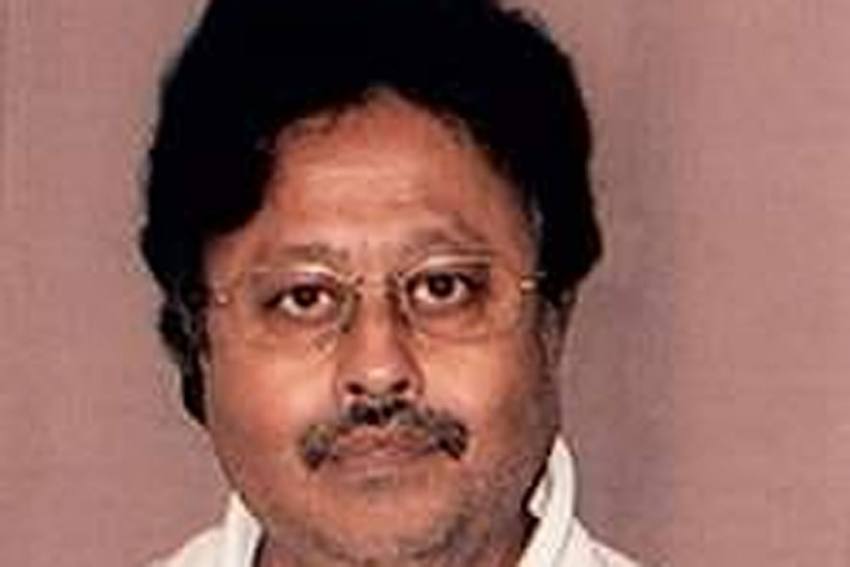
Samir Goswami
Composite: Facebook (Saba Nayakan)

Veteran journalist Samir Goswami, a much-liked figure in Kolkata sports journalism fraternity, breathed his last on Saturday after suffering from cardiac arrest.

He was 65 and is survived by his wife. Loved for his amiable nature, Goswami worked for more than two decades in popular Bengali newspaper ‘Bartaman’.

At a time when coverage of local sports in Kolkata was on the wane, Goswami was one of the few journalists, who would devotedly cover first division cricket league games and unfailingly updated the scores of hockey league matches as well results of lower-division (second to fifth division) football leagues.

He also diligently covered senior and junior level swimming competitions as well as table tennis events. After retirement, he used to freelance in different media including AIR Kolkata.

He represented Calcutta Sports Journalists’ Club (CSJC) in J K Bose Trophy on many occasions apart from going as the manager. The CSJC and Kolkata Press Club deeply mourned the sudden demise of Goswami.

source: http://www.outlookindia.com / Outlook / Home> Website> Sports / by PTI / April 19th, 2020