Bristol will always remember Rammohan Roy, says mayor

Continuing along city tradition, the Lord Mayor of Bristol on Sunday led the annual service at the sylvan Arnos Vale Cemetery to pay tributes to Indian social reformer Rammohan Roy, who died here on 27 September 1833 of meningitis.

The service at the tomb built to an Indian temple style, was attended by many people from across Britain, including representatives of the Indian high commission, Brahmo Samaj and the Unitarian church.

Lord mayor Alastair Watson recalled Roy’s many contributions, and said Bristol would always remember and cherish his memory. The annual service at Roy’s tomb has been held for nearly a century.

A new documentary, titled ‘Relics of the Raja’ by academic Suman Ghosh, was shown at the event, which included new research on Roy’s contribution to the anti-slavery movement in early nineteenth century.

It also showed the newly-discovered replica in back of Roy’s original death mask.

Carla Contractor, local historian, who has led several initiatives to preserve, cherish and celebrate Roy’s life and work, recalled his accomplishments. Her latest research is focussed on Roy’s last days in England.

“The Raja was a remarkable man in his day.

He fought for women’s rights and for the reform of legal and fiscal services in India. All Indians can take pride in what the city of Bristol has done in memory of the Raja and be proud too of their own roots in the Indian subcontinent,” Contractor said.

source: http://www.hindustantimes.com / Hindustan Times / Home / by Prasun Sonwalkar, Hindustan Times,Bristol / September 29th, 2014
Bengal girl Lili Das qualifies for World Jr Athletics C’ship

Bengaluru :

Bengal’s Lili Das claimed the women’s 1500m gold medal with a new junior national record of 4 minutes, 20.31 seconds on the opening day of the Federation Cup National Junior Athletics Championships here on Tuesday. Das’ feat helped her qualify for the World Junior Athletics Championships.

Das set the track ablaze, shaving nearly seven seconds off the earlier record created by Haryana’s Pinki Kumari in 2014. Such was her dominance that the 17-year-old Das almost lapped one of her rivals.

“It is a fantastic performance by Lili as she managed a record in this city which is situated at an altitude of 920m,” her coach Kalyan Chaudhary told reporters.

For the daughter of jute farmers hailing from Triveni in Hooghly district, Tuesday’s show was a personal best. “Her mom always used to wonder about her career. But now she would be happy as her daughter will get her share of the limelight and more importantly a job,” Chaudhary said.

The qualification mark for the world meet to be held in Bydgoszcz, Poland from July 19-24 is 4 minutes, 28.20 seconds. Harmilan Kaur of Punjab, who won silver, also booked her ticket with a time of 4:28.05s.

Priyanka wins gold
Another impressive performer from rural India was Priyanka Kerketa of Jharkhand who took the gold in women’s long jump with a leap of 5.99m, which came in her fourth attempt.

There was no coach at hand to help the Ranchi girl and she was guided by teammate Ramdev Tigga after each jump. “I wanted to do a 6.20,” said Priyanka who is from Tanghar Baishali village near Ranchi. Soma Karmakar of Bengal took the silver with 5.76 and Aishwarya B of Karnataka took the bronze with an effort of 5.60m.

In women’s 5000m race, Heena of Himachal Pradesh was disqualified after being found overage and second- placed Jothi of Tamil Nadu was awarded the gold.

Results:

Junior Men:
100m: 1. Ch Sudhakar (Tel, 10.74s), 2. Chirag (Har, 10.81), 3. Joseph Joe M (Ker, 10.82)
1500m: 1. Manjeet Singh (Man, 3:57,45), 2. Dinesh Lathwal (Har, 3:57.88), 3. Yogesh (Mah, 3:58.95)
5000m: 1. Gavit Murali (Guj, 14:44.90s), 2. Kisan Tadvi (Mah, 14:46.16), 3. Abhishek Pal (Asm, 14:47.84)
Shot Put: 1. Ashish Bhalothi (Har, 17.41m), 2. Ram Chandra (UP, 16.44), 3. Udit Kumar (UP, 16.30)

Junior Women:
100m: 1. Siddhi Hiray (Mah, 12.19), 2. Rajashree P (Ben, 12.40), 3. Sweta H (Mah, 12.48)
1500m: 1. Lili Das (Ben, 4:20:31 NR, Old: Pinki Kumari, Har, 4:27.26s, 2014), 2. Harmilan Kaur (Pun, 4:28.05), 3. Durga (Mah, 4:38.12)
5000m: 1. Jothi (TN, 17:53.62), 2. Sudha Pal (UP, 17:59.78), 3. Kavita Yadav (UP, 18:26.91);
Javelin throw: 1. Pushpa Jakhar (Har, 47.73m), 2. Runjun Pegu (Asm, 42.22), 3. Priyanka (Har, 41.47).
Long Jump: 1. Priyanka Kerketa (Jha, 5.99m), 2. Soma Karmakar (Ben, 5.76), 3. Aishwarya B (Kar, 5.60).

source: http://www.timesofindia.indiatimes.com / The Times of India / News Home> Sports> More Sports / by Biju Babu Cyriac / TNN / May 04th, 2016

Brand Bengal to steal the show in London, Edinburgh and Glasgow

Kolkata :

Two-fifty-nine years after East India Company brought business to Bengal, the roles have reversed. Brand Bengal, aka Biswa Bangla, has travelled the British Isles, and it means business.

Starting Tuesday, shows are being organized in London, Edinburgh and Glasgow to hard-sell the exotic arts and crafts of Bengal. The exhibitions will be a prologue to the grand Biswa Bangla showroom coming up in London three months later, as announced by chief minister Mamata Banerjee during her London visit in July, last year.

Titled “Gods and Demons”, the event will include live demonstrations and workshops on the making and rich history of the masks of Bengal. There will be visual storytelling from Patachitra, which was used originally as ways of spreading ancient mythology. The integration of modern social themes and issues in the artwork makes patachitra and mask-making inspiring tools for today’s artists.

Talking to TOI about UK’s exposure to “Bengal summer” at the Nehru Centre (till Friday), the Scots in the Museum of Edinburgh on May 12 and 13, Rajiva Sinha, secretary, micro and small and medium scale enterprises (MSME) and textiles, said, “The Biswa Bangla tagline ‘where the world meets Bengal’ says it all. The most exciting part of the event are the live shows by artisans Suman Chitrakar and Sankar Das. They have blended the traditional art-forms into the modern-day usage.”

In Glasgow, the location for the grand event is the Art Village Scotland which will be held on May 14 and 15, as part of the Southside Fringe festival.

“Biswa Bangla believes there is a keen appreciation for Bengal arts and crafts in the modern global community and we want the British to be a part of it, keep these art forms alive by bringing the magic of Bengal’s temples into the UK living rooms,” said London-based designer Neishaa Gharat, who represents Biswa Bangla in the UK.

Das, who hails from Sabdalpur village in South Dinajpur, will tell the British audience how “there was no rain in Kushmundi 200 years ago and people started praying to the gods for rain and to restrict the evil powers. Many characters became part of the dance, Kali, Rakshasa, Hanuman and Dakini – these are the faces we still carve today.”

Chitrakar, a villager from Naya who has applied patachitra to modern-day products like painted bags, apparels and crockery said, “Patachitra painting started many years ago. Patuas were mostly Muslims but painted Hindu gods. They moved house-to-house, singing for grains and money. Gradually, this took the shape of the art form we see today. In 2004, there were only 18 patuas in Naya, now there are 300.”

Gharat, who has been working with traditional Indian arts, crafts and textiles promoting artisans and creating designs for a global audience, sounded exited “because this is a government initiative to revive the art and craft of Bengal, which is one the most culturally diverse states in India. The art forms are fascinating because they give away such a stark dichotomy between tradition and modernity. There’s a tremendous legacy of skilled work out there and the willingness to take it forward.”

John Bell, former chairmen of the British Guild of Travel Writers and a consultant for the United Nations World Tourism Organisation, delivered the key note speech. Bell, who started his career with the BBC in London, producing and reporting for its travel and transport programmes on radio and television, said, “The work is not just a question of design, its jobs and poverty … this beautiful art is not just beautiful art, its beautiful art for good … the more we trade, the more we work, the more work we give to our friends Shankar Das and Suman Chitraker here, the more we are doing for the people of West Bengal and doing good for ourselves.”

– Aimed at rejuvenating the state’s handloom and handicraft products, Biswa Bangla was conceptualized in 2013
– The first store to sell products under the brand opened in 2014
– With 7 stores, the venture clocked a Rs 15 crore in 2014
– In the next two years, revenue is expected to increase six-fold to about Rs 100 crore.
– Among the arts being revived at Biswa Bangla are:
– Indo-Portuguese shawls (takes six months to embroider)
– Muslin
– Darjeeling tea
– Masks
– Attar perfumes
– Kalimpong cheese
– Mustard sauce
– Sundarbans honey
– Bonolokkhi ghee
– States like Rajasthan and UP are adopting the Biswa Bangla model
– Biswa Bangla markets 5,000 products, including 24 kinds of dolls from various parts of the state

source: http://www.timesofindia.indiatimes.com / The Times of India / News Home> City> Kolkata / by Ajanta Chakraborty / May 04th, 2016

‘Pather Panchali’ vignettes now in print

Pather Panchali
Pather Panchali

Kolkata:

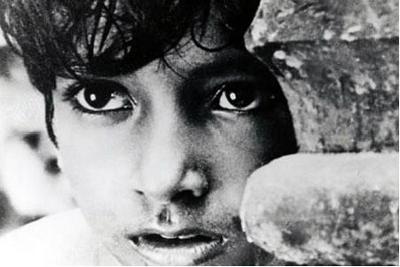
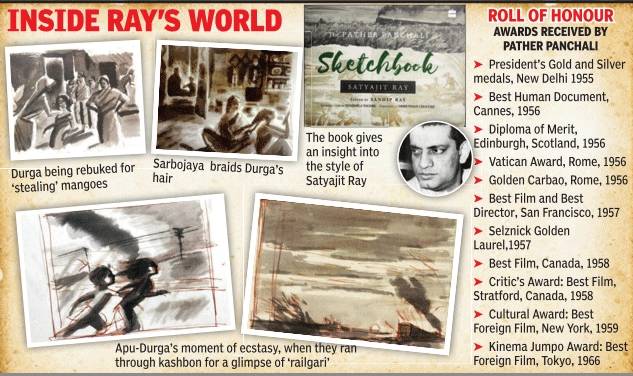
That ‘Pather Panchali’ is a film of international repute is a foregone conclusion but very few know how much labour it took for Satyajit Ray to come up with the masterpiece. A facsimile edition of the ‘Pather Panchali’ sketchbook, which has collated original contents of the film – sketches, notes and post-scripts, will now give an insight into how Ray had visualized and planned the film. It was released on the eve of Ray’s 95th birth anniversary on Sunday.

The sketchbook, as Ray’s son Sandip Ray has written in the preface, formed the very foundation of the filmmaker’s maiden film. Sandip Ray writes on the history of the book: “…Father donated it to the ‘Cinematheque Francais’ in Paris at the request of Georges Sadoul, the eminent French journalist and film scholar. In his final days, he expressed a desire to have a look at the visual script he had made for Pather Panchali. I contacted the Cinematheque Francais management, but they said the sketchbook had been missing. However, it was our good luck that last year we got hold of a scanned copy of it…and decided to bring out this facsimile edition,” Sandip Ray mentions in the preface.

The book not only gives the readers a rare glimpse into original sketches and notes made by Ray for the film, it also has several reviews and previews, original drafts, posters, booklets, letters written by eminent film personalities and some photographs and commemorative stamps.

InsideRaysWorldKOLKATA03may2016

The book also contains a few articles written by Satyajit Ray on the inspiration behind his maiden film. “I have no hesitation in saying that Aam Aantir Bhenpu, a childrens’ edition of Bibhutibhusan Banerjee’s novel ‘Pather Panchali’, was the source of the script of my film. I illustrated that edition. So I had to go through the book minutely,” writes senior Ray in his article ‘The Whole Film Was In My Head’.

“The sketchbook is the product of a painstaking effort put in by the ‘Society for Preservation of Satyajit Ray Archives’, also known as ‘Satyajit Ray Society’,” said Society CEO Arup Kumar De.

Sharmila Tagore, who has written an introduction for the sketchbook, says that the film holds a special place in her heart. “I owe my life in cinema to this film….No doubt impressed with the resounding international success of ‘Pather Panchali’ and the critical acclaim for its maker, my father took the extraordinary step of allowing me to work in Apur Sansar.,” she reminiscences in the introduction.

source: http://www.timesofindia.indiatimes.com / The Times of India / News Home> City> Kolkata / Suman Chakraborti / May 03rd, 2016

Ex-minister Kanti Biswas passes away

Kolkata:

Former school education minister Kanti Biswas died at a private hospital on Wednesday night. He was 84.

In 1977, he won his first election from Gaighata and was made minister of the youth welfare department. He became a CPM state committee member in 1982 and was school education minister from 1982 to 2006.

A diehard Marxist, he joined the Communist Party when it was banned in East Pakistan, survived repression and moved to India in 1960.

Despite being born into poverty, Biswas and passed out of school as the topper. He did his MCom from Dhaka University in 1956 and returned to his alma mater, Quaid Azam Memorial College, as a teacher.

source: http://www.timesofindia.indiatimes.com / The Times of India / News Home> City> Kolkata / TNN / April 28th, 2016

From Hooghly to the Nile

All set to represent India at a festival in Egypt, dancer Dona Ganguly says the classical arts should get as much promotion as Bollywood and cricket

DonaGangulyKOLKATA02may2016

Long before she married former Indian cricketer Sourav Ganguly, Odissi dancer Dona Ganguly had been making news for her prowess in the art form. Having trained since age three under the likes of Amala Shankar and Guru Kelucharan Mohapatra, the dancer has come a long way. With several successful performances under her belt and a thriving dance school called Diksha Manjari, Dona is a force to reckon with when it comes to Odissi.

Now, the dancer, along with her troupe, is all set to take her art form from the banks of the Hooghly River to the Nile. She is to perform at the India by the Nile festival in Egypt. Dona talks about how arts play a role in diplomatic relations.

Excerpts from an interview.

Tell us about your journey as a dancer.

Just like kids in South India are expected to learn some classical art form, in West Bengal too we are supposed to join art, dance or music classes. My parents had first enrolled me for dance classes with renowned dancer Amala Shankar. From there on, I gradually gravitated towards Odissi. Not before long, Guru Kelucharan Mohapatra took me under his wing. I would either train under him at his house in Cuttack, or he would come to Kolkata and stay with us to teach me.

I never consciously decided to become a professional dancer, but after a steady stream of performances with Guruji and then as a soloist, I was a professional; without even realising it.

What are your views on events like India by the Nile?

Indian classical dance forms have a certain aesthetic value. They cannot and should not be presented anywhere and everywhere. More than politicians, who just want a cultural skit either before or after a major event, artists know the true elegance with which their art can be presented. An occasion like this festival gives one a chance to represent the nation at an international level with realistic and tasteful art.

What are you presenting at this festival?

I am planning to present traditional choreographies of Kelu baba such as ‘Saveri pallavi’ and ‘Shankarabharnam’, and abhinaya items like ‘Ardhanareshwar’ and ‘Naba Durga’. It will be traditional, because I wish to promote Odissi in its purest form.

What is Sourav’s take on your career?

Well, he’s often a silent spectator. Sourav never holds me back, but he also does not go out of his way to promote me. This is a blessing, since it lets me express my artistic sensibilities. It is a boon that I have a loving husband and a co-operative mother-in-law, who looks after my daughter when I’m practising or touring.

What is your opinion on the current situation of Indian classical arts?

I strongly believe that Indian classical arts should get as much promotion as Bollywood and cricket. Their popularity, to a large extent, is due to the glamour associated with their professions and the kind of promotion that is done. I often wonder what would happen if we were given just as much publicity. How easily we would have become celebrities and spread our art!

Sourav never holds me back, but he also does not go out of his way to promote me

source: http://www.thehindu.com / The Hindu / Home> MetroPlus / by Madhur Gupta / April 30th, 2016

Eyewitness accounts

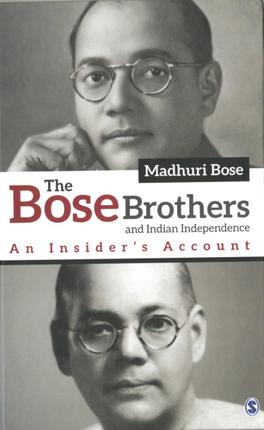
BoseBrothersKOLKATA30apr2016

A journey through the Indian independence movement of the 1920s through an illuminating collection of notes, letters and personal correspondence

Author Madhuri Bose, granddaughter of Sarat Chandra Bose (elder brother of Subhas Chandra Bose) and daughter of Amiya Nath Bose, takes the reader through the most important period of the Indian Independence Movement of the 1920s by reproducing the personal correspondence between the Bose brothers — notes and information collected mostly from her father who was an eyewitness to happenings during the crucial years of freedom struggle. She declares in her introduction, “this is not a biography of the Bose Brothers but based on family perceptions, insights and analyses of the roles of the key personalities, with a focus on Sarat and Subhas over the three decades from the early 1920s”.

The story is told mostly from the view of her father and his notes. Chapter 1 describes Amiya’s close connection with the Bose brothers, though they are physically separated. The narration is both informative and highly touching. She talks of the time Subhas was detained on January 2, 1932.

For a few months, he was allowed to stay with his brother Sarat in prison, but was shifted to Madras penitentiary where he became ill. He was then transferred to Bhowali in Northern India when the seriousness of illness was recognised. Subhas was then sent to Europe — by train to Bombay and then aboard a ship to Vienna on February 22, 1933. The authorities allowed young Amiya to accompany Subhas from Calcutta to Bombay. It was then that Subhas showed Amiya the copy of his hand written thesis on Hindustani Samyavadi Sangha that he had written during his Madras detention. Incidentally the contents were discussed with three members of Comintern (Communist International) later by Subhas in Vienna.

Chapter 2 deals with the difficult time faced by the family when the brothers were under detention by the British. In 1921, 24-year-old Subhas had returned from London after declining to join the Indian Civil Service and joined the movement for freedom.

While interned in Mandalay jail, Subhas wrote Pebbles on the Seashore, a collection of stray thoughts.

The third chapter deals with his reaction to Gandhiji’s suspension of the Non-Cooperation movement and the starting of a new daily with C.R. Das as editor and Sarat as Managing Director.

Chapter 4, the most important chapter of the book, deals with parting of the ways between Gandhiji and the Bose brothers. Copies of telegrams are reproduced here, indicating the beginning of the divide. On January 31, 1939, Gandhiji wrote of the defeat of his candidate Pattabhi Sitaramaiyya and concluded that he rejoiced at the victory of Subhas “. . . after all, Subhas Babu is not an enemy of his country.” In a lengthy letter, Sarat addressed Gandhiji on the prevailing condition in the Congress and how unhappy he was by the turn of the events.

However, at a later date, Gandhiji asked Amiya to convince Sarat to join the Congress again, and Amiya, in hindsight, felt that Sarat could have played an important role had he re-joined the Congress then.

More recent past is explained in the chapter ‘Partition — a Bitter Pill’. Sarat was to write later, “Gandhiji’s acceptance of Rajaji’s formula is nothing short of a tragedy in India’s political life.”

The epilogue deals with all principal characters of the book and it is heart-rending to read some of the letters. The book closes with a touch of disappointment in Amiya’s feeling of not being able to realise his father’s dream.

K.R.A. Narasiah is a writer and historian.

The Bose Brothers and Indian Independence: An Insider’s Account; Madhuri Bose, Sage Publications, Rs. 750.

source: http://www.thehindu.com / The Hindu / Home> Books> Literary Review / by K.R.A. Narasiah / April 30th, 2016

The Butterfly Brigade of Kolkata

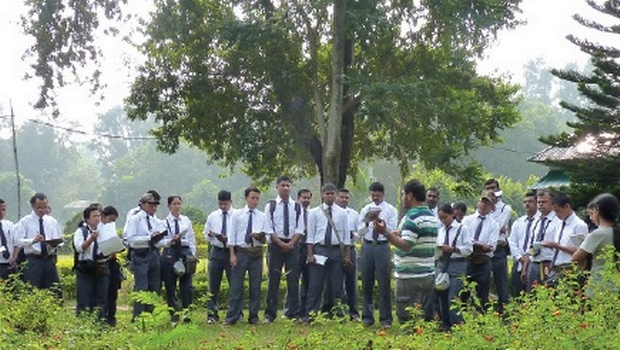
Roy teaching students about nature ina butterfly garden

Arjan Basu Roy has a dream—to turn the City of Joy into the City of Butterflies. Luckily for Kolkata, it hosts at least a hundred butterfly species. Roy and his band of nature lovers are on a mission to transform, restore and conserve the disappearing urban wildlife in the city. As secretary of Nature Mates, one of Kolkata’s foremost nature conservation groups, Roy has overseen multiple conservation projects, the most prominent of them being Banobitan, India’s first open air butterfly garden.

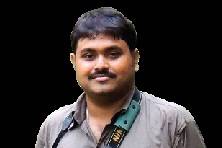
Arjan Basu Roy
Arjan Basu Roy

Nature Mates was formally launched in 2006, but it started much earlier in 1993 when wildlife enthusiast Roy and his schoolmates set up a WWF Nature Club in their school to pursue their interest in wildlife. As part of the school’s nature club activities, Roy and his friends participated in wildlife rescue missions and wildlife monitoring. Growing up with financial constraints meant that Roy could not visit wildlife reserves, nature parks or forests as a child. “That was when I realised that I did not have to go to a forest to see wildlife. I could find it here, in my city, around me. It was then that I started following urban wildlife,” he says.

The club works in tandem with the West Bengal Forest Department in conservation activities. “A healthy butterfly population is an indicator of biodiversity. They are the best pollinators; birds, lizards and frogs feed on them, so conserving butterflies will give opportunity for an entire spectrum of other species to thrive,” says Roy. “This biodiversity can be initiated by everyone. Any area can be transformed into a butterfly habitat—a sprawling garden, a front yard, a terrace or even a balcony. Placing butterfly-friendly plants in a home or garden will augur these colourful biodiversity agents.”

Roy believes that affirmative action to preserve nature makes a bigger difference than protesting or criticising wrong-doings. According to him, token gestures of planting saplings when a tree is uprooted to make way for construction amount to very little in the big scheme of nature. “We offer assistance to builders in relocating trees that would otherwise have been uprooted and replaced by five saplings elsewhere,” he explains. Nature Mates addresses a wide spectrum of conservation activities, including animal rescue, restoring endangered animal species, cleaning wetlands around Kolkata, working with the forest department to set up butterfly gardens, wildlife surveys, installing bird nests, etc.

One of the key contributions of Nature Mates is the research the group undertakes on biodiversity, wildlife conservation. “We present the data in the form of usable information to guide people. This information is made available in English and Bengali to ensure even rural communities can make use of it,” he says.

Over the years, Roy has noticed a change in people’s attitudes that is positively impacting urban wildlife, “but it is very slow, much slower than needed”. To augment this progress, Roy and his team are continuing their mission to improve biodiversity in Kolkata, one butterfly garden at a time.

source: http://www.newindianexpress.com / The New Indian Express / Home> Magazine / by Venkata Susmita Biswas / April 16th, 2016

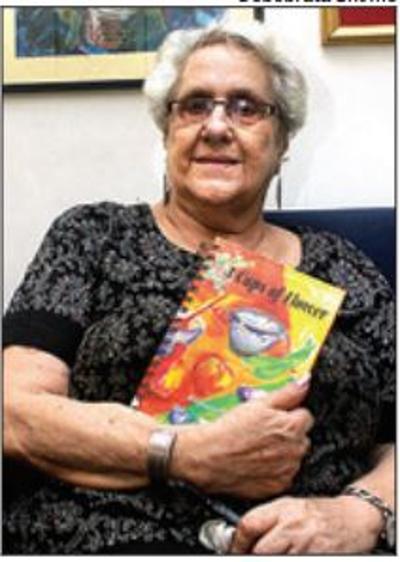
Flower power pushes Kolkata Jewish population up by 1

CHRONICLER OF TASTE : Flower Silliman

Kolkata :

For 30 years, Flower Silliman lived abroad, keenly observing and recording Jewish life in the Middle East, Europe and the US.

Now, the 86-year-old is back in the city she was born taking the community count up by one. And, she has taken upon herself the onerous task of keeping the authentic Jewish flavours alive for her nine-member strong community. Yes, you read it right: nine.

Demographers put the strength of the Jewish community in the city at less than 20, but the members are rather strict about who they call “pure”. Those that have married “outside” the community are strictly not “pure” Jews.

“I have come back to the city because this is where the Jews have lived most safe and free, but unfortunately , this is where our numbers have dwindled the most…but I am keeping the flame alive,” she says.

Silliman also happens to be among the last keepers of the community’s ancient recipes and has decided to chronicle the unique tastes for posterity.

“Even the food that Jews here have today is not what we are permitted by our religion. There’s so much of mix and match that most of the authentic cuisine that is over 5,000 years old and has its roots in the Middle East, is lost. I am trying to keep the tradition alive by documenting the recipes and rustling up dishes for feasts,” says Silliman.

Jewish food is special because Jews just can’t eat cause Jews just can’t eat anything and everything, Silliman says.

Their food -kosher -has to abide by strict dietary laws which not only lay down what is forbidden but also the process of cooking, the ingredients and the kitchen specifications. Kosher, for example, does not permit meat to be mixed with milk or milk products.So, neither can you mix the two while cooking, nor can you consume milk or milk products after having meat.

Flower Silliman says: “Judaism has a great similarity with Hinduism so far as its antiquity and dietary specifications go.

It’s another matter that most followers of both religions have drifted away from these guidelines… perhaps because they have often found it difficult to cope with such restrictions. I am not saying this by way of criticism, but the fact is that cuisines, and even cultures, become extinct because of such interpolation.”

A traditional sit-down Jewish feast on Friday night can ideally start with beet khatta with koobah (beet soup with chicken or vegetable balls), followed by Jewish roast chicken, which is different from the European roast in the kind of marinades and spices used. “The authentic Jewish roast will be far milder, both in flavour and sharpness, compared to the European roast,” Silliman says.

Kosher allows Jews to only have fish that have scales, and not those with shells (prawns, crabs or lobsters). “So you have items like fish shoofta, which is minced fish skewers. Vegetable lovers have choices like vegetable mahashas, which is stuffed tomatoes and capsicum.But the magic is in the recipe for the stuffing. The authenticity of the dish is heightened when served with aloo makalla (a special potato fry), hulba (a sort of fenugreek, mint and coriander chutney) and cucum ber zalata. Another speciality is mutton or vegetable ingree -a layered meat dish baked with brinjals, tomatoes and potatoes -not unlike the Greek moussaka, but without dairy to keep within kosher limits,” Silliman explains with the lucidity of an expert.

And why not? While abroad, Silliman served as a souschef at the Plaza in Jerusalem and launched the world’s only kosher Jewish restaurant, Maharaja.

She taught cooking and ran masterchef shows in US and London and authored two books. “I have come back to Kolkata because this is where the Jews have lived most safe and free, but unfortunately , this is where our numbers have dwindled the most… but I am keeping the flame alive.”

source: http://www.timesofindia.indiatimes.com / The Times of India / News Home> City> Kolkata / by Jhimli Mukherjee Pandey / TNN / April 29th, 2016

West Bengal gets its first transwoman presiding officer

Kolkata :

Early this year, Riya Sarkar had spoken out about the ‘terrible alienation’ she was facing from some of her colleagues of Dum Dum Prachaya Bani Mandir For Boys’. She was being treated as an untouchable at her workplace for having undergone sex realignment surgery. Three months down the line, Sarkar finds herself empowered. She is perhaps the first transwoman in India to have been entrusted with the job of a presiding officer. On April 30, Sarkar will be seen at a South Kolkata booth manned only by women in Rashbehari area.

In the last Loksabha elections, Sarkar was approached for discharging election duty. “Back then, I was a transgender and was undergoing hormone therapy. I was too weak and had informed the authorities about my medical condition,” Sarkar recalled. This year when Sarkar was approached, she accepted the offer gladly. She is overwhelmed by the huge “honour” that Election Commission (EC) has given her.

Back in her school, her colleagues are sharing her happiness too. Teacher-in-charge of her institute Amar Nath Chatterjee told TOI that he is glad with the news. “Bhaloi toh (It’s good). We had a small misunderstanding earlier. But now everything is normal. All our staff members congratulated her. Since there is a vacation in school, students don’t know the news yet.”

Sarkar is satisfied with the turnaround of people who initially had problems accepting her sex realignment surgery. “I am grateful to TOI for standing by me and helping me in my fight for equal rights. Dr Manabi Bandopadhyay and my parents have also been very supportive. My colleagues, particularly Maitreyi Das and Subrata Biswas, have always stood by me. Those who were apprehensive subsequently apologised for their behaviour. They are saluting me now,” Sarkar said.

Subrata Biswas, who teaches Bengali in Sarkar’s school, feels this move by the EC will go a long way in empowering those who are undergoing sex realignment surgery. “It is a commendable decision for the EC to rope her for a job that’s linked to nation building. This is a great way to encourage her acceptance in the mainstream,” Biswas said.

Incidentally, Biswas too has served as a presiding officer at a booth in New Barrackpore on April 25. “Before the polls began, we exchanged notes on how to discharge our duties. There was no problem of fake voting in my booth. I’ve assured her that the Central Forces are doing a great job and that she should not feel scared at all,” Biswas added.

Does poll violence scare Sarkar? “No, I’m expecting complete cooperation from our polling agents. I’m a law-abiding and politically neutral person. I hope to get full support from the CRPF and female constables to conduct a fair poll,” she replied.

source: http://www.timesofindia.indiatimes.com / The Times of India / News Home> City> Kolkata / by Priyanka Dasgupta, TNN / April 28th, 2016