07
Squash wins back its star, India gets medal
Calcutta boy’s sport-or-job battle
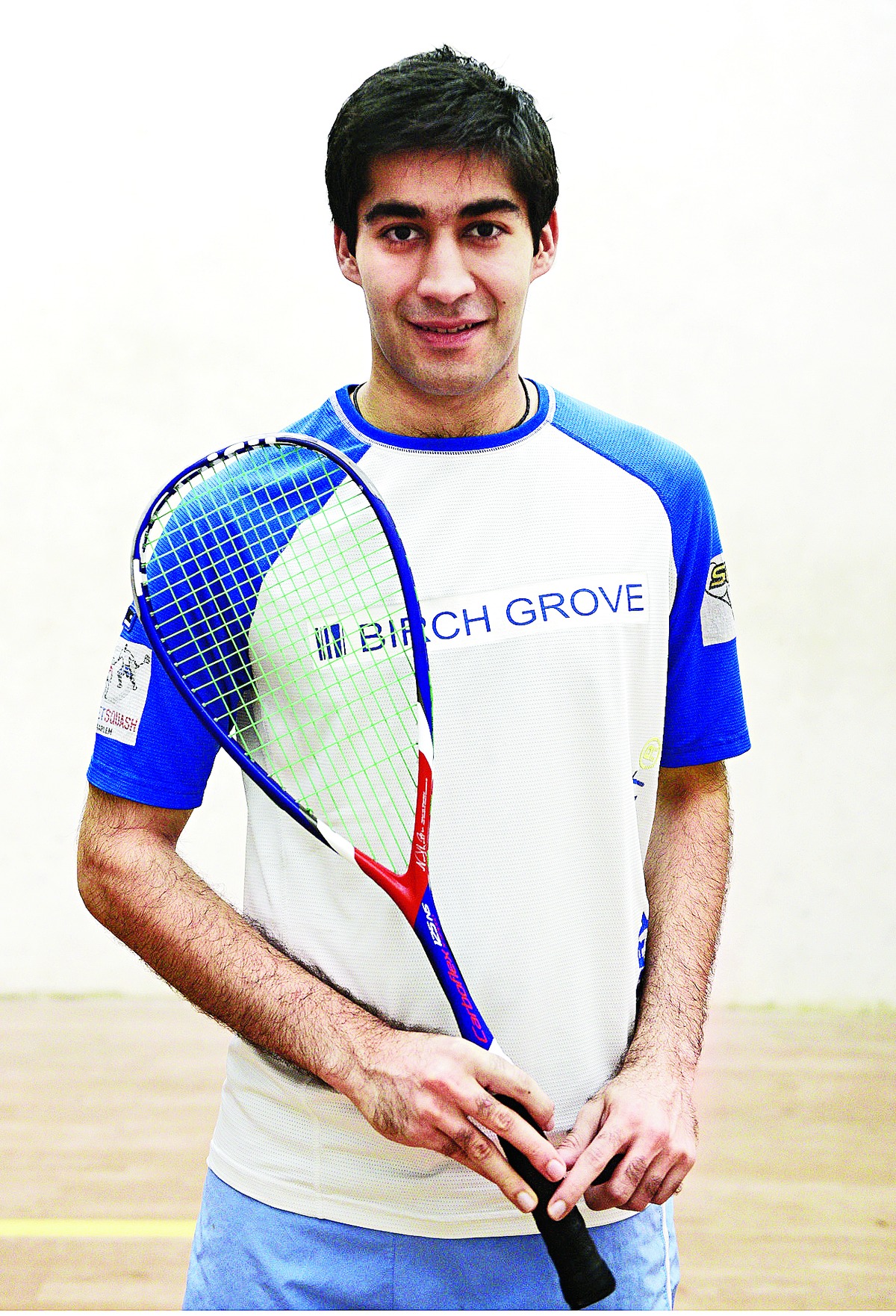
Picture by Gautam Bose
Calcutta:
Ramit Tandon’s journey from La Martiniere for Boys in Calcutta to the winners’ podium at the 2018 Asian Games hasn’t followed the usual curve of sporting success achieved through sweat and the sacrifice of myriad other ambitions.
The 26-year-old, who also studied at Columbia University, was till a year ago analysing equity and debt markets sitting in the New York office of a hedge fund. Squash remained his passion, but primarily as a leisure activity.
Last Friday, Ramit won an Asian Games bronze in Jakarta along with teammates Saurav Ghosal, Harinder Pal Singh Sandhu and Mahesh Mangaonkar, all three of them regulars in the competition circuit.
Ramit had quit his job in New York to turn pro only last November. His Professional Squash Association (PSA) ranking then was above 600. Over the next few months, he won two PSA titles to break into the top 60, good enough to earn him a spot in the Indian team for the Asian Games.
“I used to badly miss being in competitive squash. The travelling, the pressure (to perform), the adrenaline rush and, of course, the honour of representing the country,” Ramit told Metro at the Saturday Club, where he hits a ball or two whenever he is in town.
At the Asian Games, Ramit won all but one of his matches. He counts his performance against Qatar in a crunch match in the group stage as his personal favourite. He did not play a match in the semifinal against Hong Kong because the two players before him had lost theirs, making the rest of the contest inconsequential.
While the gold medal eluded India, Ramit sees the bronze as a vindication of his decision to become a squash pro.
So, what made him finally choose squash over a shirt-and-tie career? “Hedge funds require balancing risk and return. I thought it was time I did it for myself instead of clients,” he said. “I was earning well. I had to factor in so many things, including the possibility of a comeback to my earlier career if I failed in squash.”
As a student, Ramit had been regarded as a promising player in the junior circuit. Between 2001 and 2011, Ramit had won a string of national championships in successive age groups. He was the captain of the India Under-19 team that won a gold medal in the Asian Junior Championships in Sri Lanka in 2011.
But studies won the competition when it came to choosing a career. “I had had a decent schooling. When I got a chance to study at Columbia University, I did not want to let go of it. After my graduation in statistics, I got an analyst’s job with Birch Grove,” he recalled.
Now that squash has won back what it lost, Ramit intends to be loyal to the sport. And nobody’s complaining.
source: http://www.telegraphindia.com / The Telegraph,Calcutta,India / Home> Calcutta / by Debraj Mitra / September 04th, 2018
Jamdani that is out of the box
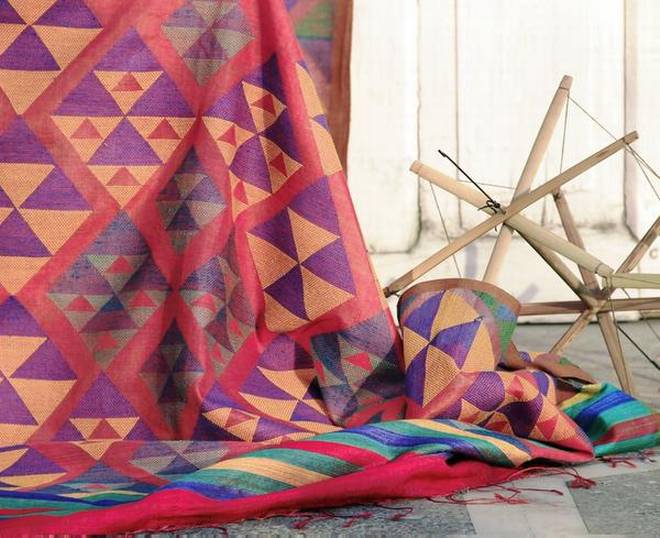
The Textile Show by CCI presents contemporary versions of traditional craft
“Our craft has to grow and adapt. It has to be a living tradition and not just be preserved as our heritage. Which is why innovation and thinking out of the box help,” says Sarita Ganeriwala, founder of Karomi, an organisation that works with the women weavers of West Bengal, focussing on the myriad possibilities of Jamdani technique.
“Karomi works with urban and rural artisans and ours is weaver-centric organisation. The focus is keeping the craft alive. For me, the product comes ahead of the story of the weaver. We develop high quality products with high functionality,” she says.
Karomi products are not just ethnic, but have a contemporary feel,” Sarita points out, adding that her art background has enhanced her design interpretations. A textile design graduate from NIFT Delhi, Sarita was joined by Sarika Ginodia, a chartered accountant, to provide a sustainable business leadership to the firm.
Disha, founded by Amrita Chaudhary, works with 400 women artisans of the Shekhawati region in Rajasthan and engages them in tie-and-dye. It has made the women self-reliant by forming a self-help group. The stories of Karomi and Disha are woven by the skilled weavers from economically marginalised regions of Shekhawat and West Bengal. All the three women who have spearheaded this revolution will participate with their creations at the Textile Show organised by Crafts Council of India (CCI), in the city.
Disha provides a dignified livelihood for vulnerable women. Its activities include assistance in creating SHGs, skills training, promoting children’s education and very importantly, conducting awareness workshops on women’s social and legal rights. The 400-member SHG founded by Disha is trained in tie-and-dye and the Japanese craft of shibori to create saris, dupattas, stoles and running fabric in chanderi, tussar, and mulberry silk.
“Our design mission is to bring together the classic and the contemporary. We handover out complete designs to our weavers and they are also involved in the design development process from the beginning. At times, design intervention takes place at the loom level,” says Sarita.
Karomi has developed a special range of khadi and khadi blends for the Chennai exhibition. “We have brought products in plain khadi, khadi-linen, among others, all with the jamdani style of weaving. This collection is most suitable for Chennai’s weather,” says Sarita. Karomi received the UNESCO Award of Excellence for Handicrafts — Jamdani stoles in 2012 and again in 2014.
At the exhibition, Disha will showcase shibori saris, stoles, and dupattas. These artisans also use fine bandhini work on chanderi and silk saris. The Karomi design story is all about natural fabrics and linen woven in the jamdani style, inspired by colour blocking and geometrics, all woven by women weavers in remote villages of West Bengal.
The Crafts Council of India (CCI) is a volunteer-run, not-for-profit NGO working for the sustainable growth and development of India’s crafts and it’s craft artisans.
The Textile Show is at CCI’s Kamala Crafts Shop, Egmore, September 6 to 8, 10.30 am to 7 pm. For details, call 28191457.
source: http://www.thehindu.com / The Hindu / Home> News> Cities> Chennai / by Chitra Deepa Anantharam / September 05, 2018
Kolkata revives the romance of the Raj
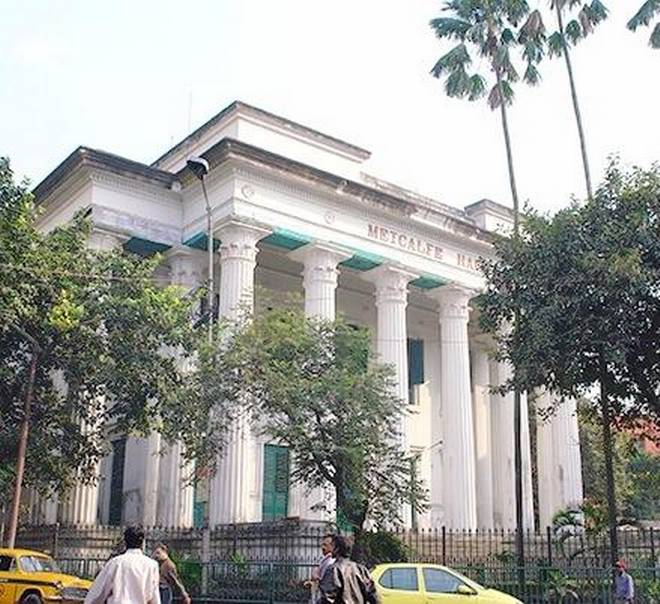
Two colonial-era buildings to get a new lease of life as hubs of art and culture
Two of Kolkata’s oldest colonial buildings, Currency Building and Metcalfe Hall, both built in the 19th century, will soon become museums and galleries showcasing art and urban history.
The three-storied Currency Building in Dalhousie Square was built in 1833. Designed in the Italian style with Venetian windows and cast iron gates, its vaults and strong room once housed some of India’s oldest banks, including Agra Bank and the Reserve Bank of India.
But now the western wing is all set to become the office of the National Gallery of Modern Art (NGMA). Once the NGMA moves in, the Currency Building will host an exhibition of sketches and sculptures by Ramkinkar Baij, a pioneer of modern Indian sculpture.
“We are expecting that a portion of the Currency Building will be handed over to us by September. There are plans to have a large exhibition on Ramkinkar Baij,” said Adwaita Gadanayak, director general of NGMA.
Archaeologists say the Currency Building was not a mint but a place where currency was kept. Till 1937, it was occupied by the RBI, after which it fell into neglect. Its central dome collapsed later. The Archaeological Survey of India (ASI) took over its upkeep in 2005.
Barely 200 m away is Metcalfe Hall, with 30 Corinthian pillars built between 1840-1844. Located at the junction of Strand Road and Hare Street, it draws its name from Lord Metcalfe, the Governor General of India in 1835-36. It is in this structure that the city’s history will come alive as the ‘Calcutta to Kolkata’ exhibition.
Renovation dilemma
The ASI grappled with the question whether to rebuild the Currency Building’s dome, but decided to keep the existing structure.
In Metcalfe Hall, it shifted one lakh books for repair work. “The exhibitions will bring them back to life,” said G. Maheswari, Superintend- ing Archaeologist, ASI, Kolkata circle.
source: http://www.thehindu.com / The Hindu / Home> News> States> Other States / by Shiv Sahay Singh / Kolkata – September 02nd, 2018
Telugus rejoice 1000 full moons in city
Calcutta:
An association for Telugus in Calcutta, formed in 1936, is celebrating its existence for 1,000 full moons according to the Telugu calendar, an occasion known as Sahasra Purna Chandrodaya.
The Andhra Association Calcutta was set up to give Telugus a feeling of home away from home.
Sahasra Purna Chandrodaya is an occasion Telugus celebrate if they see 1,000 moons in a lifetime, an association official said.
“Our association has completed 1,000 full moons and we will celebrate the occasion. For us Telugus, seeing 1,000 full moons is an auspicious occasion,” Srinivas Vedula, president of the association, said.
“In Telugu families anyone living for 1,000 full moons thinks it to be a new life. If one’s spouse is alive, partners exchange garlands like a second wedding.”
Established in September 1936, the Andhra Association Calcutta is now 81 years old. The difference in food, culture and language prompted Telugus in the city to form the association.
Vadlamani Venkatesham Pantulu, an engineer working in Port Trust, had set up the association.
President Vedula said several Telugus approached Pantulu after which the engineer took a place on rent in Bhowanipore and turned it into a hostel for Telugus. “Here, people used to get food cooked the way they would get at home. Besides, interacting with fellow Telugus gave them a feeling of home.”
Even now the association directs people who approach them to places where they can get Telugu food or people. Yet at the same time, members mingle with people from other states so that they don’t remain exclusive without any contact with people from other cultures, Vedula said.
“During cultural programmes, we have Rabindrasangeet as well,” an association member said.
There are about 100,000 Telugus in Calcutta and a large number of them working in the IT sector in Salt Lake and New Town.
Andhra Pradesh has been split into two states but people from both Telangana and Andhra Pradesh are members of the association. “It’s an association of Telugu people and not of people from a state,” Vedula said.
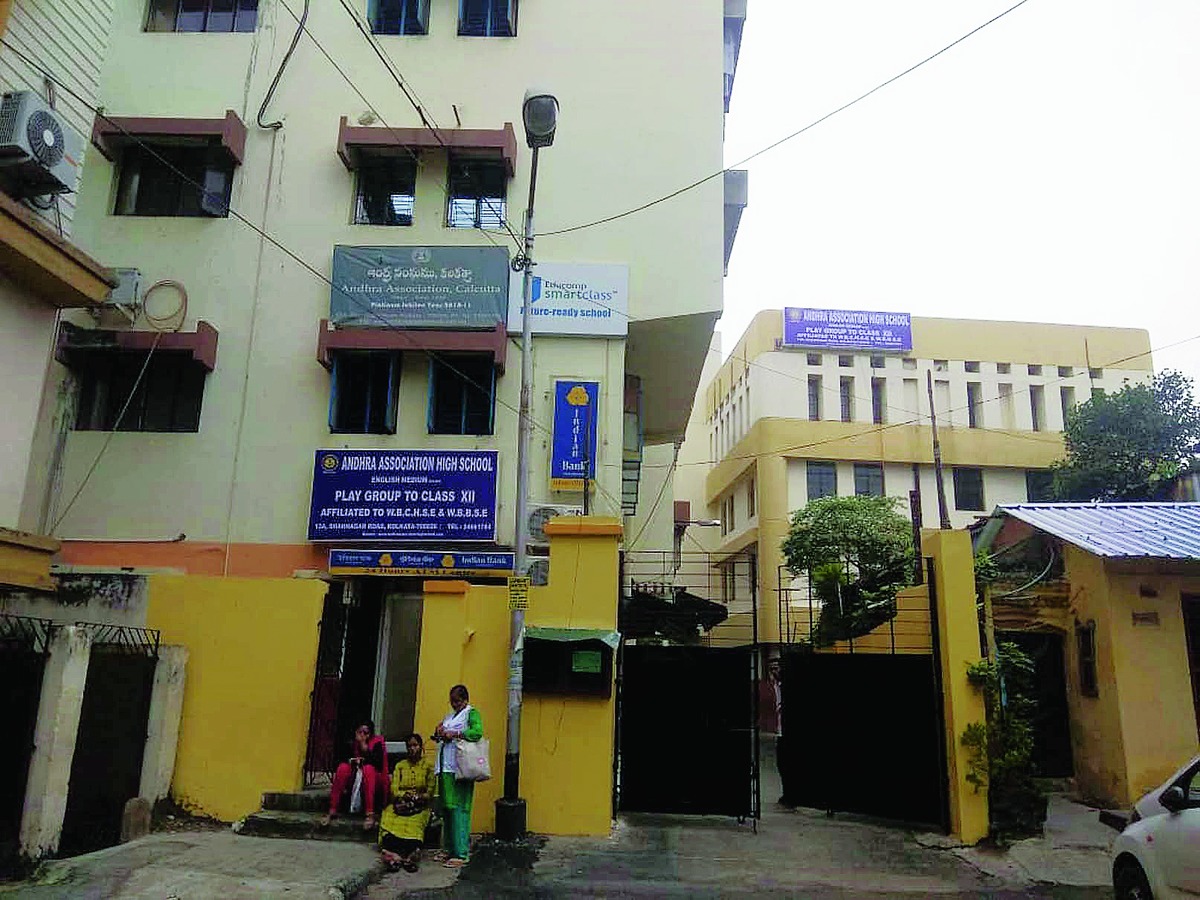
The current building that houses the association’s office on Pratapaditya Road has the Andhra Association High School, where Telugus are a minority. “We have about 1,000 students and about a dozen of them are Telugus,” a member said.
source: http://www.telegraphindia.com / The Telegraph,Calcutta,India / Home> Calcutta / by Subhajoy Roy / September 03rd, 2018