The woman who could have won a Nobel
Despite being a pioneer in the study of cosmic rays in India, Bibha Chowdhuri remains practically unknown.
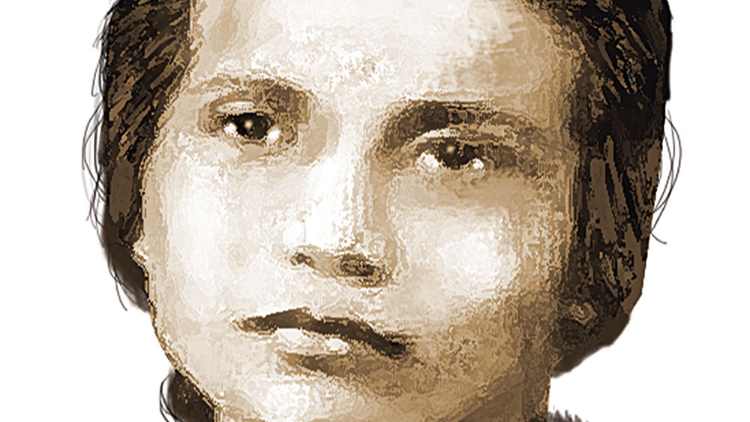
Illustration by Suman Choudhury
Judging by her publications in journals such as Nature and Proceedings of the Physical Society of London, and her doctoral research work at the laboratory of renowned physicist P.M.S. Blackett in the UK, Bibha Chowdhuri was a gifted physicist. No wonder she was one of the young scientists — the first woman researcher — selected by Homi J. Bhabha to join the newly established Tata Institute of Fundamental Research (TIFR), Bombay, in 1949. Chowdhuri (1913-1991) served in renowned institutions of the country and was a tireless researcher till she died, unsung and unheralded, in Calcutta. No national award or fellowship of any major scientific society came her way. She does not figure among the 98 scientists of uneven quality in the 2008 book Lilavati’s Daughters: The Women Scientists of India, edited by Rohini Godbole and Ram Ramaswamy and published by the Indian Academy of Sciences, Bangalore.
Now, thanks to the painstaking efforts of two physicists, a book has been published from Germany that throws light on the life and work of this remarkable scientist who happened to be a woman. Rajinder Singh, a noted science historian at the University of Oldenburg in Germany and Suprakash C. Roy, former professor of Physics at the Bose Institute in Calcutta seek to unravel the “story of courage and determination of a lady born more than a hundred years ago …for our younger generations to emulate.”
While her research contributions are well recorded and have been critically examined by the authors, not much material could be unearthed on her life. Chowdhuri was wedded to physics and led a quiet, modest and dignified life largely within the confines of her laboratory. A quintessential researcher who never aspired for high office, she hailed from an educated zamindar family in the Hooghly district of undivided Bengal and her mother was related through marriage to the family of Sir J.C. Bose. Chowdhuri was one of six siblings — five sisters and a brother. All of them were well-educated, thanks to their Brahmo lineage, and none of them married.
Chowdhuri obtained her MSc in Physics from Calcutta University in 1936 — the only woman in that batch — and plunged headlong into research, mostly at the Bose Institute. Debendra Mohan (DM) Bose [nephew of Sir J.C. Bose] and Chowdhuri published three consecutive papers in Nature, but could not continue further investigation on account of “non-availability of more sensitive emulsion plates during the war years. Seven years after this discovery of mesons by DM Bose and Bibha Chowdhuri, C.F. Powell made the same discovery of pions and muons and further decay of muons to electrons… using the same technique” and won the Nobel Prize in 1950. Powell acknowledged Bose and Chowdhuri’s pioneering contribution in his work.
In 1945, Chowdhuri joined “the cosmic ray laboratory of would-be Nobel Laureate P.M.S. Blackett (he was awarded the Nobel Prize in 1948) at a time when studies on extensive air showers in cosmic rays were one of the most important investigations in particle physics” for her PhD.
On her return, she joined TIFR. After eight years, she joined the Physical Research Laboratory (PRL) at Ahmedabad. She was involved deeply with the Kolar Gold Mine experiment and discussed with Vikram Sarabhai, then director of PRL, about her future research plans. Unfortunately, after Sarabhai’s untimely death, she was not permitted to take up the planned work. It is unfortunate that at two critical junctures, once at the Bose Institute and later in PRL, she had to abandon the work she intended to pursue. She finally opted for voluntary retirement, moved to Calcutta to pursue her work on high energy Physics, continued as an active researcher with the Saha Institute of Nuclear Physics and the Indian Association for the Cultivation of Science and kept publishing her findings till almost the time of her death.
While Chowdhuri’s research in the fields of high energy and cosmic ray physics has been extensively reviewed and rated as “superb” by the authors, her life, devoid of any major recognition, raises many important questions, especially in the context of barriers women face even today, while pursuing science.
Just like C.V. Raman was reluctant to admit the first woman researcher to the Indian Institute of Science in Bangalore, DM Bose too was initially not enthusiastic but eventually accepted Chowdhuri as a research student. The situation was not much different in the West.
In her introduction to the book Women and Science in India: A Reader,a collection of interesting essays, Neelam Kumar states that “science continues to be characterised by low number of females, clustered in disciplines considered feminine and confined to the ranks of invisible, poorly paid assistants, and other lower positions.” In the same volume, Namrata Gupta and A.K. Sharma write about the “triple burden” —- In addition to the double burden of career and home, the long hours in the laboratory demanded by scientific study and research constitutes the third burden — faced by women in science. The issue of “passive discrimination” and of invisible barriers are also no less important.
The authors of the book on Chowdhuri cite Godbole and Ramaswamy that till a few years back only five per cent of the fellows of the Indian National Science Academy were women. Eileen Pollack, author of The Only Women in the Room: Why Science is still a Boys’ Club, argues that society encourages men to take up science and discourages women. In an interview to The Manchester Herald during her research days, Chowdhuri had said, “Women are terrified of Physics — that is the trouble. It is a tragedy that we have so few women physicists today… I can count the women physicists I know, both in India and England, on the fingers of one hand. At school, scientifically-inclined girls choose Chemistry; perhaps because a really sound grasp of Higher Mathematics is one essential of any physicist’s equipment.”
Singh and Roy deserve praise for having written a scholarly and dispassionate analysis of what Chowdhuri achieved. One hopes that the book would lead to more material on Chowdhuri emerging from her students who may still be alive. It may also prompt the government to take due cognisance of Chowdhuri’s life and honour her memory as a way of expiating our collective apathy towards her.
A Jewel Unearthed: Bibha Chowdhuri by Rajinder Singh and Suprakash C. Roy was released by German publishing house Shaker Verlag recently
source: http://www.telegraphindia.com / The Telegraph,Online edition / Home> Science / by Amitabha Bhattacharya / November 25th, 2018
28 b
A tribute to Jagadish Bose, who proved plants have life
Group of scientists recreates Bose’s experiment, which was not received well 100 years ago
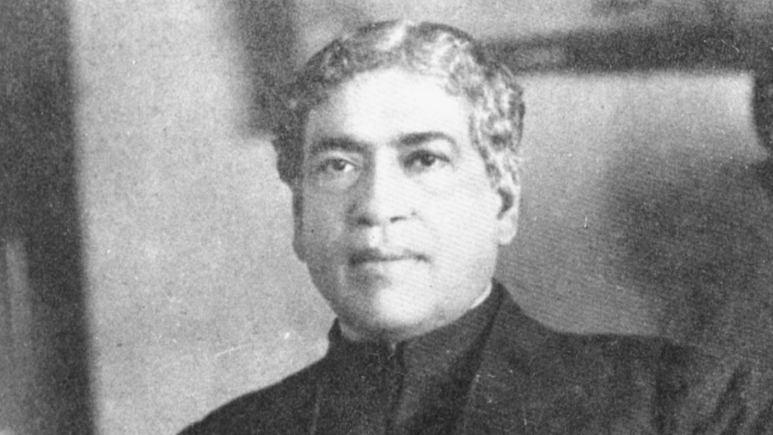
Image: The Telegraph
More than 100 years after Jagadish Chandra Bose conducted the experiment that established plants have life, a group of scientists in Calcutta came together this year to repeat it.
Supriyo Kumar Das, an assistant professor of Geology at Presidency University, led the initiative. The others on the team were also from Presidency — Debashis Datta and Rabindranath Gayen, both assistant professors of Physics, Snigddha Pal Chowdhury, a research associate in the Geology department, Abhijit Dey, an assistant professor of Botany, and Saranya Naskar, an MSc student of Physics.
Bose, who had joined Presidency College in 1885 as a professor in the Physics department, had conducted the experiment in a laboratory on these very precincts. No matter how much he is hailed today for his scientific genius, in his time Bose’s experiment had not been received well.
It all began when Peter V. Minorsky, a botanist and professor at Mercy College in the US, got in touch with Das earlier this year. Minorsky wanted to know about the groundwater composition in the College Street area, where Presidency University stands.
Says Das, “It is from him that I heard about the prejudices against Bose. In the course of our exchanges, I got interested and emotionally involved with Bose’s work.”
He had been savagely criticised by George James Peirce, professor of Plant Physiology at Stanford University. Peirce wrote in the journal, Science, in 1927: “The trouble with Bose… is that while his curiosity is directed to biological phenomena, his mind is inadequately equipped with the information and habits necessary for accurate study, and his reflections are addressed to philosophical problems.”
In 1929, the Indian Review reported that G.A. Perrson, who was from the US, was unable to find pulse in plants. And years later, in the mid-1960s, in the Handbuch der Pflanzenphysiologie (Encyclopaedia of Plant Physiology), it was said, “Unfortunately Bose’s theoretical views and his emotional style of reporting have generated what may be an excessive skepticism concerning the validity of his observations.”
This is what Bose had observed. By devising a wire electrode — an invention three decades ahead of its time — he identified a pulsating layer of cells abutting the vascular tissue in plants. In an email to The Telegraph, Minorsky says, “In the last few years, plant biologists have come to recognise this layer is the site of propagating waves of calcium release that are involved in communicating stress from local points of occurrence to the rest of the plant. The discovery of this calcium wave is one of the more exciting discoveries of the 21st century, and Bose’s ‘plant heart’ predates this discovery by a century.”
Bose has left notes aplenty about every aspect of his historic experiment. One of the lone omissions is the kind of water used. Says Das, “Being a geochemist and scientist, I understand the composition of groundwater and the effect of chemical stress of sodium on plants. I also know that the composition of water varies from place to place.” He adds, “It occurred to us that Bose’s peers in the West might not have got the same results as him because of the water used.”
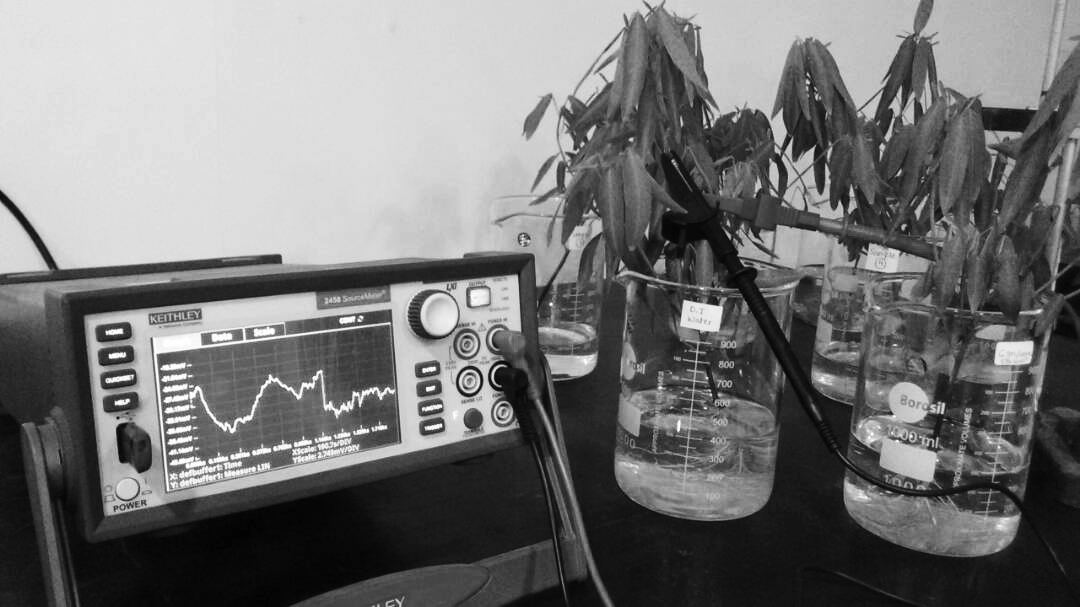
Image: The Telegraph
In Bose’s time, water was supplied to the Presidency campus from Palta in the Barrackpore area. Das points to a spot occupied by an elevator on the ground floor of Baker Building that houses the Physics department and says, “This is where the old pipeline ran.” Currently, the municipality takes care of the water supply. It comes from the Tala tank in north Calcutta.
When Das and and others repeated the experiment, they decided to use water from every possible source Bose might have accessed. “He could have also used water from the Ganges or from the pond in College Square,” says Das.
Datta explains, “We wanted to check the potassium and sodium concentration. Electricity flows through water only when there are some ions present in it. Possibly, the scientists from the West had not used ionised water.”
The “repeaters” used for the experiment the plant Bose had used — the Desmodium motorium, locally known as bon charal. Minorsky explains, “The lateral leaflets of Desmodium are unique in the plant kingdom for their pronounced and unprovoked oscillatory movements. If conditions are optimal, one can watch these lateral leaflets move at a pace slightly slower than the second hand of a watch.”
According to Minorsky, Bose enjoyed certain enormous advantages over his Western peers. First, Desmodium motorium is a native of Bengal, so he had access to an ample supply of healthy, thriving specimens. In contrast, in the West its cultivation was restricted to glasshouses. Those days, glasshouses were often heated by wheelbarrows of burning coal. These released a gas called ethylene, which in turn affected many plant processes, including a decrease in overall excitability. Second, he points out Calcutta’s temperatures and how they lend themselves to plant study. “Temperatures of 30-35° Celsius, which occur commonly, are optimal for studying plant movements and excitability. The temperatures at which scientists in the West studied plants would have been much lower,” he says. Finally, there was the salty water advantage.
Dey arranged for 21 Desmodium plants. Each was kept in a beaker full of a distinct water sample. Thereafter, they were all kept in a controlled atmosphere. Says Gayen, “We placed them in glass beakers and left them in the laboratory, where all the lights would be kept on so that all of them were exposed to the same amount of light. The air conditioner would be set at a particular temperature to control the humidity. We would connect the probes to two different parts of the stem. The source meter was used to read the fluctuating signals.”
The brainstorming went on for months and the experiment lasted a fortnight. Das says, “The apprehension of failure was there. But the moment when we got the first response was exquisite. The horizontal line that appeared on the screen formed a peak and then fell only to rise again. Though our graph did not have peaks and troughs as tall as Bose’s, we definitely had got a graph that roughly replicated the ECG graph of humans.”
source: http://www.telegraphindia.com / The Telegraph,Online edition / Home> Culture / by Moumita Chaudhuri / November 25th, 2018
27
26
25
Lights, camera, action: Kolkata film fest a hit
Day 4 of the Kolkata International Film Festival 2018
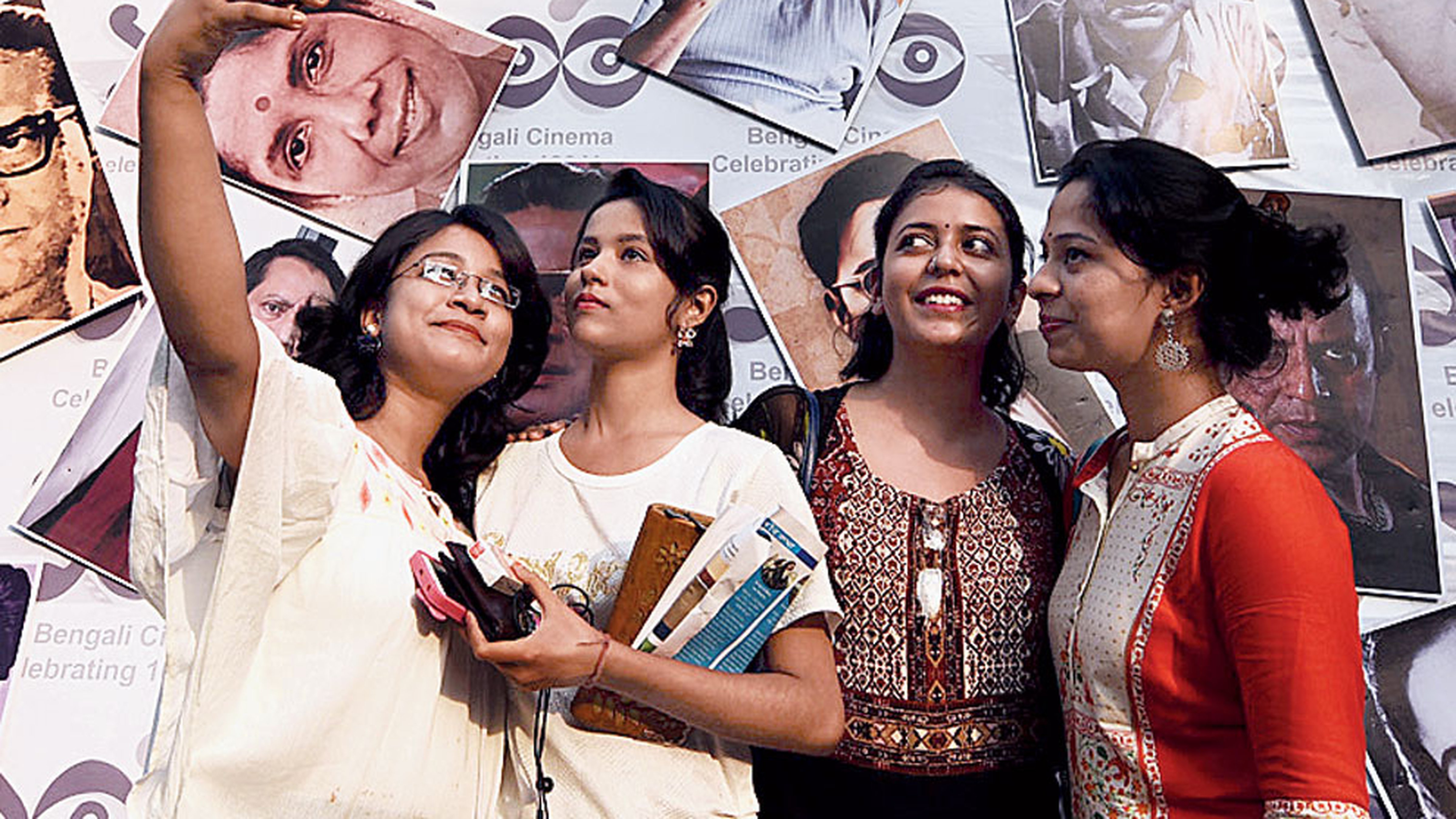
Picture by Pradip Sanyal
The Nandan promenade was crowded as usual around 4pm on Wednesday on the 4th day of the Kolkata International Film Festival.
At any point, at least five smells hung in the air. Arcane hobby publications, little magazines, festival pamphlets, and food — all vied for the visitors’ attention.
In addition to a stall devoted to promoting Bengali cinema’s 100-year-long heritage, the festival’s background score whirled in the air like an anthem.
Cigarettes went around youngsters freely. A group of three men played the role of festival troubadours with characteristic Bengali elan. While one was tall, long-haired and seemed to be holding a journal in his hands, his short friend sported a long beard and a wooden flute. The third was a jokester, shoving the other two around with a cigarette in hand while they tried to work at their craft in front of Nandan I.
At the Nandan foyer, an Australian documentary film-maker was being interviewed by a news channel. “Spicy food? Yeah, I like it, but I’m not the biggest fan. I can handle it. But really, I’m just floored by the whole festive air here. It’s like a carnival, really great. Can’t wait to see more.”
Used paper plates were laid generously at the feet of a cluster of large garbage bins. This benefited the two or three mutts, who honed in on the area once the stash was substantial.
An eager quizmaster paused onstage at the makeshift but large Ektara Manch abutting Rabindra Sadan and said: “This next question is for biological males only, please.”
Unoffended, winter picknickers at the garden venue giggled, moving around the carpeted audience area for coffee and kobiraji.
The quizmaster’s mystery soundtrack —Sob Khelar Shera by Manna Dey — came and before he could ask a question, many women raised their hands in laughing abandon. “What was the final score in the match at the end of the film?” Some backed down, now laughing meekly.
A group of students seated on the grass were heard saying, “That’s not the message of the film…. I’ve watched it more than once…. You have to perceive it in the spirit of what Vivekananda once said. You will be nearer to Heaven through football than through the study of the Gita.”
An artist seated beside a tea vendor in Nandan I called out to the occasional passer-by, “I’m not begging, you know. If you’d give me five minutes, I could show you. I really have to make a living, too. But I won’t beg. So, don’t ignore me as if I’m a beggar, please.”
On 9th November, at the inaugural ceremony of the 24th edition of the festival, chief minister Mamata Banerjee had said: “The status of the festival was on a downslide before we came to power. We showed things could be done if you wanted to.”
At Nandan, the air of legacy was ripe in the air. In addition to the tall banners mounting the Nandan buildings, the rear promenade saw a cultural exhibition commemorating 100 years of Bengali cinema. A rotunda behind Sisir Mancha had a 10-panel retrospective curated by Prosenjit and Suvaprasanna.
The panels documented the dates, personalities and photographs of all those who have made Bengali cinema proud — Satyajit Ray, Manna Dey, Tapan Sinha and Mrinal Sen to name a few.
The quizmaster, flanked by two 30ft ektaras, ended by reminding the audience to enjoy this “Carnival of Cinema in the City of Joy”.
source: http://www.telegraphindia.com / The Telegraph Online Edition / Home> West Bengal / by Aditya Nag in Kolkata / November 16th, 2018
An unrecognised explorer
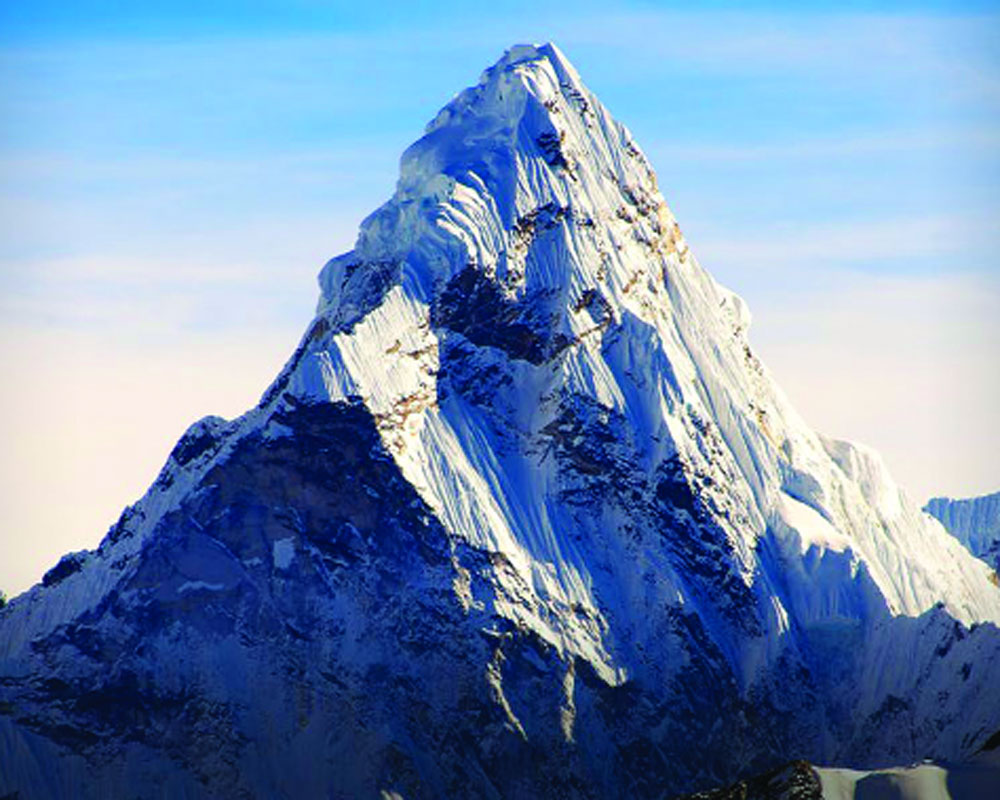
It’s time we do justice to Radhanath Sikdar, the man who first measured Mount Everest
All of us are aware from the days of our childhood that the highest mountain peak in the world is Mount Everest and it was discovered by George Everest. It was only much later that one came to know that Sir George Everest was the Surveyor General of India and the peak was so named as he had discovered it to be the highest in the world. As the Surveyor General, he had his offices in Dehradun and used to stay in Mussoorie. He left India in 1843, almost 200 years ago, but his house in Mussoorie is still being preserved and is now a place of tourist interest.
The truth, however, is somewhat different. It is a fact that Sir George Everest was the Surveyor General of India from 1830 to 1843, but it is also a fact that during his tenure of office, Mount Everest, that we know of today, was only known as ‘Peak XV’. Everest had neither initiated the process of measuring the height of this peak, nor was he instrumental in its naming, which was done much later, long after he had proceeded to England to enjoy his retirement after 1843. Located on the border of Nepal and Tibet, this ‘Peak XV’ has been worshipped as a holy place by the Tibetans, who called it Chomolungma, the Mother Goddess of the World. In Nepal, this peak is known as Sagarmatha, meaning the peak of heavens. Even these days, this peak is addressed by its traditional names, both in Tibet and Nepal, while we have followed what was given to us by the British ie Mount Everest.
In fact, the name Everest was given by Col Sir Andrew Waugh of Bengal Engineers, who succeeded Everest as the Surveyor General of India from 1844 to 1861. Circumstances under which ‘Peak XV’ was named as Mount Everest are rather peculiar and reveal a very biased handling of the matter so that the entire credit goes to the British officers of the East India Company. Going through the historical records of the Survey of India Volume IV: 1830 to 1843, pertaining to the tenure of Sir George Everest, one can observe at a glance that he had shown no interest in ‘Peak XV’ during this period. It was his successor, Andrew Waugh, who made the official announcement of ‘Peak XV’ being the highest known peak of the world in 1856, the measurements had, of course, been initiated much earlier and finalised by our own Radha Nath Sikdar in 1849.
Recognising the work of Sikdar, the Government of India had issued a postage stamp in his honour in 2004. But his work is of such a great importance that issuing a postage stamp and then forgetting about him does not do full justice to his unique and great contribution. It was Sir George Everest who had recruited Sikdar in the great trigonometrical survey and became extremely fond of him. Volume IV of the Historical records of Survey of India, pertaining to his tenure, have the following mention about Sikdar: “Radanauth is high in favour with everybody, and universally beloved in the GT Survey. You will not know him for the same person when you see him again, for he is no longer a puny stripling, but a hardy energetic young man, ready to undergo any fatigue, and acquire a practical knowledge of all parts of his profession. …There are few of my instruments which he cannot manage; and none of my computations of which he is not thoroughly master. …Eventually he will furnish a convincing proof that the aptitude of your countrymen for the practical, as well as the theoretical, parts of mathematics is in no wise inferior to that of Europeans.”
“Of the qualifications of the young man himself I cannot speak too highly. In his mathematical attainments there are few in India, whether European or Native, who can at all compete with him, and…even in Europe those attainments would rank very high.”
Later, on account of a special technique developed by Sikdar for accurate computation of heights and distances through Spherical Trigonometry, he virtually became indispensable to the organisation and rose to become the Chief Computer in the office of SGI. In that position, he moved from Dehradun to Kolkata in 1849. As to why Andrew Waugh gave the name Everest, even though he had left the scene long ago, is an interesting piece of history.
Had SG Burrard, a later Surveyor General of India, not acknowledged the good work of Radhanath Sikdar through a research paper published in 1904 in the scientific journal Nature, these facts would not have come to light. He published in detail various steps taken for the measurement of ‘Peak XV’. This in a way also exposed the machinations of Andrew Waugh who had tried his level best to take credit away from, to where it truly belonged, that is Radhanath Sikdar.
It is human nature that in case something important is achieved, one tries to take credit or gives credit to someone, but in this case, Waugh specifically mentioned that Sikdar had nothing to do with this work, indicating his bias. Later, he could be seen placating him by asking him that he should be happy that the peak had been named after his mentor. Andrew Waugh also gave the additional charge of the Indian Metrological Department to Sikdar, raising his salary to Rs 600 per month. This was unheard for an Indian in those days. Clearly, all these efforts were to keep him happy but away from the core of the survey work.
SG Burrard’s publication in the Nature specifically mentioned that the Chief Computer (who was Radhanath Sikdar) from Calcutta had informed Andrew Waugh in 1852 that the peak designated ‘XV’ had been found to be higher than any other highest measured peak in the world at that time. Raw data from theodolites, taken from seven observation stations at Jirol, Mirzapur, Janjpati, Ladiva, Haripur, Minai and Doom Dongi was collected at the trigonometrical survey at Calcutta. This was then processed by Radhanath Sikdar and conveyed to Andrew Waugh that ‘Peak XV’ had been measured at 29,002 feet, taking the mean value of all observations. Considering that the scientific instrumentation available at that time was only of a rudimentary nature, the level of accuracy reached was almost 100 per cent, and this figure has not undergone any change, despite the current state of technological progress.
Correspondence between Waugh and Sikdar reveals that Waugh did privately acknowledge the achievement of Sikdar but did not recognise his work on record and in public. In his letter dated August 25, 1856, Waugh wrote to Sikdar that he was glad to hear that naming the peak as Everest had given the latter a lot of satisfaction. Thus, it is clear that the name Everest was given to ensure that Sikdar, who could have been the rightful claimant for credit, did not object as he was extremely fond of Everest, who had recruited him in service. The situation would have remained obscure but for the research paper of SG Burrard in 1904. Later, Professor Meghnad Saha acknowledged this feat in 1938 by giving Sikdar full credit. Earlier, Kenneth Mason in 1928, recognised his work as also John Keay in his book, The Great Arc.
In the given situation, changing the name of Mount Everest to Mount Sikdar Everest will perhaps do full justice to Radhanath Sikdar and give him worldwide recognition, which was legitimately his due, long time ago. We do not have to seek anybody’s approval for such a change as the rationale is all well-documented. Even if the world continues to call it Everest, in India, we could still call it Sikdar Everest.
On several earlier occasions, achievements of Indian scientists have not been recognised, as Sir JC Bose could have got the Nobel Prize for Physics or at least shared it with Marconi for his work on wireless and radio; SN Bose could have got the Nobel Prize way back in 1932 for his work with Einstein on Bose Einstein condensate but atleast he was recognised, though belatedly naming the God particle, Higgs-Boson after him. Naming Everest as Sikdar Everest would be a recoginition of a scientist whose work has stood the test of time. Besides it would also justifiably add to our national pride.
(The writer is a retired Delhi Police Commissioner and former Uttarakhand Governor)
source:http://www.thepioneer.com / The Pioneer / Home> Columnists> Opinion / by K K Paul / November 23rd, 2018