Category Archives: Green Initiatives / Environment

Urban landscape honour for Eco Park

Kolkata :

The central Housing and Urban Development Corporation (Hudco) has voted Eco Park at New Town as one of the top two projects in the country for innovative planning and design, bringing new accolades for the city in urban landscaping.

The project, developed by West Bengal Housing Infrastructure Development Corporation Limited (Hidco), has won the second position under the `Landscape Planning and Design’ category . The first prize went for the development and revitalisation of Ranmal Lake at Jamnagar in Gujarat.”It is an encouraging recognition for the Hidco planning and engineering team.

The project was inspired by the CM,” said Hidco CMD Debashis Sen. Off the arterial road in New Town, Eco Park is spread over 480 acres, a 104-acre waterbody in its middle.

On July 19, 2011, on her way from airport, Mamata Banerjee reportedly alighted from her car as the waterbody caught her attention. On her instruction, the Hidco converted the area into an ecological garden.

New attractions, such as the Biswa Bangla Haat, a children’s play area, a butterfly garden, a musical fountain, a bamboo garden, a replica of the Ghum station and an adda zone, were added.

source: http://www.timesofindia.indiatimes.com / The Times of India / News Home> City> Kolkata / by Suman Chakraborti, TNN / November 30th, 2015
Nadia gets U.N. pat forachieving total sanitation

The district Magistrate of Nadia along with chief of Nadia Zilla Parishad in West Bengal was on Saturday presented the United Nations Public Services Award 2015 for eliminating open defecation in the district.

Nadia district, located in south Bengal, had half of its population defecating in open till October 2013. The district administration, under a programme called Sabar Souchagar, built 3.56 lakh toilets in the district. As a result, the number of people continuing with the practice dropped to mere 0.2 per cent.

The award was presented by the acting Secretary-General of the U.N., Lenni Montiel, along with Head U.N. Women Stefani Senese, on conclusion of the U.N. Day celebrations 2015, on June 26 at Medellin in Colombia, District Magistrate P.B. Salim informed The Hindu over email.

Banikumar Roy, chief, Nadia ZP, was also present.

‘Unique model’
The U.N. has described Sabar Shouchagar (Toilets for All) as a “unique model developed to generate awareness, improve access to sanitary toilets, and bring substantial health improvement through improved sanitation.”

The U.N. added that the scheme has mobilised all stakeholders, “especially women and schoolchildren and saw involvement of faith-based organisations” and “if replicated, it has the potential to eliminate open defecation from across the world.”

West Bengal Chief Minister Mamata Banerjee had on April 30 held a programme in Nadia district highlighting the success of the scheme and announced that ‘Nirmal Bangla Divas’ will be observed across the State every year.

source: http://www.thehindu.com / The Hindu / Home> News> National / by Special Correspondent / Kolkata – June 28th, 2015

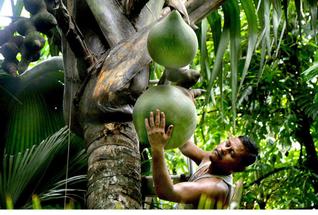
India’s only double coconut tree artificially pollinated

The palm species bears largest seed known to science

A double coconut tree stands at the Indian Botanical garden at Shibpur in Howrah district.— Photo: Sanjoy Ghosh

Scientists at the Indian Botanical Garden in West Bengal’s Howrah district have carried out artificial pollination of the only double coconut tree in India, which bears the largest seed known to science.

One of the rare and globally threatened species of palm, the double coconut ( Lodoicea maldivica ) tree was planted at the botanical garden in 1894 and the artificial pollination is a result of decades of work by scientists of the Botanical Survey of India (BSI).

“The tree took almost a hundred years to mature and when it started flowering, we started looking for this particular palm species in this part of world. We collected some pollen from palms from Sri Lanka but could not successfully pollinate it. Finally, with the help of pollen from another tree in Thailand, the pollination process was successful,” BSI Director Paramjit Singh told The Hindu .

Longest surviving palm

The Double Coconut tree not only bears the largest seed known to science — weighing around 25 kg — but this unique species is also the longest surviving palm which can live for as long as 1,000 years, he says. The palm tree also bears the largest leaf among palms and one leaf can thatch a small hut.

“Successful pollination means that we can have another Lodoicea maldivica in the country. In fact we have two fruits and it might take them another couple of years to mature,” said S.S. Hameed, BSI scientist who has been working on the pollination project since 2006.

This species of palm is diecious (where male and female flowers are borne on different plants). “Fortunately at the Botanical Garden, we had the female plant which can fruit and produce seeds,” Mr. Hameed said. The Indian Botanical Garden which serves as the repository 12,000 trees from 1,400 different species is careful in nurturing the palm.

The palm tree is located in the large palm house of the Botanical Garden which has the largest collection of palms in South East Asia with around 110 palm species.

This rare tree can be found in only two of the 115 Seychelles islands and is also called Coco de Mer (coconut of the sea), says Mr. Hameed

Legend

Legend bestows the seed with the power to bring good fortune to its owners. “There has also been a tradition of making kamandals [drinking vessels] from the double coconut by bisecting the shell. It was believed that those who consume water from these kamandals will be protected from poisoning,” Mr. Hameed said. Subsequently, sadhus started using Kamandals and it got its place in religious rituals.

source: http://www.timesofindia.indiatimes.com / The Times of India / Home> National / by Shiv Sahay Singh / Kolkata – June 13th, 2015

IIT alumnus makes green sanitary pads

Kolkata :

Spurthi Gummadala, an IIT Kharagpur alumnus who is now working with National Innovation Foundation and Honeybee Network, has developed low-cost, “semi-reusable” and “bio-friendly” sanitary napkins.

“The napkins available in the market have three parts – the top dry feel layer, the middle absorbent polymer layer mixed with wood pulp to soak in the liquid and the bottom polypropelene layer that helps avoid leakage. Once used, the entire napkin is discarded adding to landfills. I have tried to tweak this in my product,” Spurthi said.

“I have made my napkin a semi-reusable one. Here you have a holder made of polyurethin coated polyester for repeated use. The absorbent layer can be disposed and refilled with a fresh layer which doesn’t pose biohazard. So, it will help arrest biohazard to an extent,” she added.

source: http://www.timesofindia.indiatimes.com / The Times of India / Home> City> Kolkata / TNN / March 12th, 2015

Country’s highest zoo attempts to save high altitude herbivores from extinction

The initiative taken by Darjeeling’s Padmaja Naidu Himalayan Zoological Park (PNHZP) in conserving high altitude herbivores that have been on the path of extinction, has served to stem the rapid decline in their numbers.

Some of the animals that have been included in the conservation programme of PNHZP, the countries highest altitude zoo located at over 7,000 ft, are the Blue Sheep, the Himalayan Tahr, the Himalayan Goral and the Markhor.

All the four herbivores have been placed in the Schedule I of the Wildlife Protection Act, 1972, which denotes that the species are ‘threatened’.

The conservation of these animals is also crucial for the Himalayan ecosystem.

“All the four herbivores are the main prey of the much endangered Snow leopard. A decrease in their numbers will naturally affect the existence of the elusive mountain cat,” Upashna Rai, the biologist in the PNHZP told The Hindu. Conserving these herbivores serves the dual purpose of protecting the snow leopard as well. The PNHZP is also involved in the global conservation and breeding programme of the snow leopard.

The Darjeeling Zoo has taken the initiative of breeding these high altitude herbivores and is also involving the other high altitude zoos in breeding and conservation of the species.

It has provided to each of the main zoos of Sikkim and Nainital one pair of the Blue Sheep and the Himalayan Goral as a part of an exchange programme.

In the PNHZP there are 11 Blue sheep (seven males, four females) eight Himalayan Tahrs ( three males, five females) 11 Himalayan Gorals (eight males, three females) and eight Markhors (three males, five females). Interestingly Markhor, an endangered species of goat, is the national animal of Pakistan.

“Our immediate goal is to distribute the species to the high altitude zoos of Sikkim, Nainital and Shimla. We are also testing the genetic purity of the animals before introducing new breeding lines,” A K Jha, the director of the PNHZP told The Hindu.

Dr Jha said that the conservation of the herbivores was aimed at having a healthy population of the animals in the zoos in case the species get extinct in the wild.

source: http://www.thehindu.com / The Hindu / Home> News> Cities> Kolkata / by Shiv Sahay Singh / Kolkata – January 11th, 2015

New Town to get country’s first floating solar plant on Jan 5

Kolkata :

The country will get its first floating solar power plant on January 5.

The unit, which will generate 10KW solar power every day, will be inaugurated at Rajarhat New Town. State power minister Manish Gupta will inaugurate the floating solar power plant installed on a waterbody near Eco Park in New Town.

The floating solar power plant has been jointly set up by the Arka-Ignou Community College of Renewable Energy, headed by solar power expert S P Gon Chaudhuri, and the New Town Kolkata Development Authority (NKDA).

The power that will be put into the grid through marine cables will light up several areas in Eco Park and its surroundings.

Gon Chaudhuri, who is a former managing director of West Bengal Renewable Energy Development Agency (WBREDA) and West Bengal Green Energy Development Corporation (WBGEDC), said the ministry of new and renewable energy (MNRE) had earlier sanctioned a grant of Rs 20 lakh to the authorities as a research component and another Rs 15 lakh for developing and installing the solar panels. The panels have already been installed and are now ready to generate power.

“Already, engineers from different parts of the country are coming to have a look. A team of experts is coming from Lakshadweep soon to take a look at the project as a similar project will be taken up there,” Gon Chaudhuri, who was also the former adviser to the state power department, said.

Gon Chaudhuri also said that that it was around one and a half years ago that he first thought about developing a floating solar panel.

“Land is required for setting up any power plant, but a floating solar panel doesn’t require any land, since it is set up on a waterbody. Only Japan and Australia have developed floating solar power plants so far,” he added. “I gave a proposal to the Centre that developing such floating solar panels has its own benefits since it will not only generate pollution-free solar power, but also help emit less carbon dioxide. Once this floating solar panel is inaugurated and starts generation, we will conduct further research on this,” Gon Chaudhuri said.

source: http://www.timesofindia.indiatimes.com / The Times of India / Home> City> Kolkata / by Suman Chakraborti, TNN / December 22nd, 2014

Call of the wild – Book Bazaar

BiswajitKOLKATA14dec2014

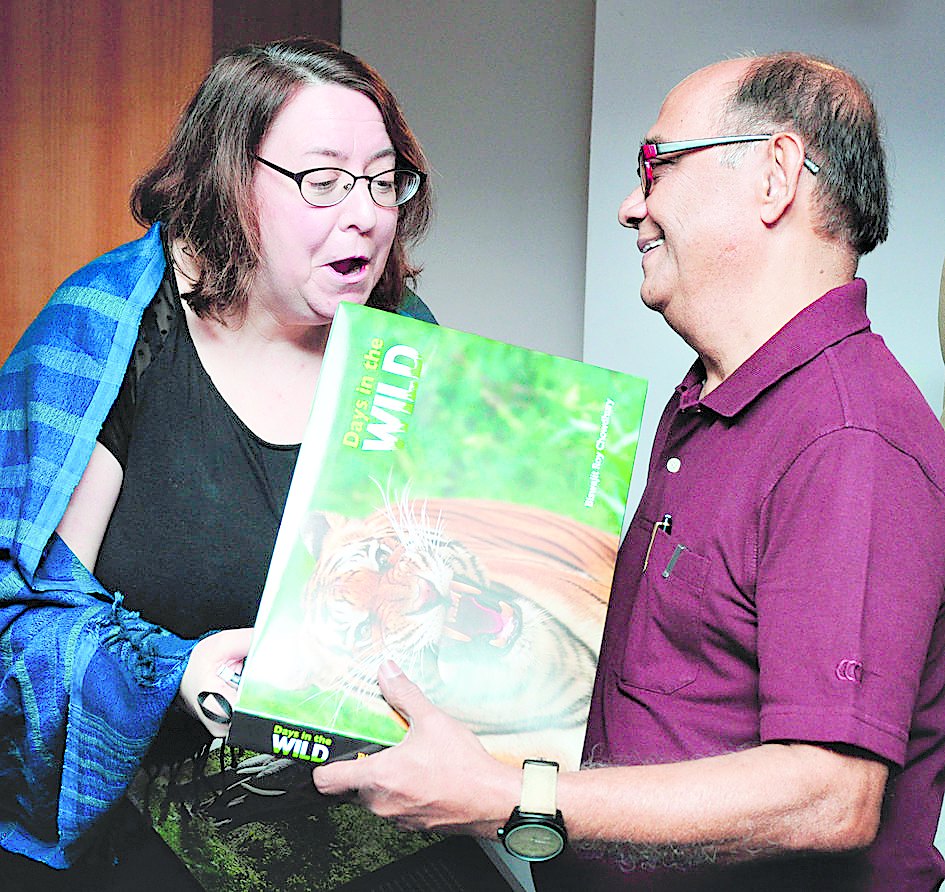
The launch of environmentalist Biswajit Roy Chowdhury’s book, Days In The Wild, was marked by a call to be sensitive to nature and protect wildlife.

Helen LaFave, the consul-general of US in Calcutta, who was present at ICCR for the book launch, remembered her trip to the Sunderbans with the author.

“Biswajit Roy Chowdhury took me on a trip to the Sunderbans and it was a wonderful experience. For many years, Roy Chowdhury has been putting in a great effort to make us realise the urgency of conserving nature. Even though I haven’t managed to read the book, I was struck by the beautiful pictures. It clearly reflected the sheer expertise of photography and made us aware of the different species of animals and birds inhabiting our planet,” she said.

Roy Chowdhury remembered growing up in a small rural town of Bihar where the call of the wild was common. “In my childhood, I watched with great interest rare species of birds. However, thanks to hunting and poaching, now I have to travel hundreds of miles for a glimpse of many species that are fading away. Through my books, I want to harp on this.”

Author’s journey

City-born author Devdan Chaudhuri’s debut novel, the Tibor Jones South Asia Prize 2013-nominated Anatomy of Life, was launched at the Oxford Bookstore recently.

The evening began with a call to “embark on a journey of dissection” as Anjana Basu, author and marketing consultant, discussed and questioned the author’s motives and intentions regarding the characters, setting and narrative of the novel. An intriguing feature of the book is that none of the characters in the book has a name; they are described using terms such as “the poet”, “the pianist”, “the sweetheart” and so on.

The narrator in the book is not just a poet but also a journalist, a philosopher as well as a former economist, much like the author himself. So is the protagonist a reflection of the author? “All novels are partly fictional and partly autobiographical. So it is not surprising that the narrator is similar to me. I needed a character who was sensitive and intellectual enough to be able to embark on a journey the book takes you on,” said Chaudhuri, whose favourite authors are Milan Kundera and Albert Camus.

The Pan Macmillan India edition (Rs 350) has on its cover a striking photograph of an empty jacket hanging against a barren background. Explained the choice, Pinaki De, assistant professor of English at Raja Peary Mohan College, Uttarpara, said: “Since this book is an inquest of the self, we do not always reveal ourselves completely. A part of us remains hidden and that is what the jacket signifies”.

source: http://www.telegraphindia.com / The Telegraph, Calcutta / Front Page> Calcutta> Story / Text by Tanisha Bagchi and Abhinanda Datta / Sunday – December 14th, 2014

Kolkata girl bags Panda award

Ashwika Kapur / by Special Arrangement

Ashwika Kapur is the first Indian woman to win the wildlife photography prize

Ashwika Kapur of Kolkata on Friday won the prestigious Panda Award, aspart of the annual Wildscreen Film Festival held at Bristol, U.K. She is the first Indian woman to win the coveted wildlife photography award for her film on a Kakapo parrot.

The tale of a parrot
Ms. Kapur’s film “Sirocco — how a dud became a stud” is based on Sirocco, a Kakapo parrot, which is perhaps the only bird to have bagged a government job.

The male bird was appointed as the Official Spokesbird for Conservation in New Zealand and it helps in conservation advocacy on social media.

The film earned 26-year-old Ms. Kapur a nomination for the best Newcomer category, competing against two other nominees. This year, the Windscreen Film Festival received 488 entries from 42 countries.

In an email statement, Ms. Kapur said the film was a solo project and she single-handedly managed the film’s scientific research, scripting, camera work, editing and music direction. She is currently involved in the filming and production of two international television programmes in India.

After finishing her school and college education in Kolkata, Ms. Kapur graduated in Science and Natural History Filmmaking from the University of Otago, New Zealand.

The Kakapo parrot, a nocturnal and flightless species of the parrot, is classified as a critically endangered species since 2012 on the IUCN Red List.

The bird, found in New Zealand, is known to be one of the longest-living birds and its known population is 125. Over 14,000 people from 162 countries voted the Kakapo the world’s favourite species in 2013.

The tiger and the African elephant came second and third, respectively.

source: http://www.thehindu.com / The Hindu / Home> News> Cities> Kolkata / by Staff Reporter / Kolkata – October 25th, 2014

India’s First Fish Hospital to Come up in Kolkata

Kolkata :

The country’s first hospital to treat abnormalities and diseases in fish is set to come up in Kolkata by mid-2015, a senior scientist said.

Senior scientist T J Abraham, who is spearheading the project told PTI that the work has already started on the project.

He said that nearly 60-65 kinds of disease and abnormality were found in fishes in India and the one reason why West Bengal slipped from the number one position in fish production was due to the fact that 10-20 per cent of them died of diseases.

“Such hospitals are quite common in foreign countries,” Abraham, a senior fish microbiologist with the West Bengal University of Animal and Fishery Sciences, said.

The institute will not only help fish farmers increase yield by reducing the number of fish deaths, but will also ensure that people will consume healthy fish, he points out.

According to Abraham, the hospital will have 50 glass aquariums, 25 circular water tanks, each with a capacity of 500 litres, to admit and treat diseased fish.

The hospital will also have a separate well-equipped pathological lab to diagnose various fish diseases.

Asked when fish growers should approach the hospital, he said, “In such cases as abnormality, sudden death, change in colour or drastic reduction of weight, they may either contact the hospital or visit it with fish and water samples.”

He said that the diseased fish would be kept in aquariums for observation and after ascertaining the disease/ abnormality, medicines and tips would be provided to the growers.

The fish hospital, which is funded by the Indian Council of Agricultural Research, under the Union Ministry of Agriculture, has a budget of Rs five crore.

“Nearly Rs 1.70 crore will be spent on hospital construction and the rest on creating infrastructure and lab facilities,” said Abraham.

Apart from Abraham, who is heading the project, there will be another scientist and the team of the two will be assisted by 4-6 research scholars initially.

Abraham said that the hospital would document diseases affecting fish in Bengal to be forwarded to the World Animal Health Organisation, Paris of which India is a member.

source: http://www.newindianexpress.com / The New Indian Express / Home> Nation / by PTI / October 24th, 2014

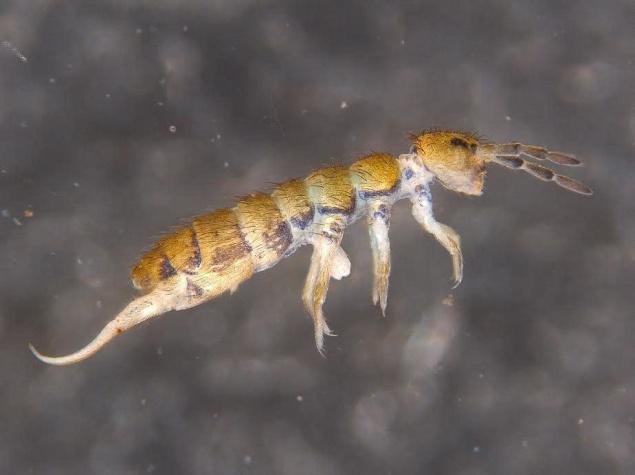
Darjeeling harbours a trove of springtails

A species of springtails, Isotomurus balbeatus, commonly found in the soil in Darjeeling. PHOTO: SPECIAL ARRANGEMENT

In the forested foothills of Sukna in the Kurseong subdivision alone, 21 species of springtails are found. The number falls with altitude.

Darjeeling is home to the highest number of species of springtails, a wingless insect that helps in soil formation, in the country.

A recent study by Zoological Survey of India scientists says 32 species of springtails (Collembola), more than 10 per cent of the total found in India, is present in the hill district of north West Bengal.

“Springtails play a very important role in soil fertility. Springtails are the only insects that are as important as bacteria and fungi in the breakdown of leaf litter and organic soil formation,” Gurupada Mandal, a scientist who took part in the three-year study, told The Hindu.

In the forested foothills of Sukna in the Kurseong subdivision alone, 21 species of springtails are found. The number falls with altitude.

“We have conducted surveys in different part of the country, including the Northeast, and have found springtails there as well, but never such a high concentration of so many species as in Darjeeling,” Mr. Mandal says.

The soil too becomes rich, providing enormous scope for cultivation of various crops. It is an indication of rich biodiversity, the scientists say.

ZSI Director K. Venkataraman said springtails were a unique kind of insect, which, by using binoculars, could be seen to jump on the soil surface.

They were tiny with sizes varying from 0.25 mm to 6 mm, barely seen with naked eyes.

“While we have considerable information on winged insects, not much is known about non-winged insects such as springtails,” he said.

Beneficial
Usually, people perceive insects as harmful; however, there are insects such as springtails which, are in fact, beneficial for human beings as they circulate nutrients in the soil, Mr. Venkatraman said adding that the country required more such studies.

source: http://www.thehindu.com / The Hindu / Home> News> National> Other States / by Shiv Sahay Singh / Kolkata – October 12th, 2014