
Category Archives: Business & Economy

Kolkata dock system creates record in monthly container handling

Kolkata :

Bharat Kolkata Container Terminals Pvt Ltd, a wholly-owned unit of PSA International is due to commence container handling operation at the Kolkata Dock System (KDS) of Kolkata Port Trust (KoPT) Terminal from December, 2014 and has already started mobilizing equipment. This was announced by KoPT chairman RPS Kahlon.

Officials believe that this will boost KDS’ performance which has already created a record in September. According to Kahlon, KDS handled 50,092 Twenty Feet Equivalent Units (TEUs) containers in September, creating an all time record. The previous highest was monthly handling by this port facility was in August, 2014, when it handled 44,873 TEUs.

“During the first six months of the current financial year, KDS recorded a growth of 7.93% in container handling as compared to the same period of the last fiscal and continued to hold third position among the major ports. Between, April and September, 2014, KDS and Haldia Dock Complex (HDC) combined handled 3,14,440 TEUs as against 2,97,970 TEUs in the corresponding period in the last fiscal. This was a growth of 5.52%,” Kahlon said.

According to officials, this was possible due to the sustained encouragement, faith and support of customers.

source: http://www.timesofindia.indiatimes.com / The Times of India / Home> City> Kolkata / by Jayanta Gupta, TNN / October 14th, 2014

Ishapore factory develops Indian variant of AK-47

Kolkata :

Rifle Factory, Ishapore, one of the oldest ordnance factories in the country, has successfully designed an assault rifle on the lines of the AK-47.

Sources in the Ordnance Factory Board said the prototype of this weapon had successfully cleared field trials by the Army, the Indian Air Force and the Sashastra Seema Bal.

The Ishapore factory will soon start production of 50,000 units of this rifle in the first phase.

For over a decade now, the Ordnance Factory Board has been attempting to develop an indigenous assault rifle on the lines of the AK-47. Initially, there was some embarrassment after an ordnance factory displayed an indigenous replica of the AK-47 at a defence expo in Delhi. This didn’t go unnoticed and Mikhail Kalashnikov, the inventor of the world’s most sold and used assault rifle that goes by his name, threatened to file a copyright violation suit against the Indian ordnance factory.

“Since then, our designers have been attempting to develop an assault rifle, using the AK-47 as a model but without replicating any of its mechanism. Three ordnance factories tried to develop their own variants. These were Rifle Factory of Ishapore, the Small Arms Factory of Kanpur and the Ordnance Factory of Tiruchirapalli. The Ishapore factory has a long history of developing and making rifles. During the World Wars, this factory produced .303 bolt-action rifles for the Allied forces. After the 1962 Sino-India conflict, the factory developed and built the 7.62mm self-loading semi-automatic rifle. This rifle was called the Ishapore Rifle and it went on to become the mainstay for the Indian security forces for several decades. In the 90’s, the factory started manufacturing the 5.56mm Insas rifles that are still the primary personal weapon of the Indian infantryman,” an official said.

The three factories at Ishapore, Kanpur and Tiruchirapalli built prototypes that underwent tests for the first time earlier this year. Minor defects were detected in all three variants. While the one developed by the Ishapore factory was declared fit in all other aspects, it failed to operate successfully in mud. An assault rifle has to be effective in all conditions, even when fired from under slush.

“This defect was rectified subsequently and when the final round of tests was conducted, the Ishapore variant was declared the best. This is an improved version of any assault rifle and the designers borrowed several facets from the 5.56mm Insas, which was also developed at Ishapore, while making this rifle. With the Insas going out of production, facilities at the Ishapore factory were lying idle. The new order will sustain the factory for the times to come,” the official added.

source: http://www.timesofindia.indiatimes.com / The Times of India / Home> City> Kolkata / by Jayanta Gupta, TNN / October 07th, 2014

Bengal Leads scouts on multi-nation odyssey

GlobeTrottingKOLKATA02oct2014

Calcutta :

Babus from Bengal are packing their bags to go around the world to draw participants for a global business summit that will put to test industries minister Amit Mitra’s ability to attract investment in Bengal.

Sources in Nabanna told The Telegraph that at least six senior IAS officers will visit parts of Europe and Asia after the Puja holidays to hold roadshows for the Global Bengal Business Summit — Bengal Leads, scheduled between January 6 and 8 at Eco Park, on the eastern fringes of Calcutta.

“The industries minister wants to make the event a grand success and so he is sending the officers to hold roadshows…. The officers will visit several countries, hold meetings with investor communities and invite them to take part in the summit and explore opportunities in the state,” a source in Nabanna said.

Although no one in the government was officially willing to comment on the roadshows, sources rolled out a probable list of names of officials and their destinations (see chart).

Apart from the roadshows overseas, the West Bengal Industrial Development Corporation will organise five meetings in Mumbai, Delhi, Chennai, Bangalore and Hyderabad.

“Mitra has gone into Ficci mode…. The success of a chamber event is ascertained by participation, but for a state devoid of investment, the test is in getting investment. The question is can an investor meet achieve that?” asked a senior official.

Although the government did not organise any business meet this year, there was little to talk about the first two editions of Bengal Leads.

If the Nabanna buzz is to be believed, Mitra has promised Mamata Banerjee that the business summit next year would be a “success” and would put Bengal on the map of attractive investment destinations.

The chief minister, sources said, has given Mitra a free hand. “After around three-and-a-half years in the government, the chief minister has realised she needs investment in Bengal… Amitda has promised to deliver,” a Nabanna official said.

Delivering on the promise will be easier said than done in a state where the government is firm on not acquiring land for industry besides fiercely adhering to its stand on not offering SEZ status to any project or relaxing the urban land ceiling act.

Not just policy hurdles, the state is also suffering because of Trinamul-backed syndicates, which mostly supply inferior construction materials at higher prices.

“Domestic investors are shying away from putting in their money…. It is too much to expect that foreign investors will come,” a senior government official said.

The chief minister is confident of getting investment, the official said. He blamed senior ministers such as Mitra for giving her an impression that Bengal is on the verge of hitting a growth trajectory.

“No one talks about the reality here,” the official said.

Mamata had assigned Mitra the industries department keeping in mind his former role as the Ficci secretary-general.

More than nine months have passed since Mitra took over, but his achievements have been few, other than diagnosing Ratan Tata with motibhrom (senility) and organising the Singapore trip for the chief minister and senior bureaucrats.

“Till now, there is no answer to what the government has got from Singapore…. Now, the government will again spend taxpayers’ money and send officials to various countries. This cannot go on,” said Rahul Sinha, the BJP state president.

The ruling establishment can blame the BJP, which is eyeing the principal Opposition’s space, for politicising the issue, but representatives of chambers of commerce and senior bureaucrats have questioned the need for the roadshows overseas.

“The event (Bengal Leads) is in the first week of January and the officials are going for roadshows after the Pujas. How can they assume that foreign investors will come to Calcutta in less than two months’ notice?” asked a senior official of a leading chamber.

According to the official, such events need at least six to eight months’ planning so that the target group for the programme can be reached well in advance.

The Gujarat government had started planning for Vibrant Gujarat 2015, immediately after the previous edition. From identifying focus sectors to giving a detailed programme outline, the organisers had uploaded everything about the show on its website.

The schedule for Bengal Leads, however, remains sketchy despite just over two months to go before Mamata flags off the event.

A veteran of organising events for an industry body expressed dismay when told about the destinations the officials were heading to.

“I heard that a team will visit Ireland with focus on getting investors for food processing…. I didn’t know about Ireland’s achievements in food processing,” the chamber veteran said.

Sources said the food processing team included the Netherlands and Israel in their itinerary. “I understand the inclusion of the Netherlands, but why Israel?” he said.

Several others this newspaper spoke to wondered about the choice of the destinations for the roadshows. “If you want overseas investors, why leave out the US, the UK, Germany?” he said.

No one in the government was available to explain why the government was expecting international participation in an event just over two months away.

“The New Year hangover stays at least for a week… I don’t know whether senior officials or CEOs of big companies would come to Calcutta by sacrificing their Christmas and New Year break,” said a senior officer in a leading chamber.

source: http://www.telegraphindia.com / The Telegraph, Calcutta / Front Page> Bengal> Story / by The Special Corrrespondent of The Telegraph, Calcutta / Calcutta – September 29th, 2014
Kolkata loses its favourite raconteur

Kolkata :

The morning durbars under the portico of the delightfully eccentric Fairlawn Hotel on Sudder Street have just become history. The ‘Duchess of Sudder Street’, as Vi (Violet) Smith was popularly called, will not be holding ‘court’ there anymore. And legions of her fans, as well as the galaxy of loyal customers of her hotel, will no longer be regaled by her stories about the Kolkata of yore. Smith passed away at her first-floor quarters of Fairlawn Hotel on Saturday at an age of 93.

The stories she narrated were as eclectic as her personality, and the hotel itself. One of her favourites was how Shashi Kapoor (“drop-dead gorgeous he was,” recalled Vi) met and fell in love with Jennifer Kendall. In the spring of 1965, the Kendals, who used to own a mobile theatre company called ‘Shakespeareana’, were putting up at Fairlawn and Prithvi Theatre (owned by Shashi’s father Prithviraj Kapoor) also happened to staging shows at New Empire at the same time. Jennifer had gone to watch a show there and it was “love at first sight” for Shashi, who courted Jennifer, joined ‘Shakespeareana’ and eloped with her to Bombay to get married after her father Geoffrey refused permission for marriage. The couple spent their honeymoon in Room No 17 of Fairlawn, and Vi named it ‘The Shashi Kapoor Room’.

Vi was also very fond of telling visitors about Patrick Swayze who stayed at the Fairlawn while shooting for ‘The City Of Joy’ in 1991. “He was very nice and soft-spoken. He had told me about the ranches he owned in California and New Mexico, about his wife Lisa and his childhood,” the coiffed and elaborately made-up Vi told this correspondent a couple of years ago. She was also an encyclopedia on the Calcutta of the glorious past.

Violet Smith was an Armenian whose grandfather escaped the genocide of the Armenians by the Ottomans in Turkey in 1915 and reached India through Iran and Afghanistan. Violet married Edward Frederick Smith, a British army officer, in 1944 and moved to England later, but returned in 1962 to take over the affairs of Fairlawn. Violet’s mother Rosie Sarkies had bought the property from two British ladies in 1936. The sprawling structure that houses the hotel is 231 years old now, having been constructed by one William Ford in 1783.

Vi lent her personality to the hotel she dearly loved. Stepping in through the iron gates of the hotel is like entering a green oasis set amidst the bustle of the city. A profusion of plants, mostly palms, provides an immediate soothing experience and leads to the portico where, every morning, the redoubtable Violet used to hold court. Not just the abundance of potted plants, the colour of the walls, linen, wicker and cane chairs, settees and stools, many of the draperies and even some of the crockery are green or have splashes of it. It’s Violet’s favourite colour. “Green symbolizes freshness, vibrancy and reminds one of nature,” she used to say.

Other regular guests at Fairlawn that Vi would often talk about were filmmakers Ismail Merchant and James Ivory, actors Melvyn Douglas, Penelope Cruz, Julie Christie, Felicity Kendal (Jennifer Kapoor’s sister) and Om Puri, writers Gunter Grass, Eric Newby, Dominique Lapierre, Ian Hislop and Glen Balfour-Paul, British playwright Tom Stoppard, TV presenters Dan Cruikshank and Clive Anderson, and even Gordon Matthew Thomas Sumner (Sting, for the uninformed)!

And all have paid glowing tributes to the hotel and its wonderfully charming owner Violet Smith. Lapierre went to the extent of wishing he loses his passport when he stays at Fairlawn the next time so that he can stay on at the hotel forever. Newby calls Fairlawn his “most favourite hotel”. Vi would often say her motto was to “receive tourists as guests and send them away as friends”. For her innumerable friends all over the world, Fairlawn, and Kolkata, will never be the same without Vi.

source: http://www.timesofindia.indiatimes.com / The Times of India / Home> Cities> Kolkata / by Jaideep Mazumdar, TNN / September 22nd, 2014

IITians create solar-powered cold storage with no running cost

Kolkata:

Young IIT engineers have come up with an affordable solution to the wastage of agricultural produce by developing a unique solar-powered cold storage system which works at almost zero running cost.

Developed at the Science and Technology entrepreneurship Park (STEP) of IIT-Kharagpur by mechanical engineering student Vivek Pandey and his team, the micro cold storage system has been successfully tested in a Karnataka farmland.

“It is a first of its kind product developed anywhere in the world as there are no running costs for the farmer and works on clean and sustainable technology for all 12 months. We have even applied for four patents for technologies used in the product,” Pandey said.

Under the banner of Ecofrost Technologies, the young graduates are now ready to move out of the campus and start a manufacturing and assembly unit in Pune next month.

Using a uniquely designed thermal storage methodology that controls compartment cooling in tandem with regular cooling, micro cold storage helps increase the shelf life of agricultural produce using solar panels of 2.5 KW-3.5 KW.

“The power generated is sent directly on to the compressor which can run at various speeds to adjust itself to the cooling demand. Instead of batteries, the system has a thermal storage unit which can store power for more than 36 hours to provide power in case there is no sun during cloudy or rainy weather,” the young innovator said.

Existing solar-powered units run on batteries which need to be replaced after 2-3 years making the running cost very high for farmers. It is estimated that every year India loses around 30 per cent of food production due to wastage and contamination.

“We want to provide farm-level solar cold storages in areas that lack access to grid connected electricity. By increasing the shelf life of agriculture produce, it will improve farmers’ livelihood by reducing losses and allowing better price realisation,” Pandey said.

Meant for horticulture produce, the micro cold storage system has a capacity of 5 metric tonnes and a price varying between Rs 5 to 6 lakh.

“We have started getting orders and will start a manufacturing and assembly unit in Pune next month. We have a target to manufacture 20,000 such cold storage units in the next five years,” the IITian said, adding that they are looking to raise around Rs 5 crore from venture capitalists.

Their promising innovation has won the first prize of Rs 10 lakh in the national university competition ‘DuPont: The Power of Shunya’.

Besides selling directly to farmers, they are also trying to create village-level entrepreneurs who will act as nodal points for cold storage in mandis where any farmer can store his produce at a fixed cost.

source: http://www.ibnlive.in.com / IBN Live / Home> India / by Press Trust of India / Kolkata – September 18th, 2014

Astor revives its British heritage

Kolkata:

Gallops of horses then, dollops of history now.

Another feather will shortly be added to the city’s heritage hospitality industry as Astor Hotel opens its doors for guests.

Housed in a building that was a British barracks about a century ago, the hotel has retained the rooms of mismatching size and shape, and ironed out the colonial wrinkles with the precision of 21st Century.

“In its 120-odd years of existence, the interiors of the building never complemented its grand facade. Be it the electrical or plumbing system, it was a completely unplanned structure. A thumb-rule in construction is that a poorly-maintained building must be brought down and built over every 70-80 years,” said the hotel’s proprietor Vikram Puri.

“But with the help of the members of the heritage commission and a team from Delhi that specializes in restoring old havelis of Rajasthan, we managed to preserve the heritage elements of the building.”

Puri said the building used to be a British boarding house where soldiers would come riding on their horses and walk up the stairs to take rest in their rooms.

“What used to be the stable is now a lounge bar called Plush. We restored the same teak staircase the armymen walked up, instead of turning it into an elevator shaft. We retained the rooms with their mismatched dimensions, which gave us perfect material for a boutique hotel. A modern hotel resembles a block diagram, but here every room has a different character,” Puri said.

The guests here will use the same rooms that were once occupied by the army personnel of the imperialists, but the rooms have been fitted with modern facilities such as a big-screen television and air-conditioning.

“The main corridor of the hotel has a distinct Victorian look. But, we will adorn the walls with paintings and photographs of a century-old Kolkata,” Puri added.

To bring down carbon footprint, the hotel has done away with split air-conditioners and geysers and installed central systems. The corridor is not chilled but cool.

“This is not air-conditioned but filled with treated fresh air,” said a member of the hotel’s staff.

High ceiling, a four-poster bed and sepia-tainted lights give the suites the ambience of an era gone by. But water sprinklers, smoke detectors and Wi-Fi devices are a constant reminder of 2014.

source: http://www.timesofindia.indiatimes.com / The Times of India / Home> City> Kolkata / by Shounak Ghosal / September 12th, 2014

Biz guru’s mantra for students

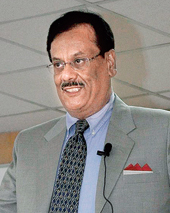
Kunal Banerji at the interactive session. (Anup Bhattacharya)

Kunal Banerji, an associate professor of management at Eastern Michigan University and a St. Xavier’s alumni, addressed students of JD Birla Institute’s management department on quality management.

The management guru dwelled upon the three cornerstones of business excellence — quality, profitability and productivity — at an interactive session organised by the Calcutta Management Association, in association with The Telegraph, on August 29.

He peppered his lecture with topics ranging from compensation and appraisal to use of suggestion systems and continuous improvement efforts to illustrate why it’s important to improve product quality, or how to do it more effectively, in the service sector.

Banerji drew from his Total Quality Management and Business Excellence, a research paper he co-authored with David E. Gundersen and Ravi S. Behara, to answer most of the questions.

He explained how quality is more perceptual than real. “Till a point of time all foreign goods were considered to be of the best quality… that is how our psyche was built. After 1992 (post-liberalisation of the economy), this perception of quality changed.”

On behalf of the CMA, its executive committee member Asok K. Banerjee thanked Banerji for discussing his research extensively with the students. “We had a great audience and a wonderful ambience.”

Banerji said: “It was a mixed crowd and that is always very interesting. Honestly, I didn’t expect such a big crowd. I don’t get such a big crowd in the US, probably because of the population rate.”

J.N. Mukhopadhyaya, the director of the JD Birla Institute’s management department, said he was happy that the seminar turned out well.

source: http://www.telegraphindia.com / The Telegraph, Calcutta / Front Page> Calcutta> Story / by A Staff Reporter / Friday – September 05th, 2014

Darjeeling’s Makaibari Becomes Most Expensive Tea in India

Kolkata :

After being sold at a record price of USD 1,850 (around Rs 1.12 lakh) per kg, Darjeeling’s Makaibari tea estate has become one of the most expensive tea producers in India.

“It is a matter of great pleasure and pride that Indian Tea, Makaibari, has booked orders at a record price of USD 1,850 per kg. That the orders have come from Japan, the UK and the US is also noteworthy,” Tea Board Chairman Siddharth said.

He said at a time when the Tea Board and the tea industry are grappling with the issues of value addition and brand building, this news has come as a shot in the arm.

“Makaibari has been an iconic tea garden and we are very pleased to note that even after its ownership has recently changed hands, the high standard of its quality and recognition has grown further,” Siddharth said.

Darjeeling Tea Association secretary Kaushik Basu said this is the highest ever price he has ever heard of for Indian tea.

“But this is a one off case. We have heard that it was a small sale of around 5 kg. I don’t think it was a commercial sale or auction. It may have been sold on charity,” he said.

Located in Kurseong, Makaibari is the ancestral property of Raja Banerjee who had recently sold off 90 per cent of his stake to Luxmi group.

source: http://www.newindianexpress.com / The New Indian Express / Home> Business> News / by PTI / September 06th, 2014

Bengal ranked top in cut flowers’ production across India: Study

Kolkata :

West Bengal is ranked on top with production of over 250 crore cut flowers across India thereby clocking highest compounded annual growth rate (CAGR) of over 597 per cent during five-year period of 2007-08 and 2011-12, noted a recently concluded study by apex industry body ASSOCHAM.

“West Bengal has also emerged numero uno with highest share of about 34 per cent in production of over 740 crore cut flowers throughout the country as of financial year 2011-12, production of cut flowers in India is growing at a CAGR of over 14 per cent,” according to a study titled ‘Value addition to rural economy: The promise of floriculture,’ conducted by The Associated Chambers of Commerce and Industry of India (ASSOCHAM).

“Festivals, weddings, large scale political functions and other special occasions are driving demand for cut flowers as they are mostly used for decorative purposes, as gifts/bouquets for formal events,” said D.S. Rawat, national secretary general of ASSOCHAM while releasing the findings of the chamber’s study.

“Though the initial investment is very high, flower production gives much higher returns compared to traditional crops, however, one has to wait for four to five years for breakeven,” said Mr Rawat.

West Bengal is ranked eighth in terms of production of loose flowers. The state produces about 64,000 tonne loose flowers clocking a CAGR of over seven per cent during the aforesaid period. While loose flower production in India is growing at a CAGR of over 17 per cent as India produces over 16.5 lakh tonne loose flowers annually.

However, area under flower production in West Bengal has shrinked from about 27,000 hectares in 2007-08 to about 24,000 hectares in 2011-12 thereby registering fall at a CAGR of over three per cent, pointed out the study prepared by the ASSOCHAM Economic Research Bureau (AERB).

Apart from this, share of West Bengal in area under flower production across India also plummeted by seven per cent during the aforesaid period i.e. from about 16.5 per cent share in 2007-08 it came down to 9.4 per cent in 2011-12, highlighted the study.

It is estimated that about two lakh people are involved cut flower production in West Bengal which is blessed with diverse agro-climatic conditions suitable for flower production.

Dedicated cold storage facilities for flowers near to the main production centres would give a boost to exports of flowers from West Bengal, besides promotion of bio-technology especially tissue culture and genetic engineering would only further help the in realising its potential in floriculture industry in the state, noted the ASSOCHAM study.

Ensuring availability of quality seeds and improved varieties of planting materials, domestic development of capabilities for establishing poly-houses/shade-houses, providing loans at attractive interest rates to farmers willing to produce flowers, luring private sector participation for investments by offering tax rebates and incentives, conducting buyer-seller meets across India and even abroad are certain key policy recommendations listed in the ASSOCHAM study to further promote floriculture industry in West Bengal and other parts of India.

source: http://www.timesofindia.indiatimes.com / The Times of India / Home> City> Kolkata / by Udit Prasanna Mukherji, TNN / September 01st, 2014

‘Smart’ New Town to grow vertically

Kolkata :

The government plans to develop smart cities and townships across the state with high-density vertical buildings and adequate green area.

The New Town Kolkata Development Authority (NKDA) has already started following the model for Rajarhat New Town. An NKDA official said they are trying to showcase New Town as the Singapore of Kolkata and the authorities were putting stress on optimum utilization of space by going vertical when it comes to real estate development.

The state government has already come up with a new urban policy that relaxes floor area ratio (FAR) to make way for buildings with larger space. According to the policy, 15% additional FAR will be allowed for mass housing, IT complexes and mega commercial housing complexes.

The Mamata Banerjee government has already identified 10 areas to develop smart cities. These are Rajarhat New Town, Raghunathpur, Jaigaon, Sagar, Kalyani, Baruipur, Durgapur, Bolpur, Debanandapur and Fulbari.

The areas have been identified on the basis of the pace of urbanization and geographical location. Rajarhat New Town is leading the way with NKDA developing it as the first green smart city of the state.

“The model that the authorities have started to follow is to have high-density buildings that will go vertical for optimum utilization of space,” an urban development official said, adding that there were about 25% green areas throughout New Town.

There has been a 31% increase in urban population between 2001 and 2011. Urban development and planning officials will conduct surveys in the areas where the state plans to develop smart cities.

NKDA has already allowed non-residential plot owners to get additional FAR if their plots fall within 250 metres of the Metro route that is coming up near the central business district.

In New Town, residential plots are now being allowed for commercial use subject to certain terms and conditions. The authorities have listed 30 non-polluting commercial activities that a lessee could take up in the residential areas.

The state government is also working on plans to approve housing projects faster.

source: http://www.timesofindia.indiatimes.com / The Times of India / Home> City> Kolkata / by Suman Chakraborti, TNN / August 24th, 2014