Category Archives: Business & Economy

Hawking legalised in Kolkata

Move comes a month ahead of municipal polls

Providing legal sanction to hawkers crowding several markets and footpaths of Kolkata, Chief Minister Mamata Banerjee on Friday announced a policy aimed at legalising hawking in West Bengal.

The decision, which is seen as a sop to hawkers, comes only a month before the Kolkata Municipal Corporation goes to polls.

“We are the first State government in the country which has decided to legalise hawking. This will ensure you are not evicted by anybody. We have formulated a policy for the hawkers. We are the first in the country to start the process of registering vendors and hawkers,” Ms Banerjee said at a gathering of hawkers.

Interestingly, the Chief Minister announcement comes when shopkeepers in the city’s New Market area have declared a 72-hour shutdown against the hawker menace.

The process of legislation of hawkers will begin on July 15 and continue for three months.

“The process of verifying the applications will be carried out between January and March. Once verified, you will be given a registration certificate and free trade license. But this facility is available only for the existing hawkers,” she added

Though Ms Banerjee asked hawkers not to encroach the shops or inconvenience pedestrians, Opposition parties said that the decision will increase hawker menace.

According to reports, there are at least 2 lakh hawkers in Kolkata.

source: http://www.thehindu.com / The Hindu / Home> News> Cities> Kolkata / by Special Correspondent / Kolkata – March 14th, 2015

India’s first private airport, at Durgapur, to be operational by April 14

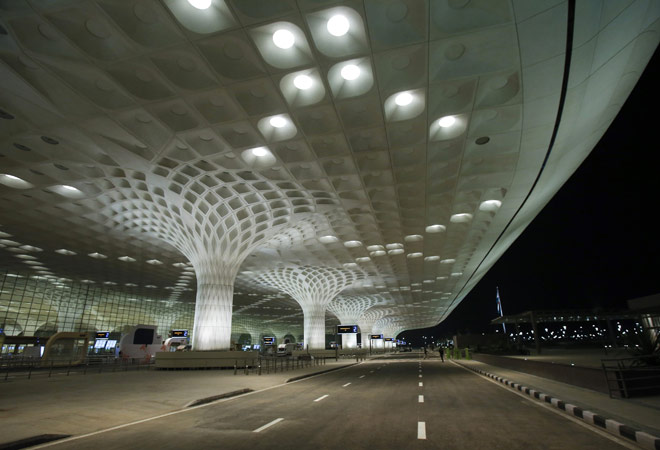
Picture for representation purpose only. (Source: Reuters)

India’s first private greenfield airport at Durgapur, promoted by Bengal Aerotropolis Projects (BAPL), is likely to be operational by April 14.

“The final calibration of navigational aids at the airport by Airport Authority is done. Now, we expect to get final DGCA licence in a month,” state Transport Secretary Alapan Bandopadhyay said in Durgapur on Monday.

In all probability, the airport, christened Kazi Nazrul Islam Airport, will be operational from April 14, the first day of Bengali calendar, BAPL officials said.

The West Bengal government has 1.2 per cent stake in BAPL, and Singapore’s Changi Airport is the single largest shareholder in the airport.

Bandyopadhyay said Pinnacle Air, a non-scheduled airline, will begin its operations from here four days a week connecting Bagdogra, Coochbehar, Durgapur and Kolkata soon after getting license from DGCA.

BAPL managing director Partha Ghosh said the company is in negotiations with IndiGo and GoAir for scheduled flights for connecting Delhi-Durgapur including Air India and non-schedule airline Air Coasta for connecting southern cities like Hyderabad and Bangalore.

Air Costa may connect these two south Indian cities for four days a week.

However, the final agreement will depend on concessions the Kazi Nazrul Islam Airport offers.

The major concessions demanded by the scheduled airlines are waiver of landing and takeoff fees, underwriting minimum of seats and 30 per cent surcharge waiver for ATF for a greater timeframe.

State government has already given a three-year waiver of surcharge on ATF for three years to Andal, Coochbehar and Bagdogra airports.

Utsav Parekh, one of the initial promoters of BAPL, said the company will focus on real estate and was holding dialogue with several global real-estate majors from Singapore, Japan and others.

source: http://www.businesstoday.intoday.in /Business Today / Home> Sectors – Aviation> Story / by PTI / Durgapur / March 16th, 2015

IIT alumnus makes green sanitary pads

Kolkata :

Spurthi Gummadala, an IIT Kharagpur alumnus who is now working with National Innovation Foundation and Honeybee Network, has developed low-cost, “semi-reusable” and “bio-friendly” sanitary napkins.

“The napkins available in the market have three parts – the top dry feel layer, the middle absorbent polymer layer mixed with wood pulp to soak in the liquid and the bottom polypropelene layer that helps avoid leakage. Once used, the entire napkin is discarded adding to landfills. I have tried to tweak this in my product,” Spurthi said.

“I have made my napkin a semi-reusable one. Here you have a holder made of polyurethin coated polyester for repeated use. The absorbent layer can be disposed and refilled with a fresh layer which doesn’t pose biohazard. So, it will help arrest biohazard to an extent,” she added.

source: http://www.timesofindia.indiatimes.com / The Times of India / Home> City> Kolkata / TNN / March 12th, 2015

Industrialist Deepak Khaitan passes away

Kolkata :

Deepak Khaitan, the vice-chairman of Williamson Magor Group and the eldest son of B M Khaitan, passed away at his Kolkata residence on Monday morning. He was 60 and is survived by his wife Yashodhara, son Amritansu, daughter Nitya and grand daughters. Khaitan was suffering from cancer for over 8 years.

B M Khaitan Group includes companies like Eveready Industries, Mcleod Russel and Mcnally Bharat Engineering among others. Khaitan was the vice-chairman of Eveready and chairman of Mcnally Bharat. An MBA from Geneva, Khaitan served as the managing director of Eveready Industries until August 10, 2011. He had over 30 years of experience in business enterprises in India.

Khaitan had in-depth knowledge of tea, batteries and engineering industries. He became the chairman of McNally Sayaji Engineering Ltd on June 11, 2009 and was also the non-executive chairman of Kilburn Engineering Limited. He was the executive chairman at McNally Bharat Engineering Co Ltd and also served as chairman of its board till August 12, 2011.

Khaitan was involved in developmental matters of Eveready and Mcnally till 2012. A close associate of Khaitan said that he was instrumental in making Williamson Magor Group the largest bulk tea producer in the country.

Between 2004 and 2007, the group had three to four major acquisitions where he played an active role. The acquisitions include Williamson Tea Assam from its owners in UK, Doomdooma Tea from Unilever (then Hindustan Lever) and Moran Tea. In July 2005, McLeod Russel acquired Borelli Tea Holdings from the Magor family based in England and took over the 17 tea estates of its Indian subsidiary Williamson Tea Assam Ltd. McLeod Russel also acquired two more quality tea companies in Assam — Doomdooma Tea Company and Moran Tea Company India Limited. All three were then merged with McLeod Russel India Limited, making the group the largest tea producing company in the world. Khaitan also had a role in the acquisition of Eveready from Union Carbide in 1994.

Indian Chamber of Commerce, where Khaitan was president in 1992, condoled his death. “During his tenure, ICC achieved new heights of excellence through a process of interaction and consultation with international and Indian experts on economy, business and management,” said ICC director general Rajeev Singh.

Nazeeb Arif, who worked with Khaitan as ICC secretary-general, said, “I will always remember him for his courage of conviction, his extremely forthright and honest views, thorough professionalism and deep commitment.”

MCC Chamber released a statement after Khaitan’s death. “We at the MCC Chamber of Commerce & Industry are shocked at his sudden demise and pay our respectful homage to his immortal soul,” the statement said. .

“The death of such an industrial doyen from Bengal is really sad,” said P Roy, director general of Bengal Chamber of Commerce.

source: http://www.timesofindia.indiatimes.com / The Times of India / Home> City> Kolkata / TNN / March 10th, 2015

Weaving dreams in Shantipur

Shantipur :

Next time you marvel at intricate weaves on a handloom saree at an upscale garment retail chain in Delhi or Mumbai, it could well be the work of a weaver in a tiny hamlet in West Bengal’s Shantipur.

About 90km from Kolkata, Shantipur in Nadia district is historically famous for producing the fabled feather-touch handloom dhoti and sarees coveted by the connoisseurs. Besides being an ancient seat of Sanskrit and Vedic learning and Vaishnav culture, Shantipur has been a centre for handloom weaving for the last 500 years, at least.

Yet, skilled weavers have been struggling for bare survival for years. Some have shut down their looms and migrated out of Shantipur to eke out a living as day labourers at construction sites.

To tide over the rough patch, weavers are now breaking out of the traditional mould. Instead of the age-old matha sarees and jacquards, Shantipur weavers are turning to innovation to catch the contemporary woman’s fancy. They are picking up a colour palette including magenta, teal, burgundy and rust. Traditional motifs are coming alive with a modern twist to the ancient warp-and-weft saga.

Helping them with innovation and the much-needed monetary support is Madhumita Pyne of Kolkata. Her fondness for handloom fabric led her to explore its provenance. Somewhere on this journey, this former consultant with a global management consulting firm met Anjan Biswas, a young weaver from Shantipur.

Anjan belongs to a family of weavers. His father Manoranjan had experimented with innovative techniques like embedded sequins to up the style quotient of bland handloom sarees. Due to a dearth of avenues to market his ware, he, like scores of other weavers in Shantipur, stuck to the rut. They churned out a bland drape to earn a meagre livelihood.

Some, like Prasenjit Biswas, switched to the power loom, which churns out more sarees in much less time and effort. “The quality though is not half as good as handloom sarees,” he admitted.

After meeting Anjan, who introduced her to Shantipur’s weavers, Pyne’s long experience in corporate-marketing instantly helped her recognize the immense potential of handloom drapes.

“There is a huge demand for handloom fabric, not just in India but abroad, too. Foreigners love the fabric for its look and feel. More importantly, they are drawn to handloom for the unique story behind the weaves,” said Pyne.

Following her instinct and passion, she decided to take the plunge last November. “The weavers in Shantipur have immense skill. What’s lacking was marketing our products and keeping up with modern trends,” said Anjan.

Pyne pitched in with both and a little more. She designed sarees and chose the colours of the thread. After the first batch was off the loom, she was ecstatic with the product. She tapped several online stores like Indianroots and top retail chains to market Shantipur sarees. She also launched her brand Loomiere. She played on words to give expression to her intent — loom that can lighten up lives of weavers.

Pyne wants to make handloom popular and help weavers get a decent income. “It’s sad that such skilled weavers who create wonders on their looms have to battle only to survive,” she said.

“The response was unexpected. In the very first month, we were flooded with orders, including from the US and the UK,” said Pyne.

She has been goading weavers, used to a laid-back way of working, to stick to deadlines. “After the initial scepticism, the weavers were enthused about the project. They are working day and sometimes late into the night to meet Didi’s (Pyne) deadline,” said Anjan.

A boost in their income also helped matters. Lalon Biswas, for instance, takes two weeks to weave a saree on his family loom. “I earn Rs 2,000 for weaving one of these new sarees. About two years ago, one saree would fetch Rs 100-Rs 180,” he said.

They call Loomiere’s sarees “new sarees”. Over the months, Anjan’s enthusiasm for Pyne’s venture has grown. He calls her ‘Didi’ and does all the running around, getting more weavers into the fold.

Currently, 220 weavers are working on about 100 looms for Pyne’s project. With a steady stream of orders flowing in, she hopes to expand.

“Besides, we plan to hold workshops in May to introduce more weavers to improved techniques and hone their skills,” she said. Loomiere has also set up a sampling unit in a small brick room in Shantipur. Here master weavers experiment with trends and styles.

Encouraged by the way things are shaping, Pyne has given up her plum job as a consultant to focus full time on Loomiere. Anjan, too, now dares to dream big. Both hope for the day when every weaver in Shantipur will lead a decent life and their skills would bring them good returns.

source: http ://www.timesofindia.indiatimes.com / The Times of India / Home> City> Kolkata / by Rakhi Chakrabarty, TNN / February 22nd, 2015
Former BCCL director no more

Kolkata :

Narendra Kumar, a former director of Bennett, Coleman & Co Ltd (BCCL) and chairman of Wearit Group, breathed his last in Kolkata on Saturday. He was 81 and is survived by wife Pramod Rani, son Manish and daughters Neerja and Nandita.

“As member of the board for many years, Narendra Kumar’s wise counsel was of great assistance to my husband Ashok Kumar Jain. The Times family remembers him with affection,” said chairman of the Times Group Indu Jain in a message. Vice chairman of the Times Group Samir Jain said, “Narendra Kumar’s long association with our company was cherished by my father.”

Kumar served as a director in the BCCL board for close to 50 years. Wearit Group has interests in the tea and textile businesses. Known as a visionary in the tea industry, Kumar held several important portfolios. He was the chairman of Indian Tea Association (ITA) from 1989 to 1991. He also headed Consultative Committee of Plantation Associations (CCPA) and was the chairman of Tea Research Association from 1993 to 1996.

According to Manish, Kumar leaves behind two tea companies and a robust textile business. The tea companies — Scottish Assam India and SPBP Tea India Ltd — have gardens in Assam. Wearit Group has textile plants in Madhya Pradesh and Rajasthan. The group has four plants in these two states. The Wearit Group is known for viscose, cotton and polyester yarns and polyester-viscose blends, polyester-cotton blends and polyester-linen blends. It has clients in Europe, the Middle East, the United States and the Far East.

A baithak to remember and pay homage to the departed soul was organized on Sunday at his Ballygunge Park home. Another baithak will be held on Monday at the same venue.

source: http://www.timesofindia.indiatimes.com / The Times of India / Home> City> Kolkata / TNN / February 16th, 2015

Sex workers’ cooperative wins award

A sex worker withdrawing money at Usha Multipurpose Cooperative Society Ltd.Photo: Sushanta Patronobish

With low interest rate, they have been able to educate their children and manage their finances better

A cooperative run by sex workers of Songachi, which functions as a bank for sex workers, has won the prestigious award for the best run cooperative in West Bengal for 2014.

Usha Multipurpose Co-operative Society Ltd, the largest sex workers’ financial institution in Asia, owned and managed by sex workers, has a corpus of Rs 19 crores and 20,000 members.

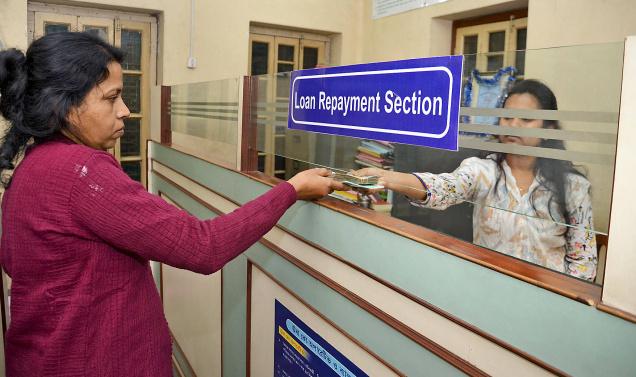
“Before the cooperative was started, we were left at the mercy of moneylenders and madams. Since the sex workers did not have address and identification proof, it was impossible for us to open an account in banks,” said Rita Rai, a sex worker who is actively involved in the Usha Cooperative.

Like Ms Rai, Abida Begum, has taken loans from the cooperative a number of times. “It is with the help of the cooperative that I managed my finances and was able to buy a piece of land. Earlier most of our earnings were spent in paying back the moneylender,” she said.

The cooperative has given sex workers a sense of empowerment. With this, they have been able to release themselves from the clutches of madams and pimps. As a result of this bank, The Hindu came across several women who have been able to educate their children, arrange the marriage of their daughters and even buy property of their own. Dependence on the bank has also mitigated the impact of the recent deposit collection scams that have rocked West Bengal on sex workers.

The beginning, however, was not easy. Chief Advisor to the cooperative, S Jana recalls the resistance faced by him and the sex workers when they decided to set up a bank of their own.

“I was personally threatened, bombs were hurled at us, and the girls were under pressure to not join the cooperative movement. However, slowly we were able to convince the women who joined us in greater numbers each year,” Dr Jana told The Hindu .

The cooperative started its operations in 1995. “To begin a society run by sex workers was not an easy task. There was a debate in the West Bengal Legislative Assembly and an amendment was brought to the Cooperative Act to enable sex workers to start a cooperative society,” Dr Jana said. He is hopeful that in 2015 itself, the Reserve Bank of India will give the cooperative a full-fledged licence to function as a bank.

The members of the cooperative society say that they do not demand an identification proof for opening an account and the rate of interest is lower than many nationalized banks.

source: http://www.thehindu.com / The Hindu / Home> News> Cities> Kolkata / by Shiv Sahay Singh / Kolkata – February 01st, 2015

New Town to get country’s first floating solar plant on Jan 5

Kolkata :

The country will get its first floating solar power plant on January 5.

The unit, which will generate 10KW solar power every day, will be inaugurated at Rajarhat New Town. State power minister Manish Gupta will inaugurate the floating solar power plant installed on a waterbody near Eco Park in New Town.

The floating solar power plant has been jointly set up by the Arka-Ignou Community College of Renewable Energy, headed by solar power expert S P Gon Chaudhuri, and the New Town Kolkata Development Authority (NKDA).

The power that will be put into the grid through marine cables will light up several areas in Eco Park and its surroundings.

Gon Chaudhuri, who is a former managing director of West Bengal Renewable Energy Development Agency (WBREDA) and West Bengal Green Energy Development Corporation (WBGEDC), said the ministry of new and renewable energy (MNRE) had earlier sanctioned a grant of Rs 20 lakh to the authorities as a research component and another Rs 15 lakh for developing and installing the solar panels. The panels have already been installed and are now ready to generate power.

“Already, engineers from different parts of the country are coming to have a look. A team of experts is coming from Lakshadweep soon to take a look at the project as a similar project will be taken up there,” Gon Chaudhuri, who was also the former adviser to the state power department, said.

Gon Chaudhuri also said that that it was around one and a half years ago that he first thought about developing a floating solar panel.

“Land is required for setting up any power plant, but a floating solar panel doesn’t require any land, since it is set up on a waterbody. Only Japan and Australia have developed floating solar power plants so far,” he added. “I gave a proposal to the Centre that developing such floating solar panels has its own benefits since it will not only generate pollution-free solar power, but also help emit less carbon dioxide. Once this floating solar panel is inaugurated and starts generation, we will conduct further research on this,” Gon Chaudhuri said.

source: http://www.timesofindia.indiatimes.com / The Times of India / Home> City> Kolkata / by Suman Chakraborti, TNN / December 22nd, 2014

Triumph Opens New Showrooms in Kolkata and Chandigarh

TriumphKOLKATA14dec2014

Triumph Motorcycles India inaugurated two new showrooms, one in Chandigarh and the other in Kolkata. With these two showrooms, Triumph has a total of 10 dealerships on India with presence in cities like Bangalore, Hyderabad, Chennai, Kochi, Pune, Ahmedabad, Delhi and Mumbai.

The Kolkata dealership is named Mukesh Triumph and is located at Matheswartala Road; while Krishna Automobiles is the new dealership in Chandigarh’s Industrial Area. The company has not been around in India for even a year but has already received 1000 bookings across 5 model categories.

Vimal Sumbly, Managing Director, Triumph Motorcycles India Pvt Ltd, said, “With the launch of Triumph Motorcycles in Kolkata and Chandigarh, we are committed to setting new benchmarks in providing high quality service experience to our brand enthusiasts and prospects in every part of India.”

The Triumph motorcycles line-up in India includes the Triumph Bonneville and Bonneville T100, the Triumph Speed Triple, the Triumph Rocket III Roadster, the Triumph Street Triple, the cafe racer Triumph Thruxton, the Triumph Tiger 800 XC and Tiger Explorer, the Triumph Thunderbird Storm, the Triumph Thunderbird LT and the super sports Triumph Daytona 675 and 675R. Though these bikes between Rs. 5.7 lakh to Rs. 20 lakh (ex-showroom Delhi), the overwhelming response the company has got speaks volumes of the fan base Triumph has in India.

source: http://www.auto.ndtv.com / NDTV Auto / Home> NDTV Auto> News / by NDTV Auto Team / November 28th, 2014

IIT-Kharagpur conclave a stepping stone for budding entrepreneurs

Kolkata :

Students of IIT-Kharagpur will get the opportunity of rubbing shoulders with renowned academics, new-age entrepreneurs, eminent business personalities and successful venture capitalists over three days in January when the premier B-school organizes the sixth edition of the Global Entrepreneurship Summit (GES 2015).

Companies like Microsoft, IBM, Intel, Flipkart, Amazon Web Services, BSE, Deloitte and other corporate giants will hold workshops between January 16 and 18, focusing on the entrepreneurial acumen of participants. IIT-Kharagpur’s entrepreneurship cell, which is organizing the event, has already undertaken various activities on the same lines, including the pan-India entrepreneurship awareness drive. Following the successful culmination of the drive, which saw close to 25,000 applicants participating from 24 cities last year, the e-cell is now moving on to the flagship event.

The previous edition of GES has seen people like India TV founder Rajat Sharma, Aakash tablet founder Suneet Singh, serial entrepreneur Dominique Trempont, Forbes columnist and Silicon Valley entrepreneur Srimana Mitra, renowned social entrepreneur Harish Hande, former ICICI Bank deputy manager Nachiket Mor and naukri.com founder Sanjeev Bhickchandani participating. Even this year, the organizers are trying to rope in a star-studded panel.

GES is the only such conference of entrepreneurship that will serve as a conclave for discussion of opportunities and programmes aimed towards promoting entrepreneurship in various universities across the world. It will host a global business model competition, Empresario, powered by Viligro, which saw entries from around the country at the preliminary round in October. The finals of the competition will be part of GES where the winners will get a direct entry into the semi-finals of the International Business Model Competition.

The other important event is the start-up camp that will involve interaction of entrepreneurs and students where start-ups will recruit the finest talent for internships or jobs while giving them an opportunity to meet to meet the CEOs in campus.

Unlike previous years, GES 2015 will be an invite-only summit where only specific colleges will be able to send their delegations.

“IIT’s entrepreneurship cell aims at supporting budding entrepreneurs. GES will prove to be the ultimate stage for propagating the cause,” said Deepak Kumar Jha, a member of the e-cell, IIT.

GES 2015 has Flipkart as its title sponsor along with sponsors like IBM, Villgro, VMware, Fedena, Haier, Air India and the WBIDC.

source: http://www.timesofindia.indiatimes.com / The Times of India / Home> City> Kolkata / TNN / December 12th, 2014