On Panchami, celebrities and who’s who of the corporate world came together to name the winners of Ultra Force Premium presents Times Sharod Srestho 2015 (TSS), a contest to choose the best among the most popular pujas in Kolkata and Salt Lake.
The contest was powered by UCO Bank and jewellery partner Senco Gold & Diamonds; with associate sponsors Smithcucina Infracooka Super Cooktop and National Insurance Company, welfare partner Lions Club and co-sponsors LIC Housing Finance Ltd and CII Surakshit Khadya Abhiyan.
In its ninth edition, the initial two rounds of judging were carried out by Art College professors on the basis of parameters, such as best music, best theme and best surprise element. The final round of judging on Sunday saw celebrity judges —actors Abir Chatterjee, Swastika Mukherjee, Pauli Dam, Sonalee Choudhury, Rajatava Dutta, Anindya Chatterjee, Ritabhori Chakraborty, Priyanka Pal, Roja Paromita Dey designer Debarun Mukherjee, photographer Supratik Chatterjee, make-up artist Annirudh Chaklader, cinematographer Soumik Haldar, art director Koushik Dutta and director Sekhar Das—select the winners from among the shortlisted names, for different categories such as the best puja, best idol and jewellery. Ajeya Sanghati (Haridevpur), Behala Friends and Suruchi Sangha (New Alipore) bagged the Srestho Pujos.
“This is my fourth year with TSS. It’s fun to travel with friends and colleagues as we get to see the pujas in such a comfortable manner,” said Swastika. Director Sekhar Das said, “It was lovely to be associated with Times Sharod Srestho. An overall nice experience.”
For Pauli, it was a unique get-together, replete with adda, snacks and the opportunity to see some of the best pandals. “That is why I make it a point to keep myself free for this event every year,” she said. “I am thankful to The Times of India for giving me this opportunity to visit the best pujas and pandals,” said Abir.
Kuntal Chatterjee, COO, IMFL (Ultra Force Premium), Rajiv Mohan of UCO Bank, Suraj Prakash Gupta of Smithcucina Infracooka, Lion Swapan Bhattacharya, Lion Kishan Podar, Lion Mahendra Jain and Lion Hemant Marda, Ashim Bhuyan of LICHFL, Sarbani Pal of Senco Gold & Diamonds, R K Sahu of National Insurance Company, Indrani Ghosh and Subrata Banerjee of CII were also among the panel of judges.
source: http://www.timesofindia.indiatimes.com / The Times of India / News Home> City> Kolkata / TNN / October 20th, 2015
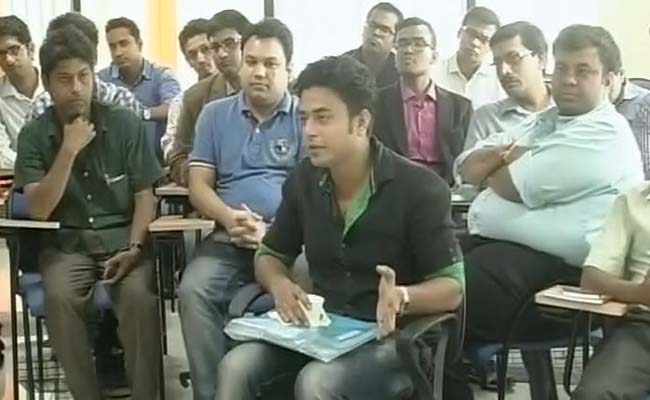
Entrepreneurship is the last thing that comes to our mind while taking a rooftop boat ride. However, on Saturday evening, a boat packed with young entrepreneurs did just that, pitching their startup ideas to investors on a cruise along the Ganges. For many, it turned out to be a smooth sailing, with their ideas being appreciated, endorsed and taken up for funding by investors.
In a first of its kind, Nasscom’s startup wing 10,000 Startups joined hands with Catapooolt, India’s first industry-backed crowd funding platform, to organize a platform on which various startups from across the country pitched their ideas to investors, who assessed them and extended funds on the spot.
Just as the boat left the dock, the 10 startups that were selected, started pitching their ideas. Paritosh Sharma, head of channel partnerships of PayUmoney, said, ” This live crowd-funding pitch at Kolkata is India’s first. Catapooolt, PayUmoney and Nasscom 10K Startups have collaborated with a mission to build India’s largest growth ecosystem for startups and small and medium enterprises (SMEs). And the same happening while taking a boat ride makes it even more interesting.”
The idea was to present every member with a booklet which had five coupons worth Rs 100. Whoever would want to invest in a specific startup based on their presentation would write down it’s name and place it inside a ballot box. In the end, a counting was done and a winner selected.
Ravi Ranjan, the warehouse manager of 10,000 startups, said, “This would support startups to validate their ideas with crowd and initially get small but significant money.”
Fading Clouds, a startup, co-founded by 2008 Satyajit Ray Film and Television Institute(SRFTI) pass outs Sumon Majumder and Mrimoy Mondal, showcased their independent film sharing the same name. The movie centres around the loneliness of urban life, due to the over use of technology and how as a result, people are losing out on the family bonding.
Satish Kataria, managing director of Catapoolt said, “We are pleased to have organised India’s first ever live crowdfunding pitch event in Kolkata. We endeavour to make innovation accessible to all through crowdfunding and wish to inspire everyone to contribute and engage with new ideas.”
“While Kolkata had been slightly late in catching up with start up movement, we hope that with such concepts, the people here can leapfrog to new ways of funding ideas and together, put the city, sky high on Innovation map,” he added.
source: http://www.timesofindia.indiatimes.com / The Times of India / News Home> City> Kolkata / by Abhro Banerjee, TNN / October 12th, 2015
Among the stories of torture, loot and oppression that the British left behind for us, one of the most common is that of how the thumbs of muslin weavers from Bengal were chopped off to wipe out the ancient art form from the face of the country. Muslin has since then been an item only to be seen in museums across the world.
A fine cotton textile making art that originated in India in the ancient times, with the maximum concentration in Bengal, and proliferated under Mughal patronage since the 17th century, muslin died an unnatural death when the British decided to smother it so that they can bring in their own mill-made textiles from Manchester to India.
Recently, the West Bengal chapter of Crafts Council of India has taken up a project to revive the art of muslin making. It started in 2010 and now weavers who were being re-skilled for producing muslin, have finally been able to reach an enviable thread count of 500.
After the Mamata Banerjee government came into power, the state micro, small and medium enterprises department also started thinking on how the fine textile making art can be revived in Bengal. The MSME department scouted for experts in villages across five districts of the state where muslin used to be produced traditionally. In this manner, some 793 weavers’ families were chosen from Birbhum, Murshidabad, Nadia, Bankura, West Misnapur and Burdwan, who had all been connected with muslin making some generations ago. The state government encouraged them to take to the art once again.
When the thread count reached 300 last year, muslin made by weavers under MSME made its way to the government’s Biswa Bangla Haat. MSME department is trying its best to increase the count further because the higher the count, the better is the quality of muslin.
During the time of the Mughals, muslin weavers from Dhaka were able to reach a count of 1500. Samples of these are available in museums across the world. A 500 count means that the two threads crisscross each other to create a mesh 500 times in the span of a square inch. “It all started quite by an accident. An American advertising honcho, Anne Johnson, had visited us with inquiries about muslin and whether any efforts were being made to revive it. She was fascinated with muslin and was even prepared to fund it if we took up a revival project, which we eventually did at a cost of Rs 70 lakh,” said Ruby Pal Chowdhury, who heads the Crafts Council of India here.
The Crafts Council project took place in Kalna, where master weavers, who are otherwise associated with the production of khadi yards under the aegis of the Khadi and Village Industries Commission (KVIC) of the central government and West Bengal Khadi Board (WBKB), kept experimenting with spinning of the yarn with the right thickness out of cotton sourced from Gujarat.
“Once the yarn is spun, it has to be soaked in starch made of kolma or dohor nagra varieties of rice. The water used is essentially rain water to keep the solution soft. There is no formula for this, these are part of family knowledge that are being gradually recalled through re-skilling,” said Pal Chowdhury.
The weavers of the council have not only been able to weave muslin yards but also entwine antique jamdani motifs in it. These have been christened as muslin jamdani and a pure saree woven thus costs nothing less than Rs 20,000. These creations are now available for viewing at Artisana, the council’s outfit at Chowringhee Terrace, while a mega debut is also being planned.
Considering the huge expense that such revival incurs, the council is also trying to tie up with Biswa Bangla to take the revival issue a step forward.
“We would welcome this because the final aim is to bring back muslin to its original glory. That will be possible only if we are able to keep giving incentives to weavers to sacrifice other commercial interests and concentrate on spinning finer yarns and then weaving finer counts,” said Sinha.
source: http://www.timesofindia.indiatimes.com / The Times of India / News Home> City> Kolkata / by Jhimli Mukherjee Pandey , TNN / October 11th, 2015
Mathematicians all over the world have been trying to solve a 150-year-old problem, popularly called the Holy Grail of maths, and a city mathematician has just been able to give a major insight into it. Ritabrata Munshi has stunned the world and no wonder, he has bagged the Shanti Swarup Bhatnagar award.
A number theorist, Munshi, who has taken lien from TIFR, Mumbai, to join his alma mater Indian Statistical Institute as faculty, seemed unfazed by all this adulation. In fact, one could sense an urgency in his voice, an urge to carry on with the third degree of the Lindelof hypothesis, which is the route that he is taking along with his co-researchers abroad to finally progress on the line of the ever elusive Reimann hypothesis that was formulated in 1859 by Bernhard Riemann.
It took 60 years to solve the first degree of the L theory and progress on to the second degree that again took 35 years to be resolved. Finally, Munshi has been able to make a global start on the third degree and make a considerable progress.
“The properties of prime numbers, their distribution pattern in the realm of the abstract simply bowled me over and I made up my mind to study maths after plus two despite ranking 25th in the WBJEE and under 400 in IITJEE,” said Munshi. He studied B Stat and M Stat at ISI and then enrolled for Phd at the Princeton University under legendary mathematician Andrew Wiles. He enrolled at Rutgers University, US, for his post doctoral degree.
source: http://www.timesofindia.indiatimes.com / Times of India / News Home> City> Kolkata / by Jhimli Mukherjee Pandey, TNN / September 30th, 2015
Inside the underground chambers of a non-descript office building on BBD Bag’s Netaji Subhas Road, lies a piece of Kolkata’s banking history. Here, in the basement of the four-storeyed structure, constructed by a Gujarati entrepreneur in 1940, Kolkata had one of its first private vaults — The Calcutta Safe Deposit Vault.
In the absence of locker facilities in banks then, it was a huge success with British citizens and business families. Seventy-five years later, the vault — probably the only privately owned one in Kolkata now — still survives.
Spread across 5,000 sqft, the vault has an astounding 8,600 lockers and three strongrooms. Dozens of safes, chests and almirahs, some of which are nearly a century-old, take up space in the strongrooms. Several lockers are still in the name of foreigners who rented them three generations ago. Around 2,000 of these lockers are now ‘dead’ and their holders are untraceable.
But the rest are active, says Sriram Ojha, a member of the board of management that runs the vault.
“We still have clients in USA, UK, Singapore and Canada, apart from all corners of the country. While many have stopped getting in touch with us, the rest are active users of the vault. They have been using it over generations and are keen to carry on. We are delighted to serve them because they are helping to keep this vault alive. It is part of our city’s great history,” Ojha said.
It was his father Amritlal Ojha, a successful industrialist from Kutch in Gujarat who started the vault in a building constructed by him. People like industrialists Badridas Goenka and Nalini Ranjan Sarkar attended the inauguration in January, 1940. It charged clients just Rs 8 every three months for a locker.
Four years later, on October 18, 1944, Amritlal passed away.
“My father had travelled to England to secure permission for the vault and building, which had been denied initially. He was on the board of more than a dozen companies and also president of the Indian Chamber of Commerce and FICCI at New Delhi, apart from numerous other business organizations. He enjoyed a tremendous goodwill in the elite circles of Kolkata, which made it easy for Calcutta Safe Deposit Vault to continue even after his death. Our clients never left us,” Ojha said.
Among those who stored valuables at the vault were the Dalai Lama and the Maharaja of Burdwan. Members of the royal family of Sikkim and the Tata and Birla families still hold some, apart from numerous other rich, aristocratic families in the city. Many of them still visit the vault regularly.
Fresh applications for lockers are still received, though there is hardly any available now. Recently, a client opened a locker that had not been operated for nearly 30 years — a Bengali woman from Texas claimed her husband’s trunk from a strongroom at the vault.
Reminders are sent to old clients to come and check their belongings. “Many respond enthusiastically while others are returned to us for the recipients are either dead or have shifted residence,” Ojha explained.
It is more to carry on his father’s legacy, than anything else, that the vault has been kept running with a workforce of only 20, said the 71-year-old Ojha. “None of his other businesses survive so I am keen that this one exists at least till I am alive. It is a hand-to-mouth existence for the vault since we have hundreds of defaulters. Charges have been revised but the earnings are still not enough to result in a decent profit. But we can still survive,” Ojha said.
There is a set of Reserve Bank of India guidelines for nationalized Bank lockers. But Ojha is not aware of them and he has not been questioned either.
“When my father started it, there was no RBI. But a demand for lockers must have existed as this vault was a runaway success. Our vault is not the only one in the country, there are several others in other cities. But ours was a huge hit,” he argues.
The vault now charges between Rs 800 and Rs 3,000 annually for a loc-ker, depending on its size. The char-ges for renting an almirah, a safe or a trunk are Rs 12,000, Rs 15,000 and Rs 5,000 respectively.
What worries Ojha now is the future. “Rent from the building sustains the company but the major tenant has been defaulting. Unless we can generate more revenue, the vault will pass into history. It sustains nearly a hundred people, which makes it important for me to ensure that it goes on,” Ojha explains.
source: http://www.timesofindia.indiatimes.com / The Times of India / News Home> City> Kolkata / by Prithvijit Mitra, TNN / September 13th, 2015
Sept. 6: Bengal has turned conventional economic wisdom on its head.
Data released by the Centre last month revealed that Bengal had one of the lowest population growth rates, 13.8 per cent, in the country for the 2001-11 decade. This is of a piece with the number thrown up earlier in 2013 for Bengal’s total fertility rate, which placed the state at the bottom of the table.
This development has taken place without being accompanied by the level of economic and social progress that has so far been seen to create conditions for low population growth.
Saswata Ghosh, economist and mathematical demographer at the Institute of Development Studies, Calcutta, said: “The basics in economics tell us that population growth rates tend to stabilise with rise in income and social well-being. We have seen such trends in the advanced economies of Europe around the 1960s and 1970s.”
Japan’s experience has been the same.
Bengal bucks that trend. The provisional socio-economic caste census (SECC) data of 2011 paints a dismal picture of rural Bengal: one-third of the population are illiterate and nearly three-fifths live in kuchcha houses and three-fifths earn their livelihood through manual labour. The breadwinner in 82 per cent of the households makes less than Rs 5,000 a month.
The situation of Odisha is somewhat similar. The state has witnessed a decadal population growth rate of 14 per cent but the socio-economic conditions of the rural population cannot be regarded as favourable for such a dip in the population growth rates.
“This is a demographic puzzle and I think it calls for more research,” said Anup Sinha, professor of economics at IIM Calcutta.
According to him, a proper social safety net can push down fertility rates – as it has been witnessed in various European countries – because people think that the government will take care of them in their old age. India is far from a situation like that.
Given the uncertainty about the future and the widespread misery, conventional wisdom expects the poor to have more children in the hope of augmenting future income. Besides, the lower probability of survival of all the kids also encourage the poor to procreate more.
But the finding from Bengal is different, as the total fertility rate has dipped. This rate is defined as the average number of children a woman would have over her reproductive life. Bengal’s fertility rate of 1.6 is not only below the national average but also lower than the replacement rate of 2.1 children per woman. This rate is taken to be 2.1 with the notion that a couple will be replaced by two children; 0.1 is added to factor in infertility among some women.
“The dip in the fertility rate in urban areas in Bengal is more to do with aspirations for their children, where parents are reducing fertility in search of social uplift. But in rural areas, the decline is distress-driven, as there are fears that the next child may starve to death,” said Ghosh, who has been tracking the trend for some time.
This sense of insecurity can be understood in the context of results from the census. Some 70 per cent of the rural households are landless, around 47 per cent of the rural population do not have primary education (national average of 50 per cent) and the percentage of graduates in the state is less than the national average and all the western and southern states.
The low decadal population growth might make Bengal’s current administrators happy as it means less strain on scarce public and private resources. As for the state’s poor social and economic scores, Mamata Banerjee can well blame her predecessor, the Left Front, as the survey related to the years to 2011, the year she took charge.
Several economists, however, said the trend of deprivation seen during Left rule doesn’t seem to have changed.
“Had there been a significant improvement in the situation after 2011, it would have been discernible to even non-expert eyes…. At least I haven’t seen any major changes in terms of job opportunities or education,” said Sinha.
Economists may wait for numbers, but till the next such survey results are out, Mamata can keep claiming that the Left destroyed both industry and agriculture, but the tables tucked in the voluminous report have several lessons for the chief minister.
Governments in Bengal have boasted about rapid industrialisation, never producing the numbers to support their claims. The provisional SECC data show that only 8.5 per cent of the rural population have salaried jobs -evidence of the lack of industrialisation. Agriculture offers a picture that is as gloomy: only 19 per cent of the rural population – against a national average of 30 per cent – earn their main livelihood from cultivation.
If more than 58 per cent of a state’s rural population earn their primary living through manual casual labour – which means they do not use skills and employment is irregular – there is little doubt that the state needs industrialisation for which availability of land is a precondition. But Mamata’s stated stand is against government acquisition of land.
“If the present government sticks to its stand on land, the next census will produce a more dismal picture of the state,” said an city-based economist who did not wish to be named.
Over the past few years, the Mamata government has been claiming that Bengal is ahead of the national average in terms of all the major indicators like the growth rate of the economy and the rate of growth in industry, agriculture and services.
“From a small base, one can achieve higher growth numbers. Besides, the national average includes other laggard states. So, clocking a higher than national average is no big deal. Instead of patting herself on the back for what she has achieved, she should take a lesson from these numbers and change her approach,” said the economist.
source: http://www.telegraphindia.com / The Telegraph, Calcutta,India / Front Page> Story / by Devadeep Purohit / Monday – September 07th, 2015
As the number of start-ups grow in Kolkata, angel investors are taking notice.
Kolkata :
If you thought startups meant only Bengaluru, think again. The bug has bitten Kolkata and angel investors are suddenly sitting up and taking notice.
In just the last one month, a restaurant chain in the city has bagged angel funding, so has an education app.
NASSCOM, the IT body, had set a target of 10,000 startups by 2023 across the country. It now says the goal will be met much faster with the way big ideas are landing, many of which are from Kolkata.
The start-up bug has bitten Kolkata
Kolkata’s biggest startup story in recent times is a momo chain going all popular. Two college friends had pooled in Rs. 30,000 seven years ago to set up their first shop. They now have 52 outlets in six cities with an investment of Rs. 10 crore from the Indian Angel Network.
“I want to make this brand an international brand, want to go all over the world. That’s what our dream is. We want an Indian brand go abroad. And why not?” said Binod Homagai, co-founder, Wow! Momo,
His friend, partner and co-founder Sagar Daryani’s has more immediate plans; sixty more outlets in the next two years and an IPO in seven. He feels the startup bug is in Kolkata to stay.
“Nowadays, being an entrepreneur has become the cool thing,” he says.
A spurt of big ideas has investors hotfooting to Kolkata. NASSCOM, which set up its startup warehouse in January with state support, is pointing the way. Senior associate, NASSCOM, Ravi Ranjan, says, “We have seen more than 200 applications on our website in eight months and we have selected 13 world class global product companies from Kolkata”.
President of Indian Angel Network, Padmaja Ruparel, who has invested in Wow! Momo is excited. “I am seeing entrepreneurial genes kicking in, I am seeing entrepreneurs who are driven, there is passion and, most important for me, that commitment which says, I want to make it happen. And that will make Kolkata happen as well,” she said.
Funds are flowing in. Om Agarwal, a 23-year-old law student from NUJS, Kolkata, will launch an education app in a couple of weeks. He has just won investment from a startup investor Ravi Agarwal, the details about whom are not being shared, but who might just be a big name.
“EazyCoach, my startup, will give students one marketplace where they can get help with admissions and money to travel and study at colleges abroad,” says Om Agarwal. “We are starting with services to students in India but will soon reach out to students in China and Brazil.”
Startups with unique ideas are flourishing; like Anirudh Poddar and Aditya Ladsaria’s Chai Break restaurant, which was started on a capital of Rs. 50,000 five years ago, and is up to six restaurants already.
“There are lots of coffee chains in the country but we want to focus on tea,” said Anirudh Poddar.
The startup fever in Kolkata seems set to be on the rise and could make the city of joy the country’s next startup destination.
source: http://www.ndtv.com / NDTV / NDTV> Section> Home> Kolkata / by Monideepa Banerjie / September 05th, 2015
The Nahoum and Sons bakery is one of the last vestige’s of Kolkata’s Jewish heritage – but it still attracts the odd very important patron
Dough Calcutta … Nahoum and Sons bakery, Kolkata. Photograph: Leisa Tyler/LightRocket via Getty Images
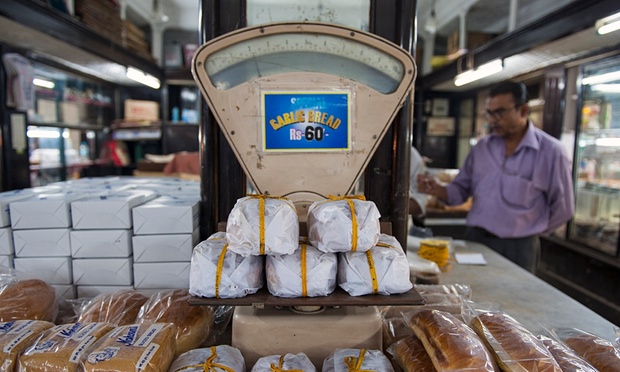
Stepping inside the Nahoum and Sons bakery in South Kolkata is a trip back in time. The legendary confectioner’s shop hasn’t changed much since it first opened 113 years ago; the same teakwood furniture and display cases remain, and the same list of sugary treats based on old family recipes.
Kolkata’s region, Bengal, is known throughout India for its delectable sweets – from rosogolla (spongy milk balls soaked in sugar syrup) to shor bhaja (deep-fried milk cake) to chenna (a moist and crumbly sweetened cow’s cheese), though in a majority-Hindu city it’s unusual that the most popular dessert haven is run by a Jewish family.
But a taste of a rum ball or a slice of lemon tart explains exactly why Nahoum’s has been going for over a century, despite the local Jewish population dwindling to just 20 in recent years.
Between the late 18th and mid-20th centuries, Kolkata was home to a small but significant community of Jews – a consistent 4,000 over that period. Nahoum’s, the city’s last remaining Jewish bakery, is a symbol of this disappearing heritage.
The bakery’s most famous offering is a rich fruitcake. At Christmas queues span three streets to buy it and “our rich fruit cake is internationally known,” says owner Isaac Nahoum.
“The cake used to be supplied to government houses. When Archbishop of Canterbury Geoffrey Fisher came to Kolkata, they served him Nahoum’s fruit cake and he said it was the best fruit cake he had ever eaten.”
• Bertram Street, New Market Area, Taltala, Kolkata, +91 33 6526 9936, no website
source: http://www.theguardian.com / The Guardian / Home> Travel> Kolkata> The Foodie Traveller / by Lauren Razavi / Sunday – August 30th, 2015
For the last 11 years, this entrepreneur has experimented with sweets, taking his traditional yet popular family business to the next level. Today, this 33-year-old director of Balaram Mullick and Radharaman Mullick Sweets has made it to the list of six most promising entrepreneurs in the country selected by Forbes India Magazine.
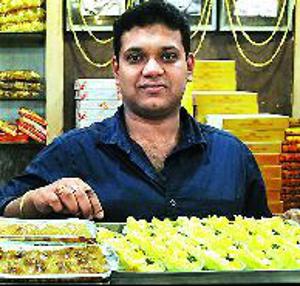
Sudip Mullick displays some of the innovative sweets at his shop.
While working in the Oberoi Grand kitchen, Sudip Mullick picked up a European taste for desserts and dreamt of fusing them with the typical Bengali sweets their family shop was famous for. Now, the once-traditional sweetshop has become a one-stop destination for new age fusion mishti in the city.
Sudip is ecstatic that his efforts have got the 130-year-old brand recognized by Forbes India.
Names like strudles, pudding, truffles and souffles are now common on the Balaram Mullick racks and though they are mostly variants of the traditional sandesh and Bengali rosh er mishti in their myriad forms, you will be confused as to whether you are tasting a European delicacy or a Bengali favourite.
Sudip has mechanized the entire process by using machines he imported from Denmark, Taiwan, Japan and Italy, and fused various processes to churn out his own delicacies.
The Japanese machine used to make rice dust desserts there is used to make the jol bhora sandesh with a Japanese twist, the machine from Denmark that is used to churn out pure chocolate truffles is used to make chocolate-coated sandesh and rossogolla truffle and the Italian machines designed to make cookies are making golapi pera sandesh. There is a type of singara being made by a German machine originally used to bake patties.
“People have become health conscious and they avoid deep fried savories. The baked singaras have a big fan following,” Sudip said.
Other promising entrepreneurs on the Forbes list are Rahul Gonzalvez of Bangalore, for his digital design agency, Ashoke Thakur, for churning out vada paos by thousands in Mumbai’s Dadar, Sirish Duttatreya who is a third-generation second-hand book shop owner with over 9,00,000 titles in Pune and Parvatlal Kanhaiyalal Dubey who is the country’s biggest wedding planner.
source: http://www.timesofindia.indiatimes.com / The Times of India / News Home> City> Kolkata / by Jhimli Mukherjee Pandey, TNN / August 14th, 2015
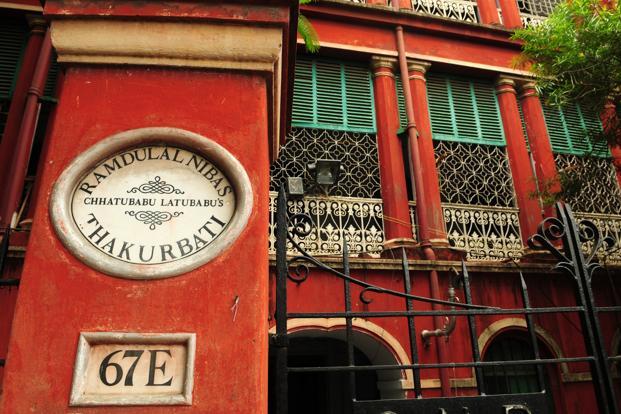
The ancestral home of Asutosh and Pramatha Nath, sons of the legendary Ramadulal De. Photo: Indranil Bhoumik/Mint
In the 20th century alone, hundreds of banks went belly up in the city, leaving many landed families in ruin
Photographs by Indranil Bhoumik.
It is historically documented that one Ramdulal De (1752-1825) rose from penury to become one of Kolkata’s wealthiest businessmen ever by wagering on the wreck of a ship.
As a manager in a shipping company, De was a man of modest means when he bid an astounding Rs14,000 to snap up a sunken ship. Within hours, he managed to sell it to a European with better knowledge of its cargo for almost Rs1 lakh.
No one knows what happened to the European who bought the ship, but De never looked back.
The more recent emergence of Chandra Shekhar Ghosh as an entrepreneur is equally fascinating.
Even in the early 2000s, he was travelling by public transport into the interiors of West Bengal and neighbouring states to stabilize the operations of a fledgling microfinance institution.
In only 15 years, Ghosh’s Bandhan Financial Services Pvt. Ltd is turning itself into a bank with bruised and battered Bengali pride riding on it for redemption.
West Bengal has a chequered history in banking. It was in Kolkata—then Calcutta—where the first deposit-taking bank was founded in the early 1770s.
Alexander and Co.—a British managing agency, or a diversified conglomerate—launched Bank of Hindostan in partnership with local moneylenders, or indigenous bankers called shroffs or banians in those days.
De was at that time one of the leading banians.
Many more banks were launched in the late 18th century, but all of them collapsed within 50-60 years. The reason? Speculation and overtrading by their founders. Bank of Hindostan survived three runs, but eventually went under in 1832 along with its founder Alexander and Co.
In 1806, Bank of Calcutta—one of the forebears of today’s State Bank of India—was established by a government charter. But because it was risk-averse and wouldn’t lend for more than three months, local businessmen—both British and Indian—continued to launch private banks.
The result was the same—more bank failures. The most storied failure was that of Union Bank Ltd (1829-48), founded by illustrious Bengalis such as prince Dwarkanath Tagore (poet Rabindranath Tagore’s grandfather) in partnership with British companies.
When it collapsed, De’s sons Asutosh and Pramatha Nath had to pick up the tab for its bankruptcy. Whereas their father remained a banian, they had become shareholders of Union Bank.
According to some historians, Bengalis turned to safe-haven investments such as real estate following the collapse of Union Bank. Property prices zoomed.
Described by many historians as reckless destroyers of wealth, Bengalis returned to banking again in the early 20th century, ostensibly with the noble purpose of backing Indian businessmen to compete against the British.
These ventures were even more short-lived. Some wound up within years.
Between the early 1940s and the mid-1960s, West Bengal had gained unparalleled notoriety in bank failures, and former SBI chairman D.N. Ghosh blames it on greed, corruption and lack of regulation.
In the 20th century alone, hundreds of banks went belly up in Kolkata, leaving many landed families in ruin.
The state’s inglorious past has weighed on the minds of regulators, according to D.N. Ghosh.
Bandhan is a break from the past. It has earned the regulator’s confidence, and its conservative and risk-averse founder, Chandra Shekhar Ghosh, is the Bengali community’s best bet for redemption.
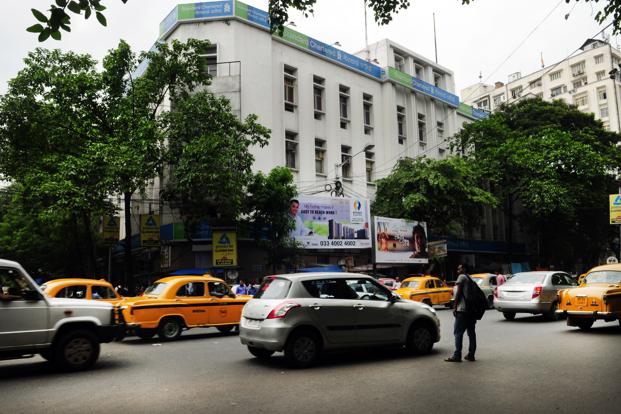
The headquarters of the erstwhile Calcutta City Banking Corp., founded in 1863. Among its founders was Durga Charan Law, a wealthy banker and banian.
source: http://www.mintonsunday.livemint.com / Mint On Sunday / Home> Photo Essay / by Aniek Paul / Sunday – August 23rd, 2015