Category Archives: Business & Economy

Threads from Bengal

sareeskolkata14oct2016

Rang Mahal brings to the city the creations of 250 weavers from Nadia

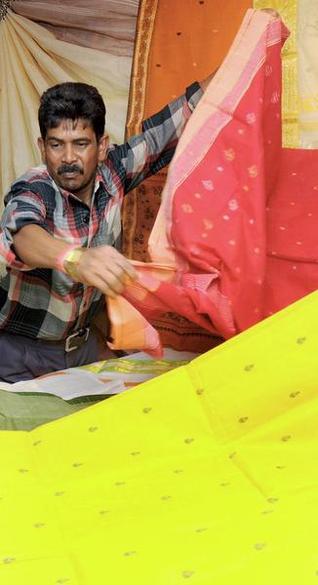
For 19 years now, even before the Durga Puja festivities die down, Sarmistha Das Biswas and her team at Rang Mahal have been getting ready for a hope-filled pre-Deepavali journey. For, they carry the creations of 250 weaver families from Nadia district in West Bengal, who’ve found favour with the Chennai sari-wearing audience.

“People here know the value of cotton,” smiles Sarmistha, who’s coordinating the exhibition, on at New Woodlands Hotel, R.K. Salai. She’s the fifth generation in a family of weavers, and says shows such as these are a great way to link the weaver and wearer. This time around, five weavers have joined the team, and will be at the venue, explaining their craft.

While keeping alive tradition, the team has also tried to fuse in contemporary thoughts — they blend cotton with organic bamboo and banana fibres to create a fabric that is ultra soft and breathes well.

Travelling has exposed the weavers to new thought processes and preferences too. Sarmistha says that most of them are not very educated, and have learnt spoken English from the Bengal Weavers Service Centre so that they can better interact with customers.

Among the specialities at the exhibition are nakshi tangail saris with colourful borders, hugely popular in Tamil Nadu; jamdani handloom weaves, with detailed work on the pallu; printed Santiniketan cottons; vanya resham or ahimsa silk; and hand-painted saris that replicate the paintings of Jamini Roy and Ganesh Pyne. The best part? All of them can be home-washed.

The weavers have worked for about four months to create this collection of 5,000-odd saris in 550 designs, and customise a colour palette that works well in Tamil Nadu.

“Usually, pastels with vibrant borders do very well here. So, we offer a mix of colour tones,” says Sarmistha. The weavers create patterns on their own, but also take feedback from designers who give them work. This way, their craft improves, she says.

The show is on till October 24 from 10 a.m. to 8 p.m. They accept only cash payments.

source: http://www.thehindu.com / The Hindu / Home> Features> Metroplus / Subha J Rao / Chennai – October 14th, 2016
Horse carts get life… and a burden

Kulti :

A 50-year-old tanga (horse-drawn carriage) operator in Burdwan’s Kulti had been planning to sell his two horses and look for some other source of income as the business, in which his family has been involved for four generations, had fallen on hard times.

The same was the fate of around 30-odd tanga operators in Kulti town on the Bengal-Jharkhand border.

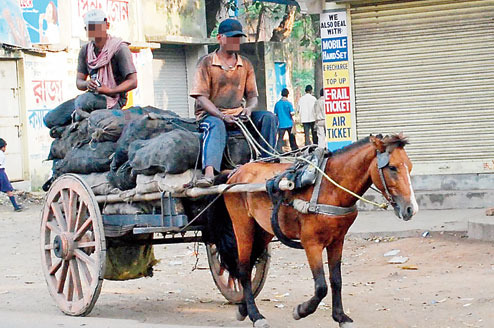
Pilfered coal being ferried in a tanga in Kulti. The faces of the operators have been blurred. /  Picture by Santosh Kumar Mandal
Pilfered coal being ferried in a tanga in Kulti. The faces of the operators have been blurred. / Picture by Santosh Kumar Mandal

However, the tangas have now got a new lease of life and the horses are back on their feet, ironically though, because they are being used to carry the burden of an illegal trade. Local coal pilferers have chosen the nearly forgotten mode of transport to ferry their booty to brick kilns and depots as tangas are much faster than bullock carts.

The horse-drawn carriage was introduced in Kulti by the British after James Erskine founded Bengal Iron Works.

The journey of the tanga since then has been chequered. From a symbol of glory during British rule, it became a popular mode of public transport. However, with the advent of modern means of transport such as buses, autorickshaws and totos, the tanga lost out.

Earlier, pilferers used to transport coal in trucks. However, because of a crackdown by police, they had chosen bullock carts and bicycles. However, bullock carts are slow and ferrying huge amounts of coal on cycles is a labourious and time-consuming task, prompting the pilferers to choose the tangas.

The owners of at least 30 horse-drawn carts in Kulti town have modified the vehicles so that they can be used to ferry coal. The hoods and seats have been removed to make space for coal sacks. Sources said the tanga owners charge between Rs 200 and Rs 250 for each trip.

Some residents alleged a section of policemen took bribes from tanga owners and pilferers.

Asansol-Durgapur police commissioner L.N. Meena said he did not know that tangas were being used to ferry pilfered coal and dismissed as “baseless” the allegation of bribe.

source: http://www.telegraphindia.com / The Telegraph,Calcutta,India / Front Page> Bengal> Story / by Abhijeet Chatterjee / Wednesday – August 17th, 2016

Kolkata shipyard develops new vessel for Coast Guard

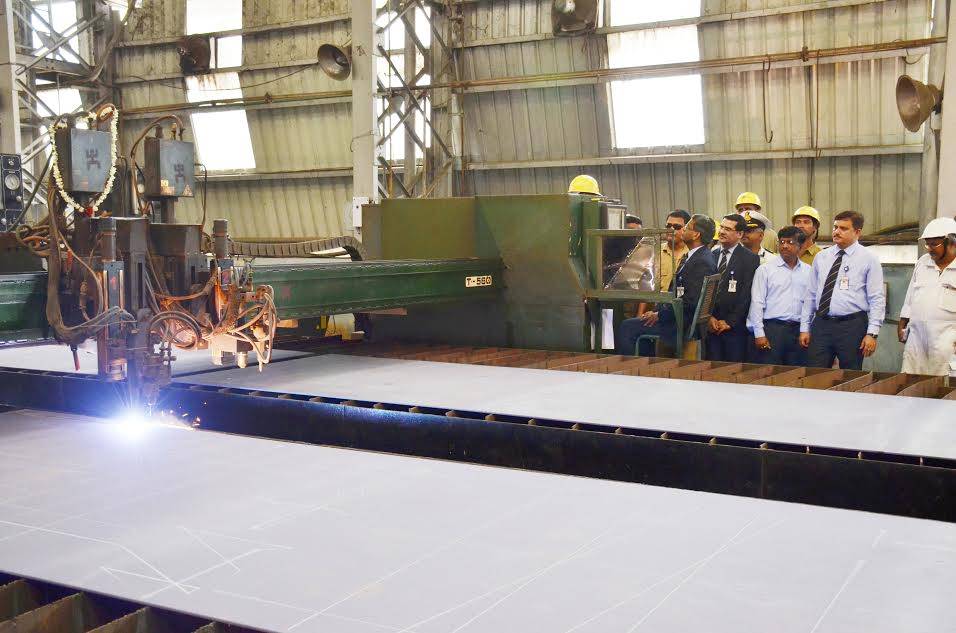
ShipyardKOLKATA17aug2016

Kolkata :

Garden Reach Shipbuilders and Engineers (GRSE), on Saturday, commenced work on the first in a series of Fast Patrol Vessels (FPVs) it has developed and will be building for the Coast Guard. Among those present during the ‘Plate Cutting Ceremony,’ the first step towards construction of a ship, were Rear Admiral (retd) AK Verma, chairman-cum-managing director, GRSE and other senior officials.

The order for the FBVs was placed in March, 2016 and the first ship will be delivered in February, 2018, Verma said. “The design of these ships is unique. They are cost-effective, fuel-efficient and ideally suited for patrolling, anti-smuggling, anti-poaching and rescue operations. They are an improved version of Inshore Patrol Vessel (IPVs) built earlier by GRSE for the Coast Guard. The FPVs are designed and developed by the in-house design centre of GRSE. Thanks to active support and participation of internal workforce and business partners in various shipbuilding activities, GRSE’s capabilities are constantly increasing. These ships will add punch to the Coast Guard’s capabilities in maintaining maritime security,” the CMD added.

The FPV is 48.9 metres long, 7.5 metres wide and has a displacement of nearly 300 tonnes. It is capable of attaining a maximum speed of 34 knots. At 12-16 knots, these ships have endurance of 1,500 nautical miles. They are fitted with three water jet propulsion systems powered by marine diesel engines, each developing 2720 KW of power and will be fitted with CRN-91 indigenous 30 mm gun. The ship has modern habitability conditions with accommodation for 35 personnel.

source: http://www.timesofindia.indiatimes.com / The Times of India / News Home> India / by Jayanta Gupta / TNN / August 14th, 2016

Future of banking decoded

CalcuttaManagementSummitKOLKATA12aug2016

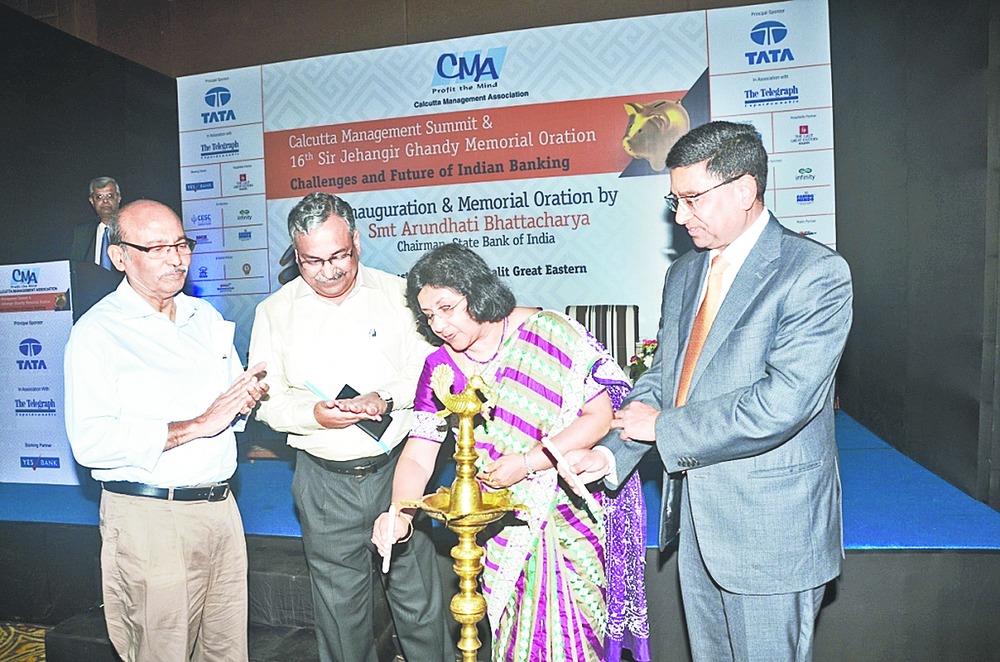
Calcutta Management Summit 2016, the annual signature event of Calcutta Management Association, was held at The Lalit Great Eastern on August 3. The theme? Challenges and Future of Indian Banking. It was inaugurated by the chairman of the State Bank of India, Arundhati Bhattacharya – seen here with Achintan Bhattacharya, director, National Institute of Bank Management (Pune), Gautam Ray, president (CMA), and industrialist Sanjay Budhia.

Bhattacharya delivered the 16th Sir Jehangir Ghandy Memorial Oration on “Challenges and Future of Indian Banking”. The summit had two technical sessions on “Changing Contours of Risks and Positioning Indian Banks” and “Digital Banking and Redefining of Efficiency Paradigm in Banking”.

The other speakers at the summit were Achintan Bhattacharya, A.S. Ramasastri, director, Institute for Development and Research in Banking Technology(IDRBT), Hyderabad, C.S. Ghosh, MD & CEO, Bandhan Bank, Anup Sinha, professor of economics, IIM, Calcutta, Pavan Trivedi, COO, Srei Equipment Finance, Shubhada Rao, group president & chief economist, YES Bank; Saugata Bhattacharya, senior vice president & chief economist, Axis Bank, Deshbandhu Kataria, deputy general manager, Anytime Channel, State Bank of India, and Rajarshi Sengupta, partnerchief innovation officer, Deloitte, Touche, Tohmatsu India LLP

source: http://www.telegraphindia.com / The Telegraph,Calcutta,India / Front Page> Calcutta> Story / Thursday – August 11th, 2016

Indian weaves meet Italian exuberance

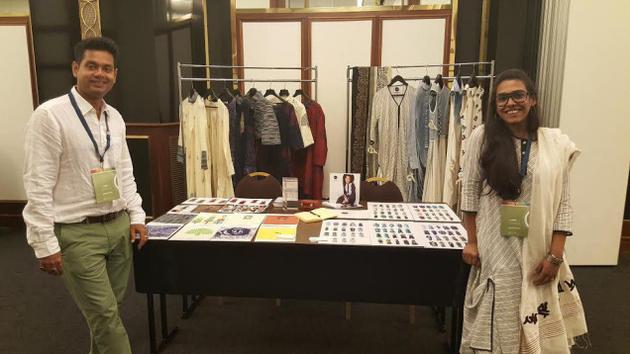
Designers Sayantan Sarkar and Rimi Nayak in Italy.

Two Kolkata designers represent the country in Italy

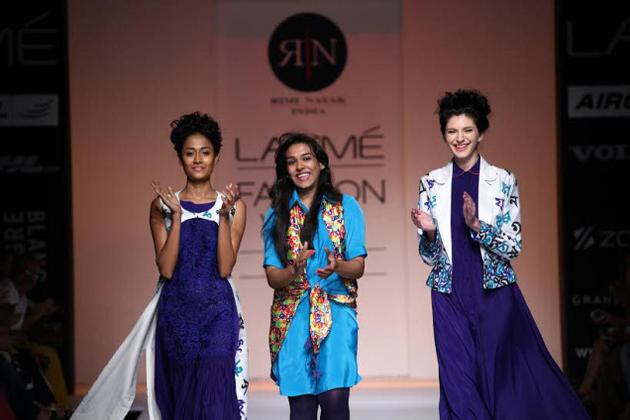
Last month, designers Sayantan Sarkar and Rimi Nayak — both Lakme Fashion Week veterans — were among a group of 18 delegates from various industries who represented India at a four-day trade conference, courtesy the Bengal Chamber of Commerce. The meet was organised in association with the Indian Embassy as a part of the government’s ‘Make in India’ project. Staged across three Italian cities — Milan, San Marino and Rome — the meet was graced by Italian fashion houses, buyers and industry experts, who were duly impressed by Indian craftsmanship, textile heritage and attention to detail.

Saying it in Bengali
Nayak has been working with prints inspired by Bengali fonts since 2013. Her signature Bengali typography prints have earned her rave reviews at the Lakme Fashion Week and celebrity clients such as Vidya Balan, Amrita Rao, Esha Gupta, Sayani Gupta and Yami Gautam. Nayak. The curvaceous look of the Bengali font piqued the curiosity in Italian buyers. “Bengali fonts are visually appealing and have been hugely appreciated in the past.” says the designer.

Nayak’s collection inspired by Bengali typography.

“I had iconic lines from Tagore’s literature printed on beautiful dresses with my signature drapes. Also, every line in Bengali also had its corresponding English translation. For instance, ‘Pothik tumi ki poth haraiyacho?’ was accompanied by ‘Wayfarer have you lost your way?’ printed beside it.” The ‘world map’ items from her 10-piece capsule collection were also a huge hit with buyers in Milan. “The entire world map was printed on the ensemble in a graphical manner, with names of the countries and oceans written in Bengali and English.”

Nayak, who works extensively with khadi, said that Europeans acknowledged and appreciate the rich heritage of the handloom fabric.

As for the typographical print, she said, “When it comes to typography prints in fashion, you mostly see English, Chinese and Arabic scripts. I am born and brought up in Bengal, although I am Oriya by birth. So I wanted to popularise the Bengali typography as it never got the kind of exposure it deserved.”

Nayak is now expecting potential collaborations through Milan Fashion Week with those who are keen to work with her label. She is looking forward to working on commissions for developing indigenous fabrics for them.

Europeran sensibilities, Indian fabric
Sarkar feels Indian designers ought to harness the craze Europeans have for our fabrics. “You can expect to sell a simple Khadi ensemble for 3000 Euros. That’s the kind of price they are willing to pay.” He has also been approached to develop weaves by ‘mesmerised buyers’ from Italy.

He is amongst the handful of Indian designers who develop their own textiles. He works with craftsmen in the Phulia district of Bengal to create fabrics for his western outfits. “The Chamber of Commerce was seeking someone who would cater to European sensibilities promoting Indian fabric. That’s how they zeroed in on me.”

Sarkar travelled with two collections, featuring trousers, shirts and jackets for women. The former used the khesh technie (a technique which recycles fabric) on the denim. “We have applied it on denim strips, washed them and developed fabric out of them. These fabrics were manufactured in Shantiniketan.” His Mayuraka collection. “had dancing peacock motifs used on shift dresses, tunics and shirts.” The other, more bohemian collection, called Vagabondage, was inspired by “the nomadic gypsy lifestyle” and used the Jamdani weave. The feathers of a dream catcher were used as a recurring motif. It featured shibori with kantha stitchwork and South American Aztec motifs inspired by the traditional Bengali Jamdani textile.

Sarkar concedes that the European market is of the opinion that our silhouettes are not trendy or global yet. “They think we are still very conservative. They demanded a new silhouette range, which we have taken up as our most recent project.” Sarkar is optimistic that his designs will display soon at multi-designer outlets in Rome.

The author is a freelance writer

source: http://www.thehindu.com / The Hindu / Home> News> Cities> Mumbai / by Piali Dasgupta / August 09th, 2016

Tea tool for planters

Jalpaiguri :

The Tea Board of India today gave plucking machines to 150-odd small growers in the district.

Officials said the machines had been given away with a 50 per cent subsidy to be borne by the board. The remaining amount will be paid by the beneficiaries in three-four installments.

“Getting workers in the tea sector has become a major problem.The small tea sector here is also facing this shortage. That is why the tea board has decided to offer the machines to small growers,” Ramesh Kujur, deputy director of the tea board, said.

The tools that cost between Rs 40,000 and Rs 72,000 were given to planters from Rajganj, Sadar and Mainaguri who had applied for them.

“It can help growers in tackling manpower crisis and also increase the amount of leaves plucked,” Kujur said.

Jalpaiguri has 10,000-odd small planters.

ADDITIONAL REPORTING BY OUR SILIGURI CORRESPONDENT

source: http://www.telegraphindia.com / The Telegraph,Calcutta,Indai / Front Page> North Bengal> Story / Wednesday – August 10th, 2016

Dial S for Shepreneur

If you have an idea and wish to turn it into a business, dial S for Swayam.

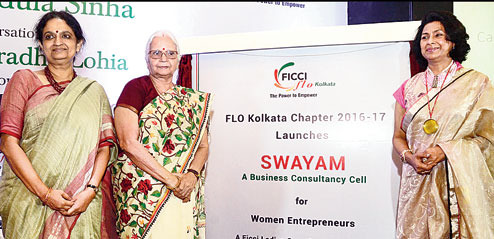
Swayam, a business consultancy cell for new and existing women entrepreneurs, was launched by FICCI Ladies Organisation (FLO) on Tuesday. Goa governor Mridula Sinha was invited to launch the project as Anuradha Lohia, Presidency University vice-chancellor, chatted with her on the “changing role of women” in front of an audience of around 200 FLO members at Taj Bengal.

Governor of Goa Mridula Sinha (centre) launches Swayam, the business consultancy cell of FICCI Ladies Organisation (FLO), with Anuradha Lohia, vice-chancellor of Presidency University (left) and Anupama Sureka, chairperson, FLO Calcutta, at Taj Bengal on Tuesday. Picture by B. Halder

“The changing role of women goes hand-in-hand with the changing role of men,” said Sinha, who described herself as a “familist” – as opposed to “feminist” – to emphasise the importance of family support, especially from male members, in a woman’s journey to success.

Eight mentors are part of the Swayam team in Calcutta. “We will step in at places where women need help like writing business propositions, raising funds, getting them familiarised with government policies and marketing,” said mentor Nayantara Palchoudhuri, who was the first woman president of the Bengal National Chamber of Commerce and Industry.

The mentors have been prepping up in order to deliver their best. “I did a course on motivation because I was going to be part of this motivational team of Swayam members,” said Suksham Singh, who runs Lifeline Foundation, a free tele-helpline service for the depressed and suicidal.

“If a woman wants to get into a particular area of business, she needs to be told the ABC of business. Say, it is food processing. That’s not my area of expertise but I will put her on to experts. The mentors’ job will be to network… we are going to see that she gets all the attention she needs to take her down that path. They can be young or old… I’m looking for someone who’s 65 and wants to start a business!” added Suksham, who also opened the first all-women petrol pump in Alipore in 2004.

“As of now, Swayam is open to all women and students and not restricted to FLO members. Consultancy is available for a nominal fee, charged only so we get serious proposals,” ” said Anupama Sureka, chairperson, FLO Calcutta.

You can reach Swayam in Calcutta at 9163167789 and flokolswayam@gmail.com

source: http://www.telegraphindia.com / The Telegraph,Calcutta,India / Front Page> Calcutta> Story / by A Staff Reporter / Wednesday- July 27th, 2016

Where ideas turn into experiences

It’s a rare congregation where designers, techies, tinkerers, hobbyists and artists get together to toy with their ideas, exchange notes and give shape to them. MakersLoft, eastern India’s first makerspace, lets children give flight to their imagination with the help of tools and tips from professionals.

Purav Manot is passionate about robotics and has been following YouTube videos to build a bot. MakersLoft gave this student of Lakshmipat Singhania Academy a platform to develop professional skills and collaborate with fellow robotic enthusiasts. Manot now helps other kids create custom robots.

“I used to watch videos and design programmes with sensors and motors but never got a chance to showcase my models. Then MakersLoft happened. Now, I get to exchange and share interesting robotic experiences with professionals and hone my technical abilities,” Purav said.

Come with an idea and leave with a product is the invitation from Meghna Bhutoria, the founder and CEO of MakersLoft. “From 3-D painting, robotics, app development to photography, herbal painting, woodwork and fashion designing, MakersLoft is a one-stop shop for thinkers and innovators, no matter what their age,” she said.

The concept is widely prevalent in the US, France and Germany and has finally found a niche for itself in Calcutta. Stationed in a flat on Ballygunge Road, MakersLoft offers an enticing blend of lab-based learning, hands-on training and even offers chances of entrepreneurship.

“There are plenty of such never-seen-before experiences dished at MakersLoft. We have also introduced some unique and fun activities for tots and teens. Making ‘glow-in-the-dark’ objects, setting up structures and models using PVC pipes and phone film-making are some of the interesting options that can break the monotony of routine life at home or school,” Bhutoria said.

For Kushagra Kanoi, a student of Calcutta International School, the Lego classes on Saturdays are something he looks forward to all week. His Lego blocks were only lifeless pieces of plastic before he joined MakersLoft. Now, he knows how to get the blocks moving. “I used to make Lego cars but couldn’t do much to get them going. But with Lego technique set here, I know how to put lever and battery to use,” Kushagra said.

Namrata Manot, a Lego instructor at MakersLoft, said: “The kids’ imagination knows no boundaries. We give them an idea and watch them add their own creativity to it.”

source: http://www.telegraphindia.com / The Telegraph,Calcutta,India / Front Page> Calcutta> Story / by Rumela Sinha / Tuesday – July 05th, 2016

WRITER’S BLOCK – Inside India’s oldest hotel

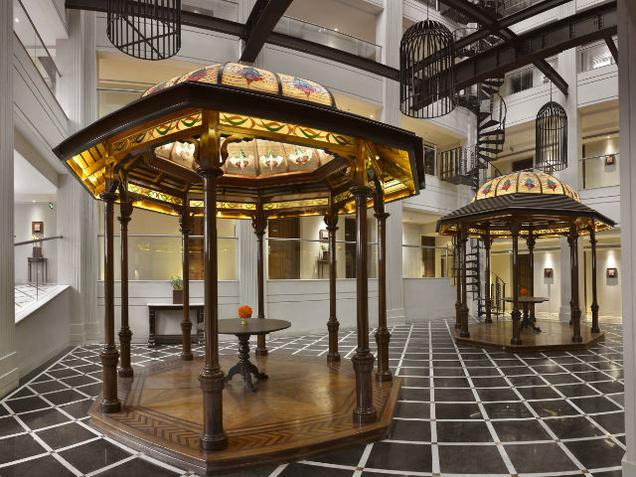
Past meets present: The atrium of the Lalit Great Eastern. /  by Special Arrangement
Past meets present: The atrium of the Lalit Great Eastern.
/ by Special Arrangement

In 1836 — when Bahadur Shah Zafar was yet to ascend the throne in Delhi to become the last Mughal — a man called David Wilson opened a bakery in Calcutta, which was fast growing into a second London. The bakery, a great source of comfort for homesick sahibs, did so well that Wilson soon acquired adjoining properties and in 1840 opened a hotel, cleverly naming it after Lord Auckland, the Governor-General of India who lived right across the road.

Until then, Calcutta boasted of only one hotel, Spence’s, also located a stone’s throw from Wilson’s bakery. Spence’s, which opened in 1830, had its share of admirers, who included Jules Verne. While scanning the archives of The New York Times, which I subscribe to online, I found only one mention of Spence’s, in an 1888 dispatch that was datelined ‘Spence’s Hotel, Calcutta’. Thereafter, for nearly a century, no Calcutta hotel merited mention in the paper other than Wilson’s, by then rechristened the Great Eastern Hotel. If you came to Calcutta, you had to stay at the Great Eastern, whether you were Mark Twain or Rudyard Kipling or Queen Elizabeth.

While no one seems to be sure when exactly Spence’s Hotel shut down, one knows for certain when exactly the Great Eastern was rescued from closure — in 2005, when the property, by now dilapidated and rat-infested, was bought over from the West Bengal Government by The Lalit group. Reopened to the public in 2013 as The Lalit Great Eastern, it is today the oldest existing hotel in India — a 176-year-old brassware restored and polished, its lifespan extended by another century or two.

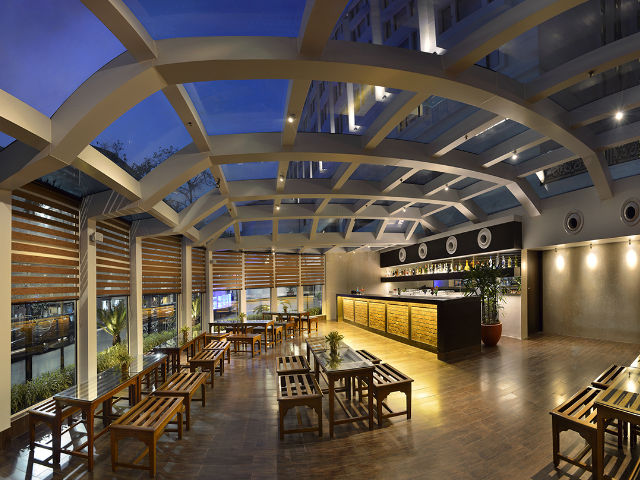
Resurrecting history: The Wilson, which serves as the pub and backery.

At the hotel, where I checked in last weekend, it is hard to miss the advertisement placed in the October 1840 issue of The Englishman and Military Chronicle: “D. Wilson and Co. beg respectfully to announce having taken those splendid and spacious Four-storied Premises, No. 1, Old Court House Street, formerly occupied by Messrs. Thacker and Co. and the Sans Souci Theatre, opposite Government House, and are sparing no expense in the alterations, and fitting it up in a manner that will render it one of the most comfortable family hotels in India.”

Nearly two centuries later, the new owners are doing precisely the same thing — sparing no expense in the alterations — as they blend the Victorian, Edwardian and modern eras to give something unique to Kolkata, which has been notorious for neglecting its handsome colonial-era buildings. The Victorian block, comprising 49 suites, is still under renovation, and will open in February next year.

The three nights I stayed there, I skipped dinner, simply because I overate during lunch, gorging on Bengali food that was prepared in its sanitised kitchens, but tasted very home-cooked. On the third day, lunch was actually home-cooked: I had happened to mention to the resident manager that I had never had litti-chokha, the quintessential Bihari dish, during my decade-long association with Kolkata, and so he had got me litti-chokha from home.

To burn calories, I walked — outside the hotel and inside. I walked around Dalhousie Square, Kolkata’s Westminster, where the hotel is located; I walked the streets of Kumartuli, watching Durga idols being made; I took a ferry across the Hooghly and walked on the Howrah Bridge. Walking in the corridors of the hotel was also as good as walking back in time. From time to time, one came across glass wine decanters, silver napkin-holders, silver water jugs, ancient teapots — all belonging to the time when the Great Eastern was known as the Jewel of the East.

It is one thing to recreate the past with the help of imagination, quite another to recreate it with actual pieces from the past — The Lalit Great Eastern has achieved the latter. When you hold an old wine decanter, you are forced to wonder whether it bears the fingerprints of Rudyard Kipling. It just might — who knows?

source: http://www.thehindu.com / The Hindu / Home> Features> Metroplus> Society / by Bishwanath Ghosh / Chennai – July 01st, 2016

Amrapali mango finding takers in Dubai, Hong Kong and Malaysia

Kolkata :

The little-known Amrapali mango grown in Bankura district of West Bengal has now found buyers in Dubai, Hong Kong and Malaysia.

Horticulture Department officials said mango producers in Bankura have received orders of exporting 8 metric tonnes of Amrapali to Dubai this season.

“They have started sending it after a quality test report from the Agricultural and Processed Food Products Export Development Authority (Apeda) cleared the product,” department official Sanjoy Sengupta said.

He said the delectable taste of the mouth-watering variety has been gaining popularity gradually over the years.
Producers have been sending it to all over the country but this is the first time that any variety of mango from Bankura is getting export orders.

So far, mangoes from Malda and Murshidabad only were the famous ones in the state.

“Now we are trying to create Bankura as a brand in the world of mangoes. Our red laterite soil produces an unmatchable taste,” officials said.

Sengupta said that they were already receiving queries about the fruit from Hong Kong and Malaysia where Amrapali would be exported next year.

This year the district produced around 130 tonnes of Amrapalis in around 730 mango orchards.

The largest orchard of 84 bigha is in Damadorpur where the highest number of Amrapalis are produced.

Last year, Bankura’s Amrapali had bagged the first prize in the agri-horticulture fair in Kolkata.

At an ongoing mango festival in Delhi, where state horticulture department officials are present, Bankura is beating other districts.

“Bankura is getting more attention than any other district. The demand is so high that all our stocks are getting exhausted,” Sengupta said.

NIK MD MM DV
source: http://www.timesofindia.indiatimes.com / The Times of India / News Home> City> Kolkata / PTI / June 28th, 2016