Category Archives: Arts, Culture & Entertainment

Meet the survivors of the 1943 Bengal Famine

In the 75th anniversary year of the Bengal Famine, Prasun Chaudhuri travels to K-Plot in the Sunderbans to meet survivors .
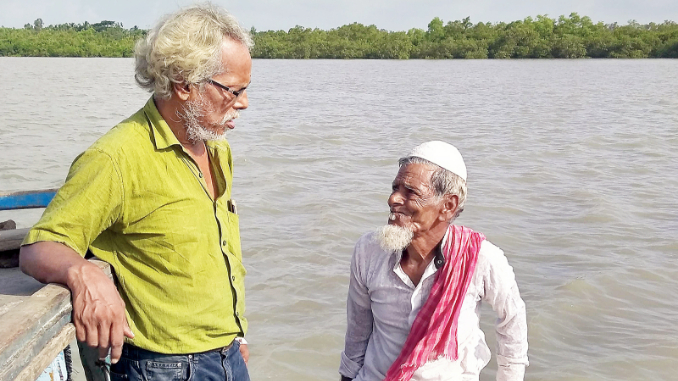

Memory Bank: Writer Sailen Sarkar hears out Khoshain Sheikh, who was 16 when he came to K-Plot / Prasun Chaudhuri

The island is called K-Plot. It might be only 130 kilometres south of Calcutta, but it is not easy to access. First, you have to take the Lakshmikantapur-bound local train from Sealdah. Get off at Mathurapur. Pack yourself into a crowded mini-van to reach Raidighi. Get off it and into another shared vehicle that will drop you to the Raidighi ferry ghat. Then board a motorised country boat to Bamunghat in K-Plot. In all, you need about six hours to touch this southern tip of the Sunderbans surrounded by Thakuran river on the east and west, Shibua river on the north and the Bay of Bengal on the south.

The name K-Plot is a British legacy. Successive officials of the East India Company had unimaginatively named these islands after the English alphabet sometime in the late 18th century. These settlements had been conceived by Collector General Claude Russell in 1771, soon after the company got Diwani rights or the permission to collect taxes on behalf of the Mughal emperor. Russell had initiated extensive reclamation of mangrove forests and offered pieces of land ranging from five to 10,000 bighas to businessmen, landlords and government employees based in Calcutta. (In Bengal, the bigha was standardised under colonial rule at 1/3 acre.)

Years later, post the notorious Bengal famine of 1943, which killed an estimated 35 million, many people sought a home in the Sunderbans in general and K-Plot in particular. Most of them were from Midnapore district, which was the worst affected. Turns out many of these famine survivors managed to give both tide and time a slip and are still around to tell their olden tale.

It is late afternoon by the time we reach K-Plot. We meaning, myself and writer Sailen Sarkar. A retired schoolteacher, Sarkar travelled extensively across southern Bengal before he wrote his Bengali book, Durbhikkher Sakkhi or Witness of the Famine.

It is one long walk to famine survivor Bijoykrishna Tripathi’s house. On the way Sarkar tells me, “I discovered these survivors by chance during my travels. While chatting with the elders of the islands, it emerged that many farmers have roots in Midnapore and clear recollections of panchasher manwantar (the famine happened in the Bengali calendar year 1350). These conversations opened up for me bits and pieces of oral history of one of the biggest tragedies of modern Indian history.”

Sarkar’s first interviewee, Sripaticharan Samanta, didn’t open up to him at first. Instead, he wept and asked, “Why did you come so late?” Soon after the interview, Samanta died. Says the writer, “That’s when I realised the urgency of documenting the oral narratives of famine survivors. I knew we were about to lose pieces of history, the legacy and tales of the indomitable spirit of ordinary human beings.”

When we finally find Tripathi, the 108-year-old patriarch is sitting in the courtyard of his home surrounded by six grown-up great-grandsons and some relations from East Midnapore who have come to seek his advice regarding a land dispute. Tripathi stands up to greet us; a tall man, ramrod straight, wearing a dhoti and uttariya, his sacred thread wound around his bare torso.

“Our misery began with a crazy rainstorm,” begins Tripathi. “It was Ashtami day of 1942, the year of the Quit India movement.” Shortly before the Pujas, an agitating 33-year-old Tripathi had burnt down a police station in East Midnapore’s Bhagabanpur village. That night, he recalls, there was a terrible cyclone. It ravaged the farms and turned everything into a wasteland. The next morning, Tripathi says, he saw hundreds of human corpses floating around along with carcasses of cattle.

The widespread devastation was followed by an acute shortage of rice. Says Tripathi, “The price of rice that cost an anna a seer [16 annas make rupee; one seer equals 1.25 kilos] doubled immediately after the cyclone and tripled in a few weeks. There was starvation and then famine.”

Some people survived on bulga or soup made from discarded wheat served at community kitchens; most others died like flies. According to Tripathi, many sold their wives and daughters in exchange for sacks of rice. He says, “Women ran away with complete strangers for two square meals a day.”
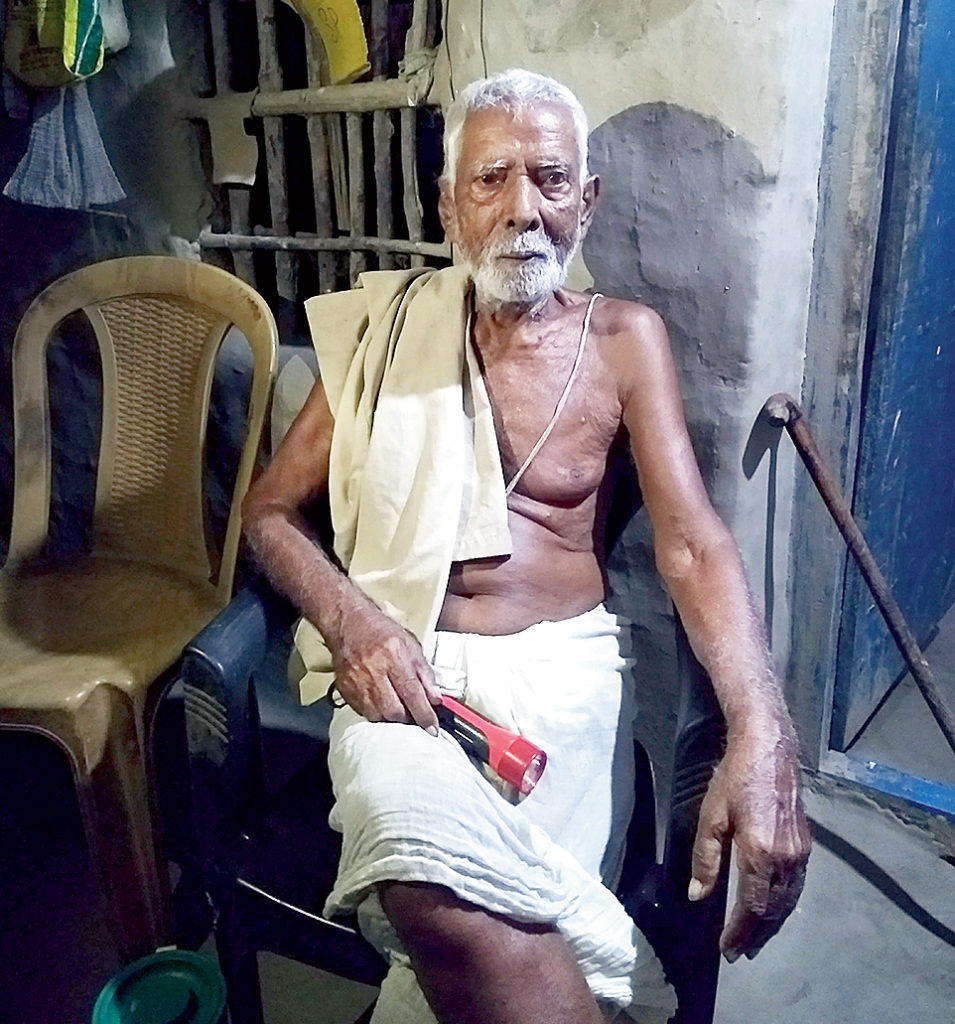

There were hundreds of human corpses floating around along with carcasses of cattle, recalls Bijoykrishna Tripathi, 108 / Prasun Chaudhuri

Researcher and writer Madhushree Mukherjee, who interviewed many famine survivors of Bengal, toes the line that the catastrophe was engineered largely by the then British Prime Minister, Winston Churchill. For her 2010 book Churchill’s Secret War, she delved into oral accounts of survivors and official documents. She cites documents and exchanges to support the view that Churchill ordered the diversion of food from starving Indians to add to stockpiles of grains in Britain and Europe.

In a more recent research, historian and anthropologist Janam Mukherjee writes, “High colonial policy, of course, usually in the name of the war effort, played an important role, but responsibilities were widespread. Seeking colonial favor, or entrenched in ‘opposition’, the response to famine by Indian politicians in both Bengal and New Delhi, was also guided, often enough, by political interest rather than public welfare.”

By November of 1943, much of the Bengal countryside lay in ruins. Artist and active member of the Communist Party of India, Chittaprosad Bhattacharya, journeyed through the innards of the famine-struck Midnapore district. In page after page of ink drawings, he tried to capture the general predicament. The visuals came lined with annotations, observations. Eventually, all those sketches came to be his book, Hungry Bengal. The book, however, was banned by the British government and thousands of copies were destroyed.

Destruction, epidemic and mass death had people fleeing cityward. A lot many died on the way, those who made it starved on the streets of the city. But there were people like Tripathi who ventured beyond the city, to the marshes of the Sunderbans, in pursuit of food and new life.

Initially they landed up as raiyats or cultivators who farmed on lands held by absentee landlords. The chain of command ran thus: first came chakdars, who further sublet the land to raiyats.

One of the reasons Tripathi chose K-Plot was that he knew a chakdar who was looking for a raiyat to cultivate 50 bighas of land he had taken at lease. “Initially I farmed the land with some labourers and sent half of the harvest to the chakdar. But the chakdar was a kind man. He eventually gifted me a part of the land when I got married.”

Khoshain Sheikh is also a resident of K-Plot. When we arrive at his hut on the edge of the island, his younger brother, Qurbat, tells us that he is gone to sow paddy saplings. He takes us to the field and we find the 92-year-old crouched there in knee-deep water. “I have been sowing paddy since I was 12,” says the man with a goatee. Then, over a bowl of puffed rice, he tells us his story.

Sheikh was 16 when he arrived here. He says, “The famine actually started before 1943. While foodgrains were fast disappearing into hoarders’ godowns, the cyclone dealt a deadly blow to the belly. My father left our village in Bhagabanpur months before the cyclone.” The Sheikhs crossed the Hooghly and reached the island via Kakdwip. “It took over 12 hours to get here that day,” he reminisces.

All 12 brothers tilled the land, sowed paddy and harvested rich crop within a year. “When we first arrived, we had to deal with wild beasts and snakes. Many of my relatives succumbed to snakebite,” says Sheikh. Then adds, “We desalinated the water by boiling tamarind in it. In the initial period, we survived on gimey shaak and other wild herbs.” The landless are now land owners. Sheikh shows us around K-Plot. He points to the greenery, new embankments and plantations.

Next, Sarkar takes me to Maipith, a neighbouring island. “Maipith is one of those rare islands where tigers and humans co-exist. There is just an embankment that separates the tiger forest from the villages,” he says as we cross two wide rivers.

Pulin Samanta has been living on the edge of Maipith in Nagenabad village since early 1944. He has turned 100 this year. Tigers often enter his paddy fields but he feels these beasts are not as scary as the black-marketeers. “The day we left Jugiberi [Midnapore], the price of rice went up to eight annas per seer, an eight-fold increase in just a year. Only the very rich could buy from hoarders.”

The Samantas had to walk for four hours to reach Rasulpur on the banks of the Hooghly. “On the way, we saw starving people lying on the fields and vultures circling them.” They crossed the river to reach Kakdwip, where they met a chakdar. He had been looking for able farmers. “We rowed for two days to reach this place,” he says. “The first thing the family built was a ‘tonger bari’ or a tree house to survive the wild beasts at night.”

Samanta’s great grandson is trying to recharge his smartphone with a solar battery. Pump sets, parts of mechanised boats and a dish antenna on the roof of the double-storey house are obvious signs of prosperity.

Samanta’s neighbour, Abedan Bibi, is the last famine survivor we meet. The sun has set by then, LED lamps can be seen all around. Rural electrification has been patchy in the island because people here have always voted against the ruling party, says Asura Khatun, who shows us the way to Abedan’s home. The 103-year old woman used to cook her own food and roam the village on her own until she lost her eyesight a few years ago. That night, by the time we reach, she has already finished dinner.

When her granddaughter-in-law informs her that we’ve come to meet her for an interview about the famine, the frail woman crawls out of the mosquito net. She settles down on a wooden stool. In the faint rays of a solar light, we can barely discern her tiny figure in a white cotton printed sari with a blue border.

She begins, “I had got married a few years before the famine.” Her father-in-law, it seems, was an enterprising man who decided to switch his base to the island soon after the cyclone. “He had apprehended the famine as the problem of food shortage had been gradually deepening.”

She continues, “The first few weeks were difficult. We survived on boiled gira shaak and shapla — aquatic plants — fished out from ponds. Occasionally, we got some flour sent by the government in flood-relief boats.”

Sarkar and I leave the island the next day at the crack of dawn. As our motorised boat sputters across Thakuran river, I try to imagine how the scattered bits of land with its dense mangrove forests would have appeared to boatloads of people trying to escape starvation and death, 75 years ago. Like a green beckon perhaps, who can say.

source: http://www.telegraphindia.com / The Telegraph, online edition / Home> Culture / by Prasun Chaudhuri / December 09th, 2018
Academics divided over translation of ancient Buddhist tantric text

Sadhanamala is being translated from Sanskrit to a regional language – Bengali – for the first time


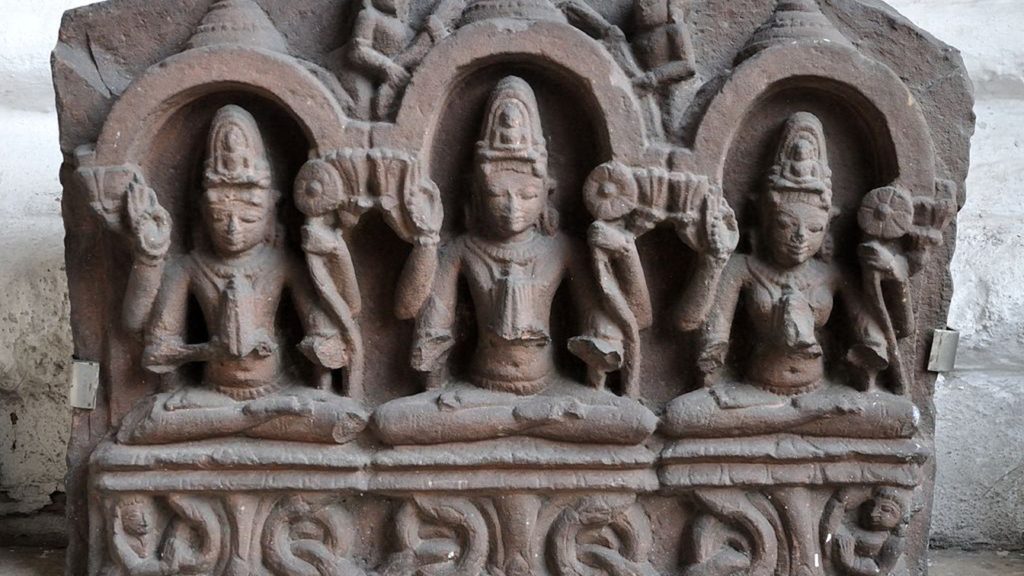
Shadakshari Lokeshvara – Circa 11th Century CEImage: Wikimedia Commons

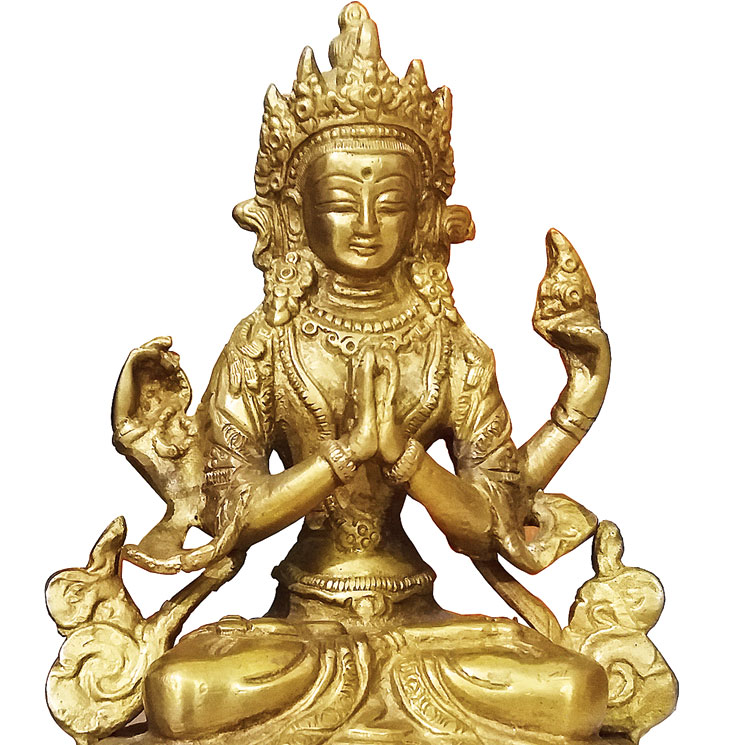
Priyanku Chakraborty is engrossed. He is examining a four-inch figurine. When he looks up from it, the research fellow in Buddhist Studies from Calcutta’s Asiatic Society says, “This is the idol of Sadaksari-Lokesvara and embodies the compassion of all the avatars of Buddha.” He points out how the four-armed deity is seated on a double-whorled lotus. How one pair of hands is folded in greeting, and the other two hold a string of prayer beads and a lotus, respectively.

“That this idol does not represent Vajrasattva, Maitreya or Manjusri or any other Buddhist deity is defined in the Sadhanamala, the text that deals with Buddhist tantric or meditative practices,” he continues. “If it was a figure of Maitreya, the deity would have been holding a Nagkesar flower; likewise, it would have had a sword had it represented Manjusri,” he adds.

Chakraborty knows. After all, he is working on the translation of the Sanskrit text, Sadhanamala, into Bengali — the first such attempt in any Indian regional language, according to him. Collaborating with him is Anindya Bandhu Guha, a Comparative Literature scholar.


An idol of Sadaksari-Lokesvara Image: The Telegraph

According to modern historians, the text was originally compiled by the great Buddhist scholar Abhyakaragupta between the 11th and 12th centuries. Abhyakaragupta was associated with the Vikramasila-mahavihar of present-day Bhagalpur district in Bihar. Says Guha, “The Caryapadavalis or Charyapad is accepted as the earliest example of Bengali literature. Its commentary begins with a salutation to Goddess Vajrayogini. Now, who is Vajrayogini? To know about her we must refer to the Sadhanamala. Therefore, it is necessary to translate the text into Bengali to know the Buddhist tantric tradition of early Bengal, which may also help render the socio-cultural scenario of that time.”

Chakraborty talks about the countless metal and stone figures and paintings of Buddhist deities belonging to the early-medieval era that have been discovered from the Indian subcontinent — Gangarampur and Mogalmari in Bengal, Vikrampur of Dhaka, Dinajpur in Bangladesh, Jolaibari in Tripura, Telhara (near Nalanda) in Bihar and Suryapahar in Assam are some such places.


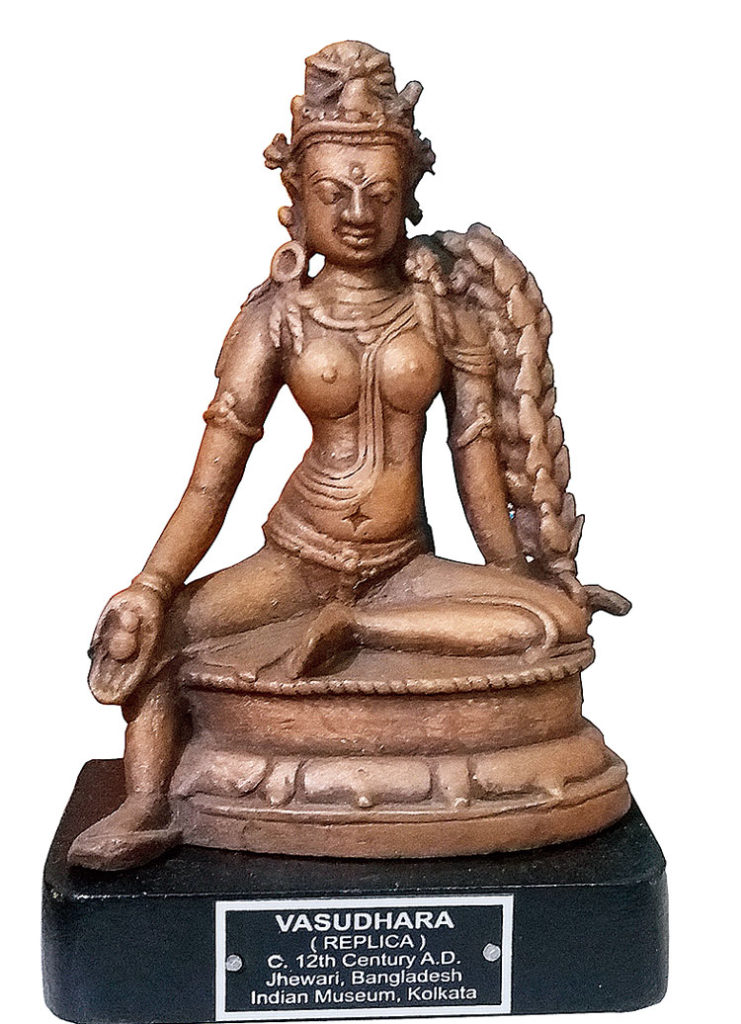
An idol of Vasudhara Image: The Telegraph

Is Sadhanamala then a manual to help us identify Buddhist deities? “No,” Chakraborty is emphatic. “The descriptions are meant to aid meditation and enable one to visualise a deity,” he adds. There are 312 sadhanas or meditation practices outlined in the Sanskrit version of Sadhanamala.

But, till such time as there is no comprehensive translation of this text in any modern Indian language or English, there is no unveiling the munificence of the world of tantric Buddhism, which is an integral part of Buddhism. “And that’s the point of our effort,” says Chakraborty. He and Guha seem to think that the project will take another five years before it can be completed.

Sanskrit scholar and Buddhologist Ratna Basu tells The Telegraph, “The translation of an ancient text makes it more universal and accessible. This secularisation of the text is always a laudable attempt if the translation is sincere, to the point and accurate.” Basu herself is engaged in the English translation of the Sadhanamala.

However, Aiswarya Biswas, professor of Buddhist Studies at Calcutta University, throws in a word of caution. She says, “The Sadhanamala is a highly specialised Buddhist tantric text. Since translation is an academic initiative, we cannot discourage it, but I am sure a person well aware about the subject matter will not translate the whole text, especially the portions about secret practices.” Biswas is aware, though, that an incomplete translation may raise further questions. She says, “For all these reasons, a pioneer translator has a great responsibility.”

Basu does not share this cautionary stance. Her take is this: many ancient scriptures — originally written in Sanskrit or Pali or Prakrit — have been translated in the whole. There are iconographical descriptions of Brahmanical deities in the Puranas. Most of them have been translated into Bengali, Hindi, English and so on. We have Bengali and English translations of Brahmanical tantric texts such as the Saradatilaka-tantraHayasirsa-pancharatra and some others. “So why not the Buddhist tantric text?” she asks.

The Sanskrit used in Sadhanamala is non-Paniniyan — it does not follow the grammar of Panini — making it difficult to decode. Moreover, the Pali and apabhramsha languages are often used in the portion of the mantras and dharanis or chants.

Says Chakraborty, “Such language is a common feature of tantric Buddhist texts written or compiled in Sanskrit. Since Buddhist mysticism has already slipped into oblivion in India, a proper understanding of the text’s terminologies is quite difficult. Therefore, it is a sort of challenge for us.”

source: http://www.telegraphindia.com / The Telegraph, online edition / Home> Heritage / by Bitan Sikdar / March 10th, 2019

Au Revoir, Calcutta

On a Sunday with barely half a day left for him to bid adieu to the city he had called home for the past three years, French consul-general Fabrice Etienne criss-crossed north Calcutta with t2

Jorasanko Thakurbari: The house of Tagore made it to Etienne’s list of favourite spots as a mark of tribute to Rabindranath. “You have no idea of the influence that he has unless you reach Bengal. He is here on the streets, (our car had stopped at a traffic light and sure enough, there was Rabindrasangeet playing on the speaker), there is the university named after him, there is Santiniketan… there is so much respect. Everyone knows his work, not just the songs. This is unique. Of course, Calcutta is having trouble thinking beyond Tagore but that is a different issue. Only a small part of his work is available in French, like Andre Gide’s translation of Gitanjali and some novels like La Maison et Le Monde (Ghare Baire) and Charulata. But few in the West know that Tagore is more than a novelist. In French literature, we may compare him to Victor Hugo who was an educationist, a poet and a novelist. But his legacy is not as alive as Tagore’s is.”

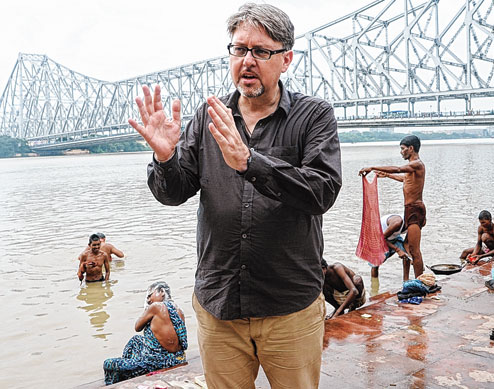
The riverside: Tip-toeing through the monsoon slush at the Mullickbazar flower market and pausing at a few stalls to negotiate prices for marigold strands, we reached Jagannath Ghat. “This is my favourite ghat as this is where you get the best view of the Howrah bridge and the rail station.” The gigantic warehouses on the Strand made him wistful. “How I wish I could live in a building like this, overlooking the river! Living in Calcutta you forget about the existence of the river which is largely hidden from view unlike in Paris which is split by the Seine. There, the city expanded on both sides of the river across which there are about 20 bridges connecting the northern and the southern sides. All the attractions are along the Seine — Eiffel Tower, the Louvre, Musee d’Orsay…. The Hooghly is much wider and the city has grown on its eastern side.”

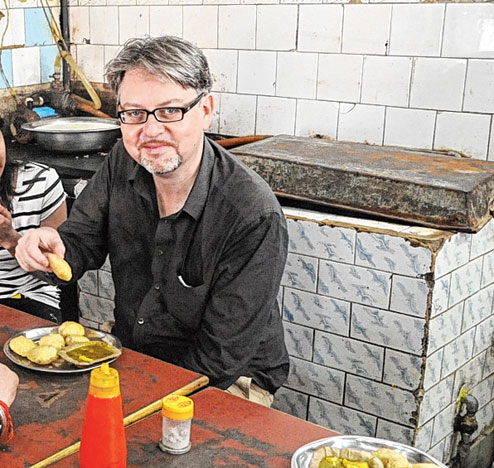
Street-side tea shop: “I have put on 10 kilos in these three years! A paunch is accepted in Calcutta but in Paris it is frowned upon. I have to start cycling and walking like a Parisian once I am back,” Etienne had confessed after getting off the weighing scale at Calcutta Club from where our trip had started. A couple of hours later, he was happily digging into club kachauri and alur torkari, followed by a handsome helping of rabri at Sharma Sweets on Kalikrishna Tagore Street, run by his friend Shyam Barua. “Nothing breathes the Orient more than the streets of north Calcutta. Wherever you look, there is something happening. These small tea shops remind me of our street-side cafes, which are integral to the French way of life. Here you can get away from the chaos on the street while keeping a watch on a slice of outdoor life. They are cheap and no one asks you to leave even if you spend hours with a cup of coffee.” 

College Street: Etienne could not find a single book in French on College Street but was startled to find some lesser-known titles of Alexandre Dumas in translation at several stalls. “This is the intellectual street of Calcutta with all the universities and bookstores. The Indian Coffee House here was a place for adda of Bengali intellectuals. It reminds me of the quartier Latin on the  left  bank of Paris which has bookstores of all sizes. This is for me one of the bridges between Paris and Calcutta…. For a kilometre on the promenade along the Seine, there are hundreds of small stores — some are just a box full of books. I used to go look for first editions of French or world literature titles as the area was close to our office.” On his last trip to College Street (“I used to come here often”), he picked up a Sunil Gangopadhyay translation. 

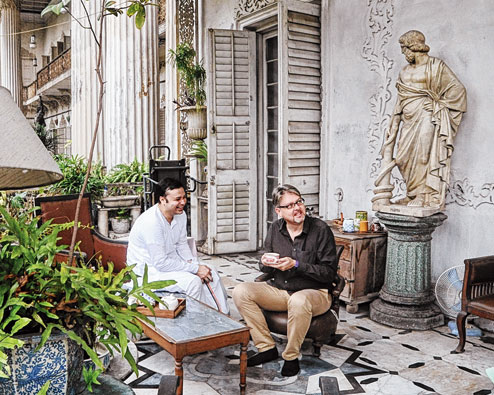
Marble Palace: A last-minute call to Sourendro Mullick secured an entry into Marble Palace, the palatial Mullick residence on Muktaram Babu Street. Photography being prohibited in the rest of the property, we settled down on the verandah adjoining Sourendro’s piano room, where a marble statue of Pluto, the lord of the Underworld, stood reclining against his staff around which a snake was coiled. “Calcutta is in many ways a baroque city and nowhere else does it express that trait more lavishly. This place is a Calcutta of one man’s fantasy. Rajendro Mullick had found so many things that caught his fancy from across the world. It reminds me of the Palace of Versailles where too the idea was to add chandeliers and marble works to express wealth. It is a unique mix of kitsch but it is kitsch with a soul. This place also has the first private zoo of India. The building has been extremely well-preserved,” Etienne remarked. 

source: http://www.telegraphindia.com / The Telegraph, online edition / Home> Entertainment / Text by: Sudeshna Banerjee , Pictures by: Sanytan Ghosh / September 17th, 2015

Kolkata Book Fair: A look at over 4-decade history of Boi Mela

The first Boi Mela was organised in 1976, after two years of planning and a year after forming the Publishers & Booksellers Guild, which continues to organise the event


The Kolkata International Book 2019 fair begins on 31 January and ends on 11 February. (Photo: KIBF)

In the early years of 1970s, during their regular adda at the iconic Coffee House on College Street, a group of literature enthusiasts, mostly publishers,  often discussed the Frankfurt Book Fair. The commercial trade fair of books was something they wanted to replicate in Kolkata, partly to give book lovers a place to exchange thoughts and ideas and get all their favourite writers’ works at one place, and partly to further the publishing business. Boi Mela or Calcutta Book Fair, which later became Kolkata Book fair, was thus conceptualised.

The idea was discussed, debated and finally given a shape in 1975, and the Publishers & Booksellers Guild came into being, with Sushil Mukherjea as its first president and Jayant Manaktala as general secretary.

The next year, in 1976, as many as 34 publishers got together and put up 56 stalls on the ground opposite Academy of Fine Arts, next to Kolkata’s landmark Victoria Memorial. Inaugurated by the then Education Minister Mrityunjay Bandyopadhyay on 5 March 1976, the ‘boi mela’ came to be known as the first Calcutta Book Fair. The 10-day affair culminated on 14 February. The book loving people of Kolkata welcomed the idea of Boi Mela and paid a 50 paisa per head entry fee to be part of the event.

The World Book Fair organised in New Delhi in 1972 and the 1974 National Book Fair organised by the National Book Trust in Kolkata were also the inspiration behind the big 1976 literary milestone for Kolkata.

The Publishers & Booksellers Guild went on to participate in the World Book Fair and the Frankfurt Book Fair also that year. Started on an experimental basis, the Kolkata Book Fair became an annual affair and the Publishers & Booksellers Guild has remained its organiser to this date.

With the 1977 edition too witnessing an equally enthusiastic participation and response, the Kolkata Book Fair required a bigger stage now. The 1978 event opposite the Rabindra Sadan ground reportedly saw participation of 112 publishers. In 1982, Peter Withers, the then director of Frankfurt Book Fair, visited the Kolkata do.

By now, the number of participating publishers had increased manifolds, and the Guild had started publishing names and details of all titles in print at the fair, besides a fair directory. Seminars and symposia also became permanent features. In 1983, then secretary general of International Publishers Association (IPA), Geneva, attended the inauguration ceremony. And it was the year the Kolkata Book Fair got its international accreditation. The IPA started mentioning the dates of the fair in its calendar every year.

In 1988, the book fair venue shifted to an even bigger ground, the Maidan nearer Esplanade, to accommodate the ever growing number of publishers and visitors. The vacant green area adjoining Park Street and Outram Road was developed by the Guild, which hosted the book fair there until 2007.

In 1991, a focal theme was introduced, on the lines of the Frankfurt Book Fair. The fair started to have one Indian state as its theme every year, aiming to highlight the literature and culture of the particular state. Assam emerged as the first focal theme.

From 1997, the focal theme has been a foreign country, starting with France.

Starting as a 10-day event, the Kolkata Book Fair gradually became a 12-day affair, usually starting in last week of January. The dates are fixed factoring in the pay day.

The Kolkata Book Fair has not been without its share of mishaps and controversies.

In 1997, six days into the fair, a massive fire broke out at the venue, reducing 1,00,000 books to ashes. A huge loss was reported. Reports said one person lost his life after suffering a heart attack at the venue following the fire. At the initiative of the then culture and home minister Buddhadeb Bhattacharjee, stalls and other structures were re-constructed within three days, the Guild says in the official website of the Kolkata International Book Fair.

If fire destroyed the 1997 Boi Mela, it was heavy rain that played havoc the next year. A lot of books were damaged. However, publishers were covered by insurance this time around.

The year 1999 was special. The fair had Bangladesh as the focal theme, and Sheikh Hasina, the then Prime Minister of Bangladesh, visited the fair. She was visiting this part of Bengal after 27 long years.

For seven more years, Maidan remained the fair venue. By then environment activists had started raising voice against holding the mega event at the green space. In 2007, the organisers had gone ahead with Maidan as the venue for the 32nd Kolkata Book Fair. Some environmentalists had filed a public interest litigation against Maidan as the venue. A day before the inauguration, the Calcutta High Court gave its ruling in favour of the petitioners.

Forced to dismantle the structures raised at the venue, the Guild shifted the Boi Mela venue to the Salt Lake stadium. From 23 acres available to them at Maidan, the Kolkata Book Fair was shrunk to a 10-acre space, and could be started only int he second week of February.

According to a study done after the event, the footfall dropped to 8 lakh from 25 lakh the previous year.

In 2008, Park Circus was decided as the venue but that too invited a PIL on similar grounds, forcing the organisers to postpone the 33rd International Kolkata Book Fair.

A different group organised the fair, calling it Boimela 2008, at Salt Lake Stadium but failed to evoke similar response.

The Guilt filed a special leave petition in the Supreme Court against the HC judgment. The then chief minister, Buddhadeb Bhattacharjee, intervened too, writing to the then Union home minister to get the fair back to Maidan.

The 33rd International Kolkata Book Fair was finally held at Milan Mela ground opposite Science City on an 18-acre land in 2009. Milan Mela is now the official venue for Kolkata Boi Mela. However, since 2018, the event has been taking place at the Central Park in Salt Lake due to ongoing restoration work at the Milan Mela ground.

Several efforts were made to increase the footfall. In 2010, it was first decided that the entry fee would be refunded if a visitor bought books worth Rs 200. Later, the entry fee was completely done away with. In 2011, the Publishers & Booksellers Guild got the NGO status. It can now use the Milan Mela ground at the rate that the state government pays for organising its fairs.

The year 2014 saw new event getting added to the Kolkata International Book Fair — Kolkata Literature Festival, on the lines of the famous Jaipur Literature Festival and Edinburgh Literature festival.

On 31 January 2019, the 43rd Kolkata International Book Fair is beginning. The Boi Mela this year pays tribute to the literary figures who passed away recently. The three halls mainly displaying English publications have been named after Nirendranath Chakraborty, Dibyendu Palit and Atin Bndyopadhyay, while the Little Magazine Pavilion will be named after Pinaki Thakur.

Guatemala is the theme country this year, and Ambassador of Guatemala Prof Euda Morales will be present when Chief Minister Mamata Banerjee inaugurates the fair on Thursday.

For the residents of Kolkata, the Boi Mela is however not just about books. Like its Durga Puja, the Kolkata Book Fair is a festival that the City of Joy waits for the entire year and celebrates as a way of life. It’s an amalgamation of words, emotions, feelings, memories and nostalgia, with the stories passed down from generation to generation.

Apart from English, the Kolkata Book Fair has stalls selling Hindi, Urdu and other books too. It’s considered a good business time for publishers as each stall manages to sell around 500-10,000 books every day.

Food stalls also prove to be a big draw, besides the different activity corners.

Kolkata is all ready for a lot of adda, food, discussion on books and some public display of love for books and reading habit.

source: http://www.thestatesman.com / The Statesman / Home> Cities> Kolkata / by SNS Web / January 31st, 2019

Calcutta’s Brush with War

The year 1942 was a landmark year in terms of political and military changes, especially in East Asia.


Calcutta in post-World War II days

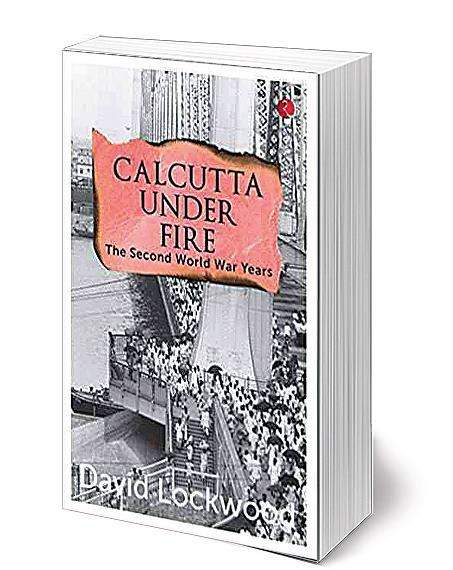
Calcutta Under Fire: The Second World War Years
By: David Lockwood
Publisher: Rupa 
Pages: 294
Price: `295

The year 1942 was a landmark year in terms of political and military changes, especially in East Asia. Japan, which had entered World War II spectacularly by bombing Pearl Harbour in December 1941, had—within less than a year—successfully invaded Malaya, Hong Kong, Singapore and Burma. In each of these territories, the defending (and now defeated) forces had been the British.

With the Japanese occupying Burma, sitting literally on the doorstep of India, it was unsurprising that by late 1942, fears of a Japanese invasion of India, or at least of its eastern and coastal stretches, should be widespread. 

Yet, there were other factors to be considered. Political, social, and military factors, and factors regarding less tangible ideas, such as the need to save face, or to put up a brave front. There was the Indian national movement, there was the growing doubt among many Britishers themselves regarding the future of India as part of the Empire. There was the (natural, given what had happened in Burma and elsewhere) fear among Indians that the British would be incapable of defending India against the Japanese. 

David Lockwood examines all of these and more in an attempt to explain the circumstances and events that shaped India during  World War II, especially around the tumultuous year of 1942, when the Japanese bombed Calcutta and sent thousands fleeing the city in panic. 

But merely looking at the Japanese bombing of Calcutta in isolation would not make a complete book, so Lockwood instead spreads his net wide to encompass events, ideologies, movements, policies and more. He examines the theory of hegemony as an intrinsic part of British imperialism, and from there goes on to discuss how the Congress’s policies were tailored towards a counter-hegemony.

There is a detailed discussion of how the Congress’s policies underwent changes; of the work the Congress did to mobilise the general populace in what was essentially a counter-hegemonistic movement; of the role played by radio (including the Congress’s illegal, underground radio broadcasts as well as Subhas Chandra Bose’s broadcasts from Berlin); and of rising discontent and nationalism among the Indians in the British Indian military and civil services.

The final picture is a complex but intriguing one of the different forces that not only shaped India in 1942, but which eventually led to independence. Lockwood manages to present interesting insights into the considerations that made the British, the Congress, and the general Indian public (both urban as well as rural) act as they did. 

Lockwood’s research is extensive (he even manages to present the Japanese side of it: did they really intend to invade India and make it part of a Japanese Empire?). There are some delightful bits of trivia, too (the thought of an impending Japanese invasion seems to have encouraged some Indians, who looked on the approaching Japanese armies more as liberators than conquerors, to take some very surprising steps, such as learning Japanese). While Lockwood’s style of writing may at times seem more geared towards an academic audience than a layperson, the book is an invaluable resource for understanding India during World War II.

source: http://www.newindianexpress.com / The New Indian Express / Home> Lifestyle> Books / by Madhulika Liddle / Express News Service / February 24th, 2019

Railway heritage by Hooghly

The highlight of a railway heritage walk was the residence of the GM of South Eastern Railway that was once occupied by Wajid Ali Shah, the last ruler of Awadh


The headquarters of South Eastern Railway.

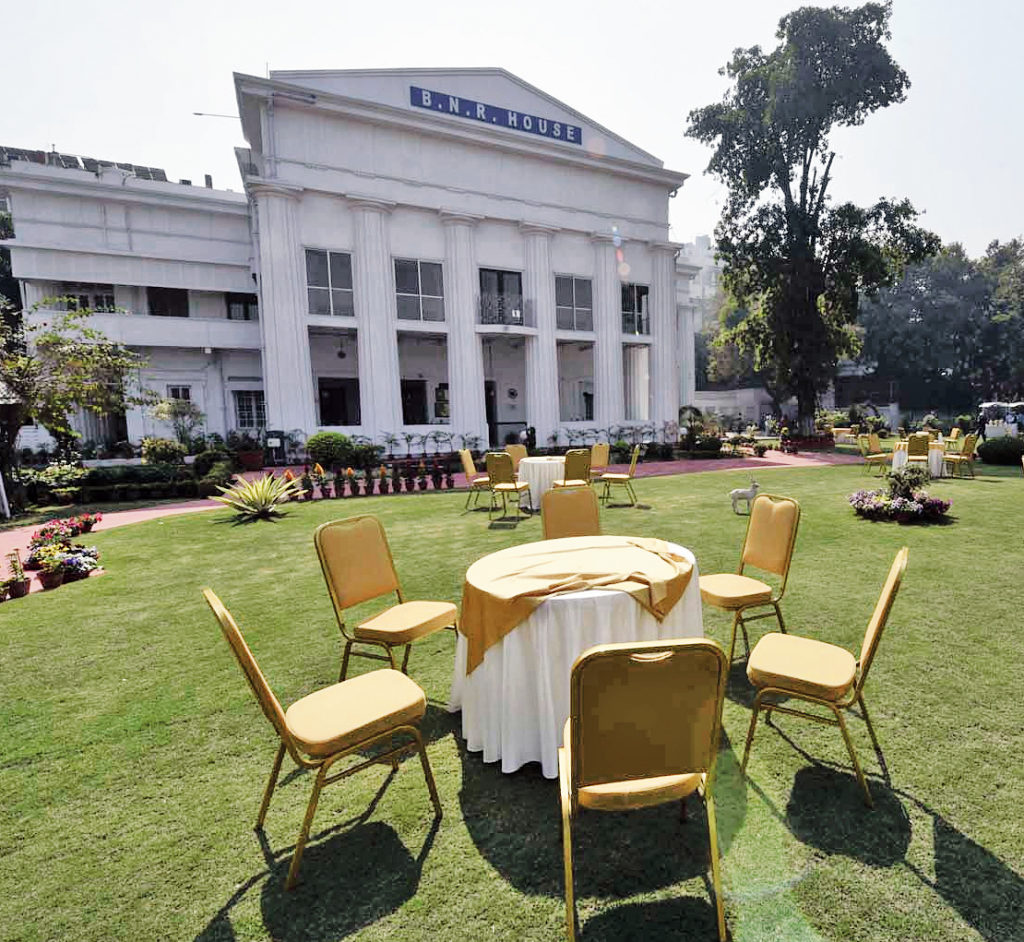
A white edifice overlooking the Hooghly in Garden Reach was built by the British in 1846, the architecture inspired by the Tower of the Winds in Athens.

The building, the highlight of a heritage walk on Saturday morning, was for a few years the home of Wajid Ali Shah, the last ruler of Awadh who was exiled to Calcutta.

But the first occupant of the home was Lawrence Peel, the chief justice of British India. He was the cousin of Robert Peel, two-time Prime Minister of England and one of the founding fathers of the Conservative Party.

The walk began at the South Eastern Railway headquarters in Garden Reach and culminated at the BNR (Bengal Nagpur Railway) House, the official name of the white bungalow that now serves as the residence of the general manager of South Eastern Railway.

“Fascinating titbits of colonial history is nested in every corner of the buildings in this area,” said Samrat Chowdhury, chief mentor of BAUL (Bespoken Architectural and Unique Legacies of Bengal), which organised the walk in association with the external affairs ministry and the railways.


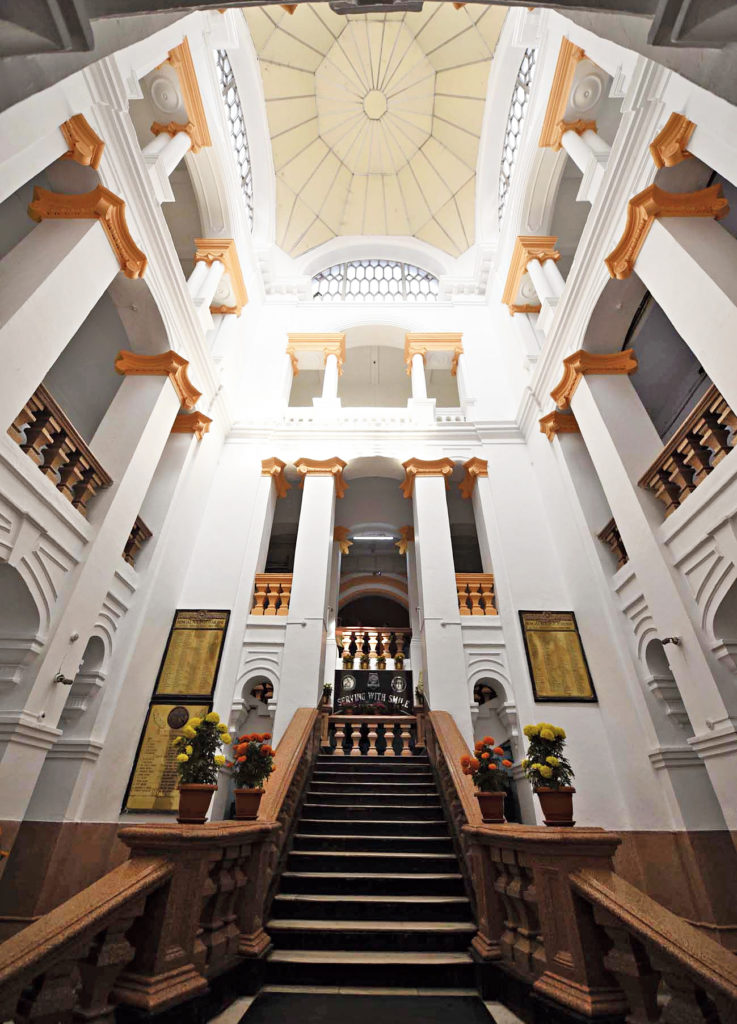
The inside of the building. The dome on top conceals water tanks

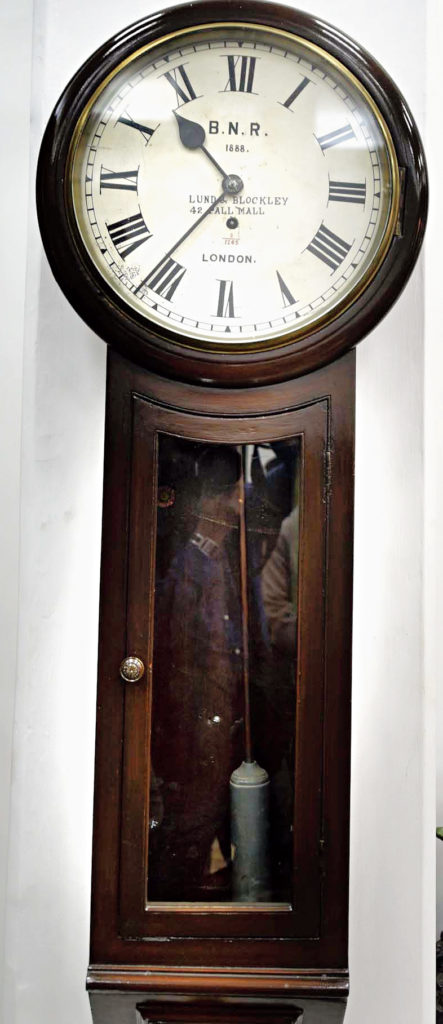
A clock made in London in 1888 inside the general manager’s office

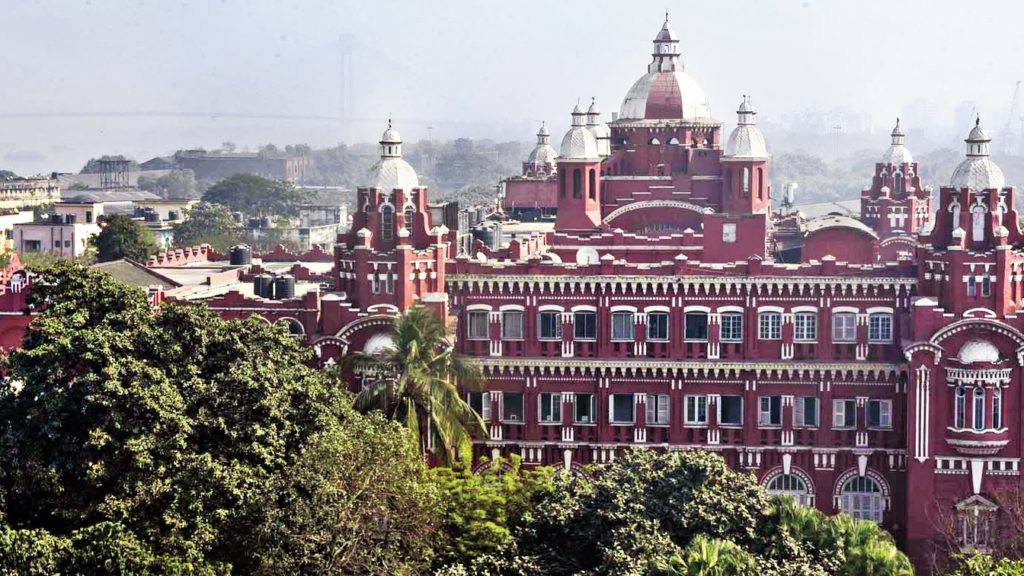
The headquarters of South Eastern Railway (erstwhile Bengal Nagpur Railway) is a majestic red brick building with domes.

“The architecture is Indo Saracenic, also found in Madras High Court and Lucknow railway station. The red brick structure is occasionally relieved by stone terracotta. The western design is embedded with Indian features such as domes,” said J.K. Saha, chief heritage officer of South Eastern Railway, who guided the participants in the walk.

The construction of the building — spanning over 53,000sq ft — started in April 1906 and was completed in May 1907, a pointer to British engineering efficiency.

Several things have been left unchanged for over a 100 years, including the cast iron-Burma teak staircase to the glass door that leads to the general manager’s cabin. “The building has not needed any structural alterations,” said Saha.

Apart from railway officials and heritage enthusiasts, people from various walks of life took part in the walk on Saturday. Janavi Sanon, a 24-year-old architect, was one of them.

“This is my second railway heritage walk. As a student of design, this is an exciting journey. The history behind all these buildings makes it doubly interesting,” she said.

The deputy high commissioner of Bangladesh, Toufique Hasan, was a participant.

One of the main attractions was a newly opened heritage gallery at the railway office. A 119-year-old Schiedmayer piano was a key draw in the gallery.

Made in Stuttgart, the instrument was shipped to India in 1900. “It is difficult to say who brought it and who played it in Calcutta but it is vintage stuff and would fetch at least a crore in the antique market,” said Saibal Bose, senior railway engineer who has done extensive research on railway history.


The BNR House that was home to Wajid Ali Shah for a few years / Pictures by Sanjoy Chattopadhyaya

A feedback from Netaji Subhas Chandra Bose in a complaint book of a railway refreshment stall at Muri station, now in Jharkhand, is there on one of the shelves.

A cabinet is dedicated to shells made by the Kharagpur railway workshop of BNR during World War I and II. Resting beside the shells is a large splinter that was inside a bomb dropped by the Japanese in Garden Reach during World War II.

“People of the country need to know about this heritage. I want more and more schoolchildren and youngsters visiting these areas,” said Kajari Biswas, head of the external affairs ministry’s branch secretariat in the city.

Saha also explained why the area was called Garden Reach.

A reach is a length of a stream or river, usually suggesting a level, uninterrupted stretch. There is one such reach in the backyard of the headquarters. The botanical garden sits on the opposite bank.

“The reach and the garden gave this name,” Saha said.

In December, BAUL had organised a similar heritage walk around Howrah station. “We want to bring the railway heritage sites within the ambit of tourism. Ideally, there should be a single-window system that takes care of a guided tour of all these places. There is tremendous tourism potential here,” said Chowdhury.

source: http://www.telegraphindia.com / The Telegraph, Online edition / Home> Heritage / by Debraj Mitra in Calcutta / February 03rd, 2019

The altruist of Naradari

This retired professor in West Bengal is the reason many children of his region have an education and career


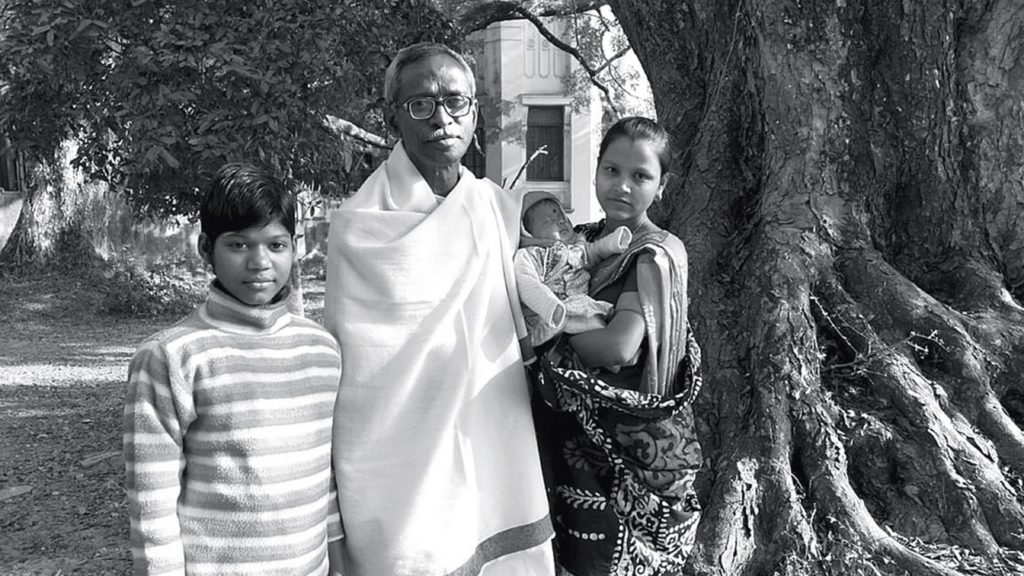
Lifeline: Professor Dilip Roy with Belaboti (left) and Uma / Image: Rabindranath Bera

Where is Dadu? Why haven’t you brought him along,” demands the petulant eight-year-old with closely cropped hair and a beige jacket over a pink frock. Her name is Bela, short for Belaboti, often referred to as Belu too. Just now she is standing akimbo, blocking the entrance to our lodgings adjacent to a two-storey mud house in Naradari, a village in Nandakumar block of East Midnapore district, five kilometres from Tamluk. The object of her query, or Dadu, meaning grandfather, is Dilip Roy, a retired professor of History and man of the house.

Bela knows that the septuagenarian had accompanied this gaggle of strangers from Calcutta to the flower show — an annual affair organised by the Tamluk Flower Lovers’ Association, founded by the good professor over 40 years ago. She is the youngest member of the Roy household, which includes Biswaranjan Pal or Bisha, Bishnupada Maity or Dipu and Joyinandan Maity or Joyi. While Bisha and Dipu are preparing for their higher secondary exams this year, Joyi is in the first year of college. There is Uma, too, whom Roy calls Kochi. She got married to Rabindranath Bera or Robi two years ago and is currently in Naradari with their newborn.

Roy is actually no kin of Bisha, Dipu, Bela, Joyi, Kochi or even Uma; at least not in the accepted sense. But each of these lives has got so entangled with his own that it is difficult to tell his story without straightening out a reference, giving an explanation or two to their lives’ stories and experiences. Also, these are lives that refract his own story, one that he himself is loath to tell.

Bisha, Dipu, Joyi were inmates of an ashram on the banks of the serene Roopnarayan river in the adjacent village, Betalbasan. When it closed down, Roy took them in. Uma is the daughter of farm labourers from Narghat village some 17 kilometres from Naradari. She had heard about Roy and his extended family from an uncle. She says, “I was not interested in studies and my parents would often beat me up for that. I literally ran away from home to escape studying and came here to work as a domestic help.”

But as it turned out, she had walked, rather run, straight into the tiger’s den. First, she was home-schooled, then at 14 she was enrolled in Class V of a local school. When the neighbours smirked, Roy — whom she and many others call Jethu, or uncle — told her, “Clear the Class X boards, that will shut them up.” Uma cleared her Class XII boards last year and is raring to resume college once her daughter is six months old.

Unlike Uma, Robi had wanted to study. He was a good student too, but his father was a hawker and couldn’t afford to support his son’s dreams. Once, while visiting his maternal grandmother in Talpukur village adjoining Tamluk, he approached Roy for help. Actually it was his grandmother who spoke to Roy as the boy explored the estate. The professor visited the boy’s school, paid for Robi’s textbooks, even arranged for free tuitions for the Class X student. And then, he supported him right through high school and graduation in every possible way. Today, Robi is team leader, back office operations, with Tata Consultancy Services, and posted in Calcutta.

Roy was born in Naradari in the late 1940s, but had left for Calcutta for his postgraduation. His father was an advocate while his mother, a housewife. When he returned home at 24, it was to teach at Moyna College, about 20 kilometres away. The youngest of three brothers, he had always been reclusive. And when he came back he chose to stay, not in the family home, but in the other two-storey mud house on the estate jointly owned by his father and uncles. He says, “The house was lying uncared for. The main house was too crowded. My parents, uncles, aunts, cousins, my Didi, her family…,” and his voice trails off as he looks at the manicured garden between the two houses.

Roy turned the ground floor into his living quarters and the upper floor he dedicated to Rabindranath Tagore. That became his library-cum-temple. He would sit there singing and listening to Tagore’s songs and reading his works. He would organise, and still does, cultural dos on Tagore’s birth and death anniversaries. “Even today, I begin my day reading sections of Tagore’s lectures, just like people read the Gita. Of course, of late, I have begun reading the Gita too,” laughs the lean, greying philanthropist.

A few years into teaching, he decided to remain a bachelor. He began to spend more and more time on his two passions — gardening and travelling. His closest friend, a doctor who died in an accident a couple of decades ago, was his travel companion. Together, they have traversed the length and breadth of the country. Somewhere along the way he began helping students from impoverished backgrounds in their pursuit of education and learning. And the more he got involved in the lives of his students, the more acutely aware he became of their hardships.

Around the beginning of the 1980s, he started providing food and lodging too to poor and meritorious young men. Today, so many years later, Roy cannot remember the first time he brought a student home. I point out that it is most odd, this date slip, of someone who teaches History, but he is distracted by Bela, who has given lunch a miss and is sulking. “She is angry with me for having my lunch without her,” he explains.

What happened was that one by one many students came to live with him. Not everyone stayed the course though. Many were taken away by their parents or guardians. But there were exceptions like Bela — the little girl from a cobbler’s family in Uttar Pradesh’s Saharanpur. She and her older sister were brought to Roy by their maternal grandmother but a few years later taken away by their parents. Her sister notwithstanding her pleas to return to Naradari was married off, but her parents eventually let Bela go back to Roy. She is being home-schooled currently.

When his college teacher’s salary could no longer sustain the expenses, Roy started to scout around for financial help. Over time he has developed a network of connections — civil servants, engineers, doctors, authors, teachers, businessmen, artists. Some pay the fee for these students, some buy the books. And while he is dogged in his pursuit of funds, Roy is careless about his own money.

To date, Naradari and its surrounding villages have produced six doctors, all of whom have flourished under Roy’s munificent shade. He paid for their admissions, entrance tests and connected them with foundations that bore their expenses at the medical colleges. And despite Roy’s advancing years, the effort to help students continues. Says Uma, “At the beginning of the new school session villagers line up for help. Every year, Jethu buys textbooks worth Rs 25,000-30,000 himself.”

During his student days in Calcutta, Roy would spend time at the city libraries. The National Library was his home on holidays. He says, “I’d go to there, borrow a book and spend hours on the veranda. I’d hardly read though. Most of the time I would look at the lawns and trees on campus.” And that’s how another interest took shoot. Roy started frequenting the neighbouring horticultural society.

His time at the horticultural society made him aware of environmental issues. In time, he launched a movement to educate villagers and schoolchildren on the need to plant trees, especially flowering ones. The movement gradually spread to neighbouring villages. Today, there are legions of gardeners working under Roy’s supervision, planting, landscaping. “Even the nurseries here seek his advice,” says Robi, the pride in his voice pronounced.

source: http://www.telegraphindia.com / The Telegraph – online edition / Home> People / by Swachchhasila Basu / February 17th, 2019

In Version 2.0, Kolkata’s iconic Metro cinema is a ‘filmi store’


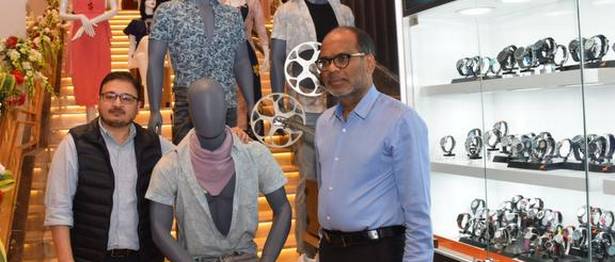
Future Lifestyle Fashions CEO Vishnu Prasad (right) and Future Retail CEO-East Zone Manish Agarwal   –  Debasish Bhaduri

It was in 1934 that American film production company Metro-Goldwyn-Mayer decided to set up a cinema hall in Calcutta to promote its films. The hall was inaugurated in 1935. Famous as an elite British city, the then Calcutta was a large market for Hollywood films.

Eighty-five years later, the iconic cinema hall on Chowringhee Road has made way for Future Group’s first ever movie themed ‘Central’ store.

The fashion and lifestyle retail store will play old Hollywood, Hindi and Bengali hits. These classics were big draws at the ‘Metro cinema’. The screenings are likely to start in April.

According to Vishnu Prasad, CEO, Future Lifestyle Fashions (which owns Central), the company is preparing a list of classics that have been screened. Plans are afoot to bring in the yesteryear stars who featured in these films. Over each week, a film will be played.

First thematic store

“This will be our first thematic store. In fact, Metro Central will be a filmi store. Going forward we may look to host theme-based movie screenings at the store. The idea is to bring alive a lost heritage of the city,” Prasad told BusinessLine.

Metro Central, as it is called, is expected to rake in ₹100 crore by FY20 with apparel sales accounting for nearly 70 per cent of it.

Down memory lane

Metro Cinema’s distinctive art deco structure has, over the years, defined the culture of the city. Initially, it screened only films produced by MGM. Gradually, Hollywood films made way for Hindi cinema and an occasional Bengali film.

The two-storied structure was designed by Thomas Lamb, a Scottish architect settled in the US who built several movie theatres around the world. MGM commissioned him to build two theatres in India. Metro Calcutta’s famous cousin in Mumbai was built in 1938.

Prasad points out that “special care” was taken at the time of renovation so that the art-deco façade, waterfall-style columns and grand staircase within were retained. The company has spent ₹22-25 crore on renovating the heritage structure that will have 55,000 sq ft of space.

Sources say the group had held talks for the renovation and reuse of Grace cinema, too, but issues such as structural stability of the building put things on the backburner.

source: http://www.thehindubusinessline.com / Business Line / Home> Variety / by Abhishek Law / Kolkata / February 15th, 2019

Curtain goes up on Thunchan fete


Bengali writer Manoranjan Byapari inaugurating the Thunchan Literary Festival at Thunchan Paramba, Tirur, on Friday.  

This year’s Thunchan Literary Festival began at Thunchan Paramba, Tirur, on Friday. Inaugurating the festival, well-known Bengali writer Manoranjan Byapari described his life’s journey from being a shepherd to accidentally meeting Jnanpith laureate Mahasweta Devi while riding an autorickshaw.

He said that he had entered into writing much later in life. It was his incarceration that helped him find an interest in reading books. His writings in Bengali are considered one of the strongest in Indian Dalit literature.

Thunchan Memorial Trust chairman and Jnanpith laureate M.T. Vasudevan Nair presided over the function.

Arts festival

Mr. Nair released the Thunchan history penned by K. Sreekumar by giving a copy to Artist Namboothiri. Mr. Namboothiri inaugurated a book festival being held as part of the literary festival.

Poet V. Madhusoodanan Nair delivered the Thunchan Memorial Lecture on poetry and tradition. Writers Chathanath Achuthanunni, Manambur Rajanbabu, and V. Appu Master spoke.

Actor V.K. Sreeraman inaugurated the Thunchan Arts Festival.

Poet Alankode Leelakrishnan spoke.

source: http://www.thehindu.com / The Hindu / Home> News> States> Kerala / by Staff Reporter / Malappuram – February 15th, 2019

Tagore’s Visva-Bharati is restoring its 3 Japanese gardens

Expert coming from Japan today to help with the gardens, one of which was set up by the poet’s son


The Japanese garden next to Udayan house at Visva-Bharati.Picture by Indrajit Roy
Picture by Indrajit Roy

Visva-Bharati has decided to restore three Japanese gardens on the campus — one of them set up by Rabindranath Tagore’s son, Rathindranath — by an expert from Japan soon.

The Japanese department of Visva-Bharati has appealed to the consul general of Japan in Calcutta, Masayuki Taga, to arrange for an expert gardener who can help the university restore the gardens in keeping with Japanese culture.

Gita A Keeni, the head of Japanese department, told The Telegraph: “We wanted to restore our Japanese gardens but we had no expert gardener. So, we requested the consul general of Japan in Calcutta who has helped us get the expert. The expert in Japanese garden, Fumio Thukamoto, will visit the campus on February 11 for two days.”

Visva-Bharati sources said there were three Japanese gardens on the campus — one is beside Udayan house in Uttarayan complex, the second garden is at Nippon Bhavana and third near the Nandan gallery of Kala Bhavana.

The Japanese garden beside Udayan, where the poet stayed for a log period of time, was designed by Rathindranath Tagore in the 1930s. The gardens at Nippon Bhavana was designed by the then Japanese language professor Saini Makino and the garden near Nandan gallery was designed by a group of scholars from Japan.

Nilanjan Banerjee, the special officer of Rabindra Bhavana and a scholar in the Japanese department, said: “We did not get any expert on Japanese gardens earlier. As a result, the gardens were not being restored for a long time. The oldest Japanese garden is in the Uttarayan complex. We are happy as now the gardens will be restored properly under guidance of an expert gardener.”

Rabindranath went to Japan five times between 1916 and 1929 and saw the culture and rituals of Japan, including the concept of gardening in that country.

In his travelogue, Japan Jatri, Tagore wrote: “The Japanese know what a garden should be. Merely piling up earth and planting shrubs in geometrical patterns is not enough as you will know if you have ever been to a Japanese garden.”

Visva-Bharati sources said during his maiden visit to Japan, the poet had stayed at a beautiful garden-house, which was the residence of a Japanese silk merchant and art lover Tomitaro Hara.

“Tagore was so influenced by the culture and gardens, the Ikebana (Japanese art of flower arrangement) and the Chado (Japanese tea ceremony) that he had wished to bring an entire Japanese house to Santiniketan,” said Banerjee, the special officer of Rabindra Bhavana.

source: http://www.telegraphindia.com / The Telegraph, online editon / by Snehamoy Chakraborty in Shantiniketan / February 11th, 2019