Category Archives: Arts, Culture & Entertainment

Muktijoddha poet’s creations go unnoticed

Kolkata :

Lyricist Gobinda Halder, whom Bangladesh President Abdul Hamid met at a hospital on Monday, didn’t just write ‘Joy Banglar Gaan’, patriotic songs that inspired the Muktijoddhas during the Bangladesh Liberation War in 1971. He had also penned nearly 3,500 semi-classical, folk, baul, kirtan, Shyamasangeet and modern Bengali songs before glaucoma claimed his sight and ended his writing spree.

Some of his patriotic songs like ‘Mora Ekti Phulke Bachabo Bole Juddho Kori’, ‘Ek Sagor Rokter Binimoye Banglar Swadhinata Anlo Jara’, ‘Purbo Digonte Surjo Uthechhe Rokto Lal’ and ‘Padma Meghna Jamuna Tomar Amar Thikana’ are still popular in Bangladesh. Artistes from All India Radio and Doordarshan did sing some of his songs from other genre but Halder was never acknowledged. Most of his works, both songs and poetry, remain unpublished and unknown.

Halder’s first book on poetry had been a success. The 500-odd copies that the writer had managed to print in 1989 after depleting his meagre resources got sold out. Unfortunately, Halder did not have the means to reprint ‘Door Digante’, a collection of powerful poems.

His childhood friend Debkumar Mitra, who was chief librarian of Calcutta University till 1994-95, did publish the second edition five years later. But a combination of factors that ranged from poor production quality to lack of sales and a quantum change in reading habits post-Liberalisation ruined its prospects.

“I still have about 70 copies unsold. During my trips to Bangladesh, I had approached officials and offered to hand them over so that they could be distributed either in the country where he is loved or from the Bangladesh pavilion at the Kolkata Book Fair,” said Debkumar’s daughter Sangeeta.

Mitra would drop by at Halder’s tiny Ramakrishna Samadhi Road apartment in Kankurgachhi regularly till four years ago when his own failing health confined him indoors. He passed away this March, his dream of publishing his friend’s works unfulfilled.

Halder, who is unaware of his friend’s demise, is recuperating at JN Roy Hospital. B Hazra, the doctor treating him, said his condition was stable. “He was in a critical condition when he came on December 13, suffering from cerebral atrophy that affected his speech. He had also contracted bed sore. His speech has since improved,” the physician said. Halder is on Ryles tube and catheter.

Halder’s daughter Gopa said they were happy with the treatment and glad her father was responding to it.

source: http://www.timesofindia.indiatimes.com / The Times of India / Home> City>Kolkata / by Subhro Niyogi & Debasish Konar, TNN / December 24th, 2014
MUSIC – Fresh as ever

The recent ITC Sangeet Sammelan in Kolkata gave a platform to young musicians alongside the veterans.

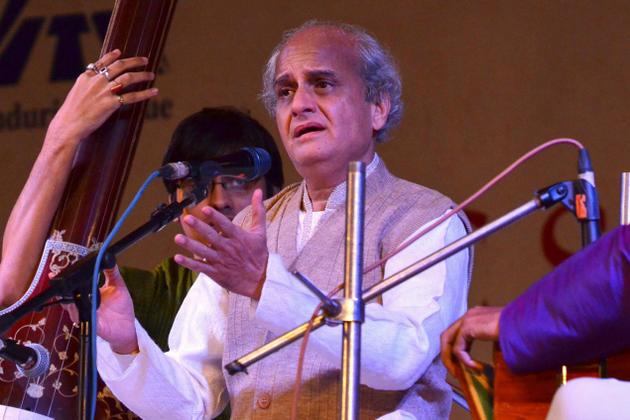
Pandit Ulhas Kashalkar.

ITC was perhaps the pioneer in shouldering the corporate social responsibility when it took a resolve to preserve and promote Indian classical music. It organised the first ITC Sangeet Sammelan in 1971, at a time when the reputed musicians had lost royal patronage. Encouraged by the success of this initiative, the ITC decided to open a ‘gurukul’ of classical music, formalising the time-tested guru-shishya parampara, where topmost artistes would groom professional musicians living with them in the most congenial atmosphere to impart training and transmit their art. The idea crystallised in the year 1978 in the form of the Sangeet Research Academy (SRA), a residential gurukul, where the students lived and learned in close proximity of great gurus. The ITC-SRA thus, produced a number of distinguished musicians who in turn became gurus to carry forward the tradition.

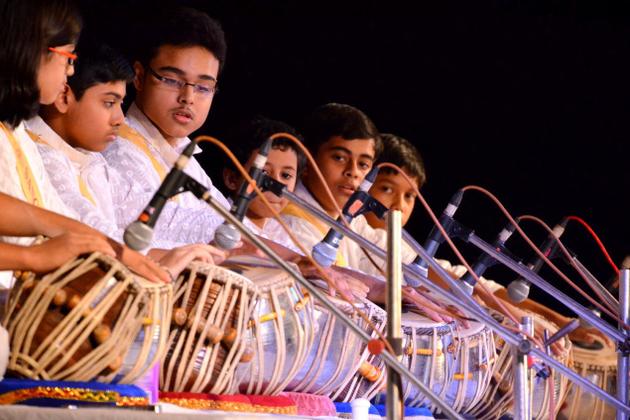
Children’s group tabla recital at the event.

It was a proud moment for the SRA when a galaxy of gurus adorned the stage on the inaugural evening of the recent ITC Sangeet Sammelan held in Kolkata, while this year’s ITC Sangeet Samman was conferred upon Taal Yogi Pandit Suresh Talwalkar. The three-day overnight festival offered a judicious blend of upcoming and well-established artistes presenting ragas of every hour from dusk to dawn. The Sammelan this year opened with a pleasant surprise when the children of Sangeet Piyase (5 to 12 years of age) gave a group tabla recital under the guidance of Guru Samar Saha, that sounded like a tabla-tarang, tuned to the swaras of raga Chandrakauns being played as the accompanying lehra in Teen tala.

Raga Chhayanat of Sanjukta Biswas, the gifted disciple of Guru Shubhra Guha, Jhinjhoti on the sarod by Malhaar Rakshit, disciple of Guru Pt. Buddhadeb Dasgupta or raga Puria Dhanaashree of Shatwisha Mukherjee, Yaman and Hameer of Shankhumay Debnath being trained under Pt. Ulhas Kashalkar, had the authentic stamp of their gurus. Saket Sahu’s melodious violin, Allahrakha Kalawant’s sarangi solo, Ratan Bharati’s guitar, Sandeep Bhattachrya’s Rageshree and Sucheta Ganguli’s raga Jog and a Thumri in Kaushikdwani were the other remarkable performances. Musician tutors of the SRA belonged to the next category of brilliant performers where Abir Hussain impressed with raga Bihaag on the sarod, Arshad Ali with his khayals in Malkauns, Omkar Dadarkar in Jogkauns, Wasim Ahmad Khan with Baageshree and Aniruddha Bhattacharya with his Lalit welcoming the dawn.

Among the invited artistes, Ashwini Bide Deshpande’s Kaafi Kanhada and Chandrakauns, Kala Ramnath’s Natnaraayana on the violin, Shashwati Mandal Pal’s gaga Malgunji, Sohini Bhathiyaar and Tappa, Manjusha Patil’s Multani and Purbaayan Chattaerjee’s Miyaan Ki Todi as a sitar jugalbandi with his Guru and father Pt. Partho Chatterjee were some of the memorable presentations. Pt. Hariprasad Chaurasia played raga Maru Bihaag and a couple of melodious folk tunes of Bengal. Kaushik Bhattacharya’s raga Jaijaiwanti and Kirwani Bhajan had more of decorative elements and less substance. Aliflaila had come from Bangladesh but her sitar could not match the high standards of this prestigious platform.

The real stars of the Sammelan were the Gurus of the SRA including Pt. Suresh Talwalkar who received the ITC Award this year and gave a brilliant performance on the inaugural evening. Vidushi Girija Devi’s Nayaki Kanhada and Thumri, Ustad Mashkoor Ali Khan’s Darbaari Kanhada, Uday Bhawalkar’s Dhrupad in Adbhut Kalyaan, Pt. Ulhas Kashalkar’s Vibhas and Khat and Pt. Ajay Chakravarti’s Bhairav welcoming the morning, were some of the memorable performances that transported the Kolkata music lovers to a state of bliss and fulfilment.

source: http://www.thehindu.com / The Hindu / Home> Features> Friday Review> Music / by Manjari Sinha / December 25th, 2014

Queen of thumri and much more

Kolkata :

She is Appaji to even those in this music loving city who don’t know how she got the name. To Ravi Shankar, she was a little sister, “chhoto bon”. Kishori Amonkor calls her Didi but thinks of her “like mother”. Kabir Chowk at Banaras adorned her with the sobriquet of thumri samragyi while the government showered on her the Padma Bhushan. To the world at large, she’s Dr Girija Devi.

However, more important than the many epithets is the fact that ‘Girija — a Lifetime in Music’ — distills her as both, a vocalist and a guru. For, it’s a tribute by her disciples Debapriya, Samanwaya and Sankalp to the Purab Ang maestro as she turns 86. The film, produced by daughter Sudha Datta and Madhuchandra, was launched at ICCR on Saturday in the presence of Governor KN Tripathi, Pt Vijay Kichlu, Krishna Neotia and Sanjay Budhia while H P Budhia presented her a purse of Rs 1 lakh.

To give one example: Girija Devi asks a disciple to stretch out her arm in the drizzle. “This is rim-jhim puhar, a few notes on your skin. If you sing two-three taans, it will become a shower or downpour. The words of the bandish don’t warrant that,” she imprints the experience on her student’s mind. On another occasion, she sings of a separated lover. “She’s like fish out of water, tarap tarap ke jee rahi. You must imagine the fish gasping for her life breath. Only when you see, feel, experience can you express emotions through your notes.” Clearly the memories of catching fish on the sandy banks of the now polluted Ganga inspires her to date.

Girija Devi, born to a Bhumihar Zamindar in Banaras of 1929, claims kinship with the traditions of Siddheswari Devi, Bismillah Khan, Ravi Shankar, Birju Maharaj, Rajan Saajan Mishra. Making her public debut at AIR Allahabad in 1949, she is an agraj (elder) showing the way to flautist Hari Prasad Chaurasia. As an upper class woman who promised her mother and grandmother she’d never perform mujra (private concerts), she became a faculty member of ITC Sangeet Research Academy – and made Kolkata her second home. Music, as Girija Devi has taught Anjana Nath, Manasi Majumdar, Sunanda Sharma, Malini Awasthi, Dalia Rahut — among so many others — “is more than a weaving together of notes. It is breathing lived life into the words.” Sometimes she does this with sparkling taans, unique embellishments, exquisite artistry.

Sometimes she displays her grasp of tappa and dadra, at other times bhajan and khayal gayaki. But, and always, people flock to listen to her thumri. If Omkarnath Thakur was synonymous with bhajan, Siddheswari was the empress of thumri, she believes. But not once will she disappoint even those who’re alien to the regional characteristics of Kajri, Chaiti, Hori…

Once they sit through her recital, they go home with a profound sense of happiness. As they do after watching Girija – despite its 140-minute duration. Isn’t that ‘ananda’ – aesthetic as much as spiritual – the lakshya of every high art?

source: http://www.timesofindia.indiatimes.com / The Times of India / Home> City> Kolkata / by Ratnottama Sengupta, TNN / December 21st, 2014

Film with Kolkata touch in Oscar race

Kolkata :

When Bickram Ghosh and Sonu Nigam hit it off as collaborators four years ago, little did they know that a moment of creative spark will land them in the race for Oscar. The soundtrack of ‘Jal’, a film based in the Rann of Kutch, scored by the duo with a horde of Kolkata musicians on board, has been shortlisted for Oscar.

The soundtrack has several Kolkata musicians behind the scenes — such as keyboardist Indrajit Dey who has done the melody programming, and folk singer Dipannita Acharya, among others. This is also a first for Ghosh, who has featured in a Grammy-nominated album so far.

“The producer is excited as the movie has been shortlisted in the best feature film category as well. We have featured an international artist like Greg Ellis and the soundtrack has several Kolkata fingerprints on it. Shamik Guha Roy is the recordist along with Pramod Chandorkar in Mumbai. The sound is a marriage of Gujarati folk and voice music,” said Ghosh.

“Sonu is overjoyed. We collaborated first in 2010 and our album will be launched this week,” he added. The race is against masters like A R Rahman, who has two film scores on the list, and the legendary Hans Zimmer.

Dey, who has programmed the score for the melody, said: “It’s a marriage of desert folk and symphony and even oral percussion.” When asked about his chances, he replied: “It’s all about taste. There is folk raga music… I am more used to classical fusion and I find desert fusion closer to the heart and the grassroots. This could be an advantage in the race to the Oscars. Dipannita, who excels in various folk forms, has a god-gifted Gujarati folk texture and the effect is amazing.

source: http://www.timesofindia.indiatimes.com / The Times of India / Home> City> Kolkata / by Shounak Ghosal, TNN / December 13th, 2014

Sarat library without a librarian

Sarat01KOLKATA14dec2014

Factfile

Name:Sarat Smriti Granthagar
Estd: 1956
Address: Village and PO – Panitras, PS – Bagnan
No. of members: 1,029
Membership fees: Rs 2 per month for general members, free for children
Rare books: Collection of old volumes from Sarat Chandra Chattopadhyay’s personal library

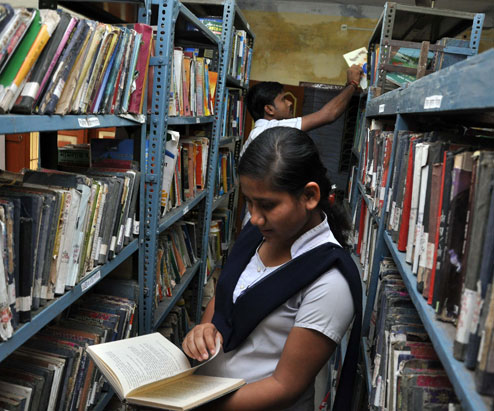
Panitras in Bagnan is popularly known as Sarat Chandra Chattopadhyay’s home. Not only did Sarat Chandra live here, but his sister’s house was also in Gobindapur, in Bagnan. Sarat Chandra’s house in Panitras is now a tourist attraction and a heritage property. However, there are many other things in this village that are associated with the novelist. The local library is dedicated to him. It was named Sarat Smriti Granthagar by the local people, who started it in 1956. Sarat Mela is held on the ground adjoining the library.

Some of Sarat Chandra’s belongings are also displayed at the library. An inkpot, a porcelain pen holder, an old pair of slippers, a torch, a hukkah and also a small wooden writing table. Although these have heritage value, the library authorities can only afford to keep these things stacked on top of an old cupboard. Interested people can take a look by bringing them down.

Sarat02KOLKATA14dec2014

Sarat Smriti Granthagar was started by the local people who wanted to promote education in this area. Sarat Chandra being a popular figure at that time, they decided to name the library after him. It started functioning from a mud house in the locality. Some years later, in 1960, a permanent structure came up where the library now stands. In the same year, it became a government-sponsored library and in 1987 it was given the status of a town library. The total membership of the library now stands at 1,029 out of which only 235 are active members. The children’s section has 371 members, most of whom are students of the nearby schools, Panitras Boys’ School and Samta Sarat Chandra Uchha Balika Vidyalaya.

“Almost all students from the two schools come to this library for membership. Since we have a huge collection of reference books, they find it easier to study here,” said Gaurav Guria, a staff at the library. Students find this library useful since many old textbooks that have gone out of print, are available here. “Students studying in college or doing their post graduation in Bengali, often tell us that many of the texts here cannot be found in the market anymore,” said Guria. The library also has a career guidance section, which is useful to those studying for competitive exams.

Sarat03KOLKATA14dec2014

Although it is a popular library in this part of Howrah, Sarat Smriti Granthagar is operating without a librarian for more than two years. “The librarian and the assistant librarian retired some years back and both positions are lying vacant. A librarian was appointed for a year here in 2011, but after he left, no one has been appointed. The district library authorities are aware of the fact that there is no librarian at our library. However, they have not managed to appoint anyone in this position so far. So it is up to us to run the library on our own,” said Guria. The retired assistant librarian was asked to look into the running of the library, however, he could not continue due to illness.

The library has 11,245 titles. A collection of 133 encyclopaedias, gazettes and other books used by Sarat Chandra has been kept in this library. Copies of the Indian Quarterly Register and Indian Annual Register of 1920, 1925, 1929 and other years, are part of the novelist’s collection. Volumes of Nelson’s Encyclopaedia used by the author are also here. The books have been bound and preserved well. “The Howrah Municipal Corporation has taken initiative in 1999 to preserve these books,” said Guria.

Grants come regularly to the town library. It receives Rs 48,000 as annual grant. In 2010-11, the library received a computer from Raja Rammohun Roy Library Foundation (RRRLF).

source: http://www.telegraphindia.com / The Telegraph, Calcutta / Front Page> Howrah> Story / by Dalia Mukherjee / Friday – December 12th, 2014

The men of Bally Granthagar

Bally01KOLKATA14dec2014

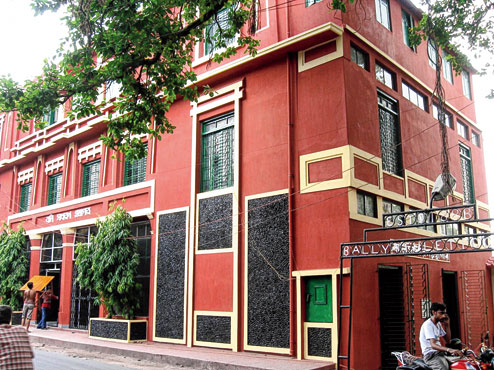
They are called ‘the men of the library’ because they are dedicated voluntary workers of the library. They help in cataloguing books, exchanging or issuing new books and even dusting the shelves — the members of Bally Sadharan Granthagar Karmisangha are as good as library staff, only they do it not for a salary but out of love for their local library.

Formed in Bengal in 1940, the group comprised dedicated library workers, who would help the library staff in all activities. The Karmisangha was formed under the leadership of Ratanmoni Chattopadhyay and the first director was Pravat Kumar Mukhopadhyay.

Over the years, Karmisangha has increased in size and activities. In 1981, when Bally Sadharan Granthagar became a government sponsored town library, Karmisangha was also registered as an association of library workers. Most of the library’s activities depend on the members of Karmisangha. The children’s section is entirely managed by these voluntary workers.

At present there are 88 members of Bally Sadharan Granthagar Karmisangha and any new entrant has to prove his or her dedication towards the library in order to be a member of the association. “Members are inducted on the basis of their dedication. Those who are regular visitors to the library and show interest in library activities are later inducted as members,” said Sumit Mukherjee, a member of the Karmisangha since 1975

Bally02KOLKATA14dec2014

“In our schooldays, our fathers or uncles would drag us to the library and make us remove the books and clean the shelves and also help in stock taking. We still do that once a year and also help the librarians and staff in indexing new books. The library is huge and the amount of work that accumulates is difficult for the staff to complete on their own,” added Mukherjee.

The traditional practice of inducting members includes taking an oath on Janmastami. “Janmastami is the foundation day of Karmisangha and new members are inducted on this day. A sloka from the Geeta on Karma is read out after which the new members take the oath,” said Utpal Kumar Mukhopadhyay, the secretary of Karmisangha.

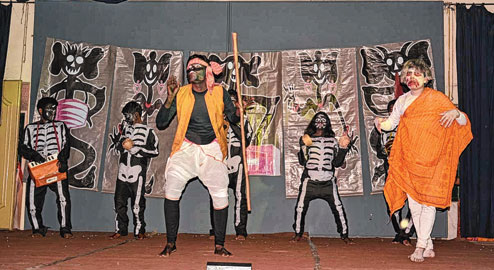
Karmisangha is celebrating its diamond jubilee this year with a variety of activities. A special screening of mountaineer trekker, Anindya Mukherjee’s cycling expedition from the Equator to the Tropic of Capricorn in Africa was done on one evening at the library seminar hall. The biggest event is the annual Soumen Charukala Utsav that continues for a month from November to December. A special workshop on masks will be held this year where school students will take part.

source: http://www.telegraphindia.com / The Telegraph, Calcutta / Front Page> Howrah> Story / by Dalia Mukherjee / Friday – December 12th, 2014

Call of the wild – Book Bazaar

BiswajitKOLKATA14dec2014

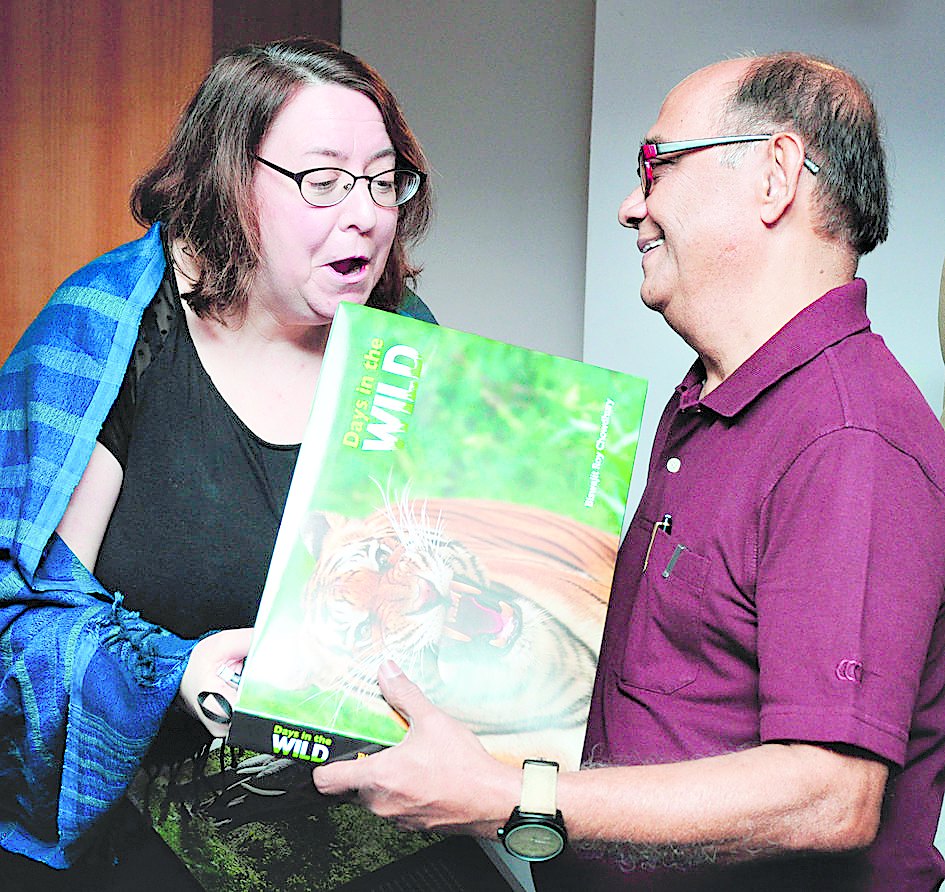
The launch of environmentalist Biswajit Roy Chowdhury’s book, Days In The Wild, was marked by a call to be sensitive to nature and protect wildlife.

Helen LaFave, the consul-general of US in Calcutta, who was present at ICCR for the book launch, remembered her trip to the Sunderbans with the author.

“Biswajit Roy Chowdhury took me on a trip to the Sunderbans and it was a wonderful experience. For many years, Roy Chowdhury has been putting in a great effort to make us realise the urgency of conserving nature. Even though I haven’t managed to read the book, I was struck by the beautiful pictures. It clearly reflected the sheer expertise of photography and made us aware of the different species of animals and birds inhabiting our planet,” she said.

Roy Chowdhury remembered growing up in a small rural town of Bihar where the call of the wild was common. “In my childhood, I watched with great interest rare species of birds. However, thanks to hunting and poaching, now I have to travel hundreds of miles for a glimpse of many species that are fading away. Through my books, I want to harp on this.”

Author’s journey

City-born author Devdan Chaudhuri’s debut novel, the Tibor Jones South Asia Prize 2013-nominated Anatomy of Life, was launched at the Oxford Bookstore recently.

The evening began with a call to “embark on a journey of dissection” as Anjana Basu, author and marketing consultant, discussed and questioned the author’s motives and intentions regarding the characters, setting and narrative of the novel. An intriguing feature of the book is that none of the characters in the book has a name; they are described using terms such as “the poet”, “the pianist”, “the sweetheart” and so on.

The narrator in the book is not just a poet but also a journalist, a philosopher as well as a former economist, much like the author himself. So is the protagonist a reflection of the author? “All novels are partly fictional and partly autobiographical. So it is not surprising that the narrator is similar to me. I needed a character who was sensitive and intellectual enough to be able to embark on a journey the book takes you on,” said Chaudhuri, whose favourite authors are Milan Kundera and Albert Camus.

The Pan Macmillan India edition (Rs 350) has on its cover a striking photograph of an empty jacket hanging against a barren background. Explained the choice, Pinaki De, assistant professor of English at Raja Peary Mohan College, Uttarpara, said: “Since this book is an inquest of the self, we do not always reveal ourselves completely. A part of us remains hidden and that is what the jacket signifies”.

source: http://www.telegraphindia.com / The Telegraph, Calcutta / Front Page> Calcutta> Story / Text by Tanisha Bagchi and Abhinanda Datta / Sunday – December 14th, 2014

It’s time to celebrate for Calcutta Diocese

Kolkata :

The Diocese of Calcutta turns 200 this year and a year-long programme has been planned to celebrate the occasion, it was announced at the Bishop’s House on Wednesday. The Bishop, Diocese of Calcutta, Rt Reverend Ashoke
Biswas said a plot has been earmarked near St Thomas College, Kidderpore, for a human resource centre. A shelter
home will also be built.

“In past 200 years, through its 25 institutions, the Diocese has imparted education to millions of students in Kolkata and the suburbs. Our institutions boast of having Swami Vivekananda, Netaji Subhash Chandra Bose, Mrinal Sen and Manna Dey, along with many other luminaries, as our alumni,” Rt Revd Biswas said. “The Diocesan Board of Social Service covers 51 villages in South 24-Parganas and the primary focus is to mobilize women and youth by forming organizations to address food rights and livelihood issues. Youths are engaged in the entrepreneurship development and are also given vocational training,” he added while going on to list more programmes undertaken by the Diocese.

The announcement of the year-long celebrations came in presence of Revd Abir Adhikary, secretary and joint convener of the bicentenary celebrations, Revd Nigel Pope, the vicar of St Paul’s Cathedral church and celebrations convener and St James school principal T H Ireland.

The inaugural programme starts with worship service at St Paul’s in the afternoon, followed by a ceremony and cultural programme on Sunday. On February 7, a marathon for peace will be organized. March 7-8 will witness an inter-church cricket tournament. March 28 will see a women’s meet, where issues of empowerment and relevant topics will be discussed. Events will take place every month for exactly one year, when President Pranab Mukherjee is likely to be present for the closing ceremony.

Teachers and children will also enjoy their events, like an inter-school and pastorate basketball tournament in May, a children’s summer camp in June, inter-school football tournament in end-July, a Teacher’s Day celebration in September and a children’s fair on November 14.

source: http://www.timesofindia.indiatimes.com / The Times of India / Home> City> Kolkata / TNN / December 11th, 2014

Maidan battle tank shifts to new location, Mig-27 to be part of display

Kolkata :

The battle tank that was kept on the maidan close to the east gate of Fort William (facing Park Street) has been shifted to a new location on St George’s Gate Road. The tank, a war trophy from the 1971 Indo-Pak War, has been placed on an ‘island’ between the two flanks of the road close to the head office of the Hooghly River Bridge Commissioners (HRBC).

“We plan to create a tri-services exhibit on the island. We have asked the Indian Air Force (IAF) for the shell of a Mig-27 aircraft and the Navy for an anchor. The tank, aircraft and anchor will be part of an exhibit at the spot. The HRBC has done a wonderful job at developing the island. The aircraft is expected to arrive in the next 10 days,”said Maj Gen Harsh Kakkar, chief of staff, Bengal Area.

The Army wants to put up more exhibits around the city to create awareness about India’s military history. Till now, there were two battle tanks in the Maidan area. One is the Chaffee tank that was shifted to St George’s Gate Road and the other one is a Vijayanta Tank close to Babughat. The Army has also made plans for proper upkeep of the trophies.

Chaffee tanks were made in the US and used by the Pakistan Army in the 1971 War. At that time, these were considered one of the best light battle tanks in the world. India pitted the indigenous Vijayanta tanks against the Chaffees. The Vijayantas were India’s first indigenous tanks built under licence from Vickers, UK.

“The 1971 War was fought from Kolkata but this is a city that doesnat have sufficient war trophies on display. Other cities have a large number of them. There is need to exhibit more of them in the city. There is sufficient space in the Maidan which is anyways under the control of the Army. This will be the first time that a Mig-27 aircraft will be on display in Kolkata. There are a couple of Mig-21s, one of them inside Nicco Park. The Mig-21s were used in the 1971 War but the Mig-27s came in later and were India’s first ground attack aircraft. They will be phased out soon,” an officer said.

Officers feel that government offices, educational institutions and even private establishments that have sufficient space should ask for these trophies from the Army and IAF to put up on display.

source: http://www.timesofindia.indiatimes.com / The Times of India / Home> City> Kolkata / by Jayanta Gupta, TNN / December 04th, 2014

Tapan Raychaudhari, the renaissance man

Calcutta University V-C remembers the historian

Historians and students in Kolkata remembered Tapan Raychaudhari as a man who had all the qualities of a ‘Renaissance man’. The eminent economic and social historian Tapan Raychaudhari breathed his last on Wednesday in Oxford. He was 90 and had not fully recovered from a stroke he suffered last year.

Professor Raychaudhuri was a Reader in Modern South Asian History at St. Antony’s College, Oxford, from 1973 to 1992. An alumni of Presidency University, he completed his second D. Phil. in Oxford University in the late 1950s, and was the Emeritus Fellow of St. Antony’s College until his death. The winner of a Padma Bhushan in 2007 for his contribution to the study of history, Professor Raychaudhari authored several books on colonial India.

Among his many publications are Bengal Under Akbar and Jahangir, Jan Company in Coromandel, Europe Reconsidered: Perceptions of the West in Nineteenth Century Bengal, and The Cambridge Economic History of India (co-edited with Irfan Habib). He had also penned two autobiographies — Bangal Nama in Bengali and The World in Our Time in English.

Remembering his teacher at Oxford University, Vice-Chancellor of the Calcutta University Suranjan Das said Professor Raychaudhuri took equal interest in both academic as well as personal concerns of the student, a quality which is rarely found in a teacher.

Recalling an incident when his foodie professor personally accompanied him and another student to the dining hall to help shed their inhibitions in a new environment, Professor Das told The Hindu: “Professor Raychaudhuri never imposed his ideologies on us. Even if he differed with our arguments, he would think from our point of view and accordingly assist us to arrive at a logical decision. He treated criticism for his own work in an intellectual way.”

Although Professor Raychaudhuri migrated to the U.K. in 1970’s, he was passionate about research on Indian studies and helped establish the Centre for Indian Studies at Oxford University to encourage research on Indian studies to help dispel commonly-held stereotypes about India and Indian pluralism. Instead of focusing purely on research and analysis, the Centre would take a cultural approach on Indian studies to help understand Indian culture.

Professor Raychaudhuri was a strong critic of post-modernism and believed in empirical studies, the Vice-Chancellor said adding that his wife Pratima Raychaudhuri had played a critical role in supporting him in the domestic front.

source: http://www.thehindu.com / The Hindu / Home> News> Cities> Kolkata / by Staff Reporter / Kolkata – December 01st, 2014