Category Archives: Amazing Feats

For Malala, this West Bengal teenager is a true hero

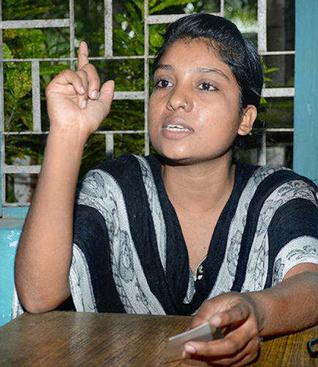
Anoyara Khatun.— Photo: Sushanta Patronobish / The Hindu

As the world celebrates Pakistani teenager Malala Yousafzai winning the Nobel Peace Prize, Malala herself is celebrating the courage of a little known young girl from West Bengal’s Sandeshkhali area who has been quietly working against the trafficking of young girls from the region.

Anoyara Khatun, 18, from North 24 Parganas, has, with the support of other children and non-governmental organisations, built a strong network to resist trafficking of young girls and prevent child marriages in the region.

“Malala and the Malala Fund celebrate Anoyara’s exemplary courage and leadership. She has helped reunite more than 180 trafficked children with their families, prevented 35 child marriages, rescued 85 children from the clutches of child labour and registered 200 out-of-schools (drop-outs) into schools,” says a Facebook post by the Malalafund, an initiative by Malala.

The post made on October 13, International Day of the Girl, only a few days after Ms. Malala was awarded the Nobel Prize, has described Anoyara as “a true girl hero.”

When The Hindu met Anoyara at Sandeshkhali on Wednesday, she was aware of the Facebook post and could not stop talking about Malala. The first year student of a local college has also collected a number of vernacular newspapers that published news of Ms. Malala’s award and shared it with her friends.

“Though I have not met Malala, I did meet her father Ziauddin Yousafzai at Brussels in June 2012,” she said. She made the trip to Belgium when she was nominated for The International Children’s Peace Prize.

“Trafficking of young girls and child marriages were rampant in the villages here. Poverty and lack of awareness and education provided the ideal conditions for traffickers to operate here,” Ms. Anoyara said.

In 2008, Save the Children, an international non-governmental organisation working for child rights, helped establish a number of multi activity centres in the Sandeshkhali area. These centres help create awareness among the children of the region about the dangers of trafficking and similar crimes. Anoyara recalls stories of how she and others chased away traffickers who came offering jobs and marriage to young girls in the region.

Jatin Mondar, the State Programme Manager of Save the Children, West Bengal said that through these centres, the organisation had managed to put in place a “committee-based child protection model” in Sandeshkhali since 2004.

“Now, if someone approaches the villagers with the proposal to take a girl to Delhi or anywhere else for work, that person is sure to be handed over to the police by us,” Anoyara said.

source: http://www.thehindu.com / The Hindu / Home / by Shiv Sahay Singh / Sandeshkhali (North 24 Parganas) / October 16th, 2014
Special 40

Pictures by Arnab Mondal

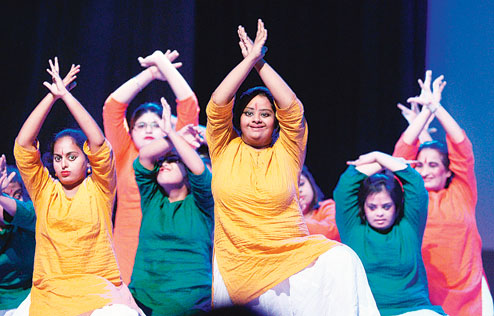
Students of Manovikas Kendra perform at a programme to mark 40 years of the organisation, at Science City auditorium on Thursday.

From tiny tots to students of vocational units, some of them on wheelchairs, everyone joined the celebration.

Sharada Fatehpuria, the founder- director of Manovikas Kendra, turned nostalgic as she remembered the first day of the institute. “It was January 28, 1974, and Saraswati Puja was being celebrated in the foyer of Gyan Manch at Abhinav Bharati High School.

The journey began with two children in one room and today Manovikas Kendra is spread over an acre and it is full of wonderful children who are studying and playing with 160 dedicated personnel,” she said.

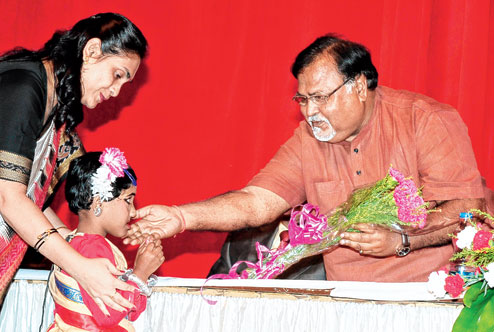
Education minister (below) Partha Chatterjee was the chief guest on the occasion.

Pictures by Arnab Mondal

source: http://www.telegraphindia.com / The Telegraph, Calcutta / Front Page> Calcutta> Story / Friday – September 05th, 2014

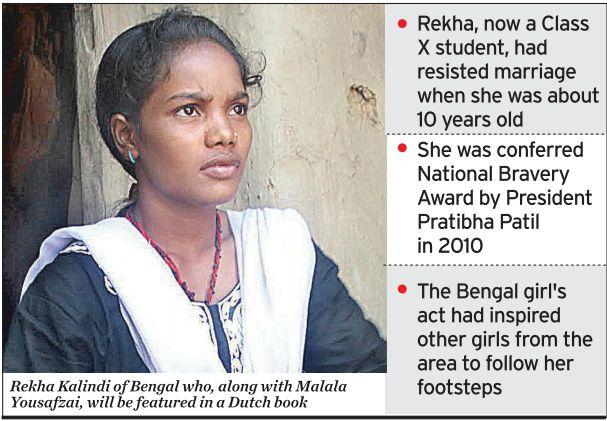
Bengal girl joins Malala in Dutch book

RekhaKOLKATA02sept2014

What is common among Malala Yousafzai, Anne Frank, Hellen Keller and 16-year-old Rekha Kalindi from Purulia in West Bengal?

The braveheart from the State will feature along with Malala and Anne Frank in the book Children who changed the world to be released in November in Amsterdam marking the 25th anniversary of the UN Declaration of the Rights of the Child.

Rekha, now a student of Class X, resisted marriage when she was about 10 years old. Her resistance led to other girls in the area following in her footsteps. She, along with two other girls from the district, was conferred the National Bravery Award by then President Pratibha Devisingh Patil in 2010.

The book is written by Dutch Newspaper NRC Handelsblad’scorrespondents who live and work in the countries of the children featured in the book.

It profiles 20 children and the chapter on Rekha is written by journalist Aletta Andre.

Girls inspired
“Rekha’s story fits very well in this theme (the book’s theme), as she resisted a very common but not so great practice in her area, when she was about 10 years old and has with her act inspired other girls to do the same. It shows that very young children, even very young girls in a patriarchal society, have the power to make a difference,” she said in an email response.

Speaking to The Hindu, Rekha said she was very happy that the story about her is being published in other countries. Since the time she and other girls from Purulia had resisted child marriage, many girls came forward to oppose the practice, she said, adding that poverty and lack of education are still resulting in such marriages.

She also pointed out that a Class V textbook of the State Board has a chapter on child marriage where her and another girl’s names feature.

“Such stories (like Rekha’s) encourage adolescents to protest and raise their voice against child marriage,” Asadur Rahaman, chief of field office UNICEF in West Bengal, said. Pointing out that child marriage and trafficking of girls continue to be a concern in States like West Bengal, Mr. Rahaman said that a scheme like Kanyasree providing scholarship to school-going girls is a significant
initiative.

source: http://www.thehindu.com / The Hindu / Home> News> Cities> Kolkata / by Shiv Sahay Singh / Kolkata – August 28th, 2014

Child Crusader’s Story to Inspire the World

Kolkata :

Her defiance against an age-old custom developed into a campaign that caught the imagination of the nation. And now anti-child marriage crusader Rekha Kalindi will rub shoulders with Malala Yousafzai and Anne Frank in a book that tells the tales of how they changed the world.

The story of this braveheart from West Bengal’s Purulia district, conferred the National Bravery Award for refusing to be a child bride and inspiring many of her ilk, features in the “Kinderen Die De Wereled Hebben Veranderd” (Children Who Changed the World), a Dutch book to be released Nov 20 to mark the 25th anniversary of the UN Declaration of the Rights of the Child.

Written by renowned Dutch journalists and historians, the book portrays the heroics of 20 children who stood up against injustice or became a symbol of injustice done to them and includes the likes of Pakistani education activist Malala Yousafzai and holocaust diarist Anne Frank.

Talking about Rekha’s story – the only one from India – Aletta Andre who has penned the chapter on her, elaborated about the 16-year-old’s efforts to inspire nearly 10,000 girls in the district to pursue their studies and not to concede to their families’ demand of an early marriage.

“It’s not only about her own defiance but also about how she counselled and inspired a lot of other girls to do the same. At least 10,000 in Purulia district have resisted child marriage and her story has been also mentioned in a Class V textbook,” Andre, a Delhi-based Dutch journalist, told IANS on the phone.

Considered a liability, her parents had planned to marry Rekha off at 11 to get rid of “their burden”. But having seen her elder sister suffer as she became a mother at 12, the idea of marriage terrified Rekha and eventually led her to revolt that created history.

Conferring the Bravery award in 2009, the then president Pratibha Patil had described Rekha as a “messenger of social change”.

At the age of four Rekha started working, rolling beedis along with her mother. Now a class 10 student of Jhalda Satyabhama Vidyapith, she actively campaigns against child labour and child marriage.

Ecstatic about being part of the book, Rekha at the same time is distraught for she can read only Bengali and not Dutch.

“I heard the book is in some other language which I cannot read. I am sad at that, but I am also very happy that my story will be read by foreigners,” Rekha told IANS.

Aspiring to be a teacher and preparing hard for her board exams, Rekha insists her job has just begun.

“There is so much poverty; many girls have to work because of which they don’t get time to study. I wish a day comes when all of us will go to school without having to worry about work,” added Rekha.

Unicef, which has been working to curb the menace of child marriage, expressed happiness at Rekha’s contribution getting international recognition and hoped this would inspire and create many a crusader like her.

“This is surely a proud moment for all of us and I hope it creates many a Rekhas to fight out the menace of child marriage and child labour,” Asadur Rahman, head of Unicef’s field office said.

Others featuring in the book include Pakistani child labour hero Iqbal Masih who helped over 3,000 minor bonded labourers to escape before he was murdered in 1995 and South African Nkosi Johnson, who made a powerful impact on public perceptions of HIV/AIDS and its effects before his eventual death at the age of 12 from the pandemic.

source: http://www.newindianexpress.com / The New Indian Express / Home> Nation / IANS / August 31st, 2014

Gobbling up key links to history

Hubli :

Deep within the suburbs of Unkal in the city lies a key relic of our rich architectural history — the Chandramouleshwar temple — forgotten by many and being usurped by the unscrupulous. The temple, which dates back to reign of the Badami Chalukyas in the 11-12th century, has been crying for attention for years now, but no concrete measures have been taken to protect the historical monument despite the Archeological Survey of India (ASI) designating it as a protected monument under the Ancient Monuments and Archaeological Sites and Remains Act,1958.

Over the years, the land on which it stands has also been allegedly encroached upon by villagers.

Unkal was a border area between the Hoysala and Chalukya empires. The Chandramouleshwar temple, therefore, bears resemblance to both Hoysala and Chalukya styles of architecture. Its unique plus-shaped plinth sets it apart from other temples in the state, claim experts.

A facade of promises

The temple has about 4-5 acres of land around it, but most of it has allegedly been encroached upon by villagers. ASI had woken up to such encroachments five to six decades ago, had conducted a survey and planned a renovation of the temple. But, it then placed all plans on the back burner.

C B Marigoudra, a retired teacher and historian, recalls that the temple was declared a historical monument by ASI around 50 years ago. “But, no steps for development have been completed to date.”

Around five years ago, ASI again took a shot at reining in encroachments by constructing a wall around the site. But work on redevelopment came to a grinding halt a few years ago, alleges Marigoudra.

P S Parvati, a retired officer of information and broadcasting department, says the district administration had sent a proposal to the state government around two years on developing the temple, improving road connectivity to it and providing other facilities to visitors. That file has been gathering dust. “Citizens are forgetting the importance of the temple. Many people don’t known that such a historical monument is located right in our city. There is a need to renovate the temple and create awareness about its importance among the people,” suggests Parvati.

M S Koravi, a former corporator, says ASI had served notices to residents who had encroached upon the land a few years ago. But that zest fizzled out soon. “No action was taken by the department against the encroachers. If ASI wants to clear the encroachments, it should provide alternative rehabilitation to the residents. Only then should it develop the city’s only historical temple,” recommends Koravi.

J Ranganath, assistant superintending archaeologist engineer, ASI, Dharwad division, points at half-hearted measures taken: construction of a compound wall and a watchman to keep an eye on the temple. “The ASI division will soon get funds, with which we will take up renovation in two to three months. There is a technical problem with removing encroachments and that will looked into as well,” he claims.

source: http://www.timesofindia.indiatimes.com / The Times of India / Home> City> Hubli / TNN / August 07th, 2014

Commonwealth bronze sweetens life for Sakina Khatun

Sakina khatun with the bronze medal she won at the Commonwealth Games in Glasgow. / The Hindu

Her success is all down to her hard work: coach

Life has not been kind to Sakina Khatun, who won a bronze medal at the Commonwealth Games on Saturday.

In Glasgow’s Clyde Auditorium, the 25-year-old Bangalore-based para-athlete lifted a weight of 88.2 kg to finish third in the women’s powerlifting event (Lightweight Group A). It was a success that came after prolonged hardship.

“My parents cried when I broke the news to them on the phone,” she told The Hindu from Glasgow.

Her coach and mentor Farman Basha, who also competed at the Games, faltered in his event on account of an injury, but his delight was enormous. “She has been through a lot. So I’m very happy for her,” he said.

Sakina hails from Basirhat in West Bengal’s North 24 Parganas district. Her mother is a farm labourer while her father, ailing with a serious back condition, is unable to work. “He can’t even walk,” Sakina said. “We don’t have the money for his treatment.”

Afflicted with polio at a young age, she took up swimming on her doctor’s suggestion, learning in ponds in her village before a teacher in school noticed she had an aptitude for it. “Despite steady success at the national level, I was ignored for the 2010 Commonwealth Games team. It left me disheartened and I quit the sport,” she said.

Sakina switched over to powerlifting on the advice of one of her swimming coaches, and in 2010 was directed to Basha. “She wanted to come over to Bangalore to be trained by me,” he said. “She had no money and I couldn’t afford to spend a rupee on her.”

But Sakina found a benefactor in Dilip Majumdar, a businessman who volunteered to support her training. “I’m a girl and my parents were against my leaving home,” she recalled. “But my sponsor managed to convince them.”

“At first, she could only lift around 25 kg,” recalled Basha. “But gradually she improved. Her success is all down to her hard work.”

source: http://www.thehindu.com / The Hindu / Home> News> Citis> Bangalore / by Shreedutta Chidananda / Bangalore – August 04th, 2014

Unique memorial service to honour brave airmen

Kolkata :

On Saturday, a unique memorial service was organized at the Rasgovindpur Airstrip (also known as the Amarda Road Airfield) in Odisha to honour 14 airmen of the Royal Air Force (RAF) who were killed in a mid-air collision between two B-24 Liberator bombers on July 26, 1945. It was Bhubaneswar-based war historian Anil Dhir who dug up this historical fact. He along with Aditya Patnaik of the Gandhi Eye Hospital and school children were among those who laid wreaths in memory of the dead airmen.

“Very few people are aware that 69 years ago two Liberators (EW225 and EW247) collided at low altitude during a practice flight. They were part of a six-aircraft contingent from the Air Fighting Training Unit engaged in a formation flying exercise. The Rasgovindpur Airstrip had the longest runway in Asia (more than 3.5 km). The total length of the runway, taxiways and aprons was more than 60 km. Part of the runway (nearly 11,000 feet) still remains but there is no activity save for the grazing of cattle. This airfield played a very crucial role in the defence of India during World War II. It was a forward airbase against the Japanese and was used for ‘Over the Hump’ operations as well as training pilots for special bombing raids. Unfortunately, there aren’t any details available of the activities that took place here between 1943 and 1945, even in military archives,” Dhir says.

It was during a visit to the Madras military cemetery that Dhir came across the graves of 14 airmen who were killed at the Amarda Road Airstrip crash. It took a lot of doing on his part to find out that the 900 acre airstrip was built at a cost of Rs 3 crore in the 1940’s. During his research, Dhir received assistance from Matthew J Poole from the USA who has studied the crash and prepared a report. With Poole’s assistance, Dhir was able to locate the relatives of none of those killed in the air crash. One of them is 101 years old now.

“The two aircrafts took off from the airfield in Odisha but the crash took place over West Bengal. The debris was strewn across flooded paddy fields in Bengal. I have requested both the Odisha and Bengal governments to erect small memorials at the airfield and the crash site to honour the brave souls who gave up their lives for the defence of our motherland,” Dhir added.

source: http://www.timesofindia.indiatimes.com / The Times of India / Home> City> Kolkata / by Jayanta Gupta, TNN / July 29th, 2014

Turnaround in Jangalmahal region sets a unique example

Lauding the turnaround in Maoist-affected Jangalmahal region, Chief Minister Mamata Banerjee said on Monday that the region has turned out to be a ‘unique example before the world’. “In this Jangalmahal region, people were scared to come. They were scared of Maoists,” Ms. Banerjee said, addressing a public meeting at Salboni in Paschim Medinipur district.

Claiming that her government has taken up a lot of developmental activities in the region, she said that the work done here since independence is not ‘even part of what’ has been done by her government over the last three years. “I urge you to maintain peace. I will take care of everything else,” the Chief Minister assured the gathering.

Three districts of Paschim Medinipur, Bankura, and Purulia located in the south-west part of the State were the hotbed of Maoist activities between 2009 and 2011.

The Chief Minister said that the State government had plans to set up eight colleges in the region of which four were inaugurated during the day. She referred to the State government scheme of providing subsidised food grains to all the tribals in Jangalmahal.

“The State government has been ignored in the Railway Budget and the General Budget. We do not want anything from the Centre if they waive our loans,” the Chief Minister said, adding that if the Centre did not do so, the State government would organise a protest against the Centre. She, however, expressed hope that the new government would accept the State’s demands.

source: http://www.thehindu.com / The Hindu / Home> News> Cities> Kolkata / by Special Correspondent / Kolkata – July 15th, 2014

Kolkata NCC gets 2000 people to pledge their eyes by November

Kolkata :

National Cadet Corps (NCC) volunteers of the West Bengal and Sikkim Directorate have succeeded in getting 2,127 people to pledge their eyes over the last ten days. It is now their aim to motivate 100,000 people to pledge their eyes by NCC Day in November. This will be a record of sorts.

This plan was revealed by Major General Shyam Srivastava, additional director general, NCC, West Bengal and Sikkim Directorate, at a ceremony on Friday that was attended by NCC director general Lt Gen Aniruddha Chakravarty. The DG is on a maiden visit to this directorate and also visited IIT, Kharagpur, a couple of days ago where an advanced training course was being organized for cadets who wish to appear for civil services and other competitive examinations.

Lt Gen Chakravarty lauded the efforts of the NCC is the state and said that pledging of eyes is the ultimate donation that a person can make as it helps a visually challenged person see the world. Among those who pledged their eyes were the cadets, their family members and people at large. A cultural programme was organized by visually challenged youth from the Bhartendu Andh Ashram during the day. A presentation was also made to clear the myths associated with eye donation.

source: http://www.timesofindia.indiatimes.com / The Times of India / Home> City> Kolkata / by Jayanta Gupta, TNN / July 11th, 2014

Bitten by travel bug, rickshawpuller on solo expedition from Kolkata to Ladakh

SUMMARY
Das way back in 2008 had gone all the way to Rohtang Pass in a rickshaw with his wife and daughter.
_____________________________________________________________

A rickshawpuller has set out on a daring 3,000-km expedition from Kolkata to the famous Khardung La pass in Ladakh, which has one of the world’s highest motorable road.

Forty-year-old Satyen Das, who ferries commuters at Naktala in south Kolkata, marshalled his personal savings and generous donations from local people, packed his luggage under the passenger’s seat of his refurbished rickshaw and started on his one-of-a-kind journey last month.

“I make a living on my rickshaw and spend my whole day with this, so I could not leave it behind when I started to dream about my trip to Ladakh,” Das said.

He has already reached Uttar Pradesh from where he will go to Srinagar and reach Ladakh after crossing Kargil next month. “I want to spread the message of world peace with this journey and also I want to promote rickshaw as a cheap and eco-friendly mode of transport,” he said.

Expecting to complete the expedition within five months, he is also eyeing an entry into the Guinness Book of World Records for his feat.

Bitten by travel bug, Das way back in 2008 had gone all the way to Rohtang Pass in Himachal Pradesh in a rickshaw with his wife and daughter. But this time the target is higher and he is travelling alone.

“He has this addiction of travelling in the Himalayas and going to far-off places,” said Partho Dey, secretary of Naktala Agrani Club, who helped him with funds.

Das modified his rickety old rickshaw with additional brakes and new body made of light steel at a total cost of Rs 15,000. In a day, he pedals to cover around 40-50 km and for makes night halts at religious places where he can stay for free.

Having only elementary education, the rickshawpuller said the unique road trip is also a great learning experience as he gets to understand the culture and diversity of India by criss-crossing different states, cities, towns and villages.

“My first task in the morning is to go to the local police station and take permission to move ahead. So far I have been getting it easily,” Das said. He is armed with maps to find his way to his next stop and a digital camera to document his special journey.

The club members are taking care of his wife and daughter, whom he left back home.

“We estimate that the trip would cost around Rs 80,000, which we have raised it amongst ourselves after we saw his passion and determination to travel,” Dey said adding that they have have given him an ATM card to withdraw cash as and when required.

source: http://www.indianexpress.com / The Indian Express / Home> Cities> Kolkata / by Press Trust of India / Kolkata – July 04th, 2014