Category Archives: World Opinion

Jamsetjee Framjee Madon — a pioneer of Indian cinema and champion of Calcutta’s poor Parsis

In Pioneering Parsis of Calcutta, Prochy N. Mehta chronicles the little-known lives of the first Parsis who came to the city during British rule.
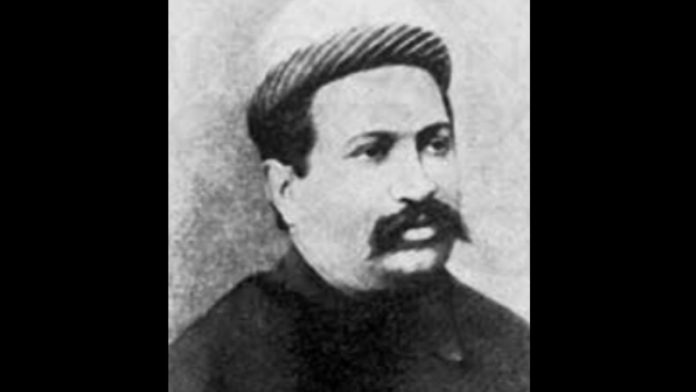
Jamsetjee Framjee Madon | Niyogi Books | Prochy N. Mehta


Jamsetjee Framjee Madon was one of the pioneers of Indian cinema. He owned over 120 cinema halls at one time. Jamsetjee was very modern in his outlook and a reformist in his religious views. He was one of the first trustees of the Late Ervad D.B. Mehta’s Zoroastrian Anjuman Atash Adaran and was a supporter of the young Bella, to whom he left Rs 5,000 in his will to help her in her legal case. 

Jamsetjee Framjee Madon was born on 27 April 1856 in a very poor family in Bombay. The family being truly indigent, he had to seek employment at the tender age of twelve as a scene-shifter in the dramatic company of Cooverji Ratanji Nazir, at a salary of Rs 4 per month. The young lad got enamoured of the stage, copying the roles of the heroes and heroines of the plays and later playing small roles on stage. Since he had a good voice, he could act the part of a courtesan and became quite popular. 

He then joined Elphinstone Natak Company which toured the country and in 1875, on an auspicious day, he came to Calcutta with this touring company. Some time later he took over this company in partnership with a few others. This company prospered, thanks to his experience, far-sightedness and hard work, and made Calcutta its permanent home. Simultaneously he started dealing in auctioned goods and in 1885 started another business as wines and provision merchant at 5, Dharamtalla Street. His honesty, perseverance and gentle nature soon attracted important Indian customers and the shop became extremely popular among government officers and Englishmen. There were seven branches of this store including those at Calcutta, Darjeeling, Lucknow and Delhi. 

In 1903, at the time of the British invasion of Tibet, Jamsetjee opened food and provision stores all the way from Siliguri to Chumbi and assisted the armed forces in supplying food and provision to soldiers even at great personal risk. The British officers greatly appreciated Madon’s fortitude and bravery as a result of which Jamsetjee was given a large contract of supplying the army during the wars in Kabul. He carried out his work at great risk and in significantly difficult circumstances, to the utmost satisfaction of the military officers. In appreciation of these services, the British Government awarded him the Order of the British Empire in 1918.

On 30 March 1919, the Calcutta Parsis felicitated Jamsetjee at a function under the chairmanship of the trustee of the Anjuman, Seth Edulji Pestonji Guzdar. Madon Seth was congratulated on obtaining the Order of the British Empire and praised for his simple life, gentle nature, honesty and kindness and for his munificence towards the poor. 

Seth Jamsetjee, like the other Parsi elders of the community, had a generous nature and was always anxious to assist the needy. Having grown up in poverty he felt for the poor and gave employment to many poor Parsi youngsters in his cinemas and shops. He was thus responsible for the livelihood of a large number of Parsi families. Many of his charities were done secretly and it can be truly said of him that his left hand was not aware of what his right hand gave away. It was estimated that such secret handouts averaged Rs 5,000 every month. This help was not restricted to Parsis exclusively; all the needy benefitted from his charity, irrespective of caste or creed. Many institutions of public welfare owed their existence and prosperity to him. 

In 1907 Seth Jamsetjee took up the mission of building a second Tower of Silence in Calcutta. Starting a subscription list with his personal donation of Rs 5,000, he went from house to house and managed to collect a lakh of rupees from the Calcutta Parsis. It was due to his influence that the municipality gave a grant of Rs 27,000 towards the purchase of land for this second Tower of Silence, and he personally bore the expenses of Rs 20,000 towards building it. Seth Madon’s efforts and far-sightedness resulted in bringing together the priests of the Kadimi and Shahanshai sections for the first time in Calcutta. The Kadimi priests performed the religious rites at the time of the foundation and the Shahanshai priests performed the consecration rites. 


In 1912, at the time of the building of the Mehta fire temple, Seth Jamsetjee provided his devoted services. The building attached to the fire temple used as a residence for the priests was built and donated by him and his family to the Atash Adaran. He presented several chandeliers, lamps and carpets for the main prayer hall and also many tables, chairs, large cooking utensils for general use. This generous-hearted Parsi also had the foresight to start funds with initial personal donations to take care of the future maintenance of the Atash Adaran.

Seth Jamsetjee was deeply sympathetic towards the poor Parsi families in Calcutta. In Dharamtalla Street he built Khorshed Madan Mansion at an expense of Rs 1,10,176 in memory of his beloved daughter, Mrs Khorshed Rustomji Maneckji Mehta, who had died on 14 January 1920 during the lifetime of her parents. Seth Jamsetjee donated this house to the Anjuman on the understanding that the flats be rented out to the poor and middle-class Parsi families of Calcutta at a low rent. Further he set aside a sizeable fund for the maintenance of this building. 

He also secured the land for the ‘aramgah’ for the Parsis in Darjeeling and donated funds towards its maintenance. On several occasions he gave donations to the Anjuman on behalf of his friends and relations. Seth Jamsetjee organised several ‘benefit nights’ in many of his cinema houses to collect funds for charities for Parsis as well as other communities. 

In 1923, the British Government honoured him with the award of Commander of the Order of the British Empire in recognition of his many cosmopolitan charities. 

About twenty years prior to the advent of cinema on a commercial basis in India, Seth Jamsetjee experimented with this new media and perfected it for public viewing. He was truly a pioneer of the cinema industry in India. 

The young lad of twelve, who started his career as a scene-shifter at a salary of Rs 4 per month, aided by some lucky turn of events and greatly due to his own inherent ability, perseverance and hard labour, became, in the evening of his life, the owner of a hundred cinema houses in India. Seth Jamsetjee’s life is a shining example of Parsi adventure and philanthropy. Upon his death which took place in Calcutta on roz 22 Govad, Mah 10 Dae, Year 1292 y.z., corresponding to 28 June 1923, Calcutta lost a true benefactor of the poor. 
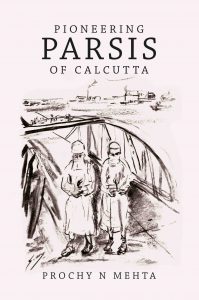
This excerpt from Pioneering Parsis of Calcutta by Prochy N. Mehta has been published with permission from Niyogi Books.

source: http://www.theprint.in / The Print / Home> Page Turner> Book Excerpts / by Prochy N. Mehta / April 04th, 2020
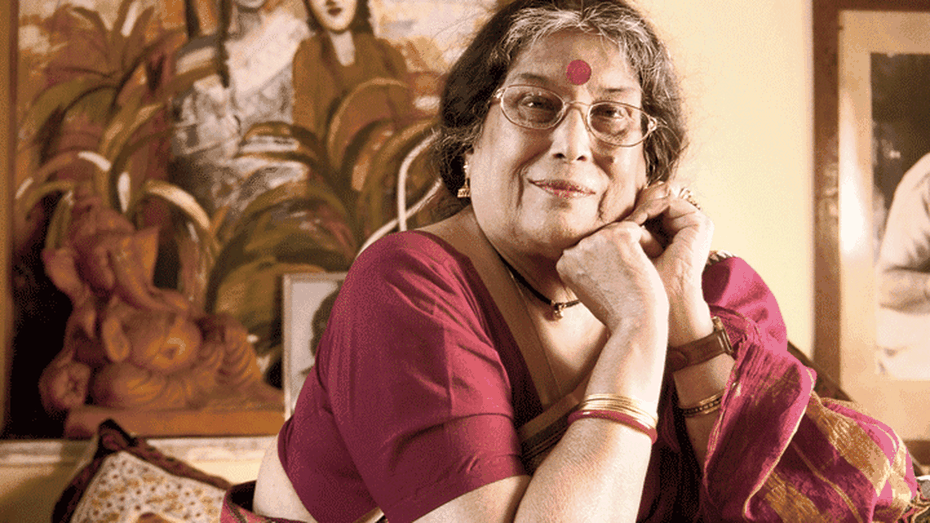

Nabaneeta Dev Sen passes away

Dev Sen had announced she was suffering from cancer

Nabaneeta Dev Sen / Telegraph picture

Nabaneeta Dev Sen, poet, novelist and academic, breathed her last at her south Calcutta home on Thursday evening. She was 81.

Dev Sen had announced she was suffering from cancer.

Her spontaneity, unique style of expression, vast and varied experience of life are evident in her poems, short stories, novels, plays, travelogues, literary criticism, essays and works of children’s literature. Some of her well-known works are Bama-bodhini, Nati Nabanita, Srestha Kabita and Sita Theke Suru.

Her Radhakrishnan Memorial Lecture series at Oxford University, a pioneering work on The Ramayana seen from women’s viewpoint, in 1997 started a new school of studies on Sita across the world.

Dev Sen is survived by her daughters Antara and Nandana, from her marriage of 17 years to economist Amartya Sen. Her last rites would be performed on Friday, before which she would be taken to Jadavpur University, a family friend said.

The daughter of the poet-couple Narendra Dev and Radharani Devi, Dev Sen grew up in a literary milieu and graduated from Presidency College. She received her masters degree from JU in 1958, where she later taught in the comparative literature department till her retirement in 2002.

She was also an alumna of Harvard University, from where she took a masters with distinction, and of Indiana University, where she did her PhD. She then completed her post-doctoral research at the University of California in Berkeley and Newnham College, Cambridge University.

The recipient of the Padma Shri and the Sahitya Akademi award was a polyglot, reading Hindi, French, German and Sanskrit among other languages.

A friend of over 50 years, author Sirshendu Mukherjee reminisced: “She had an unbelievable sense of humour and spontaneity. So infinite was her vitality that sitting next to her was like sitting by a dynamo. She had a lot of health issues, always going around with an inhaler. Yet nothing seemed to touch her. She was without fear and beyond prejudices.”

Lauding both her poetry and prose, Mukherjee said he had lost “a favourite author”. “She may not have written for children as much but what she has written is amazing. She also spoke up for a definite place for women in society through her work.”

Chief minister Mamata Banerjee expressed grief over Dev Sen’s death. “Saddened at the passing away of noted litterateur and academic Nabaneeta Dev Sen. A recipient of several awards, her absence will be felt by her myriad students and well-wishers. My condolences to her family and admirers,” Mamata tweeted.

Her last photographs made public were with Abhijit Vinayak Banerjee, when the economist came to meet her at her home Bhalo-Basha on October 23 during his brief sojourn to Calcutta after winning the Nobel Prize.

That photograph of her smiling radiantly through an oxygen tube attached to her nostrils will endure.

source: http://www.telegraphindia.com / The Telegraph, Online edition / by Special Correspondent in Calcutta / November 08th, 2019

Tributes paid to ‘bhadralok’ soldiers of WW I

Kolkata :

A forgotten chapter of the Indian military history was retrieved from the oblivion and feted at a brief function organised as part of various events held in the city on Remembrance Day today.

The memorial erected by the British at College Square in Kolkata to honour members of the Bengali Regiment who died in the First World War is hard to locate on an ordinary day. Today, however, it saw visit by WB Minister Sadhan Pandey, who paid floral tributes to the soldiers, most of whom fell not by bullets but due to various diseases.“The 49th Bengali Regiment would go on to have a rather inglorious record. It reached Mesopotamia in September 1917, but never saw combat and struggled with the desert conditions and diseases. A commanding officer divided the regiment into ‘Measles Squad’, ‘The Whooping Cough Squad’ and ‘Scarlet Fever Squad’.

More seriously, there was infighting and a junior member opened fire on three senior colleagues while they were asleep. The regiment was demobilised soon after the war,” said Santanu Das, professor at London’s King’s College, who is known for his work on the first great war.

Ashok Nath, military historian, who is on the faculty of Stockholm University, however, said except for the Kumaon Rifles, all other army regiments raised by the British in India in view of the First World War were disbanded after the war.

Muhammad Lutfur Haq, retired Bangladesh Army officer, said 10 per cent of the members of Bengali Regiment were Muslims. The rest were all Hindus. “Bengalis were never put to the frontline. They were given static and security duty at rear,” Dhaka-based Haq, an expert in military matters, told this reporter.

It is likely that because of the poor show by the regiment (known as Bangali Paltan) in the war, the memorial at College Square does not arouse excitement among the city residents.


In honour of Bengali Regiment  

  • A memorial was erected by the British at College Square in Kolkata to honour members of the Bengali Regiment who died in the First World War
  • The 49th Bengali Regiment reached Mesopotamia in September 1917, but never saw combat and struggled with the desert conditions and diseases
  • The regiment was divided into ‘Measles Squad’, ‘The Whooping Cough Squad’ and ‘Scarlet Fever Squad’

source: http://www.tribuneindia.com / The Tribune / Home> Nation / by Tribune News Service / by Shubhadeep Choudhury / November 11th, 2019

Kolkata-born Miss England helps raise funds for city’s children in UK

The Hope Foundation was founded in 1999 by Irish humanitarian Maureen Forrest to provide protection and safety to 14 young girls in Kolkata who were forced to survive on the streets.

Miss England 2019 Bhasha Mukherjee (Photo | Instagram)

World :

Indian-origin Miss England 2019 Bhasha Mukherjee helped raise funds for a UK charity working with street-connected and slum children in Kolkata as part of her beauty with a purpose mission.

Mukherjee, a doctor by profession who spent her childhood in Kolkata, took time out from preparations for the Miss World contest next month to join the Hope Foundation’s annual fundraiser in London on Friday night.

The evening raised over 20,000 pounds for the charity through ticket and auction sales and also received several pledges to sponsor children in India.

“I think it’s destiny that brings people together. I am from Kolkata, so Hope Foundation is very special to me,” said the 23-year-old, who moved to UK as a nine-year-old and is currently employed as a junior doctor in Lincolnshire, eastern England.

“Hope isn’t just about the children of Kolkata, it’s about children all over the world as well. And, my beauty with a purpose project is health education, which I am very passionate about as a doctor.

“I want to take this platform of Miss England and empower people to take control of their own health and stay well in the community,” she said.

The Hope Foundation was founded in 1999 by Irish humanitarian Maureen Forrest to provide protection and safety to 14 young girls in Kolkata who were forced to survive on the streets.

It has since grown from just one protection home to 12 homes and also operates a range of other outreach work, which has impacted the lives of millions who reside in Kolkata’s slums and on the city’s streets.

“I suppose it was my dream, and is my dream, to live in a world where it would never hurt to be a child.

“Our legacy will not be the buildings we have left there (Kolkata), but the thousands of children that we have introduced to education, these children are in turn breaking the cycle of poverty,” said Forrest, honorary director of the foundation.

The fundraiser, which was backed by historic India-connected tea brand Britannia and UK fitness retailer DW Sports, raised nearly 9,000 pounds through an auction of lots including a holiday to India and signed sports memorabilia.

The rest of the profits raised are also intended to go towards implementing the work of the foundation, which has offices in the UK, Ireland, US as well as India.

“This evening is not just about celebrating the great part that Hope (Foundation) plays in the lives of these street-connected children.

“It’s also about the inspiration that these children provide us so that we can endeavour to make changes to their lives, said Reza Beyad, London-based entrepreneur and the foundation’s UK ambassador.

“Hope offers, through its various programmes, opportunities for these kids to step out of the social bubble created for them by injustices in society,” he said.

source : http://www.newindianexpress.com / The New Indian Express / Home> World / by Press Trust of India / October 06th, 2019

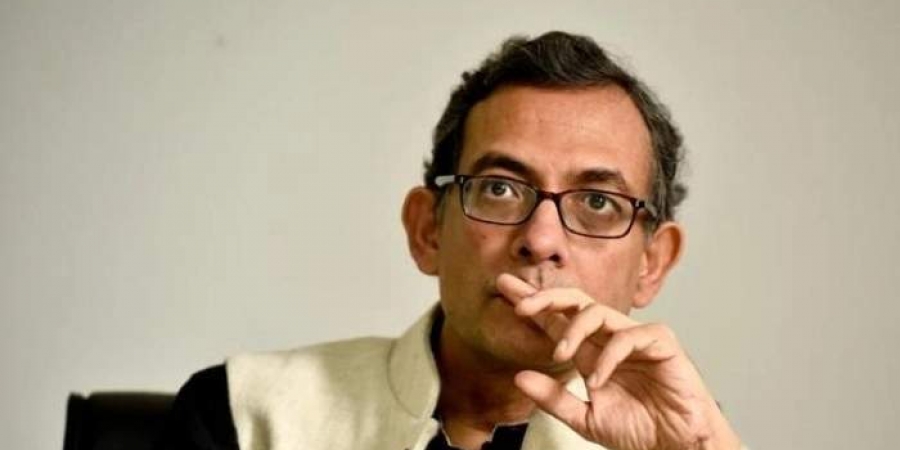
Nobel winner Abhijit Banerjee to come home to Kolkata on October 22

Abhijit Banerjee’s mother Nirmala said that she is personally preparing the room where her elder son will stay at their home in an apartment.

Indian-American Abhijit Banerjee won the 2019 Nobel for Economics. (Photo | Twitter)

Kolkata :

Nobel laureate Abhijit Banerjee will come to his paternal home in the city on Tuesday to visit his 83-year-old mother after winning the global award.

Banerjee will be in the city for two days and his mother Nirmala Banerjee, an economist in her own right, is busy overseeing the last minute preparations to welcome him.

She said she is personally preparing the room where her elder son will stay at their home in an apartment.

Banerjee, who was declared to be winner of the Nobel Prize on October 14, is now in New Delhi.

He will be at his home on October 23 and leave for the US early next morning, a family member said.

Nirmala Banerjee told reporters that she would be preparing fish items for food to welcome her Nobel laureate son.

“He loves fish and eats fish items whenever he is in Kolkata. I will prepare Katla fish curry and other fish items and some sweet dish,” she said.

The family and his friends have decided not to make it a gala affair this time as he will be on a tight schedule.

“He will be in the city in December-January and we are planning some big celebrations then,” Banerjee’s childhood friend Bappa Sen said.

“For now some of us who are his friends have decided to meet him and congratulate him in person,” he said.

Banerjee, an Indian-born American professor at Massachusetts Institute of Technology, has won the Nobel in economics for 2019, jointly with French-American Esther Duflo, his wife and Michael Kremer of Harvard University for “experimental approach to alleviating global poverty”.

Banerjee did his schooling at South Point School and had graduated in economics from the famed Presidency College (now University) in the city.

On Saturday he had visited his alma mater Jawaharlal Nehru University in New Delhi, where he completed had completed his Masters.

source: http://www.newindianexpress.com / The New Indian Express / Home> Nation / by Press Trust of India / October 22nd, 2019

Mini Europe by the Hooghly

Kolkata’s splendid history holds impressions of waves of European cultures

Kolkata :

Across the River Hooghly – a tributary of the River Ganges – one can still see signs of various European countries that had created their own unique areas, to facilitate trade through Calcutta’s Port. For those not too familiar with Bengal’s early history, a visit to the area is a real treat as one can see signs of the settlements of various European countries, along the banks of the Hooghly River.

The countries that settled here, creating their own spaces were Denmark, France, Holland and Portugal. As one drives along the riverside road, it is fascinating to see the structures that have survived over the years. The area occupied by the European settlement is the present Hooghly District. Fortunately, these countries have begun to appreciate the historical value of these old ruins. Denmark has recently restored a Tavern at Serampore and tourists now have a splendid place for a meal.

It was almost a century after the Portuguese adventurer Vasco da Gama landed on the western coast of India in 1498, that other European countries realised that they were losing out on trade with India. Soon the European settlements began inroads into Bengal, with the Hooghly being their main source of navigation. The first to create a settlement were the Portuguese who settled down at Bandel, long before the British made Calcutta their stronghold. They were soon followed by the Dutch in Chinsurah, the Danish in Serampore and the French in Chandannagar.

Across the River Hooghly – a tributary of the River Ganges (Photo: By Shona Adhikari) Image Credit: IANS

The Portuguese also built the first Christian church in Bengal in 1599.

In 1632, Mughal Emperor Shah Jahan attacked the Portuguese settlement and demolished their small fort and their church. The head of the Church, Father Joan De Cruz, was taken prisoner to Agra, where he was thrown in front of a ferocious elephant, who instead of trampling the priest, lifted him up and seated him on his back. Shah Jahan was so impressed that he freed the priest and provided free land for a new church.

Interestingly, such miraculous episodes continued. During another siege, Taigo, a local Christian, in a desperate bid to save the statue of Mary, dived into the Hooghly with it and was never seen again. However, on the day of the inauguration of the church, it was found on the river bank. Re-established, the statue came to be known as “Our Lady of the Happy Voyage”.

There is also a splendid Imambara worth seeing in Bandel. Designed by architect Keramtulla Khan, the two-storied building is centred round a rectangular courtyard, decorated with fountains and pools and has a sundial that is a great attraction. The structure has two 85-feet high towers with 152 stairs in each – one for men and the other for women. Built in the memory of the philanthropist Hazi Muhammad Mohsin, the structure took 20 years to build. The three-storied structure connecting the towers contains a clock at the top story. The lower rooms are said to contain splendid chandeliers, but are unfortunately out of bounds to the public.

The Dutch settlement ended in 1825, the Dutch fort of Gustava was demolished by the British and very little remains of the Dutch rule in Chinsura. The Dutch church was demolished in the 1980s, but the Dutch cemetery still stands containing an assortment of graves under the shade of ancient trees, with the oldest dating back to 1743.

It was after receiving Mughal Subedar Ibrahim Khan’s permission in 1673, that the French colony Chandannagar was established as a trading post on the right bank of the Hooghly River. Bengal was then a province of the Mughal Empire. The colony became a permanent French settlement in 1688 and in 1730, when Joseph Francis Dupleix was appointed governor of the city, its development included 2,000 new houses and a considerable amount of trade and commerce. For a short while, Chandannagar also became the main centre for European trade in Bengal.

Today, Chandannagar still boasts considerable French heritage.

The Strand is considered the most beautiful stretch of the Hooghly River. The tree-shaded promenade along the river is about 1km in length and 7 meters in width, and the area houses a number of French mansions. The Durgacharan Rakshit Ghat on the Strand is also an interesting mix of Indo- French architecture.

Also on the Strand is the Dupleix Palace Museum – one of the oldest museums of the region housing French antiques and period furniture. Just off the Strand is the Sacred Heart Church, dating back to 1884. It was designed by French architect Jacques Duchatz and has beautiful stained glass windows. A French colony till 1950, French is still taught as a third language in many of Chandannagore’s schools.

To make you aware that you are in French surroundings, there is the Chandannagar Gate constructed in 1937 to mark the Fall of the Bastille. Etched on stone is the slogan ‘Liberte, egalite, fraternite’ (Liberty Equality and Fraternity).

Serampore , the Danish Settlement, remained under Danish rule till 1845, after which the Danish Governor decided to sell it to the British East India Company. The Serampore college, remains well maintained with its grand facade. Danish missionary Carey along with Ward and Marshman, began the Serampore Mission Press and published the first Bengali translation of the Bible. They also launched the “Friends of India” newspaper. Another outstanding contribution was the installation of India’s first paper mill at Battala, set up by Marshman, which was powered by a steam engine.

The Baptist Mission Cemetery in Serampore contains the family graves of Carey, Ward and Marshman – three personalities whose immense contribution to literacy, cannot be disregarded. Between 1801 and 1832, the Serampore Mission Press printed 212,000 copies of books in 40 different languages.

IANS

source: http://www.gulfnews.com / Gulf News / Home> Asia> India / by Shona Adhikari / September 13th, 2019

Calcutta teen champions arts in US

17-year-old creates group to give kids choice of education

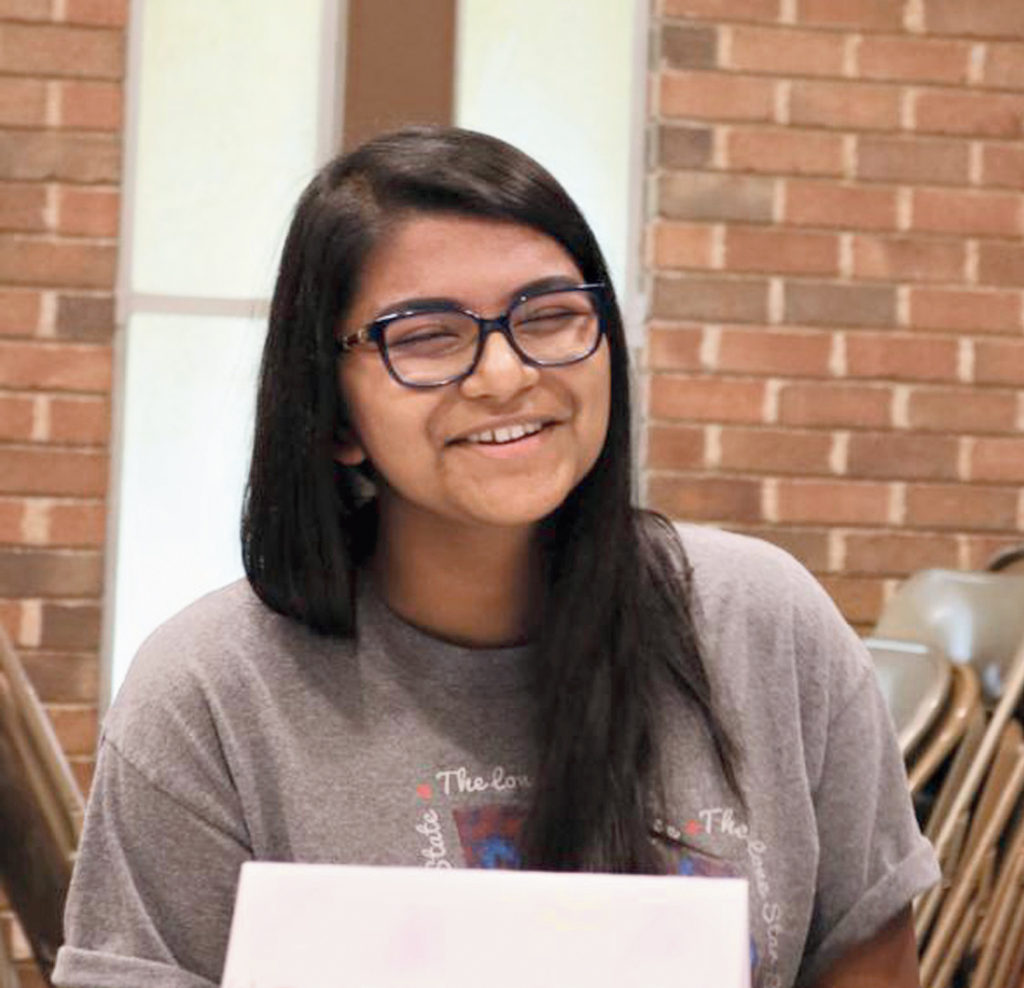
Children take part in a guitar-building session during a music workshop conducted by Humanities of Tomorrow, a Dallas-based group floated by Kaushiki Roy to spark interest in the humanities through creative activities. The students also made and decorated maracas, flutes and drums at the workshop.(Pictures sourced by correspondent)

A teenager with roots in the city is changing mindsets among students in Dallas, Texas, where she lives now.

Kaushiki Roy, 17, believes in giving children a choice in education. A former student of Calcutta International School, she created a group last month to help under-privileged children develop a taste for art, dance, theatre and music and pursue the arts stream in college.

Her goal: To rid students of the pressure created by the school curriculum and parents to opt for STEM (Science, Technology, Engineering and Math) subjects.

Kaushiki floated Humanities of Tomorrow with the help of some like-minded friends. Together, they involve children in diverse activities from art and craft to music and theatre.

“There are many non-profit organisations that coach underprivileged children in STEM subjects so that they can pursue college education in science and technology. However, none of them creates any interest in the humanities. I decided to do just that,” the Grade 12 student said.

The daughter of an IT professional, Kaushiki had felt the pressure to excel in science and maths during her schooldays in Calcutta.

“I studied there for two years — classes VI and VII. Right from that stage, I could sense this urgency among my classmates and their parents to work harder on science and maths. Most of the parents were doctors and engineers, like mine, and the kids wanted to follow the tried and tested path too,” said the fan of Ariel Lawhon of I was Anastasia fame.

“I remember attending an algebra class on my first day in school and feeling at a loss while my classmates aced the problems,” she said.

Kaushiki, who discovered her love for the languages early, felt kids in the US were also under pressure to excel in STEM subjects.

“The emphasis intensifies from Grade 8. My school caters to a diverse range of students. There are many Asians, too. Most kids are striving hard to excel in physics, chemistry and maths. Humanities subjects are often neglected,” said the girl who enjoys playing the piano.

Kaushiki Roy

Kaushiki, along with six friends, have designed a two-week arts curriculum for children. Surprise awaited her at home when her father supported her initiative despite his science background.

Workshops conducted by their group engage the children in mandala-making, playing the drums and encourage them to dabble in different theatre genres. Zumba and impromptu acting sessions are also held. The idea is to appreciate the creative qualities of the kids.

“There are different teachers for each subject. The teachers are all students like me. We also have volunteers. Together we try to train the children in forms of dance (contemporary and popular) and music. They learn to express through art. The training is meant to give them a good time and encourage them to speak up,” Kaushiki said.

“They should at least be given a choice. Liking humanities does not make you a loser. The mindset must change. Let them learn everything and then decide what they want to take up in college,” she said.

Kaushiki’s greatest gift — when students express an interest in pursuing humanities in future.

Humanities of Tomorrow has already conducted sessions for two different clubs of underprivileged children. The last day of each session ends with a carnival where the trainers and students have a good time together.

“Till now we have touched the lives of nearly 80 kids (between 9 and 18 years) in our locality. All of them are now looking at humanities from a different perspective. These children don’t get the kind of exposure we enjoy in school. So I am giving it to them in my way. We are thinking of inducting some of these children into our group as volunteers,” Kaushiki said.

She is already planning cultural awareness and environmental awareness weeks in her fall and spring breaks, respectively.

Kaushiki hopes to leave Texas for higher studies next year but wants her organisation to continue working. “My school has been very supportive. We are in the process of training juniors. I will help them when I come home during breaks. I will try to set up a branch of Humanities of Tomorrow in the state where I study,” said the girl, who dreams of being a journalist.

source: http://www.telegraphindia.com / The Telegraph, online edition / Home> West Bengal / by Chandrayee Ghose in Calcutta / August 28th, 2019

Noble edifices: publication lifts veil on mysteries of Bengal’s Raj Bhavans

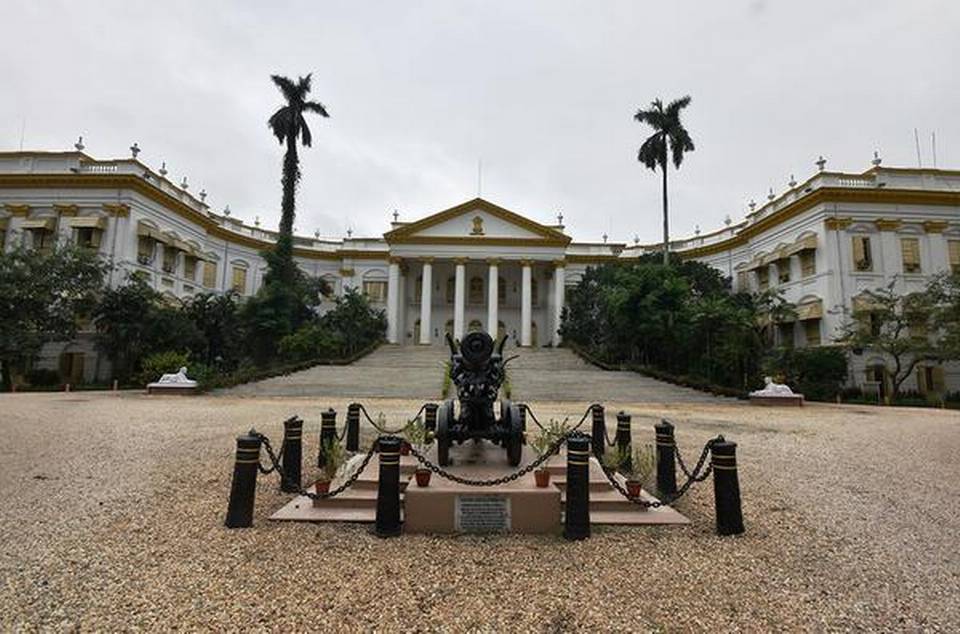
A view of the stately Raj Bhavan in Kolkata. File   | Photo Credit: Victoria Memorial Hall

Some of the policies that shaped colonial India, including the introduction of English education in India through Thomas Macaulay’s Minute of 1835, the Doctrine of Lapse, and the Partition of Bengal, were plotted in the Raj Bhavan.

A large room in the south of Raj Bhavan, Kolkata overlooking its gardens has a beautiful oil painting of Mahatma Gandhi by Jamini Ray, hung on the wall just above the desk of the Governor in a room that is called the Governor’s study. Not any people know that some of the most fundamentally transformative policies that shaped colonial India, including the introduction of English education in India through Thomas Macaulay’s Minute of 1835, the Doctrine of Lapse, the Ilbert Bill, the Partition of Bengal, and many others, were plotted in this very room. In words of Lord Curzon himself, the room ‘has witnessed discussions as agitated and decisions as heavily charged with fate as any private apartment in the wide circumference of the British Empire.’

Other rooms in the Raj Bhavan, Kolkata like the Council Chamber in the North-east wing of the first floor, which hosted the swearing-in ceremony for each new Governor-General or Viceroy, the Ball Room which from the very beginning was fitted with the original chandeliers and mirrors that once belonged to the French General Claude Martin and the Throne Room where the so-called throne of Tipu Sultan, captured from Seringapatam in 1799, is kept have all been witness to major historical events of the subcontinent in the 19th century.

Several anecdotes about the Raj Bhavan, Kolkata, the building that remained the principle seat of power for entire subcontinent from 1803 to 1912 have been the documented in the book titled “Those Noble Edifices- The Raj Bhavans of Bengal” which was unveiled by Governor Keshari Nath Tripathi here on Thursday. In the foreword of the publication, The Governor said that, this volume was planned because “we wanted to share these ‘secrets’ and inside stories of Kolkata’s most hallowed precincts with the public” and “ the purpose is to bring the Raj Bhavan – including its exteriors and interiors – closer to the public”.

Jaynata Sengupta, secretary and curator of Victoria Memorial Hall, who has written the book ,said that this publication is an attempt to “ lift this shroud of mystery and show what lies beneath, what the Raj Bhavan really means as a residence, to its exalted overlords as well as to its humbler inmates and workers”. Mr. Sengupta, in the publication about throws light of three Raj Bhavans of Bengal, the Raj Bhavan build by Lord Wellesley in Esplanade in early 19 th century which is similar to architecture of the Kedleston Hall in Derbyshire and the Raj Bhavans at Barrackpore and Darjeeling.

Full of maps, hundreds of archival photographs, letters and manuscripts the 200 page publication also refers buildings older that the existing Raj Bhavans where Governor General and officials of the East India company lived, from the Old Fort located between the river Ganges and today’s BBD Bagh (erstwhile Dalhousie Square), a house on what is on the street that subsequently came to be named after him (Clive Street) and the Old Government House which was also known as the ‘Buckingham House,’ . It was at this very spot at the Old Government House that Lord Wellesley constructed the Raj Bhavan. The cost of building Raj Bhavan then to between £1,70,000 and £1,80,000, that is, between Rs. 22 and 24 lakh which angered the East India Company’s Board of Directors.

In fact Lord Wellesley had similar plans of making another Raj Bhavan at Barrackpore, which derives its name British barrack or cantonment, but the plans were rejected by the Board of Governors of East India Company. The first bungalows at Barrackpore, was bought by the Bengal Government in 1785 for the occupation of the British Commander-in-Chief. After assuming the title of British Commander-in-Chief, which was conferred to him after the Battle of Seringapatam in 1799, Lord Wellesely took over the house British Commander-in-Chief was Sir Alured Clarke. “Wellesley later described Barrackpore as ‘a charming spot which, in my usual spirit of tyranny, I have plucked from the Commander in Chief.” Mr Sengupta writes in the book. Documents like a minute dated 1 April 1857, in Governor-General’s Lord Canning’s own handwriting, “regarding the outbreak of the ‘disturbance’ (the Revolt of 1857) at Barrackpore on the occasion of the disbandment of the 19th Native Infantry” have been highlighted in the book. It is believed that Lord Canning’s note was written at Barrackpore not far from where the “disturbances” have broken out. Mr Sengupta said that the Government House at Barrackpore was a mere shadow of what Wellesley’s grand and ambitious plan could have produced, it was still spacious enough to serve as a country residence for Governor-Generals and Viceroys. After independence, the Raj Bhavan at Barrackpore came under the care of West Bengal Police, housing the police training academy. Now the academy has been shifted out and the building has been restored. The restored building now houses a museum.

The third important structure the book discusses in detail is the Raj Bhavan in Darjeeling which came up on what was not of the conquered territory of the British. After the introduction of Tea to Darjeeling in the early 1840s and the British negotiating treaties with both Sikkim and Bhutan in the 1860s, Darjeeling became formally a part of British India in 1866. By the 1870’s Darjeeling became the summer seat of the Bengal Government and a suitable accommodation for the Lieutenant-Governor was built in the late 19 th century. Unlike the Raj Bhavan at Kolkata, which was built without a Garden the Raj Bhavan at Darjeeling always had a Garden.

“The main house was so extensively damaged by the Nepal-Bihar earthquake of January 1934 that it had to be entirely demolished, and replaced by a new Government House built in ferroconcrete during the tenure of Sir John Anderson (1932–37),” Mr Sengupta writes.

source: http://www.thehindu.com / The Hindu / Home> News> National / by Shiv Sahay Singh / Kolkata – July 18th, 2019

Larger features of total solar eclipse match IISER Kolkata’s prediction

Spot on: The team’s prediction (right panel) of two bright petal like structures in the Sun’s corona were confirmed by the observations of the eclipsed Sun (left panel). Photo courtesy: Durgesh Tripathi and CESSI  

The team predicted the shape of the Sun’s atmosphere at the time of the eclipse using a two-step model

Scientists from the Indian Institute of Science Education and Research (IISER) Kolkata were in for a pleasant surprise as the total solar eclipse on July 2 proved their prediction correct in its major features. They joined solar physicsts from India and several international researchers who had gathered in Argentina to view the eclipse.

While their aim was to check whether their prediction of the shape of the corona had been realised, imaging the solar corona, or the Sun’s atmosphere was the motivation for many others. The corona can only be viewed during a total solar eclipse. This total solar eclipse was visible only within a narrow strip of land stretching over Chile and Argentina.

Dibyendu Nandi’s group, from IISER Kolkata, had used a two-step model to predict first the shape of the solar magnetic field on the day of the eclipse and then extrapolate it to describe what the corona would look like. “Our predictions of two cross-equatorial streamers, or bright petal like structures the Sun’s Corona were confirmed by the observations,” said Prof. Nandi in an email to The Hindu.

Space weather

The model built up by the IISER Kolkata team can be used to predict space weather. It will also be useful in analysing data from the proposed Indian space mission – Aditya-L1 – which is meant to study the Sun’s corona. “We now know the basic theoretical premise of our computational modelling is correct. This work has given us confidence to utilise similar theoretical models for supporting the interpretation of data from India’s Aditya-L1 solar space mission which is currently under development,” says Prof. Nandi.

The path of the eclipse was known well in advance and hence a professional meeting was planned for solar physicists about a year earlier.

“The local organisers looked at possible locations near San Juan (which is situated at the edge of the path). One needs to go to the central line for maximum duration of totality,” said Dipankar Banerjee, solar physicist from Indian Institute of Astrophysics who helped organise the meeting.

“Special permission was needed to reach this place; apparently tourists are not allowed to these locations,” he added in his email to The Hindu.

This eclipse offered an excellent opportunity to view and image the corona. Despite being hotter than the layers of the Sun that lie within, the corona has lower density of photons. For this reason, the inner layers of the Sun such as the photosphere outshine the corona, rendering it practically invisible. Except, that is, when the Moon totally occults the Sun. During a total solar eclipse, the Moon’s disc completely covers the region of the photosphere. This lends a moment of total darkness. But just before totality, light from the Sun reaches viewers, first as a brilliant spot of light known as the “diamond ring.” At this stage, you can see the chromosphere and solar prominences. The next instant, when the Moon’s disc covers the Sun, we see an uneven ring of light – the corona. This is seen only during the totality.

Details to be analysed

The broad features of the corona are as predicted by the IISER Kolkata team. “We have to perform a detailed analysis to ascertain which fine scale features of the corona we got right and what aspects we did not. For this we have to wait for technically processed images and other scientific observations acquired during the eclipse by teams from the US National Science Foundation, regional observatories in Chile and Argentina and space-based satellites,” explains Prof. Nandi.

Based on constraints set by these observations, the group plans to refine their models before translating these into operational space weather forecasting tools.

source: http://www.thehindu.com / The Hindu / Home> Sci-Tech> Science / by Shubashree Desikan / July 06th, 2019

Book on French connection

The revolution & its effect on the colonies

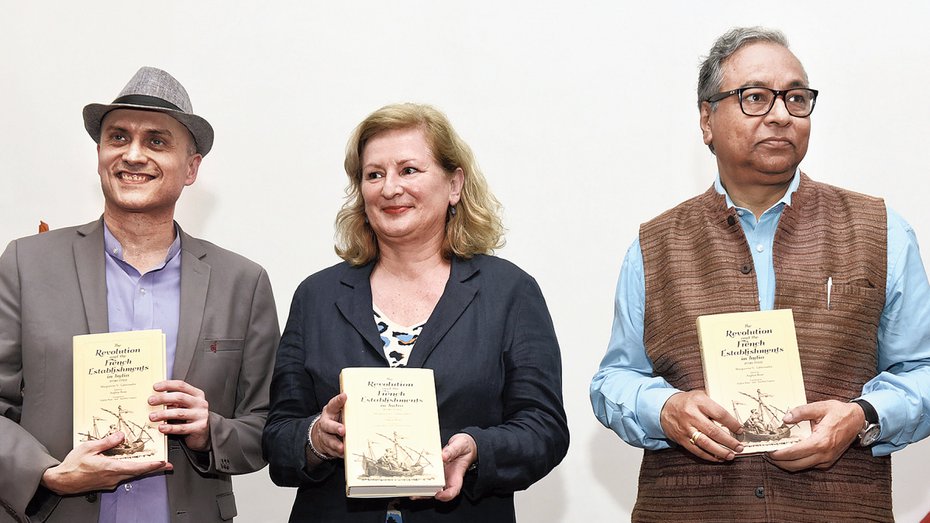
(From left) Alliance Francaise du Bengale director Fabrice Plançon, consul general of France Virginie Corteval and social historian Jawhar Sircar launch The Revolution and the French Establishments in India (1790-1793)./ The Telegraph picture

The fort of Bastille may have fallen in July 1789 but it was not until the British frigate La Vestale docked at Pondicherry in January 1790 that news of “the Paris Revolution” reached India.

The report was confirmed by the French barge Bienvenue which arrived soon after on February 22 from Port Louis, the capital of the Isle de France (now Mauritius).

A translation of a book, The Revolution and the French Establishments in India 1790 -1793, that sheds light on the happenings in the French colonies in the post-Revolution phase was launched on Thursday.

“The book in French published in 1930 was written by Marguerite V. Labernadie, a doctoral student who discovered the administrative archives of the French colonies in India lying almost in ruins in Pondicherry. The book offers fascinating insights into the relation between French colonial establishments in India and the effect of the French Revolution on them,” said Arghya Bose, the editor of the book.

Bose, a Chandernagore boy, chanced upon a dusty copy of the book at Bibliotheque Nationale de France (BNF) when he was a student at Sciences Po in 2015.

Chandernagore in Wood Engraving by Brickers & Sons, London (1878). / The Telegraph picture

On his return, he joined the Alliance Francaise du Bengale and met Sandhia Vasseur who had just joined as the librarian. “My grandparents on my mother’s side were French citizens of Indian lineage from Pondicherry. In 1947, when they were offered Indian citizenship, they refused and left for Cambodia, which was still a French colony. A war there in 1964 made them shift to France. I was interested in the Franco-Indian encounter as I have seen in my own family how important the French identity can be to people born in India. So when Arghya came up with the idea of translating the book I readily agreed. It was on Gallica, the BNF’s digital portal.”

The news of the revolution triggered political unrest against the French East India Company. “France was not sending money or armaments. The Bienvenue had embarkment orders for the paltry European artillery and troops, leaving Pondicherry defenceless. Chandernagore too faced frequent sieges and humiliation by the British. So people met Chevalier de Fresne, the governor general of Mauritius and Pondicherry, with a host of demands. Constituent assemblies were formed and decrees passed as they tried to replicate what they heard had happened in Paris. Such was the eagerness to conform to the changing political structure in France that they sent expensive gifts to relatives back home, seeking volumes of the minutes of the National Assembly,” said Bose.

Another interesting aspect is the tussle between Chandernagore and Pondicherry. “While Pondicherry claimed administrative supremacy, Chandernagore, dealing especially in salt and salt petre, was the centre of trade. It paid enough revenue to the French government to offset deficits from the other Indian colonies Mahe, Karikal and Yanaon. They demanded control over the use of their revenue which Pondicherry refused.” The book ends with the British invasion and capture of the French colonies in India in 1793 as a fall-out of France going to war against England.

“The French colonies are not studied at length. Material available to Indian researchers on this subject is scarce. The book is a valuable addition to French colonial history in India,” said Jawhar Sircar, who was present at the launch.

source: http://www.telegraphindia.com / The Telegraph, online edition / Home> West Bengal / by Sudeshna Banerjee in Calcutta / July 08th, 2019