Category Archives: World Opinion

Bengal ranked top in cut flowers’ production across India: Study

Kolkata :

West Bengal is ranked on top with production of over 250 crore cut flowers across India thereby clocking highest compounded annual growth rate (CAGR) of over 597 per cent during five-year period of 2007-08 and 2011-12, noted a recently concluded study by apex industry body ASSOCHAM.

“West Bengal has also emerged numero uno with highest share of about 34 per cent in production of over 740 crore cut flowers throughout the country as of financial year 2011-12, production of cut flowers in India is growing at a CAGR of over 14 per cent,” according to a study titled ‘Value addition to rural economy: The promise of floriculture,’ conducted by The Associated Chambers of Commerce and Industry of India (ASSOCHAM).

“Festivals, weddings, large scale political functions and other special occasions are driving demand for cut flowers as they are mostly used for decorative purposes, as gifts/bouquets for formal events,” said D.S. Rawat, national secretary general of ASSOCHAM while releasing the findings of the chamber’s study.

“Though the initial investment is very high, flower production gives much higher returns compared to traditional crops, however, one has to wait for four to five years for breakeven,” said Mr Rawat.

West Bengal is ranked eighth in terms of production of loose flowers. The state produces about 64,000 tonne loose flowers clocking a CAGR of over seven per cent during the aforesaid period. While loose flower production in India is growing at a CAGR of over 17 per cent as India produces over 16.5 lakh tonne loose flowers annually.

However, area under flower production in West Bengal has shrinked from about 27,000 hectares in 2007-08 to about 24,000 hectares in 2011-12 thereby registering fall at a CAGR of over three per cent, pointed out the study prepared by the ASSOCHAM Economic Research Bureau (AERB).

Apart from this, share of West Bengal in area under flower production across India also plummeted by seven per cent during the aforesaid period i.e. from about 16.5 per cent share in 2007-08 it came down to 9.4 per cent in 2011-12, highlighted the study.

It is estimated that about two lakh people are involved cut flower production in West Bengal which is blessed with diverse agro-climatic conditions suitable for flower production.

Dedicated cold storage facilities for flowers near to the main production centres would give a boost to exports of flowers from West Bengal, besides promotion of bio-technology especially tissue culture and genetic engineering would only further help the in realising its potential in floriculture industry in the state, noted the ASSOCHAM study.

Ensuring availability of quality seeds and improved varieties of planting materials, domestic development of capabilities for establishing poly-houses/shade-houses, providing loans at attractive interest rates to farmers willing to produce flowers, luring private sector participation for investments by offering tax rebates and incentives, conducting buyer-seller meets across India and even abroad are certain key policy recommendations listed in the ASSOCHAM study to further promote floriculture industry in West Bengal and other parts of India.

source: http://www.timesofindia.indiatimes.com / The Times of India / Home> City> Kolkata / by Udit Prasanna Mukherji, TNN / September 01st, 2014

INDIA ON WAX – Record discs that helped defeat the British empire: Tagore sings ‘Bande Mataram’

During the freedom struggle, recordings of patriotic speeches and songs helped rally support.
PhonographKOLKATA01sept2014
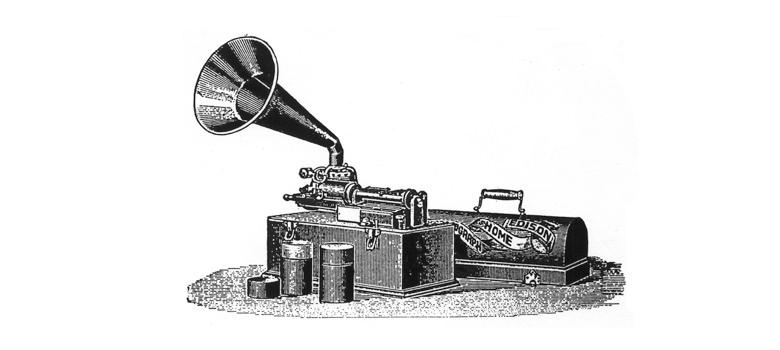
Between 1877 and 1878, Thomas Alva Edison submitted patent applications for the phonograph in many countries, including British India. It is not known when these patents were granted, but it is known that in December 1878, the first phonograph recording was demonstrated in Kolkata.

For the next 30 years, recordings on the phonograph cylinder became quite popular, remaining so even in the early years of disc records.

Many members of royal families and wealthy people bought cylinder phonograph machines and recorded musicians and religious personalities. The Maharajah of Khetri recorded Swami Vivekananad’s speeches and discourses much before he went to America and gave his famous talks on religion. The internet is full of versions of his celebrated speeches.

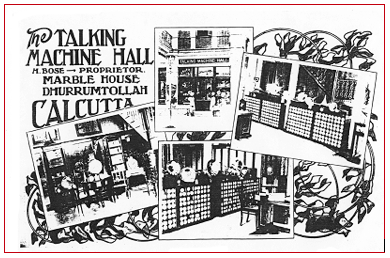
Hemendra Mohan Bose (1864-1916) opened the Talking Machine Hall in Kolkata, a shop where one could get one’s voice recorded. Bose was a sound recording expert and also had an agency to sell Edison and Pathe brand phonograph machines. Many great writers, poets and political leaders would visit him and he would record their recitations and speeches.

A 1906 catalogue lists several cylinder recordings of Rabindranath Tagore. Unlike disc records, cylinders could not be reproduced for sale. Most of these cylinders have been lost. Some museums have broken or damaged copies of cylinders as artefacts but no audible sound can be extracted from them.

TagoreAdsKOLKATA01sept2014
During agitations against the partition of Bengal in 1905, H Bose recorded many political speeches and songs, such as Bande Mataram, both on phonographs and disc records, and they became very popular. But his factory and shops were sealed, machines and discs destroyed ruthlessly by police. As a result, nothing has survived today except a very short piece from Bande Mataram, sung by Tagore.

Recording experts from Beka, a German company, were in Kolkata in November 1907. The British government went about destroying all nationalistic material, whereas the German company was the first to record a political speech right under the nose of the British.

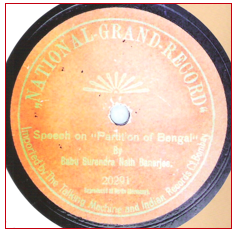
The National Grand Record label had a saffron disc with a rising sun as the logo. On it was recorded a speech by Babu Surendranath Banerjee, on the partition of Bengal. The flipside of this unusual 78-rpm disc has a speech on Bande Mataram.
DiskKOLKATA01sept2014

The man responsible for producing this disc was Sir Abdul Halim Guznavi, a political leader and agent for the Beka record company in Kolkata. Only few copies have survived. We have the image of the label only but no access to the audio file of this historically important recording.

We welcome your comments at letters@scroll.in.

source: http://www.scroll.in / Scroll.in / Home> All News / by Suresh Chandvankar / August 15th, 2014

How Vicky Roy went from being a ragpicker to celebrity photographer

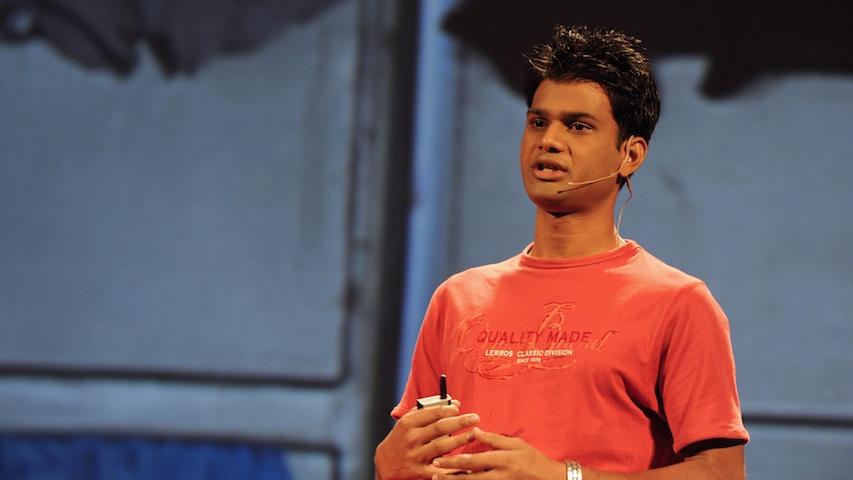
VickyRoyKOLKATA31aug2014

Vicky Roy came from a poor family, other than him, there were six other mouths of his three sisters and three brothers to feed. Getting beaten by his mother was normal, and he was not allowed to play with other children, and while his parents went in search of work, he was left with his grandparents.

Running away:

In 1999, when he was 11-years old, Roy decided to run away. With Rs. 900 in his pocket, which he had stolen from his uncle, he boarded a train at Purulia, West Bengal, and landed in Delhi. Some street children at the station spotted him crying, and took him to Salaam Balaak Trust (SBT), a home for young boys who have no place else to go that was formed from the proceeds of the Mira Nair movie ‘Salaam Bombay.’

But the place was always locked, this did not suit Roy’s free spirit, so one morning when the gates were opened for the milkman to come, he ran away for a second time. He met the same kids he had met at the railway station, and after narrating his tale, he joined them as a ragpicker. ” I collected water bottles and sold them for Rs. 5, the police beat us and the goons on the railway platform would steal all our money. I joined a restaurant near Ajmeri gate as a dishwasher, during winters the water was cold, and I had rashes that would bleed. This was when I met a volunteer from the same SBT who told me that I should be in school and that the trust had many centres and in some you could attend school and you are not locked up all the time,” says Roy. He rejoined one of the many centres the trust ran called Apna Ghar.

Back to SBT and meeting Dixie Benjamin:

Roy scored 48 per cent in his 10th standard board exams. Realizing that he was not bright academically he was told to join National Institute of Open Schooling where he could get training in computers or TV repair. His first brush with photography happened here, when he came across two kids who were undergoing a photography training, and had also gone to Indonesia and Sri Lanka.

Little did he know that his life was about to change forever.

He met Dixie Benjamin, a British filmmaker, who was making a documentary on SBT. Roy hit it off with Benjamin and became his assistant, and thus began his journey as a photographer. Benjamin couldn’t converse in Hindi, and Roy knew only a smattering of English, but he was still able to pick up most of what Benjamin taught him about concepts like aperture, lighting and so on. Before this Roy had used a plastic Kodak camera to take photos. Benjamin brought him upto speed with the use of an SLR.

A dream comes true:

Roy was soon to turn 18-years, and he was dreading it, this meant that he will have to leave SBT and set out on his own. SBT would provide with the basics like a gas cylinder, stove, matress and utensils: but he knew no other life other than what he had at SBT. However, becoming independent proved a blessing in disguise. Roy approached Anay Maan, the well-known portrait photographer to be his assistant. He agreed, but wanted Roy to stay with him for a minimum of three years, he did want him to leave after a few months having picked up some tricks of the trade.

Anay Maan turned out to be a good teacher and mentor. He used to teach Roy about photography by drawing a picture by hand and explaining concepts like lighting and depth of field. The assignments took Roy to many places, his life was now lived in luxurious hotels, and he was collecting flight boarding passes by the dozen. He also browsed a lot of books on photography, which told stories of different subjects. It occurred to him that he had a story to tell as well. He was already on possession of a Nikon F80 that he had bought taking a loan of Rs 28,000 from SBT, which he had repaid by giving back Rs 500 a month.

He shot street children who were 18 years or less, and had a goal to do something with their lives. “I had my first exhibition called ‘Street Dreams’ in 2007, this was sponsored by British Commission and DFID that was very successful. I also took the exhibition to London and South Africa and sold many copies of the book. I now started feeling like I had arrived as a photographer and started developing an attitude,” says Roy. Anay Maan called him and put things into perspective saying that before the exhibition he was simple, but now he was rude. This struck a chord in Roy, who promised to stay true to his roots and not forget his humble beginnings.

He continued working with his mentor on a part-time basis and mostly on the big assignments. There was a subtle change in their relationship, Ayaymaan treated him with a lot more respect, now as his equal, and friend.

Dreaming bigger:

Having a built a platform with ‘Street Dreams’ Roy was confident to take on more ambitious projects. In 2008, there was global competition organized by Maybach Foundation, the Ramchandra Nath Foundation nominated his work, and he was one among three photographers chosen for a six-month residency to be held in 2009 at the International Centre for Photography. This led him to be given access to the World Trade Centre (WTC) site, once a week, for two hours. “I finally felt I knew the reason why I had run away from home all those years back,” recalls Roy. His work was exhibited at WTC 7, and won the Duke of Edinburgh’s award, he was invited to lunch with Prince Edward at Buckingham Palace. This was the first time that he had heard of the palace. Roy’s work started to go places: like the Whitechapel Gallery and the Fotomusem Switzerland. He held his second solo exhibition – WTC: Now- at the American centre in Delhi, in 2009.

Going back to his Apna Ghar roots:

After tasting success globally, Roy decided to come back home to Apna Ghar and resumed work that he had started in 2007. The work was displayed at Vadera Art Gallery, and to coincide with 25 years of Apna Ghar’s existence, he teamed with editor Sanjiv Shaith to bring out a book that was debuted at the Delhi Photo Festival in 2011 called Home. Street. Home.


Giving back:

Even after all the success that Roy has under his belt in his relatively short career, he doesn’t feel like he has arrived as yet. But he’s giving back to his fraternity in small ways. Last year, along with photographer Chandan Gomes he started a photo library called Rang by donating over 500 books to Rang. Rang organizes photography workshops for children in schools and shelters and tries to infuse the spirit of photography in them. The high-quality books on photography can be accessed by anybody at Rang’s Open Library, which is currently located within the Ojas Art gallery in Mehrauli.

Realizing the invaluable role that mentors like Benjamin and Anaymaan played early on in his life he has taken on himself to mentor other upcoming new photographers. He has currently taken under his wing, a 20 year old called Anish to assist him with his shoots.

You can check out Roy’s work here.

Disclosure: The author was hosted by the organizers of the INK Conference, at Kochi, where he met Vicky Roy, an INK 2013 Fellow.

source: http://www.social.yourstory.com / Home> Social Story / by Nelson Vinod Moses / January 29th, 2014
Child Crusader’s Story to Inspire the World

Kolkata :

Her defiance against an age-old custom developed into a campaign that caught the imagination of the nation. And now anti-child marriage crusader Rekha Kalindi will rub shoulders with Malala Yousafzai and Anne Frank in a book that tells the tales of how they changed the world.

The story of this braveheart from West Bengal’s Purulia district, conferred the National Bravery Award for refusing to be a child bride and inspiring many of her ilk, features in the “Kinderen Die De Wereled Hebben Veranderd” (Children Who Changed the World), a Dutch book to be released Nov 20 to mark the 25th anniversary of the UN Declaration of the Rights of the Child.

Written by renowned Dutch journalists and historians, the book portrays the heroics of 20 children who stood up against injustice or became a symbol of injustice done to them and includes the likes of Pakistani education activist Malala Yousafzai and holocaust diarist Anne Frank.

Talking about Rekha’s story – the only one from India – Aletta Andre who has penned the chapter on her, elaborated about the 16-year-old’s efforts to inspire nearly 10,000 girls in the district to pursue their studies and not to concede to their families’ demand of an early marriage.

“It’s not only about her own defiance but also about how she counselled and inspired a lot of other girls to do the same. At least 10,000 in Purulia district have resisted child marriage and her story has been also mentioned in a Class V textbook,” Andre, a Delhi-based Dutch journalist, told IANS on the phone.

Considered a liability, her parents had planned to marry Rekha off at 11 to get rid of “their burden”. But having seen her elder sister suffer as she became a mother at 12, the idea of marriage terrified Rekha and eventually led her to revolt that created history.

Conferring the Bravery award in 2009, the then president Pratibha Patil had described Rekha as a “messenger of social change”.

At the age of four Rekha started working, rolling beedis along with her mother. Now a class 10 student of Jhalda Satyabhama Vidyapith, she actively campaigns against child labour and child marriage.

Ecstatic about being part of the book, Rekha at the same time is distraught for she can read only Bengali and not Dutch.

“I heard the book is in some other language which I cannot read. I am sad at that, but I am also very happy that my story will be read by foreigners,” Rekha told IANS.

Aspiring to be a teacher and preparing hard for her board exams, Rekha insists her job has just begun.

“There is so much poverty; many girls have to work because of which they don’t get time to study. I wish a day comes when all of us will go to school without having to worry about work,” added Rekha.

Unicef, which has been working to curb the menace of child marriage, expressed happiness at Rekha’s contribution getting international recognition and hoped this would inspire and create many a crusader like her.

“This is surely a proud moment for all of us and I hope it creates many a Rekhas to fight out the menace of child marriage and child labour,” Asadur Rahman, head of Unicef’s field office said.

Others featuring in the book include Pakistani child labour hero Iqbal Masih who helped over 3,000 minor bonded labourers to escape before he was murdered in 1995 and South African Nkosi Johnson, who made a powerful impact on public perceptions of HIV/AIDS and its effects before his eventual death at the age of 12 from the pandemic.

source: http://www.newindianexpress.com / The New Indian Express / Home> Nation / IANS / August 31st, 2014

US diplomat to meet Mamata

USDiplomatKOLKATA15aug2014

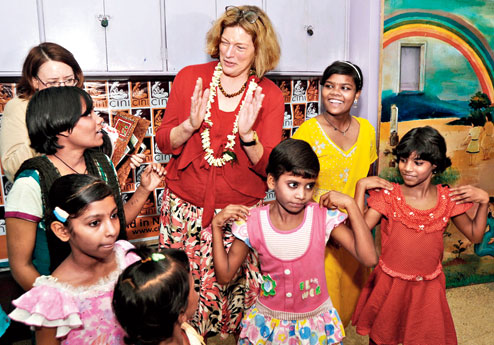
US charge d’affaires ambassador Kathleen Stephens (centre) spent an hour on Wednesday at CINI, the Child In Need Institute’s short-stay home on Rafi Ahmed Kidwai Road.

She discussed child and maternal health care with CINI officials before interacting with children at the home. The kids, aged between six and 14, greeted her with a garland and danced to the song Dhaaker taaley from the film Poran Jai Jolia Re. Stephens handed each child a little brooch with the Indian flag on it.

In the afternoon, Stephens visited Presidency University and met vice-chancellor Anuradha Lohia. Stephens interacted with teachers and students on a host of issues, including exchange of teachers and students and research collaboration between Presidency and US universities. She spent close to an hour browsing through the galleries and artefacts at Victoria Memorial. Picture by Pradip Sanyal

Calcutta :

US charge d’affaires ambassador Kathleen Stephens is scheduled to meet chief minister Mamata Banerjee at 4pm tomorrow at Nabanna, sources in the state secretariat said this evening.

A charge d’affaires is a diplomatic secretary or a counsellor or a minister who heads a mission in the absence of its titular head.

“I am here to take Indo-US relations to a new level,” said Stephens, who took charge in early July.

If the meeting is held according to schedule, it will be Mamata’s first such session with a visiting foreign diplomat since she met Nancy Powell, the then US ambassador, in May 2013.

Powell, who had tried to “change the chief minister’s mind on FDI in retail” during that meeting, did not get an audience with Mamata during her next visit to Calcutta in February this year.

Sources in the US consulate had described Powell’s failure to meet Mamata as a “disappointment”. The then US ambassador to India had met then Gujarat chief minister Narendra Modi before her Calcutta visit.

Asked about her chances of meeting the chief minister, Stephens, who interacted with a select group of journalists this evening, said: “I have a good schedule tomorrow.”

The fact that Stephens and other officials of the US consulate were guarded about the prospect of the meeting was an indication that they did not want to make any announcements before the session.

“One cannot rule out the possibility of the meeting being cancelled at the last minute,” a Nabanna source said.

Unlike her predecessor Buddhadeb Bhattacharjee, who used to meet visiting diplomats or delegate the responsibility to senior ministers, Mamata has not shown much eagerness in engaging with foreign envoys.

The Nabanna sources said they received requests from visiting diplomats, seeking appointments with Mamata. But on most occasions, they do not get an audience with the chief minister or any of her senior colleagues, the sources said.

The approach has, however, been different in case of engagements with the US. Then secretary of state Hillary Clinton had come to Calcutta in May 2012 to meet the chief minister.

Although the Hillary-Mamata meeting had gone off well, there was a controversy later over whether they had discussed FDI in retail.

“A statement released by the US consulate had said the issue had been touched upon. But the way the state government reacted, with finance minister Amit Mitra calling up the US consul-general, did not go down well with the American establishment,” said a source close to the consulate.

Although Mamata had met Powell after that, the vibes were “not as warm as before”, the source said.

If Mamata finally meets Stephens, it will send a positive message to the US establishment.

“The chances of a meeting seem brighter this time as the chief minister is unlikely to miss the opportunity to tell the visiting diplomat that she is leaving for Singapore later this week to scout for investment,” a source said.

source: http://www.telegraphindia.com / The Telegraph, Calcutta / Front Page> Bengal > Story / by Our Correspondent / Thursday – August 14th, 2014

British Baptist Missionary William Carey to be remembered on his 253rd birthday

Kolkata :

British Baptist Missionary William Carey, who was the driving spirit behind the spread of modern English education in Kolkata, will once again be remembered on his 253rd birthday on August 17. The Bible Society has organised for a Carey Lecture to be delivered by Jawhar Sircar, the CEO of Prasar Bharati.

Sircar has been researching on old Kolkata for a long time and will focus his lecture on the Bengal Renaissance and the role of Carey behind it.
This will be followed by a dance drama, Dhrubojyoti Tumi directed by danseuse Alaknanda Roy. The performers are inmates of correctional homes.

source: http://www.timesofindia.indiatimes.com / The Times of India / Home> City> Kolkata / by Jhimli Mukherjee Pandey, TNN / August 07th, 2014

This Lee is a game changer in kabaddi

Jang Kun Lee (left) and Seong Ryeol Kim.  / Photo: Special arrangement / The Hindu
Jang Kun Lee (left) and Seong Ryeol Kim. / Photo: Special arrangement / The Hindu

In a cluster of doughty Indian kabaddi players the presence of a South Korean creates an outlandish effect, true to his name, the Korean has been noted for his speed and agility.

In a cluster of doughty Indian kabaddi players the presence of a South Korean creates an outlandish effect.

Jang Kun Lee seems to have leapt out of a martial art move and landed straight on the kabaddi mat to salvage his Indian hosts from crisis. This is how the plot seems to be unfolding for the Bengal Warriors in the Pro Kabaddi League, where the 21-year-old South Korean, who calls himself a student of the sport, has already become a hero for the team.

Jang Kun Lee, who shares a part of his name with the celebrated martial art exponent Bruce Lee, has raised the expectations of his Indian teammates, something akin to the exploits of the celluloid hero. Lee is the raider (attacker) every defence dreads and the South Korean showed he is a quick learner as he picked up successive ‘Best Raider’ awards in the back-to-back matches his team Bengal Warriors won when the second round of the recently-launched STAR Sports Pro Kabaddi tournament hit the city this weekend.

His speed and agility are already a talk of the tournament. The player says it comes from his experience of playing the martial art sports like judo and taekwondo. “The tournament is a big learning experience for me and it really feels nice to be apart of it,” Lee said, after picking up his second best raider award.

The Korean interest in Kabaddi does not stop with Lee. The secretary general of Korea Kabaddi Association Yoon Young-hak is closely monitoring the education process of his boys. The other Korean player with Bengal Warriors, Seong Ryeol Kim, is a defender and had already made his debut with the Warriors. Young-hak insists that Kim is also a player of great merit. There are two more Koreans – Dong Ju Hong and Tae Deok Eom who play for Dabang Delhi and Patna Pirates – but it is Lee who is currently hogging the limelight.

Lee went on to reveal the secret of his instant success. “We have a different training procedure in Korea where we focus more on weight training and other strength-building measures. That probably makes us quick and agile. Indians are the best in the world in technique, but I am not sure about the time they devote to weight training,” he said.

The South Korean player says the newly designed professional tournament like Pro Kabaddi will help the sport gain the attention of the world.

“Kabaddi is yet to pick up in our country. The good performance of players like Lee or Kim will definitely help the sport grow in our country,” said Young-hak appreciating the way Bengal Warriors is using his compatriots. “We are preparing for international tournaments like Asian Games and our experience here will form an important part of our training and understanding of the game,” Yoon Young-hak said, adding that his country also is taking the help of coaches from Sports Authority of India to train their players.

Commonwealth bronze sweetens life for Sakina Khatun

Sakina khatun with the bronze medal she won at the Commonwealth Games in Glasgow. / The Hindu

Her success is all down to her hard work: coach

Life has not been kind to Sakina Khatun, who won a bronze medal at the Commonwealth Games on Saturday.

In Glasgow’s Clyde Auditorium, the 25-year-old Bangalore-based para-athlete lifted a weight of 88.2 kg to finish third in the women’s powerlifting event (Lightweight Group A). It was a success that came after prolonged hardship.

“My parents cried when I broke the news to them on the phone,” she told The Hindu from Glasgow.

Her coach and mentor Farman Basha, who also competed at the Games, faltered in his event on account of an injury, but his delight was enormous. “She has been through a lot. So I’m very happy for her,” he said.

Sakina hails from Basirhat in West Bengal’s North 24 Parganas district. Her mother is a farm labourer while her father, ailing with a serious back condition, is unable to work. “He can’t even walk,” Sakina said. “We don’t have the money for his treatment.”

Afflicted with polio at a young age, she took up swimming on her doctor’s suggestion, learning in ponds in her village before a teacher in school noticed she had an aptitude for it. “Despite steady success at the national level, I was ignored for the 2010 Commonwealth Games team. It left me disheartened and I quit the sport,” she said.

Sakina switched over to powerlifting on the advice of one of her swimming coaches, and in 2010 was directed to Basha. “She wanted to come over to Bangalore to be trained by me,” he said. “She had no money and I couldn’t afford to spend a rupee on her.”

But Sakina found a benefactor in Dilip Majumdar, a businessman who volunteered to support her training. “I’m a girl and my parents were against my leaving home,” she recalled. “But my sponsor managed to convince them.”

“At first, she could only lift around 25 kg,” recalled Basha. “But gradually she improved. Her success is all down to her hard work.”

source: http://www.thehindu.com / The Hindu / Home> News> Citis> Bangalore / by Shreedutta Chidananda / Bangalore – August 04th, 2014

The Lede – Test of Metal : The Indian origins of a famous rugby trophy

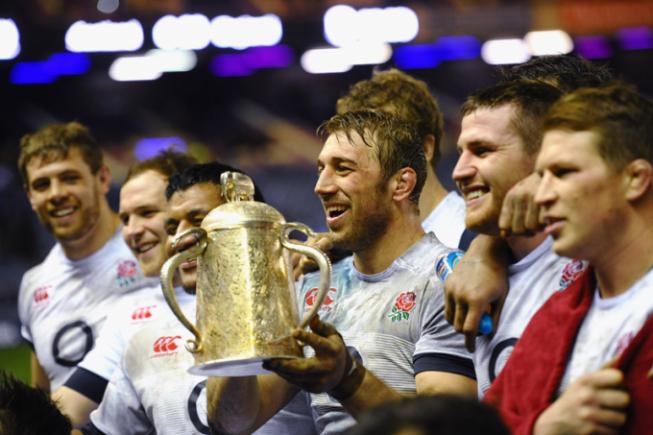
Chris Robshaw, the captain of the English rugby union team, holds the Calcutta Cup, which England retained in February - / Photo : Laurence Griffiths / Getty Images
Chris Robshaw, the captain of the English rugby union team, holds the Calcutta Cup, which England retained in February – /
Photo : Laurence Griffiths / Getty Images

On 8 FEBRUARY, before a crowd of 67,144 people, Scotland faced England at Murrayfield Stadium in Edinburgh as part of the 2014 Six Nations rugby championship. After 80 minutes of play on a muddy pitch, England secured an authoritative victory, with a score of 20–0. As disappointed home supporters filed out, up in the main stand Chris Robshaw, the jubilant English captain, held aloft an intricately engraved silver trophy, with three handles shaped like cobras and an elephant figure crowning its dome-shaped lid: the Calcutta Cup, the oldest trophy in international rugby.

The trophy Robshaw received was, in fact, a replica of the original cup, which is stored in the World Rugby Museum in Twickenham, near London. The museum’s curator, Michael Rowe, told me over the phone that although the cup’s significance has decreased in recent years, it was incredibly prestigious in its heyday, when it was “the Ashes in the sport of rugby.” What is most remarkable, Rowe said, was that the trophy’s origins can be traced back to the largely forgotten history of rugby in colonial India.

In the winter of 1872, a group of British émigrés having a hard time adjusting to life in Calcutta published letters in the Englishman, a prominent newspaper, asking that the administration organise rugby matches. A game was played on Christmas Day that year, with English players on one side and those representing Scotland, Ireland and Wales on the other. There is no record of who won, but the event was a success, and was repeated the following week. Those two matches led to the formation of the Calcutta Football Club in January 1873 (at the time, rugby was one of several related games called “football”). The club thrived—137 members joined in the first year alone—and it joined the Rugby Football Union, the sport’s governing body for all British territories, in 1874.

After a successful start, however, the club fell on hard times. A regiment of the British army left the city for a new posting, and new British arrivals were more interested in polo and tennis. According to Rowe, funds soon started running out, forcing the closure of the club’s free bar, which caused the membership to drop substantially. GA James Rothney, the club’s treasurer, secretary and team captain, considered several fundraising suggestions, but concluded that none of them would keep the club going.

Then, Rowe told me, in 1877, Rothney had an “ambitious” idea. He wrote to the Rugby Football Union suggesting that, to preserve the memory of the club, its remaining funds be used to make what he described as a trophy of “ornate Indian workmanship,” to be “devoted to the purpose of a Challenge Cup and presented to the Rugby Union to be competed for annually” in any way deemed “best for the encouragement of Rugby Football.” Both the Union and the club’s members agreed. Rothney withdrew the club’s remaining £60, a substantial sum at the time, in the form of 270 silver rupee coins. These were melted down in September 1878 by WE Jellicoe, a British silversmith and watchmaker on Calcutta’s Esplanade Row, to create the Calcutta Cup.

The cup was taken to Britain, and in March 1879 the Union organised the first Calcutta Cup match—a game in Edinburgh between England and Scotland, which ended in a draw. The contest was repeated in every following year, and the cup, Rowe said, quickly “became eponymous with the England–Scotland rugby game.” In 1883 it was incorporated into the Home Nations Championship, which eventually became the Six Nations—an annual rugby union competition involving France, Italy, Scotland, Wales, England and Ireland that is effectively the sport’s European championship. The cup has been contested every year since, except during the World Wars. England has won 68 of the 121 matches to date, with Scotland winning 39 and 14 matches ending drawn. England has retained the trophy since 2009.

Today, the original trophy is treated with special care. In 1988, on the night after England retained the cup, two drunk players, one English and the other Scottish, took it out onto the streets of Edinburgh, where they passed it between themselves and dropped it several times. The cobra handles were crushed, and the body and base badly dented. The Edinburgh jewellers Hamilton & Inches restored the cup to its original form, but, as Rowe told me, “silver is a soft metal,” and the restoration left the cup “in a fragile state.” The incident led to a decision to give both nations replica trophies, and store the original at the World Rugby Museum to avoid any further damage.

Rowe said that with the rise of other rugby-playing nations, the England–Scotland rivalry has mellowed in recent years, and so reduced the significance of the Calcutta Cup. But, he added, Rotheny’s idea to entwine the memory of the Calcutta Football Club into the history of rugby was a success. “It is quite remarkable that a short-lived club has such a place in the history of the sport,” he said.
_________________________________________________________________________

Atul Dev is a correspondent with The Sunday Guardian.
_________________________________________________________________________
source: http://www.caravanmagazine.in / The Caravan / Home> Reporting & Essays> The Lede / by Atul Dev / 2014

Prince Dwarakanath lies forgotten in a corner of London

On August 1, 1846, a treacherous thunderstorm raged through London. ‘Vivid flashes of lightning’ struck, the wind howled, and in a hotel room, very close to Bond Street, a ‘Prince’ died. Dwarakanath Tagore was only 52 when he died in the company of just two members of his vast family — a son and a nephew.

Four days later, they buried him, without ceremony in Kensal Green Cemetery. Among the mourners were his youngest son Narendranath, nephew Nabin Chandra Mukherji, four medical students who had accompanied him on his trip to England and his former partners Major Henderson and William Prinsep. Queen Victoria and Prince Albert — who had welcomed him to their court like ‘an old friend’ just over a year ago — sent four carriages. It was a princely send off.

Whatever may have been his reputation back home, in London Dwarakanath was the darling of fashionable society. He gave lavish parties, dined with royalty in England and France, showered his friends and hosts with expensive gifts and gave generously to charities. He was immensely popular with European ladies and made no attempt to conceal his many ‘friendships’. He even kept a boat on the Thames with a certain Mrs Caroline Norton — a divorced, small-time Victorian poet of some ‘beauty and wit’ — where he hosted the literati of the day from Charles Dickens to WM Thackeray.

It is all a very different picture today. Although, the city that he so loved continues to remain popular with most of his fellow countrymen, not many people come to see him. We took the Bakerloo Line on the Underground, got off at Kensal Green Station, and turned left. It was late September and the trees had started changing colour. Kensal Green is huge — 72 acres in fact — and is one of London’s oldest and most distinguished public burial grounds. It has many celebrated residents from scientists, botanists, actors and royalty — Ingrid Bergman and Freddie Mercury among them.

But just as we walked though the very impressive archway of the main gate, we realised we were quite lost. In the absence of any map or directions it was near impossible to find Dwarakanath. Although I knew what his grave looked like, I had no idea where it was. And there was not a soul in sight. A little later, a group of Americans ambled in for a guided walk with a ‘Friend’ of Kensal Green. And this ‘Friend’ – locals who volunteer their time – showed us the way.

Just yards from the main gate, where we had been rummaging the last half hour, lay Dwarakanath. The ground was a little sunken. The grave, simple and grey, simply said ‘Dwarkanath Tagore of Calcutta’. Obit 1st.

The ‘Friend’ who knew a bit about the man seemed curious in our interest. “Nobody visits him these days. Not even on his anniversary. You would think someone from the Indian High Commission or his fellow Bengalis would come to lay flowers. But, I have seen no one.”

Standing there — a little overgrown and overlooked by numerous other graves of different ages — it is difficult to imagine the life and times of Dwarkanath Tagore, once the ‘most prominent citizen’ of Calcutta and the leading force behind the first joint-stock commercial bank in India, Union Bank. Pioneer, philanthropist and partner in Carr, Tagore and Co, Dwarkanath dabbled in everything from customs, salt, tea, coal and steam navigation to indigo and sugar plantations and opium. A great friend of Rammohun Roy, he was a strong voice behind the anti-Sati movement, freedom of Press in India and women’s education. Never shy of controversy, he was almost the self-styled mayor of Calcutta at one point.

The hotel where he died still stands, although under a different name. Brown’s Hotel on 33, Albermarle Street is now a luxury five-star hotel in Mayfair. A room for a night costs anything between £460 and £3,000 and a Sunday three-course lunch for two will set you back by £100. A stay fit for a ‘Prince’ indeed.

— The author is a former journalist who has worked for British and Indian newspapers. She now works at Bath Spa University

source: http://www.timesofindia.indiatimes.com / The Times of India / Home> India / TNN / August 01st, 2014