Category Archives: Travel

Kolkata loses its favourite raconteur

Kolkata :

The morning durbars under the portico of the delightfully eccentric Fairlawn Hotel on Sudder Street have just become history. The ‘Duchess of Sudder Street’, as Vi (Violet) Smith was popularly called, will not be holding ‘court’ there anymore. And legions of her fans, as well as the galaxy of loyal customers of her hotel, will no longer be regaled by her stories about the Kolkata of yore. Smith passed away at her first-floor quarters of Fairlawn Hotel on Saturday at an age of 93.

The stories she narrated were as eclectic as her personality, and the hotel itself. One of her favourites was how Shashi Kapoor (“drop-dead gorgeous he was,” recalled Vi) met and fell in love with Jennifer Kendall. In the spring of 1965, the Kendals, who used to own a mobile theatre company called ‘Shakespeareana’, were putting up at Fairlawn and Prithvi Theatre (owned by Shashi’s father Prithviraj Kapoor) also happened to staging shows at New Empire at the same time. Jennifer had gone to watch a show there and it was “love at first sight” for Shashi, who courted Jennifer, joined ‘Shakespeareana’ and eloped with her to Bombay to get married after her father Geoffrey refused permission for marriage. The couple spent their honeymoon in Room No 17 of Fairlawn, and Vi named it ‘The Shashi Kapoor Room’.

Vi was also very fond of telling visitors about Patrick Swayze who stayed at the Fairlawn while shooting for ‘The City Of Joy’ in 1991. “He was very nice and soft-spoken. He had told me about the ranches he owned in California and New Mexico, about his wife Lisa and his childhood,” the coiffed and elaborately made-up Vi told this correspondent a couple of years ago. She was also an encyclopedia on the Calcutta of the glorious past.

Violet Smith was an Armenian whose grandfather escaped the genocide of the Armenians by the Ottomans in Turkey in 1915 and reached India through Iran and Afghanistan. Violet married Edward Frederick Smith, a British army officer, in 1944 and moved to England later, but returned in 1962 to take over the affairs of Fairlawn. Violet’s mother Rosie Sarkies had bought the property from two British ladies in 1936. The sprawling structure that houses the hotel is 231 years old now, having been constructed by one William Ford in 1783.

Vi lent her personality to the hotel she dearly loved. Stepping in through the iron gates of the hotel is like entering a green oasis set amidst the bustle of the city. A profusion of plants, mostly palms, provides an immediate soothing experience and leads to the portico where, every morning, the redoubtable Violet used to hold court. Not just the abundance of potted plants, the colour of the walls, linen, wicker and cane chairs, settees and stools, many of the draperies and even some of the crockery are green or have splashes of it. It’s Violet’s favourite colour. “Green symbolizes freshness, vibrancy and reminds one of nature,” she used to say.

Other regular guests at Fairlawn that Vi would often talk about were filmmakers Ismail Merchant and James Ivory, actors Melvyn Douglas, Penelope Cruz, Julie Christie, Felicity Kendal (Jennifer Kapoor’s sister) and Om Puri, writers Gunter Grass, Eric Newby, Dominique Lapierre, Ian Hislop and Glen Balfour-Paul, British playwright Tom Stoppard, TV presenters Dan Cruikshank and Clive Anderson, and even Gordon Matthew Thomas Sumner (Sting, for the uninformed)!

And all have paid glowing tributes to the hotel and its wonderfully charming owner Violet Smith. Lapierre went to the extent of wishing he loses his passport when he stays at Fairlawn the next time so that he can stay on at the hotel forever. Newby calls Fairlawn his “most favourite hotel”. Vi would often say her motto was to “receive tourists as guests and send them away as friends”. For her innumerable friends all over the world, Fairlawn, and Kolkata, will never be the same without Vi.

source: http://www.timesofindia.indiatimes.com / The Times of India / Home> Cities> Kolkata / by Jaideep Mazumdar, TNN / September 22nd, 2014
The Husain on the wall

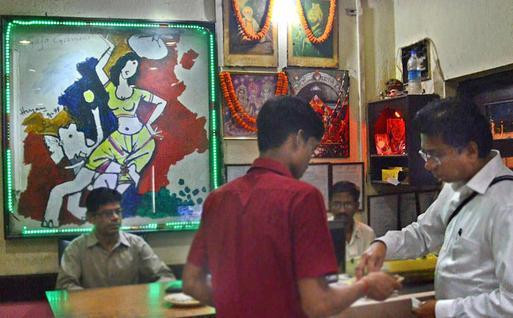
The wall of the Azad Hind Dhaba in Kolkata adorned with M.F. Husain’s Gaja Gamini. Photo: SUSHANTA PATRONOBISH

The now-famous painting, titled Gaja Gamini (one with a walk like an elephant), depicts a dancing woman, in a bright red background, while a white elephant looks on with its trunk held aloft

The memory of seeing M.F. Husain colouring one of his sketches back in 1999 is still fresh in the mind of Madan Sharma, one of the owners of Azad Hind Dhaba, a popular eatery in south Kolkata.

One fine afternoon years back, Mr. Husain walked into the dhaba, which he frequented during his visits here, and all of a sudden started adding colour to the black and white sketch on the wall that he had drawn three years before.

“The experience made me speechless,” Mr. Sharma said, on the eve of the 99th birth anniversary of the iconic painter.

The now-famous painting, titled Gaja Gamini (one with a walk like an elephant), depicts a dancing woman, in a bright red background, while a white elephant looks on with its trunk held aloft. Mr. Husain arranged a private show of his film Gaja Gamini at Azad Hind in 1999.

Sitting at the cash counter with the painting behind him, Mr. Sharma fondly recalled his memories of the famous artist. He remembers Mr. Husain as a “moody and humble person” who would come to the restaurant and sit quietly in one corner sipping his favourite “kadak chai [strong tea].”

“He did not talk much. But sometimes told me what kind of food he wants,” Mr. Sharma said. He was initially apprehensive of talking to an artist of Mr. Husain’s calibre, but eventually they became friends. “Mr. Husain could mingle with adults and children with equal ease. He was totally devoid of arrogance.” Whenever schoolchildren spotted him at the eatery, they flocked to him and asked for autographs. The world-famous painter complied with their demands with a smile and even drew them impromptu sketches.

When asked about the controversy that erupted in 2006 over Mr. Husain’s depiction of Hindu gods and goddesses, Mr. Sharma said the thought of removing the painting never entered his mind. “Nobody asked me to remove the painting even when the controversy erupted.”

Mr. Husain eventually had to leave the country under pressure from Hindu nationalist forces. He passed away in London in August 2011.

Meanwhile, the dancing woman with an elephant walk lives on happily on the central wall of Azad Hind Dhaba, in the company of numerous Hindu gods and goddesses.

source: http://www.thehindu.com / The Hindu / Home> Features> Friday Review> Art / by Soumya Das / Kolkata – September 17th, 2014

Oldest toy train chugs through British garden

London :

The ‘toy train’ chugging up a serpentine track through the Darjeeling hills is almost an image out of a fairy tale. But for Adrian Shooter the first look at the scene triggered a life-long love story that made him buy an entire locomotive to run in his London garden.

The world’s oldest surviving Darjeeling-Himalayan Railway (DHR) locomotive is back on track, thanks to Shooter. Smitten by the magic of a ride on the DHR (now an Unesco world heritage property) a decade and a half ago, Shooter, who retired as chairman of Chiltern Railways, bought the DHR locomotive — model number 778 — built in 1889 by Sharp Stewart and Company, Manchester, to restore it to perfect
condition.

The Indian government had sold the locomotive to Hesston Steam Museum in 1960, not realizing what its worth would be 50 years later when it was declared a world heritage by Unesco.

Shooter has also bought an Ambassador that runs by the train when it chugs through his garden to give it a feel of being in Darjeeling. He shipped the locomotive in a container from US to the steam rail workshop in Tyseley, Birmingham, where he restored it. The tracks laid in his garden over 1.5km is in the form of a loop just like in Darjeeling.

He has also built a station that looks exactly like the original Sukna station, besides laying a pathway that crosses over the tracks, exactly the way it is in Darjeeling.

In an exclusive interview to TOI, Shooter said “I bought the locomotive from the museum in Indiana, US, in 2002. It had been bought by a private individual, Mr Donnelley in 1960. He died in 1975 and it passed on to the museum after that. He was the boss and major shareholder in R R Donnelley Co, which is a very large printer and publisher in Chicago.”

He added, “I have several volunteers who help me operate the loco and we give rides to invited guests. We usually have 100-150 and do this three or four times a year. The loco is fully functional and is in excellent condition. Last winter it had a 10-year overhaul when, by law, the boiler has to be taken off the chassis, carefully examined and repaired as necessary.”

“The loco still has the original 1889 boiler and is, by at least 50 years, the oldest loco boiler in use in the UK. There are a couple of older ones in India. The reason that it has lasted so long is that it is made of wrought iron, which is much more corrosion-resistant than steel. It was obviously very well looked after during its 70-year use in India,” Shooter said.

Shooter will be in Delhi in February at the invitation of Mark Tully to speak at the Indian Steam Conference. He said, “Darjeeling Railway is very special because it climbs so high (over 7000 feet) through fantastic countryside with wonderful people. Many Britons had ancestors who lived, worked or visited Darjeeling. I still regularly come across people who went to school in Kurseong or Darjeeling. The engines themselves are of a sound design that have shown themselves to be more than capable on very steep and curvaceous railway tracks.”

Shooter, however, said he has no plans to return the locomotive to India. Britons will get a chance to ride on the train as it makes a special appearance at the North Pennines on September 26-28.

South Tynedale Railway at Alston is hosting Shooter’s train — Locomotive No. 19 — for an Indian-themed weekend of food, music and films. People will be able to ride on the train, dress like a local from Darjeeling and enjoy eastern Himalayan cuisine.

Locomotive No. 19 was withdrawn from the Darjeeling-Himalayan railway service in 1960 and, privately purchased, made its way to Indiana. In 2003, it was taken across the Atlantic to be restored by Tyseley Locomotive Works, Birmingham, for Shooter. At the same time, two replicas of DHR carriages were constructed at the Boston Lodge Works of the Ffestiniog Railway. These and the locomotive run in Adrian Shooter’s private garden railway.

India at present has 14 original DHR locomotives in working condition and 10 others on display at museums. Shooter’s train is the oldest of all DHR trains. Currently, only five DHR locomotives are privately owned, four of which are in Assam. The 778 is the only model outside India.

Indian railway expert Rajesh Agrawal said, “In the 1960s, India was getting rid of a large number of locomotives as we had more than we required. One such model was the 778. Nobody knew then that the DHR would become such a prized object. People also thought the 778 was not in working condition as it was 71 years old. A locomotive generally retires after 45 years.”

source: http://www.timesofindia.indiatimes.com / The Times of India / Home> City> Kolkata / by Kounteya Sinha, TNN / September 19th, 2014

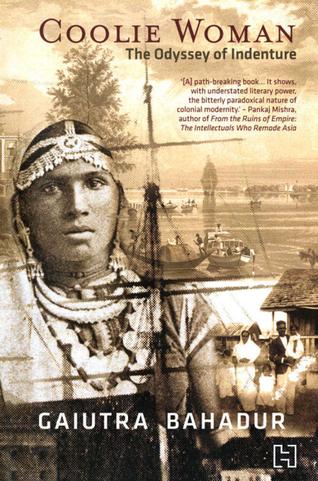
An indentured worker’s journey

This new contribution to diaspora studies maps a woman’s tumultuous passage from India to West Indies

COOLIE WOMAN — The Odyssey of Indenture: Gaiutra Bahadur; Hachette Book Publishing India Pvt. Ltd., 4th & 5th Floors, Corporate Centre, Sector 44, Gurgaon-122003. Rs. 599.

Usha V.T

Gaiutra Bahadur’s Coolie Woman is an attempt to recreate the journey of an indentured woman labourer — a woman from India —who travelled to the West Indies and eventually to the United States. Diaspora studies have often pointed out that a wide array of social and economic deprivations drove villagers from their homes to travel to faraway lands. And as this author reiterates, the practice of imperial capitalism destroyed traditional livelihoods, while at the same time colonialism created new routes for moving across the subcontinent, in several guises.

The author justifies the use of the term coolie , despite its derogatory connotations, at the very outset. In fact, she devotes a whole chapter to a discussion of the term and its use in the current context. “As it turns out, mystery darkened the lives of many women who left India as coolies. The hind of scandal was communal. Some historians have called indenture “ a new form of slavery,”

In many ways it was: once in the sugar colonies, coolies suffered under a repressive legal system that regularly convicted more than a fifth of them as criminals, subject to prison for mere labor violations, which were often the unjust allegations of exploitative overseers.”

What makes the work interesting is the autobiographical nature of the narrative. The protagonist is the author’s great grandmother Sujaria, whose life and adventures are the occasion to map the tumultuous journey of the woman from her home in India to the West Indies. With the help of historical records, legal documents and tales of indenture, Gaiutra Bahadur attempts to recreate her grandmother’s historic journey. She says: “What I found was a revelation. I once thought that my great grandmother must have been an exception .” And a little later we read: “In which category of recruit did my great grandmother fall? Who was she? Displaced peasant, run away wife, kidnap victim, Vaishnavite pilgrim or widow? Was she prostitute…”

The sexuality of the women and her exploitation in terms of her body both during the journey to the new land as well as in her survival in the land of her slavery through sexual negotiation takes prime place in some of the seminal chapters of the book. They were exploited physically and their reputations were then “dismembered”. This was done systematically both by the men who exploited them as well as by the men who had no sexual stake in the women. Though it was seen that gender imbalance caused sexual chaos in the colonies among the indentured labourers and their functionaries, the women were made to suffer not merely physical agony but mental torture through character assassination. Some of the comments and statements that Gaiutra cites are from public figures held usually in high regard: Even men without a sexual stake in the women cut them to pieces. The Reverend C.F Andrews, indenture’s greatest critic, rued the women he met in Fiji. “The Hindu woman in this country” he reported, “is like a rudderless vessel with its masts broken being whirled down the rapids of a great river without any controlling hand. She passes from one man to another and has lost even the sense of shame in doing so ”.

Of course none of the opinionated colonisers bother to talk to the women or ask for their version of the reality they face on an everyday basis for survival. Yet they make their judgements on the character of the women vocal and the woman as always is silenced and humbled for circumstances beyond her control.

In 1906, the author’s great grandmother and her new born arrived at Rose Hall Plantation, on Canje Creek. She did no field work there as the narrator informs us… “Dey send her, and she cyaan make it in the field, because her feet was soft …” Instead Sujaria was assigned to be a child minder. This was the job that Jamni, the woman at the edges of the Nonpareil uprising, either as kept woman or rape victim, reportedly had. And this was the job that my great grandmother was given. Perhaps this was because she had a baby to support alone and her caste background had made her useless in the fields. Or perhaps, she possessed a pretty woman’s advantage. (p 148)

Gaiutra explains how caste class and gender are factors that develop new meaning as the woman moves from her own land through along, perilous journey into a new world where her survival depends on her capacity to negotiate with the multiple forces that are decisive to her existence. Her sex, though her weakness, now becomes a major factor that she can utilise for negotiating her survival. In a way of life, that is exploitative, survival become the centre of the labourer’s existence and the author explains how it is achieved in individual cases.

The narrative is supported with documents such as legal references, captains’ or doctor’s logbooks from the ships, police records, administrative reports, photographs etc.

These neglected narratives are footnotes to colonial history and women’s history in particular. It becomes her middle passage:

middle-passaged

passing

beneath the coloring of

desire

in the enemy’s eye

a scatter of worlds and bro

ken wishes

in shiva’s unending dance

(Arnold Itwaru, “We Have

Survived”)

With an astute eye for detail Gaiutra Bahadur, trained as a journalist, unearths sumptuous information buried in documents and records hitherto less-explored areas pertaining to women in indentured labour amounting to sexual slavery, and the odyssey of indenture is presented in a nonchalant manner. However having said that, the documentary nature of the work makes it a little tedious and uninteresting at times over several pages.

The author’s self-conscious struggle to motivate the reader to share individual experiences — albeit factual, in places slipping into a fictional style — is sometimes a bit laborious and too obvious. Gaiutra Bahadur’s Coolie Woman traces the story of how one woman’s experience represents an entire spectrum of woman’s experience: the book is a veritable source book for further research in diaspora studies.

source: http://www.thehindu.com / The Hindu / Home> Features> Book Review / by Usha V.T / September 16th, 2014

Jewish past, digital present

A digital museum on the Jews of Calcutta is ready to go online on Monday after two years in the making.

“The archive documents the Jewish community’s contributions to Calcutta and celebrates the city where they thrived. It has taken me more than two years to curate this archive. I’m still fine-tuning it before the launch at Victoria Memorial on September 1 and have got wonderful feedback from community members across the world,” said Jael Silliman, a former women’s studies teacher at the University of Iowa and one of the members of the dwindling community in the city.

The website is a storehouse of information about Jews in Calcutta.

The community has dwindled from 6,000-plus members in its heyday to barely 20 people — mostly elderly — at present.

There hasn’t been a Jewish girl in the Jewish Girls School for about 40 years.

The Telegraph had reported last September how the community needed to include Israeli ambassador to India, Alon Ushpiz, who was visiting the city along with five other Jews, to achieve the “minyan” or quorum of 10 men needed for a formal service to celebrate Simhat Torah at Magen David Synagogue in Calcutta. It could not be held for 25 years because the community was not able to line up 10 men needed for the service.

Jews in India have branched into three main streams after the first batch arrived from West Asia in the late 18th century: the Bene-Israel (meaning Children of Israel), the Cochin Jews who prospered along the Malabar coast and Baghdadi Jews, who settled mostly in Calcutta and Mumbai.

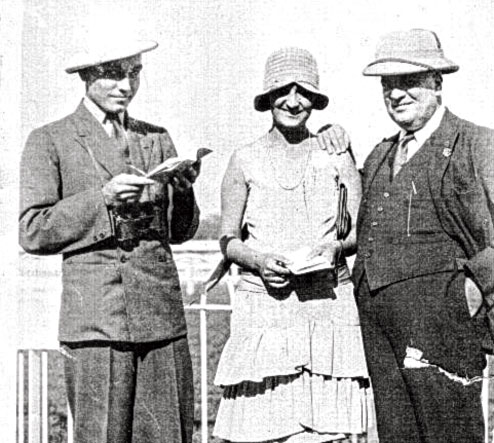
Calcutta’s Jewish community members at the Viceroy’s Cup racing derby in 1937
A guide to the races

The archive’s film section includes an audio-visual documentary of Jewish elders Cyril Cohen and Aaron Harazi, who passed away recently, speaking at length about their schooldays and work in Calcutta. The section offers a virtual tour of the Magen David on Canning Street and Beth El on Pollock Street — two synagogues no longer in use.

In a clip from the racecourse, Elijah Twena, an avid racer, gives an insight into the favourite pastime of Calcutta Jews.

A geniza at the Narkeldanga cemetery

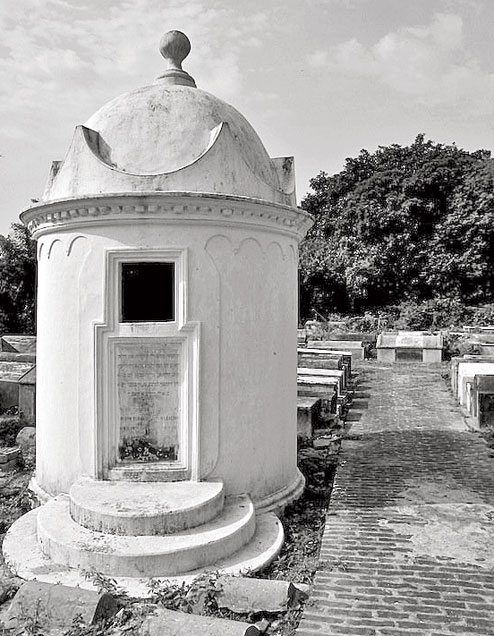
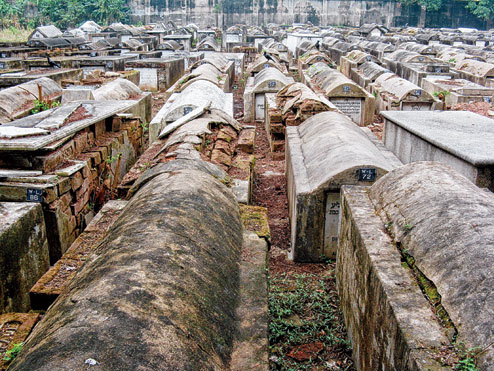
Another section talks about Jewish cemeteries in Calcutta, especially the ones at Narkeldanga.

Legend has it that the first Jewish burial ground — at 45, Narkeldanga Main Road — was “born” when Shalome Cohen, the first settler, decided to buy a plot of land for a cemetery and went about asking his friends and business associates for a suitable place. A Bengali business associate took him to a paddy field on the outskirts of Calcutta and asked if that would do.

Graves of Jewish people at 45, Narkeldanga Main Road

Shalome was delighted and told him to quote a price. The gentleman declined and offered to give the plot for free. But Shalome insisted that he must pay because the site would be used for religious purposes. The gentleman reluctantly agreed to accept “whatever Shalome wishes to give”. The settler pulled a gold ring out of a finger, gave it to the landowner and sealed the transaction.

It is assumed that Moses de Pas, an emissary from Safad, now in Israel, was the first Jew to be buried in Calcutta cemetery for the community in 1812. His grave is no longer traceable. The cemetery has a geniza too for storing worn-out Hebrew-language religious books and papers. A small private cemetery was opened in the 1870s, and closed after 20 years or so, half a mile from the main cemetery.

Other sections include maps of Jewish Calcutta, a film gallery, community portraits, music of the community recorded from Rivers of Babylon, war years and military service and their impact on the community.

The museum project is led by Jael Silliman, a former women’s studies teacher at the University of Iowa, and assisted by Amlan Dasgupta, professor at Jadavpur University. “Some of the speakers at the launch will be Amlan Dasgupta, Adam Grotsky of USIEF and Jo Cohen, who will talk about the life Jews made for themselves in the city,” said Silliman, an author of two books, The Man with Many Hats (2013) and Jewish Portraits, Indian Frames: Women’s Narratives from a Diaspora of Hope (2001).

“We’re happy to be associated with the project. It has been quite a journey and a very fruitful one. Our students have worked untiringly for the project. We’re also considering housing the material at the School of Cultural Texts and Records, Jadavpur University,” said Dasgupta.

source: http://www.telegraphindia.com / The Telegraph, Calcutta / Front Page> Calcutta> Story / by Showli Chakraborty / Monday – September 01sr, 2014

Astor revives its British heritage

Kolkata:

Gallops of horses then, dollops of history now.

Another feather will shortly be added to the city’s heritage hospitality industry as Astor Hotel opens its doors for guests.

Housed in a building that was a British barracks about a century ago, the hotel has retained the rooms of mismatching size and shape, and ironed out the colonial wrinkles with the precision of 21st Century.

“In its 120-odd years of existence, the interiors of the building never complemented its grand facade. Be it the electrical or plumbing system, it was a completely unplanned structure. A thumb-rule in construction is that a poorly-maintained building must be brought down and built over every 70-80 years,” said the hotel’s proprietor Vikram Puri.

“But with the help of the members of the heritage commission and a team from Delhi that specializes in restoring old havelis of Rajasthan, we managed to preserve the heritage elements of the building.”

Puri said the building used to be a British boarding house where soldiers would come riding on their horses and walk up the stairs to take rest in their rooms.

“What used to be the stable is now a lounge bar called Plush. We restored the same teak staircase the armymen walked up, instead of turning it into an elevator shaft. We retained the rooms with their mismatched dimensions, which gave us perfect material for a boutique hotel. A modern hotel resembles a block diagram, but here every room has a different character,” Puri said.

The guests here will use the same rooms that were once occupied by the army personnel of the imperialists, but the rooms have been fitted with modern facilities such as a big-screen television and air-conditioning.

“The main corridor of the hotel has a distinct Victorian look. But, we will adorn the walls with paintings and photographs of a century-old Kolkata,” Puri added.

To bring down carbon footprint, the hotel has done away with split air-conditioners and geysers and installed central systems. The corridor is not chilled but cool.

“This is not air-conditioned but filled with treated fresh air,” said a member of the hotel’s staff.

High ceiling, a four-poster bed and sepia-tainted lights give the suites the ambience of an era gone by. But water sprinklers, smoke detectors and Wi-Fi devices are a constant reminder of 2014.

source: http://www.timesofindia.indiatimes.com / The Times of India / Home> City> Kolkata / by Shounak Ghosal / September 12th, 2014

Top Gear’s ‘best taxi in the world’ to cease production

AmbassadorKOLKATA03aug2014

Originally based on the Morris Oxford, the Ambassador has been manufactured by Hindustan Motors in India since 1948.

The car manufactuer has announced that it will suspend production at its plant in West Bengal. Few see it returning to Indian roads, as more efficient, modern cars have taken over the market.

This car ruled Indian roads for the first 40 years, becoming a symbol of power and influence. By the end of the 1970s, it had a market share of 75 percent.

The entry of Suzuki though a local joint venture with Maruti, changed all that and by 1992, Ambassador’s share dropped to 20 percent.

Lack of investment, a militant workforce, an ageing plant and lack of interest and vision by the owners are cited as resons for the demise of this car.

In teh 1990s, Hindustan Modors enterd into a joint venture withGeneral Motors to manufacture and sell Opel vehicles. There was also a collaboration with Mitsubishi Motors to manufacture the Lancer. But none of these ventures took hold.

In a statement, Hindustan Motors blamed the shutdown on “worsening conditions at its Uttarpara plant which include very low productivity, growing indiscipline, critical shortage of funds, lack of demand for its core product the Ambassador and large accumulation of liabilities”.

Only 2,200 Ambassadors were sold in 2013-14; a small fraction of the 1.8 million passenger cars sold in India.

In a show, which was aired on the BBC last year, Top Gear organized a world taxi shootout in which Ambassador emerged a winner, beating competitors from all over the globe.

The Top Gear team’s verdict? “If performance is getting to your destination at some point of time, yeah, this is quite a performer.”

As reported in The Economic Times, Nida Najar notes: “Drivers complain that pedals break off after a few thousand miles, that the air-conditioners malfunction. Some use turmeric to stop up holes in the radiator; anything to avoid servicing with expensive and increasingly rare parts. Many carry water bottles to cool off radiators that frequently overheat.”

source: http://www.ferret.com.au / Ferret / Home / by Kevin Gomez / July 03rd, 2014

University of Calcutta to confer a posthumous doctorate on Lithuanian traveller anthropologist Antanas Poska

Vilnius (Lithuania):

In a rare honour, the University of Calcutta has decided to confer a posthumous doctorate on one of the world’s greatest explorers – Lithuanian traveller anthropologist AntanasPoska.

In an exclusive interview to TOI, Lithuanian foreign minister Linas Linkevicius said that Poska – the man who undertook an incredible journey to India on a motor bike all the way from Vilnius in 1929 will be conferred the doctorate during the University’s next convocation ceremony around September.

Confirming this to TOI from Kolkata, the University vice chancellor Suranjan Das said Poska “symbolised an eastern European’s inquisitiveness about India” and was being conferred the doctorate “for his contribution in making India known to the outside world through his extensive writings”.

Das told TOI “Poska’s feat is unparalleled when it comes to popularising India in Europe. Poska also studied in the University of Calcutta. Developing a close relationship with Lithuania is a priority for the new Indian government and conferring the doctorate will help seal the friendship”.

Das said “We have formally confirmed the University’s plans to confer the doctorate on Poska. However, it has to be given by the governor of West Bengal who presides over our convocation. Since the earlier governor resigned recently and we are waiting for the chair to be filled, the date of the convocation is yet to be finalised. It could take place around September-October”.

Lithuania’s ambassador to India Laimonas Talat Kelpsa has plans to bring Poska’s daughter Laimute Kiseliene to Kolkata to receive the doctorate.

It was TOI who had unveiled the extraordinary tale of Poska and a never before known facet of his work – the first ever translations of Rabindranath Tagore’s works into the Lithuanian language.

TOI had dug out Laimute who is now professor of choreography and dance methodology at Lithuanian University of Education. She for the first time ever unveiled to TOI a set of three binded books with “Tagore” written on them and a small palm sized journal made from birch tree barks.

She had received it from a frail old woman who had showed up at her door one day with these manuscripts.

The handwriting on them was familiar – it was that of her father who had written them during his exile.

Post 1929, when Poska returned to Lithuania from an eight year long journey across the world, the Soviet government packed him off on an 18-year-long exile to Siberia “without any formal reason”.

The frail lady then told Laimute that her father had returned from India as one of the biggest admirers of Rabindranath Tagore.

He then translated some of the poet’s works into Lithuanian – the first ever for any Indian literature to be done in that country.

Lack of paper during the exile forced him to use birch tree barks to write on. He also wrote poetry during his exiled years, copying Tagore’s style.

He had then given the documents to the lady in confidence who then worked in a Soviet controlled publishing house.

He wanted them published but the government destroyed most of his works.

Poska also gave her a note that read “These translations are a small bit of light for all those in despair”.

The lady instantly realised that they were “great cultural heritage” and hence hid them from the Soviets.

After knowing Poska is now survived by a daughter, the old lady had landed up at Laimute’s door many years later to hand over the manuscripts.

In an exclusive interview to TOI, Laimute had said “I was amazed when I received these manuscripts. He was a great fan of India and I grew up listening to stories of Tagore and Gandhi. My father never told anyone about these translations. Tagore’s works made a great impact on my father and hence took great pains to translate them thinking it would help those under Soviet oppression to see hope. These are real treasures of cultural heritage”.

“I would gladly give them to any publisher who would publish the translations now. There is nobody in Lithuania to validate the translation,” Laimute who has never shown these manuscripts to anyone before, said.

She added “The dream of his life was to translate the Vedas to Lithuanian”.

One of the translated works “dated 1932 at Shantiniketan” that TOI saw read in the introduction “While being a guest of a great Indian poet. With his personal help, I have prepared a small present for Lithuanians. This is a pearl of Tagore’s work called Fruit Gathering”.

Laimute revealed that Poska and Tagore met twice during his stay in Kolkata.

Laimute said “While in Shantiniketan, he waited for three days to meet Tagore. My father later revealed that the first meeting between him and Tagore wasn’t warm. Only when Tagore learnt of his interest in India, his travels, he became interested in Poska. Poska had expressed interest to Tagore of translating his works – an offer Tagore didn’t like. Tagore supposedly told him he looked down upon foreign translators who he felt ‘made it a business to make money from his works'”.

Poska in his journals also had nice things to say about the people of Bengal.

“During his next visit to Bengal. Poska found the people to be as warm, kind and creative as Tagore’s stories,” Laimute said.

Poska met Laimute’s mother Maria while on exile.

Laimute was born in Petro Pavlovsk in Kazakystan in 1950. She was nine years old when the family finally returned to Lithuania from their exile.

“Poska was never told why he was being exiled by the Soviets. So when he was ever asked the question, he would jokingly say it is because he stole Stalin’s pipe. One of Poska’s close friends and linguists from Bengal professor Suniti Kumar Chatterji gifted him a photo of Tagore which he always carried with him,” Laimute who took to being a professor of dance after hearing her father’s stories on Indian dances, said.

Poska and his co-traveller Matas Šalcius set out for an incredible journey to India on a motorbike in 1929. Their ways parted in Iran and each of them reached India separately in

1930. While Šalcius traversed India and continued his journey east up to the Philippines, Poska stayed on in India for five years, studying at Bombay University, later at Calcutta University and working at the Anthropology Laboratory of the Indian Museum in Kolkata.

He devoted these years to the study of commonalities between Lithuanian language and Sanskrit, Indian Vedas and Lithuanian folklore, making friends among Indian intelligentsia and expressing his passionate support for Indian independence.

He was a passionate advocate of the Esperanto language – international language of peace that was created by Ludwik Zamenhoff of Lithuanian Jewish origin in the end of the 19th Colonial India.

During the Soviet occupation, Poska was arrested for being well travelled and knowledgeable about the world beyond the Iron Wall.

He was first sentenced to hard labour in Siberian gulags, later transferred to Central Asia.

In Osh (Kyrgyzstan), he discovered and described an unknown Palaeolithic settlement and rare fossils.

Laimute finally revealed “Matas Salcius didn’t know how to ride a book. So it was father who drove all the way through so many years of travel”.

source: http://www.timesofindia.indiatimes.com / The Times of India / Home> City> Kolkata / by Kounteya Sinha, TNN / July 18th, 2014

Ode to women who dared

They charmed audiences with their histrionics on stage and screen. Men sought their company and women envied their acting and singing skills. They didn’t care for the purdah and dared to defy social norms that prohibited women from stepping out in public.

A tribute was paid to 10 actresses of Bengal who have left a lasting impression on the minds of audiences. Titled ‘Songstress’, the programme paid homage to Nati Binodini, Narisundari, Angoorbala, Kanan Debi and Keya Chakraborty among others. The programme weaved in storytelling by popular elocutionist Sujoy Prosad Chatterjee. Songs and dialogues from the plays and films in which they acted were performed.

Commenting on the actresses, an official of 40A Creative Studio that organized the homage said only those who also sang were chosen. Chatterjee also felicitated some prominent actresses of Bengali stage including legendary actress Chitra Sen and veterans like Dolly Basu, Anashua Majumder and Sohag Sen. Actresses Mumtaz Sorcar and Arunima, along with filmmakers Anindya Ghosh and Sekhar Das, were present at the programme.

Students’ tryst with Germany

Students of Birla High Schools Boys and Girls have completed a year-long exchange programme on a project with German partner school Amandus Abendroth Gymnasium in Cuxhaven, Germany. Ten students each from the boys and girls school and 20 from Amandus Adendroth Gymnasium started working on endangered species – mussels in Germany and tigers in India. Each student was hosted by the family of a German student and teachers were hosted by their German counterparts. All the students worked on the project during school hours apart from attending some classes with their German partners in school.

Various educational excursions were organized by the partner school during the stay – Klima Haus, University of Applied Sciences in Bremerhaven, Polar Haus (Alfred Wagner Institute) and Wadden Sea were visited. The entire group visited the mayor’s office where the students had a privilege to meet the mayor of Cuxhaven, Erika Fischer, and interact with her.

Nature in the city captured on lens

Young photographers aged between 16 and 18 years captured glimpses of nature and animals in Kolkata on their lens for a photography exhibition at Harrington Art Gallery. Rashbehari Centre for Ecological Movement (CEMO), an organization that has been spreading awareness on environmental issues for the past few years, held the exhibition on Friday and Saturday. Students from leading city schools put on display around 40 photographs revolving around the theme ‘Nature-watch in Your Backyard’.

The photograph taken by Tiyasa Mal, a student of Shri Shikshayatan School, featuring the flight of three birds in the sky, won the first prize. The second prize went to Kunal De of DPS Newtown for a tiger dragonfly’s photograph. Sweta Karmakar of National High School for Girls bagged the third prize for her excellent snap that featured a squirrel on the hunt for food. Dr Debal Sen, a cardiologist and amateur photographer, inspired the budding shutterbugs to play with light and shadow, striking a balance with their studies. Five members of the host organization exhibited some photographs on wildlife worth between Rs 2,000 and 5,000. “The money raised from the sale of these images will be donated to our organization,” said Purnima Dutt, a member of CEMO.

Show of Bengal tourism

The state tourism department organized a show at Eco Park in Rajarhat New Town to showcase Bengal’s tourism prospects. The venue was the glass house in the Eco island. More than 100 delegates from different parts of the country and also from abroad participated in the show. A presentation was given to the participants on how the tourism department was working towards developing tourism in the state. Hidco authorities handed over a special leaflet and a small souvenir to each of the delegates.

(Contributed by Prithvijit Mitra, Sarthak Ganguly, Jhimli Mukherjee Pandey & Suman Chakraborti. Compiled by Urmi Mukherjee. Photograph by Debobrata Shome)

source: http://www.timesofindia.indiatimes.com / The Times of India / Home> City> Kolkata / TNN / July 07th, 2014

Bitten by travel bug, rickshawpuller on solo expedition from Kolkata to Ladakh

SUMMARY
Das way back in 2008 had gone all the way to Rohtang Pass in a rickshaw with his wife and daughter.
_____________________________________________________________

A rickshawpuller has set out on a daring 3,000-km expedition from Kolkata to the famous Khardung La pass in Ladakh, which has one of the world’s highest motorable road.

Forty-year-old Satyen Das, who ferries commuters at Naktala in south Kolkata, marshalled his personal savings and generous donations from local people, packed his luggage under the passenger’s seat of his refurbished rickshaw and started on his one-of-a-kind journey last month.

“I make a living on my rickshaw and spend my whole day with this, so I could not leave it behind when I started to dream about my trip to Ladakh,” Das said.

He has already reached Uttar Pradesh from where he will go to Srinagar and reach Ladakh after crossing Kargil next month. “I want to spread the message of world peace with this journey and also I want to promote rickshaw as a cheap and eco-friendly mode of transport,” he said.

Expecting to complete the expedition within five months, he is also eyeing an entry into the Guinness Book of World Records for his feat.

Bitten by travel bug, Das way back in 2008 had gone all the way to Rohtang Pass in Himachal Pradesh in a rickshaw with his wife and daughter. But this time the target is higher and he is travelling alone.

“He has this addiction of travelling in the Himalayas and going to far-off places,” said Partho Dey, secretary of Naktala Agrani Club, who helped him with funds.

Das modified his rickety old rickshaw with additional brakes and new body made of light steel at a total cost of Rs 15,000. In a day, he pedals to cover around 40-50 km and for makes night halts at religious places where he can stay for free.

Having only elementary education, the rickshawpuller said the unique road trip is also a great learning experience as he gets to understand the culture and diversity of India by criss-crossing different states, cities, towns and villages.

“My first task in the morning is to go to the local police station and take permission to move ahead. So far I have been getting it easily,” Das said. He is armed with maps to find his way to his next stop and a digital camera to document his special journey.

The club members are taking care of his wife and daughter, whom he left back home.

“We estimate that the trip would cost around Rs 80,000, which we have raised it amongst ourselves after we saw his passion and determination to travel,” Dey said adding that they have have given him an ATM card to withdraw cash as and when required.

source: http://www.indianexpress.com / The Indian Express / Home> Cities> Kolkata / by Press Trust of India / Kolkata – July 04th, 2014