Category Archives: Travel

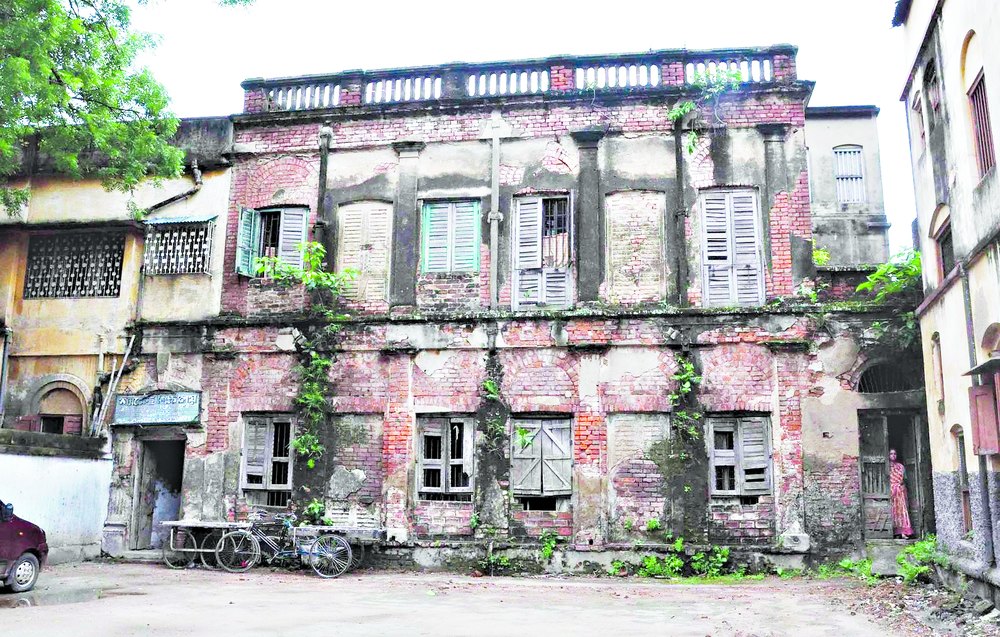
Heritage tag on Bankim house

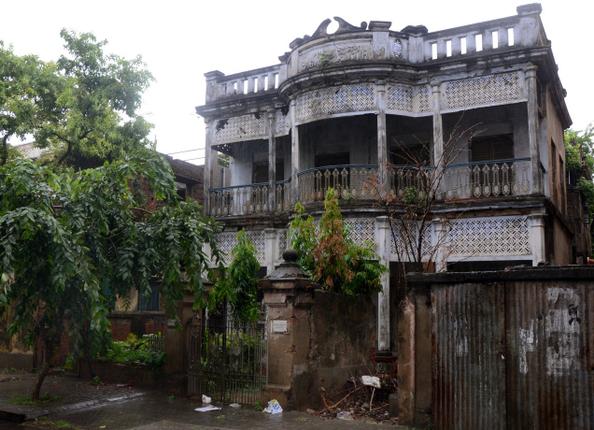
Bankim’s house at Panchanantala Road. Picture by Anup Bhattacharya

The house where Bankim Chandra Chattopadhyay lived during his stint as deputy magistrate and deputy collector of Howrah has been declared a heritage building.

The 17-cottah park adjoining the house at 218 Panchanantala Road – called Bankim Park – has been included in the Howrah Municipal Corporation’s “demand register” for development grants.

Bankim Chandra, who wrote the national song Vande Mataram, had worked and lived in Howrah between 1881 and 1886.

“We have granted heritage status to 218 Panchanantala Road. The park adjoining the house will also be developed and a grant of Rs 5 crore has been sanctioned for the project. An archive on Bankim Chandra along with a library and other facilities will be set up,” said mayor Rathin Chakraborti.

A bronze statue of the litterateur and administrator will adorn the park while the heritage structure will house a conference hall, a guesthouse and the proposed archive.

At the beginning of his first stint as an administrator in Howrah in 1881, Bankim Chandra would travel from his Calcutta home to his workplace every morning. He later decided to shift to the rented house at 218 Panchanantala Road.

Bankim Chandra lived in the same house during his second stint in Howrah from 1883. He wrote Muchiram Gurer Jibancharit while living in Howrah.

source: http://www.telegraphindia.com / The Telegraph, Calcutta,India / Front Page> Calcutta> Story / by Dalia Mukherjee / Saturday – August 01st, 2015

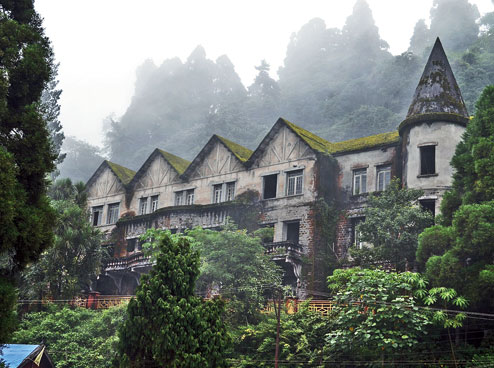
Darjeeling hotel to be pulled down – Housing complex and hotel to come up

Mount Everest Hotel in Darjeeling. Picture by Suman Tamang

Hotel Mount Everest that in its hey day had hosted Mohammed Ali Jinnah and Amitabh Bachchan will soon be dismantled and a housing complex and a new hotel will come up in its place.

East India Hotels (EIH) Limited, which owns the Oberoi and Trident brand of hotels, has announced that it has sold the property to a consortium of businessmen led by B.M. Garg, a Darjeeling-based multiplex owner, for Rs 11 crore.

Today, Garg said: “The property has been bought by a consortium of businessmen. We plan to dismantle the hotel as it is a 100-year-old structure. The property was ravaged by fire and it has been closed for 30 years now.”

Garg said they had not yet finalised the details of the housing complex and the hotel that would come up.

“We have not yet given any name to our business consortium or to the project. We will soon hire an architect to work out the details of the housing complex — given its demand in Darjeeling — and a high-end modern hotel.
We plan to start work after the winter.”

The land on which the hotel stands now and two residential buildings near it — Rutland House and Newstead House — were owned by Darjeeling resident Nemy Chandra Bose.

The property, which stands on a plot measuring around 5 acres, is along Gandhi Road.The stretch was earlier known as Auckland Road.

It is hardly a kilometre away from Chowrasta and is close to the Circuit House.

Bose leased out the property to Arathon Stephen for 99 years, which was to end on December 31, 2013.

Stephen turned the property into a hotel and named it Hotel Mount Everest.

In 1925, Stephen transferred the hotel to Everest Hotels Limited.

In 1963, it was transferred to a firm called Hotel 1938 Private Limited.

In September 9, 1968, the property was transferred to East India Hotels Limited.

According to author Sanjay Biswas, who wrote the book Pahar Theke Hariye Jaowa Padachinhaguli, Jinnah had stayed at Hotel Mount Everest in 1917.

Actors like Dev Anand, Raj Kapoor, Sunil Dutt, Rajesh Khanna and Rekha had also stayed at the hotel.

Suresh Periwal, the owner of Clubside Tours and Travel, the oldest travel agency in Darjeeling that was set up in 1948, said: “It is sad that an international chain of hotels is leaving Darjeeling. Their presence in Darjeeling would have meant lot of publicity for the place.”

Periwal was one of the first residents of Darjeeling to hold his marriage reception at Hotel Mount Everest.

“The hotel was devastated by a fire on October 19, 1978, and my marriage was on November 22, 1978. The hotel authorities ensured that the reception was held there. They closed down a section of the hotel with 30 rooms and opened the remaining 40 rooms for the marriage,” Periwal said.

Hotel Mount Everest was finally shut in June 1984.

Periwal said in 1969, a double room in the hotel would cost Rs 115 a day, while a single room came for Rs 85.

Today, Garg said they were hopeful that they would be able to start the construction soon.

Asked if the land mutation was under the name of EIH Limited, he said: “As of now, no. But we are confident that all issues would be resolved soon.”

source: http://www.telegraphindia.com / The Telegraph, Calcutta,India / Front Page> North Bengal > Story / by Vivek Chhetri / Friday – August 07th, 2015

Kolkata forgets Job Charnock on 325th year of his landing

Kolkata :

Two red wild flowers were what the city had on offer for Job Charnock on Monday, the day that marked the 325th birth anniversary of his landing in Kolkata.

Nobody knows who the kind-hearted soul was who made it a point to pay homage to the founder of the city (though the high court had quashed the claim in 2003), but unknowingly he turned out to be an exception in a city that has forgotten the day for good.

Till 2003, Charnock was considered as the founder of Kolkata. Programmes were organized at the grave to mark the historic landing, which was even considered as the birthday of Kolkata. In 1990, the tercentenary of the city was celebrated on this day with global fanfare. But post the court order, the celebrations turned muted and headed for a slow death. And on Monday, Charnock’s grave inside St John’s Church near Dalhousie Square lay as non-descript as it has been lying for years now.

The grave is certainly older than the church since Charnock died in 1692, two years after he had landed on the eastern bank of Hooghly and discovered a cluster of prosperous villages that he thought would help him set up trade for the British East India Company. It’s another matter that other European traders had already set foot in different parts of what is now known as the Hooghly district, but there is no denying that this chance decision by Charnock was to change the fate of Kolkata and the entire country.

“Despite the controversy, there is no denying the importance of the day. Had he not done that, Plassey would not have happened in 1757 and the entire history of India would have been different. The day should definitely be specially remembered,” said historian Arun Bandopadhyay, president of the Society for Preservation of Calcutta that was set up by historian Nisith Ranjan Ray. Ray, along with historian Barun De, was among those who had argued the case in favour of Charnock in 2003.

St John’s Church, too, is sad with the neglect. “Apart from maintaining the grave as a heritage structure, what else can we do? The day has a great symbolic importance and the city should come forward to observe it. The structures with which we identify the city were mostly built by the British, can we deny that? Would all this have happened had Job Charnock landed somewhere else?” said priest of the church, Pradip Nanda.

Mayor Sovan Chatterjee agreed that the KMC did not do anything to commemorate the day. “Actually there is a controversy related to whether the day is actually the city’s birthday since the court has quashed that claim, but yes, Job Charnock can be certainly celebrated for his contribution and we will collaborate with St John’s Church from next year,” Chatterjee promised.

source: http://www.timesofindia.indiatimes.com / The Times of India / News Home> City> Kolkata / by Jhimli Mukherjee Pandey, TNN / August 25th, 2017

Taste of Jains from Murshidabad comes to city

Kolkata :

Sheherwali cuisine, unique to Jains who had settled in Murshidabad around 400 years ago, is on the cusp of becoming ‘endangered’.

Evolved from a confluence of multiple cuisines, it is still the mainstay in the Sheherwali households of Kolkata. But with community now experiencing reverse migration and the young ones moving to other cities, a shadow has been cast over the cuisine’s survival.

“The Sheherwalis are famous for their gastronomic preferences. The meals are always served in courses. The food that is to be consumed is cooked daily. The dishes served at lunch are distinct from those served at dinner with summer and winter variances as well. The tradition was kept alive for centuries by the close-knit community. But, this is gradually disintegrating with inter-community marriage becoming inevitable and their daughters landing up in Marwari, Gujarati or Punjabi Jain kitchens. Also unlike our generation, when men were primarily in business and women homemakers, today’s educated youths are professionals. Many of them migrate to other cities and even abroad. They have neither the time nor the inclination to pursue the fine art of cooking Sheherwali dishes,” said Sumitra Jhunjhunwala, a member of the Sheherwali community.

In the years to come, it will be a challenge to keep authentic dishes, like Kachhe Kela Ke Chop, Kumra ka Murabba, Saloni Mewa ke Khichdi and Kachha Aam ke Kheer, alive. Already, Mirchi ka Achaar and Kaathbel Pachak are no longer made in the Sheherwali homes in Kolkata. These are instead procured from a family in Murshidabad’s Azimganj.

A cook booklet containing Anita Dugar’s favourite dishes that her children Sujata and Priyankar had compiled after her death has recently become much sought afterwith many Sheherwali families keen to send it to their children living away hoping that they would at least try out some of the recipes to learn the art. Mindful of the threat, the Sheherwalis in Kolkata are trying to retain the tradition to the best of their ability.

Businessman Tushar Singhi, who takes much interest and pride in the cuisine, said the community patronized special cooks who prepared Sheherwali food and sweets at marriages and other community events. “Even in the community, there are some who are catering from home to keep others rooted to the taste and affinity for the cuisine,” he said.

Though there is no Sheherwali restaurant in Kolkata yet, Singhi and others are well aware that the fine essence of Sheherwali cuisine needs to travel beyond their kitchens so that others get to taste it as well. Hence, when ITC Hotels approached Murshidabad Heritage Development Society to showcase Sheherwali cuisine, the community was delighted.

“In its endeavor to enable Indian cuisine its rightful place in the global culinary scape, ITC Hotels accords special emphasis on showcasing regional Indian cuisines while presenting global dining concepts, perfected on Indian soil. This initiative under the aegis of Kitchens of India will showcase Indian’s wealth of unique, undiscovered, royal and forgotten cuisines. Sheherwali is the first of the series. Sheherwali cuisine is a vegetarians paradise, in which Bengali meets Rajasthani, Afghan, Mughal, Awadhi and even several European culinary practices, making it a unique mix of ingredients and flavors that tantalizes the palate,” said ITC Sonar master chef Mayank Kulshreshtha. The cuisine will be on offer at Eden Pavilion in ITC Sonar from August 25 to 30 as part of dinner buffet.

source: http://www.timesofindia.indiatimes.com / The Times of India / News Home> City> Kolkata / by Subhro Niyogi, TNN / August 24th, 2015

Diplomat seeks revival of French connection of Chandernagore

Kolkata :

Outgoing French Consul-General in Kolkata Fabrice Etienne, whose second innings in the city comes to an end this month, celebrates the cultural bond that links the city with Paris, but bemoans the fading French connection with Chandernagore.

Q. Your first posting was in this very city 20 monsoons ago. What was your first impression back then?

A. I was first impressed by the excessive sides of Calcutta — too many people, too many cars, too much noise, too much heat, too much rain. The old, and often decayed, colonial buildings of central Calcutta and what remained of the palaces of north Calcutta left its mark. I had the feeling I had been transported to a place rich with a thousand stories.

Q. Cut to 2015, how much has the city changed in your eyes?

When I first returned to Kolkata in 2004, I was pleasantly surprised — the streets were cleaner, some shopping malls had come up, some flyovers were built, some old buildings renovated and repainted that gave the city a more modern look. In 2012, this impression was confirmed and yet at the same time, I felt the very soul of Kolkata was still very much there, and the soul of Kolkata, is its people and the great culture they carry within them.

Q. Do you have any bitter memories during your stay here?

A. Road accidents that have struck my Bengali friends. Nothing really has been done to improve the road conditions in India—it is not only a Kolkata issue—and reduce the number of fatalities. This bothers me to no end, especially because the social and economic gains are directly related to a fluid traffic flow. It is true for environment protection. And of course, I do feel a little bitter about the lack of any concrete fruition of the projects earmarked in my tenure between France and Bengal.

Q. What has been your impression on the former French colonies of Chandernagare. Do you think the preservation work is satisfactory? If not, what are your suggestions?

A. As a Frenchman, I am of course much attached to the remnants of our past in this former trading outpost. The banks of the Hooghly are very nice and I feel something from the French “art de vivre” (art of living) each time I go there. I sadly do not see any serious preservation work done there, and it is even sadder when you think about the huge tourism potential of this area. Every 10 years or so, the government shows an intention to develop cultural tourism here by improving connectivity, renovating heritage building, promoting this unique destination. Nothing takes place afterwards. A few years ago, the French embassy commissioned an inventory of the French heritage building in Chandernagore to Indian architect Aishwarya Tipnis. Of the 100 building she listed, many have been destroyed. Tipnis, with the support of French NGO Vieilles Maisons Francaises is digitalizing the database.

Q. During a meeting with the CM, you expressed France’s interest in investing in Bengal. What’s the progress?

A. I cannot speak on behalf of the many French companies in India. It is true certain companies did not consider Bengal as the best possible place to invest in their fields. The ABG-LDA case in Haldia did not contribute towards sending the right signals back home. Fortunately, there are some success stories: The Accor group opened its first hotel, Novotel, a few months ago and plans to open other hotels in near future; Decathlon (sport equipment) will open stores here in the next few months.

Q. What in your opinion has been your greatest achievement as Consul-General?

As Consul General, that France is back in Kolkata and now active in a wide range of subjects of bilateral interests — culture thanks to Alliance Francaise du Bengale, students exchanges thanks to Campus France, tourism thanks to a very effective visa section that processes all applications for Indian tourists within 48 hours, science — and many others areas of mutual interests and cooperation building blocks laid down in the past few years.

Nothing really has been done to improve the road conditions in India… The same is true for environment protection. I do feel a little bitter about the lack of any concrete fruition of the projects earmarked during my tenure between France and Bengal

source: http://www.timesofindia.indiatimes.com / The Times of India / News Home> City> Kolkata / by Showmak Ghosal, TNN / August 20th, 2015

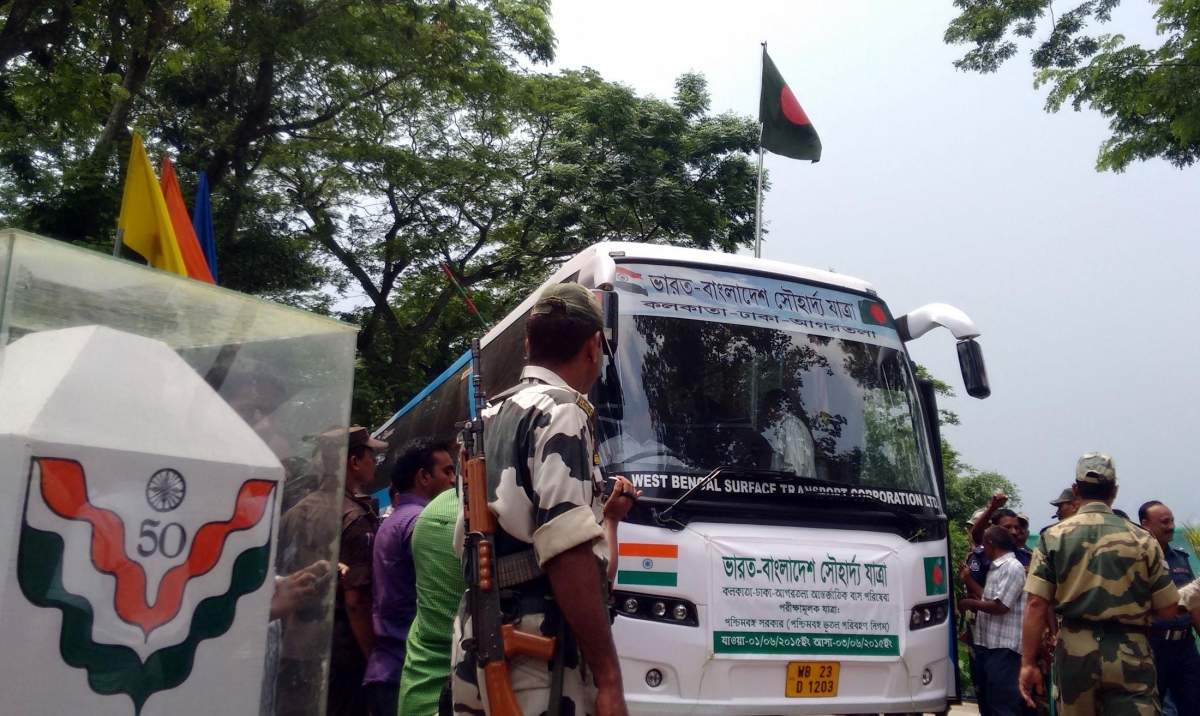
Mamata Banerjee Flags Off Kolkata-Dhaka-Agartala Bus Service

The first Kolkata-Dhaka-Agartala bus enters Agartala from Bangladesh through Akhaura integrated checkpost during a trial run on 2 June, 2015.IANS

Flagging off the Kolkata-Dhaka-Agartala bus service here on Thursday, West Bengal Chief Minister Mamata Banerjee said the initiative will turn the India-Bangladesh ties into an everlasting relationship.

“The launching of this service makes this day forever memorable and historically significant for both the countries,” Banerjee said at the flagging off event at the state secretariat, Nabanna, in Kolkata’s neighbouring Howrah district.

“This service will bring both India and Bangladesh closer and turn our cordial ties into an everlasting relationship,” she added.

The cross-border bus service was approved at a recent meeting between Bangladesh Road Transport Minister Obaidul Quader and his Indian counterpart Nitin Gadkari in New Delhi.

The bus service will facilitate visiting mainland Indian states for people of the mountainous northeastern region, reducing the distance by over 1,000 km.

Agartala via Guwahati is 1,650 km from Kolkata by road, but the distance between the tripura capital and the West Bengal capital via Bangladesh is only around 500 km.

Prime Minister Narendra Modi and his Bangladesh counterpart Sheikh Hasina are scheduled to flag off the Agartala-Kolkata direct bus service in Dhaka on June 6.

source: http://www.ibtimes.co.in / International Business Times / Home> News> Society / by IANS / June 04th, 2015

ZSI celebrates a century of magic finds

Kolkata :

Scientists at the Zoological Survey of India (ZSI) have discovered 176 new animal species in the run-up to their centenary year that kicked off on Wednesday.

Speaking to TOI, ZSI director K Venkataraman said 93 new species of insects were recorded by the team last year along with 24 species of amphibians, 23 species of fish and two species of reptiles. The other new finds were 12 species each of arachnida and crustacea, one type each of nematoda, trematoda and mollusca.

“It has been an exciting year with our scientists contributing to the inventory of animal species on the planet. Apart from the new finds, 61 species of animals that were found elsewhere in the world were also found and recorded in the country,” Venkataraman said.

Of the new insects discovered, several were found in Bengal. Agricnemis kalinga was found in Panchala, Howrah; Amemboa bifucrata in Kalikhola, Jalpaiguri; Amemboa mahananda in Mahananda Wildlife Sanctuary, Darjeeling; Onchotrechus dooarsicus in Buxa Tiger Reserve, Jalpaiguri; Pleciobates bengalensis in Alipurduar; Calvia explanata in Darjeeling and Forcipomyia parasecuris in Burdwan. In addition, several other species were found across the state.

ZSI deputy director Dhriti Banerjee said Bengal has one of the richest faunal diversities in the country due to its diverse climatic zones. “Of 96,000-odd recorded animal species in India, 11,042 species, or more than 10%, are found in the state. Different climate zones — alpine temperate forest in Darjeeling, tropical forest in north Bengal, desiduous forest in south Bengal, dry grassland in the middle and mangroves in Sunderbans — support the varied animal life,” she said.

In fact, north Bengal, particularly Darjeeling, is considered a animal diversity hotspot by zoologists as the Eastern Himalayas is the gateway for faunal elements coming to India. “Any experienced scientist can confidently set out on a trip to Darjeeling and find a new species. The insect and ambhibian population in Darjeeling is very high,” Banerjee said.

While new species are being discovered in the state, several species have become extinct, including Javan rhinoceros, Asiatic two-horned rhinoceros, musk deer, monal pheasant, mombin quail, pink headed duck, marbled cat, golden cat, three-banded palm civet, mock viper and gore’s bronze back viper.

While ZSI has traditionally focused on surveys, collection of specimens, identification, naming and preserving, it has now started working on a GIS platform so they can be spacially and temporally mapped for reference. An ambitious programme to digitize the specimens is underway.

“A databank of high resolution photographs of type specimens, along with their full profile — what it looks like, where it was discovered, where it is found now and its DNA bar code — will be created,” Banerjee said.

Banerjee is heading the Rs 3 crore project to digitize information on 7,286 species, most of which are 100-200 years old.

source: http://www.timesofindia.indiatimes.com / The Times of India / Home> City> Kolkata / TNN / July 02nd, 2015

The old Calcutta chromosomes

Thousands of Kolkata houses with red-oxide floors and sleepy green-shuttered windows, the spacious porches on the ground floor, with their intricate cornices, elaborate wrought-iron grills, and open terraces are being destroyed at an incredible pace. Photo: Akash Mondal

Kolkata’s heritage buildings are part of the city’s unique DNA, as distinct to its landscape as a fingerprint. The writers talk to novelist Amit Chaudhuri, who is spearheading the city’s brave fight to save its heritage.

In one of Kolkata’s most prosperous neighbourhoods stands a two-storey house. It has shuttered windows and large pillars, in the style typical of colonial Calcutta. The house belongs to Tapati Mukherjee, and was built by her grandfather in the 1930s, in an area called Hindustan Park. The house next to hers, built around the same time and in the same architectural style, is owned by a former chief of the Indian Football Association. It is being torn down. It will soon be replaced by an anonymous high-rise.

Mukherjee, however, is adamant that she will not let her house suffer a similar fate. The Director of Culture and Cultural Relations and the President of Rabindra Bhavan at Visva Bharati University in Santiniketan, she said, “I don’t want to live anywhere else. The house has a cultural ambience and feeling of old-world grandeur (that) I do not find elsewhere. I vow to protect this house till my death.”

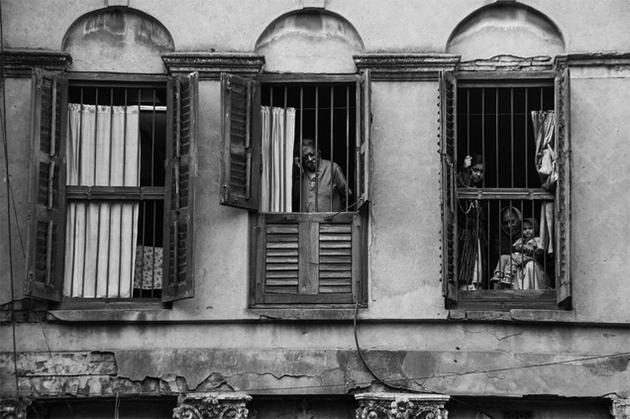
Unfortunately, not everyone thinks like Mukherjee. Thousands of Kolkata houses with red-oxide floors and sleepy green-shuttered windows, the spacious porches on the ground floor, with their intricate cornices, elaborate wrought-iron grills, and open terraces are being destroyed at an incredible pace. These houses give Kolkata its unique old-world charm and reflect the amazing architectural ethos of the city, but they are being lost in the mad rush for multi-storey buildings and concrete chaos.

Thousands of heritage buildings in with red-oxide floors and green-shuttered windows, spacious porches with intricate cornices, elaborate wrought-iron grills, and open terraces are being destroyed at an incredible pace in Kolkata. / Photo: Sanjoy Ghosh / The Hindu

This loss of heritage is not unique to Kolkata. Several Indian cities today are battling this dilemma. In Jaipur, for instance, many of the privately-owned historical havelis, with their jaali windows, false fronts and pink facades — which gave the city its moniker of Pink City — are in danger of being lost forever. They have become dilapidated over time and are slowly beginning to be pulled down to make way for modern buildings. Some of these havelis date back over 100 years.

Mumbai has a splendid architectural history, with a mix of Art Deco, Indo-Saracenic and Victorian, all contributing to a rich variety of features that contribute to the city’s signature ‘look’. But many of these buildings are crumbling today and, in the absence of government incentives, owners prefer to let the heritage homes decay rather than spend their own money on upkeep, which is understandably an expensive task. Once the buildings reach a certain stage of disrepair, the owners are allowed to demolish them and sell the rights to redevelopers for a lucrative sum. This makes it much more difficult to persuade owners to look after them. Bangalore and Chennai, too, are fighting the same battle, as is the state of Goa, with its stunning built legacy in the Portuguese-Baroque style.

The only weak but bravely flickering touch of silver in this bleak skyline is the fact that informed citizens across India are taking up cudgels to try and save the country’s heritage structures. The newest episode to this saga of protest is being staged in Kolkata, where several people — both ordinary and prominent citizens — have written to Chief Minister Mamata Banerjee, pointing to the urgent need to stop the destruction of these historic buildings. Most of these houses were begun in the 19th century and continued to flourish over the next hundred years. In fact, even during the recession of the 1930s, the cement industry was flourishing as the middle-class was constructing these huge houses.

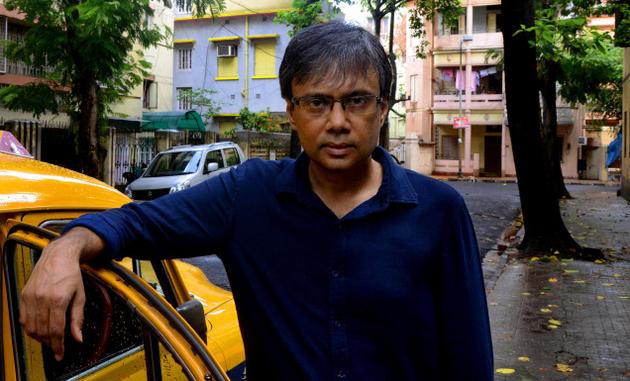
Author Amit Chaudhuri who is spearheading the protests to save the heritage buildings. / Photo: Sanjoy Ghosh / The Hindu

Eminent writer Amit Chaudhuri, who is leading the campaign, said, “Destroying these buildings is to destroy one of the chief characteristics of this city’s history of modernity. Kolkata is a modern city and these houses are emblems of the city’s modernity… they are as important as the painting, literature and music of Bengal.” For Chaudhuri, this is an old battle. He has been speaking and writing on the issue for many years now. He talks of how the architecture of many neighbourhoods in Kolkata is quite distinct from the Indo-Saracenic or neo-Gothic style of architecture that can be seen in other Indian cities. They represent a Bengali-European style that is not seen elsewhere.

The Kolkata heritage protest team includes architects, artists, film directors and academicians. And one common factor that everybody agrees upon is the fact that these old buildings are not important only because of the nostalgia that surrounds them but because they represent a certain time in history. If preserved well, these buildings can actually lead to very practical and modern benefits, such as increased tourism revenue and, in turn, a renewal of the city.

Take, for instance, the boutique hotel that opened in Kolkata a couple of years ago. Called Hotel 233 Park Street (based on the door number), it occupies the ground floor of an imposing Zamindari mansion located at the much less stylish but no less historical Park Circus end of the city’s famous restaurant street. Rather than tear the mansion down, with its classical pillars and high ceilings and wooden-slatted windows, the owner has recreated a piece of the city’s cultural history here. The rooms have antique mahogany or Burma teak furniture, and a potpourri of Zamindari and Colonial tapestries, lithographs, curios and floor lamps. The hotel’s revenues could be used to revamp the rest of the mansion over a period of time. It is testimony to how sensible restoration can go a long way.

As Nobel Laureate Amartya Sen has said, the rich history of early habitation in the Calcutta region has suffered not only from intellectual neglect but also from the destructive tendencies of the past. “We owe to future generations a preserved and unmutilated heritage of Calcutta’s eccentric but exciting old buildings,” Sen had said in response to the city’s petitioners.

Even as Kolkata’s mayor Sovon Chatterjee has claimed that it is “next to impossible” to preserve the old neighbourhoods and houses, the supporters of the campaign have agreed that a legislative intervention is required to preserve the buildings. Architect Partha Ranjan Das has also come up with another idea. He suggests that buyers must be incentivised by the introduction of a transfer of development rights. In other words, he says, “While the buyers (of heritage properties) will not be able to make changes to these old houses, they can transfer the floor area ratio to other projects that they are developing in other localities.” This is a unique solution that must be looked at seriously, not just in Kolkata but across cities.

Meanwhile, Sugata Bose, historian and MP from Trinamool Congress, has assured the petitioners that he will take up the matter with Chief Minister Mamata Banerjee. “During the Chief Minister’s upcoming visit to London, I will try to show her what the authorities have done there to preserve the neighbourhoods,” he said.

However, well-known artist Shuvaprasanna, who heads the West Bengal Heritage Commission, is very clear that the best of intentions cannot achieve anything unless there is a change in existing laws to prohibit the demolition of these houses. “The German author, Günter Grass, was awestruck by the city and had raised the issue of renovation with former Chief Minister Buddhadeb Bhattacharjee during the 1990s. However, the discussion was not taken forward and nothing much could be done.”

As he points out, most of the houses are owned by several members of a family and, in many of them, litigation is involved, so that most owners find it the easiest option to sell the houses to private builders. In fact, most owners don’t see any value in the structure itself, and sell it for the value of the land alone. Bose speaks of the need to change mindsets so that people can better understand the innate heritage value of the buildings.

But others say that none of this might work because rampant unemployment has resulted in real estate becoming one of the few growing sectors. In other words, the developers will not be stopped easily. “We have declared a number of these as heritage houses but we are failing to preserve them despite investing crores of rupees,” said the mayor, adding that the Kolkata Municipal Corporation has neither the resources nor adequate laws to deal with the issue.

A recent Bengali film, Bhooter Bhabishyat, (The Future of the Ghosts) was a huge hit. In the film, ghosts evict the greedy builders from a 19th century palace and settle down in it themselves. In real life, will the city’s heritage ever be able to evict the powerful builders and promoters?

source: http://www.thehindu.com / The Hindu / Home> Features> Magazine / by Shiv Sahay Singh & Suvojit Bagchi / June 27th, 2015

Chinese churches stand test of time

Kolkata :

Crumbling buildings and filthy roads at Tiretta Bazar — or Old Chinatown — bear evidence to the depleting fortunes of the Chinese community in the city. But behind those closed doors lie a secret the community so proudly cherishes. The shabby buildings with a ‘falling-apart’ look and feel house some of the historic churches of Kolkata. Step inside and the regalia, incense sticks and intricate altars will give you a feel of the Chinese tradition.

The fact that KMC and the tourism department have joined hands with a Singapore-based organization to revive Old Chinatown has come as a shot in the arm for the community. They are happy that these churches, which were originally established in the 19th century and then rebuilt in the early part of the 20th century, will get restored.

The Indian Chinese Association has appealed to the project co-ordinators that the revival project should centre around the six churches (they were originally temples but later got converted to churches as most of the Chinese people embraced Christianity) that the community is guarding so dearly for so many years.

While the project so long centred around the Toong On Church and the famous Nanking restaurant that it houses, now five churches have also come into focus. A visit to the churches is an experience in itself. Take the case of the Namsoon Church, for example. It is the oldest of the six. It was established in 1820, almost immediately after the Chinese settlers abandoned Atchewpur near Budge Budge. Located at the far end of the snaky Damzen Lane, you will easily miss it. But the church, dedicated to Kwan Yin, the Chinese Goddess of War, has a magnificent altar complete with an intricately carved roof hanging.

There are three more churches on the same lane. Choong Hee Dong Thien, built in 1859, is in a sorry state but the deity, Kwan Kun, believed to be the God of Fortune, is still maintained and worshipped by the community. The Gee Hing Church was originally built in 1888 but it reached such a dilapidated state that the community rebuilt and relocated it in 1920 to its present location on 13, Blackburn Lane. Even that is in a sad state now, though the members of the community regularly visit for prayers and offerings there.

“Times are tough and you hardly find time to hang around as regularly as you did earlier. But we still try to meet up for our board games of Chinese Pair, after prayers as frequently as possible,” said Chang Yu Sen.

“Our tradition lives in these churches. It reminds us where we belong and the culture and tradition of that place. We cannot relate to the changes that have come over China today, so we guard these altars to remain close to our roots. Today many of us might have become Christians but we have not lost touch with Buddhism, Taoism and Confucianism that bind us,” explained Paul Chung, president of the Indian Chinese Association.

The other three churches — Sea Ip Church, Sea Voi Yune Leong Futh Church and Then Hane Miaw — too are crying for attention despite devotees’ best efforts at maintaining them.

source: http://www.timesofindia.indiatimes.com / The Times of India / Home> City> Kolkata / by Jhimli Mukherjee Pandey, TNN / June 23rd, 2015

Relic Hunter

On a rainy afternoon, Chittaranjan Dasgupta sits hunched on a chair in his dimly lit room in Bankura’s Bishnupur, working on the manuscript of his latest book, ‘Dakshin Paschim Banger Itibritto’ (History of South West Bengal).

He is 90 years old. For more than 50 years, he has been working tirelessly for preserving the history of Bankura and its surrounding region. Age has not dulled his faculties.

He has authored two other books on Bishnupur’s terracotta temple art. Recently, he wrote a paper on ‘International Trade and Cultural Diffusion in Medieval Southwestern Bengal: Some Architectural Evidence’.

His son Basab Dasgupta, economic advisor with the World Bank in Washington, has sent it to the University of Cambridge.

Dasgupta’s tryst with history began in the prime of his youth. He taught Bengali at Bishnupur High School. “Those were heady days,” he recalls. “We were still basking in the glory of new-found freedom after the British left. Everyone, especially the youth, were fired by a deep passion and commitment towards our soil.” They were free spirits, too. “We would travel to villages in and around Bankura regularly. On these trips, we stumbled upon archaeological relics buried deep in the soil.”

Bishnupur, best known for its terracotta temple art and Baluchori sarees, is a treasure trove of relics dating back to the prehistoric era.

Bankura-Bishnupur’s history can be traced back to thousands of years ago, when Proto-Australoids and Proto-Dravidians inhabited the region. Bishnupur was the core of Mallabhum that in its heydays stretched up to the Chhota Nagpur Plateau in the west and Burdwan in the east.

Its monarchs were called Malla Rajas. Bishnupur saw a confluence of various religions and sects, including Vaishnavism, Jainism and Islam. Bishnupur’s kings were patrons of art, music and culture. The eponymous Bishnupur gharana originated here.

Tansen’s descendant Ustad Bahadur Khan, a musician at the court of Bishnupur’s King Raghunath Singh Deo II, established the gharana.

The writ of time, however, ensured Bishnupur’s link with its glorious past became tenuous.

In the 1940s, Jogesh Chandra Roy, who settled in Bankura after retiring as a professor of chemistry and botany from Cuttack’s Ravenshaw College, tried setting up a museum for relics, books, manuscripts of a bygone era. Around that time, the area around the Kangsabati river was being excavated. “Prof Roy was pained to see government officials and others walking away with priceless archaeological finds,” says Dasgupta. Roy then placed an announcement in a reputable Bengali magazine, seeking help to build the museum. He received no response. Then, came a band of enthusiasts who cherished their history.

Besides Dasgupta, the motley group comprised teachers, scholars, students, businessmen and government officials. They wanted to preserve testimonies of the past for posterity.

Inspired by Roy, they set up the Bishnupur chapter of Bangiya Sahitya Parishad in 1951. Dr Manik Lal Singha was a prominent member who contributed immensely to preserving Bishnupur’s history. Like Dasgupta, he, too, taught at Bishnupur High School and became the parishad’s secretary.

“In 1970s, Manik Babu discovered a Chalcolithic site at Dihar, north of Bishnupur on the north bank of Dwarakeshwar river,” Dasgupta says. Coins, beads, semi-precious stone jewellery and pottery were excavated. The find helped establish that Bankura-Manbhum-Singhbhum was the hinterland of the Tamralipta port and part of the trade route that opened into the Bay of Bengal.

Dr Singha wrote to the Calcutta University’s archaeological department, which took charge. Parishad members scoured villages to collect bits of Bishnupur’s past. “We would go to houses asking for ancient manuscripts written on palm leaves or tulot kagoj (handmade paper). These were heirlooms and several families didn’t want to part with them,” Dasgupta says.

For about a decade — from the 1980s, till he retired in 1990 — Dasgupta, like Dr Singha, travelled through villages to collect relics. They found numerous ancient stone sculptures. Coins, ornaments, pot shards, arrow heads, weapons and tools were excavated from the banks of the Kansai, Shilai and Darakeshwar rivers. “Often, we succeeded in retrieving the relics. But there were times when villagers didn’t allow us, especially if the relic was an idol of a deity who they worshipped,” he says. Gradually, when they had a collection of manuscripts, the parishad decided to set up a museum.

In January 1951, Kabishekhar Kalidas Roy inaugurated a room from where the museum began.

Later, Bishnupur’s Bhattacharya family donated about 10 bighas of land, where then Union education minister Humayun Kabir laid the foundation of the museum, Jogesh Chandra Purakriti Bhavan, in 1954. Named after Prof Roy, today it is a two-storeyed building. The state government, too, chipped in.

During the Left Front regime, the foundation was laid for a new wing. Victoria Memorial gave a grant of Rs 15 lakh for its modernization. Dasgupta is the museum’s member-secretary. The museum became a crucible of culture.

The Parishad organized various lecture series, discussions and music performances. The list of speakers had Bengal’s best — scientist Satyen Bose, author Tarashankar Bandopadhyay, scholars like Shashibhushan Dasgupta, Suniti Chattopadhyay, Sukumar Sen, Kalidas Nag, economists Ashok Mitra and Biplab Dasgupta.

Now, most parishad members are either dead or old. Lectures and performances are no longer held. “Nobody seems to be interested in intellectual pursuits anymore,” Dasgupta feels. Also, today, moving in villages in search of relics would have been tough. “Violence and suspicion stemming from politics have eroded the innocence and peace in Bengal’s villages,” he rues.

The museum boasts a collection dating back to the Paleolithic Age. There are sculptures of Jain Tirthankaras, Parasnath, Choumukha votives and Hindu gods, including Chamunda, Vishnu on Ananta Shajya, Ganesha, Kartikeya, Shankha Purush, Indrani, Pragya Paramita and Ambika. The music gallery chronicles the Bishnupur gharana, its exponents and their instruments.

Curator Tushar Sarkar and two guards are in charge of the museum. During peak season, the museum attracts about 400 visitors a day.

Yet, such priceless treasures of Bengal’s history are left practically unguarded with not even electronic surveillance or high-tech round-the-clock vigil.

source: http://www.timesofindia.indiatimes.com / The Times of India / Home> City> Kolkata / by Rakhi Chakrabarty, TNN / June 20th, 2015