Category Archives: Travel

Nezone-Ok Play in pact to make indigenous e-rickshaws

Kolkata :

City based Nezone Group and leading moulded plastic maker Ok Play has forged a partnership to manufacture indigenous e-rickshaws.

“We have collaborated with Ok Play to manufacture eastern region’s first ICAT (International Centre for Automotive Technology) and Automotive Research Association of India (ARAI) approved e-rickshaw,” Nezone group managing director M L Beswal told .

As steel pipe producer it is forward integration for us as we will be providing the chasis of the e-vehicle, he added.

Calcutta High Court’s direction to the West Bengal government to form a high-power committee to take steps against unauthorized e-rickshaws comes as a boon for us, he said.

According to estimates, over a lakh e-rickshaws are plying across the state, most of which are either built with Chinese components and are unable to meet regulatory requirements.

PSU banks have also approved this product which will help buyers to get subsidised Mudra scheme loan to purchase the vehicle.

This is a complete green vehicle as even components used for body are all UV stable plastic body which is non-polluting, long lasting and edge free, Nezone officials said.

Feasibility is being carried out to make solar powered e-rickshaw as well, Benswal said.

He said if some direct fiscal benefit scheme is offered by the West Bengal government it would help in quick switchover to authorised e-rickshaw in the state.

The Delhi government has announced a subsidy of Rs 15,000 per e-rickshaw. The Maharashtra government has waived registration charges on such vehicles.

Several state governments have waived VAT on e-rickshaws. The union government has reduced central excise to 6 per cent on these battery operated vehicles.
BSM MD SOM

source: http://www.timesofindia.indiatimes.com / The Times of India / News Home> City> Kolkata / PTI / May 26th, 2016

Barcelos comes to Kolkata

Kolkata :

Costa Mazzis-owned Barcelos has brought Afro-Portugese cuisine to the city. Rohit Malhotra, India Business Head of Barcelos, told Business Line that the franchised 100-seater casual dining restaurant was result of a tie-up with MP Jewellers family outfit Trivia Food & Beverages Pvt Ltd.

Indranil Roychowdhury, Director of Trivia, said that collaboration was likely to be replicated in the near future for a few more in West Bengal.

For Barcelos, it is the fourth outlet after setting up two in New Delhi and one in Gurgaon. “By July we would be present in Jaipur and Mumbai through the franchisee route”, Malhotra said. Apart from one company owned outlet in the Capital, Barcelos is following the franchise model for expansion in the country.

Portuguese restaurateur Mazzis, who first set up his shop in South Africa, linked his brand to a village in Portugal – Barcelos – with legends attached to cockerel or rooster.

Though its low-oil flame grilled chicken along with “peri-peri” or a number of table sauces made of African chili are the menu drivers, for India, Barcelos has created a range of vegetarian dishes.

Barcelos official said that the chain now popularising a typical flavour and taste of the fiery African peri-peri in the country where Portuguese traders centuries ago introduced chili. Variants peri-peri sauce is also used by Barcelos chefs as a secret marinade for meat or seafood before they are roasted or grilled, Malhotra said.

source: http://www.thehindubusinessline.com / Business Line / The Hindu, Bureau / Kolkata – May 16th, 2016

Bristol will always remember Rammohan Roy, says mayor

Continuing along city tradition, the Lord Mayor of Bristol on Sunday led the annual service at the sylvan Arnos Vale Cemetery to pay tributes to Indian social reformer Rammohan Roy, who died here on 27 September 1833 of meningitis.

The service at the tomb built to an Indian temple style, was attended by many people from across Britain, including representatives of the Indian high commission, Brahmo Samaj and the Unitarian church.

Lord mayor Alastair Watson recalled Roy’s many contributions, and said Bristol would always remember and cherish his memory. The annual service at Roy’s tomb has been held for nearly a century.

A new documentary, titled ‘Relics of the Raja’ by academic Suman Ghosh, was shown at the event, which included new research on Roy’s contribution to the anti-slavery movement in early nineteenth century.

It also showed the newly-discovered replica in back of Roy’s original death mask.

Carla Contractor, local historian, who has led several initiatives to preserve, cherish and celebrate Roy’s life and work, recalled his accomplishments. Her latest research is focussed on Roy’s last days in England.

“The Raja was a remarkable man in his day.

He fought for women’s rights and for the reform of legal and fiscal services in India. All Indians can take pride in what the city of Bristol has done in memory of the Raja and be proud too of their own roots in the Indian subcontinent,” Contractor said.

source: http://www.hindustantimes.com / Hindustan Times / Home / by Prasun Sonwalkar, Hindustan Times,Bristol / September 29th, 2014

Indo-Danish collaboration revives St Olav’s from ruins

Serampore:

The bells will again chime, the ancient clock tick and hymns resonate through the air as the 210-year-old St Olav’s Church is Serampore rises like a phoenix from the ruins.

St Olav’s Church of Fredricksnagore, as the Danes called Serampore, is being restored back to its former glory, with the first service being slated for April 16.

After decades, people will pray inside the 210-year-old church that has risen like phyoenix, not from ashes, but from ruins. St Olav’s of Fredricksnagore (as the Danes called Serampore) has been restored back to its former glory.

If the former Danish colony, which administered Serampore from 1755 to 1845, boasted of a landmark, it was St Olav’s, which was built from 1800 and opened to the public in 1806. Now, it is an example of one of the most successful conservation projects in the country.

A part of the “Serampore Initiative”-launched by the National Museum of Denmark (NMD) in 2008 with the revival plans for the former Danish colony monuments-the restoration of the church began in January 2015.

The Danes started building the church in 1800 and finally opened it in 1806., as a relic of the time when the Danish ruled Serampore.

From a distance, the church’s magnificence is not quite visible. But as one walks into the narrow alley, the majestic steeple of St Olav’s church which would be the identity of the Danish settlement on the banks of the Hooghly centuries ago-towers over. The clock in the tower is getting the finishing touches, symbolic of the eras gone by, and the ones to come.

But the grandeur of the project-now touted as a major collaboration India-Denmark collaboration-can be truly perceived only after entering the compound.

Bente Wolff, curator of NMD, to attend the historic moment of reviving the church, sounded excited: “The church looks new, not in the flashy sense, but in its authenticity. Very high standards of international restoration protocol are maintained. We are proud of the fruits of our hard labour.”

She recalled how Danish historian Simon Rasting and architect Flemming Aalund had meticulously conducted the pre-project social survey, hunting through archives in India and Denmark for original designs and photographs as part of the scientific analysis.

“Doing this in our own country would have been easier, but we loved the challenge and how all the stakeholders, especially the locals, helped us achieve this,” said Rastin, adding the project would not have been possible without the craftsmanship of Aalund and conservation architect Manish Chakraborti, chief conservation architect for the project and director of historic buildings conservation firm Continuity.

“St Olav’s can serve as a model for conservation projects,” said Chakraborti. “The restoration was carried out after thorough research.” for adopting an appropriate strategy executed with utmost care.”

Ashis Mukherjee, proprietor of Mascon, who is executing the project, said, “The greatness of the project lay in the filigree work, strictly carried out with lime and mortar.” Everything, from piecing together the almost-shattered marble tablet of J S Hohlenberg to recreating the timber of the roof-it collapsed in 2003 -that has been replaced with steel beams, polishing the church bells with ‘Frederiksvaerk 1802’ inscribed on them to restoring the original Burma teak furniture, is noteworthy.

History of St.Olav’s Church

‘Governor’ Ole Bie – born in Norway, buried in Serampore , Between 1755 and 1845 Serampore was administered by Denmark under the name Frederiksnagore. Until 1814 Denmark and Norway formed one kingdom

The longest sitting head of Serampore’s Danish government was the Norwegian Ole (Olav) Bie. During his service from 1776 to 1805 Serampore grew nto a prosperous town. In 1800 Ole Bie began the construction of a Lutheran church for Serampore’s Protestant citizens.

Originally planned as a simple three-aisle building with a flat roof, the church was later enlarged with an open portico in front, and a vestry and a spiral staircase behind the altar.

The church was completed in 1806, but Bie died in 1805 and never saw the final result.

An epitaph honouring his achievements can be seen in the Church together with five other commemorative tablets. Olav was a Norwegian saint, but it is not known when the name St. Olav’s Church came into use.

source: http://www.timesofindia.indiatimes.com / The Times of India / News Home> City> Kolkata / by Ajanta Chakraborty / TNN / April 07th, 2016
Experts to Document Ashoka Circuit in State

Kalaburagi :

A joint initiative of HKRDB and Calcutta University to document an Ashoka Circuit for Karnataka from Sannati to Siddhapura has been launched.

Head of Ancient History Department of Calcutta University Prof Susmita Basu Majumdar is the Principal Investigator. As part of this expedition, a documentary will be filmed and a pictorial Pali-English-Kannada dictionary will be compiled.

Karnataka has perhaps the largest number of Ashoka sites and those dating back to the 3rd century BC are the earliest legible records found from Afghanistan in the northwest, Andhra Pradesh in the south, Odisha in the east to Girnar in the west. The project will first document all the Ashokan sites in Karnataka and then establish the full circuit from Afghanistan.

AshokaBF02mar2016

A team of three, Prof Susmita Basu Majumdar, artist Rajib Chakraborty and film maker Ranjay Ray Choudhury visited the Chandralaparameshvari temple at Sannati on Sunday, to document the spot where the Ashoka edict was found. They found the original idol of deity Mahakali broken into four pieces lying on the western side of the temple on the banks of river Bhima.

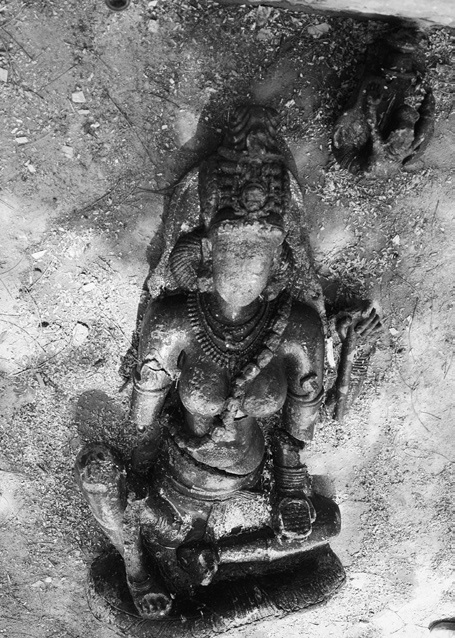
Prof Basu Majundar took the initiative to re-join the idol and narrated the interesting story behind the discovery of the Ashoka inscriptions. In 1986, a portion of the roof of the temple collapsed and caused damage to the 12th century seated four handed figure of goddess Mahakali wearing mundamala and holding damaru, trishula, kapala and sword.

Presently, this beautiful piece of sculpture only shows the trishula and kapala and the other two hands are broken but the temple authorities informed that the present image of Chandraparameshwari which is worshiped in the temple is a replica of the previous Goddess.

The khandita pratima of the deity lying on the banks of Bhima was almost awaiting the visit of this team and when the sculpture was joined it looked as if the beautiful Goddess had reappeared.

The idol base had a protruding pillar like hinge which was fitted into a stone socket. The stone on which the Ashoka inscription was engraved was used to form the base of this deity. When the idol was damaged, the inscription was discovered.

This inscription carried the separate edicts one and two and rock edits 12 and 14 of Ashoka (274-232 BC). Karnakata was the southernmost boundary of the Ashoka’s Mauryan Empire.

This inscription was discovered in 1989. Now the original idol which is about 600 years old is also restored to the temple. The matter is being reported to the ASI for further action.

source: http://www.newindianexpress.com / The New Indian Express / Home> States> Karnataka / by Express News Service / March 02nd, 2016

Web home for Chandernagore

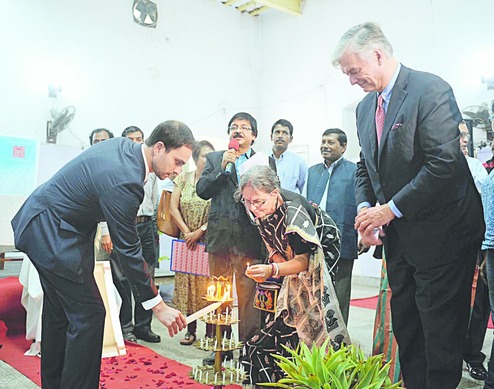
French consul-general Damien Syed lights a lamp to start the foundation celebrations at the Institut de Chandernagor as Vieilles Maisons Francaises president Philippe Toussaint (right) looks on. (Sanjoy Chattopadhyaya)

Five years ago, a project that took off as an inventory of the heritage buildings of Chandernagore has blossomed into an interactive website that acts as a repository of memories, a tool for heritage consciousness and a global platform for the former French colony.

The website www.heritagechandernagore.com will be unveiled on Wednesday at Alliance Francaise du Bengale. “The website enables people to see the magnificent built heritage of Chandernagore. Once one knows what is there to protect, there is no excuse not to do it,” Philippe Toussaint, president of Vieilles Maisons Francaises, the NGO which has provided most of the funds for the website, told Metro.

“The inventory was necessary to protect the buildings which would otherwise disappear,” said French consul general Damien Syed.

Syed and Toussaint had travelled to Chandernagore to be a part of the foundation day celebrations at the Institut de Chandernagor (IdC), marking the signing of the treaty of cession of Chandernagore in 1951.

“The website will evolve as it is not static like the one we built for Chinsurah,” said architect and conservation planner Aishwarya Tipnis, who led the project and has also built www.dutchinchinsurah.com on the history of neighbouring Chinsurah. “A blog will be part of the website where people will continue to contribute. There will be a continual crowd-sourcing of history.”

While the inventory of 99 buildings was ready by 2012, a host of community engagement activities was held in May 2015. “Contests were organised for schoolchildren alongside various workshops and a citizens’ forum. Local youths went door to door collecting memories which form a part of the website. They are now trained to take tourists on guided walks,” Tipnis said.

Toussaint is ready with another gift for Chandernagore. “We want to fund the digitisation of the important documents at IdC.” IdC curator Arup Ganguly has drawn up the list of documents. “Some, like our single copy of Le Petit Bengali, need immediate attention before crumbling to dust,” he says. The project awaits government approval.

source: http://www.telegraphindia.com / The Telegraph,Calcutta,India / Front Page> Calcutta> Story / by Sudeshna Banerjee / Wednesday – February 03rd, 2016

40 Buddhist relics unearthed at Moghalmari in a single day

Kolkata / Midnapur:

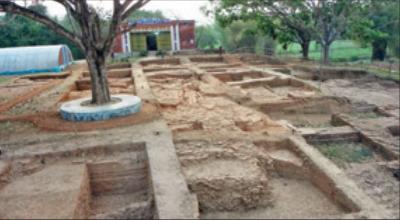
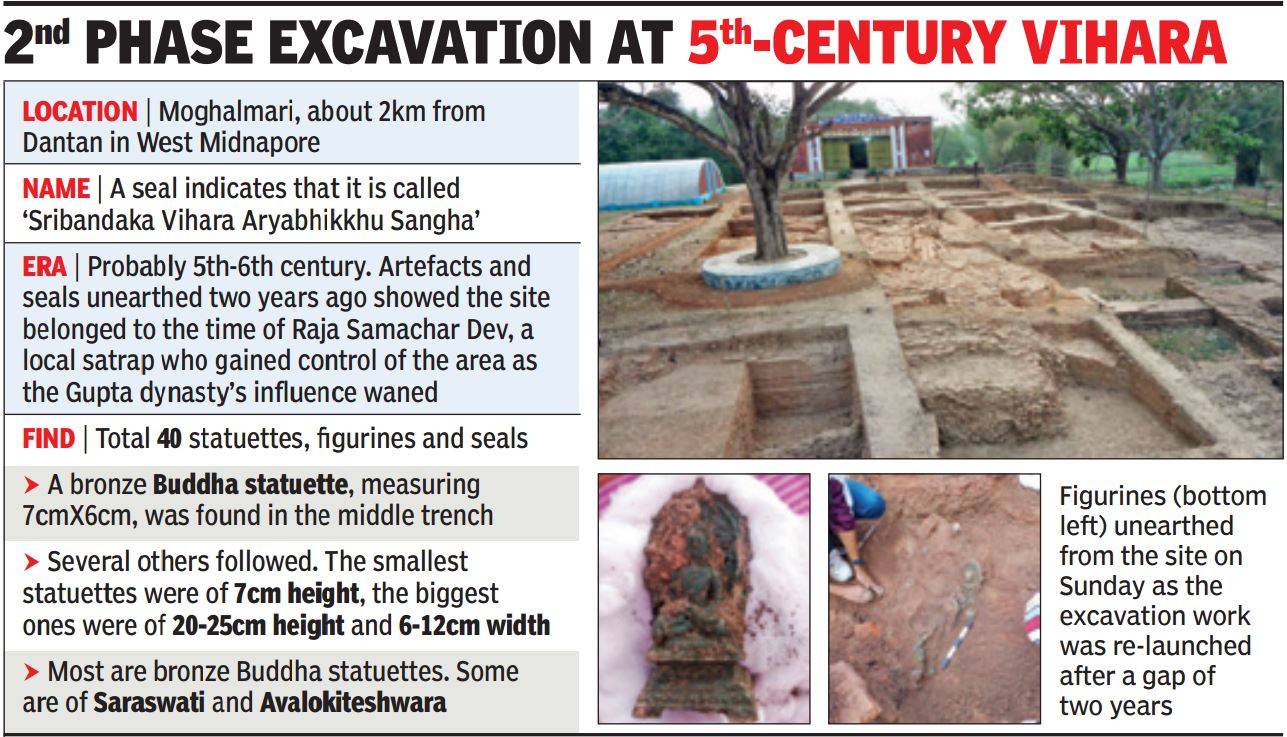
The ancient site at Moghalmari witnessed much excitement on Sunday morning when around 40 bronze artifacts, dating back to fifth and sixth centuries, tumbled out of the earth, as the state archaeology department re-launched excavation of the Buddhist vihara after a gap of two years. The digging work coincided with a two-day Moghalmari Festival inaugurated on Sunday.

BuddhistRelicsKOLKATA25jan2016

About two kilometres away from Dantan in West Midnapur as bronze artefacts dating back to fifth and sixth centuries started tumbling out of the ground, one after the other. The state archaeology department has re-started the excavations at the site after a gap of two years.

Around 11am, a bronze Buddha statuette, measuring 7cmX6cm, first surfaced in the middle trench of the site, which is about 2km from Dantan in West Midnapur. After this, several more statues of varying sizes started showing up to loud cheers from archaeologists as well as residents of the area. Monks from across the country, who have converged on Moghalmari for special prayers and seminars at the festival being organized by Kolkata-based Bauddha Dharmankur Sabha, were equally enthralled by the discoveries at the vihara, believed to be one of the oldest Buddhist sites in the country.

Of the area who gathered to watch the digging. A two-day Moghalmari Festival also started there on Sunday organised by the city based Bauddha Dharmankur Sabha. Invited by the Sabha, monks from across the country are camping at the site for special prayers and seminars. Naturally, the discovery of the bronze statuettes generated all around veneration for the site has already been established as one of the oldest Buddhist viharas of the country and definitely of Bengal.

While the smallest statuettes were around 7cm high, the biggest ones stood tall at 20-25cm, with widths varying from six to 12cm. While most were bronze Buddhas, statuettes of Saraswati and Avalokiteshwaras were also found. “We are going very slow with the digging work as relics are strwen across the entire zone. Finding over 40 antique figurines in a single day is definitely rare and prized. We are thrilled beyond explanation,” said Prakash Maity, who is in charge of the Moghalmari excavation. “Earlier, we found stucco figurines, gold, silver and mixed metal coins, pendants, votifs and seals.” The site dates back to the post-Gupta period when the dynasty’s influence waned and local satraps-here, Raja Samachar Dev, gained control. The pre-Pala phase of Bengal history was shrouded in mystery, experts said.

In fact, the state archaeology directorate halted the digging work as experts needed to analyse the coins and seals to verify the site’s dates. After research, historians were confirmed that they had found the key seal that revealed the vihara’s name as ‘Sribandaka Vihara Aryabhikkhu Sangha’ and the inscriptions on it established that the institute was founded and functioned in the 5th-6th centuries, if not earlier. The state government has decided to release funds for the new phase of excavation. Already, more than Rs 3 crore has been spent.

BuddhistRelics02KOLKATA25jan2016

Atanu Pradhan, a local enthusiast and secretary of Tarun Seva Sangha, who was instrumental in drawing the Calcutta University’s attention to the mound under which the vihara lay buried for centuries is elated. “I am sure that with time, archaeologists will stumble upon artifacts of greater value and the site will be officially announced a fifth-century vihara,” Pradhan said.

source: http://www.timesofindia.indiatimes.com / The Times of India / News Home> City> Kolkata / by Sujay Khanra & Jhimli Mukherjee Pandey, TNN / January 24th, 2016

Moghalmari fest to bring ‘buried’ Buddhist vihara under limelight

Kolkata:

Buddhist monks from different corners of the country are set to converge on Buddhist monks from different corners of the country are set to converge on Moghalmari near Dantan in West Midnapur on January 24 to stake their claim on a newly excavated site, believed to be one of the oldest Buddhist viharas in India.near Dantan in West Midnapur on January 24 to stake their claim on a newly excavated site, believed to be one of the oldest Buddhist viharas in India.

What was written off as just a mound, which residents of the area believed to hide an ancient lore, has turned out to be a 5th century Buddhist site. The state archaeological department’s excavation has pushed the Raktamrittika Vihara at Karna Subarna in Murshidabad, dated 7th century, to the second position on the Buddhist religious map and calendar.

The Bauddha Dharmankur Sabha, headquartered in the city, has organised the two-day Moghalmari Buddhist Festival, which will see a rare congregation of monks at the site that dates back to the era of Raja Samachar Dev. This was the time when the Gupta dynasty had waned and local satraps had managed to shake off its suzerainty to declare their independence, Raja Samachar Dev being one of them. Most details of the pre-Pala age of Bengal is shrouded in mystery owing to lack of any historical evidence but now, scholars believe that the Moghalmari vihara excavation would help them piece together this past.

The excavation of the site, which had been put on a hold for nearly two years, will be taken up again from Monday. The state archaeology directorate had stopped the digging after archaeologists found coins and seals that had to be analysed to verify the site’s antiquity.

With the inscriptions on the seals finally ascertaining the fact that the vihara was founded and fucntioned during the 5th-6th centuries, if not earlier, the state government has decided to release funds for the new phase of excavation. Already, more than Rs 3 crore has been spent.

“A total of 6,400 square-feet area has to be dug up. So far, we have been able to work our way through less than 2,000 square feet. There is a lot of work to be done. Apart from the stucco figurines, gold, silver and mixed metal coins, pendants, votifs and seals, we have also been able to unearth a seal that describes the vihara as the Sribandaka Vihara Aryabhikkhu Sangha. The vihara did not grow in one phase. So far, we have come across evidence that pinted at the fact that the establishment flourished over second and third phases. We will not stop till we get to see traces of the first phase of the vihara’s development which might put the dates back even further,” said Prakash Maiti, director of the Moghalmari excavation site and a senior archaeologist of the directorate.

During the festival, the Bauddha Dharmankur Sabha will organize special prayers and meditation sessions to spread the message of Buddhism. Visitors will be taken on tours through the excavated courtyard, pradakshin path, the cells in which the monks lived. Seminars have also been organised on Tagore’s writings on Buddha and how his teachings had inspired Vivekananda.

While on one hand, the festival would write a new page in Buddhist religious history, it would also help catapult Moghalmari from obscurity to an important position on the map of ancient Indian history.

“This phase is especially important to us because we will look for more seals to finally establish the name of the vihara. Also, we might stumble upon the first phase of the vihara’s growth while excavating further. We have not yet reached the Garba Griha,” Maiti said.

District magistrate of West Midnapur J P Meena said a lot of interest has already been generated around the forthcoming festival.

source: http://www.timesofindia.indiatimes.com / The Times of India / News Home> City> Kolkata / by Jhimli Mukherjee Pandey & Sujay KhanraJan / January 10th, 2016

Engineer follows his passion to take people to the mountains

Kolkata :

Remember Farhan Qureshi of Three Idiots who left his engineering to become a wildlife photographer. Here is the story of another engineer who left his well settled life to chase his dreams. Saptarshi Roy is a production engineer from Jadavpur University and worked in some of the biggest companies like CTS, Cognizant and Wipro but his passion for the mountains overpowered his sense of security. Farhan had ‘Rancho’ alias Phunshuk Wangdu to motivate him but this self-motivated engineer left his well settled job and started a trekking company to make people become a part of the pristine beauty.

“I completed my production engineering in 2001 and then like any other engineer joined a company through campus interview. In the next ten years I worked with numerous companies. I was never comfortable and went on switching jobs. Finally I felt that engineering is not my cup of tea and started doing something which I liked,” this 38 year old trekker told TOI.

Roy always had a passion for the snow-capped hills and used to run to the peaks whenever he could manage time out of his busy schedule. In 2010 Roy left his job and started a company Himalaya Trekkers – a company responsible to designing customize trekking trips for the people- even for those who don’t have any idea about the ridges and the rifts of the Himalayas.

According to Roy – a trek in The Himalayas is not just a trek; it is an experience that involves all your senses, the sight of snow-clad peaks, the clean smell of mist in the air, smoking hot Momos which melts in your mouth, sound of rugged nature, and the cold touch of the icy wind. “Camping on grassy meadows, beneath the Milky Way sipping on hot coffee in cozy tents with the nature beckoning you with her clarion call to explore is indeed an experience which no hotel room with its walled comfort can offer. Those who live this life will never trade anything for it,” Roy added.

In the last five years Saptarshi has taken more than 500 people to different trekking routes including difficult trekking zones like Roopkund (16000 feet), Pin Parvati Pass (17400 feet), Satopanth Tal (15100 feet), Dzongri & Goecha La (16000 feet) and Sahastra Tal (16400 feet). “We try to provide the real feel of the mountains. As I love the mountains I want the people who travel with us to love the mountains as well,” Roy added.

Going to the mountains has helped Roy to go beyond the corridors of religion, caste and creed. “I have a guide in Kashmir – Altaf. He stays in a small village near Sonmarg. His father Gulam Mohammed has peculiar fascination for the Bengalis particularly for the Kolkatans. Whenever we go to their home they offer us a particular handmade roti along with namkeen chai which I like very much,” Roy added. When asked whether they had faced any hardship, Roy said, “This year in Garwal region we had wait for one hour because there were lots of snow ground bear. They are not dangerous to find them at such an altitude is something great”.

source: http://www.timesofindia.indiatimes.com / The Times of India / News Home> City> Kolkata / by Saibal Gupta, TNN / December 14th, 2015

Toy train service is back

ToyTrainKOLKATA04dec2015

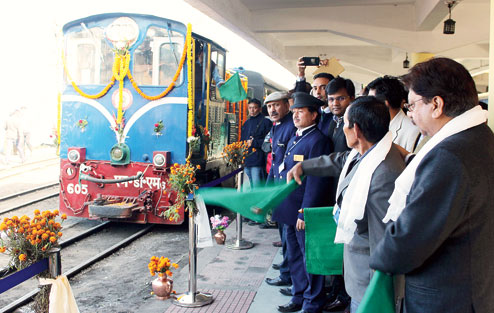
The Northeast Frontier Railway restarted the Darjeeling Himalayan Railway (DHR) toy train service between New Jalpaiguri and Darjeeling on Wednesday.

The service between NJP and Darjeeling was suspended on June 15, 2010, after a landslide near Paglajhora, about 35km from Siliguri, damaged the tracks. The tracks had caved in because of landslide and rain in Tindharia also.

The NFR resumed train services on June 12, 2015, but it was suspended again on June 15 because of landslides.

Repair was undertaken and finally, the service resumed on Wednesday.

According to NFR sources, a passenger special DHR train will leave Darjeeling at 10.15am and arrive at NJP at 5.45pm.

From NJP, the train will leave at 8.30am and reach Darjeeling at 4pm. Each train will have two first-class coaches and a luggage van and would be pulled by a diesel loco.

The toy train was flagged off by Purnabahadur Lepcha, a senior railway employee, at the Darjeeling railway station in the presence of Md. Jamshed, the general manager of NFR, and other senior officials at 9.30am.

source: http://www.telegraphindia.com / The Telegraph,Calcutta,India / Front Page> North Bengal> Story / Thursday – December 03rd, 2015