Category Archives: Science & Technology

Gravitational waves ‘sixth sense’ to understand universe: US-based Indian researchers

Kolkata (IANS):

Thrilled at the detection of the elusive gravitational waves a century after Albert Einstein’s prediction and the first observation of collision of two black holes at the Interferometer Gravitational-wave Observatory (LIGO), two young US-based Indian researchers working on the project say the waves act as a sixth sense for humans to comprehend the universe.

In fact, these “ripples in the curvature of space and time” will provide information on the cosmos that wouldn’t have been possible by peering through any kind of telescope, say Karan P. Jani and Nancy Aggarwal, who are elated at the prospect of India getting a third LIGO (observatory) and being at the forefront of new-age astrophysics.

Last month, India and the US signed an agreement for a new LIGO project in India during Prime Minister Narendra Modi’s visit to Washington. The agreement was signed between India’s Department of Atomic Energy and the US’ National Science Foundation (NSF).

The prime minister also met Indian student scientists, including Aggarwal and Jani, associated with the LIGO project.

“Gravitational waves are a completely new way of seeing the universe. It’s like humans can now perceive the sixth sense beyond the five, to comprehend the universe,” Jani, a fourth year PhD researcher in astrophysics at the Georgia Institute of Technology, told IANS via email.

The gravitational waves were detected on September 14, 2015, by both of the twin LIGO detectors, located in Livingston, Louisiana, and Hanford, Washington. The LIGO Observatories are funded by the NSF and were conceived, built, and are operated by Caltech and the Massachusetts Institute of Technology (MIT).

Physicists have concluded that the detected gravitational waves were produced during the final fraction of a second of the merger of two black holes to produce a single, more massive spinning black hole. This collision of two black holes had been predicted but never observed.

Jani and Aggarwal explained the detectors led to “direct observation of existence of black holes as also a direct observation of mergers of two black holes into a bigger black hole.”

“The energy released during collision was 50 times more than all the stars in the universe combined at that instance,” added Jani, whose work involves simulating black holes on supercomputers and searching for massive black hole collisions in LIGO data.

The breakthrough was made by the LIGO Scientific Collaboration (LSC) (which includes the GEO Collaboration and the Australian Consortium for Interferometric Gravitational Astronomy) and the Virgo Collaboration using data from the two LIGO detectors.

The LSC currently includes over 1,000 members from 90 institutes and 16 countries. India is the third highest right now in terms of membership.

At the heart of the mammoth hunting game to catch the unicorn are tools called interferometers which work by merging two or more sources of light to create an interference pattern that can be measured and analyzed.

“It is a four km light interferometer… in fact LIGO is the most precise measurement ever done. This means a lot of technology research has to be done to make LIGO,” Aggarwal, a fourth year Ph D student at MIT LIGO Lab, told IANS via email.

Aggarwal is studying quantum mechanics to improve the precision of gravitational wave detectors and is glad that the starting of the LIGO India project opens up a new opportunity for her to work in her native country.

“A lot of technological developments that were made for LIGO have found independent applications in science as well as industry and LIGO India will create a lot of opportunities for Indian scientists and engineers and improve the general scientific and technological environment,” Aggarwal emphasised.

They hope to “share the discovery with a larger audience”, a request put in by Modi during their meeting.

“During our meeting, the prime minister said he would like the LIGO scientists to make frequent India trips to popularize the science in colleges in India. We also talked about physics outreach in India for school children, the importance of hands-on demos and the importance of learning material in languages other than English,” Aggarwal informed.

“Also, due to the participation, the travelling of Indian scientists abroad and international scientists to India will definitely strengthen the international relations for India,” she said.

(Sahana Ghosh can be contacted at sahana.g@ians.in)

source: http://www.timesofindia.indiatimes.com / The Times of India / News Home> City> Kolkata / IANS / april 22nd, 2016
Belle Vue to set up 2 new hospitals and nursing college

Kolkata :

With an investment of Rs 500 crore, the super-speciality Belle Vue Clinic is building another 400-bedded hospital, an eye hospital and a nursing college in Rajarhat.

“We have got two plots of two acres each in Rajarhat area where we will be expanding. Funds to the tune of Rs 500 crore have already been allocated for the new facilities,” hospital CEO P Tondon told reporters here today.

He said the 400-bedded super speciality hospital will have different departments but it will specialise in trauma care.

“Trauma care is a very difficult subject and everybody doesn’t want to venture into it,” he said adding that the construction work will begin from January next year.

The new hospital as well as the eye hospital will be ready by 2020, the official said.

On another two acre plot they will set up a nursing school, accredited by the Nursing Council of India, where 400 students will be trained in nursing skills.

“There is a lot of shortage for nurses. We are also seeking permission from the state government to allow us train male nurses as well. Lot of patients want male nurses and so there is a big shortage in the market,” Tondon said.

The nursing school will offer courses in General Nursing & Midwifery (GNM) and a BSc in nursing. Both courses are of three year duration.

Belle Vue has now got recognition from the National Accreditation Board of Hospitals & Healthcare Providers (NABH).

Their existing setup in south Kolkata has 287 beds at present which will be expanded to 357 in a year’s time.

“We are always short of beds. Lot of patients under the West Bengal health scheme also come to us and so we are adding two new floors in the building to have 70 extra beds,” the hospital head said. NIK NN

source: http://www.timesofindia.indiatimes.com / The Times of India / News Home> City> Kolkata / PTI / April 08th, 2016

Scientists develop green technology for water purification

Kolkata (IANS):

Indian scientists have developed an eco-friendly nanotechnology for water-softening applications that could be used in civic water treatment plants for generating potable water, said the official of a technical institute.

The team from Institute of Advance Study in Science & Technology (IASST) in Assam’s Guwahati, crafted a biopolymer using a naturally occurring substance, called chitosan (obtained from the hard outer skeleton of shellfish, including crab, lobster, and shrimp) as a backbone for the carbon nanoparticles to sit on.

“In the biopolymer, nanoparticles are the functional parts of the technology. They remove calcium and magnesium components of water through ion exchange, the same process that is used by common water purifiers,” Devasish Chowdhury, associate professor, physical sciences division, IASST, told IANS.

“This material, we report, is the first of its kind with potential to act as a biodegradable and green material for water-softening applications,” he said.

Published online on March 30 in the joural Nanoscale, the work involved IASST’s Upama Baruah and Achyut Konwar.

While convention water-softening techniques use synthetic resins, Chowdhury said that the novel technology is biodegradable as well.

“We have applied it to pond water sample successfully. This could be used in civic water treatment plants since they do not have very effective water-softening methods and the resulting treated water is very crude,” he added.

source: http://www.timesofindia.indiatimes.com / The Times of India / News Home> City> Kolkata / IANS / April 03rd, 2016

Faculty of Heritage Institute of Technology receives Gandhian Young Technological Award 2016

It was a proud moment for Heritage Institute of Technology Kolkata when one of its faculty members, Debjyoti Chowdhury, received the Gandhian Young Technological Innovations Award 2016 from the President of India on March 12, 2016.

Chowdhury was previously a student of the Department of Applied Electronics and Instrumentation, of the institute and was guided by Madhurima Chattopadhyay, head of the department of Applied Electronics and Instrumentation of the institute under whom he completed the project for which he received the award.

Chowdhury had created a “Cost effective self-stabilizing smart hand held platform (spoon/pen) for the elderly or Parkinson’s disease patients” under the guidance of Chattopadhyay. The project introduces an easy to adopt hand mount device that can be used to support the tremors in hands of old people with the disease for day to day normal activities like writing with a pen,having food with a spoon and also holding crockery/knifes.

More than 500 Institutions competed for the award and a total of 1,80,000 projects were submitted for the award.

source: http://www.timesofindia.indiatimes.com / The Times of India / News Home> City> Kolkata / by Jhimli Mukherjee Pandey / TNN / March 15th, 2016

Bengal village teen bags top Nasa scholarship

Eighteen-year-old Sataparna is among only five scholars from the world chosen for the programme
Eighteen-year-old Sataparna is among only five scholars from the world chosen for
the programme

Kolkata :

Eighteen-year-old Sataparna Mukherjee, a Class 12 student from a village around 30km from Kolkata, has been selected by the National Aeronautics and Space Administration (Nasa) for its prestigious Goddard Internship Programme under the Goddard Institute for Space Studies (GISS). She is among five scholars chosen from across the world for this programme.

Nasa’s GIP selects five exceptional individuals from across the world every year and funds their entire education after school.

Sataparna, who will appear for her school-leaving exams this year from St Judes School, Madhyamgram, in Kamduni – it gained notoriety for a brutal gangrape in 2013 – will be at Oxford University, where she she will pursue graduation, post-graduation and PhD (as Nasa faculty) in aerospace engineering at its London Astrobiology Centre.

Sataparna told TOI, “It all started in May last year when I was a member of a group on a social networking site where there were many members, including some scientists. One day I shared some of my thoughts on ‘Black Hole Theory’, and one of the members of this group gave me Nasa’s official website and told me to post my findings, which I did.” Sataparna’s paper on Black Hole Theory, and how this could be used to create a ‘Time Machine’, was hugely appreciated. “I am very happy to get this opportunity where I will also work as a researcher at the Nasa centre in London,” she said.

Under the Goddard Internship Programme, Sataparna will work as an “employee and researcher”, where she will be part of its earth science and technology development programme. Nasa is paying her a generous sum as honorarium, apart from bearing all her expenses.

Her father Pradip Mukheree, a headmaster of a primary school who led a people’s movement against goons and political pressure to drop the infamous June 2013 Kamduni gang-rape case, said, “She has made us, and the entire country, proud.”

Pulak Chakraborty, a professor of English at the Nabagram Hiralapal College, who’s acting as Sataparna’s referee at Oxford, said, “She is a very good student and her ability should not be judged through her marks alone. She is original, and that has made her attain so much.”

“She is going on August 17,” said Pradip. “Though every cost is borne by the university and Nasa, we will arrange for the passage money, which is quite high. I am thinking of taking a loan because I don’t want to let this opportunity go,” he said.

source: http://www.timesofindia.indiatimes.com / The Times of India / News Home> City> Kolkata / by Saibal Gupta / TNN / February 29th, 2016

In Calcutta, from trick to truth

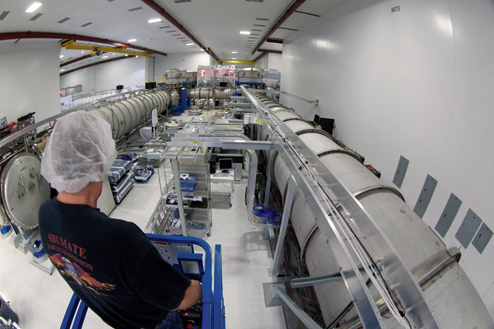
A bird’s eye view of a Ligo laboratory’s laser and vacuum equipment area near Hanford, Washington. (Reuters)

New Delhi :

Anuradha Samajdar, a research scholar in Calcutta, initially thought the first email alert she received about a possible gravitational wave signal was a “blind injection”, the community jargon for a simulation, a trick to test the integrity of the data analysis process.

The email was from Marco Drago, a scientist at the Max Planck Institute for Gravitational Physics, Hannover, Germany, telling a global consortium of physicists that two giant instruments on Earth had sensed (for just a fleeting one-fifth of a second) a signal.

The arrays of lasers, mirrors and control electronics that make up the detectors of the Laser Interferometer Gravitational Wave Observatory (Ligo), located 3,000km apart in the US, had recorded what appeared to be ripples in space-time – possibly the first direct observation of gravitational waves.

It would be up to the data analysis groups scattered across the world, including in Bangalore, Calcutta, Gandhinagar, Pune and Thiruvananthapuram, to determine that they were genuine effects of gravitational waves – and not just noise from the cosmos masquerading as gravitational waves.

“I had heard about blind injections – where a very select few senior scientists release signals and data analysis teams work on them only to be told later that this was a test,” said Samajdar, a scholar working towards her PhD at the Indian Institute of Science Education and Research, Calcutta.

Drago, an Italian and a member of the Ligo consortium, was among the first scientists to be alerted that something interesting had been turned up by an automatic “pipeline” that scans and filters the signals picked up by the detectors.

Shortly before noon on September 14, Drago received the automated pipeline alert. “The signal was so nice, so perfect, it looked like it was coming from a binary (a pair of objects),” Drago told The Telegraph .

After telephone consultations with colleagues, he sent out the alert to the 900-odd consortium members.

Samajdar and physicist Rajesh Nayak at IISER were among scientists in India analysing the signals, trying to determine whether the patterns of ripples observed indeed matched theoretical predictions of what patterns would look like, depending on the source of the gravitational waves.

Nayak, a faculty member at the IISER department of physical sciences, said: “We first match the detected signal pattern with the theoretical predicted pattern, if there is a match, we try and use the signal to estimate various parameters of the source event.”

Supervised by Nayak, Samajdar, who graduated in physics from the Lady Brabourne College, Calcutta, before joining IISER’s integrated PhD programme, while still a bit sceptical about the nature of the signal, began the process of extracting information about the source.

“We began to calculate the masses of the (merging) black holes, their distance – and our estimates were similar to what others in the consortium were reporting,” Samajdar said. “We told ourselves noise wouldn’t give us such nice outputs – that’s when I wondered ‘is this really the big thing’?”

Scientists at the Inter-University Centre for Astronomy and Astrophysics, Pune, the Indian Institute of Technology, Gandhinagar, IISER, Thiruvananthapuram, and the International Centre for Theoretical Sciences, Bangalore, also played key roles in the data analysis.

The multiple efforts across the consortium converged on the same results – the signal had emerged from (the merger of two black holes) a distant part of the universe, perhaps a galaxy.

Physicists are celebrating the discovery for multiple reasons.

“This is an example of big science supported by big engineering,” said Dibyendu Nandi, a physicist at IISER, Calcutta, and head of the Centre for Excellence in Space Sciences, India, a facility supported by the Union human resources development ministry.

The Ligo detectors are marvels of engineering precision, designed to detect ripples or displacements in space billionths of the width of an atom using laser beams that are bounced off mirrors after travelling along two arms of the instrument, each 4km long.

“Gravitational waves was the one prediction of Einstein’s general relativity theory that had not been directly detected – until now,” said Nayak. “This discovery is important for another reason – it will open a new branch of astronomy, we can observe and study things we have never seen or observed before.”

Some physicists also point out that the signal represents the first direct evidence of black holes merging.

“There is no other way we could have detected such exotic events,” said Nandi, who is not associated with the search for gravitational waves. “This observation tells us that such events are not just theorists’ dreams, that the universe is as exotic as we have imagined it to be.”

source: http://www.telegraphindia.com / The Telegraph,Calcutta,India / Front Page> Story / by G.S. Mudur / Friday – February 12th, 2016

Kolkata girl creates underwater drone

Sampriti Bhattacharya

Kolkata :

At 28, she has created an underwater drone that can map ocean floors and explore the deep sea, where even GPS doesn’t work. Kolkata girl Sampriti Bhattacharya’s invention — the Hydroswarm — has been patented and is quite a rage with the defence sector and oil giants.

What’s more, Forbes has featured her among the top 30 most powerful young change agents of the world. Sampriti, who left the city about seven years back for her masters, is now a PhD scholar at Massachusetts Institute of Technology (MIT).

Hydroswarm was created as part of her research thesis. “Underwater navigation has been a reality for many years but for advanced searches you need maps that are as refined as, say, the Google map. This is where my drone comes in. It can map the ocean, sitting on its bed, and you can zero in on the minutest objects, living or non-living.

You can even map underwater pollution with the help of this drone,” said Sampriti, who was in Kolkata for a short while and returned to the US on Thursday. A South Point alumnus, she studied engineering at St Thomas College and did her masters in aerospace engineering at Ohio State University before switching to robotics at MIT.

She told TOI that she always wanted to create an underwater robot because there was no easy way to study the ocean floor. The only option was the very expensive remotely operated underwater vehicles generally used to track warships.

source: http://www.timesofindia.indiatimes.com / The Times of India / News Home> City> Kolkata / TNN / January 29th, 2016

Kolkata based cardiologist felicitated for path-breaking surgery

Kolkata :

Most patients with heart injuries caused by speeding missiles (bullets, daggers, knives) are deprived of treatment because they bleed to death on the way to hospital, or while being operated. A surgeon has been felicitated for correcting the rarest of accident-related heart injuries by the Central Asia Regional Congress of Medical Women in India.

Prof Sushila Mitra, former head department of cardio-thoracic surgery, SSKM Hospital, presented the cases at the congress in a city hotel on Saturday.

Her first presentation was on Jagadhish Khatua (26), who was hit on his right chest by an arrow during an in-fighting between tribal groups at Birbhadrapur village in Midnapore in 1989. Bleeding profusely, he was admitted to SSKM Hospital and the x-ray showed that the tip of the arrow was inside her heart. “We did purse-string sutures on him, and transfused six units of blood. He went home, cured. Today he is totally symptom free, leading a normal life,” Mitra told TOI.

In another case, 18-year-old Tanmoy Gayen, was hit on his left chest by a stray bullet while he was driving his cycle van. He was admitted under Mitra on 4 April, 1998. “Initially, the bullet was missing in his x-ray reports. His chest was opened and closed. A post-operative CT scan showed that the bullet was deep inside his heart. The bullet was finally removed through an open-heart surgery,” Mitra said. She showed pictures of the man, 17 years later to show his fitness.

The surgeon’s third presentation was about 21-year-old Mahesh Chand diagnosed with a hole in his heart. He was admitted on 18 Match, 1994. “During the corrective surgery, the catheter tip accidentally broke inside the heart and got stuck in the right upper chamber of the patient’s heart. He was immediately shifted to the cardiothoracic surgery department and we did an open heart surgery,” Mishra said, adding “the patient was admitted through the night. We removed the ‘foreign body’ first and then the hole in the heart was mended. Post surgery, the patient was on ventilator for two weeks.” Twenty-one years later, Mishra said, the patients is married with a child.

source: http://www.timesofindia.indiatimes.com / The Times of India / News Home> City> Kolkata / by Ajanta Chakraborty, TNN / December 05th, 2015

German precision for cardiac surgery

Kolkata :

Cardiac surgery and heart ailment detection techniques are set to take a leap ahead with the introduction of advanced systems that will shorten the diagnosis period and make it easier and more precise.

Surgical devices and methods, developed in Germany and launched by Dr Kunal Sarkar at Medica Superspecialty Hospital on Wednesday, will help to detect the extent of blood flow reduction in the arteries, provide cardiac and respiratory support to patients whose heart and lungs are unable to function normally and make surgeries possible through small incisions.

The new methods include Transmit Time Flow Measurement (TTFM) -a diagnostic method that determines the level of blood flow reduction through vessels and helps in identifying vessels that are deeply embedded in the heart muscles. It can be used in transplantation surgery and other vascular procedures other than coronary artery bypass grafting (CABG).

The techniques also include one of the latest and most advanced procedures for conduit harvesting in CABG -endoscopic vessel harvesting (EVH). It requires a very small incision and apart from the cosmetic benefits, the pain is less compared to the open technique.

Extra Corporeal Membrane Oxygenator (ECMO) is another technique that is part of the package. It provides cardiac and respiratory support to patients whose heart and lungs are unable to provide an adequate amount of gas exchange to sustain life. ECMO works by removing blood from the patient’s body and artificially removing the carbon dioxide and oxygenating red blood cells.

Fractional Flow Reserve is the final procedure on offer. It helps in accurate diagnosis of a heart block and significantly reduces unnecessary stenting revascularization and helps in optimizing the therapy for heart patients. It helps the cardiologist in making an informed decision, particularly in case of multi-vessel blocks. The procedure relies not on how severely constricted an artery appears to be, but on how the constriction is affecting the blood flow.

source: http://www.timesofindia.indiatimes.com / The Times of India / News Home> City> Kolkata / TNN / December 03rd, 2015

IIT Madras helps KoPT to slash dredging costs by Rs.250 crore

The Kolkata Port Trust may implement a technology that will help it save Rs.250 crore annually through reduced dredging costs, Union Minister for Road Transport, Highways and Shipping Nitin Gadkari said.

Dredging costs at the country’s only riverine port is likely to get reduced from around Rs.400 crore to around Rs.150 crore due to a new process of dredging suggested by the IIT-Madras on the basis of recommendations made by the Boston Consulting Group. The two port systems of KoPT at Kolkata and Haldia have a draft of around 7.5 metres.

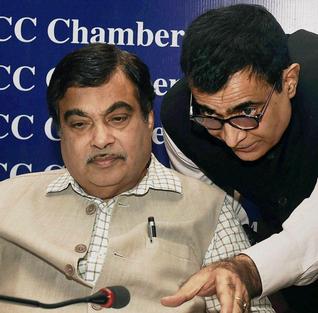
Within five years, 50 lakh jobs are expected to be generated by the transport sector, which would have a two per cent addition to GDP, says Nitin Gadkari. Union Minister of Road Transport, Highways and Shipping. R.P.S.Kahlon, Chairman, Kolkata Port Trust, is also seen.— PHOTO: PTI

Boston Consulting, on the basis of a Ministry mandate, had made 120 recommendations on improving the performance of all the major Indian ports. “About 20 suggestions are being implemented and the rest would be put in place in two years,” Mr Gadkari said adding that it is not possible to improve exports without good ports.

“For this government, waterways had the highest priority in the logistics segment followed by railways and roadways.” Against the previous government’s pace of laying two km of roads daily, now 18 km of roadways were being laid, he said. The target is to increase it to 30 km a day by March 2016. The Minister also said that within five years, 50 lakh jobs are expected to be generated by the transport sector, which would contribute two per cent to the GDP.

source: http://www.thehindu.com / The Hindu / Home> Business / by Special Correspondent / Kolkata – December 02nd, 2015