Category Archives: Science & Technology

Doc with city roots a star author in Britain

London:

Who is Rangan Chaterjee and why has he suddenly become just about the most famous doctor in Britain – a bit of a heart throb, actually?

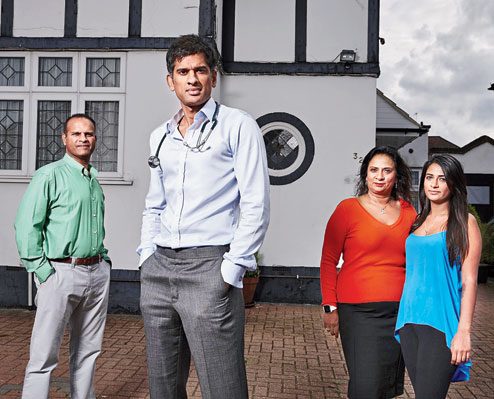
For starters, Chatterjee, son of a doctor, Tarun Chatterjee, who came to England from Calcutta in the 1960s, has written a book, The 4 Pillar Plan: How to Relax, Eat, Move and Sleep Your Way to a Longer, Healthier Life, which is now No. 1 on Amazon UK.

“I am a Bengali boy and this book will have special appeal for Bengalis who tend to eat late at night,” Chatterjee told The Telegraph, as he remembered frequent Calcutta holidays at his father’s home in Shyambazar and his mother Bandana’s in Chetla.

Chatterjee, who has been interviewed by BBC News, The Daily Telegraph, the Daily Mail, the Daily Express and elsewhere, appears to have struck a chord by focusing “on finding the root cause of diseases and helping my patients make their illnesses disappear”.

“The handsome 40-year-old father-of-two, star of BBC One’s Doctor in the House, is at the forefront of a new generation of social-media-savvy medics,” wrote one interviewer about the 6ft 6in tall doctor who lives in Wilmslow, Cheshire, with his Gujarati wife, Vidhaata, a criminal barrister, and their children, aged seven and five.

Based on his “experiences serving as a doctor for nearly 20 years”, Chatterjee, MBChB, BSc (Hons), MRCP, MRCGP, says that his “book goes beyond the sort of health advice we’ve all been reading about for so long – beyond the fad diets and the quick fix exercise programmes”.

His plan has been endorsed by, among others. Celebrity chef Jamie Oliver, who believes “Rangan’s easy, common-sense plan can help everyone live a happier, healthier life”.

Two events have shaped Chatterjee’s life – one was caring for his father who died five years ago. He was a consultant at Manchester Royal Infirmary, “a first-generation immigrant, who worked and worked and worked”.

Even more traumatic was the near death of his infant son who was diagnosed with “an easily rectified calcium deficiency”.

With a sensible diet, exercise and meditation, Chatterjee says: “I have routinely helped my patients reverse type 2 diabetes; eliminate irritable bowel syndrome; lower blood pressure without drugs; reduce menopausal symptoms naturally; sleep better and regain their energy; regain control of their autoimmune conditions; restore harmony to their circadian rhythms; add life to their years, as well as years to their life.”

source: http://www.telegraphindia.com / The Telegraph, Calcutta,India / Home> Calcutta / by Amit Roy / January 03rd, 2018
Gratitude to genius behind Boson

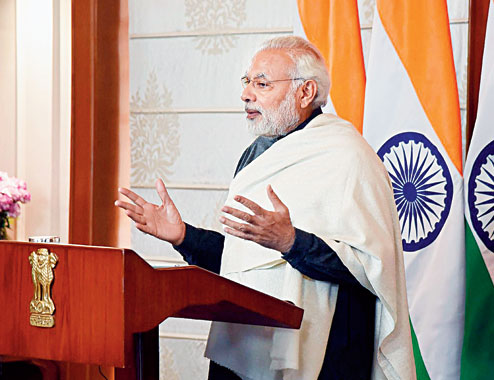
Prime Minister Narendra Modi pays tribute to S.N. Bose (below) on his 125th birth anniversary
via video-conferencing from New Delhi on Monday. (PTI)

Calcutta:

Physics was his calling but he could play a complex classical raga on the esraj with as much dexterity as he could read out a French novel in impromptu English translation.

Stories highlighting the multifaceted genius of Satyendra Nath Bose, after whom the Boson particle is named, on Monday filled the curtain-raiser to a yearlong commemoration of his 125th birth anniversary.

Prime Minister Narendra Modi inaugurated the event from Delhi through video-conferencing, reminding the audience at the SN Bose National Centre for Basic Sciences in Salt Lake that “just as a quantum particle does not exist in isolation, we should also get out of isolation”.

Modi said the scientific ecosystem needed to connect with innovators, entrepreneurs and technocrats to work on artificial intelligence, big data analytics, machine learning, genomics and electrical vehicles. “These are some of the rising technologies on which we need to get ahead,” he pointed out, holding up Bose as the inspiration to test new frontiers.

Born on January 1, 1894, Bose had collaborated with Albert Einstein to create what came to be called the “Bose-Einstein Condensation”. Physicist and author Partha Ghose, who did his PhD under Bose, recounted one among many instances of how humble he could be despite his brilliance.

“He was in a reflective mood one day and spoke about the ‘photon spin’ aspect in his derivation of Planck’s law. But then, with a mischievous smile, he said, “But the old man (Einstein) struck it off”.

Ghose said the anecdote left him flabbergasted because Nobel laureate C.V. Raman’s research later vindicated Bose’s derivation.

“When I asked him why he didn’t claim credit for his discovery, he said, ” Ki ba eshe gelo? Ke baar korechhilo tatey ki eshe jaye? Baar to hoyechhilo (How does it matter? Who discovered it is not the main thing, is it? At least it was discovered)’,” he reminisced.

Planck’s law is the basis of quantum theory.

In his speech, the Prime Minister said many Nobel prizes had been won for work based on Bose’s research.

Union science and technology minister Harsh Vardhan also paid tribute to Bose.

source: http://www.telegraphindia.com / The Telegraph, Calcutta,India / Home> Calcutta / by Anasuya Basu / January 02nd, 2018

CSIR develops ‘solar tree’ that can light 5 houses

A CSIR laboratory in West Bengal has designed a ‘solar power tree’ that takes up only four square feet of space and produces about three kilowatts (kW) of power, enough to power about five households.

“The challenge was to come up with a design so as to generate more solar power in less land space,” Sibnath Maity, chief scientist at the Central Mechanical Engineering Research Institute (CMERI) in Durgapur, which developed the “tree”, told IANS.

“For one mW of power, one needs five acres of land. To generate 10,000 mW we would need 50,000 acres. Now this poses a dilemma in states like West Bengal and Bihar,” Mr. Maity said.

The “solar tree” was inaugurated on Tuesday by Union Science and Technology Minister Harsh Vardhan during his maiden visit to the CMERI, which is a constituent of the Council of Scientific and Industrial Research (CSIR).

Mr. Maity said one conventional solar photovoltaic system of five kW requires 400 square feet of area.

The three kW solar power tree resembles a tree with branches at different tiers and could be squeezed on rooftops and highways with a space requirement of around four square feet.

“The branches hold up the 30 photovoltaic panels and the system costs around Rs.3 lakh with battery back-up,” Mr. Maity said.

Two solar power trees would be installed at the office at Harsh Vardhan’s bungalow according to the Minister’s request, said Mr. Maity.

Harsh Vardhan also inaugurated the ‘Control Container’ developed by the CMERI for lake and sea trial of ‘Remotely Operated Vehicle (ROV)’.

“I happily took part in live demonstration of the tractors developed by CSIR-CMERI by being literally in the driver’s seat and actually driving one vehicle,” the Minister posted on his official facebook page.

“I lauded the contribution of the institute in Green Revolution with its immensely successful technological achievements — the ‘Swaraj Tractor’ followed by the ‘Sonalika’ and the ‘Krishi Shakti’ I also drove the ‘e-rickshaw’ developed by the institute with great enthusiasm,” Harsh Vardhan added. – IANS


“Challenge was to come up with a design to generate more solar power in less land space”

source: http://www.thehindu.com / The Hindu / Home> News> Cities> Kolkata / IANS / Kolkata – May 21st, 2016

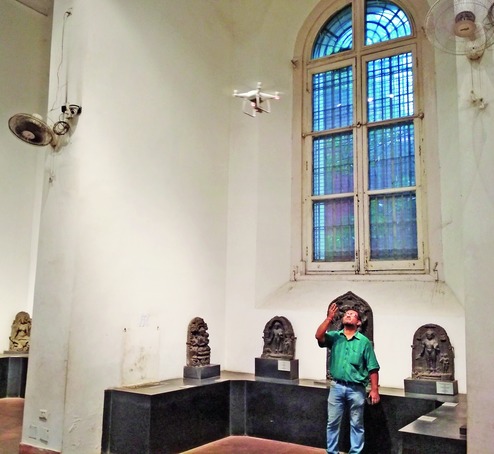
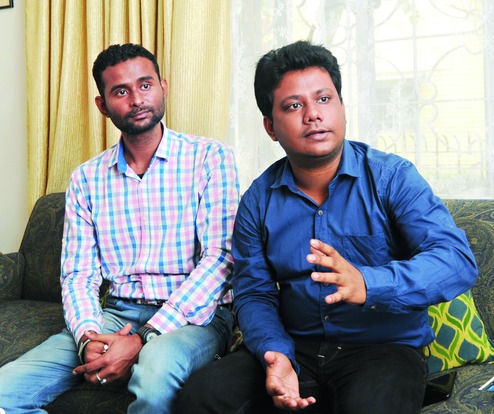
Drone duo soar in start-up dream Army and city police place orders

A drone from RC Hobbytech Solutions Pvt Ltd being tested at the Indian Museum

Calcutta:

A start-up born out of a career setback has started soaring on the rotor blades of drones.

RC Hobbytech Solutions Pvt Ltd, started by two friends, specialises in building unmanned aerial vehicles, commonly known as drones, and has already bagged orders from the Indian Army, the railways and Calcutta police, among others.

Flooded with contracts, the fledgling start-up is servicing these orders with a soft loan from IIM Calcutta, project-based finance from banks and the Rs 1.5 crore it won in a competition launched by Balmer Lawrie under the Startup India scheme in November.

For co-founder Biswajit Dey, a graduate in aeronautical engineering from St Peter’s University in Chennai, RC Hobbytech was a seed sown by the disappointment of missing out on a chance to join the Army Aviation Corps because of an accident that put him in hospital for three-and-a-half months.

A dejected Biswajit came to Calcutta to meet his school friend Ritesh Kanu, who had just graduated in business management from Techno India Salt Lake and was to appear for an interview at the RBI.

Ritesh didn’t go for the interview. Instead, he and Biswajit decided to launch their start-up.

“I liked making drones and fiddling with them while Ritesh was trained to market them. That made us a good team,” said Biswajit, who learnt the basics of drone technology in college. “There is a huge market for unmanned aerial vehicles in agriculture, surveillance and mining,” said Ritesh.

Co-founders of RC Hobbytech Solutions Pvt Ltd Biswajit Dey and (right) Ritesh Kanu.
Picture by Sanat Kr Sinha

RC Hobbytech is working on drone technology to replace the army’s system of detecting intruders along the country’s vast borders. “The army sets up poles with two free-hanging bottles to detect intruders. Whenever an infiltrator tries to cross a border fence, the bottles make a noise and alert the sentries at the forward post. They have electric fences but the wiring can be cut and the alarm system switched off,” Ritesh said.

The start-up’s Drones Tech Lab division has devised an Intruder Detection System based on GPS for the army. The system sends alerts to the forward post and control room in three seconds whenever an intruder is detected. The information includes the exact position of the suspected infiltrator.

“Our system is based on sensors and also sends messages over mobile phone, giving the correct location,” said Biswajit.

A pilot run of the system at Udhampur in Kashmir from March to April earned a letter of appreciation from the army, Biswajit said.

He is currently modifying the system to give it an industrial finish along with camouflage.

From a drone start-up, Biswajit and Ritesh are now a “solutions provider in surveillance industry, leveraging unmanned technology and integrating hardware, software and data analysis”.

They had started with a capital of Rs 4 lakh in 2014 and ended up burning the cash in a year. When their families started asking what they were up to, the duo stopped going home. They then floated a company called EduRade to teach drone technology in institutes and raise money. “It was in 2016 that we pitched for incubation at IIM Calcutta. We met Subhranghshu Sanyal, CEO of the IIMC Innovation Park, at an event and he liked our product. We were incubated in October 2016,” Biswajit recalled.

Sanyal is impressed with what the duo have done so far. “They are providing real-time solutions to problems that are quite risky for human beings to solve. Their work for the army takes risk away and improves accuracy, which is fantastic,” he said.

source: http://www.telegraphindia.com / The Telegraph, Calcutta,India / Home> Calcutta / by Anasuiya Basu / December 28th, 2017

Docspeak on Hepatitis cure 12 weeks for treatment

Calcutta:

Hepatitis C is now curable with 12 weeks of treatment and the chances of developing liver cancer from Hepatitis B has gone down, a professor of medicine from Weill Cornell Medicine said here on Saturday.

The most common liver disease in the world now is non-alcoholic fatty liver disease that can develop because of obesity, excess fat and genetic factors, Patrick Basu said.

“There are medicines that can cure Hepatitis C in 12 weeks. Vaccines can reduce the chances of development of cancer from Hepatitis B. There is a lot of advancement in treatment of hepatitis,” Basu told Metro.

Basu was in Calcutta to speak at a seminar for doctors at the Belle Vue Clinic.

Both Hepatitis C and Hepatitis B are viral infections.

Hepatitis C is a blood-borne virus and modes of infection include unsafe injection practices, unsafe health care, and the transfusion of unscreened blood and blood products, according to the World Health Organisation.

Hepatitis B is a potentially life-threatening liver infection. The Hepatitis B virus is transmitted through contact with the blood or other body fluids of an infected person.

When non-alcoholic fatty liver disease worsens, it can cause cirrhosis, a doctor said. It is possible to reduce the amount of fat in liver if detected early. Ideally, the liver should have no or little fat, he said.

Arun Sen, a professor in the Texas A&M University, spoke of the benefits of telemedicine in Bengal where doctors are few in rural areas.

Saurabh Kole, in-charge of Belle Vue’s intensive care unit, said the hospital was trying to create an organised platform of doctors for telemedicine in the state.

source: http://www.telegraphindia.com / The Telegraph, Calcutta,India / Home> Calcutta / by Staff Reporter / December 24th, 2017

Diagnosing early-stage cervical cancer using artificial intelligence

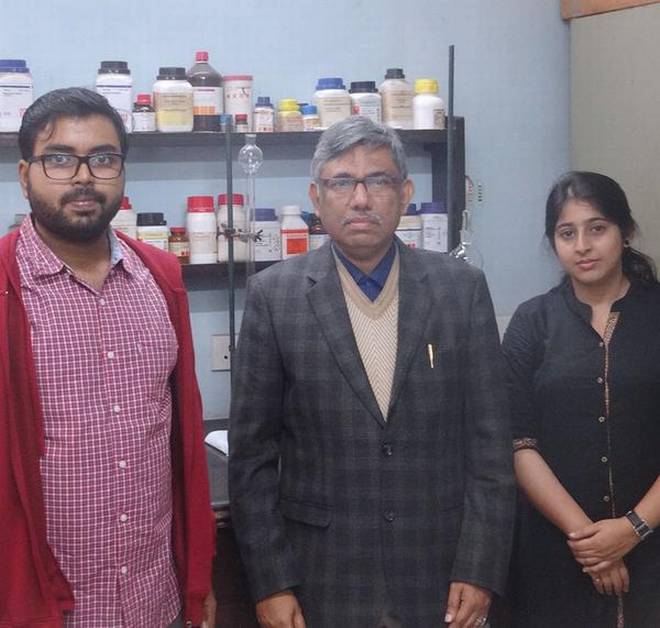
New approach: “The change in tissue morphology as the disease progresses can be picked up by light scattering,” say Prof. Prasanta K. Panigrahi (right) and Sabyasachi Mukhopadhyay

The AI identifies precancerous tissue, and also the stage of progression in minutes

The morphology of healthy and precancerous cervical tissue sites are quite different, and light that gets scattered from these tissues varies accordingly. Yet, it is difficult to discern with naked eyes the subtle differences in the scattered light characteristics of normal and precancerous tissue. Now, an artificial intelligence-based algorithm developed by a team of researchers from Indian Institute of Science Education and Research (IISER) Kolkata and Indian Institute of Technology Kanpur makes this possible.

The algorithm developed by the team not only differentiates normal and precancerous tissue but also makes it possible to tell different stages of progression of the disease within a few minutes and with accuracy exceeding 95%. This becomes possible as the refractive index of the tissue is different in the case of healthy and precancerous cells, and this keeps varying as the disease progresses.

“The microstructure of normal tissue is uniform but as disease progresses the tissue microstructure becomes complex and different. Based on this correlation, we created a novel light scattering-based method to identify these unique microstructures for detecting cancer progression,” says Sabyasachi Mukhopadhyay from IISER Kolkata and first author of a paper published in the Journal of Biomedical Optics.

Elaborating on this further, Prof. Prasanta K. Panigrahi from IISER Kolkata and corresponding author of the paper says: “The collagen network is more ordered in normal tissues but breaks down progressively as cancer progresses. This kind of change in tissue morphology can be picked up by light scattering.” White light spectroscopy (340-800nm) was used for the study.

Statistical biomarker

The change in scattered light as disease progresses is marked by a change in tissue refractive index. The team has quantified the changes in tissue refractive index using a statistical biomarker — multifractal detrended fluctuation analysis (MFDFA). The statistical biomarker has two parameters (Hurst exponent and width of singularity spectrum) that help in quantifying the spectroscopy dataset.

While MFDFA provides quantification of light scattered from the tissues, artificial intelligence-based algorithms such as hidden Markov model (HMM) and support vector machine (SVM) help in discriminating the data and classifying healthy and different grades of cancer tissues.

“The classification of healthy and precancerous cells becomes robust by converting the information obtained from the scattered light into characteristic tissue-specific signature. The signature captures the variations in tissue morphology,” says Prof. Panigrahi.

“The MFDFA-HMM integrated algorithm performed better than the MFDFA-SVM algorithm for detection of early-stage cancer,” says Mukhopadhyay. “The algorithms were tested on in vitro cancer samples.”

In vivo samples

The team is expanding the investigations to study in vivo samples for precancer detection. While the accuracy achieved using in vitro samples was over 95%, based on a study of a few in vivo samples the accuracy is over 90%.

“In the case of in vitro samples we were able to discriminate between grade 1 and grade 2 cancer,” says Prof. Nirmalya Ghosh from IISER Kolkata and one of the authors of the paper. “More testing is needed using in vivo samples.”

“Superficial cancers such as oral and cervical cancers can be studied using this technique. And by integrating it with an endoscopic probe that uses optical fibre to deliver white light and surrounding fibres to collect the scattered light we can study cancers inside the body,” says Prof. Ghosh.

source: http://www.thehindu.com / The Hindu / Home> Sci-Tech> Science / by R. Prasad / December 23rd, 2017

IACS develops hydrogel to remove toxic dyes and metal ions

Useful tool: “The hydrogel can be used by the industries for effective treatment before wastewater disposal,” says Prof. Arindam Banerjee (Centre)

It could begin absorbing dyes within 15 minutes, metals in about 6 hours

Scientists from Indian Association for Cultivation of Sciences (IACS), Kolkata, have developed a new gel that can remove toxic organic dyes and metal ions from waste water. They found the hydrogel began absorbing various commonly used dyes within 15 minutes. The dyes tested were malachite green, congo red, brilliant blue and rhodomine B. In the case of metals, the hydrogel was able to considerably remove commonly found ones such as cobalt and nickel from industrial effluents in about six hours.

Basic amino acids like leucine and phenylalanine were used to make the gel; the gel is biodegradable. It was stable at room temperature and remained as a gel for several months.

Effective treatment

The current methods used for treating wastewater — adsorption using activated carbon, chemical precipitation or electrochemical techniques — are largely ineffective due to incomplete removal or high energy requirements. In comparison, the new hydrogel-based material is able to remove the hazardous waste effectively as it has high water permeability, large surface area for adsorption and is also simple to use.

“We monitored the uptake capacity of the hydrogel using UV spectroscopy and found that within a few hours the gel absorbed the dyes and the waste water turned almost colourless. The hydrogel can absorb the wastes for up to 60 hours before reaching a saturation point. The gel was able to remove 78-92% of the dyes and more than 80% metals ions,” explains Nibedita Nandi, research scholar at IACS and first author of the paper published in Peptide Science.

Reusable resource

“The hydrogel can be washed with sodium bicarbonate and ethyl acetate and reused. As the dyes and metal ions are soluble in water they get washed out from the gel and the hydrogel can be used for up to four cycles. It can be used by the industries for effective treatment before wastewater disposal,” says Prof. Arindam Banerjee, senior professor at the Department of Biological Chemistry, IACS, and corresponding author of the paper.

The researchers say that the production of the gel can be scaled up to the desired volume for use in water treatment at industries.

source: http://www.thehindu.com / The Hindu / Home> Sci-Tech> Science / by Aswathi Pacha / December 23rd, 2017

Big CAT is ready to land

Dum Dum:

Precision landing in dense winter fog with a visibility limit of 50 metres will become possible at Calcutta airport from January 4, when the Category III-B instrument landing system makes it debut on the primary runway.

An official of the Airports Authority of India said on Monday that pilots trained to land aircraft in low visibility were practising assisted touchdown during non-peak hours. “Visibility is fine as of now but pilots are having drills in preparation for the launch.”

He said air traffic control personnel were also acquainting themselves with the new system.

CAT III-B, the answer to fog-induced flight delays almost every January, was sanctioned for the city airport in early 2014 and cost Rs 130 crore to install. Metro had reported on November 30 about the instrument landing system awaiting a final clearance by the directorate-general of civil aviation.

“All inspections have been completed and we are ready for operations. We will be providing the facility by the cut-off date and it is up to the airlines to use it,” the official said.

To be able to use the CAT III-B system, airlines need compatible aircraft and pilots trained to operate in low-visibility conditions.

Captain Sarvesh Gupta, the chairman of the airline operators’ committee in Calcutta, said most pilots flying in India were trained in CAT III-B operations. It pays for airlines to have pilots compliant with CAT III-B procedures because fog delays translate into loss of revenue.

Between late December and mid-February, flights are often disrupted because of dense fog in the morning and night. According to officials, such disruptions usually happen between 3am and 9am, when the maximum number of flights operate.

The CAT II instrument landing system currently in operation enables aircraft to land till visibility of 350m. This is inadequate for a city where visibility often dips much lower in winter.

Whenever flights have to be diverted, not only do passengers suffer but affected airlines also take a financial hit. Apart from burning additional fuel, an airline has to pay landing and parking charges at the alternative airport. If the delay is long, arranging accommodation for passengers entails more expenditure.

“When hundreds of passengers are stranded at an airport, infrastructure is tested as well. The washrooms are used by more people than they can handle and there is sometimes no place for passengers to even sit,” Gupta said.

Airport officials expect CAT III-B to almost eliminate fog-induced disruptions because visibility hardly, if ever, drops below 50m in Calcutta.

The number of lights along the centreline of the primary runway have been doubled as part of the upgrade from CAT-II to III-B.

The new instrument landing system has been installed on the southern side of the primary runway because the wind blows from north to south during winter in these parts. A tailwind would increase the possibility of an aircraft overshooting the runway while landing.

The new system also includes an advanced signalling mechanism.

source: http://www.telegraphindia.com / The Telegraph, Calcutta,India / Home> Calutta / by Sanjay Mandal / December 19th, 2017

Masterclass for scientists

Mohanpur:

The Newton Bhabha Fund on Thursday started a workshop for scientists on the Indian Institute of Science Education and Research’s Calcutta campus at Mohanpur in Nadia.

The three-day workshop aims to involve scientists from across the globe and the IISER in social and economic development, Sourav Pal, the IISER Calcutta director, said after inaugurating the workshop.

Scientific research should be industry-oriented instead of remaining confined within laboratories, Pal said.

“A huge amount of money is spent on research across the world. Many brains are being used at laboratories.

“But, it is high time that research findings are translated for the benefit of people through industries. It should be used for capacity-building of the researchers as well,” he said.

“A researcher should not be satisfied only by publishing his findings in a journal.”

The workshop, “Functional Nanomaterials: From Spectroscopy to Bioimaging”, is supported by a Researcher Link grant under the Newton Bhabha Fund.

Prasun Mandal of IISER Calcutta, who is the joint coordinator of the workshop, said the prime objective was to bring together chemists and researchers from various faculties to explore new ideas for social and economic development.

The Newton Bhabha Fund has organised the workshop in association with the University of Manchester, the British Council, the UK’s Royal Society of Chemistry, and IISER Calcutta, Mandal said.

source: http://www.telegraphindia.com / The Telegraph, Calcutta,India / Home> Calcutta / by Subhasish Chaudhari / December 15th, 2017

Bose Institute, 100, to house museum on history of Indian science

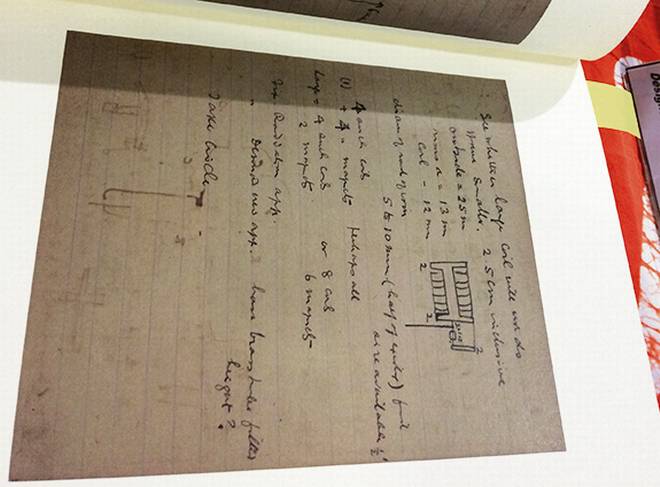
One of the pages of J.C. Bose’s notes. Photo: Special Arrangement

Bose Institute, one of India’s oldest research institutes, will house a museum highlighting the history of Indian science. The decision was taken during the recently-concluded centenary celebrations of the institution, set up by Jagadish Chandra Bose in 1917.

“The History of Science Museum will be located in the campus of Bose Institute on Acharya Prafulla Chandra Road in Kolkata. We are in touch with the National Council of Science Museums for its construction. There will be 50- 60 panels in the first phase which will be completed by 2019,” Siddhartha Roy, director of Bose Institute, told The Hindu.

According to Prof. Roy, the museum will cover four disciplines — physics, astronomy, mathematics and medical sciences — and trace the journey of Indian science from the ancient times.

“Depending on the themes we can have the gallery tracing the development from the Harappan times,” he said.

Professor P.P. Divakaran, who was present at the centenary celebrations of Bose Institute last month and gave a lecture on The Mathematics of India : From Counting to Calculus, welcomed the idea of the museum and said he was “pleasantly surprised “to find a section dedicated to mathematics.

“For most of the time till 1600 AD, India had one of the most advanced mathematical cultures among the world,” Prof. Divakaran said.

Prof. Roy pointed out that modern Indian science may have started with J.C. Bose but there were many who did pioneering work but people were not aware of their contribution.

“In terms of advancements in medical science, the museum will highlight the likes of U.N. Brahmachari, who discovered the treatment for kala azar, and Sambhu Nath De, who discovered the cholera toxin,” Prof. Roy said.

Renovated museum at Bose Institute

Interestingly, as part of its centenary celebrations, the Bose Institute recently upgraded the existing museum on J.C. Bose by displaying 12 digitised volumes of the scientist’s handwritten notes and dairies.

These diaries include the notes he took while attending classes by Francis Darwin (son of Charles Darwin) at Christ’s College in Cambridge. The museum, which also has on display the microwave apparatus developed by J.C. Bose in 1894, has also brought to light the scientist’s communications with personalities such as Mahatma Gandhi and Sister Nivedita.

source: http://www.thehindu.com / The Hindu / Home> News> Cities> Kolkata / by Shiv Sahay Singh / Kolkata – December 02nd, 2017