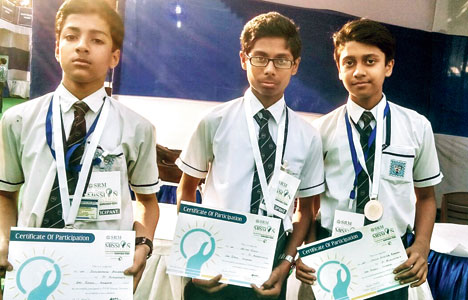
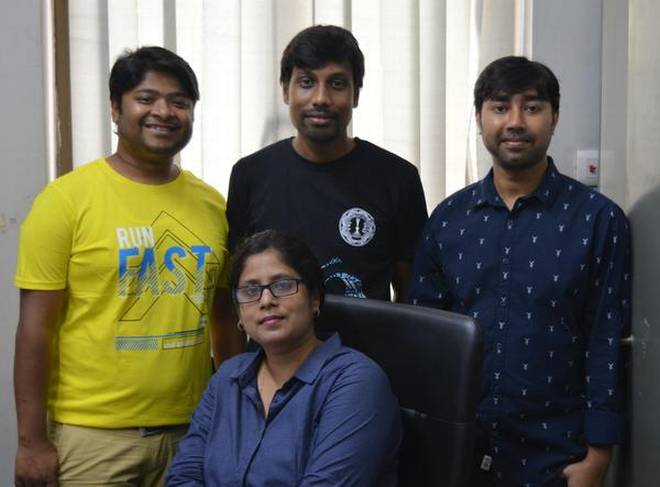
St Augustine’s Day School, Ripon Street, has introduced a robotics club to keep students abreast of development in science and technology. The club, an initiative of principal Richard Gasper, organises workshops, where students are encouraged to make models and devices. Buzzer circuits made by the students at robotics workshops have, for instance, been used during a quiz in the school. The children have taken part in many national as well as international competitions and won accolades.
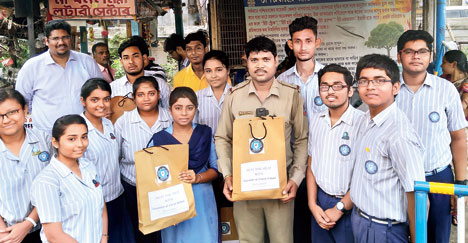
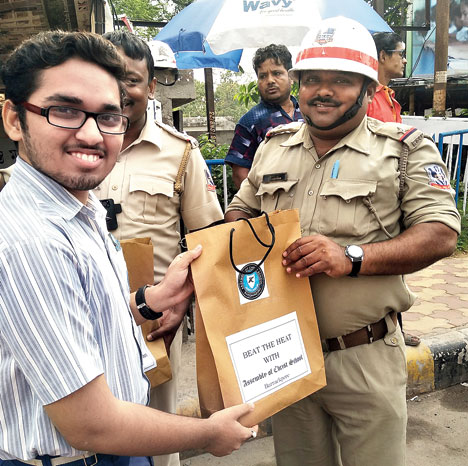
Students of Assembly of Christ School hit the road to express their gratitude to traffic cops who have to be on duty under the scorching sun. The students, along with vice-principal Rev. G. Samuel Davis, visited traffic kiosks between Barrackpore and Sodepur and handed over goody bags to the traffic cops. The campaign started from Lalkuthi in Barrackpore and covered Chiriamore, Titagarh and Khardah before ending at Sodepur. Each bag carried fruit juice, bottles of packaged drinking water, glucose drink and cucumbers.
source: http://www.telegraphindia.com / The Telegraph,Calcutta,India / Home> Calcutta / May 28th, 2018
A Class IX student of Raiganj who topped a math Olympiad has won an educational trip to Nasa.
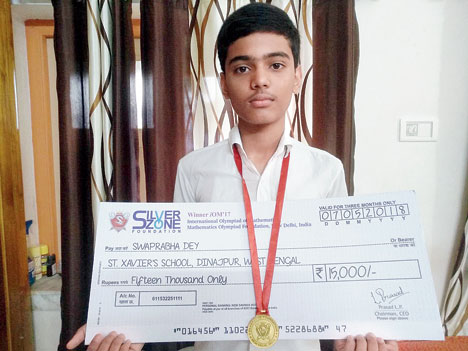
Swaprabha Dey, a student of St Xaviers School of the town, had stood first in the International Olympiad for Mathematics, 2017 conducted by the Delhi-based Silver Zone Foundation. He will visit Nasa on a week-long trip to the US in August this year.
“After the (Olympiad) results were announced, we were informed that he will be rewarded in cash and be taken to Nasa,” said Swaprabha’s father Sanjib Dey, a central government employee.
The boy, his parents said, is an ardent reader of science fictions. Professor Shanku, a character penned by Satyajit Ray, is one of his favourites.
“It is a matter of pride for the school,” Fr. David Raj, the school principal said.Ayesha Rani A, the DM, said the administration will “felicitate” Swaprabha for his success. “His performance has brought laurels,” said the DM.
source: http://www.telegraphindia.com / The Telegraph,Calcutta,India / Home> West Bengal / by Kousik Sen / May 20th, 2018
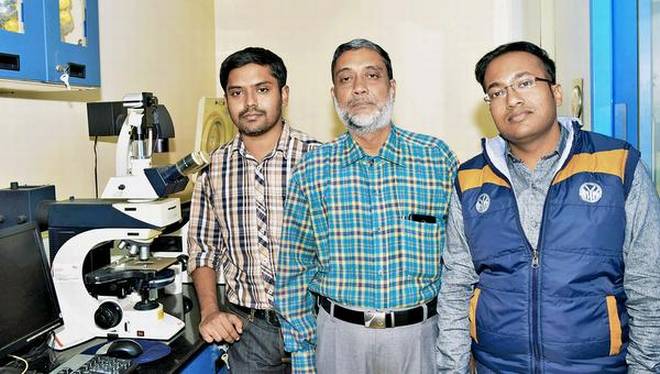
“The logic system can be recycled for three cycles by adding a heat deactivation step,” says Jyotirmayee Dash (sitting).
Sixteen combinations of different enzymes were used to make up the desired outputs
Scientists at the Indian Association for the Cultivation of Science (IACS), Kolkata, have been successful in designing DNA-based logic devices that would find application in DNA-based computation. They have designed reusable YES and INHIBIT logic systems by using a small molecule that serves as a fluorescent probe and binds to both a four-stranded DNA structure (G-quadruplex) present in human telomeres and nucleic acid cleaving enzymes (nucleases).
Fluorescence
The fluorescent probe — carbazole ligand — selectively binds to the G-quadruplex over other DNA structures present in the human genome. Once it binds to the DNA (G-quadruplex), the small molecule inhibits certain enzymes (nuclease S1 and exonucleases) from degrading the DNA. However, certain other enzymes (DNase I and T7 endonuclease I) can degrade the DNA even when bound by the small molecule.
While the small molecule by itself shows weak emission at 373 nm and 530 nm, the fluorescence intensity gets enhanced 14-fold at 530 nm once it binds to the DNA. Similarly, the small molecule bound to the DNA exhibits different fluorescence behaviour in the presence of different enzymes and this has been taken advantage of by the team led by Prof. Jyotirmayee Dash from the Department of Organic Chemistry to design conceptually novel logic devices. The results were published in the journal ACS Synthetic Biology.
Computation
For instance, DNase I enzyme degrades the DNA-bound small molecule and so when both the DNA the DNase I enzyme are used as inputs the fluorescence at 530 nm weakens. The output is therefore taken as zero. On the other hand, nuclease S1 enzyme does not degrade the DNA bound by the small molecule and so when both DNA and nuclease S1 enzyme are used as inputs the fluorescence at 530 nm does not get affected. The output is taken as one.
“So the INHIBIT logic gate is constructed using DNA and DNase I as inputs while the inputs of DNA and nuclease S1 form a YES logic gate,” says Prof. Dash.
Once the DNA is degraded by the DNase I enzyme, the logic system can be reused by supplying heat to deactivate the enzyme. “The logic system can be recycled for three cycles by adding a heat deactivation step. After three consecutive cycles, the efficiency of the system decreases by only 33%,” says Prof. Dash.
The team went a step further to design combinatorial logic systems (individual logic gates integrated into one another such as INHIBIT−INHIBIT and NOR−OR) by using different combinations of four nucleases (enzymes) as inputs.
16 combinations
The researchers were able to get 16 different combinations by adding one, two, three or four enzymes (nuclease S1, Exo I, T7 Endo I and DNase I) to the DNA-bound small molecule. The different combinations of the four enzymes are taken as inputs and the fluorescence response at 530 nm is taken as the output.
Of the 16 combinations, only four combinations are fluorescent (output taken as 1) and 12 are non-fluorescent (output taken as zero). The square numbers (1, 4, 9, 16) are assigned as fluorescent combinations, whereas the rest are assigned as non-fluorescent combinations. “So by suitable programming we can modulate the system to carry out complex calculations (for example, identification of square numbers up to 16) by varying the inputs,” she says.
“We hope that these DNA logic gates will provide the ability to not only create more complicated, sequential DNA computations but also create interfaces between silicon and DNA-based computers. The DNA-based nanodevice could be useful for diagnostic sensors and other biomolecular machines,” Prof. Dash says.
source: http://www.thehindu.com / The Hindu / Home> Science / by R. Prasad / April 21st, 2018
Cargo shipped from other countries to Calcutta and then sent by road to Nepal is now being tracked by the customs authorities with GPS to ensure the containers do not go missing on the way.
As part of a pilot project which started on Wednesday, the customs authorities are using the GPS-enabled electronic cargo tracking system to lock Nepal-bound containers at the Calcutta ports.
“Cargo containers from India cross over to Nepal from Raxaul, Jogbani and Sanauli. While Raxaul and Jogbani are in Bihar, Sanauli is in Uttar Pradesh. Now, we can track a container’s journey to any of the three border points from a port. The tracker will help us know whether a container has deviated from the route or stopped midway and for how long,” a customs official said on Friday.
At the border points, Indian customs officials remove the device. A report is immediately generated containing all details of the trip.
“Importers and exporters can track the movement, too, with this system. This will increase transparency as well as make documentation less complicated,” the official said.
Three containers bound for Nepal were sealed with the new tracking system at Kidderpore and Garden Reach ports on Wednesday.
India and Nepal had signed a memorandum of intent in 2017 to introduce the tracking system.
Surrounded by land on all sides, Nepal’s import cargo from across the world are shipped to Calcutta, Haldia or Visakhapatnam.
However, because of its proximity to Nepal, bulk of Nepal’s cargo is shipped to the ports in Bengal.
Nepal imports items from pulses to helicopters, most of which are shipped to Kidderpore, Garden Reach and Haldia. Other items it imports include electronic goods, plastic granules, machineries, coal, urea and food products such as black pepper and noodles.
Customs officials said around 1,500 containers carried cargo from Kidderpore and Garden Reach on an average every week.
Officials said there had been a few occasions when the containers went missing on the way to the border.
source: http://www.telegraphindia.com / The Telegraph,Calcutta,India / Home> Calcutta / by Special Correspondent / April 21st, 2018
A Purulia youth engaged in researching Antartica’s climate died at the world’s southern tip.
Suvojit Sen (23) was part of the 37th Indian Scientific Expedition to Antartica, a project his family said sees few applicants owing to the risks it involves.
Brother Subhankar was informed of his death on March 27; the family is unaware of when his body will reach them.
Goa-based National Centre for Antarctic and Ocean Research (NCAOR), where Suvojit was employed, said in a release: “He met with an accident during convoy operations at Ice Shelf and suffered major trauma late March 26. He was immediately rushed towards the expedition vessel and doctors joined with medical help. Unfortunately, attempts to revive him went in vain.”
The convoy operation was heading from the Indian Research Base, Maitri, to Ice Shelf, a distance of approximately 80 km.
Subhankar finally told father Dilip Sen and mother Mukta of Suvojit’s death on Thursday. They were shell-shocked and unable to speak when TOI visited their home in Purulia’s Dulmi-Nadhia locality.
Suvojit graduated from JK College in Purulia. His outstanding Geology scores in 2014 helped him get into IIT Bhubaneswar for his Masters.
Suvojit applied for the 37th ISEA project last year and was selected. He left home on October 19, 2017.
Subhankar said: “Suvojit would call us from Antartica regularly and tell us of his experiences amid ice and snow. He was very happy with his work and the opportunity to have a unique experience so early in his career. Suvojit was staying with his colleagues at a base camp named Maitri. He would tell us it felt like being in a completely different world.”
The family said that during his last call on March 24, Suvojit said his project was nearing completion and that he would be returning home before his 24th birthday on April 13 and be around for Subhankar’s wedding on April 26.
source: http://www.timesofindia.indiatimes.com / The Times of India / Home> News> City News> Kolkata News / TNN / March 30th, 2018
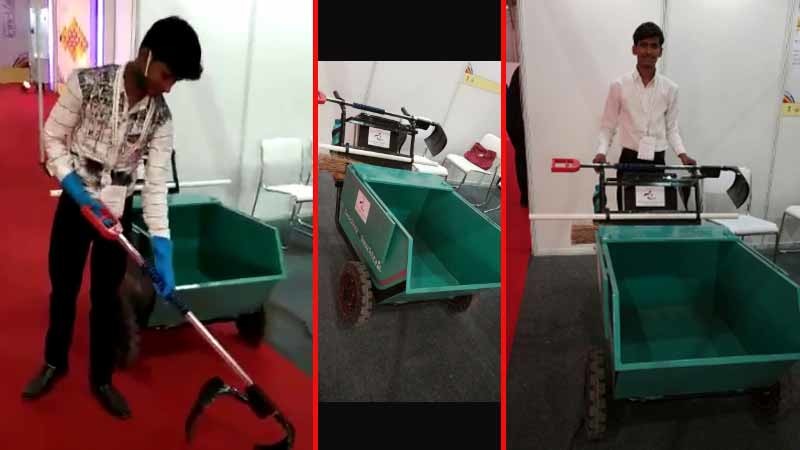
Shikanto Mandal, 15, from Mathura, who had developed a unique machine to collect garbage, was invited by the President for dinner on Tuesday. However, it was cancelled at the last moment and the dinner was hosted by science and technology minister Dr Harsh Vardhan at the CSIR centre at Lodhi Gardens in New Delhi.
Mandal, who hails from West Bengal, had showcased his innovative machine at the Festival of Innovation being held in Delhi from March 19 to 23. Earlier speaking with TOI while on his way to New Delhi, Mandal said he had dined with then President Pranab Mukherjee during the Festival of Innovation.
The young inventor said hopes to become a successful engineer one day and fulfil all wishes of his parents and give them every comfort of life. Mandal’s parents are daily wagers. Talking with TOI, Mandal’s teacher Manoj Kumar, who helped him in his project and under whose guidance he built the machine, said he had developed the manual waste lifting and dumping machine when he was in Class IX at Jai Gurudev Balya Balak Vidyadan Higher Secondary School in 2016. He is presently studying in Class XI at KR Inter College, Mathura.
Mandal’s invention, inspired by Swacch Bharat Mission, was chosen for display at the district-level exhibition organized by the department of science and technology in 2016. His machine’s model was then showcased at a state-level exhibition held in Lucknow and later, at the national level.
His model has been patented by a Gujarat-based company, where he holds a 50% stake of the market share.
In January, Mandal was invited by film star Akshay Kumar his movie, “Padman”, screened at the Innovation conclave in which 16 innovators from across the country participated and received Rs 5 lakh each for their innovation.
source: http://www.timesofindia.indiatimes.com / The Times of India / Home> News> City News> Agra News / TNN / March 21st, 2018
ISI team develops algorithms that promise higher accuracy than the competition
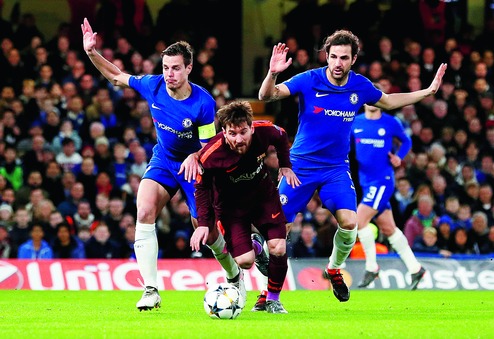
The automated system developed at ISI looks to be as accurate as Lionel Messi’s left foot when it comes to ball tracking. (AP)
Dunlop:
Advanced algorithms developed by a team of scientists at the Indian Statistical Institute (ISI), Calcutta, promise to do for ball tracking in football what tiki-taka has done for FC Barcelona.
Dipti Prasad Mukherjee of the institute’s electronics and communication sciences unit and PhD candidates Saikat Sarkar and Samriddha Sanyal have come out with a high-precision automated system using algorithms that “balance prior constraints continuously against the evidence garnered from sequences of images”.
The system, based on computer vision, aims to track and accurately calculate ball possession by a team during a game. According to Samriddha, it is at least 7.2 per cent better compared to competing approaches to ball tracking.
Samriddha had published a paper titled “On the (soccer) ball” with Mukherjee and Arnab Kundu in 2016.
“The problem of tracking the ball is when there is a sudden change in speed and orientation of the ball,” he said.
In a given video, the prior constraints would be the ball positions in previous frames. The paper proposes a particle filter-based algorithm that tracks the ball when it changes direction suddenly or travels at high speed.
“Our tracking algorithm has shown excellent results even for partial occlusion (blockage), which is a major concern in soccer videos,” Samriddha said.
Tracking a ball when it is being kicked or passed quickly from player to player like in tiki-taka remains a challenge for broadcasters.
Saikat, who is working on calculating ball possession, said: “Till now, the chess-clock method is used to measure ball possession. The other measure for ball possession is to count the number of passes. The ratio of the number of passes by a team divided by the total number of passes in a match closely correlates with ball possession stats.”
FIFA uses data from Deltatre, a sports media company that uses the chess clock method. In the Premier League, ball possession is measured on the basis of data from Opta Sports.
Deltatre has individuals using the three buttons of a chess clock to measure when the ball is with Team A, Team B or not in play. Opta uses a software overlaid on live feeds to track the number of passes.
The team at ISI uses raw broadcast video, measuring ball possession with close to 80 per cent accuracy.
source: http://www.telegraphindia.com / The Telegraph,Calcutta,India / Home> Calcutta / by Anasuya Basu / March 14th, 2018
Damage caused to the stomach by mental stress can be reduced by targeting the mitochondria present in the stomach, says Uday Bandyopadhyay (centre).
The link between mitochondria in the stomach and the brain was found using rats
Researchers at Kolkata’s CSIR-Indian Institute of Chemical Biology (CSIR-IICB) have for the first time identified the molecular mechanism by which acute mental stress affects the stomach causing gastric ulcer or stress-related mucosal disease. Using a rat model subjected to cold-restrained stress, the research team led by Uday Bandyopadhyay from the Division of Infectious Diseases and Immunology at IICB has used drugs that can act specifically on mitochondria present in the stomach to prevent gastric ulcer caused by stress.
When subjected to stress, the mitochondrial respiratory capacity was disrupted, ATP production was reduced and oxidative stress increased. Stress also causes morphological changes to the mitochondria such as increased fragmentation. The results of the study were published in the journal Free Radical Biology and Medicine.
“Due to oxidative stress and fragmentation, the mitochondria in the gastric mucosal lining cannot behave in a normal fashion and ATP production gets further compromised. In the absence of ATP production, cells cannot proliferate and the gastric lining gets thinner due to mucosal cell death. All these cause stress-induced gastric ulcer,” explains Dr. Bandyopadhyay. “This is the first time we could find a link between the mind and mitochondria in the stomach. It is very exciting and fascinating.”
Second brain
The stomach is one of the organs most severely affected by stress and this is due to the link between the stomach and the brain. Moreover, the stomach is also known as the body’s second brain with a specialised neural network, repository of neurotransmitters and different kinds of nerve cells innervating the organ, though fewer in number.
Plenty of corticosterone was released into the blood when the animals were subjected to stress. Once corticosterone gets inside mitochondria it reduces ATP production and respiration capacity. By using a drug that prevents corticosterone from binding to the receptor found inside the cell, the researchers were able to significantly prevent stomach injury in the animals.
Interestingly, some common psychoactive drugs used in the study helped in preventing the pathological manifestations — gastric ulcer. “So we can say that it is indeed the acute mental stress which is causing gastric complications,” says Rudranil De from IICB and first author of the paper.
Role of mitochondria
“We delved deeper to find out the involvement of mitochondria in stress-induced gastric damage,” says De. A compound that scavenges harmful free radicals released from the malfunctioning mitochondria and another compound that inhibits mitochondrial fragmentation significantly prevented the injury and intra-gastric bleeding; although the drugs don’t reportedly act on the brain.
“Although stress is present, we could still prevent the damage caused to the stomach by targeting the mitochondria,” says De. “The use of these two compounds acting directly on the mitochondria confirmed that acute mental stress damages the mitochondria of the stomach ultimately leading to tissue injury and haemorrhage.”
The use of tranquilisers and barbiturates, often prescribed to patients suffering from mental stress and disorders, are associated with inherent problems including withdrawal effects and long-term side effects. “Our study proposes an alternative line of therapeutic strategy which relies on salvaging mitochondrial damage, thereby providing significant protection from stress. This will help avoid the use of existing psychoactive drugs while keeping the subjects alert,” says Somnath Mazumder from IICB, one of the authors.
If further research and human trials confirm the results seen in animal studies, it would lead to a new generation of anti-stress medications with minimal side effects which would aim at targeting the mitochondrial pathology to take care of a bigger psychosomatic health complication.
source: http://www.thehindu.com / The Hindu / Home> Sci-Tech / by R. Prasad / January 06th, 2018
Aerospace Engineering researcher Professor Santanu Bhowmick, who hails from Jhargram district of West Bengal, has discovered a unique raw material to manufacture light weight anti landmine-vehicles.
The anti-landmine vehicles used by the defence organisations in India usually weigh 10-15 tonnes. Whereas vehicles manufactured using raw material discovered by Profesor Bhowmick will weigh only 5 tonnes, resulting in faster spped and greater mobility, especially in hilly terrains. The new material is also capable of withstanding heat upto 2400 degrees celcius. Usually, heat generated during a landmine blast measures upto 2000 degrees celcius.
Professor Bhowmick has already discovered a light weight bulletproof jacket which has been approved by the empowered committee of the Ministry of Defence. The jacket is made from indigenous ultra modern lightweight thermoplastic technology. It has been included in the Prime Minister’s ‘Make in India’ project.
Anti-landmine vehicles used in India are made of steel which tends to melt by the heat generated by landmine blasts, resulting in the death of its occupants -namely security personnel and jawans.
According to Professor Bhowmick, “Primarily the new vehicle will be provided with a heat withstanding ceramic and steel plate fitted to its base. The other portions of the vehicle will be made of steel. Later the entire vehicle can be made entirely of this material which will make it lighter. The material remains unchnged even at the highest temperature limit of 2400 degrees celcius.”
The vehicle base will be made of three layers of heat resistant ceramic plates of 60mm thickness.
Professor Bhowmick claims that the new anti-landmine vehicle will be made by the Tata group at their Jamshedpur workshop. On January 4, a meeting was held between him and the representatives of Tata group. According to Bhowmick, “Tata will supply high quality steel. The vehicle will be entirely made by Indian technology.”
The newly discovered material’s patent has been secured by Bhowmick. The new series of vehicles will be ready by 2020, confirms the scientist.
On Monday, the professor delivered a presentation about the newly discovered technology at the Army Technology Seminar 2018 using slide shows to illustrate his findings. According to him, “In the future this raw material may be used in building army bunkers, tanks, missiles and space research centres too.”
Bhowmick has been assisted in the research by three other scientists – Govindraju M, G Ajesh and V Shivakumar.
Monday’s presentation was attended by the Indian Army chief Gen. Bipin Rawat and many top ranking Army officers. DRDO director S Christopher was also present at the show together with scientists from the Chennai and Gandhinagar IITs.
Professor Bhowmick’s discovery is considered an important progress towards Prime Minister Narendra Modi’s Make In India project especially in the Defence sector.
source: http://www.telegraphindia.com / The Telegraph, Calcutta,India / Home> News> City News> Kolkata News / by El Samay / January 09th, 2018
The chief minister will present Banga Ratna to nine persons from north Bengal for their contribution in different fields at the inauguration of the Uttar Banga Utsav here on Monday.
Mamata Banerjee is scheduled to launch the eight-day cultural fest at Kanchenjungha Stadium here.
Official sources have said among the recipients of the Banga Ratna are Manas Dasgupta (economist from Darjeeling), Dinesh Chandra Roy (researcher on folk culture of the region from Jalpaiguri), Prem Kumar Bhutia (social worker of Kalimpong) and Debkumar Mukherjee (educationist from Cooch Behar).
The others are Malin Das (folk music instrumentalist of Cooch Behar), Dilip Kumar Roy (writer from Alipurduar), Prem Bihari Thakur (retired teacher from North Dinajpur), Tapas Kundu (researcher on Molecular Biology from South Dinajpur) and Radhagobinda Roy (social worker of Malda).
“Each award will carry a prize of Rs 1 lakh, a shawl and a certificate.
Apart from the awards, a total of 54 meritorious students from eight districts of north Bengal will get Rs 10,000 each from the chief minister.
Thirteen of them will get the assistance at the inaugural and the rest will be provided with the amounts by the administrations of their respective districts,” an official of the organising committee of the festival said.
source: http://www.telegraphindia.com / The Telegraph, Calcutta,India / Home> West Bengal / by Bireswar Banerjee / January 08th, 2018