All posts by wellnmed@gmail.com

Top scientists in Kolkata to talk CERN theories

Kolkata :

Leading physicists from around the world will analyze CERN experiments and theories over the next three days at a conference — ‘India’s International Collaborations In Physical Science’ — to be held in the city.

Sessions will review and dissect CERN experiments and chart out a future course of action. They will also discuss theories thrown up at CERN, according to scientist Bikash Sinha, a former director of the Saha Institute of Nuclear Physics (SINP), which played a key role in getting India involved with the CERN experiment.

“CERN has thrown up hundreds of theories that will dictate particle physics in years to come. Scientists who will be here have been directly associated with CERN from its inception and it will be a good opportunity to listen to them. Indian scientists will have a rare opportunity to collaborate with them,” said Sinha.

Among those who will join the conference are Horst Stoecker, the director general of GSI Darmstadt, Johanna Satchel, a recipient of the Lise Meitner Prize, CERN director Rolf Heuer and CERN spokesperson Jurgen Schukraft. Larry McLerran, professor of theoretical physics, Brookhaven National Laboratory and a recipient of the Herman Feshbach Prize, will also attend the conference.

Heuer is arguably the biggest name on the guest list. An outstanding experimental physicist, he has been the architect of the leadership of CERN’s experiments with LHC, which led to the discovery of the Higgs Boson.

Several renowned Indian scientists will also share the dais. Notable among them are Siraj Hasan, a former director of the Indian Institute of Astrophysics, Rakesh Bhandari, a former director of the Variable Energy Cyclotron Centre and Dinesh Kumar Srivastava, an outstanding theoretical physicist and Sibaji Raha, director of the Bose Institute and S N Bose Centre, Kolkata.

Though the science community in the country is upbeat about the conference, India’s status at CERN remains unclear, according to Sinha. While the community has been trying hard to elevate India to the grade of an associate member at CERN, the government clearance is yet to come through. “Even Pakistan is an associate member now. We deserve to play a greater role now,” said Sinha.

source: http://www.timesofindia.indiatimes.com / The Times of India / Home> City> Kolkata / TNN / February 03rd, 2015
Sex workers’ cooperative wins award

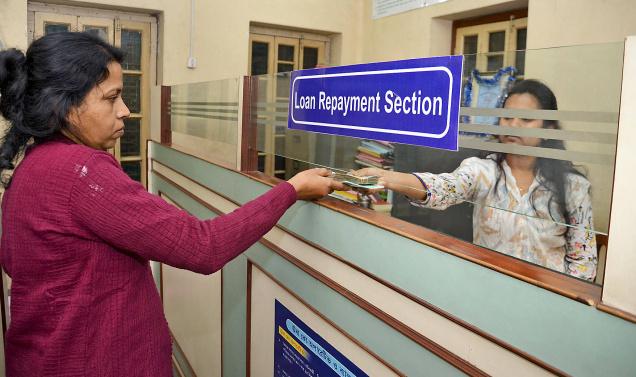
A sex worker withdrawing money at Usha Multipurpose Cooperative Society Ltd.Photo: Sushanta Patronobish

With low interest rate, they have been able to educate their children and manage their finances better

A cooperative run by sex workers of Songachi, which functions as a bank for sex workers, has won the prestigious award for the best run cooperative in West Bengal for 2014.

Usha Multipurpose Co-operative Society Ltd, the largest sex workers’ financial institution in Asia, owned and managed by sex workers, has a corpus of Rs 19 crores and 20,000 members.

“Before the cooperative was started, we were left at the mercy of moneylenders and madams. Since the sex workers did not have address and identification proof, it was impossible for us to open an account in banks,” said Rita Rai, a sex worker who is actively involved in the Usha Cooperative.

Like Ms Rai, Abida Begum, has taken loans from the cooperative a number of times. “It is with the help of the cooperative that I managed my finances and was able to buy a piece of land. Earlier most of our earnings were spent in paying back the moneylender,” she said.

The cooperative has given sex workers a sense of empowerment. With this, they have been able to release themselves from the clutches of madams and pimps. As a result of this bank, The Hindu came across several women who have been able to educate their children, arrange the marriage of their daughters and even buy property of their own. Dependence on the bank has also mitigated the impact of the recent deposit collection scams that have rocked West Bengal on sex workers.

The beginning, however, was not easy. Chief Advisor to the cooperative, S Jana recalls the resistance faced by him and the sex workers when they decided to set up a bank of their own.

“I was personally threatened, bombs were hurled at us, and the girls were under pressure to not join the cooperative movement. However, slowly we were able to convince the women who joined us in greater numbers each year,” Dr Jana told The Hindu .

The cooperative started its operations in 1995. “To begin a society run by sex workers was not an easy task. There was a debate in the West Bengal Legislative Assembly and an amendment was brought to the Cooperative Act to enable sex workers to start a cooperative society,” Dr Jana said. He is hopeful that in 2015 itself, the Reserve Bank of India will give the cooperative a full-fledged licence to function as a bank.

The members of the cooperative society say that they do not demand an identification proof for opening an account and the rate of interest is lower than many nationalized banks.

source: http://www.thehindu.com / The Hindu / Home> News> Cities> Kolkata / by Shiv Sahay Singh / Kolkata – February 01st, 2015

If you missed Tansen, listen to his descendant

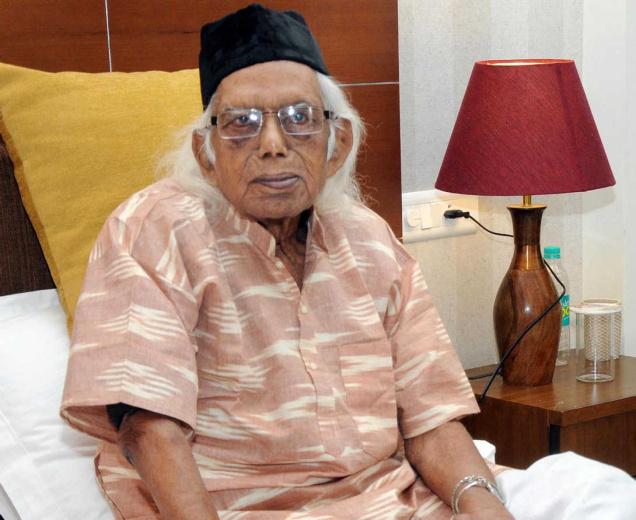
Abdul Rashid Khan will perform at Sursagar’s ‘Living Legends and Budding Masters’ series at Alliance Francaise on January 30 at 6.30 p.m. — Photo: Sampath Kumar G.P.

Ustad Abdul Rashid Khan (107), based in Kolkata, was the oldest living legend to be bestowed Padma Bhushan

He is the direct descendant of Tansen and has been performing for 75 years. He has performed nearly 3,000 concerts and composed 2,000 bandish , which are being sung by leading Hindustani musicians. In 2013, when he was conferred the Padma Bhushan, he was the oldest living legend to be bestowed the honour.

“I am Ustad Abdul Rashid Khan, 107 years young,” declares the maestro jokingly. “Some members of my family have lived up to the age of 110 and beyond,” he says.

Born in 1908 at Salon near Rai Bareli in Uttar Pradesh, Rashid Khan is the son of Chote Usuf Khan of the Gwalior Gharana. He is the 23{+r}{+d}generation of Tansen’s family and traces his ancestry to Surat Sen, one of the maestro’s four sons.

“My father, and uncle Bade Usuf Khan, trained me in a 10-hour schedule that was followed by a four-hour riyaaz (practice) every day for 22 years.

“Only when I touched 30 did my gurus allow me to step on a stage. That was the kind of integrity we followed,” says the Ustad, who once had Zakir Hussain, then 16, playing the tabla.

After obtaining a degree from Allahabad University, Rashid Khan went to Rae Bareli. He performed a slew of concerts in every nook and corner of India. “I have performed at every maharaja’s court in pre-Independent India. Rae Bareli alone had 22 maharajas and each would demand a particular raag ,” he says recollecting the traditional four to five hour concerts that were in vogue then.

In 1991, he was specially invited by the ITC Sangeeth Research Academy in Kolkata to take over as the senior guru. He has been teaching there for the last 25 years. His traditional compositions have been recorded by the BBC and Iraq Radio.

The UP Sangeet Natak Academi and the ITC Sangeet Research Academy have more than 1500 compositions of the ustad in their collection.

And the secret of his longevity?

“All we know is that he prays five times a day,” says grandson Bilal Khan, who accompanies the ustad on the tabla.

source: http://www.thehindu.com / The Hindu / Home> News> Cities> Bengaluru / by Ranjani Govind / Bengaluru – January 29th, 2015

Treasures of Bengal Renaissance on display till Jan 28

Kolkata :

An exhibition of rare colour etchings, manuscripts, letters and documents at the Sadharan Brahmo Samaj Library at Bidhan Sarani has brought alive the Bengal Renaissance — the days of Raja Ram Mohan Roy and Rabindranath Tagore, the two doyens of Bengal’s socio-cultural resurgence.

The exhibition, which will continue till January 28, is part of the 185th Maghotsava celebration, an annual event of Sadharan Brahmo Samaj. Some of the artifacts being exhibited are rare etchings that capture early-19th century life and rituals in Kolkata. None of these etchings, done by European artists, were formerly available in India. Art restorer and archivist Ganesh Pratap Singh painstakingly bought these back from different international auctions.

“These are our treasures of our country, lying with personal collections mostly of Europeans and Americans. Once they are up for sale, I don’t lose a moment in buying them back,” said Singh, who for the first time is showcasing his treasure trove, which includes Tagore’s rare photographs. An original deed of a loan agreement of Tagore during the 1900s is also part of the exhibition. “Tagore probably took the loan for his family business,” Singh said.

The colour etchings are the most remarkable portrayals of socio-religious life of Kolkata and Bengal in the early-19th century. There are scenes of Charak Utsav, from markets and a series on the custom of ‘sati’, where a widow would be burnt alive on her husband’s pyre. Father of Bengal Renaissance, Ram Mohan Roy, took the lead in abolishing this custom. Several letters written by Ram Mohan and Keshav Chandra Sen are also on display.

“We have also brought some of the pieces from our own collection at Ram Mohan Library,” said Subrata Dutta, joint secretary of the Samaj. The Brahmo Samaj Library in itself is a historic place visited by the who’s who of Bengal Renaissance for intellectual exchanges.

“The formative years of people like Sukumar Ray were shaped here,” said Bijon Chanda, another joint secretary and key custodian of the 25,000 rare books, manuscripts and photographs. But January 26 is a special day when Brahmos from different corners of the country would meet at the majestic prayer hall to pray for peace.

Sudin Chattopadhyay, a former professor of history at the then Presidency College, was delighted to see the etchings and pointed out that their depiction of ‘sati’ was still relevant for the current generation. “The word ‘sati’ now does not bring the horrible picture of the custom to one’s mind. The current generation that only has textual knowledge of the custom will get a glimpse of how horrible the practice was after seeing these paintings,” he said.

source: http://www.timesofindia.indiatimes.com / The Times of India / Home> City> Kolkata / TNN /January 25th, 2015

Kaushiki forms first all-woman classical band

Kolkata :

Some of the country’s best-known young women performers have come forward to form the first ever ensemble of Indian classical music to “celebrate womanhood”.

Vocalist Kaushiki Chakraborty and her ensemble ‘Sakhi’ will make their debut at Kalamandir on January 20.

“Sakhi means friend. We will tell stories of womanhood through music and dance. It is our humble effort to pay tribute to the Indian women — Ganga, Saraswati, Durga, Lakshmi, Draupadi, Kunti, Sita, Radha and Meera — whose contribution to Indian music and dance remains as anonymous as their existence,” says Kaushiki, who is also the producer of the project.

But, is it really essential to form a women-only band to celebrate womanhood?

“Most of the legends in the classical music fraternity are male. We respect them. We are not trying to establish a counter platform. But, who else can portray womanhood better than women themselves?” insists a member of the group.

Shaoni Talwalkar, the daughter of tabla player Pandit Suresh Talwalkar and vocalist Bidushi Padma Talwalkar, will be on the tabla. Mahima Upadhyay, daughter of pakhwaj player Pandit Ravi Shankar Upadhyay, will play the pakhwaj. Debopriya Chatterjee, a disciple of Pandit Hariprasad Chaurasia, will play the flute. Bidushi N Rajam’s granddaughter Nandini Shankar will be on the violin, while Pandit Birju Maharaj’s disciple Bhakti Deshpande will perform Kathak.

Together, they will perform diverse genres of traditional repertoires of Hindustani and Carnatic music, such as khayal, thumri, dadra, chaiti, hori, kajari, tarana, tillana and bhajan, and kathak to explore the diverse spectrum of womanhood.

“Here we are together only for fusing various elements of Indian music, but nothing non-Indian,” says flautist Debopriya, who arrived in the city from Mumbai on Sunday.

“My challenge is to present a new interpretative form of classical music to the audience without diluting the standards by any means. I was never interested in forming a group just for its sake. But in this project, Kaushiki the girl and Kaushiki the singer will come together. We have programmes of our group lined up in Mumbai, Europe and America in the next few months. But I chose Kolkata to be the venue for our debut because of my emotional attachment with the city,” says Kaushiki.

“Kaushiki was actually inspired by Ustad Zakir Hussain in forming the musical group. Zakir bhai loves my daughter like her own daughter. She has formed the first women’s group of classical music in the country. On my part, I always wanted her to understand the real value of our music. I believe that the values that I and my wife have instilled in her will help her remain on track. She will not deviate from the core values of the purest forms of our music in whatever way she experiments,” assures Kaushiki’s father Pandit Ajoy Chakraborty.

source: http://www.timesofindia.indiatimes.com / The Times of India / Home> City> Kolkata / by Tathagata Ray Chowdhury, TNN /January 19th, 2015

80 years that are lighter than roses

Kolkata :

The ‘Teen Bhubaner Pare’ pair of 1969 showed their chemistry is intact even in 2015 when the graceful Tanuja met the evergreen Soumitra to wish him on his 81st on Monday.

When Soumitra’s Chatterjee’s daughter Poulami pointed out that their ethnic attires complemented each other, Tanuja responded: “It’s unintentionally coordinated. We’re the best,” giving the original Feluda a playful nudge.

And it was not just the chemistry, but the energy too that had a renewed vigour to it. As the camera flashes threatened not to cease in the greenroom, Tanuja exclaimed: “So many people! If we do a movie together now it’ll be an instant hit.”

Soumitra, ‘Pulu’ to Tanuja, nodded vigorously. “Yes, we must do another film as the lead pair.” When someone asked how he was enjoying his birthday, he said: “I’m not enjoying it at all. I haven’t had the chance to eat, sleep or bathe.”

Tanuja said: “May you live a 100 years.” He replied: “But that would be too painful.” Soumitra had high fever and had to take paracetamol tablets through the day.

But once they hit the stage for a conversation moderated by poet Srijato, the warmth that could be felt wasn’t because of a virus. The moderator asked him whether having nothing left to unveil on his life was a curse or boon, Soumitra said: “If you spend so many decades under public glare, you have to forego a private life. But such long stints also produce friends, like I have one in Tanuja. Not because we have worked in many films together, but more like things happen in home. You strike a certain understanding. Now the industry has changed a lot. Back then, it was so homely that if I had a headache, she would say ‘shhh’ and take out an ointment to rub on my temple.”

When Srijato asked her about her bond with the Chatterjee family, Tanuja said: “How to explain… When I met Pulu he didn’t feel like a stranger.” Srijato interjected: “Did you know he still has a cheque signed by you with him?” Tanuja was astounded. “You mean you didn’t encash it?”

Soumitra explained: “She had a plan to launch Kajol in a film that also featured me. She had even given me a cheque in advance. But the film didn’t happen.” Tanuja repeated: “You seriously didn’t encash it?”

The real impatient, inspired Soumitra came out when he was asked: “Despite so much success how are you still not complacent?” “I’m unsatisfied by nature. Even if I like my work in a particular field, it is so short-lived that it’s negligible. My icon is Rabindranath Tagore, the most successful of them all. He achieved everything, but didn’t sit back in complacence. He had grievances and they reflected in his art. With such an example before me, how can I be satisfied!” he said.

Tanuja said she feels the same way but this was a lesson she “learned anew this evening”. She elaborated: “When someone asks me: ‘What’s your best film?’ I say: ‘I haven’t done it yet.’ I love your attitude.”

Despite a sore throat, Soumitra recited one of his poems selected by Srijato and went on to recite one more. A book on him by Tapan Sinha Foundation was launched on the occasion while theatre group Mukhomukhi felicitated Tanuja. Sketch artist Ekta Bhattacharjee was invited to present her hand-drawn portrait to Soumitra while veteran artist Rabin Mandal presented him with a book on his artwork recently published by Delhi Art Gallery.

And the moment the audience cheered the most? When the onscreen pair hugged. Before signing off, Soumitra had one last witty bomb to drop. “Back in the greenroom, a person came up and presented me with a bouquet of roses. He said there were 80 of them. I realised that 80 years were not as heavy as that many flowers.”

source: http://www.timesofindia.indiatimes.com / The Times of India / Home> City> Kolkata / by Shounak Ghosal, TNN / January 20th, 2015

Officers awarded during investiture ceremony in Kolkata

Kolkata :

At the investiture ceremony held at Fort William in Kolkata on the occasion of the 67th Army Day recently, 23 Army personnel and an Air Force officer were awarded gallantry and distinguished services awards. The awards were presented by Lt Gen MMS Rai, GOC-in-C, Eastern Command at the Albert Ekka Auditorium. Several units were also awarded Unit Citations and Appreciations.

“Fourteen Army personnel received Sena Medals (Gallantry) for their courage and bravery during counter-insurgency operations in the North East. The citations were sagas of valour of these brave men effectively eliminating terrorists with professional elan, indomitable courage with disregard for their personal safety. They achieved this using minimum force to ensure safety of innocent citizens ensuring negligible collateral damage. Two Sena Medals (Distinguished), two Bars to Vishisht Seva Medal (VSM) and five VSMs were also awarded to personnel for their commendable performance,” an officer said.

Lt Gen Raman Dhawan, GOC, Bengal Area and Gp Capt Tarun Kumar Singha, CPRO, Ministry of Defence in Kolkata were conferred Bars to their VSMs. This signifies that they are being awarded the VSM twice.

source: http://www.timesofindia.indiatimes.com / The Times of India / Home> City> Kolkata / by Jayanta Gupta, TNN / January 20th, 2015

First batch of military nurses from Kolkata commissioned

Kolkata :

The first batch of 18 nursing cadets from the College of Nursing, Command Hospital, Eastern Command, Kolkata, were commissioned as lieutenants into the Military Nursing Service on Wednesday. Among those present were Maj Gen A K Nagpal, MG (Med), HQ, Eastern Command and Maj Gen Deepak Kalra, Commandant, Command Hospital, Eastern Command.

“Lt Sushila Bishnoi was awarded the gold medal for securing first position in the University exams and was also adjudged best all-rounder. Lt Priyadarshni Kumari bagged the silver medal for standing second in the batch while Lt Isha Sharma was awarded the silver medal for best clinical nurse. In his address to the nursing officers, Gen Nagpal, spoke about the responsibilities of a nursing officer as being both challenging and rewarding. They have the role of nursing soldiers and their families in the armed forces hospitals across the country in times of peace and war, as well as abroad over land, air and sea, he said,” an officer said.

The School of Nursing was established at the Command Hospital in 1973. It was converted to the College of Nursing in 2010 and conducts BSc (N) programme of four-year duration. Recently, a two-year post graduate programme was also introduced at the college.

source: http://www.timesofindia.indiatimes.com / The Times of India / Home> City> Kolkata / by Jayanta Gupta, TNN / January 14th, 2015

A festival adds to the woes of Sagar

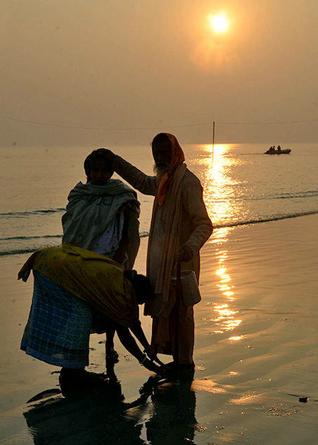
A sadhu blesses two women at Sagar island on Monday. Photo: Sushanta Patronobish

Devotees gathering for Makar Sankranti almost thrice the island’s population

In the next few days, lakhs of devotees will descend on the Sagar Island in the Sunderbans archipelago of West Bengal to take a holy dip, where the Hooghly river enters the Bay of Bengal, on the occasion of Makar Sankranti. They are unaware of the festival’s environmental impact on the island.

Sagar is the largest island in the Indian Sunderbans system, boasting an area of 251 square km and a population of 2.10 lakh as per the 2011 census. Despite its size, the erosion of certain parts owing to the rising sea level is causing its residents concern.

In July 2014, at least 10 villages were submerged in high tide, and this exposed the vulnerability of the island, like the other smaller islands of the unique ecosystem.

While State government officials admit that no detailed environmental assessment has been done in the recent past, some recent studies show that on the one hand, the issue of pollution has not been addressed and on the other, the island’s tourism potential has not been tapped.

Experts say the number of devotees gathering on a particular beach during the Mela is five to six lakhs, almost three times the island’s population.

At least two recent papers, produced by researchers of the School of Oceanographic Studies (SOS), Jadavpur University, have looked at the issue of sustainability of the Mela and the island’s tourism potential.

‘Impact of Gangasagar Mela on Sustainability of Sagar Island,’ published in 2012 in the International Journal of Research in Chemistry and Environment, pointed to an increase in fecal coliform bacteria in the surface water of the beach used by the pilgrims. The paper said the inhabitants of the island living near the Mela ground complained of obnoxious smell and communicable diseases.

“The authority needs to limit the gathering according to the… capacity of the Gangasagar Mela ground which depends on infrastructure such as housing, latrine, toilet and bathing ghat [so as] to minimise pollution,” said the paper authored by Tuhin Ghosh of the SOS and Rituparna Hazra and Rajarshi Mitra.

Another paper published by Prof. Ghosh and others at International Journal of Innovative Research & Development in 2014 looks at the tourism potential of the island under the Global Sustainable Tourism Criteria.

source: http://www.thehindu.com / The Hindu / Home> News> Cities> Kolkata / by Shiv Sahay Singh / Sagar (South 24 Parganas) / January 13th, 2015

Hazarduari gets ‘Adarsh’ tag from ASI

Kolkata :

Hazarduari Palace in Murshidabad has been declared an Adarsh Monument by the Archaeological Survey of India (ASI) along with three others in eastern India.

The other three monuments are Vaishali-Kolhua in Bihar, Rang Ghar in Assam’s Sibsagar and the Konark Sun Temple in Odisha. These
will be in the focus of international tourism promotion plan developed by the central government.

ASI has selected only 25 out of 3,680 protected monuments under the Adarsh Samarak Yojona. The list was made on the basis of the number of tourists these monuments attract annually. The list includes some of the biggest crowd-pullers like Taj Mahal, Khajuraho, Qutab complex and Red Fort.

All of them can be of great interest to international tourists, believes the ministry of culture. “Keeping that in mind, we are developing amenities of international standards, including washrooms, drinking water, signs, cafeterias, audio-visual centres, Wi-Fi connectivity, interpretation centres and encroachment-free areas,” said ASI regional director (eastern region) P K Mishra.

But more than anything else, security will be enhanced. The Centre is thinking of introducing the ‘tourism police’ force that is quite common across the world.

Hazarduari Palace, earlier known as Bara Kothi, is located on the campus of Kila Nizamat in Murshidabad, on the banks of the Bhagirathi. It was built in the early 19th century by Duncan MacLeod under the reign of Nawab Nazim Humayun Jah of Bengal, Bihar and Orissa (1824-1838). In 1985, the palace was handed over to ASI. Kila Nizamat or Nizamat Kila was the old fort of Murshidabad which was demolished to build this grand palace.

Built in the 13th century, the Konark Sun Temple is shaped like a chariot of the Sun God with 12 pairs of ornamented wheels dragged by seven horses.

Rong Ghor, meaning ‘House of Entertainment’, is a two-storied building that used to serve as the royal sports pavilion. Ahom kings and nobles used to watch buffalo fights and other sports at Rupahi Pathar in Rangpur, particularly during the Rangali Bihu. Said to be one of the oldest surviving amphitheaters in Asia, the building was constructed during the reign of Swargadeo Pramatta Singha in 1744-1750.

Kolhua in Vaishali is where the Buddha is said to have preached his last sermon. To commemorate the event, emperor Ashoka erected one of his famous lion pillars here in the third century BC. A hundred years after the Buddha’s death, Vaishali hosted the second great Buddhist council. Two stupas were erected to commemorate it.

Jainism, too, has its origins in Vaishali. In 527 BC, Lord Mahavir was born on the outskirts of the city and lived in Vaishali till he was 22. Vaishali remains an important pilgrimage centre for both Buddhists and Jains.

source: http://www.timesofindia.indiatimes.com / The Times of India / Home> City> Kolkata / by Krishnendu Bandyopadhyay, TNN / January 11th, 2015