All posts by wellnmed@gmail.com

The accidental zamindar – The East India Company did not learn its lessons well

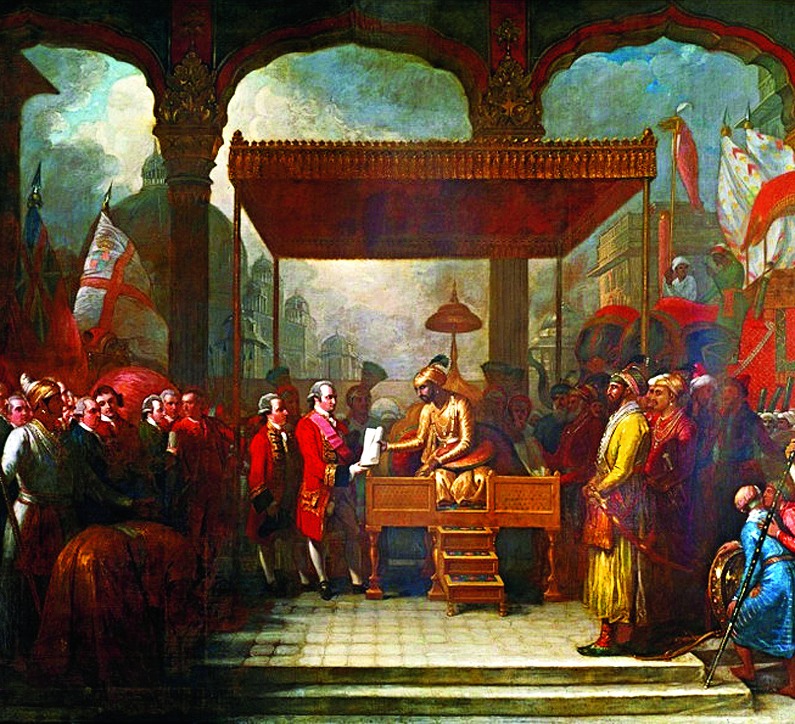
A painting by Benjamin West, 1765, of the Mughal emperor, Shah Alam, transferring the right of tax collection to Lord Clive

East India Company was basically a commercial enterprise; till the end it continued to make good money by exporting Indian goods. In the 19th century, its monopoly was corroded by the entry of other British traders; but trade continued to be a major activity till its demise in 1858.

But it was an odd bird from its birth. The Spanish and Portuguese adventurers who preceded it were an explicit extension of their home governments; the British crown, on the contrary, kept out of the Company’s affairs abroad. Charles II gave the Company power to judge and punish people in its territory abroad according to the laws of his kingdom in 1661; the power to make locally applicable laws followed.

The injunction assumed that the Company would occupy and own territory. But its territory in India was not virgin territory; it had its own administrative structure, of which the Company became one pillar. So it had two masters; and in so far as the two never talked to each other, it had considerable freedom of manoeuvre. But legislation and administration were not its main business; it tried to minimize the effort it put into them. One way it did so was to use local law where it existed, and import British law where there was no local law.

The two differed greatly in respect of landed property. In 1660, King Charles II abolished personal service due from noblemen and converted it into a monetary obligation; that is how land revenue became the dominant tax in Britain. In India, too, land revenue was the major tax; it was reckoned as a third of agricultural produce under Akbar. But it was not always in cash. And it did not necessarily go to the king; the nobleman delivered his dues in cash or in military service. The feudal structure applied to the Mogul empire, but not necessarily to other, smaller kingdoms. So when Lord Clive defeated the Mogul army in 1765 and took the Diwani of Bengal, the Company had to learn the ins and outs of zamindari.

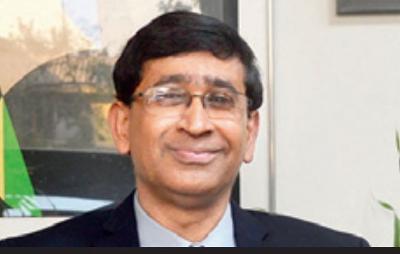
The lessons it learnt are the main part of Law and the Economy in Colonial India, a new book by Tirthankar Roy and Anand V. Swamy. They are an odd pair. Tirthankar is a first-class economic historian. But he is not a leftist; so he faced discrimination from the academic powers-that-be in India. Finally he got fed up and left India; now he teaches in the London School of Economics. Anand Swamy teaches economics in Williams College. They have been running into each other in conferences, and working together on books once in a while.

Their conclusion is that the Company did not learn the lessons well. Its laws led to thousands of cases in Bengal relating to property, tenancy and rent; the system remained overloaded throughout British rule, and cases took decades. As if property law was not obscure enough, legal proceedings were complicated by succession law, which differed according to religion. They do not say so, but the mess was sorted out after Independence, first by legislation abolishing zamindari, and more slowly by population growth, which reduced the size of holdings.

It is difficult to imagine today that Indians could own slaves till 1843; and once slavery was abolished by law, all they had to do was to give a loan to the slave and turn him into a bonded labourer. That is not surprising, since Britain itself outlawed slavery only in 1811. But slavery served a purpose under conditions of labour shortage, which was commonly faced by plantations in the north-east. There were not enough workers in the area; they had to be brought from far away, most often tribals from Chhota Nagpur, which is now Jharkhand. Loading them into bullock carts and transporting them hundreds of miles cost money; a planter could not afford to bring them and then let them walk over to a neighbouring planter for a higher wage. So planters asked for and got laws which empowered them to jail their workers for not repaying a loan. But maltreating workers also earned a planter a bad reputation that he would rather avoid; so planters who could get and retain workers more easily avoided using penalties. Roy and Swamy deal with these labour market adjustments in some detail.

I found their discussion of contract law fascinating. Before the statification of the Company, Indian governments did not legislate or enforce laws. But commerce had existed for millennia; and where there was trade, there was always scope for cheating and breach of promise. Traders used social networks to deal with these risks; loss of reputation and standing was the punishment for breach of contract. But this could work only with those who had reputation to lose; it could not work with Santhal labourers or indigo farmers. When it came to workers, the Company gave penal powers to their employers. That could not be done with indigo farmers; they were not housed by indigo buyers, and could not be jailed or beaten up. So indigo buyers collected chits documenting debt against various farmers, and when an opportunity arose, sold them off to someone who had greater influence on the debtors. Partly under their influence, a contract act was passed in the 1860s; but few cases were filed under it.

Such are the narratives collected by Roy and Swamy. Their book is neither a treatise on law nor a history book: it does not systematically align legislation and case law, and it does not tell a story. The topics it has chosen are broad; a systematic treatment would take more space. Making a history out of it would require a larger role for the personalities involved; a legal treatise would require links with both legislative and case law. So there is a case for expanding the book.

Roy and Swamy should also try their hand at pathology of Indian law. The Indian judicial system is hugely overloaded, and extremely slow; the two aspects are connected, but slowness is not just due to overload. It is a good deal due to antiquated procedure; for instance, judges let lawyers drone on and on, briefs cite piles of cases unnecessary to make the point, and courts give postponements and adjournments for the asking. There are too many briefless lawyers, and too few judges. High courts reverse a high proportion of lower court judgments, generally on the ground of poor police investigation. Other systems have faced these problems and overcome them.

No one in India has looked critically at the judicial system except Arun Shourie; anyone who thinks of doing so is bound to consider the possibility that he may face judicial bias if he is hauled to court. Roy and Swamy do not have to worry about that. At worst, a book of theirs would be banned in India. But that would not be much of a loss; hardly any book sells more than a thousand or two copies in India, and the publicity would increase the book’s sales outside. If the judicial system is to be repaired, someone has to start somewhere, and no one is better placed to do so than Roy and Swamy.

source: http://www.telegraphindia.com / The Telegraph,Calcutta,India / Front Page> Opinion> Story / Writing On The Wall: Ashok V. Desai / Tuesday – February 14th, 2017

Kolkata girl bridges Bengal-Costa Rica gap

Kolkata :

This saree-clad, Spanish-speaking woman had stood out in the Costa Rica pavilion of the Kolkata Book Fair. Nothing about her looks and demeanour was Central American and yet she seemed so much at home, spreading native Costa Rican cheer. But speaking to a visitor at the pavilion, her Spanish changed into pure Bengali within seconds. Kolkata girl Baishakhi Saha has made it big in Costa Rica to gain permanent residency from the government there.

Saha used to live in Salt Lake and studied at Bharatiya Vidya Bhavan before settling down with her parents in Chennai. Her ties to the city, however, remained strong as the family often returned to visit relatives. Always a brilliant student, Saha bagged a scholarship from the Singapore department of education to major in computer science and minor in German from University of Singapore. It was during her stay there that she realised being part of university exchange programmes would help her see the world.

However, she soon realised that with a partial scholarship, it was quite an expensive proposition for an Indian girl with a middle-class background. Around this time, she participated in a global essay-writing competition hosted by the government of Switzerland, on how Europe still inspires imaginations. This won her a limited period stay in Switzerland, which was a turning point in her life. “I yearned see the whole of Europe.

There were many like me and I soon found that by becoming a member of Aiesec, a global students’ body, I could get placed in jobs and get internships that could help me with that. Luckily, I managed to clear the necessary tests and was called for an interview to Malayasia, after which I was awarded a management internship with Model United Nations in Nigeria. It was a two-month job and I made $200 a month — quite a hand-to-mouth situation, but I enjoyed every moment of it,” Baisakhi recalls.

For the next one-and-a-half years she travelled the length and breadth of the west coast of Africa for the TV show Goge Africa. Aiesec acknowledged her work and her next assignment was that of an English teacher in Venezuela, after which she got a similar assignment in Costa Rica. By then, she had started writing her book, ‘magicNine’. The book was a success and Baisakhi was soon giving inspirational talks and teaching business communications at institutes. Her popularity made the Costa Rican government acknowledge her contribution and offer her permanent residency.

“Life has been a dream since then. Costa Rica is more or less like Kerala or Goa if you want to compare Indian situations. I come to Kolkata once in a while, but I have plans to take slices of Bengali culture there now,” Baisakhi said. She is a dancer too and has performed Indian dances in Costa Rica, which have been instant hits. As one of the few Bengalis in a distant land, she has much to do to bridge the two cultures, she explained.

source: http://www.timesofindia.indiatimes.com / The Times of India / News> City News> Kolkata News / by Jhimli Mukherjee Pandey / TNN / February 13th, 2017

Singur movement ‘historic win’, to be part of school syllabus: West Bengal minister

The minister also said that by March 15 the government would complete the entire process of employing 72,000 teachers in primary, upper-primary, Madhyamik and Higher Secondary schools.

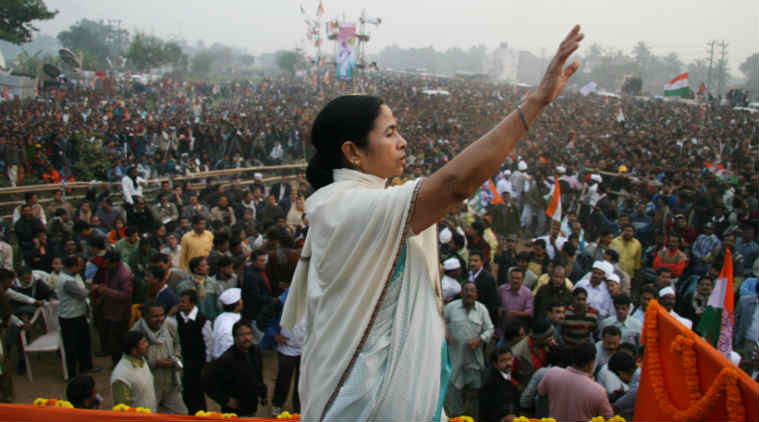
West Bengal CM Mamata Banerjee addressing a rally at Singur in 2011. (Express archive)

The iconic Singur movement would be introduced in the history syllabus of schools run by the West Bengal government from this year, West Bengal education minister Partha Chatterjee today said.

The minister, who described the Singur movement as a “historic win” for the farmers, told a question-answer session in the Assembly that a chapter detailing the agitation would be included in the history syllabus of class eight.
Later, speaking to reporters, Chatterjee said, “It’s a historic win for the farmers. Along with the Singur movement, the Tebhaga movement and Krishak Andolan will also feature in the syllabus and students must know that this movement is one of the milestones in the country’s history.”

Chatterjee said that distribution of the books had already been started. After the Supreme Court verdict allowing redistribution of Singur land among farmers, the state education department had sent the proposal to the syllabus committee for approval of the inclusion of Singur movement in the Madhyamik school syllabus.

The minister also said that by March 15 the government would complete the entire process of employing 72,000 teachers in primary, upper-primary, Madhyamik and Higher Secondary schools.

He requested ‘opponents’ not to move court creating hurdles in the process of employment of teachers and said that his department was going through a verification process at present.

source: http://www.indianexpress.com / The Indian Express / Home> Education / by PTI / Kolkata – February 13th, 2017

Air to water device produces purer drinking water

Kolkata :

The technical report of the functioning of the air to drinking water converting machine have been submitted by state Public Health Engineering department engineers.

Results from the Central Testing Laboratory have shown that the quality of water that is produced by the machine is many times purer and better than the typical water purifier devices.

The Housing Infrastructure Development Corporation (Hidco) authorities are now planning to install a few such machines in different parts of New Town.

“A sample of water produced from the device was sent to the Central testing Laboratory through PHE engineers to find out how pure the water is. The water has been found to have purer quality than the normal water purifying devices. We are planning to install some such devices in Eco Park and other commercial spots,” said a Hidco official, adding that plans are on to install the device at the Mother’s Wax Museum canteen on a trial basis and a few other places like gate No.3 of Eco Park, police outposts, traffic signal kiosks and places inside Eco Park in phases.

source: http://www.timesofindia.indiatimes.com / The Times of India / News> City News> Kolkata News / by Suman Chakraborti / TNN / February 13th, 2017

Federation of Film Societies of India to felicitate Madhabi Mukherjee on her 75th birthday

Kolkata :

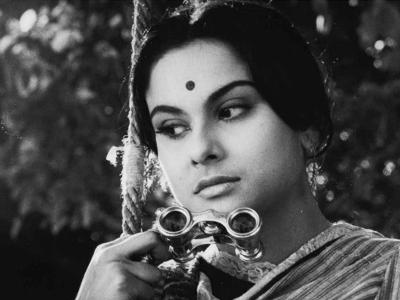
To mark the 75th birthday of veteran actress Madhabi Mukherjee, a special programme will be held on Saturday at Nandan. The Federation of Film Societies of India (FFSI) is hosting this programme along with Shilpi Sangsad and Nandan that will see a host of dignitaries speaking about the actress followed by a screening of “Baishey Srabon”.

While her remarkable prowess in acting has often been spoken about, what has hardly been highlighted is Mukherjee’s philanthropic nature.

Said her daughter Mimi Bhattacharya, “Maa would buy umpteen bottles of pickles sold by an ageing actress only to help her tide through crisis. There were times when we wouldn’t even need that much. Yet, she bought them because that was her way of helping the veteran actress.”

She was among the few who had extended financial help to Ray actor lying on his deathbed in a government hospital. During that time, she was invited to Sonagachhi to attend a programme organised to launch the Babu Samity.

Premendra Mazumdar, who is the former general secretary of the Federation of Film Societies of India, was also one of the speakers. Addressing the sex-workers, Mukherjee had given a fiery speech that day. “‘Both you and I work with our bodies. We use our bodies in a certain way when we perform as actors. You use your bodies differently in your profession. But never be ashamed of what you are doing,’ she had said,” recalled Mazumder.

During her speech, she had referred to how this actor was once in relationship with a lady from that area. “Suddenly, we saw a lady in the crowd weeping profusely. She was the one with whom he had had this relationship. Spontaneously, the girls collected money for his treatment. This lady then accompanied Madhabi-di back to the hospital and stayed there till he died,” recounted Mazumder.

Even her decision to join politics was driven by her urge to help the workers who had lost their job when the Star Theatre was gutted down by a fire. “Maa was crest-fallen. Along with Soumitra kaku (Soumitra Chatterjee), Maa had approached Buddhadeb Bhattacharya to see if something could be done. There were some litigation issues. But Buddhababu never informed her that he wouldn’t be able to do much. That hurt Maa a lot. Later on, when Subrata Mukherjee and Mamata Banerjee had approached maa to join politics, she had first asked if they would do anything for Star theatre. When they had said yes, she had counted 1,2,3 under her breath and said yes,” Mimi said. Losing the polls wasn’t an issue for her. “Maa had to contest against him and was ready to face the consequences,” Mimi said.

However, Mukherjee herself has never liked to highlight the way she has helped others. “It is not about only reaching out to people from the industry. I connect with human beings and try to do my bit to help them,” she said, happy that she has been able to make a difference in people’s lives.

source: http://www.timesofindia.indiatimes.com / The Times of India / News> City News> Kolkata News / TNN / February 10th, 2017

Diversity makes US great, says Nasa scientist from Kolkata

Goutam Chattopadhyay.

Kolkata :

A jet propulsion scientist at Nasa who grew up in the suburbs of Kolkata believes America owes much of its success to immigrants.

“The driving force of America is the assimilation of people from all over the world; people who are talented and have used the opportunities to drive innovation. That is what makes America great,” said Goutam Chattopadhyay, who migrated to the ‘land of opportunities’ in 1992 and lived his dreams.

Growing up in utter poverty in Konnagar, Chattopadhyay was not allowed to sit in a Class III exam as his school fee (Rs 8) hadn’t been paid. Still, he finished second in class that year, the only time he did so as he topped his class right up to his engineering degree in Electronics & Telecommunication from BE College, Shibpur. He had even cracked IIT entrance exam but could not study since his family could not afford it.

From BE College, Chattopadhyay went to TIFR in 1987. That’s when his horizon widened. “Till then, I wasn’t sure what to do other than take up a job to support my family,” the senior scientist recounted. As a design engineer at the premier institute, he was part of the team that designed the Giant Meterwave Radio Telescope (GMRT). Chattopadhyay designed the Local Oscillator System that converts the signal that comes from the sky into lower frequency signal that is easier to process.

In 1992, he went to the US to pursue higher studies, doing his masters at the University of Virginia and then PhD at California Institute of Technology (Caltech). There, he was in the group that developed Terahertz that will come into commercial telephony when 5G is rolled out.

On completion of the PhD in 1999, he got a call from Nasa. “Looking back, it has been an amazing journey and it has been possible because the US has been welcoming. I don’t think Indian students will be affected by what is happening right now. These are short-term bumps. I hope this will not stop the flow of talent to the US,” he said.

Chattopadhyay is currently working on a project that could help President Donald Trump overcome some of the fears on homeland security. His team is using Terahertz to do a remote pat-down of suspects. A project for the department of Homeland security, it is a device that allows law enforcement agencies to remotely scan a person to detect guns or bombs hidden under the jacket. “It can work at a 30-40 metre distance and be of use in airports and stations,” he explained.

Talking of airports, Chattopadhyay missed the crowds waiting at LA airport to welcome immigrants to protest against Trump’s ban on seven Muslim-majority countries as a judge in Seattle had put a stay on the executive order a day before he took his flight to India. Though he wasn’t worried about taking this trip as there are no restrictions on travel from India, fellow colleagues in Nasa who hail from the countries under the scanner won’t risk a visit ‘home’ anytime soon.

source: http://www.timesofindia.indiatimes.com / The Times of India / News> City News> Kolkata News / TNN / February 09th, 2017