All posts by wellnmed@gmail.com

Tracing the last of Raj-era silversmiths

Kolkata :

A quiet revolution is unfolding in Mamata Banerjee’s backyard, courtesy her own MSME department.

The department’s retail body, Biswa Bangla Marketing Corporation, has started reviving a vanishing craft that is delightfully British, tracing the last of the Raj-era silversmiths — Maheswar Dutta — at Kansaripara.

TOI found Bengal’s only surviving “Sheffield craftsman” inside a crumbling edifice, down a backstreet of the CM’s Kalighat residence. These days, Kansaripara Lane — the cradle of Bengal’s traditional silversmithy — is no more than a place with decrepit houses that once belonged to Hindu sub-caste Kangshabaniks or Kansaris (bell metal workers) who settled here in the mid-18th century.

Squeezed between Sambhunath Pandit Street and Russa Road, this place is home to artisans who are still visited by leading jewellers for their outstanding craftsmanship. Dutta (63) is the last heir of a tradition extending back to Charnock’s Calcutta. His forefathers spearheaded a resurgence in heritage silver craft of the 8th century Pala dynasty.

“We were displaced from the nearby Gobindopur village, that constituted Calcutta 250 years ago when Robert Clive cleared the swamps to build Fort William,” said Dutta.

Some of the exquisite pieces Dutta and his apprentices, Alok Patra (38) and Biswanath Bodak (28), have forged will shortly travel to London for a Biswa-Bangla exhibition. The idea is to bring these intricate inlay work in dainty velvety boxes back to shoppers’ lists and eventually apply for the GI tag for the “nakshakari” work.

Only the other day, until Biswa Bangla’s chief consultant Partho P Kar tracked the roots of Bengal’s silversmithy, Dutta was a worried man. Now, they are the busiest stakeholders of the heritage craft revival project.

source: http://www.timesofindia.indiatimes.com / The Times of India / News> City News> Kolkata News / by Ajanta Chakraborty / TNN / May 01st, 2017
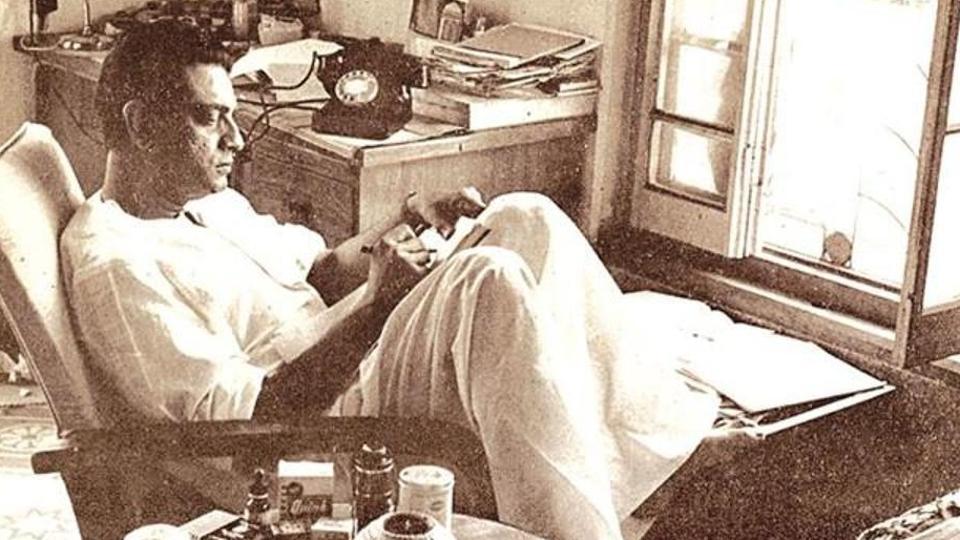
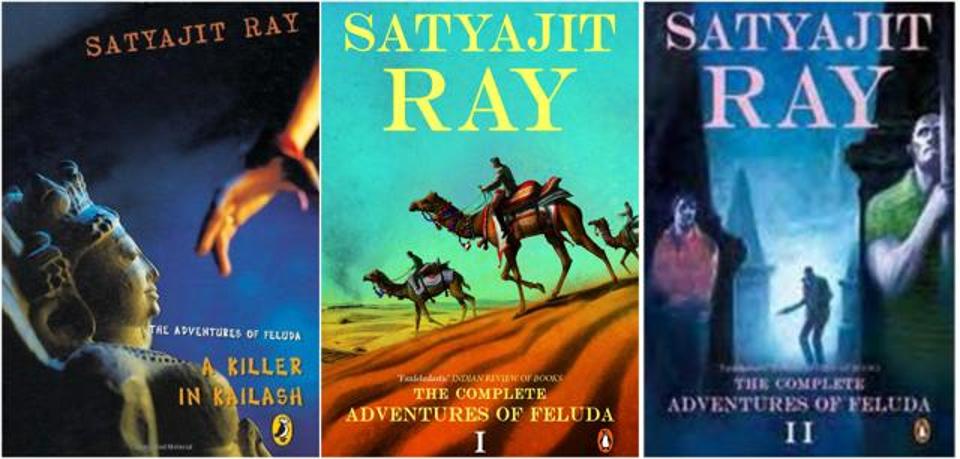
On Satyajit Ray’s birthday, Kolkata exhibition celebrates 50 years of Feluda

Over a hundred exhibits on display capture the legendary film-maker’s multifaceted personality, as a writer, as an illustrator and as a composer.

The exhibition showcases everything related to Ray’s much-feted oeuvre, including photos from his famed Red Books where he jotted down minute details associated with his films.

An exhibition of over a hundred exhibits celebrating 50 years of Feluda, the iconic sleuth created by auteur Satyajit Ray, was inaugurated in Kolkata on Sunday evening ahead of the legend’s 96th birth anniversary on May 2.

The Oscar-winning film director’s 25th death anniversary was observed on April 23.

The assemblage essentially captures everything related to Ray’s much-feted oeuvre, including photos from his famed “Kheror Khata” (red books or manuscripts) where he jotted down minute details associated with his films.

“Though the theme is Feluda, there is much more to be seen in the exhibition, such as his doodles. Initially we were restricting the exhibits to 90 but it has crossed 100. The items exhibited capture his multifaceted personality, as a writer, as an illustrator and as a composer.

“For Feluda afficionados, there are shooting schedule of films like Sonar Kella, sketches and illustrations of Feluda,” a representative of The Society for the Preservation of Satyajit Ray Archives, said. The show will run till May 4 at ICCR and then move to the Calcutta Club.

Revolving around the 27-year-old athletic Pradosh Chandra Mitter, nicknamed Feluda, the novellas showcase the private eye’s superb analytical and observational skills that ultimately solve the mysteries – be it murders, theft or kidnapping.

Said to have been modelled on Sherlock Holmes, the cigarette-smoking and martial art-trained Feluda is accompanied in his sleuthing pursuits by cousin, Tapesh Ranjan Mitra or Topshe who is the narrator of the stories and may have been loosely based on character of Dr John Watson.

Ray also brings in a character called Jatayu (Lal Mohon Ganguly), a writer of thriller novels who provides a much-loved comic relief, from his sixth novella onward.

Feluda possesses a .32 Colt revolver but rarely uses it. In story after story, his major weapon is “magajastra” (the brain). Since the first Feluda whodunit Feludar Goyendagiri (Feluda’s investigation) debuted in December 1965 in the Sandesh magazine, the series has been translated in four Indian languages besides English, French, Italian, Swedish, German and Japanese. The first Feluda book came out in 1967.

The books have spawned hit films, animations and comics and the character has attained cult status among the old and the young alike.

Follow @htlifeandstyle for more.

source: http://www.hindustantimes.com / Hindustan Times / Home> Lifestyle> Art & Culture / by Indo Asian News Service / Kolkata – May 01st, 2017

Grand theatre fest planned to celebrate 70 years of Bohurupee

Kolkata:

The journey that started in 1948 after Shambhu Mitra and Bijon Bhattacharya left the Indian People’s Theatre Association (IPTA) to embark on a new venture, continues unabated as Bohurupee turns 70 on May 1, making it the oldest surviving theatre group in the country.

The group that has left its imprint on the history of the nation’s theatre movement — first under Shambhu Mitra himself and then under Kumar Roy — is readying itself to present a theatre festival to celebrate the landmark.

The festival is scheduled between April 29 and May 1 and will not only see new productions and re-staging of popular plays, but will also have in attendance theatre directors Tanvir Akhtar from Bihar and Subodh Pattanaik from Odisha.

Shambhu Mitra (along with wife Tripti), stunned the theatre world with his ‘Raktakarabi’, ‘Char Adhyay’, ‘Visharjan’, ‘Raja’, ‘Malini’ and ‘Muktadhara’. Some of the other better known plays of Mitra were adaptations from Sophocles, Ibsen, Chekov, O’neil, Brecht, Anouilh, Sartre and Sanskrit classics like Sudrak’s ‘Mirchchakatika’ along with works of contemporary playwrights. The plays were noticed by leading theatre personalities in Mumbai and Delhi as well, so much so that Marathi legends Satyadev Dubey and Mohan Rakesh sent their student Amol Palekar to watch Bohurupee plays.

“Shambhu Mitra and and Kumar Roy shaped my sensibilities ever since I came into theatre in 1967. Those were different times when the Kolkata group theatre scene lit up theatre movements in Pune, Mumbai, Delhi and Bangalore,” said Amol Palekar, who is still associated with Bohurupee. “Night after night, I witnessed Mitra’s Ibsenian realism shake viewers out of their stupor. There was no Bohurupee production that I missed in the city,” he recounted. He has even written for the group’s special number that is scheduled to be released on the occasion.

The piece is at the same time a remembrance of Om Puri, whom he met at a theatre lovers’ gathering in Kolkata.

A new play, ‘Medal’, written by Alok Mukhopadhyay and directed by Debesh Roy Chowdhury, will be staged at the event.

Bohurupee spokesperson Susanta Das said, “We’ll honour the state’s biggest theatre directors. Of them, Rudraprasad Sengupta worked with Mitra and Bibhas Chakraborty started out as a Bohurupee student.”

source: http://www.timesofindia.indiatimes.com / The Times of India / Home> News> City News> Kolkata News / by Jhimli Mukherjee Pandey / TNN / April 24th, 2017