All posts by wellnmed@gmail.com

The House Where Nivedita Lived – Moumita Chaudhuri stops by at a forgotten address and tries to re-imagine a lost time

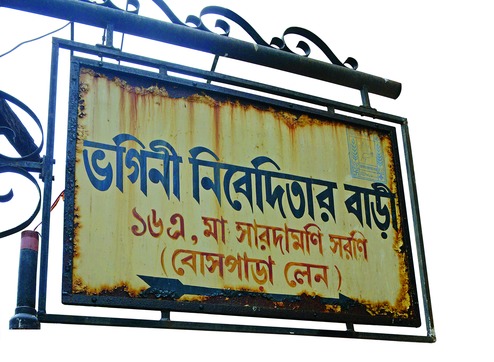
To all outward appearances, it is just another old house in north Calcutta – nondescript, ordinary. The same cannot be said about the address though: 16 A, Bosepara Lane of Bagbazar is the house where Sister Nivedita lived from 1898 to 1911, though few may be aware.

Inspired by her interactions with Swami Vivekananda, when the Irish social activist left her home in England for India, she was still Margaret Elizabeth Noble. It was in Calcutta in 1898, that she slipped into her Indian identity. This two-storey house was the most intimate witness of this spiritual metamorphosis. But all these years no one bothered about it.

This year being Nivedita’s 150th birth anniversary, the monastic and charitable organisation, Ramakrishna Sarada Mission, along with the Bengal government took on the task of renovating the house. Work is still on, but beginning October 23 – Nivedita’s birthday – the residence has been thrown open to the public for an indefinite but brief while. A full-fledged experiential museum is also in the works. But it will take time to ready it.

“It has taken us almost three years to renovate the house. It was in a precarious state when it was handed over to us – the windowpanes broken, the doors rotting, the rooms in a sorry state, the ceiling about to collapse,” says Pravrajika Aseshprana, the nun supervising the restoration project. She adds, “A lot of the original fittings have had to be thrown away. The wooden handrail of the stairs leading to the first floor, however, remains untouched. It has Sister’s touch on it.”

Upon arriving in Calcutta, Nivedita lived in one of the cottages in Belur in Howrah district, on the banks of the Hooghly. Vivekananda had had these built for some disciples from the West. The shift to Bosepara happened later.

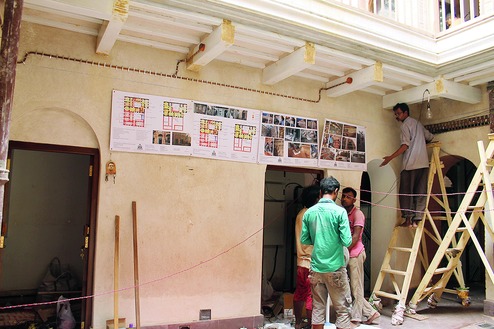
BEYOND BRICK AND MORTAR: (From top) The renovated thakurdalan, the exact spot where the girls’ school was launched in 1898; restoration work underway at 16 A, Bosepara Lane.
Photographs by the writer

The physical shift was thought through by Vivekananda. It was in keeping with his larger world view about women’s education and nation-building and the role he thought Nivedita could play in this. In the 1956 book Sister Nivedita, Moni Bagchee writes: “It was to carry out this plan [provide for the nation efficient women in different spheres of life] that Nivedita was sent to Calcutta… Sarada Devi, the divine consort of Sri Ramakrishna, was then residing in Bagbazar with her community of ladies, mostly of devotional bent of mind. Swamiji wanted that Nivedita should live in company of these women…”

Nivedita was given a room in Sarada Devi’s house, but by her own admission, she couldn’t fit in. Bagchee quotes one of Nivedita’s letters from the time. “I imagined caste to be only a foolish prejudice – which must yield to knowledge – against some supposed uncleanliness of foreign habits and thus cheerfully assuming all the ignorance to be on her side, confidently forced myself upon this Indian lady’s hospitality.” Sensitive to the issue at hand, Vivekananda rented out for Nivedita a house in the same neighbourhood – 16 A, Bosepara Lane.

The second shift helped Nivedita bond better with Sarada Devi. It also helped her find her own equilibrium. In Sister Nivedita: The Dedicated by Uzelle Raymond, one comes across a description of the house by Nivedita herself. She writes: “My home is, in my eyes, charming. It is a rambling specimen of the true old Hindu style of building, with its courtyard a great well of coolness and, at night, a playground of merry breezes. Who would not love a house with such a courtyard, with its limited second story, and with its quaintly terraced roof built at five different levels? Here at dawn and sunset, or in the moonlight, one can feel alone with the whole universe .”

As one moves from the hall to the courtyard, and up the flight of stairs to the corner room on the first floor, one cannot help but imagine Nivedita inhabiting this space. Raymond’s book had described a “personal workroom” furnished with two large tables of white wood, a chair, a stool and a bookshelf laden with her Bible studies, Bowden’s The Imitation of Buddha, the Discourses of Epictetus, selections from Renan, biographies, a wide assortment of Emerson, Thoreau, Joan of Arc, Saint Louis, Pericles, Alexander the Great, Saladin. Raymond wrote: “On the wall hung her ivory crucifix and a single picture: the Annunciation, with the Virgin holding the broken lilies in her arms.” One wonders, was it here, or here, or there?

Nobody, of course, can say for sure which space was used for what. “We have had to guess and imagine from the descriptions we find in her books,” says Aseshprana.

The thing that leaps to the eye upon entering the house is the high-ceilinged thakurdalan to the right. Restoration work on this portion is complete. The walls are a lovely burnt orange, the floor gleaming with red tiles, wooden skirting in place with brackets for lights… This is the spot from where Nivedita launched a school for girls one Kali Puja day in 1898. It has now shifted to another address in the neighbourhood. Here she taught them – wives and child widows from orthodox, middle-class Hindu families – lessons in the arts and sciences. Deeply involved with India’s freedom struggle, she had designed a national flag. She taught her students to stitch the design on fine Murshidabad silk.

After the partition of Bengal in 1905, this house became the seat of many political and intellectual meetings. To the left of the entrance is the baithak khana, or parlour equivalent. Debanjan Sengupta, who is a Nivedita expert, tells The Telegraph that this is where the famous chaa paaner aashor or tea party happened. “This is where Rabindranatha Tagore and Vivekananda, Surendranath Banerjee, Sarala Devi, Balaram Bose and others met. This is where Swamiji discussed how to motivate people to embrace Hinduism once again, people who joined the Bramho Samaj.”

Nivedita had an intimate knowledge of armed struggle from her life in Ireland. She was aware of techniques of manufacturing explosives and the power of the Press. Alongside being a centre of women’s education and a den of Bengal’s intelligentsia, 16 A, Bosepara Lane became a repository of all these experiences too, and she drew on these to power the fight for freedom. From this house too was conceived, under her supervision, Jugantar, the first Bengali daily newspaper. This is where she brainstormed with freedom fighters. Writes Bagchee: “…during this time it [the house] was a volcano. It was from this tiny lane that Sister Nivedita planned and conducted the armed struggle like an experienced general…”

The project concerns the house, but the truth is, this entire lane is steeped in history – Nivedita’s and Bengal’s own – though few care to know. History needs makeovers from time to time to re-establish itself. So does, in a manner of speaking, herstory.

source: http://www.telegraphindia.com / The Telegraph,Calcutta,India / Home> Calcutta / by Moumita Chaudhrai / October 30th, 2017

Records broken on and off field at Salt Lake stadium

Kolkata :

A record crowd at the Salt Lake stadium witnessed a record number of goals on Saturday. India took over as the most attended Fifa Under-17 World Cup venue ever, even as it witnessed 183 goals in the tournament, seven of which came in the final match between England and Spain, the highest ever in the history of a final in the tournament.

The stadium was packed to capacity on Saturday.

The stadium clocked an attendance of 66,684, just three short of the most that could be accommodated by the stadium. The players too acknowledged the support that the crowd showed. The tournament’s highest goal scorer, Rhian Brewster, wrapped the English flag around him and bowed to the spectators with folded hands after the end of the match.

As the final ended, the total number of spectators who turned up at the six host venues across the country stood at 13,47,143, beating the previous best of 12,31,000 recorded in the very first edition of the tournament in China in 1985. With two goals in the Brazil-Mali match and seven goals in the final, the tally of the tournament stood at 183 — 11 more than what was scored in the 2013 edition of the tournament in UAE. The final match tally of seven goals was also the highest, beating the previous record of five goals between Brazil and Ghana in 1997.

“This was like a dream come true. What a match and what an ambiance at the stadium. I am so glad that we could manage to get tickets to the game,” said Priyanka Agarwal, a banker who came for the match with her husband and son.

So enthralled was the crowd that almost none left even after England won the match 5-2. They stayed back for the next 30 minutes for the presentation ceremony where awards of Golden Boot, Golden Ball, Golden Gloves and the all important cup was handed over to the winners in the presence of chief minister Mamata Banerjee and India captain Sunil Chhetri.

While 56,432 spectators had come in for the first match between Brazil and Mali, the count shot up immediately at the start of the second and final match. Among the several noted expats, director of Mali Football Association Cheickna Demba was the toast of the crowd as he ran about along the stands, shouting “Mali! Mali!” to drum up support for the African players. The spectators, though largely Brazil supporters, were soon chanting in tune with Demba. Though the team lost 2-0 to Brazil, the Mali fan club won the hearts of Kolkatans in the stands.

Saturday had a different mix of spectators compared to other days — there were a lot of first-timers. Many were not even football fans, but were at the stadium to enjoy the essence of witnessing a mega sporting event . “We have never been to a stadium before. The atmosphere out here is just crazy. The stadium has made me a fan of the game and I will come back again,” said Army Hospital oncologist Shweta Sharma.

While Brazil garnered more support from the fans in the first match, the crowd support was evenly distributed between England and Spain in the final match. But as England ultimately won the game 5-2, the entire stadium started cheering for the team. “England are the new home team for Kolkata. This was their sixth match in Kolkata and I have seen them win all of them from difficult situations. Today they were at their best,” said Debabrata Mukherjee, a Spain fan who swears by Barcelona, but admitted to have ended up cheering for the English team on Saturday.

source: http://www.timesofindia.indiatimes.com / The Times of India / News> City News> Kolkata News / by Dwaipayan Ghosh and Tamaghna Banerjee / TNN / October 29th, 2017

The Calcutta Chromosome

An empathetic look at a heartbreaking city

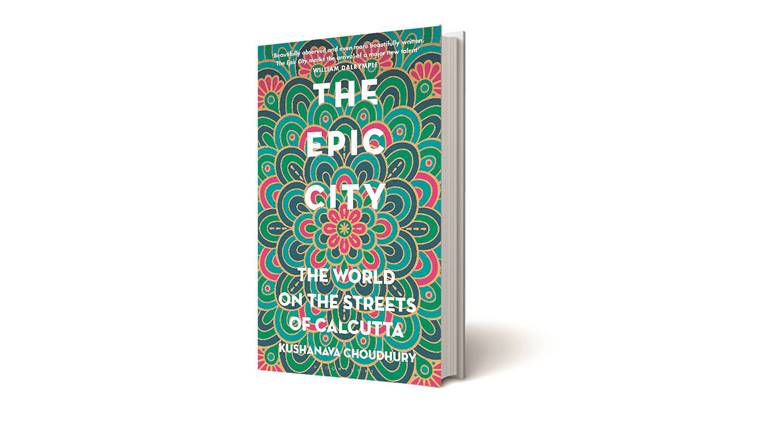
The Epic City: The World on the Streets of Calcutta Kushanava Choudhury (Bloomsbury Circus 241 pages; Rs 499)

Calcutta is personal. And the front flap blurb contains all the trigger words: immigrant, Princeton, British Raj, mosquitoes, hawkers, fish-sellers. Would this be another book balancing nostalgia with wide-eyed wonder? Or would it hit the road running in one more case of parachute authoring? Or, worse, would it be a supercilious outsider’s take on a city that is easy to love, easy to hate, but hard to know?

Calcutta, that most storied of cities, has been subjected to all kinds, right from Geoffrey Moorhouse’s 1971 work to Amit Chaudhuri’s Two Years in the City (2013). In recent years, it has been best served by Strangely Beloved: Writings on Calcutta (2014), a compilation of essays and excerpts that, by virtue of its format, held up special-interest mirrors to facets of the city, from the Eastern Calcutta wetlands to the soundscape that birthed India’s first rock band. The flipside is the academic undertone that robs the city of some of its joy, and the nostalgia shoehorn that depletes some immediacy.

Superficially, The Epic City has none of those problems: Kushanava Choudhury spent some of his childhood years in Calcutta and then comes back to work in the city as a reporter at The Statesman (peeve: the article is part of the masthead, so why lose it?) at the turn of the millennium as a fresh Ivy League graduate. “Like the revolutionaries of my parents’ generation, I wanted to change things…My best hope for making a difference was to work at a newspaper.” To translate those efforts to “make a difference” into a book would be a straight card into disaster zone. Where Choudhury scores emphatically is in twinning his heart, mind and soul — his own story — with the city’s to forge a work that is as gritty as the Beleghata canals, as wondrous as Kumortuli, as determinative as the Partition.

Groomed in the shoe-leather reporting The Statesman was once renowned for (the newspaper’s decline is an obvious parallel for the city), Choudhury lends depth to his observations with lightly worn erudition to produce one of the most readable accounts of a world city. Casual chats with relations, friends, colleagues merge seamlessly with purposeful conversations with trade unionists, little magazine archivists, impoverished scions of Calcutta’s oldest families, descendents of refugees, small publishers, idol sculptors. Underlying it all is an understanding of cultural crosscurrents — Satyajit Ray, of course, but more (and more powerfully) Ritwik Ghatak, Michael Madhusudan Dutt but also Mujtaba Ali — and an instinctive sense of history that burrows into unarticulated spaces, uncomfortable silences.

Cleverly constructed and utterly relevant as each of the 14 chapters of the book is in conveying Choudhury’s clear-eyed vision of the city, two, in my mind stand out. In ‘College Street’, the essay that opens the core section, the author uses a favourite trope for all city chroniclers to eviscerate one of its most fondly held myths: Of Calcutta as a centre of learning. Traipsing through the portals of little magazines and past “rainwater and dog shit” of university avenue, Choudhury trains his guns on the “notes business”, which finesses the education system to ensure intellectual stagnation more effectively than the much-reviled brain drain ever could.

The mood of The Epic City grows darker as it investigates the methodical de-industrialisation of Calcutta — the old factories in the southern reaches memorialised only as bus-stops such as Bengal Lamp and Usha — the rarely acknowledged Hindu-Muslim divide (including at The Statesman, as cosmopolitan as the city likes to think itself to be) and, in ‘Russian Dolls’, it culminates in a familial account of the run-up to Partition and its aftermath.

Weaving together the devastating sequence of the World War II in Europe, the Churchill-directed Bengal famine, the consequences of Direct Action Day with his own grandparents’ displacement from East Pakistan and pitching forward to the rise of the Communists and the Naxal rebellion to his father’s decision to migrate, Choudhury creates a stunning, tight fabric of continuum. Always empathetic, mostly sharp and frequently insightful, this is a heart-full work on a heartbreaking city, notwithstanding the gaping hole of the post-2011 Mamata Banerjee years. While it might even impress the resident Calcuttan, it is definitely recommended for anyone else ever touched by the city.

Sumana Mukherjee is a writer in Bengaluru

source: http://www.indianexpress.com / The Indian Express / Home> Lifestyle> Books / by Sumana Mukherjee / October 07th, 2017

Skin cancer hope from Calcutta-born biologist

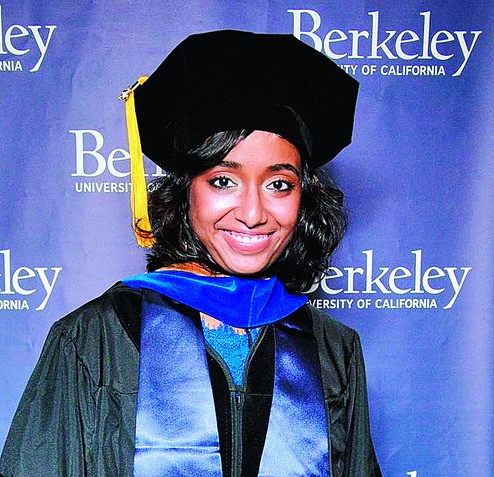
Aishwarya Kundu

New Delhi:

Cancer biologist Aishwarya Kundu has chemically tweaked a natural compound found in broccoli, cabbages and cauliflowers to design a novel molecule that shows promise as a treatment for skin cancer resistant to standard therapy.

The California-based researcher and her colleagues have shown through laboratory studies that their designer compound is about 20 times more potent in killing skin cancer cells than the parent compound extracted from the vegetables: indole-3 carbinol (I3C).

Scientists have known for nearly 30 years that broccoli and the other so-called cruciferous vegetables contain I3C, which has anti-cancer properties. Several research teams working independently have since the late 1980s shown that I3C suppresses breast cancer, prostate cancer, colon cancer and leukaemia cells grown in laboratory petri dishes.

The compound, packaged into tablets, has even been sold as a “health supplement”.

“But the exact way it works in different kinds of cancers is not known. Nor are its direct targets known, without which a compound cannot be given the status of a drug,” said Kundu, who was born in Calcutta and studied at Calcutta Girls’ High School before moving to Manipal and then to the US for higher studies.

Kundu’s research at the University of California, Berkeley, is the first to establish that I3C can block two specific biological pathways -BRAF and PTEN – that drive the growth of skin cancer. While the current drugs against skin cancer target the BRAF pathway, I3C promises a second alternative route of attack.

The researchers have added a chemical structure to the I3C compound to create a novel molecule that shows the same anti-cancer effect at a concentration 20 times lower than the parent compound.

“This is a specially valuable aspect that the drug industry looks for – compounds that are effective at very low concentrations,” Kundu told The Telegraph over the phone. The novel molecule also blocks a third biological pathway: Wnt.

Skin cancer cells use the Wnt pathway as an “escape route” to develop resistance to the standard drugs. Most of these drugs target the BRAF pathway, which is the primary “driver” in 70 per cent of skin cancer patients.

“Since our novel compound blocks the Wnt escape route, we hope it will be more effective than BRAF blockers alone. It can be used in combination with BRAF blockers to curb the risk of resistance,” Kundu said.

“It may also hold out hope for the 30 per cent of patients who don’t carry the BRAF mutation in their tumours and, currently, have limited treatment options. This market alone runs into billions of dollars.”

The California researchers’ studies show that both I3C and the new compound can independently shrink skin tumours in mice. Kundu and her colleagues are now hoping to conduct the required animal studies before the new molecule can be assessed in human clinical trials.

If all goes well, Kundu speculates, human trials could start within two years.

source: http://www.telegraphindia.com / The Telegraph,Calcutta,India / Home> India / by G.S.Mudur / October 27th, 2017

‘Girija Devi’s demise an irreparable loss to Banaras Gharana’

Even at 88 her scintillating voice could leave the audience spell bound

_______________________________________________________________

Highlights

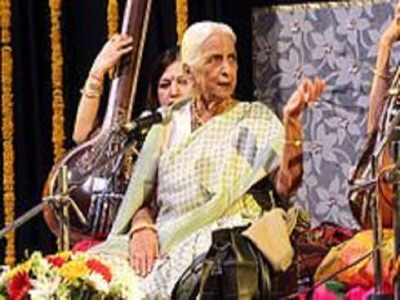
Girija Devi, fondly known as Appa ji, passed away in a hospital in Kolkata on Tuesday evening. She was 88.

She worked as a faculty member of the ITC Sangeet Research Academy, Kolkata in the 1980s and of the Banaras Hindu University during the early 1990s

She was awarded Padma Vibhushan in 2016
_________________________________________________________________

Varanasi :

Demise of great vocalist and Thumri queen Girija Devi came as a big shocker to the music lovers of Varanasi, the birth place of the eminent singer. Girija Devi, fondly known as Appa ji, passed away in a hospital in Kolkata on Tuesday evening. She was 88.

“It is an irreparable loss to Indian music and Banaras Gharana of music. She was a guiding figure for us,” said noted Sarod player and Yash Bharati recipient Pt. Vikash Maharaj. “She was ailing for some time, and admitted to BM Birla Hospital in Kolkata in the morning. She left for the heavenly abode in the evening,” he said adding that she had been living in Kolkata with her daughter.

“No one can fill the gap. Even at 88 her scintillating voice could leave the audience spell bound. She was perhaps the last exponent of thumri, tappa, chaiti and khayal. I heard her singing in an award ceremony in New Delhi on August 27,” said Ashok Kapoor, founder of a cultural organization Kala Prakash working for the cause of Indian music.

Though settled in Kolkata, she regularly visited Varanasi. She was born in Varanasi in 1929. She took lessons in singing khayal and tappa from vocalist Sarju Prasad Misra in early childhood. She worked as a faculty member of the ITC Sangeet Research Academy, Kolkata in the 1980s and of the Banaras Hindu University during the early 1990s. She was a prominent performer of purabi ang thumri style of Banaras gharana. She was awarded Padma Vibhushan in 2016.

source: http://www.timesofindia.indiatimes.com / The Times of India / News> India News / by Binay Singh / TNN / October 25th, 2017

Kolkata: A peek into Parsi tradition and culture at 4-day expo

Kolkata :

If you’ve always wondered what lies beyond the closely guarded boundary walls of a Parsi fire temple, especially because tradition has it that a non-Parsi is not allowed inside, your curiosity is going to be satisfied. A Parsi agyari (fire temple), as it is called by the community, will be re-created as part of a special four-day exhibition that the community in the city is organising to explain its history, traditions, lore and culture.

The exhibition, Threads of Continuity, is being organized between October 26 and 29 by The Calcutta Zoroastrian Community’s Religious and Charity Fund (a trust) – as part of its 150 years celebrations – in association with Parzor, a Delhi-based foundation that has been working with the support of the Unesco for the revival of Parsi culture and heritage. It’s being held at Olpadvala Memorial Hall.

There are about 650 Parsis in the city, a number that has dwindled from 2500 three decades ago. While on one hand the community rues that there has been a steady brain drain of Parsis from the city – thanks to the lack of business and career opportunities here – on the other, both the Parsi Club and the trust have tried to keep the community bonding strong by organizing cultural activities throughout the year. “But, we need to know more about our history that goes back to ancient Persia and the time when we as Zorastrians came under attack from the Muslim invaders/rulers of Persia. Facing persecution, we fled and reached the shores of Diu from where we entered Gujarat and chose to settle there after we were given shelter by the king…” said Cyrus Madan, a trustee.

“Most people do not know why non-Parsis are not allowed inside the fire temple, for that matter, many don’t know that we are not worshippers of fire. It’s just a medium through which we reach the God. We just want to de-mystify everything,” said Trista Madan, who is co-ordinating with Parzor.

source: http://www.timesofindia.indiatimes.com / The Times of India / News> City News> Kolkata News / by Jhimli Mukherjee Pandey / TNN / October 23rd, 2017

Two girls who’ve brought cosplay to Kolkata

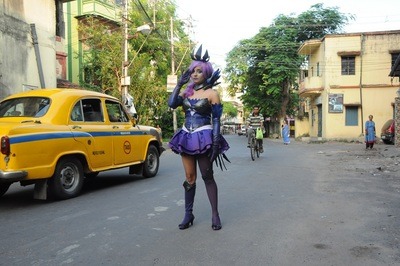
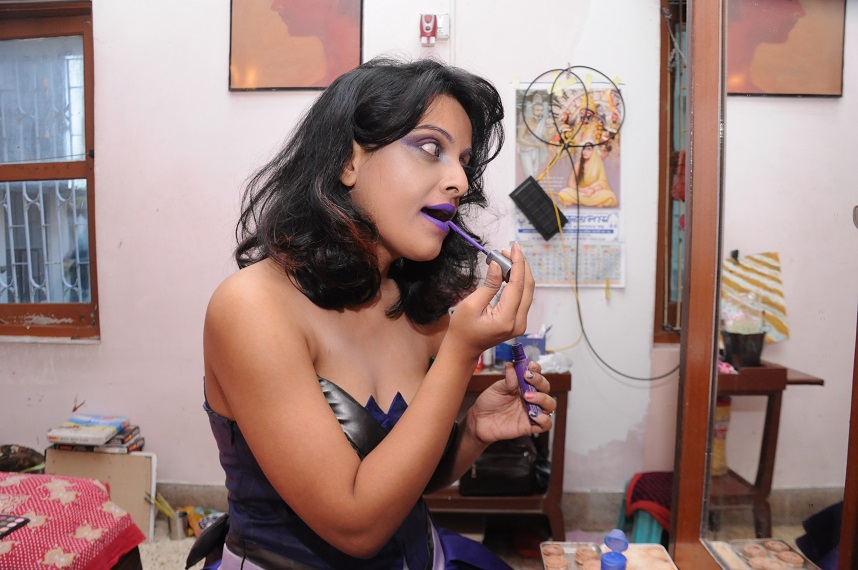
We all have our hidden heroes somewhere inside. It may be someone with superpowers — like Superman or Batman — or someone from the dark side — like Loki or Harley Quinn. While most of us go through life with these fantasies locked up, there are some lucky ones who get to express their innermost desires, dressing up as characters of their choice. These are the cosplayers — people who role-play as fictional characters for an audience — and Kolkata finally has a couple of them to boast of.

What is Cosplay?

Cosplay or Costume Play is a hobby where the participants bring a fictional character to life with the right makeup and costumes. The idea behind cosplaying is to bring two dimensional art forms into 3D space. The characters mostly revolve around anime, video games, manga comics and are sometimes taken from storybooks and TV/web series.

Meet Rhea Chowdhury and Romi Mondol, two girls who’ve taken up this exciting, adventurous hobby in a city that’s a cosplaying backwater in every sense of the term. Cosplaying is an accepted sub-culture abroad, especially in countries with a huge fan following for comic books, like the US and Japan. In India, it’s become popular in cities that have regular Comic Cons, like Bangalore and Mumbai. But that’s not a hindrance for our two city girls. Rhea, aka Rheality Lapse, is a social media executive who’s been cosplaying since 2015, while Romi Mondol, an MBBS interning at SSKM hospital, just started a year back. Their stories will tell you more about them, us and the world of cosplaying.

Early days of Cosplaying

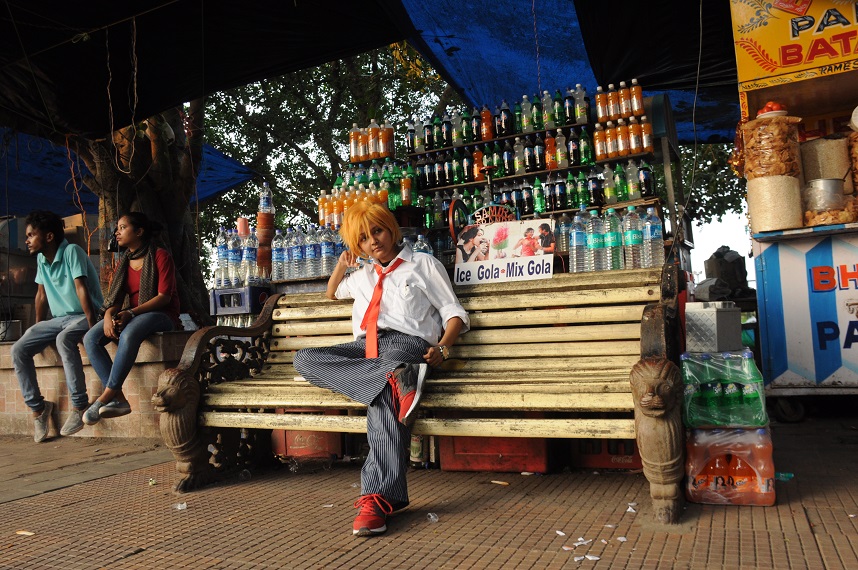
Romi, for instance, faced some resistance at home when she started dressing up as fictional characters. Her parents found her behaviour eccentric and couldn’t understand what the budding doctor was up to. “My dad is still dead against cosplaying as he thinks doctors are not supposed to do such things. My mom was also against it, but since she loves tailoring, she has started sewing my cosplay clothes,” says Romi. Cosplaying also allowed her to cross-dress. “From childhood, I liked to dress up as a boy. I was often taunted for this, but cosplaying helped me get rid of the inhibitions,” Romi adds.

Romi Mondol
Cosplay name: Romtz Wonder World
Profession: Doctor
Cosplaying since: 2016
Major characters covered: Usui Takumi, Misty (Pokemon), Erza Scarlet, Rei Ayanami, Harley Quinn, Lucy Heartfilia

Romi also thinks gender consciousness is dependent on how people address the issue. “I am a cross-cosplayer. I like to dress up as both male and female characters, though I prefer men. Cosplay allows me that, which is one of the major reasons why I fell in love with this activity.”

Rhea on the other hand has a supportive family. “I was always into Japanese anime and gaming. My parents knew that my hobbies and likings were offbeat. They have accepted me the way I am, but they get worried when I wear skimpy clothes. That’s mostly because of the horrifying news we see and read every day,” she says. Rhea started following cosplay in 2010 and before she knew it, she was regarded as a cosplayer. “I’ve been following the scene since 2010. But I started dressing up much later. I used to do that for fun. But when people started calling me a cosplayer, I thought, why not?”

The Kolkata scene

Rhea feels Kolkata can become one of the leading Indian cities for cosplaying, but can’t understand the reasons behind the ignorance. “Kolkata has a niche audience for gaming and cosplaying. But somehow big events like Comic Con India don’t come to our city,” she adds. She also points to the availability of cheap dress material, which is crucial to cosplaying. “The city offers you the best quality dress material at a much cheaper price compared to other Indian cities. This should interest cosplayers but I don’t know why people don’t participate.”

Rhea Chowdhury
Cosplay name: Rheality Lapse
Profession: Social Media Manager
Cosplaying since: 2015
Major characters covered: Lara Croft, Weiss Schnee, Harley Quinn, Juuzou Suzuya (Crossplay), Dark Lux, Diva (blood+)

Romi echoes Rhea in that the major cosplay events ignore Kolkata, which is why cosplaying is not growing here. “If events like Comic Con had come to our city, people would have got the opportunity to think about it. Now, most people don’t know what cosplay is. Many people I know have cosplayed once or twice but they didn’t continue because of the lack of events.”

Rhea has won many competitions held elsewhere in India. “I didn’t go for winning; I just went for cosplaying. The opportunities here are so few that participating itself is great fun for me. However, I won quite a few times and it’s always nice.” Romi is visiting Mumbai for a cosplay event later this year. “My profession doesn’t allow me enough time for cosplaying and since Kolkata doesn’t have much events, travelling to another city takes a lot of time. So I miss out on many big opportunities,” she adds.

Both agreed that since Kolkata is not exposed to the idea of public role-playing, people often behave in objectionable ways when they’re out in their costumes. Rhea speaks about a harrowing experience on Park Street, which is seen as the city’s party street. “I did a cosplay walk dressed as Harley Quinn (Suicide Squad) along with my friend who was dressed as the Joker. Stares are common and we cosplayers are prepared for that. But we had to stop the shoot as people crossed the line of decency and came too close. This is not the first time though; such behaviour is common in Kolkata,” she remembers.

Even Romi has faced similar problems. “Even if I ignore the innumerable stares and comments, sometimes people cross the limit. I have faced situations like that but I got out of them very confidently,” she says with a smile.

source: http://www.timesofindia.indiatimes.com / The Times of India / News> City News> Kolkata News / by Shrutanwita Chakraborty / TNN / October 22nd, 2017

On & off field: girls tackle challenges

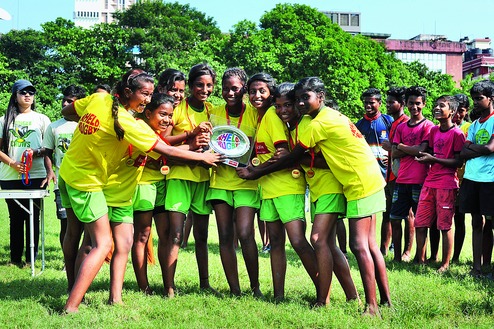
Team Chingrihata I with the winner’s trophy on Sunday. Picture by Arnab Mondal

At 23, Kripa Oraon is a trailblazer. A rugby player herself, she has helped reach the sport to more and more girls in and around Saraswatipur, a small village in New Jalpaiguri.

Maidan: Kripa is one of the 30 girl community young leaders of Jungle Crows Foundation who eat, drink and sleep rugby and defy all odds to rewrite their own life stories and others’.

On Sunday morning, the girl gang proved they are not only good players but also good organisers as they held an under-14 Tag Rugby Festival to celebrate the UN’s International Day of the Girl Child (October 11) at Crow Field on the Maidan.

“From planning to execution, the girls did it all. This is the first time the tournament has been organised entirely by them,” said Nidhi Ghelani, project manager, Khelo Rugby – a sports-for-development project by Jungle Crows.

“We have proved that given the opportunity girls can do everything. I have organised tournaments in Saraswatipur before. So I was confident that I would be able to do it,” said Kripa, who has been playing rugby since 2013 when Khelo Rugby first reached her village. She was responsible for officiating all big matches, including the final.

Twenty teams comprising 280 girls from locations where Khelo Rugby has a presence took part in the competition. Two teams from Chingrihata – Chingrihata I and Chingrihata II – reached the final and Chingrihata I won 6-4 after a tough clash.

“I joined Khelo Rugby just eight months ago and I never imagined I would be a part of the champion side in such a short time. It was great fun,” said Ruma Mondal, a Class VI student of Sukantanagar Vidyaniketan, who dreams of playing rugby professionally and making her father, a rickshaw puller, proud.

Bikash Paswan, the Jungle Crows coach who trains the Chingrihata girls, sees “great potential” in Ruma. “She is a fast learner,” he said.

Paul Walsh, the founder of Jungle Crows, was excited to see “so many girls playing rugby and having fun”. “The Chingrihata girls were absolutely fantastic. It shows how much hard work they have put in,” he said.

source: http://www.telegraphindia.com / The Telegraph, Calcutta,India / Home> Calcutta / by Ayan Paul / Monday – October 23rd, 2017

This video by a Cuban filmmaker turns Kolkata into a dizzying roller coaster ride

‘During my trip to Kolkata, I could only think of one word.’

https://www.youtube.com/watch?v=hYg2dmJO4Lg

Ever since City of Joy, Kolkata has been a foreign filmmaker’s joy, its dizzying roll of sights, faces, sounds, and activities offering exciting possibilities to documentary-makers in particular.

Cuban-born, Netherlands-based filmmaker Yuribert Capetillo Hardy aptly summed up the feel of Kolkata in the title of his short film – Roller Coaster. “During my trip to Kolkata, India, I could only think of one word: rollercoaster,” he wrote in the film description. “This film rollercoaster is the visualisation of my feelings, fears and emotions.”

Hardy’s film moves just like a rollercoaster, swooping low and soaring high to create an exhilarating collage of scenes from the city. He shot his film in just one week, while on assignment for a Dutch non-profit organisation, 1000Children. “The one thing that stays on my mind was a little baby sleeping alone in the streets, which made me think of my own daughter who grows up protected and loved,” Hardy noted.

We welcome your comments at letters@scroll.in.

source: http://www.video.scroll.in / Scroll.in / Home> Around The Web / by Scroll Staff / October 14th, 2017

Project to revive lost glory of Kolkata-Puri pilgrim route

Kolkata :

A team of researchers has taken up a project to revive the lost glory of Jagannath Sadak — the ancient trail from Kolkata to Puri used by travellers and pilgrims before the railways came. The project was launched by the Indian National Trust for Art and Cultural Heritage (Intach), Bengal chapter on November 19, 2015.

Titled, “Listing and Documenting the Monuments of the Jagannath Sadak in West Bengal”, the compiling of heritage sites dotting this coastal route between Odisha and Bengal is now an elaborate three-volume document that informs about the precious structures lost in oblivion and also those which can still be protected. It will be released at the Indian Museum on Sunday. Anil Dhir, chief coordinator of the project, told TOI, “We have traced 200 remnants in Odisha, but only 100 in Bengal.

Many of the monuments don’t exist any more, but some structures, such as a Gurudwara at Chandrakona, a Jagannath temple at Dantan, a Kali temple at Bagnan and the Nandagopal temple at Mellock near Panskura, are still there.”

Travellers would cover the 516 km stretch in bullock carts, palanquins, horses, camels and elephants. Many walked.

Three years ago, Dhir took a bullock cart to traverse the entire stretch. “For the documentation, three different routes were taken in Bengal. They culminated at Dantan on the Odisha border,” explained Dhir. The route taken by Chaitanya Mahaprabhu was through Tamluk, Mahisadal, Kanthi and Mohanpur while Guru Nanak took the route through Chandrakona, Midnapur and Narayangarh.

The popular and shorter route through Uluberia, Panskura, Debra and Belda. G M Kapur, convener, Intach’s Bengal chapter, said, “We will approach the Bengal and Odisha governments and the ASI to notify these 315 structures as protected monuments and help in their conservation.” With the advent of the railways, Jagannath Sadak was abandoned.

source: http://www.timesofindia.indiatimes.com / The Times of India / News> City News> Kolkata News / by Ajanta Chakraborty / TNN / October 21st, 2017